UK Butterflies
Building a Community of Responsible Butterfly Enthusiasts in Britain & Ireland
Building a Community of Responsible Butterfly Enthusiasts in Britain & Ireland
Wingspan
♂ 29 - 34 mm, ♀ 32 - 37 mm
Checklist Number
57.008
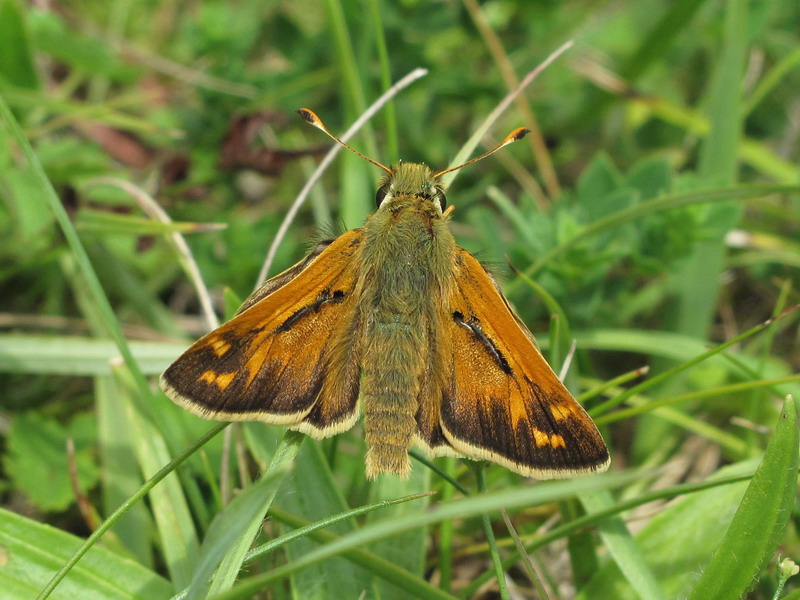
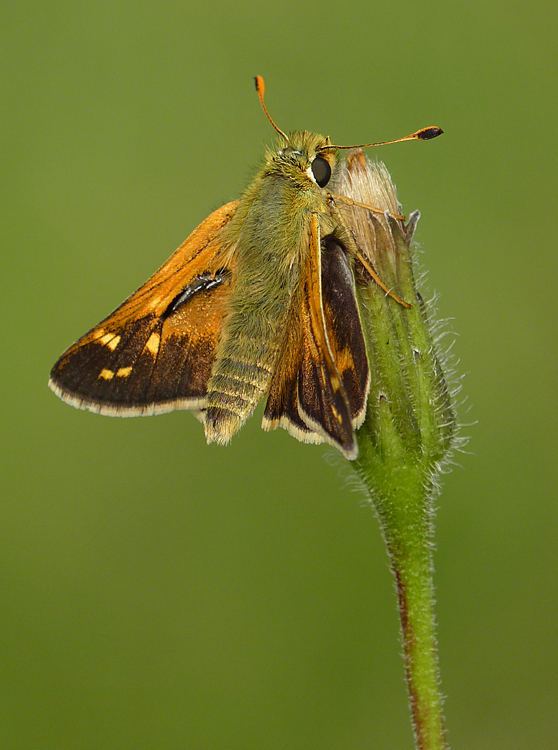
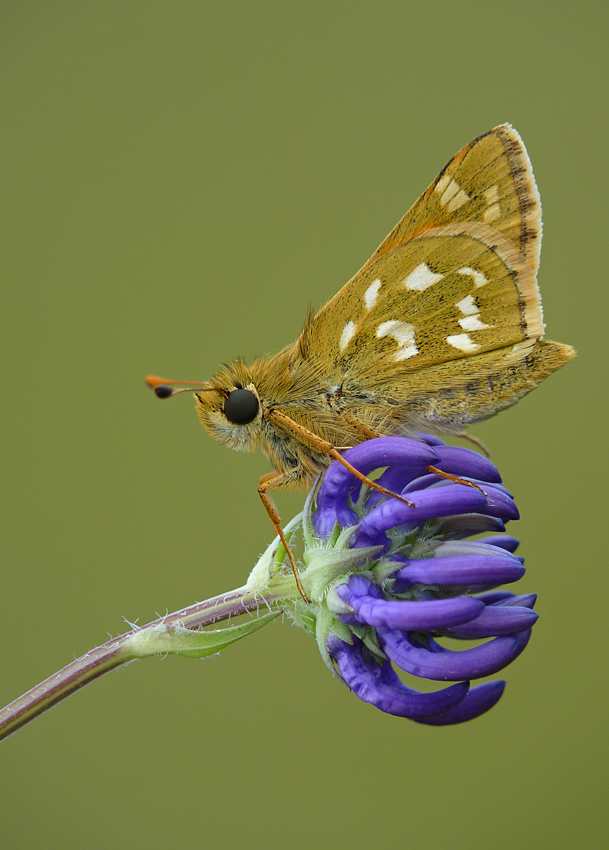
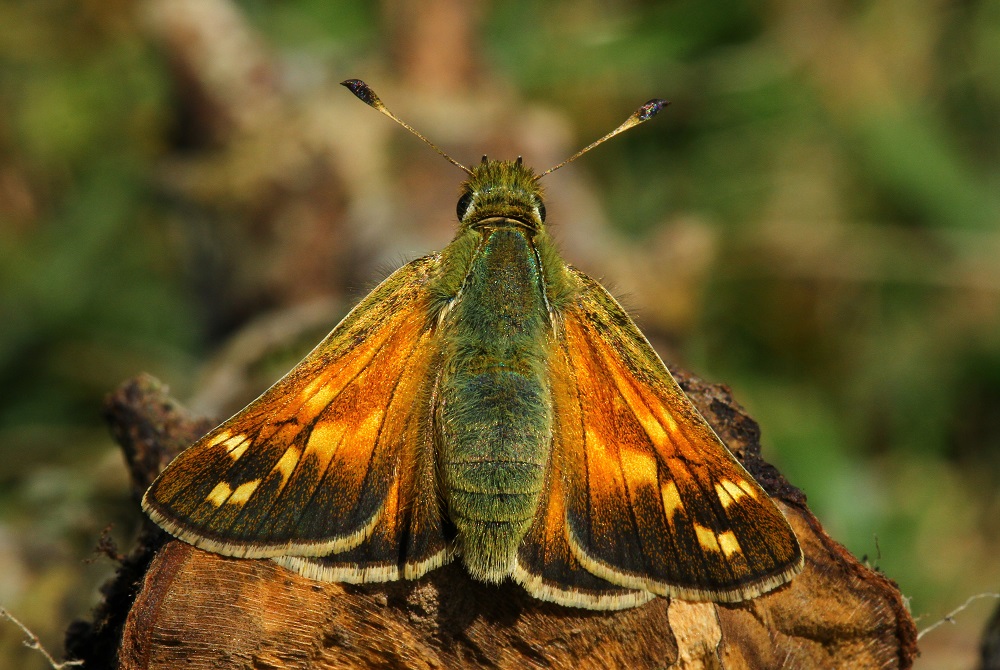
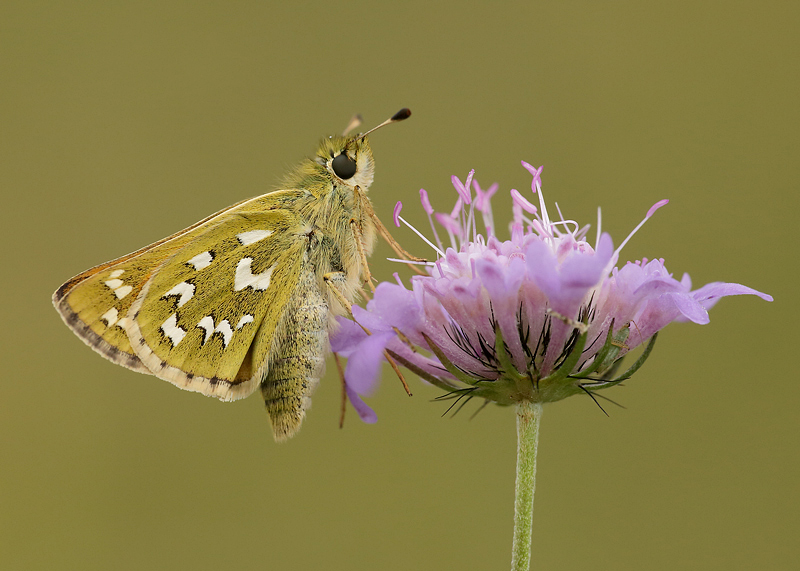
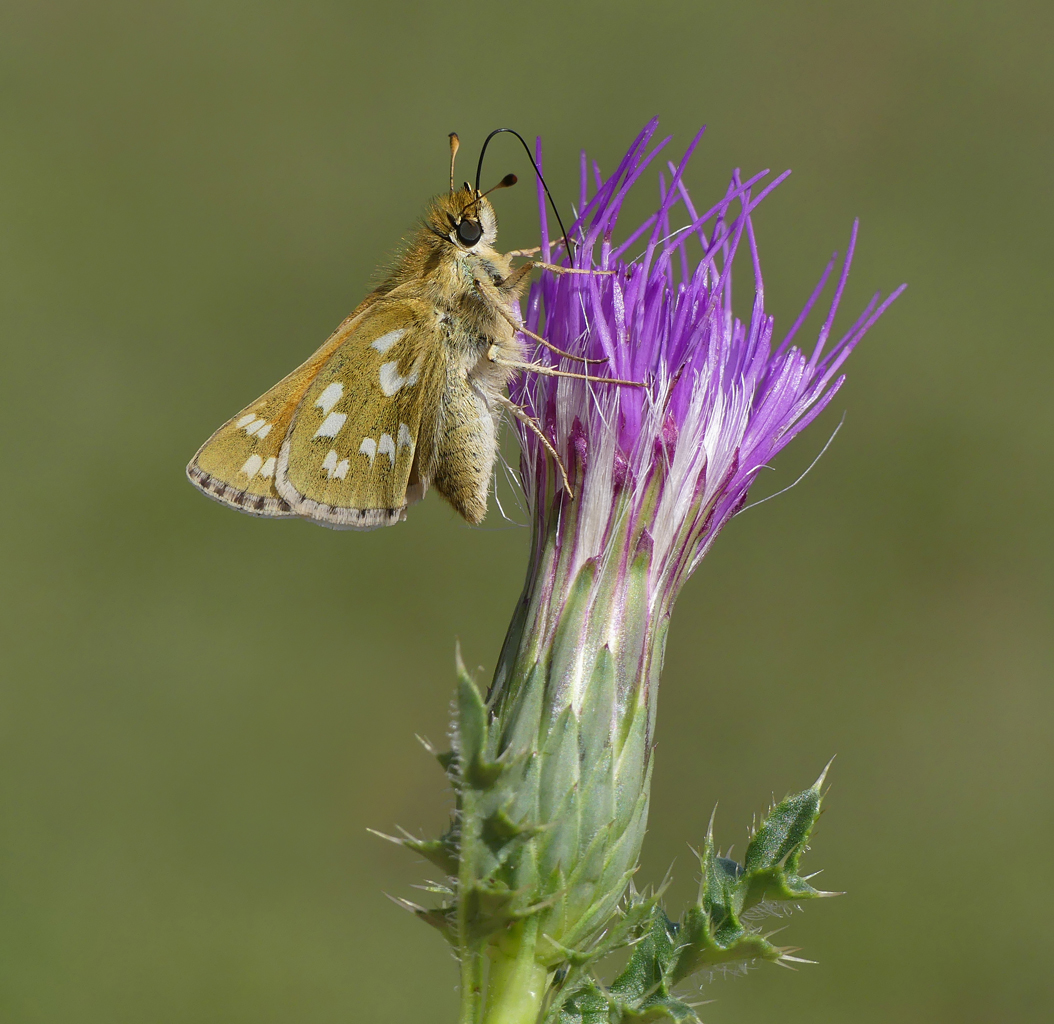
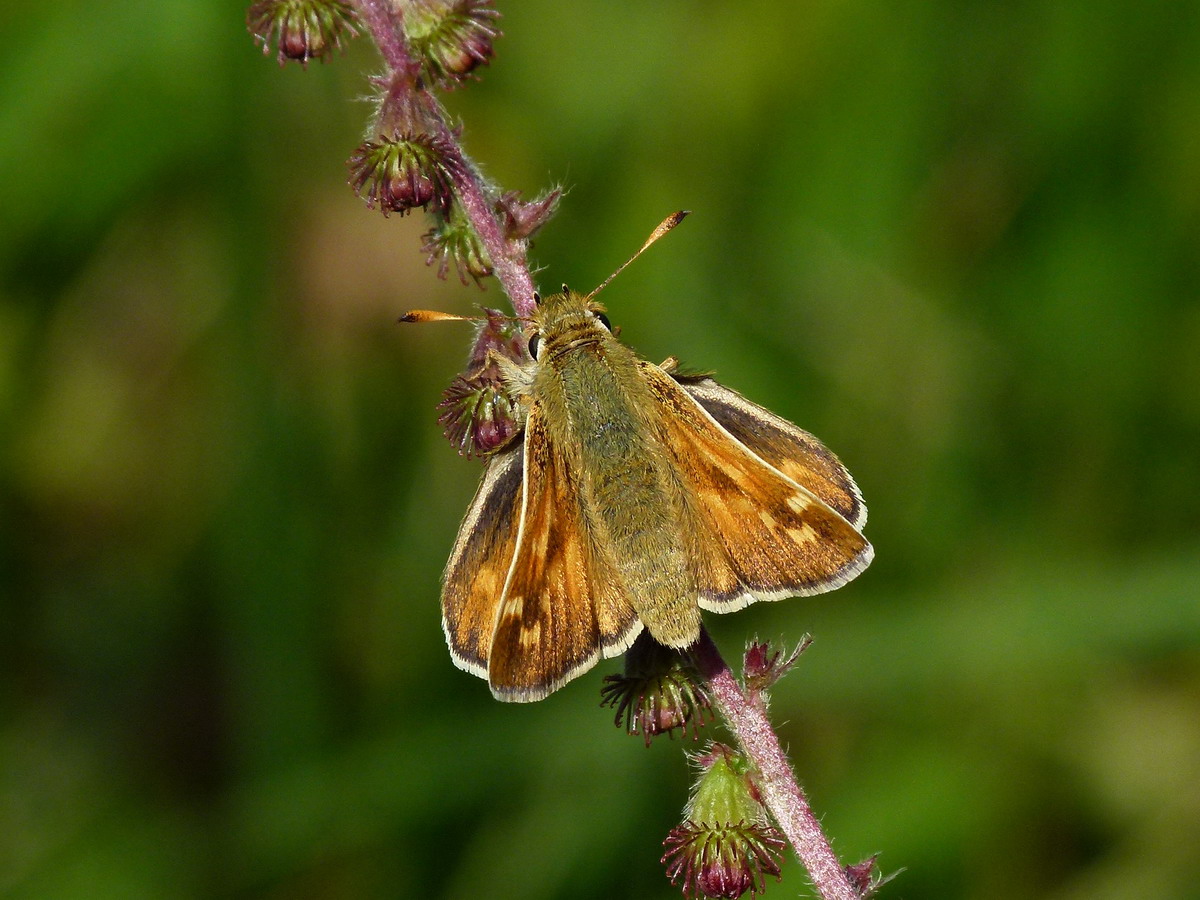
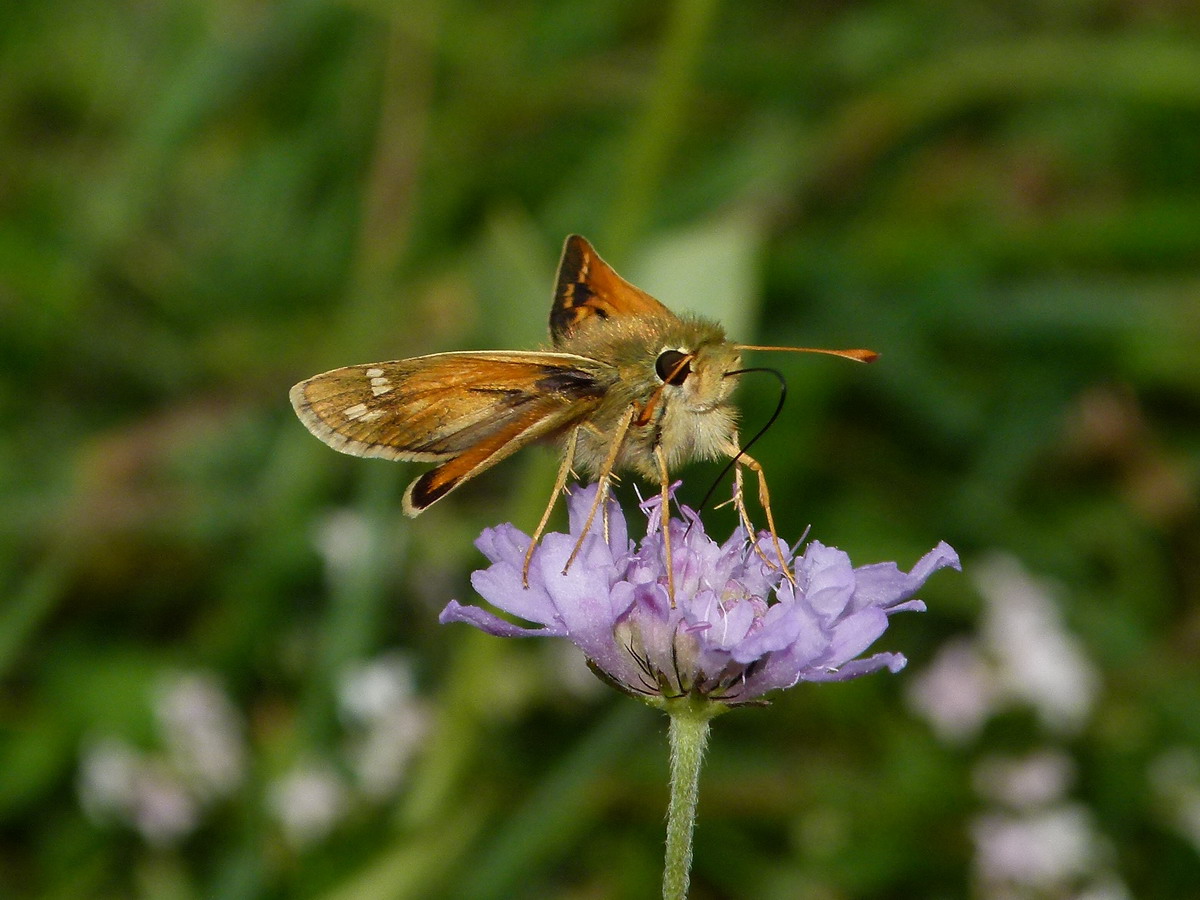
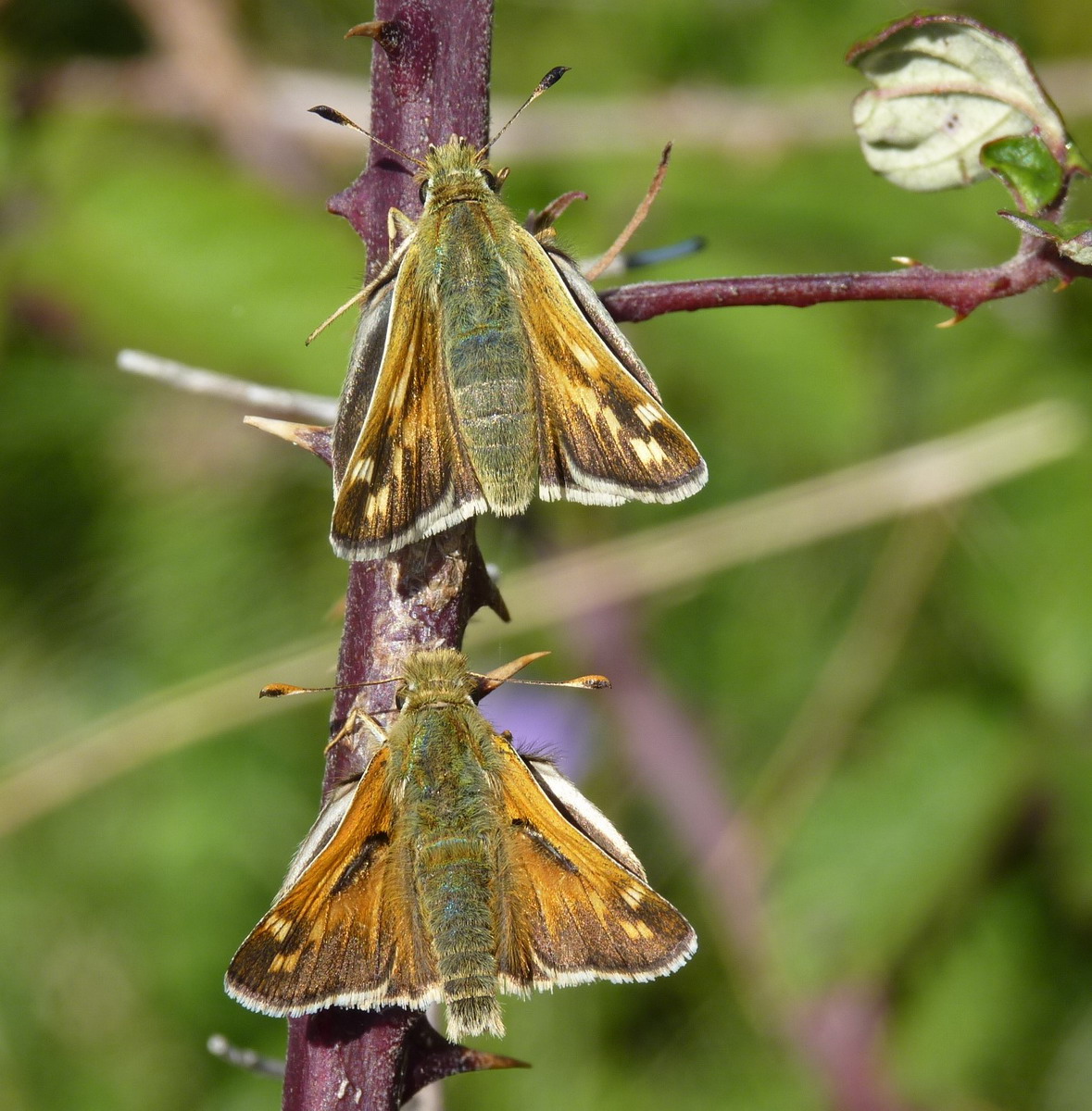
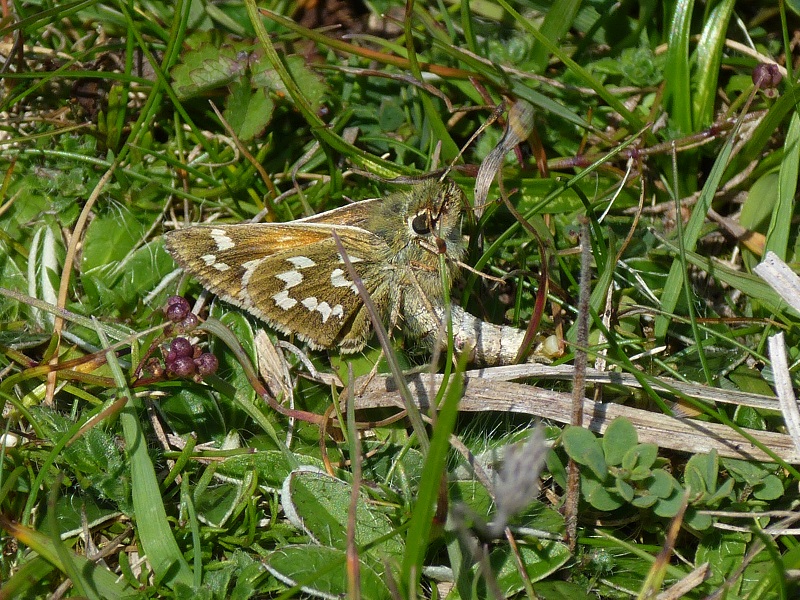
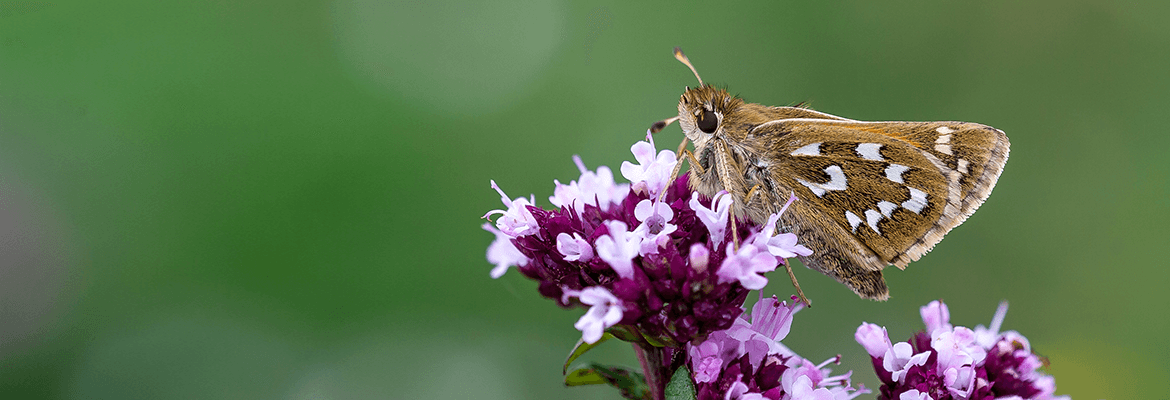
This warmth-loving skipper is relatively-local, but is fairly easy to identify, since it is the only skipper found in the British Isles that has the distinctive white spots on the underside of the hindwings, which give the butterfly its name. Like other "golden" skippers, the male is distinguished from the female by the sex brand on its forewings, which is a line of specialised scent scales. This butterfly is restricted to closely-grazed chalk downland sites in southern England. Its former range extended from South Somerset in the west to isolated colonies in the north as far as Westmorland and North-east Yorkshire. Its range contracted in the 20th century due to a reduction in grazing stock as well as the onset of myxomatosis which severely affected rabbit populations. Recent years have been more promising and this is one of the few species that is increasing its range. This species is not found in the Channel Islands.
| Family: | Hesperiidae | Latreille, 1809 |
| Subfamily: | Hesperiinae | Latreille, 1809 |
| Tribe: | ||
| Genus: | Hesperia | Fabricius, 1793 |
| Subgenus: | ||
| Species: | comma | (Linnaeus, 1758) |
Description to be completed.
The distribution data (2000-2009) has been made available through the generosity of Butterfly Conservation and any subspecies distribution is taken from Riley (2007). Click here to see the distribution of this species together with site information overlaid.
This butterfly is found on chalk grassland that contains short, sparse, turf. This warmth-loving species is typically found on south facing slopes on which its sole foodplant, Sheep's-fescue, grows.
This butterfly is one of the few species whose fortunes have greatly improved as a result of improvements to the management of chalk grassland sites. However, this is still a species of conservation concern.
The table below shows the occurrence (distribution) and abundance (population) trends, using information from The State of the UK's Butterflies 2015 (Fox, 2015). Any UK BAP status is taken from the UK Biodiversity Action Plan (UK BAP) (2007 review).
1976-2014 (%) | 1976-2014 (%) | 2005-2014 (%) | 2005-2014 (%) |  +10 +10 |  +943 +943 |  +7 +7 | +12 |
|---|
This is one of the latest butterflies to emerge, not appearing until late July or early August, and it is then on the wing until early September. There is one generation each year.

Like most skippers, this is a fast-flying species that flies close to the ground, and can be difficult to follow when in flight. The male of this species is more-frequently encountered than the female. Both sexes spend the majority of their time either basking or feeding, and a wide variety of nectar sources is used, including various species of Thistle. The butterfly will find the warmest patches of ground on which to bask, enjoying the warmth of paths, rabbit scrapes and other patches of bare earth which have been baked by the sun. This species is inactive in overcast conditions.
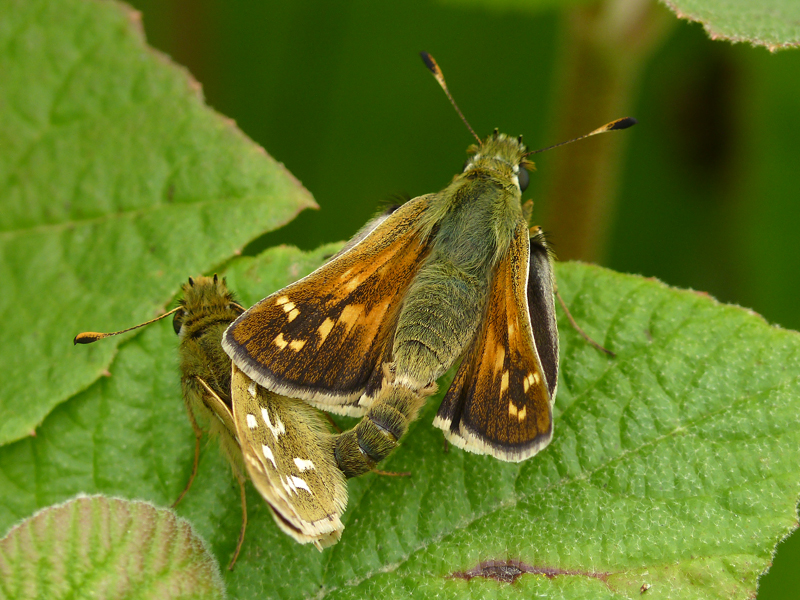
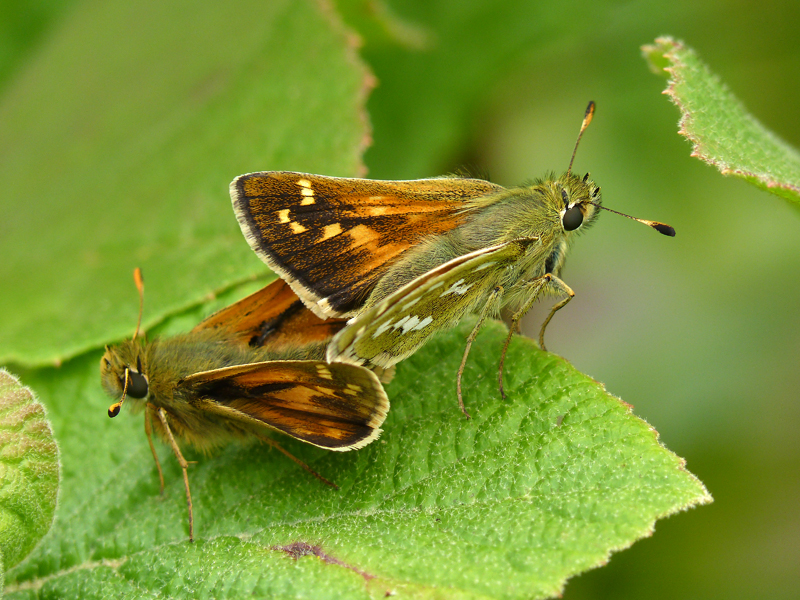
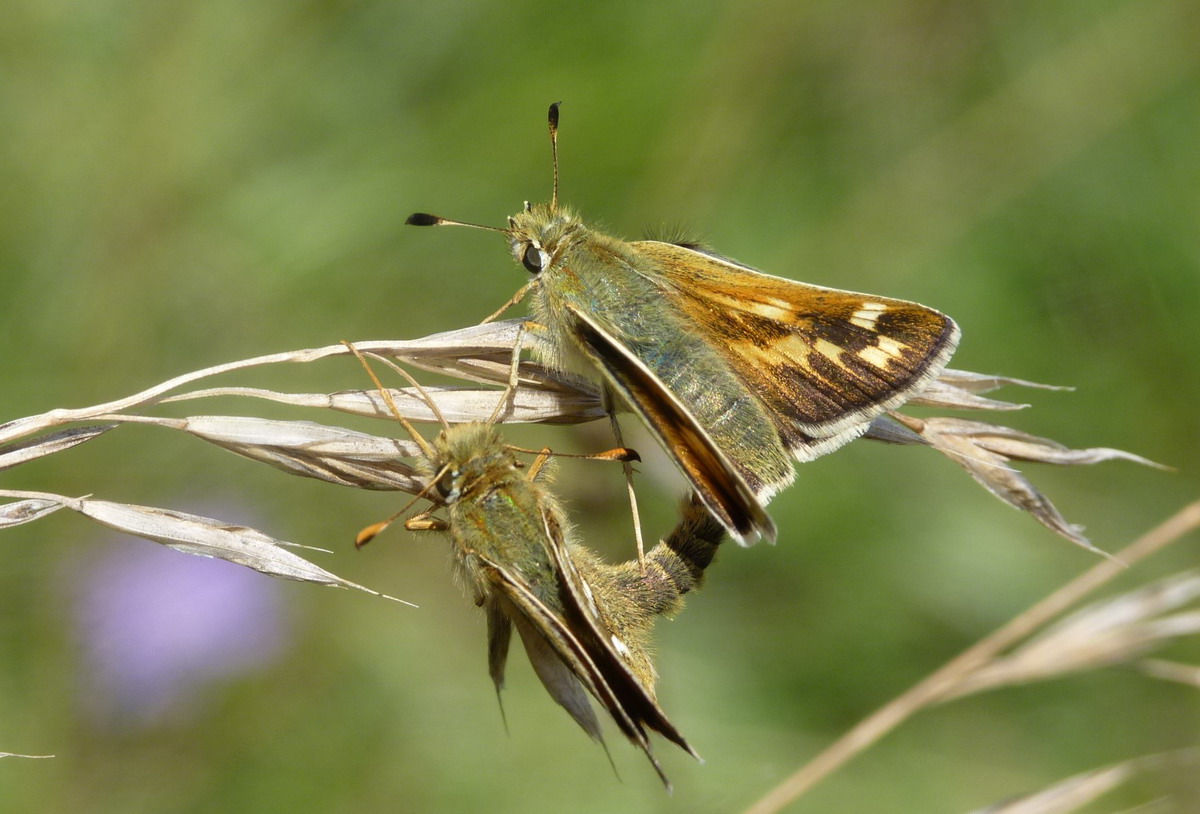
The male rests on a suitable sunlit perch, and investigates any passing butterfly, in the hope of finding a mate. If a virgin female is encountered, the pair exhibits a tumbling courtship, with the male eventually forcing the female to the ground where mating takes place. An egg-laying female locates a suitable patch of bare ground, such as a rabbit scrape, and then walks to the edge of the patch looking for a suitable location on which to lay a single egg.
Adults feed primarily on Autumn Gentian (Gentianella amarella), Common Bird's-foot-trefoil (Lotus corniculatus), dandelions (Taraxacum spp.), Field Scabious (Knautia arvensis), knapweeds (Centaurea spp.), Red Clover (Trifolium pratense), thistles (Carduus spp. and Cirsium spp.) and Wild Basil (Clinopodium vulgare).
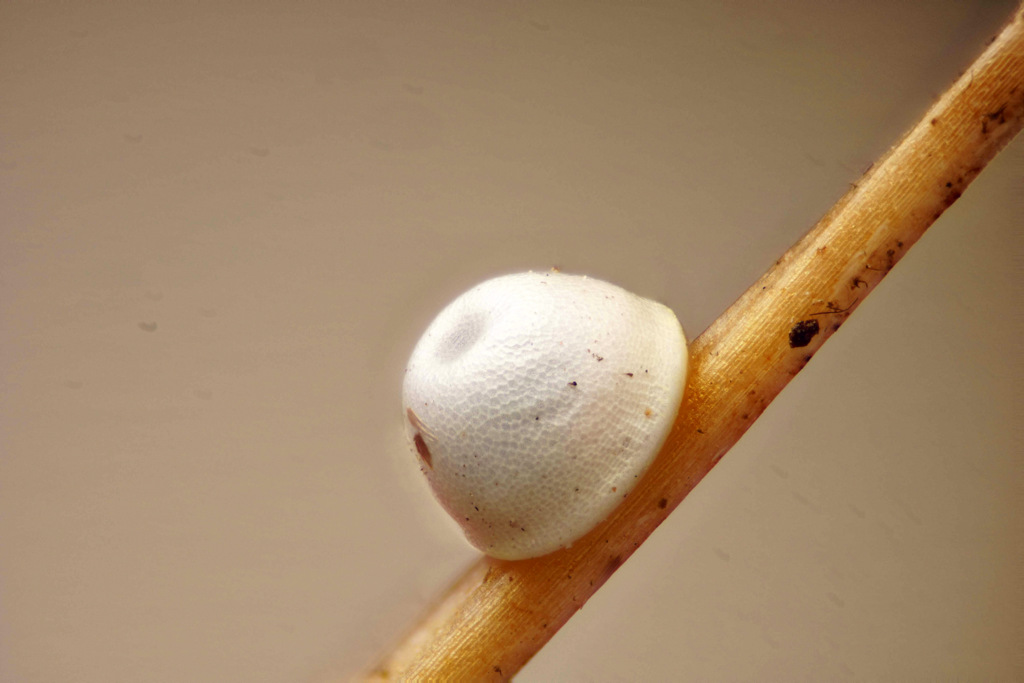
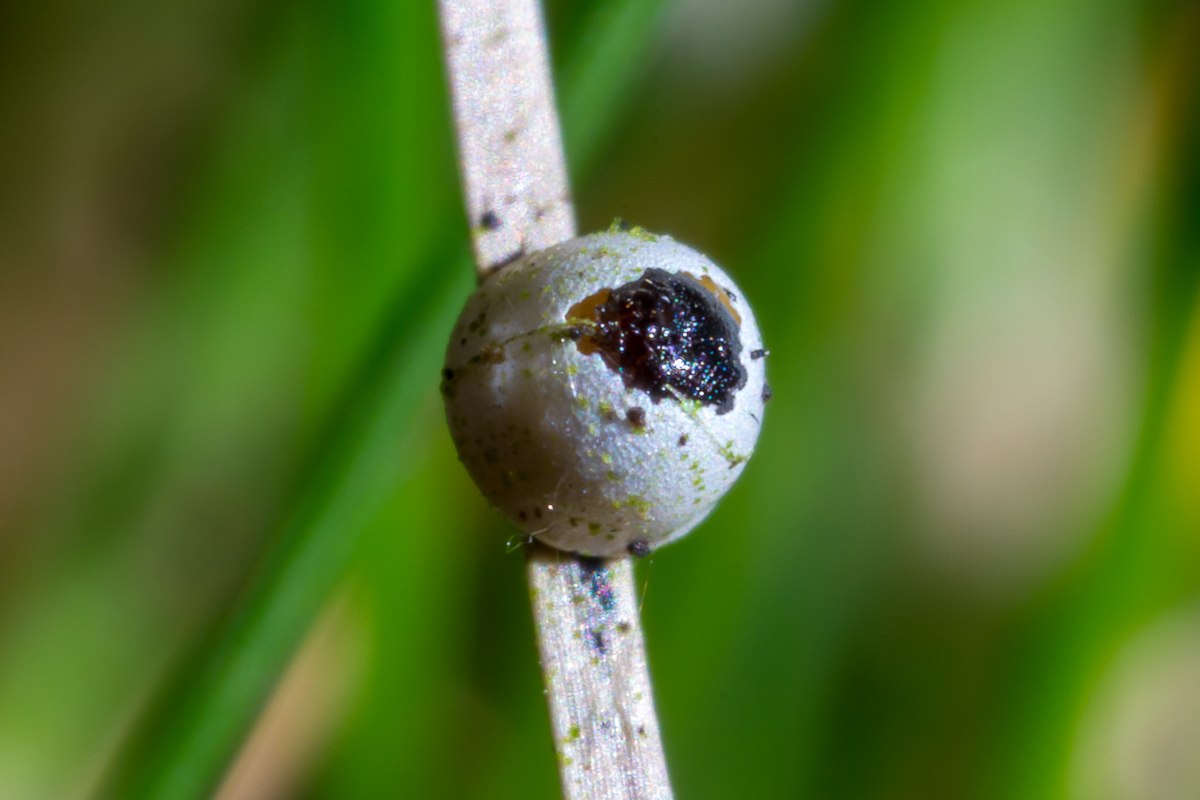
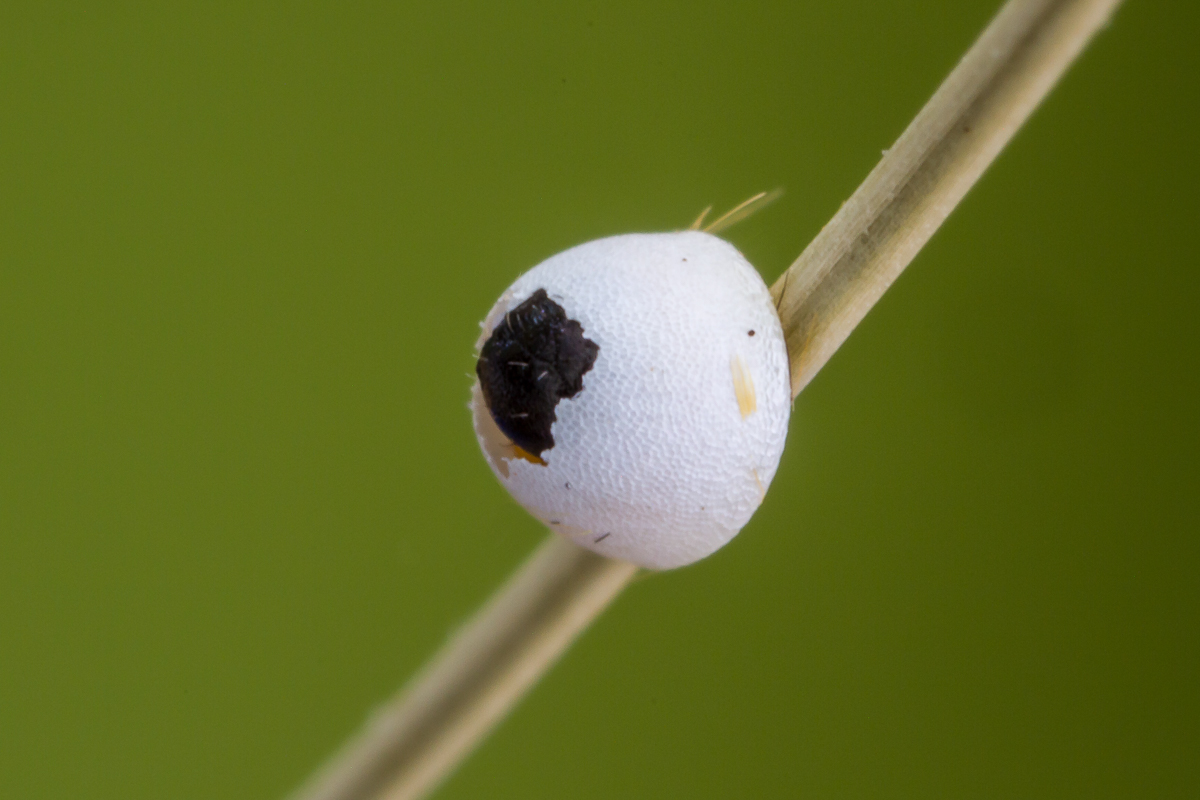
The conspicuous pale eggs are laid singly on small tufts of the foodplant, or on adjacent plants, where they overwinter. Eggs are often laid close to bare ground, such as rabbit scrapes or animal tracks.
"On August 17th, 1900, the author found a few comma on the wing, flying over a small patch of chalky ground covered with a short dense growth of various grasses, but the sheep's fescue grass (F. ovina) predominated, and other low-growing plants dotted about, such as rock-rose, thyme, etc. A female was soon detected hovering over the surface with the unmistakable buzzing flight when searching for a site for egg-laying, so by careful watching she was seen to settle on a tuft of the fescue grass, and after walking over and among it a little time she curved her abdomen down and deposited a single egg on one of the fine hair-like blades, and close by, within an inch, another egg was found, similarly laid, which from its darker colouring had apparently been deposited about three or four days previously. After securing these two eggs, the author dug up the plant of grass, as well as other similar plants for potting, and then captured a few females, which were subsequently placed on the plant, and on August 20th they deposited a large number of eggs upon the grass stems and blades. The egg is very large in proportion to the butterfly, measuring 0.90 mm. in diameter at the base; in shape it exactly resembles an inverted pudding-basin, having a sunken crown, rounded sides and a well developed basal rim; the base is quite flat; the surface is finely granulated, forming reticulations near the base which run into ridges to the rim; when first laid the colour is pearl-white with the slightest yellowish-green tinge, which very gradually turns deeper in colour, assuming a pale straw-yellow on the sixth day, and when a fortnight old it is a clear pale apricot-yellow, which colour remains unchanged until the middle of January, when a slight change begins to take place by the colouring gradually fading until it finally turns to an opaque white with the faintest yellowish hue at the base and rather leaden in certain lights on the crown, remaining so during February and March; at the end of the latter month or the first few days of April it hatches; after hatching the shell is a dull opaque white. On April 1st, 1901, the eggs began hatching; nearly all were hatched by the end of the first week in that month." - Frohawk (1924)
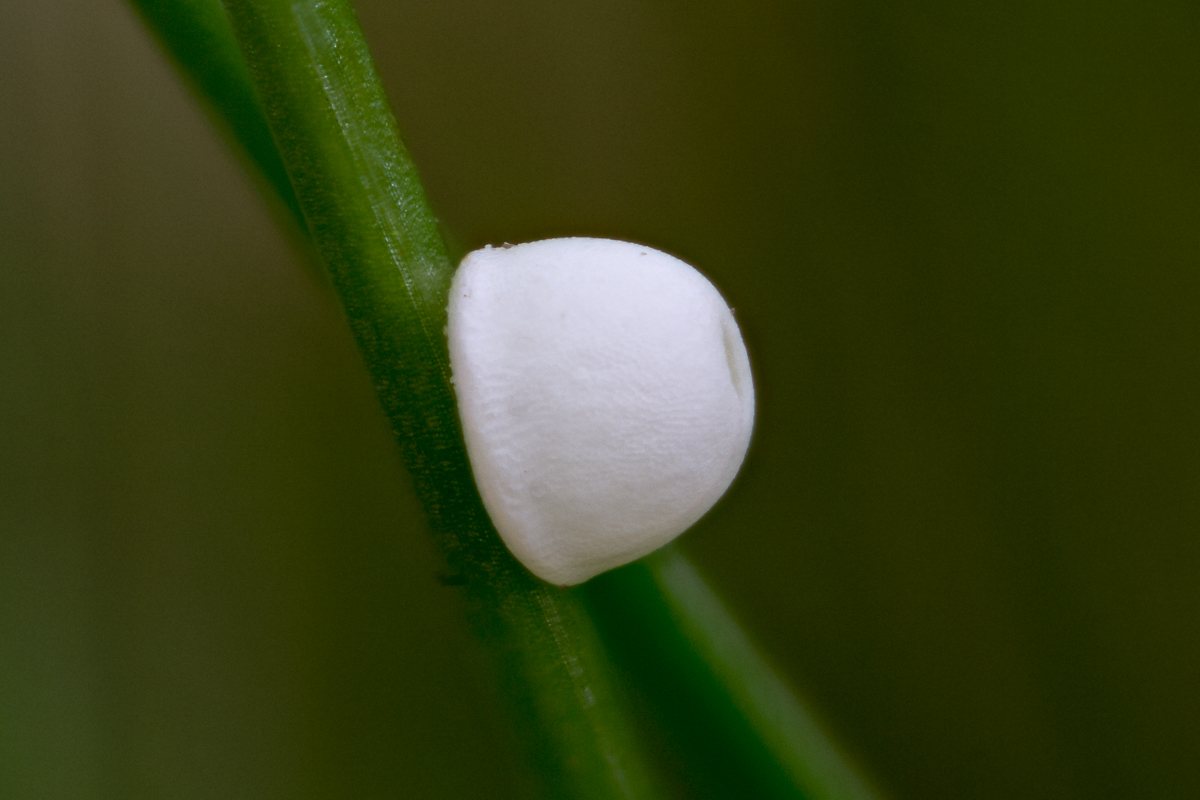
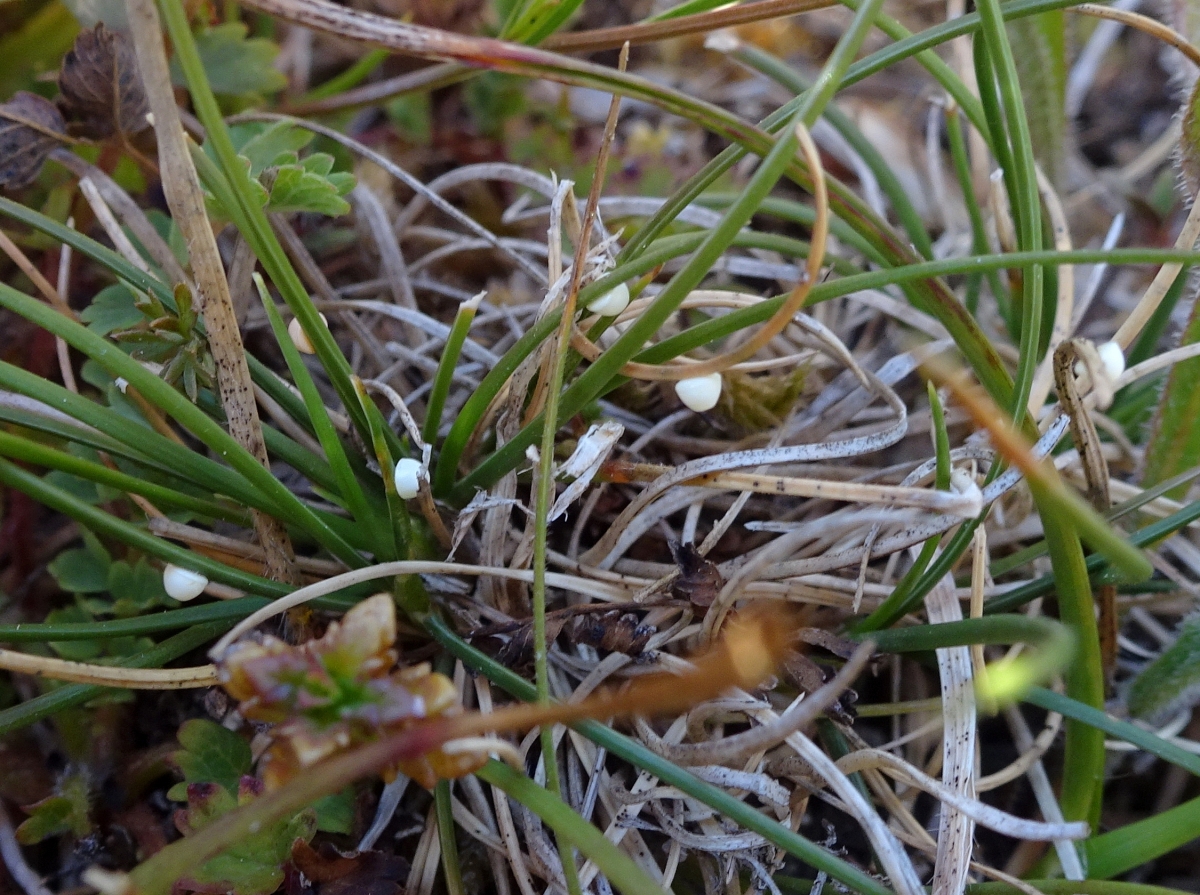
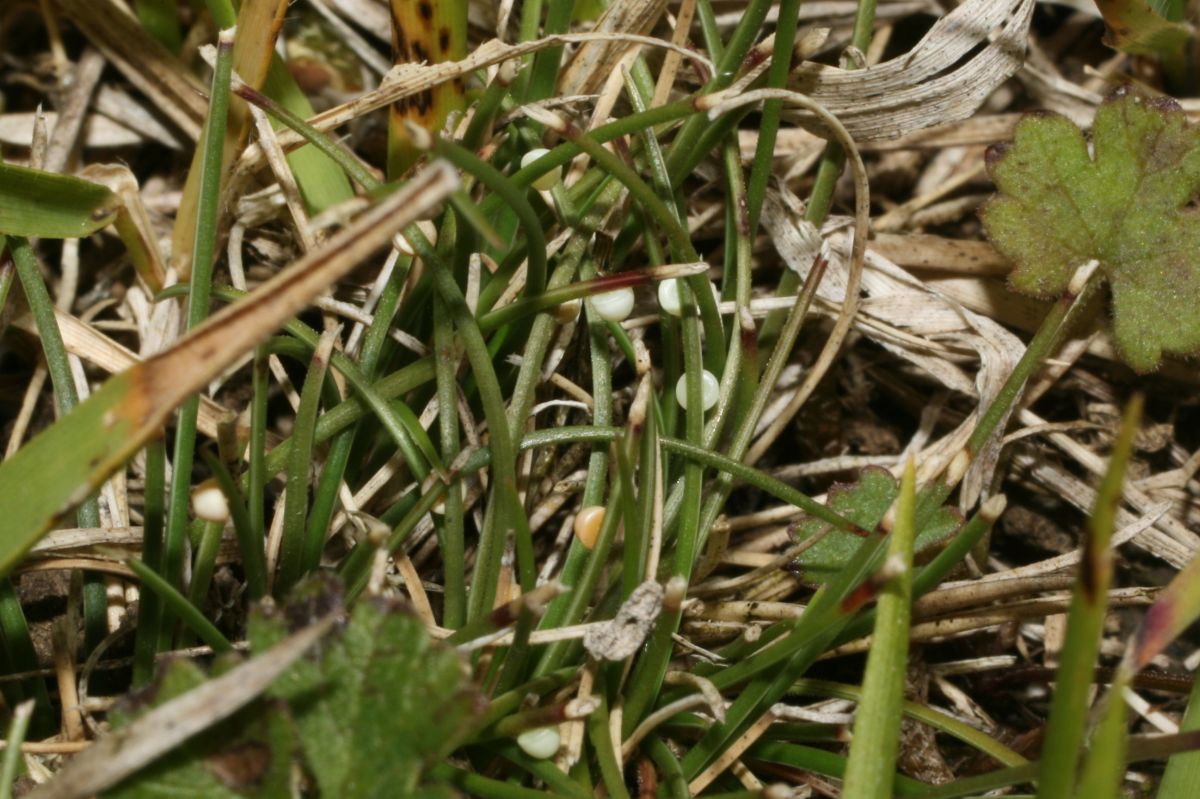
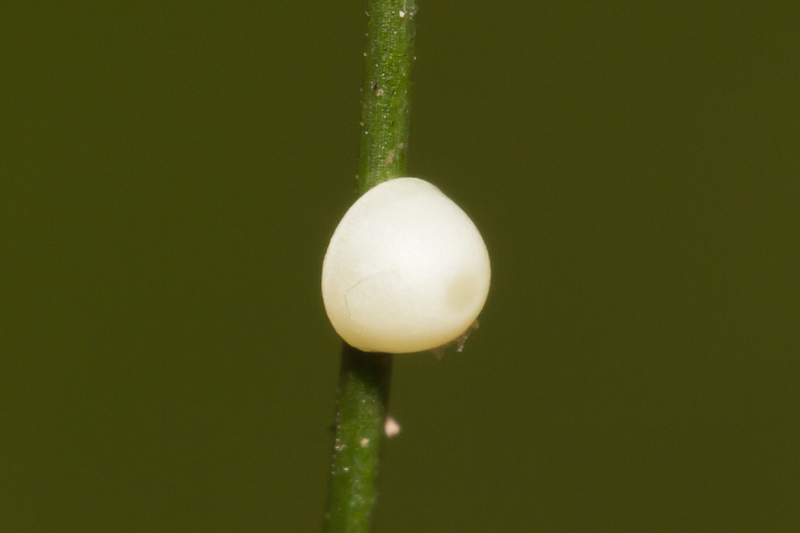
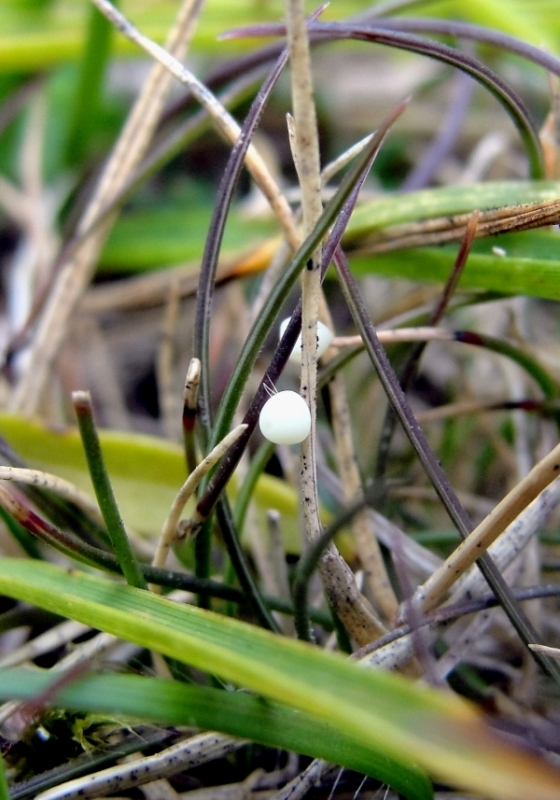
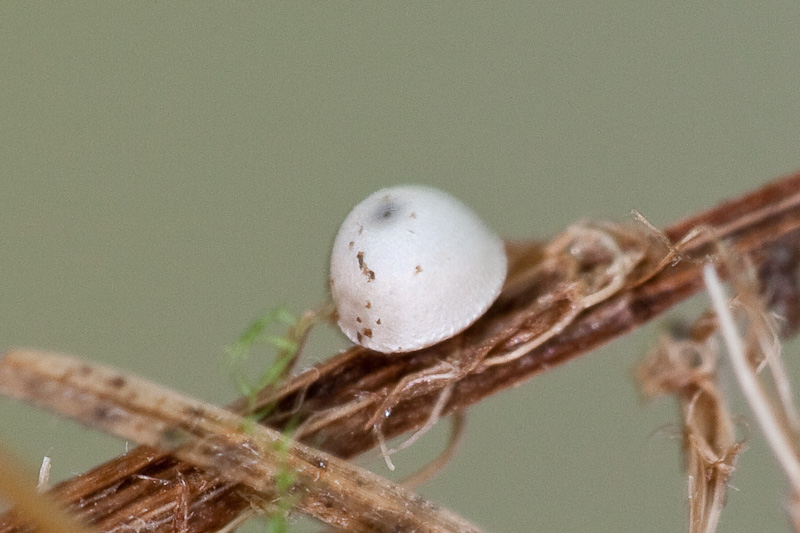
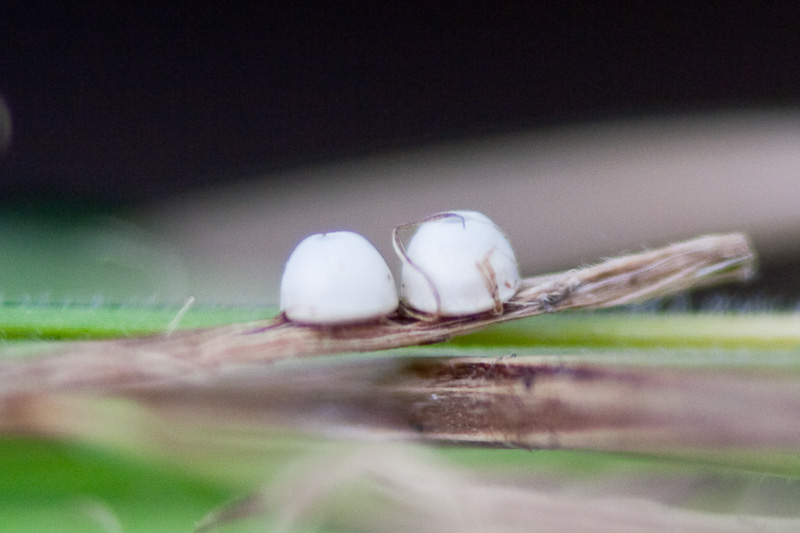
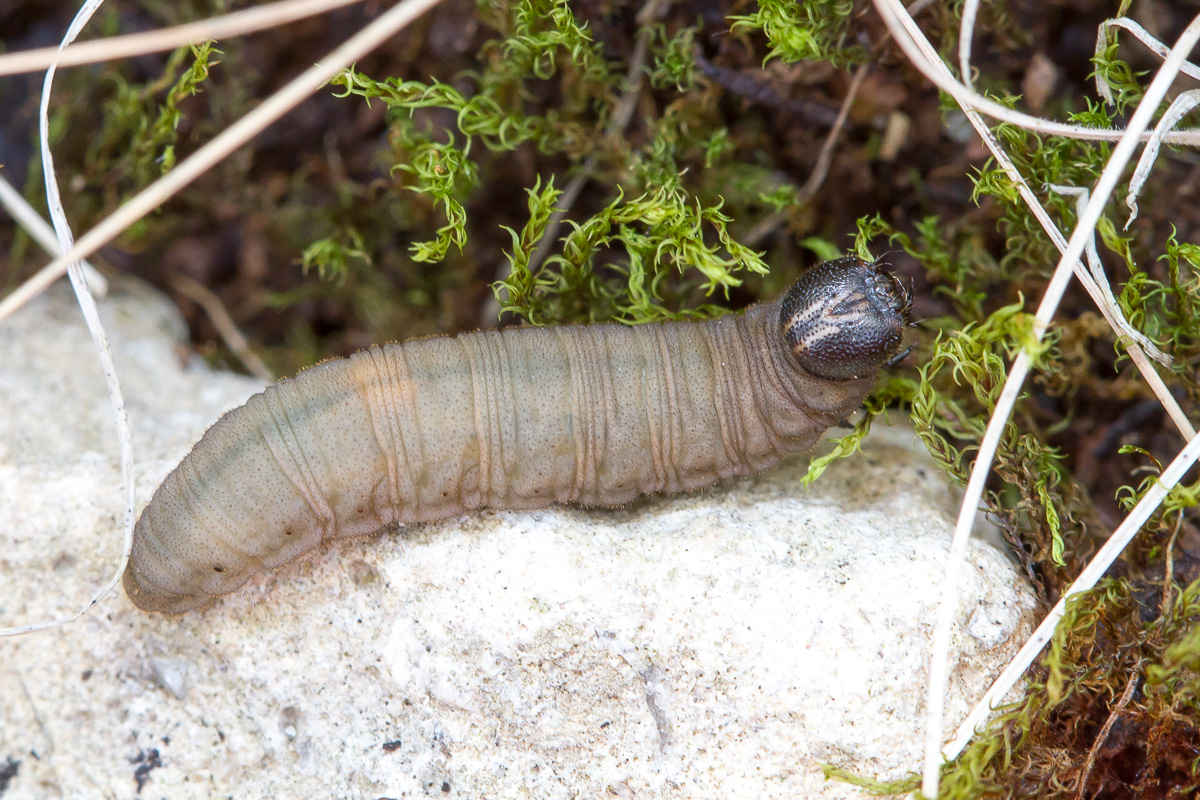
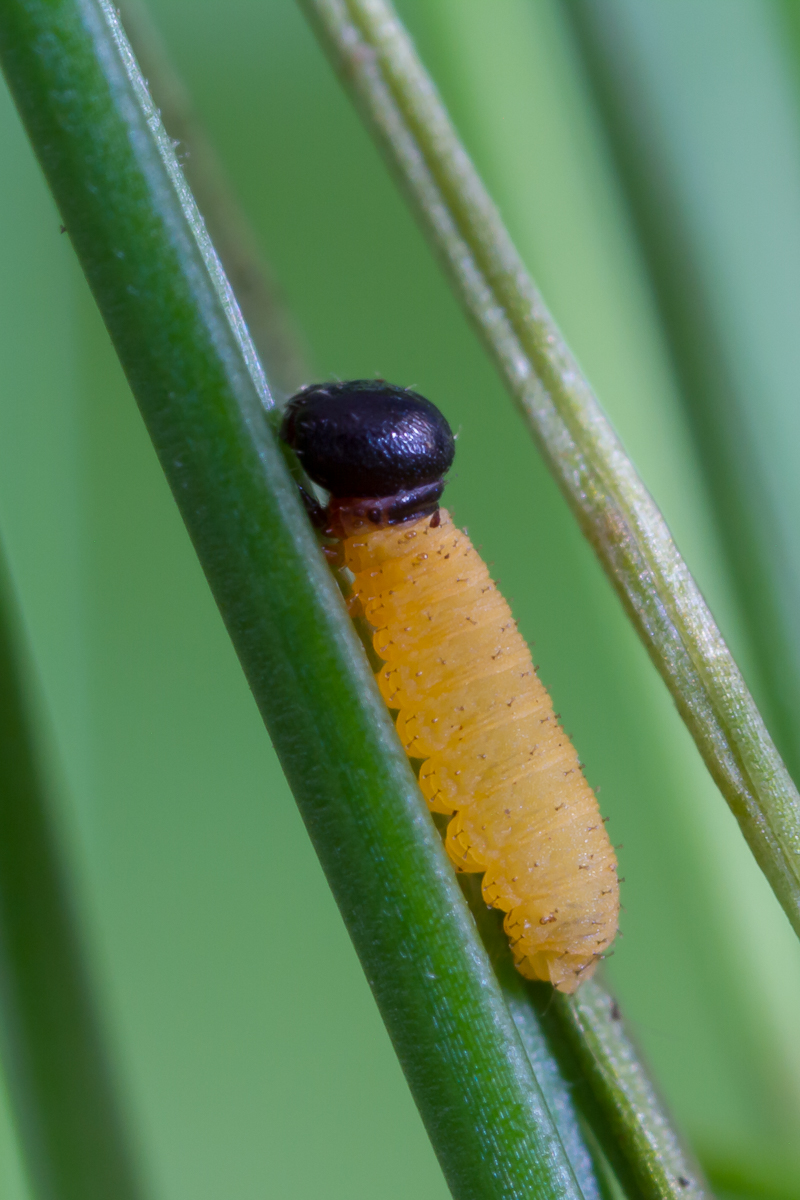
The larva emerges in March, but does not feed on the eggshell. It forms a tent by spinning several leaf blades together from which it feeds, creating a new tent as it grows, and as the surrounding foodplant is eaten. The larva will often wander a considerable distance in order to find a dense tussock in which to pupate.
The primary larval foodplant is Sheep's-fescue (Festuca ovina).
"The larva eats a circular hole in the crown of the egg, through which it emerges. Directly after emergence it measures 2 mm. long; the head is proportionately large, the body swollen at the middle, attenuated at both ends, but mostly so on the first segment, which is furnished with a dark brown shining collar. It is wrinkled transversely and lobed laterally; the entire body is a rich straw-yellow, which becomes paler after feeding; on each side are four longitudinal rows of very minute knobbed points, all of about equal size: the first and second rows are dorsal and sub-dorsal, the third and fourth are super-spiracular and sub-spiracular; excepting those forming the latter row, all the points are directed forwards; those on the anal segment are longer and only slightly clubbed; along the lateral region, including the claspers, are a number of minute spines pointing downwards; all the points and spines are white and glassy with dark bases; the entire surface is granular; the head shining black, granulated, and bears a number of tiny whitish spines; the mouth parts are brown; the legs and claspers the same colour as the body. If the young larva is in any way disturbed, however slightly, it immediately contracts and rolls itself up with the head touching the eighth segment, and remains motionless for several minutes. It does not eat the empty egg-shell, but directly after leaving the egg it starts spinning the fine grass blades together into a somewhat dense cluster an inch or two above the ground. In this compact shelter the larva lives and feeds upon the grass surrounding it, remaining almost always completely hidden. Sometimes as many as three or four live together. They appear to be chiefly nocturnal, as they are always to be found quietly resting during the day, and exceedingly difficult to see as they are so well hidden. The first stage lasts about one month. On May 2nd many of the larvae had recently moulted the first time. Just before the first moult it measures 4.2 mm. long. The colour being the same as when first hatched." - Frohawk (1924)
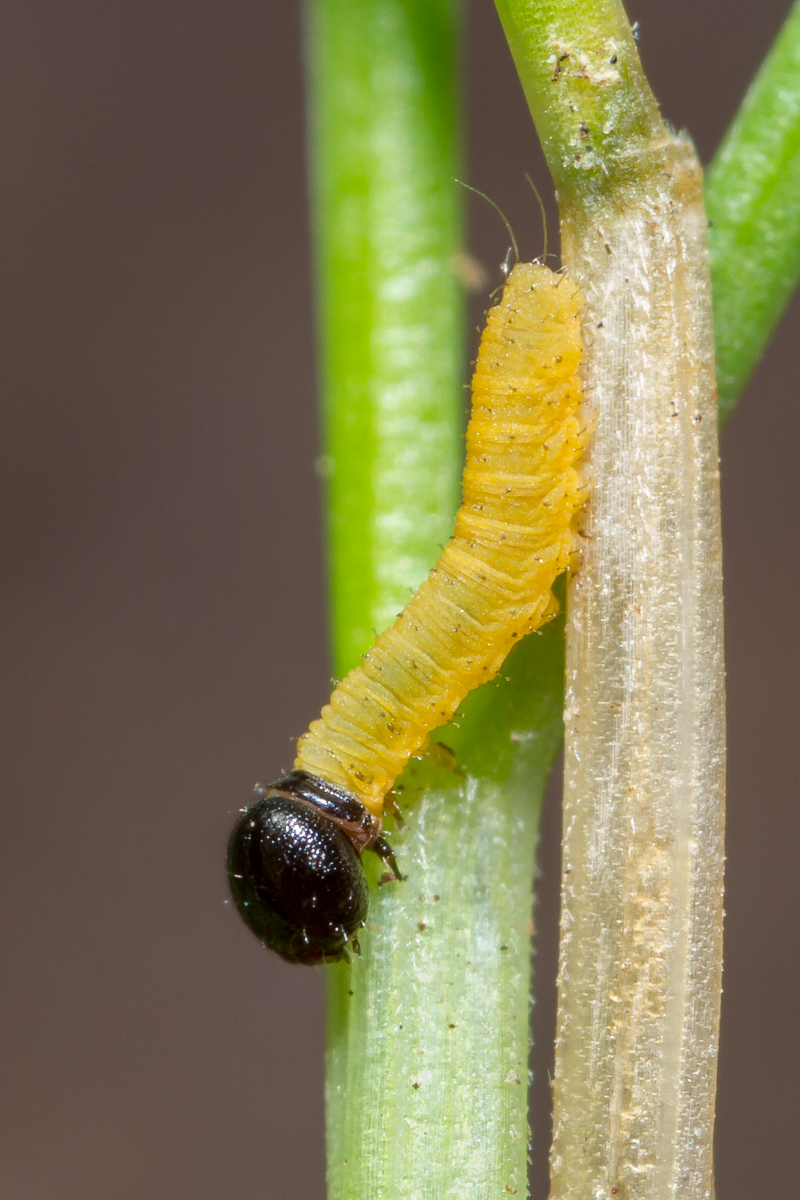
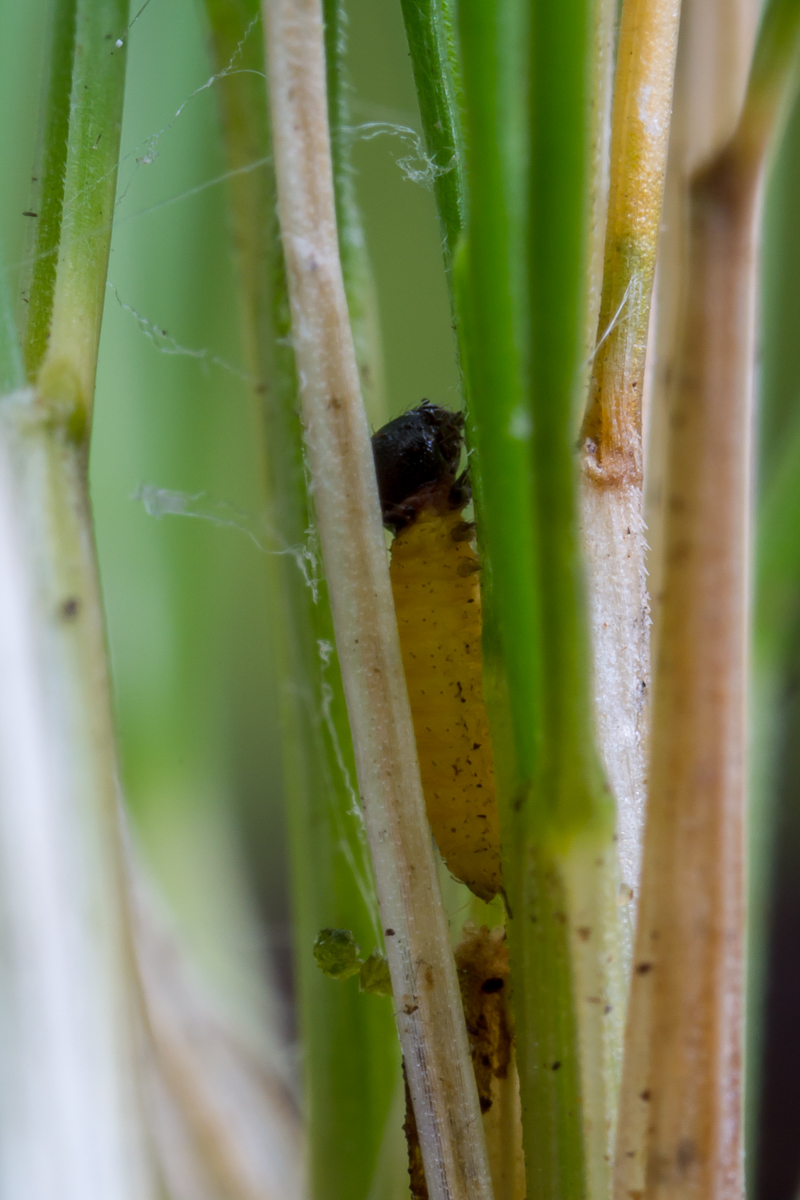
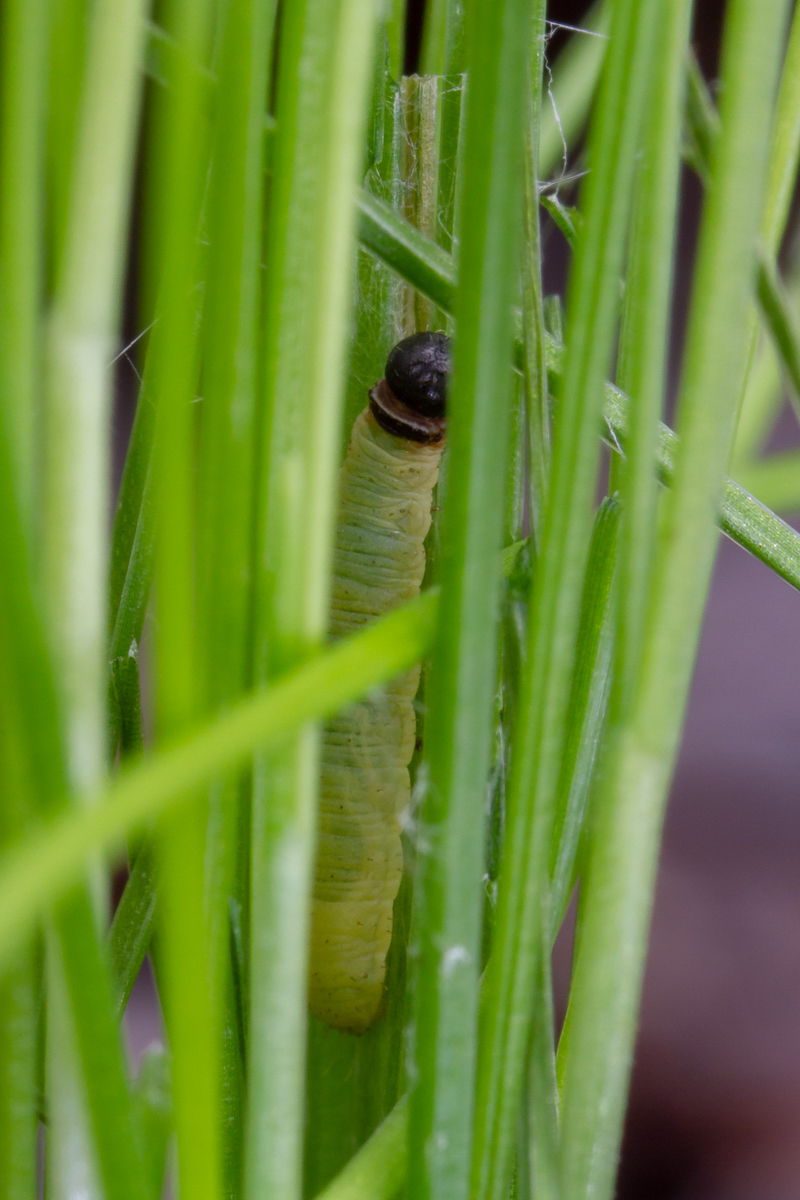
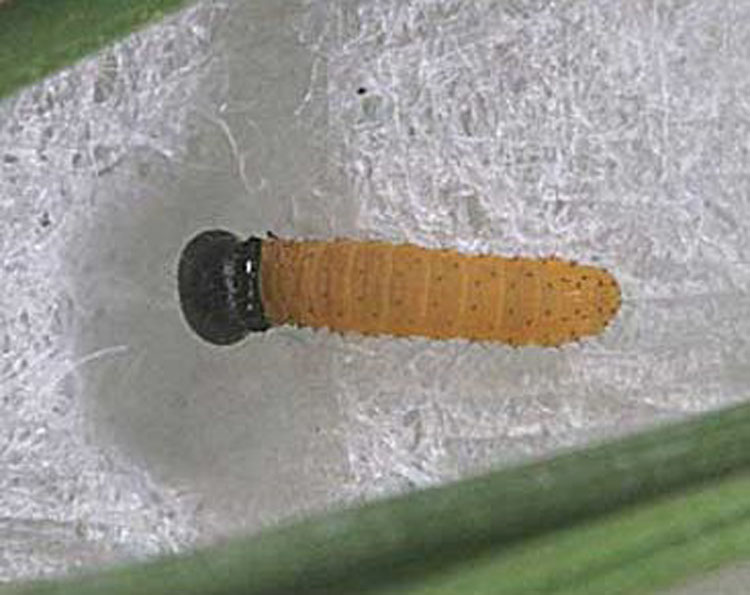
"Soon after the first moult the colour along the dorsal surface has a decidedly greenish tinge; the rest of the body is a pale straw-yellow. It is more thickly sprinkled with minute, white, glassy, angulated, knobbed points with black bases; and on the dorsal surface of each segment are two shining black lenticles and another just above the spiracle; also on the second and third segments are two larger lenticles; all these, as well as the spiracles, are black. The head is similar to the previous stage. The first segment, which is freely retractile, has the anterior half of a lilac-flesh colour, which is the elastic portion, the posterior half having a shining black band encircling the upper half. On May 21st all the larvae were still in the second stage. Upon examining the larvae on May 28th several were found to have recently moulted the second time, and others undergoing the moult, and some of similar size but not moulted. The second stage lasts between three and four weeks. Shortly before second moult it measures 7 mm. long. The anterior segments, especially the first, are much smaller than the rest of the body, being considerably swollen about the middle; the anal segment has the dorsal surface speckled with brown. As in the first stage, they live entirely concealed in tubes formed of grass blades spun closely together. They crawl rapidly, either forwards or backwards, similarly to other case-dwellers, and feed on any species of grass that happens to be interwoven with the fescue grass. On June 14th they were again examined, and over two dozen larva in different stages were detected, some after the second moult and others after the third moult, but varying greatly in size." - Frohawk (1924)
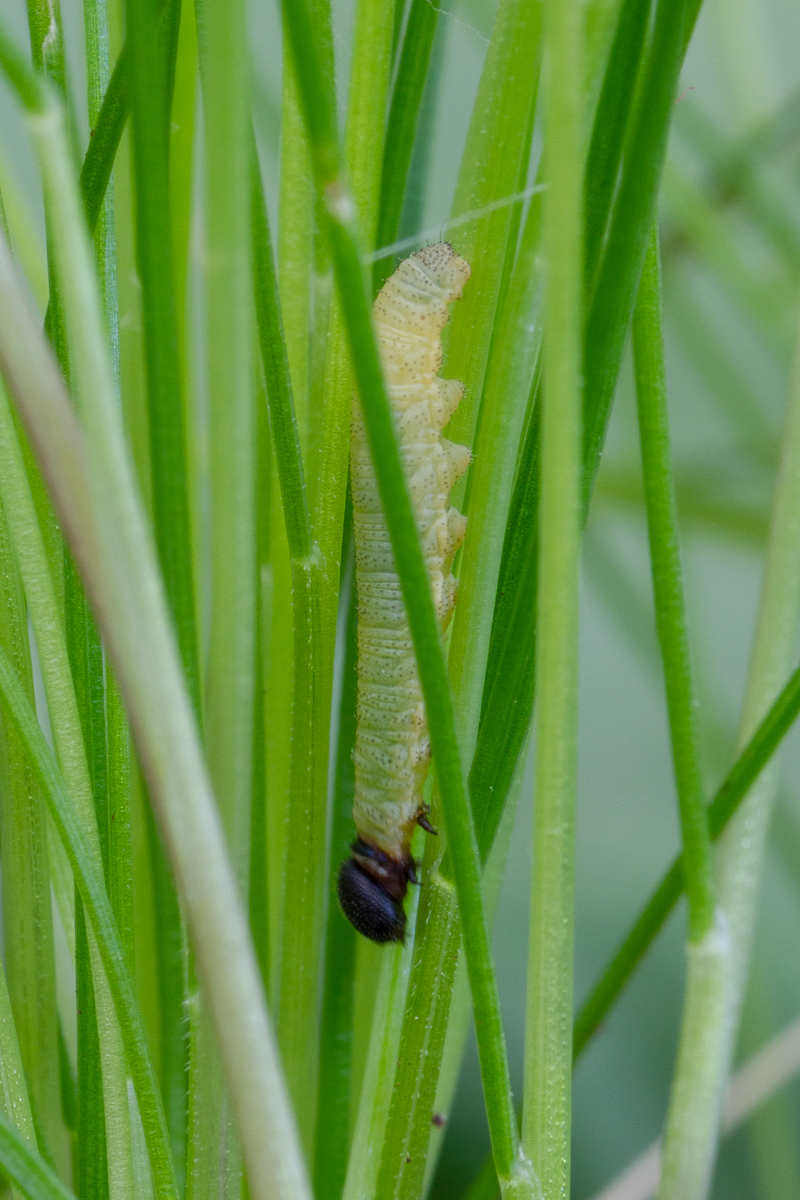
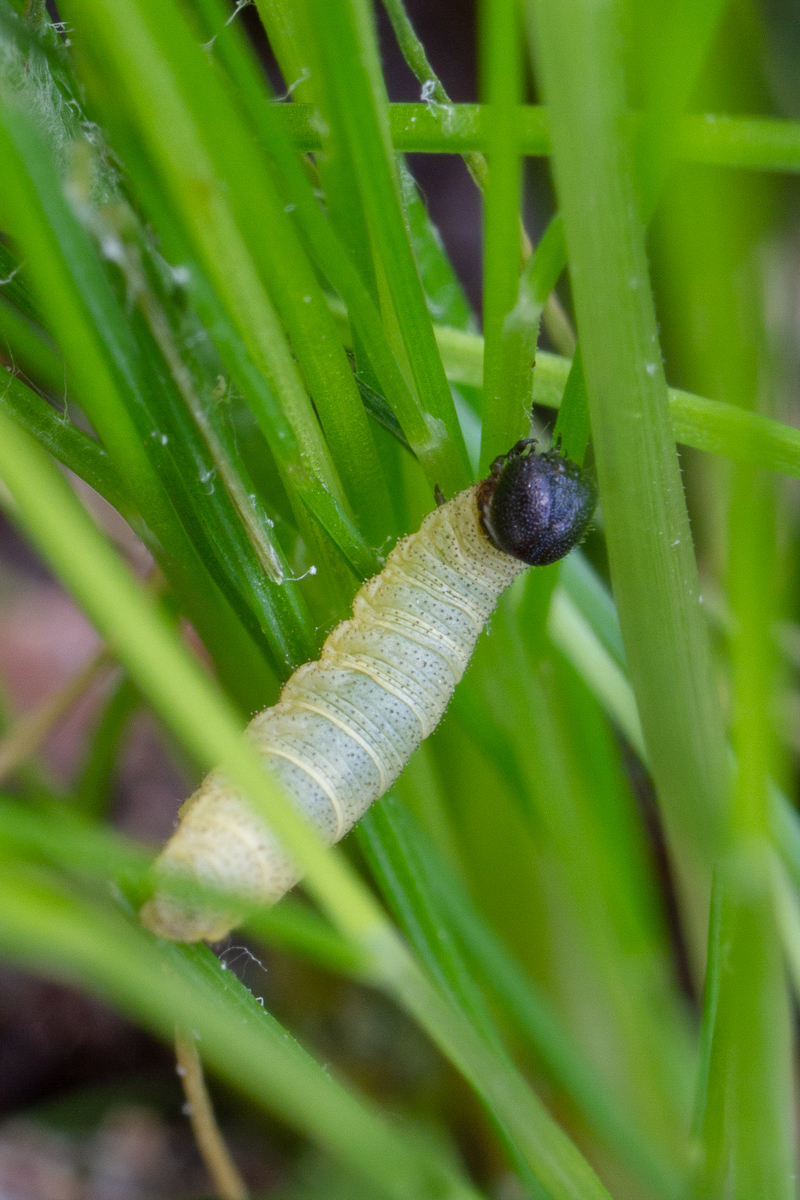
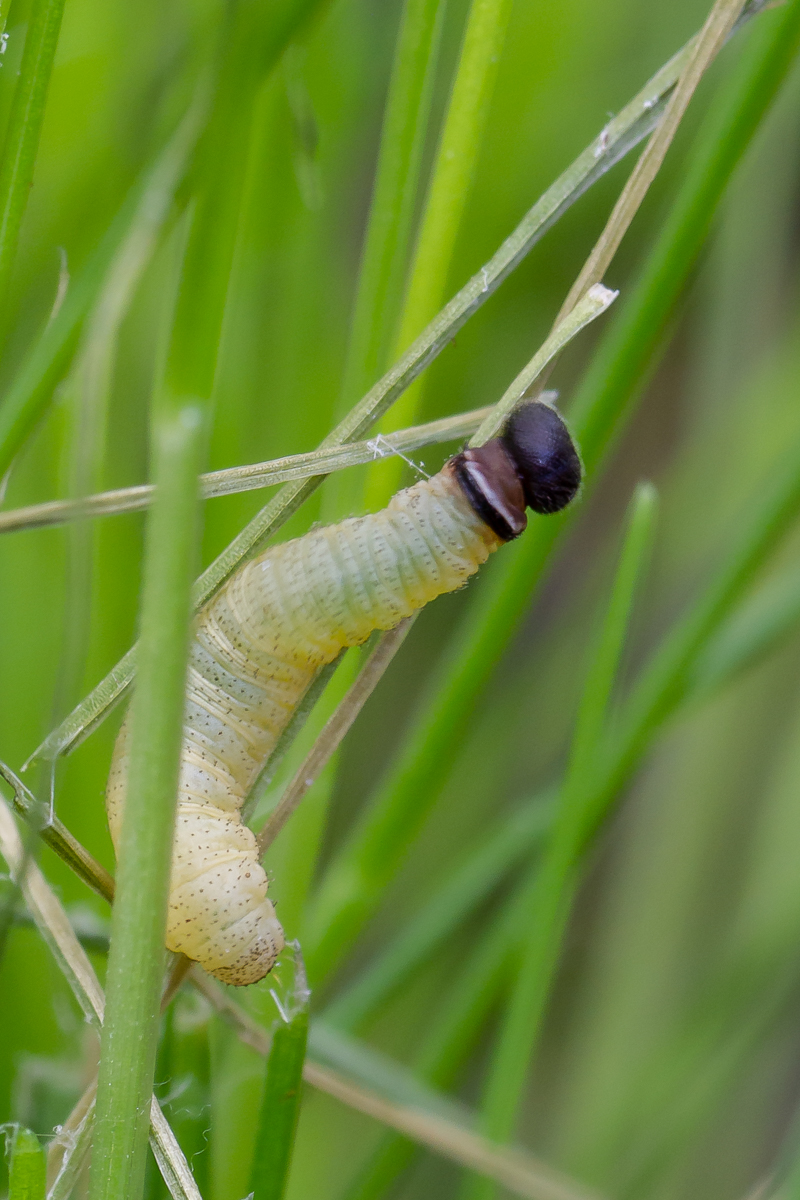
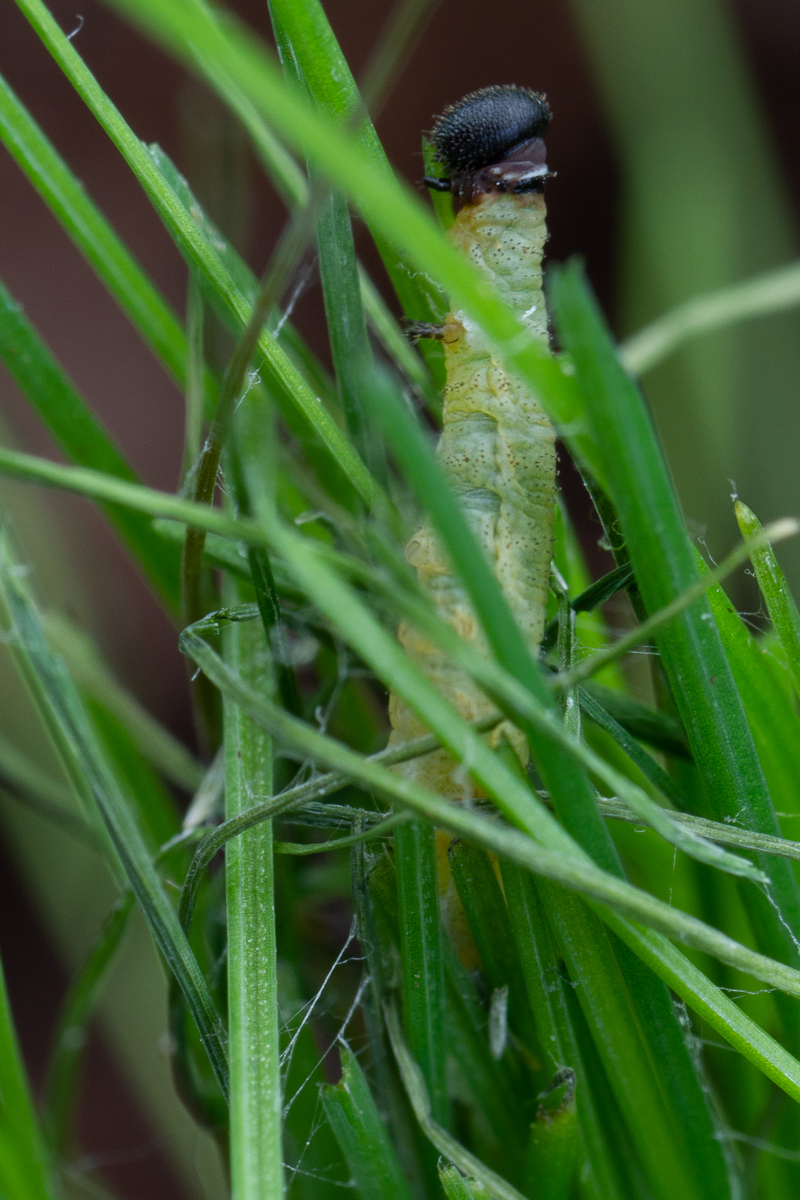
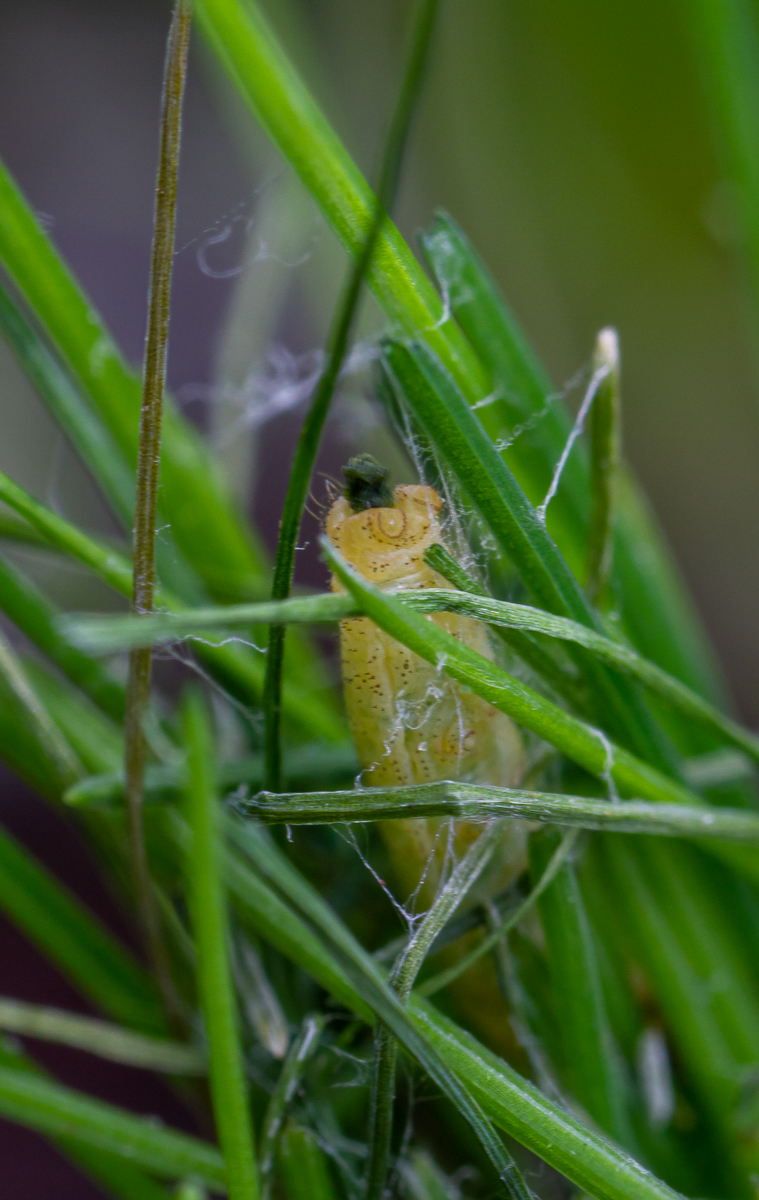
"After the second moult and shortly before the third moult, about seventy days old, it measures while resting about 9.5 mm. long. The general colouring is pale greyish-green, but some are of a decidedly ochreous hue; in all other respects they are precisely similar to the previous stage." - Frohawk (1924)
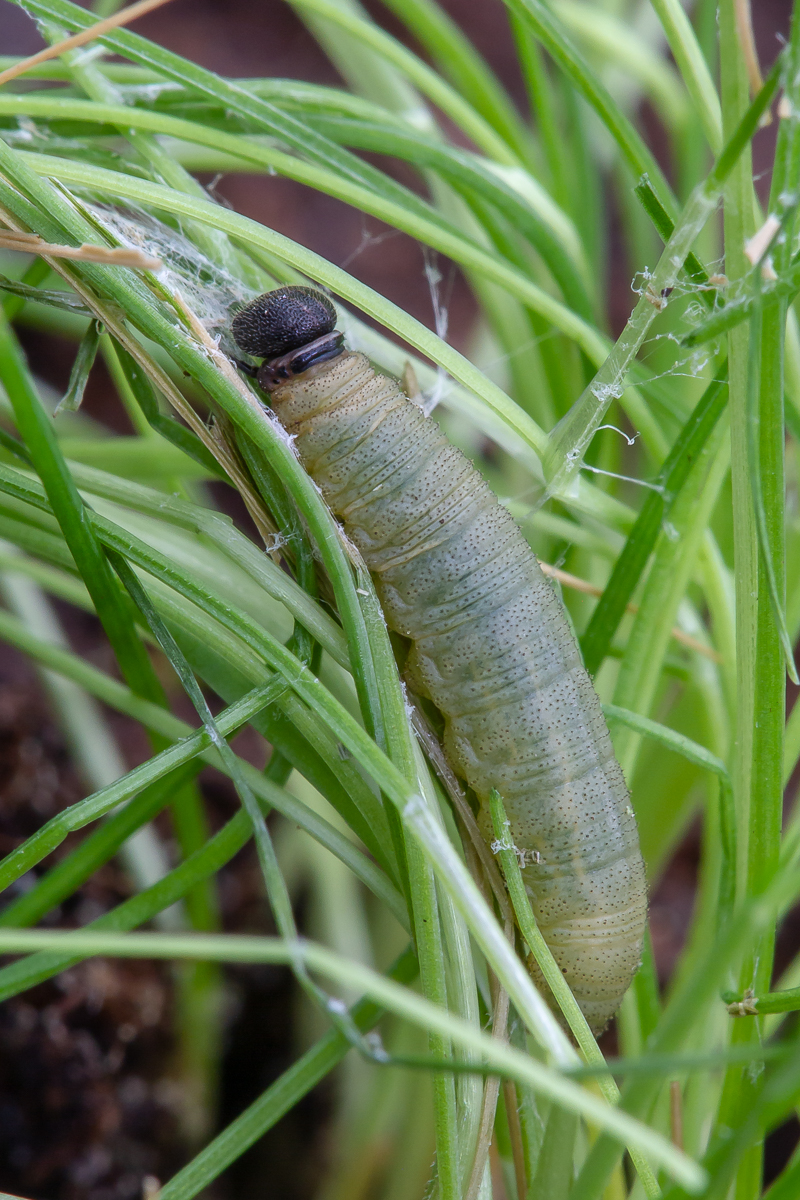
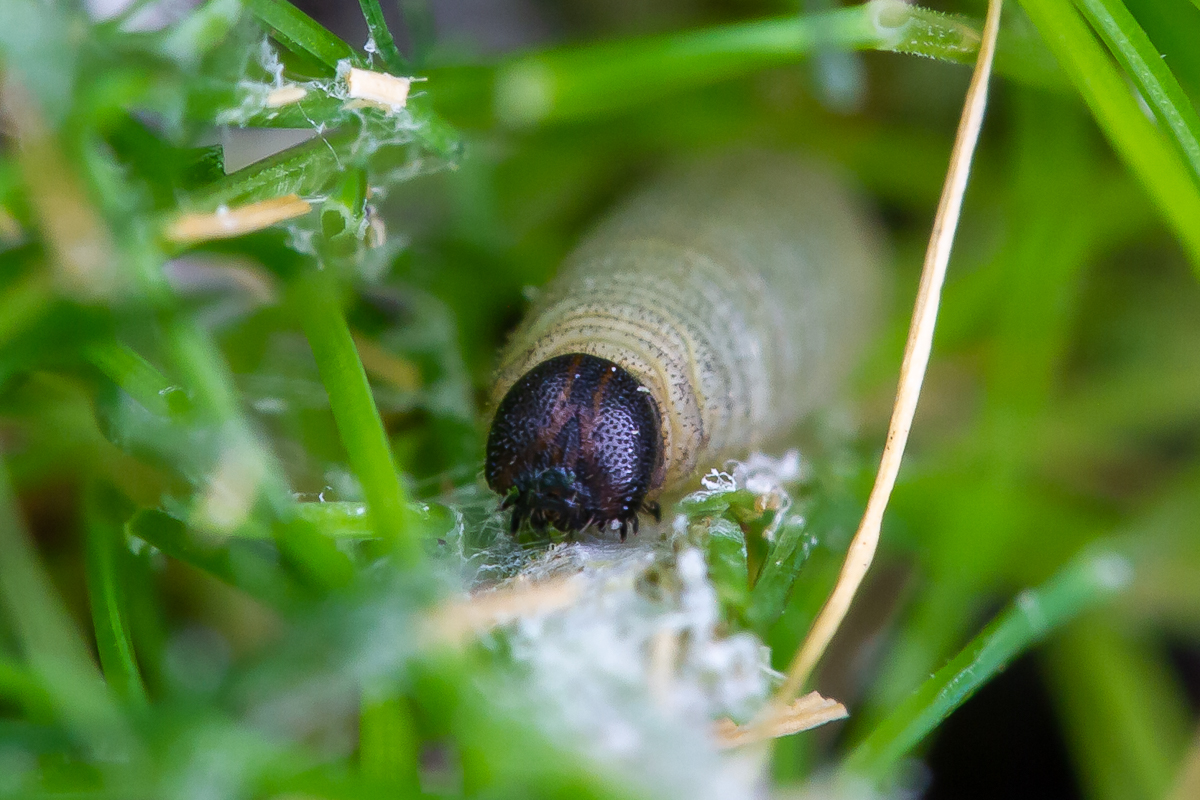
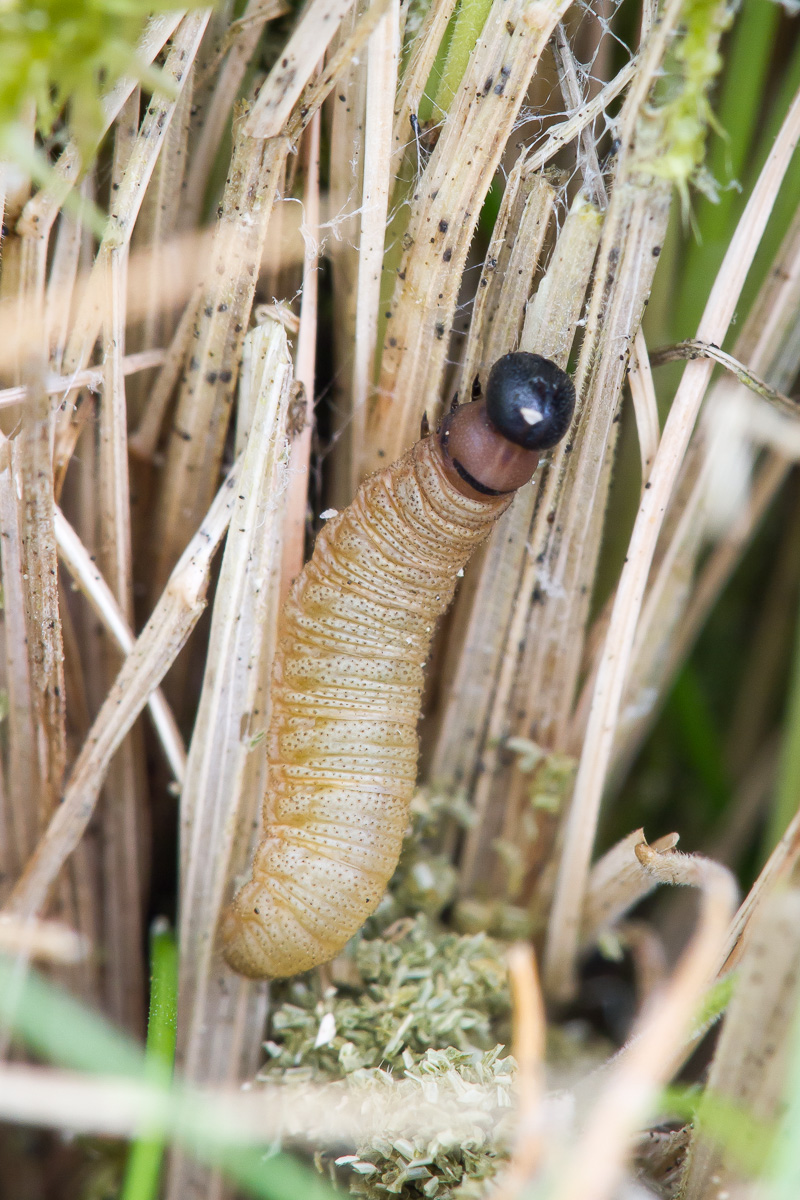
"After the third moult, and seventy-five days old, the whole of the colouring of the body is a dull olive-green, slightly paler on the ventral surface, including the claspers; the legs are black and shining; the head now exhibits two ochreous vertical parallel lines down the crown, and the clypeus forms an ochreous A marking; otherwise the form and structure of the larva is similar to the earlier stages." - Frohawk (1924)
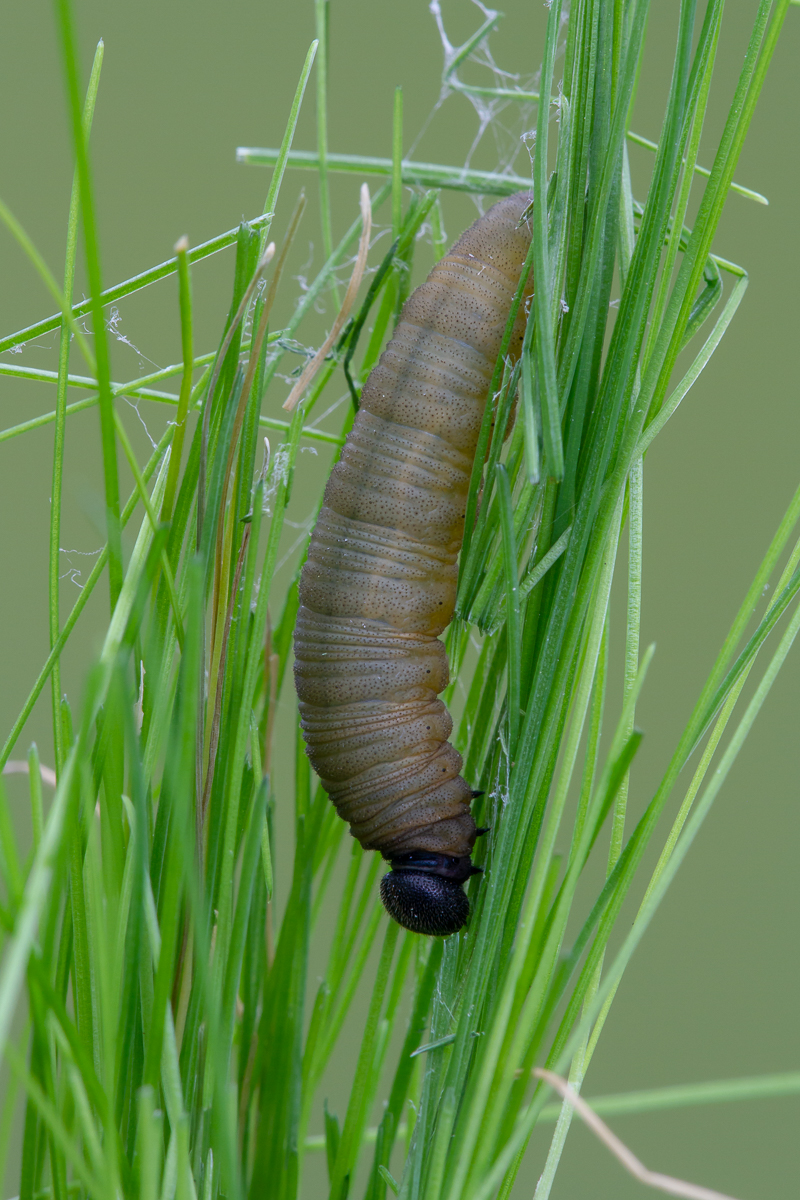
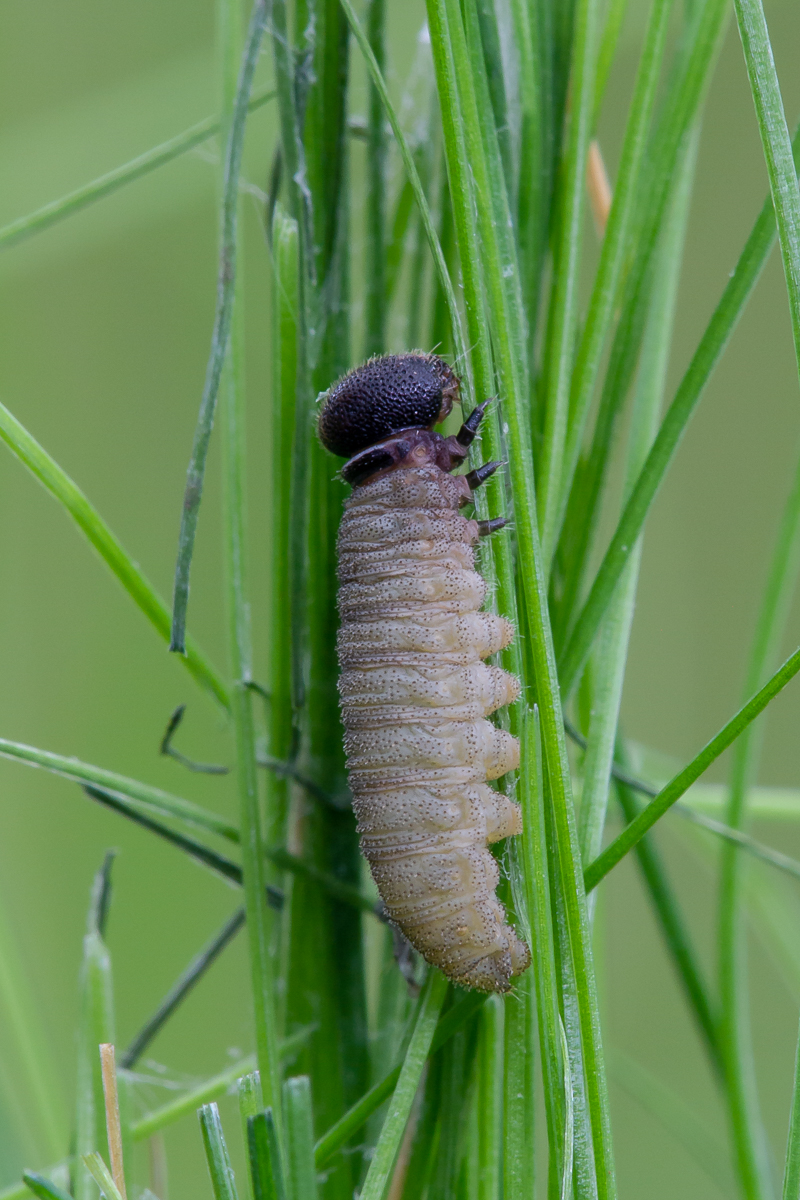
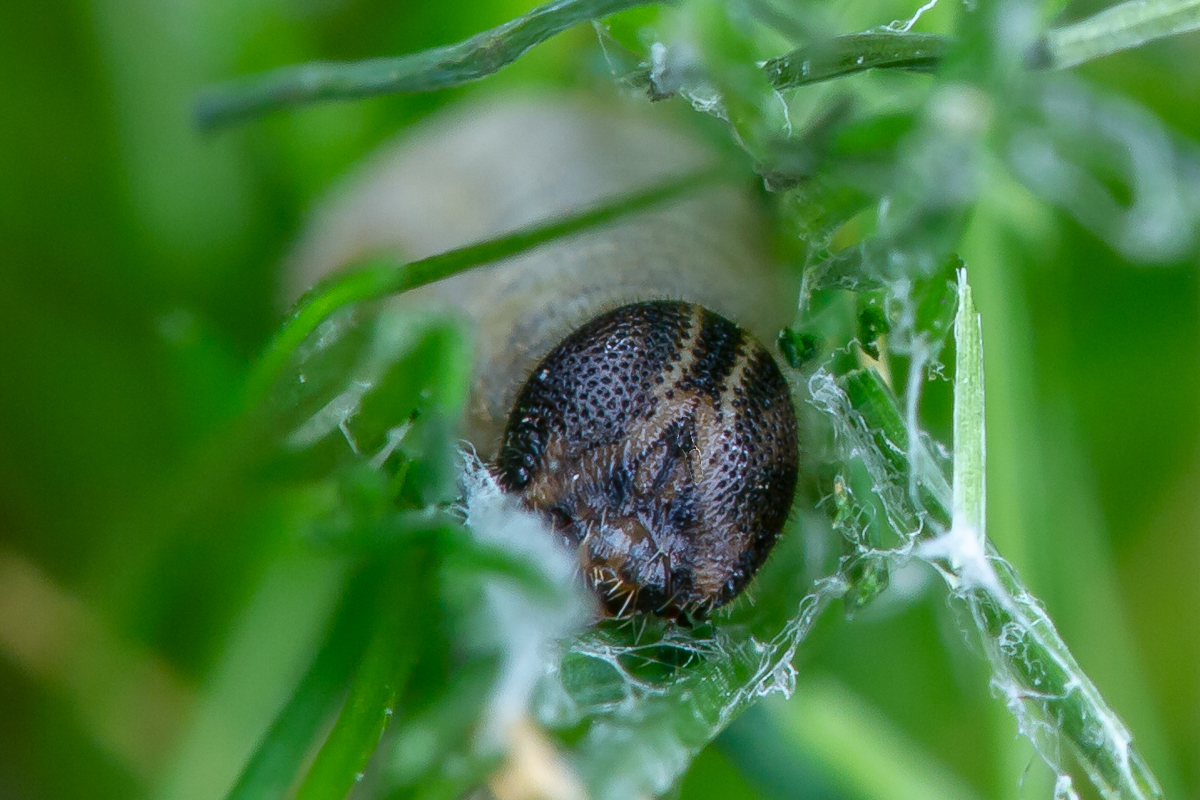
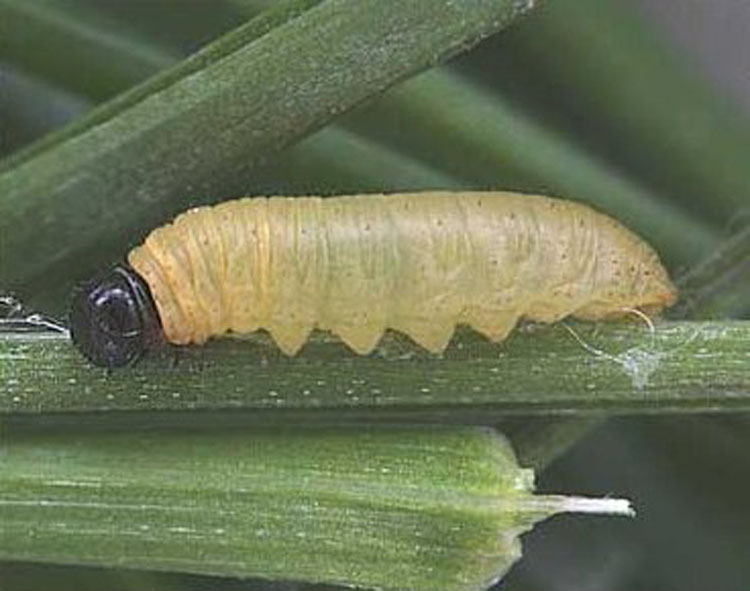
"After the fourth and last moult, fully grown, about 100 days old, it is 28.6 mm. in extreme length when crawling. The head is large and similar to previous stage in colour. The first segment is very small, elastic and retaining the black collar of former stages; the following segments gradually increase in size to the sixth, and taper from the ninth to twelfth. The entire surface is densely sprinkled with minute shining black warts, each emitting a tiny amber-coloured spine with a cleft knobbed apex; those on the ventral surface are simple spines and rather longer. The skin is also covered with fine regular granulations, which are dusky in colour and exceedingly minute. Besides these there are sprinkled over the whole surface very small lenticles, the largest being situated on the claspers, which have a shining, whitish, film-like surface stretched over the centre, and one on each segment below the spiracle, which (the latter) is conspicuous, black and shining. The tenth and eleventh segments have the anterior half of the ventral surface covered with a white, rough, granular, waxy substance. The anal comb consists of about fifteen or sixteen tines, which are all nearly uniform in length, not fan-shaped as in sylvanus. If disturbed while crawling the larva frequently wriggles backwards very rapidly, similarly to the wriggling habit possessed by many micro-larvae. Just before pupation the larva often crawls restlessly about, but in some instances it does not leave its place of feeding, and spins a strong, coarse network cocoon among the grass close to the ground, weaving the gnawed loose pieces of grass with the fine stems and blades, and therein pupates during the latter part of July." - Frohawk (1924)
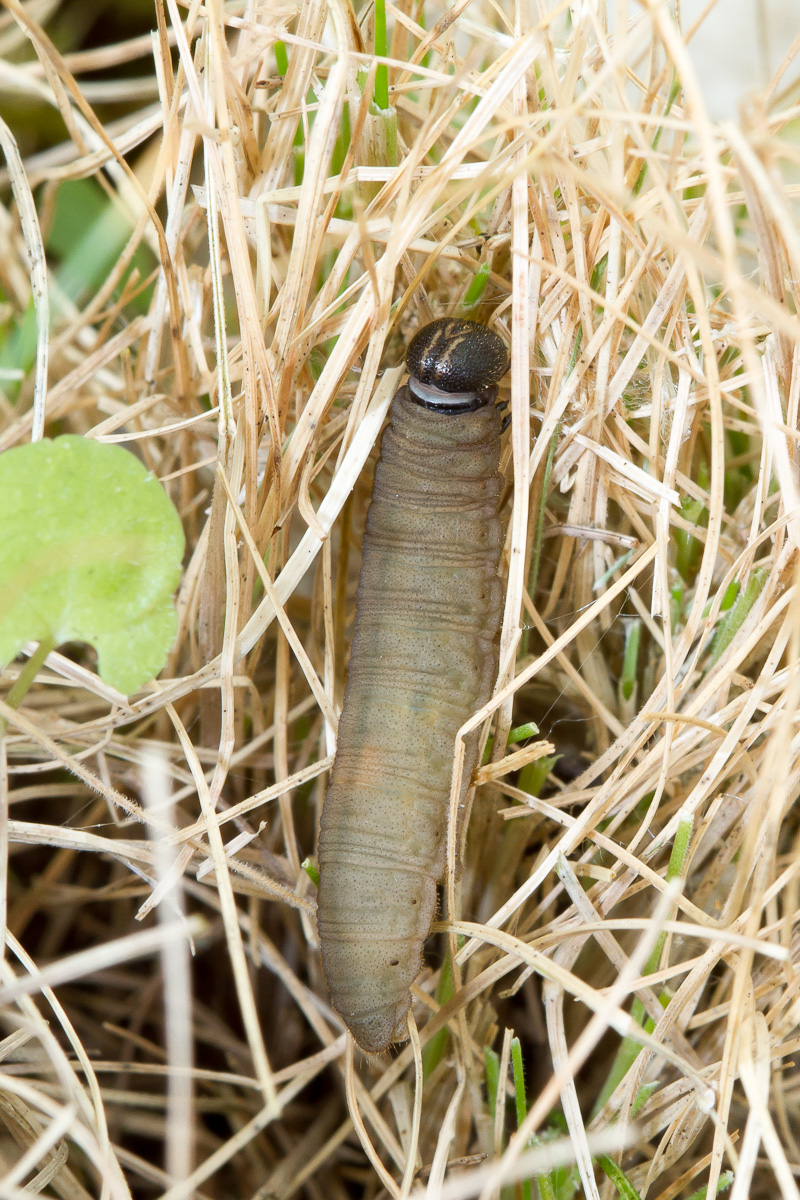
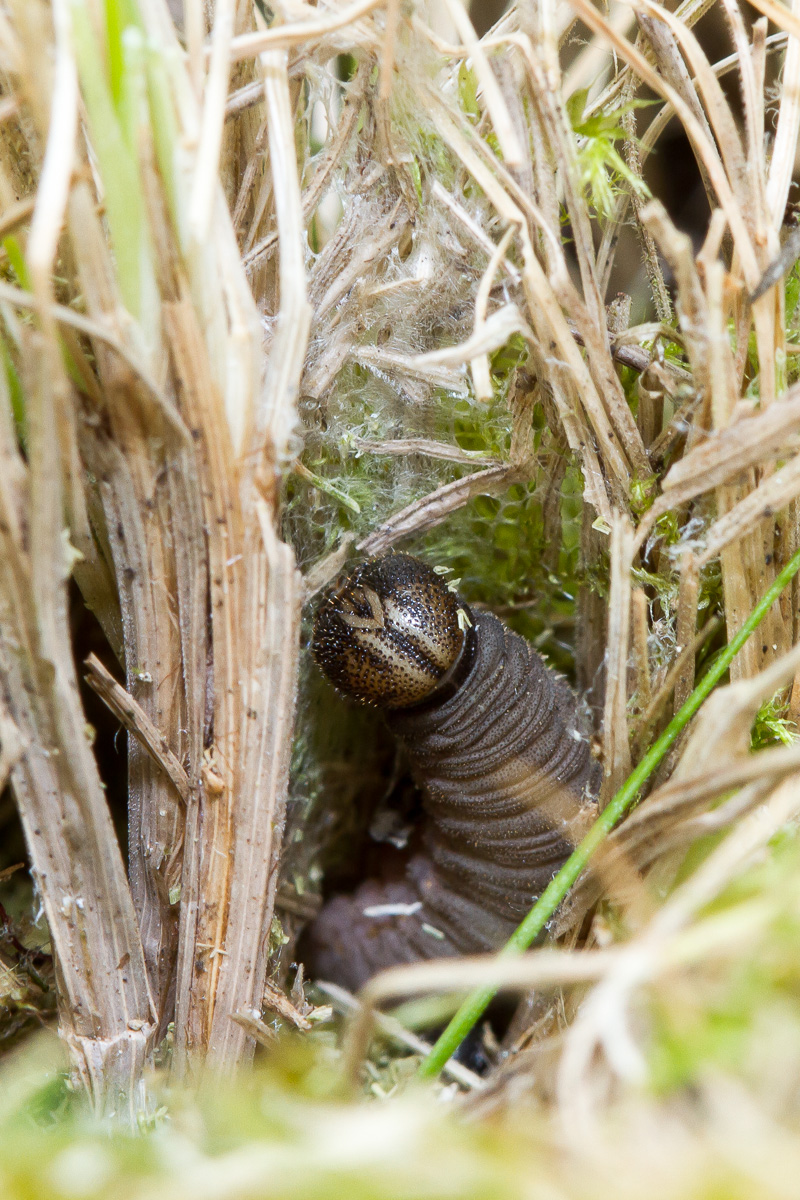
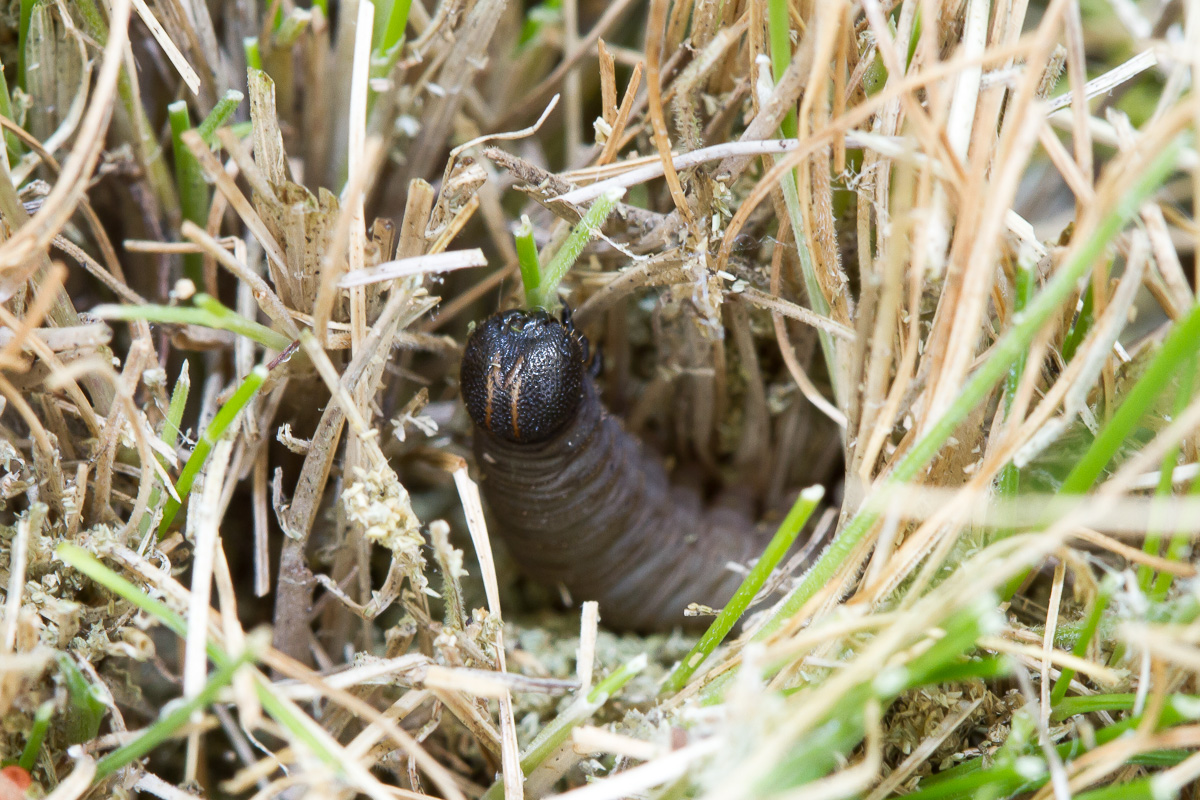
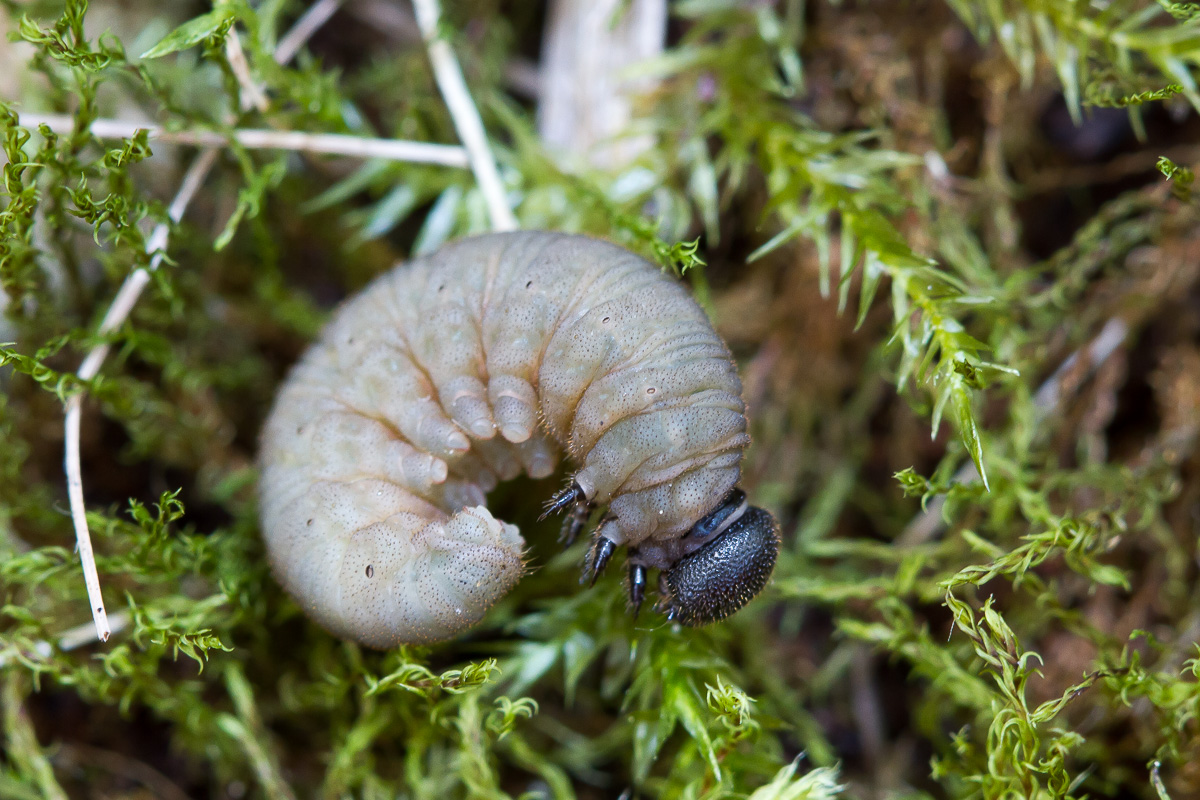
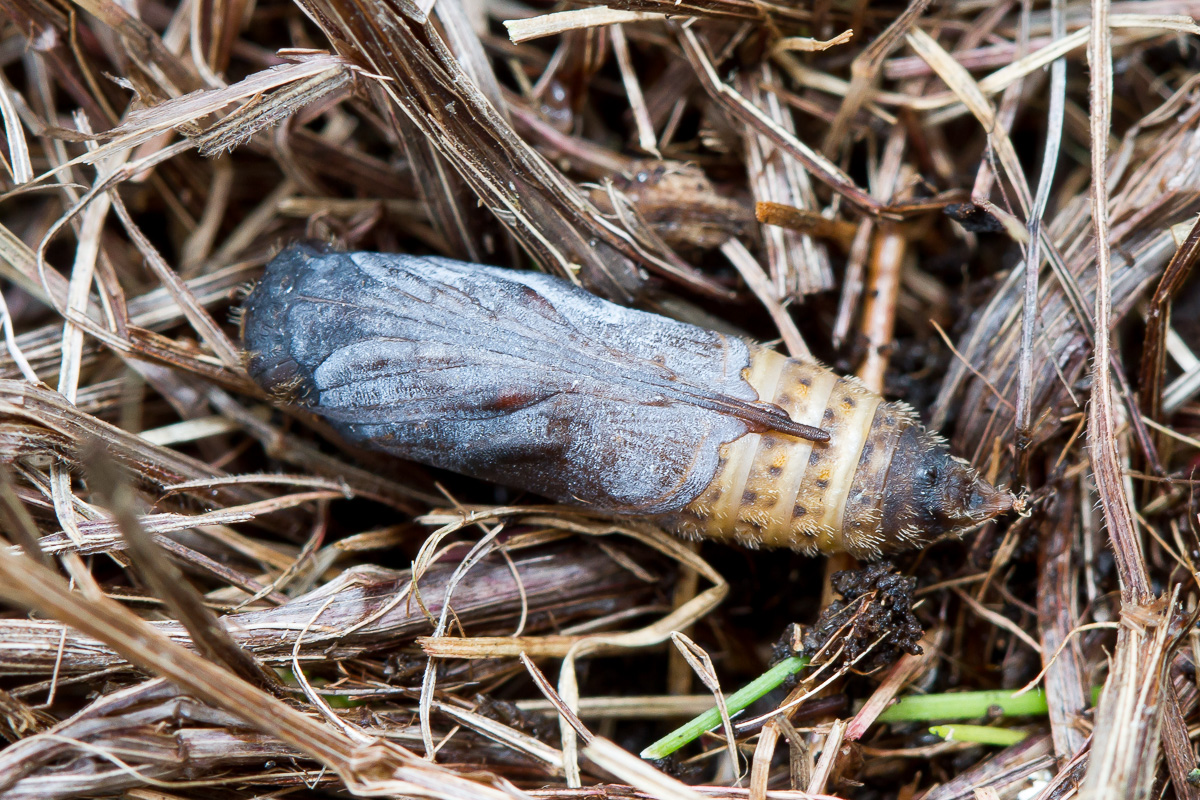
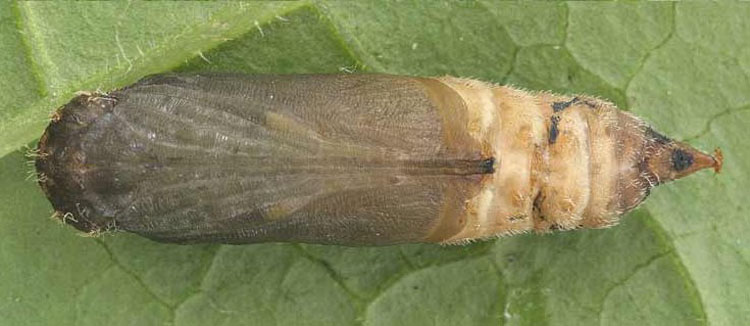
Before pupation, the larva spins a cocoon very close to the ground, in a grass tussock. This stage lasts around 2 weeks.
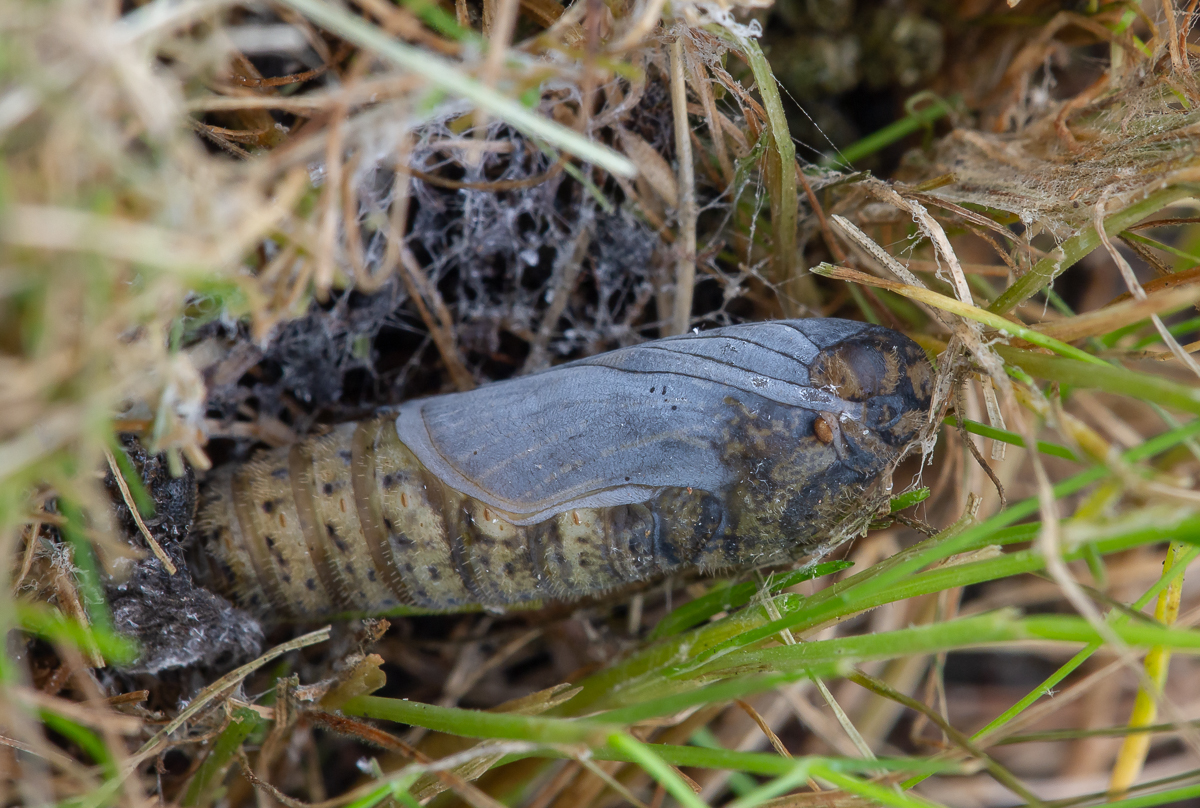
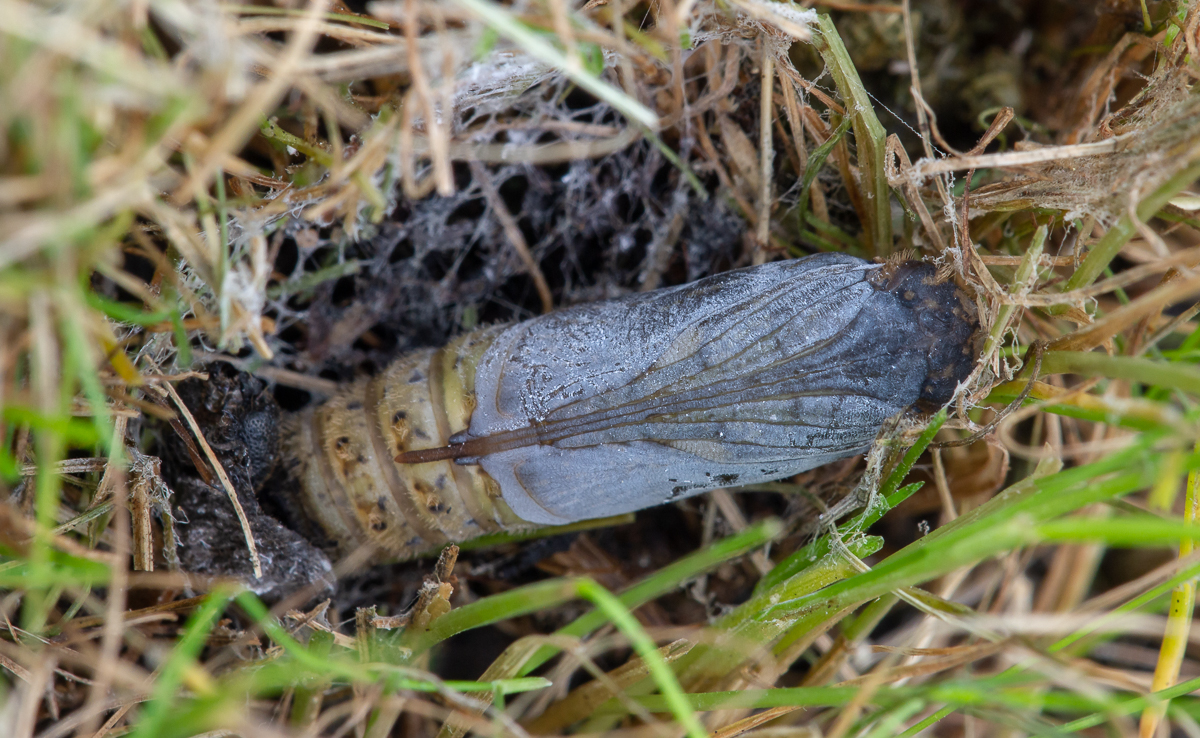
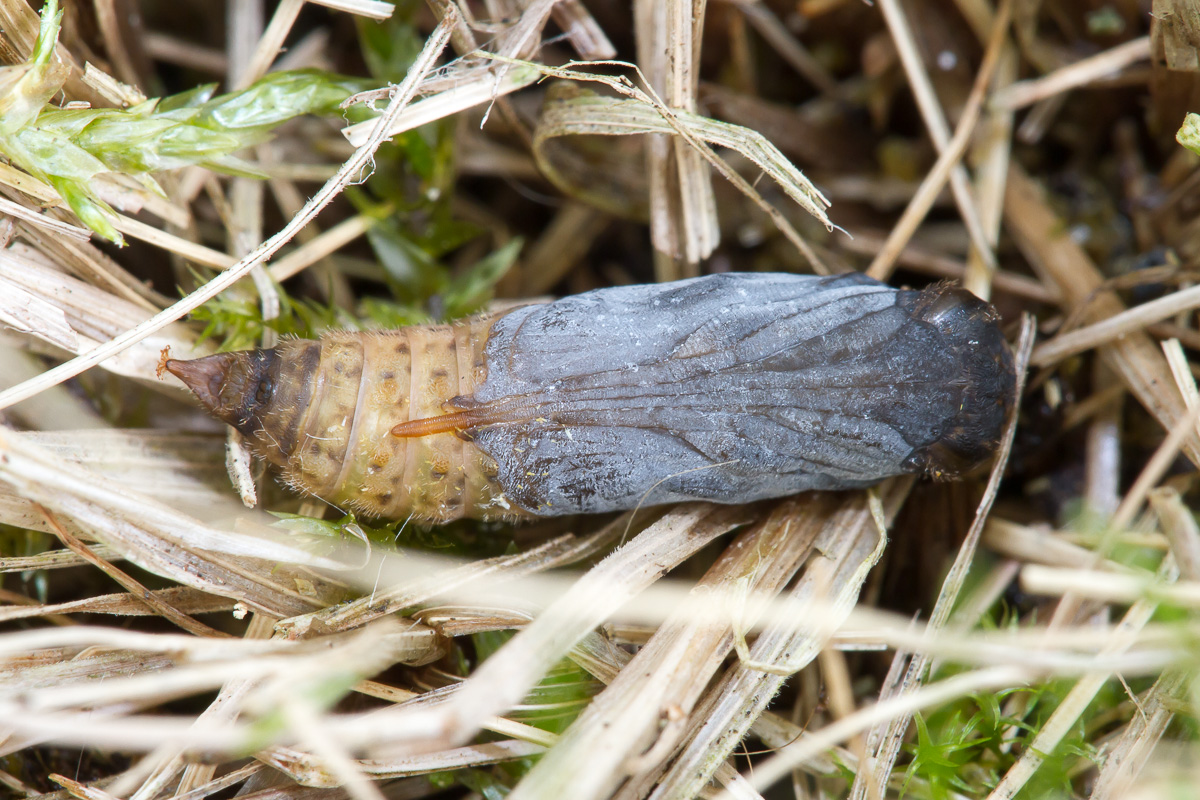
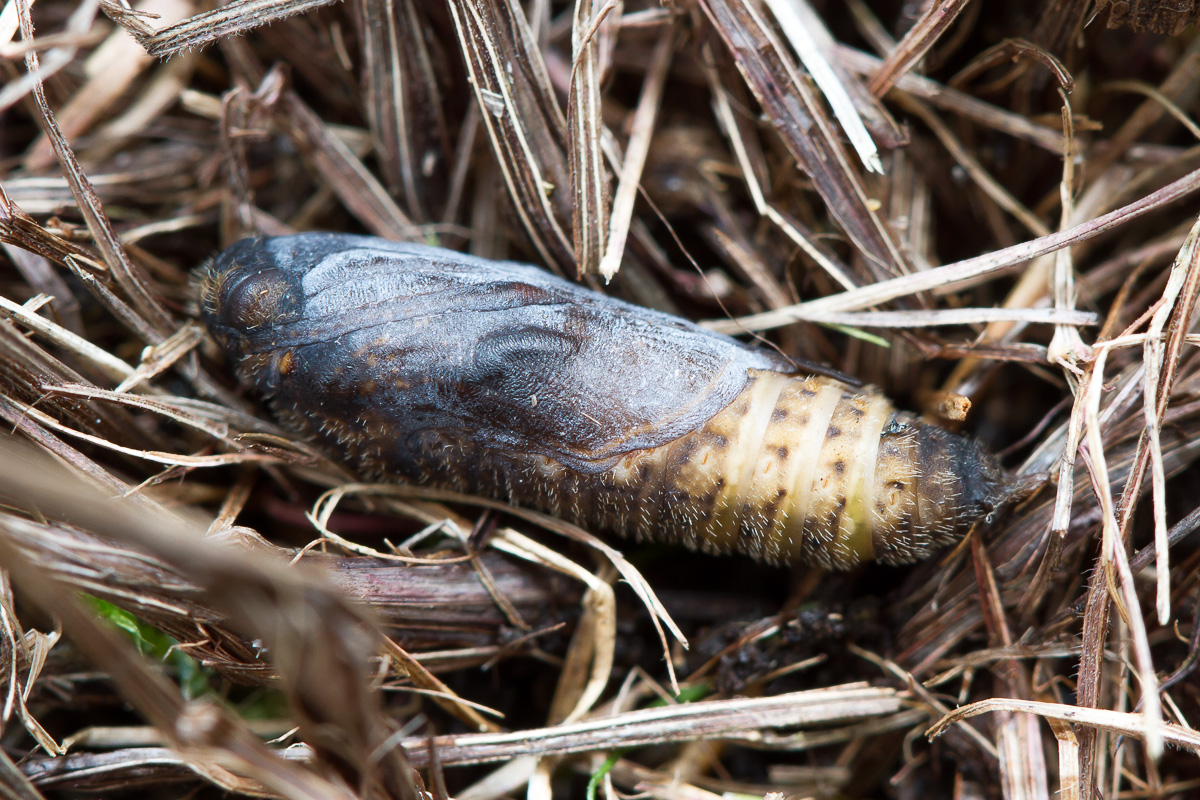
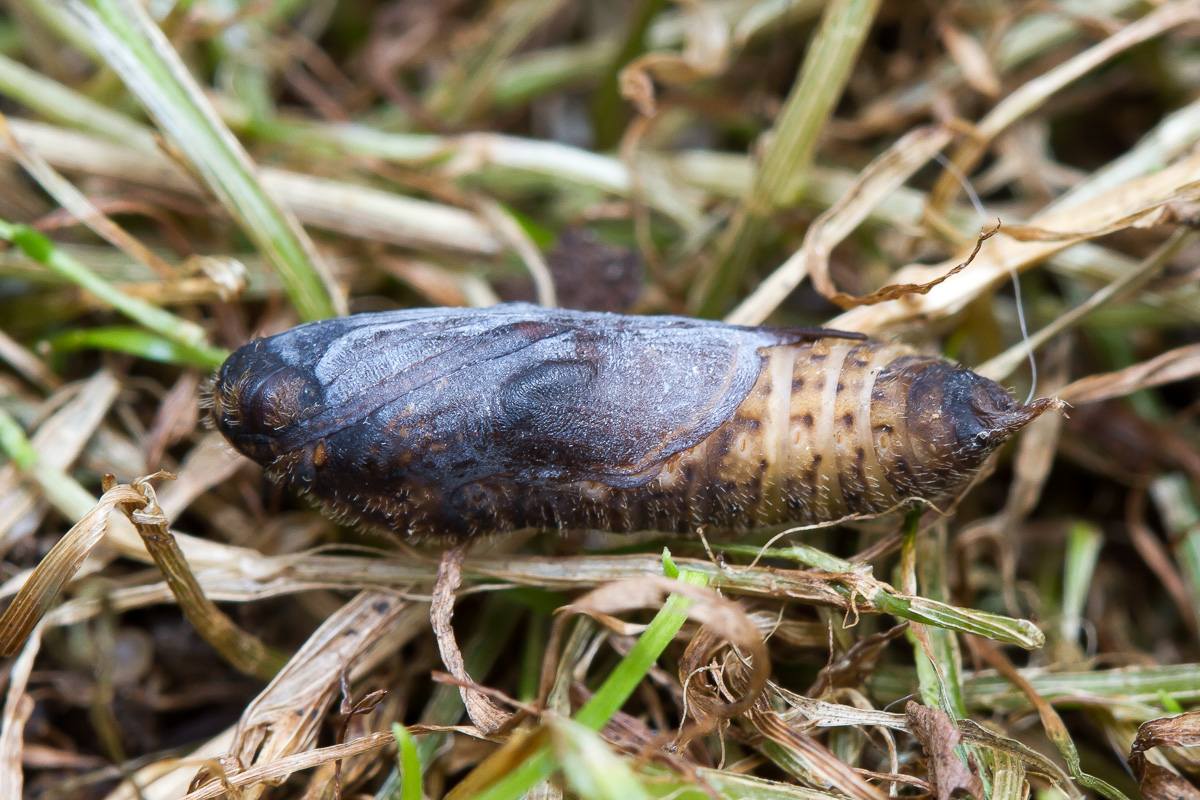
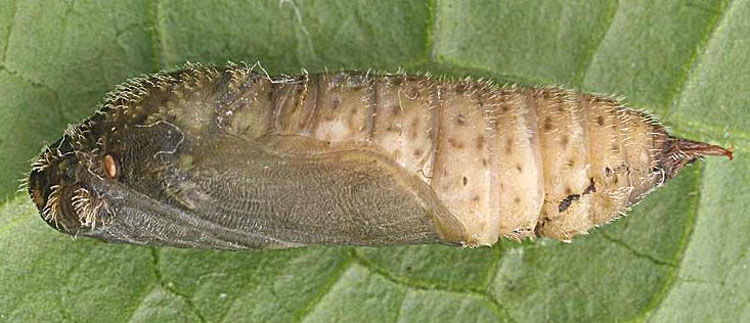
"The pupa measures 19 mm. long. The head is rounded; the thorax slightly swollen; the abdomen cylindrical and tapering, terminating in a long anal point, furnished at the extremity with an ample bunch of cremastral hooks, which are very securely anchored to a pad of silk spun for the purpose at the end of the cocoon. The head, thorax and abdomen are clothed in short stiff spines; below the spiracles they occur in dense tufts. Those on the head are remarkably formed, all the longer ones terminate in a hook; these are in patches, the largest patch covering the eye. These hooks are also fastened into the cocoon, so that the pupa is securely anchored "fore and aft." At the base of the wing is a peculiar raised disc. The whole surface of the wings, antenna and legs is covered with a lilac-grey bloom, which is very easily detached; it also covers the cocoon like whitish powder, and small flakes are scattered over the pupa, apparently of the same waxy substance as that on the larva. The head and thorax are pale olive mottled with blackish, the abdomen olive, spotted with dark olive and inclining to yellow on the ventral surface; below each spiracle is a short longitudinal mark; the spiracles are amber-brown. Such is the description of the female pupa. The male differs by having a well defined elongated dusky ridge covering the androconial mark on the fore wing. The first one, a fine female, emerged on August 3rd, 1901. All its stages much more resemble those of a moth than a butterfly." - Frohawk (1924)
The following links provide additional information on this butterfly.