UK Butterflies
Building a Community of Responsible Butterfly Enthusiasts in Britain & Ireland
Building a Community of Responsible Butterfly Enthusiasts in Britain & Ireland
Wingspan
♂ 42 - 48 mm, ♀ 46 - 52 mm
Checklist Number
59.009
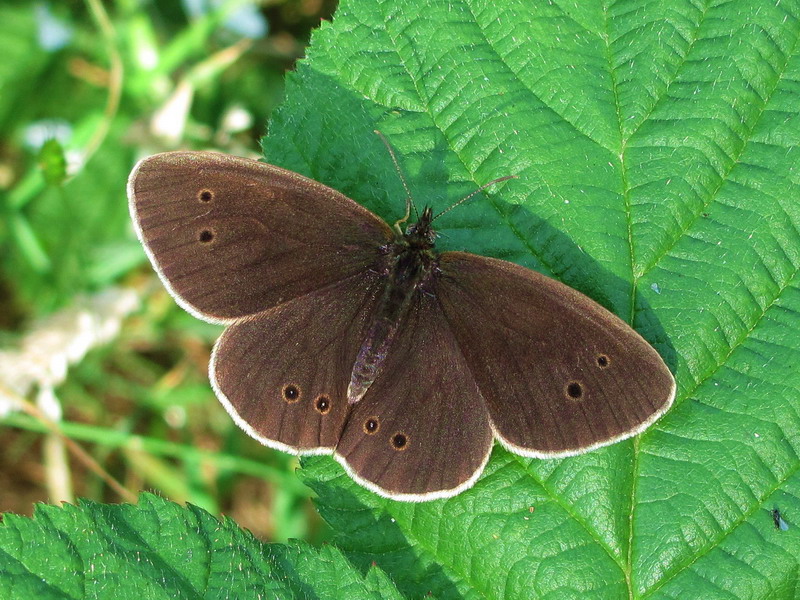

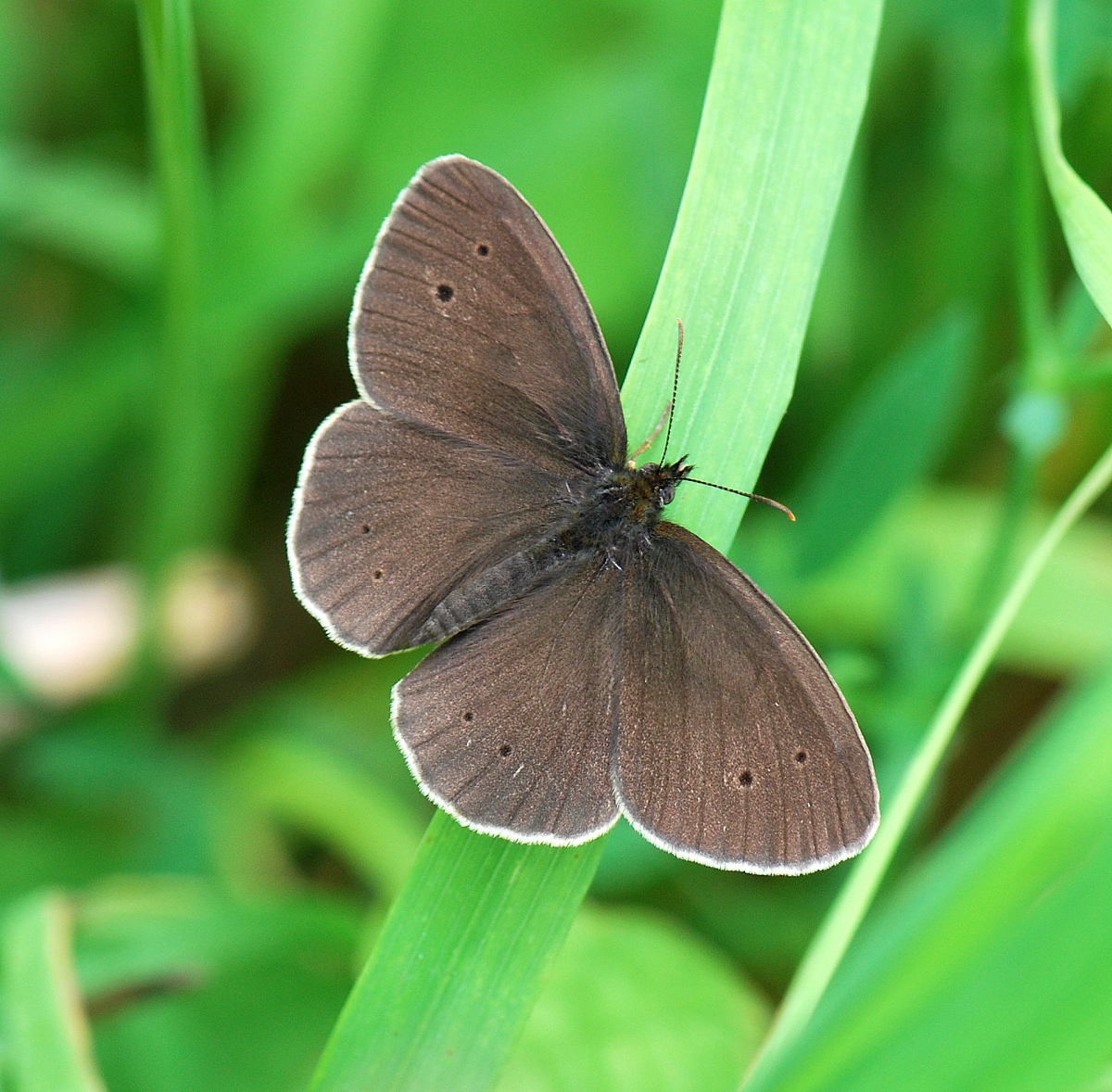
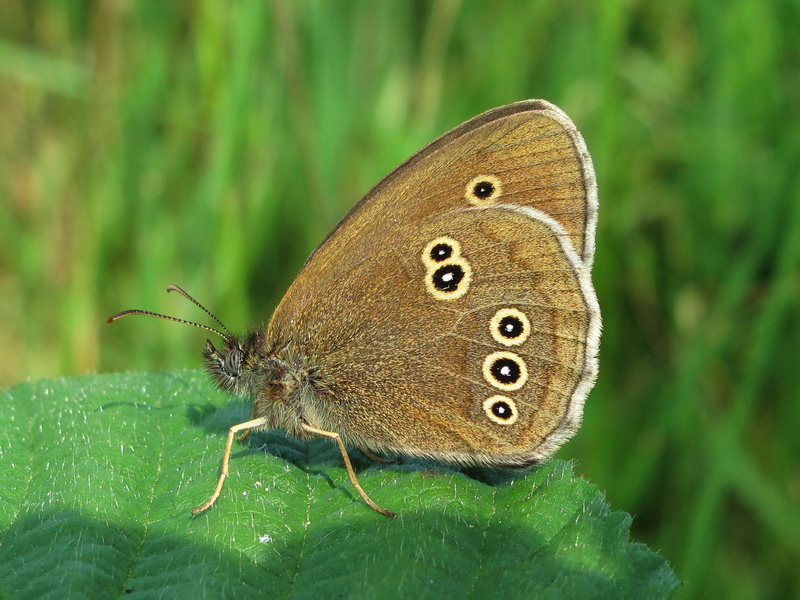
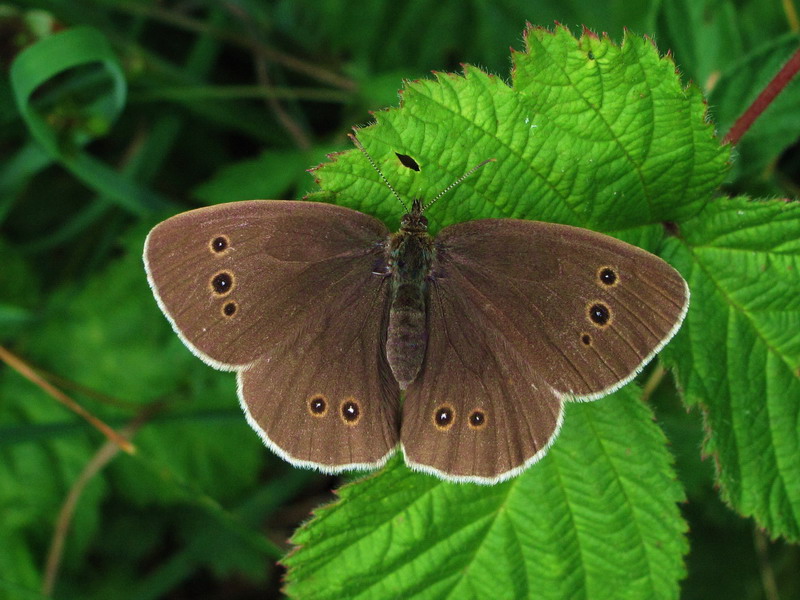
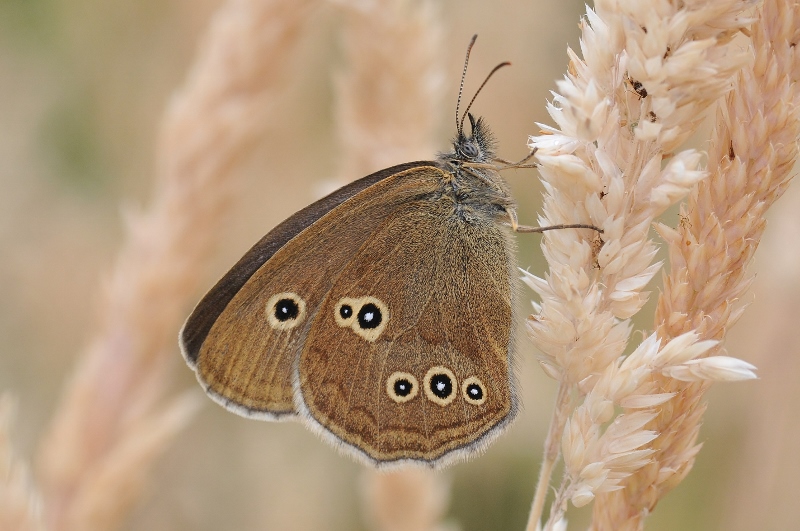
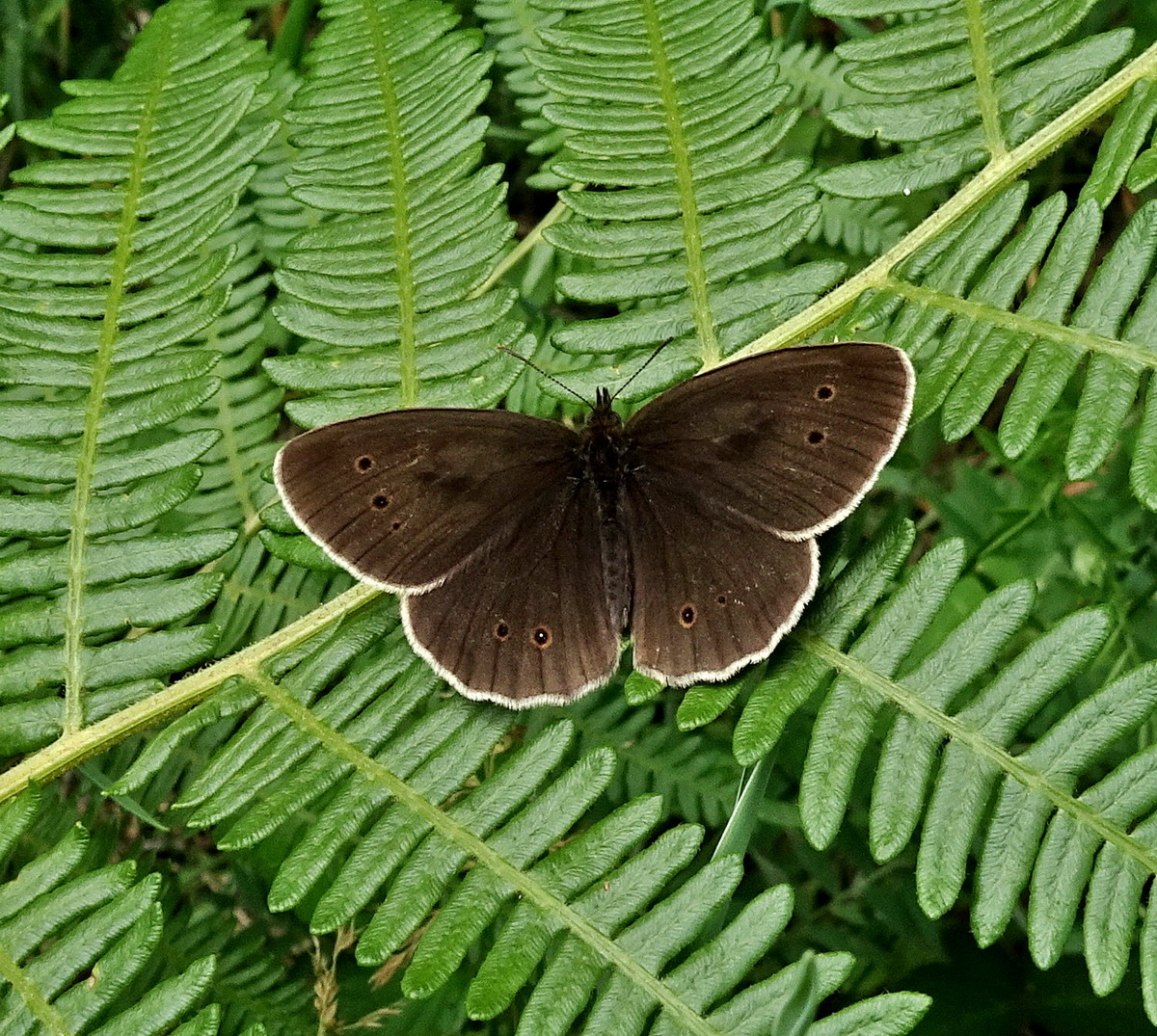
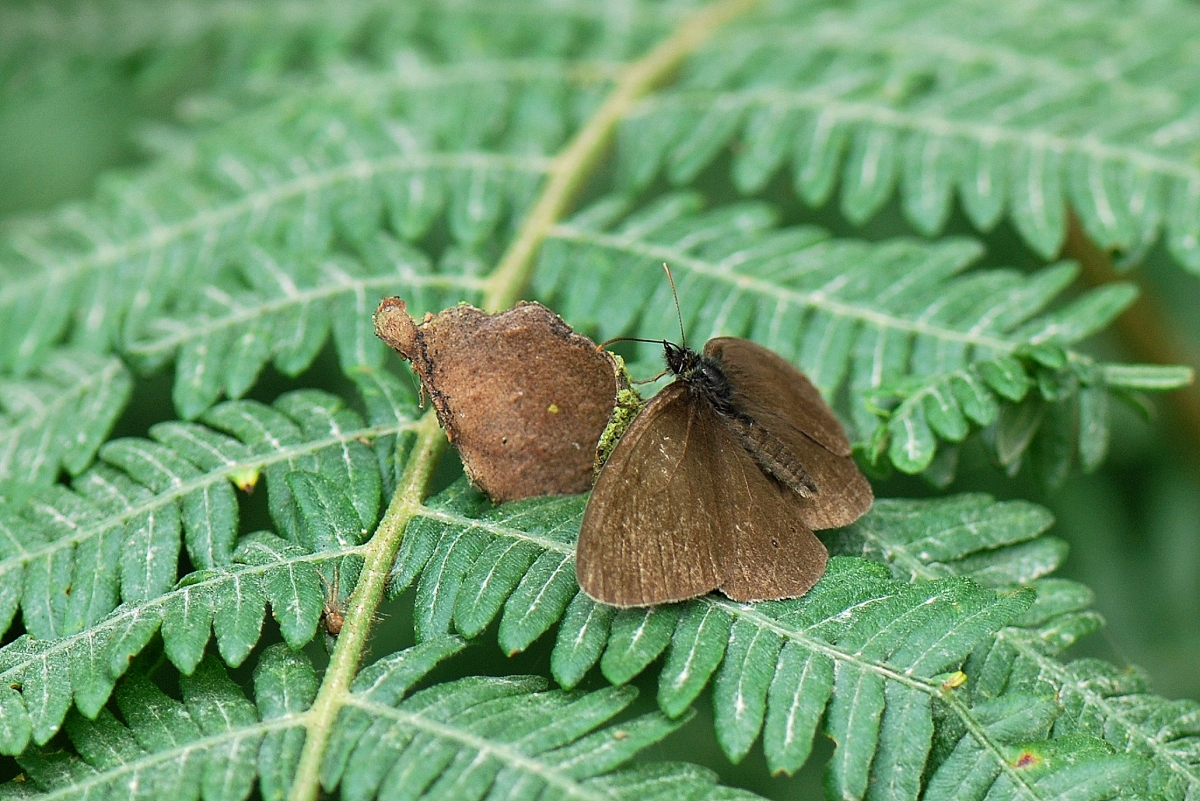
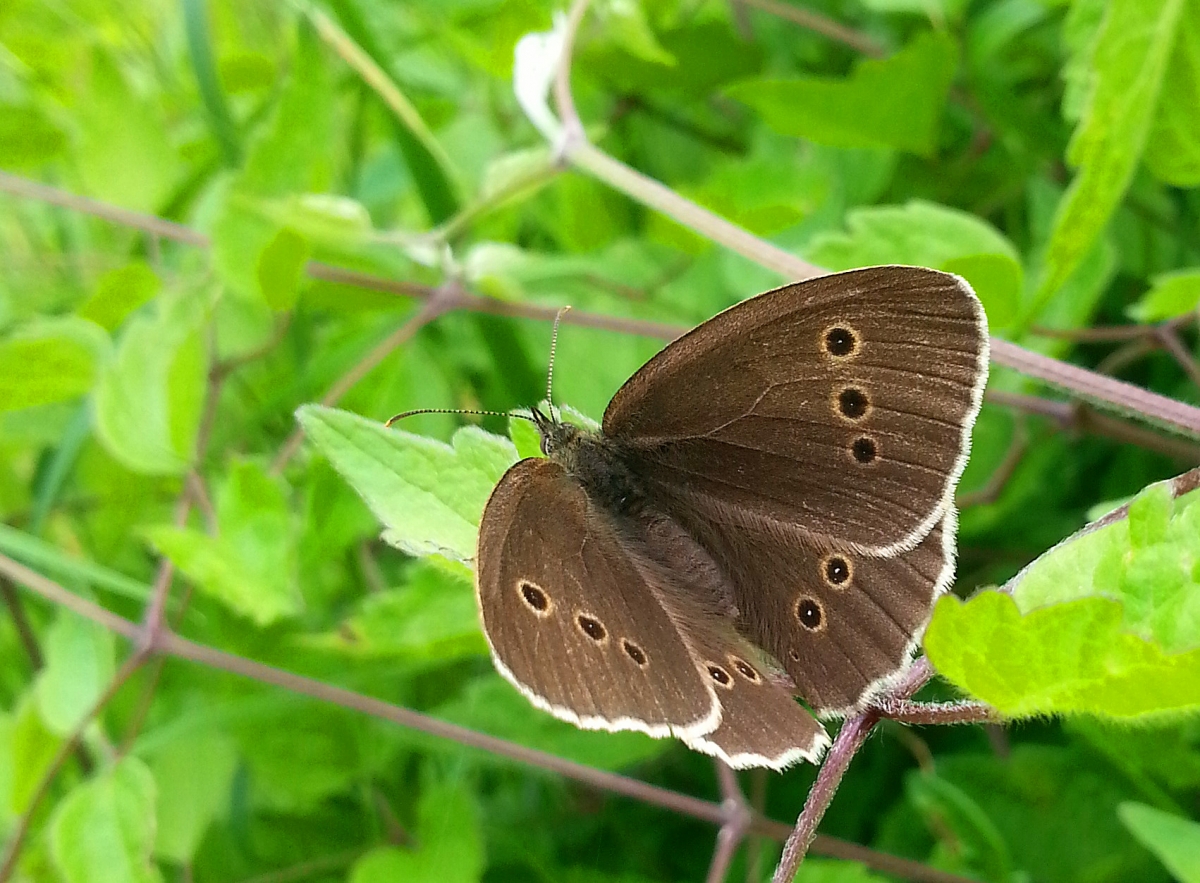
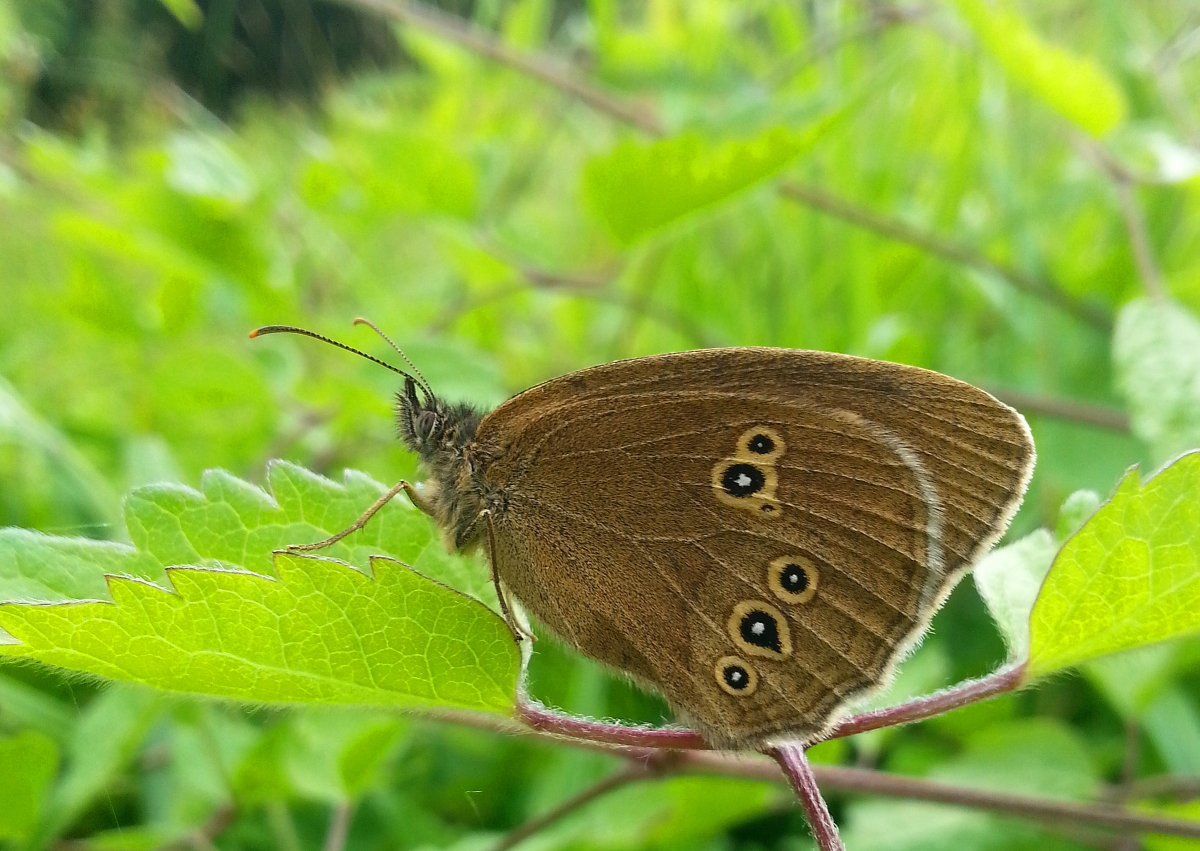
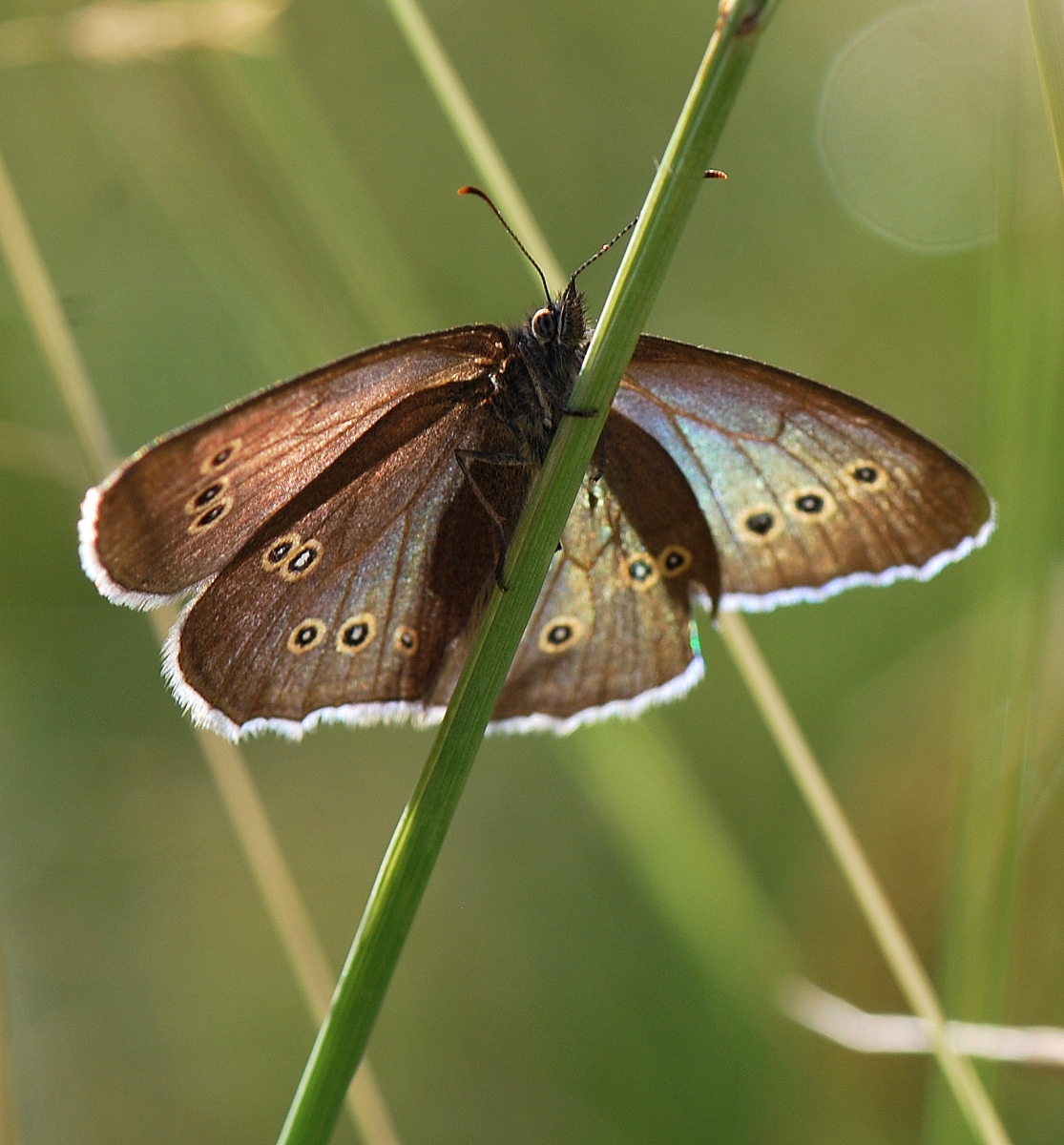
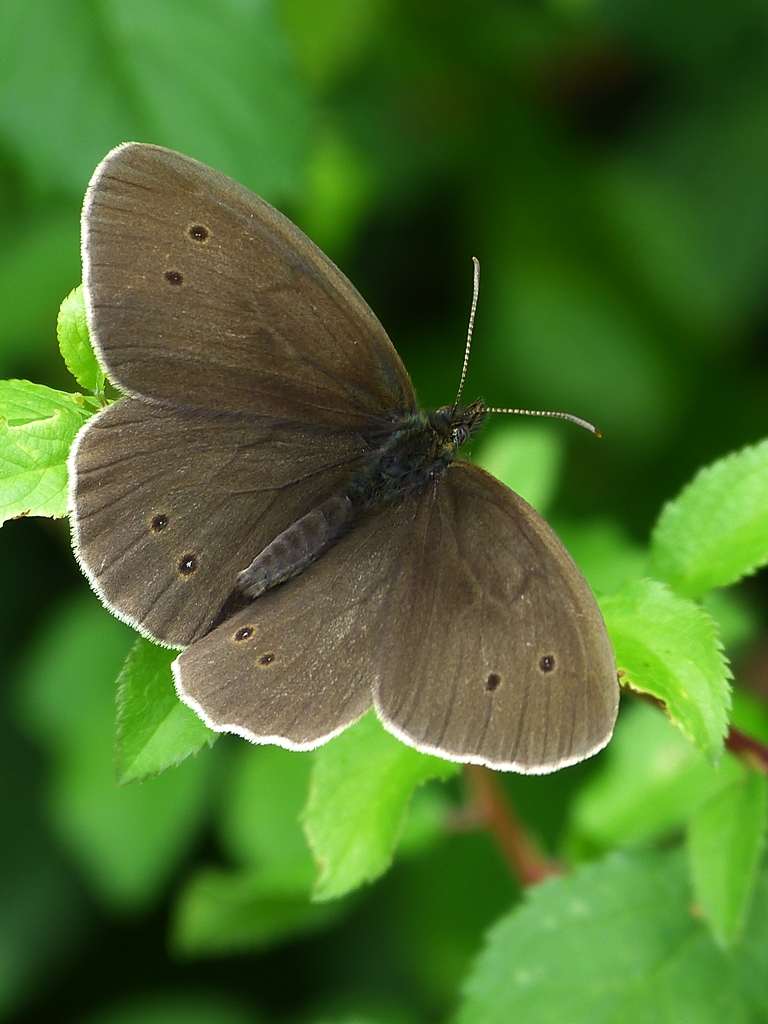
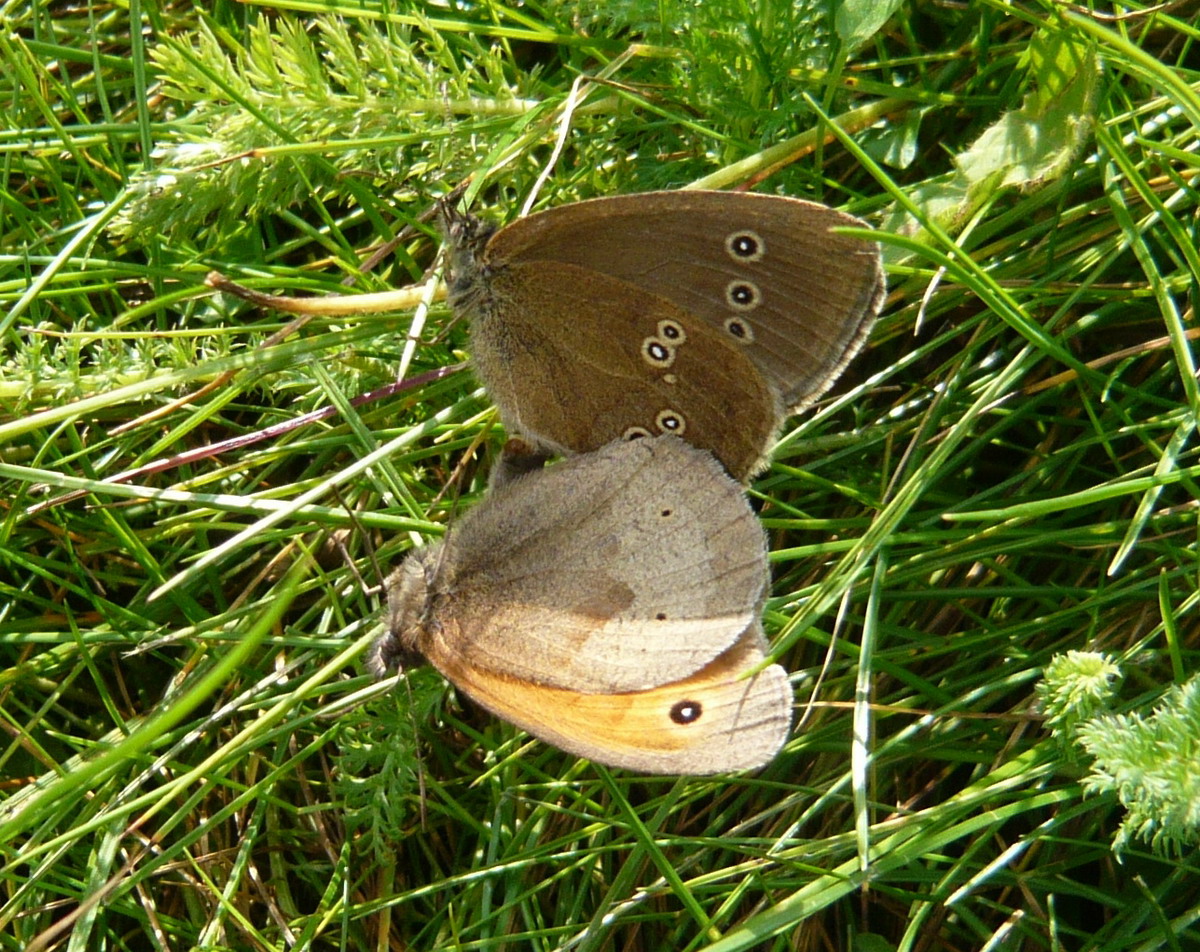
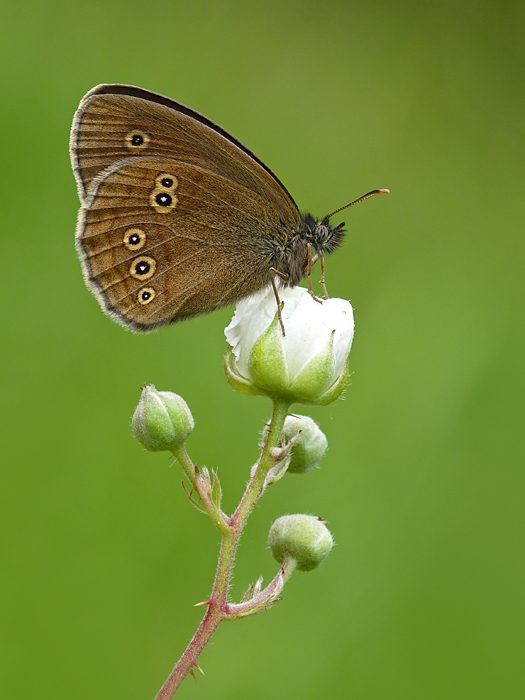
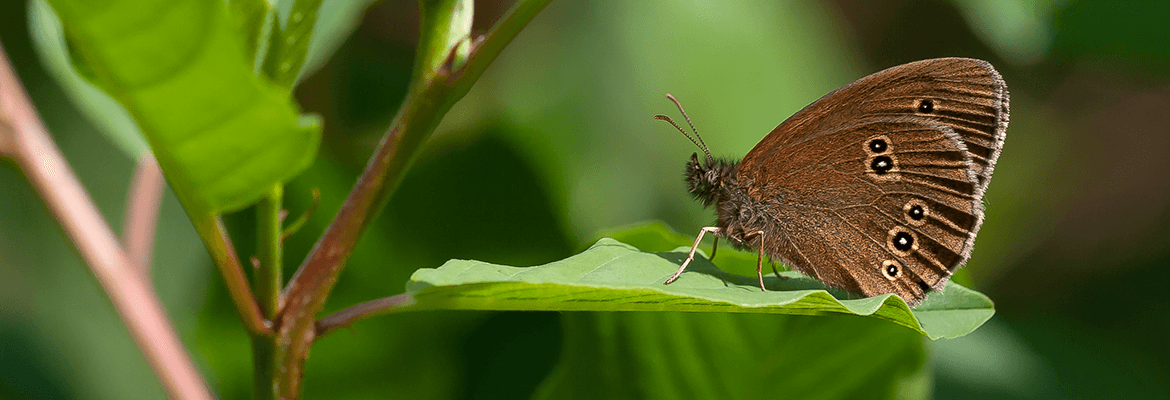
This is a relatively-common butterfly that is unmistakable when seen at rest - the rings on the hindwings giving this butterfly its common name. The uppersides are a uniform chocolate brown that distinguish this butterfly from the closely-related Meadow Brown. Despite this uniformity, a newly-emerged adult is a surprisingly beautiful insect, the velvety wings providing a striking contrast with the delicate white fringes found on the wing edges. The dark colouring also allows this butterfly to quickly warm up - this butterfly being one of the few that flies on overcast days.
Variation in this butterfly is primarily focused on the rings on the hindwings, the lanceolata aberration being particularly striking, where the rings are elongated to form teardrops. Other aberrations occur where the rings are greatly reduced or completely absent. Huggins (1959) also describes a form in Kerry, Ireland, that is of normal size until 600 feet, when it starts to be replaced by a dwarf form that, at 1,000 feet, takes over completely.
This butterfly can be found throughout most of the British Isles, south of a line between the South Ebudes in the west and Banffshire in the east. It is also absent from the western parts of northern England, north-west of the Midlands, the Isle of Man and the Channel Islands. This butterfly forms discrete colonies where numbers vary from a few dozen to several thousand.
| Family: | Nymphalidae | Rafinesque, 1815 |
| Subfamily: | Satyrinae | Boisduval, 1833 |
| Tribe: | Maniolini | Grote, 1897 |
| Genus: | Aphantopus | Wallengren, 1853 |
| Subgenus: | ||
| Species: | hyperantus | (Linnaeus, 1758) |
Description to be completed.
The distribution data (2000-2009) has been made available through the generosity of Butterfly Conservation and any subspecies distribution is taken from Riley (2007). Click here to see the distribution of this species together with site information overlaid.
A variety of habitats is used, although sites characterised as being sheltered and damp are preferred, such as woodland clearings, woodland edges and rides, meadows, hedgerows, road verges and country lanes, where the full heat from the summer sun can be avoided and where the foodplant is lush. The butterfly is not typically found in open areas, such as grassland or heathland.
This is one of the few species that is doing well, with evidence of increases in both distribution and population. It is not, therefore, a priority species for conservation efforts.
The table below shows the occurrence (distribution) and abundance (population) trends, using information from The State of the UK's Butterflies 2015 (Fox, 2015). Any UK BAP status is taken from the UK Biodiversity Action Plan (UK BAP) (2007 review).
1976-2014 (%) | 1976-2014 (%) | 2005-2014 (%) | 2005-2014 (%) |  +63 +63 | +381 |  +21 +21 | +72 |
|---|
There is one generation each year, with adults emerging in the second half of June, peaking in mid-July, with a few individuals continuing into August. The flight period is relatively-short when compared with its close relatives.

Male and female are almost identical in appearance, although it is just possible to make out the feintest of sex brands on the forewings of the male, which contains special scent scales used in courtship. Males adopt an exclusive strategy of patrolling for mates and are often seen in ones and twos fluttering among the grasses that typify their habitat.
A mated female lays her eggs in a somewhat-chaotic fashion, typically perched on a grass stem and ejecting a single egg at random, often into the air, causing it to land in the vegetation. Both sexes take nectar from a variety of sources, Bramble and Thistle being particular favourites.
Adults feed primarily on brambles (Rubus spp.). Common Fleabane (Pulicaria dysenterica), Hemp-agrimony (Eupatorium cannabinum), Kidney Vetch (Anthyllis vulneraria), ragworts (Jacobaea spp.), thistles (Carduus spp. and Cirsium spp.), Wild Marjoram (Origanum vulgare) and Wild Privet (Ligustrum vulgare) are also used.
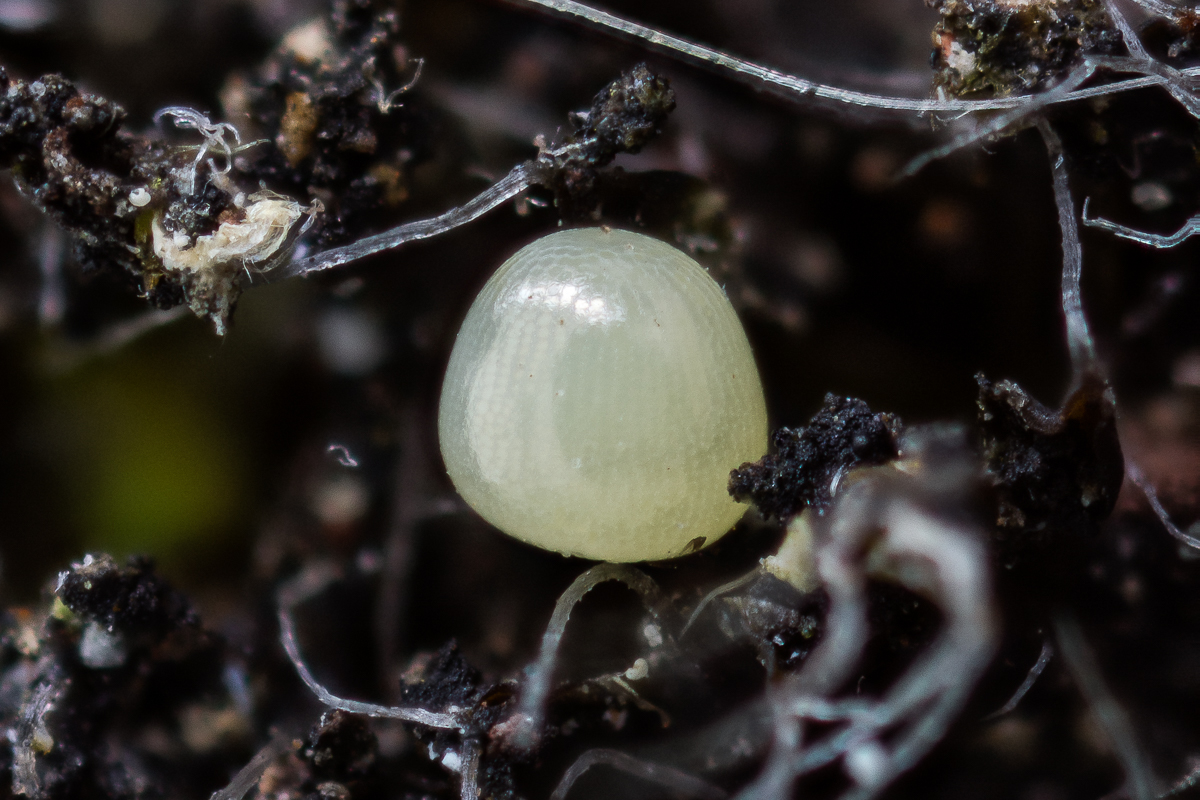
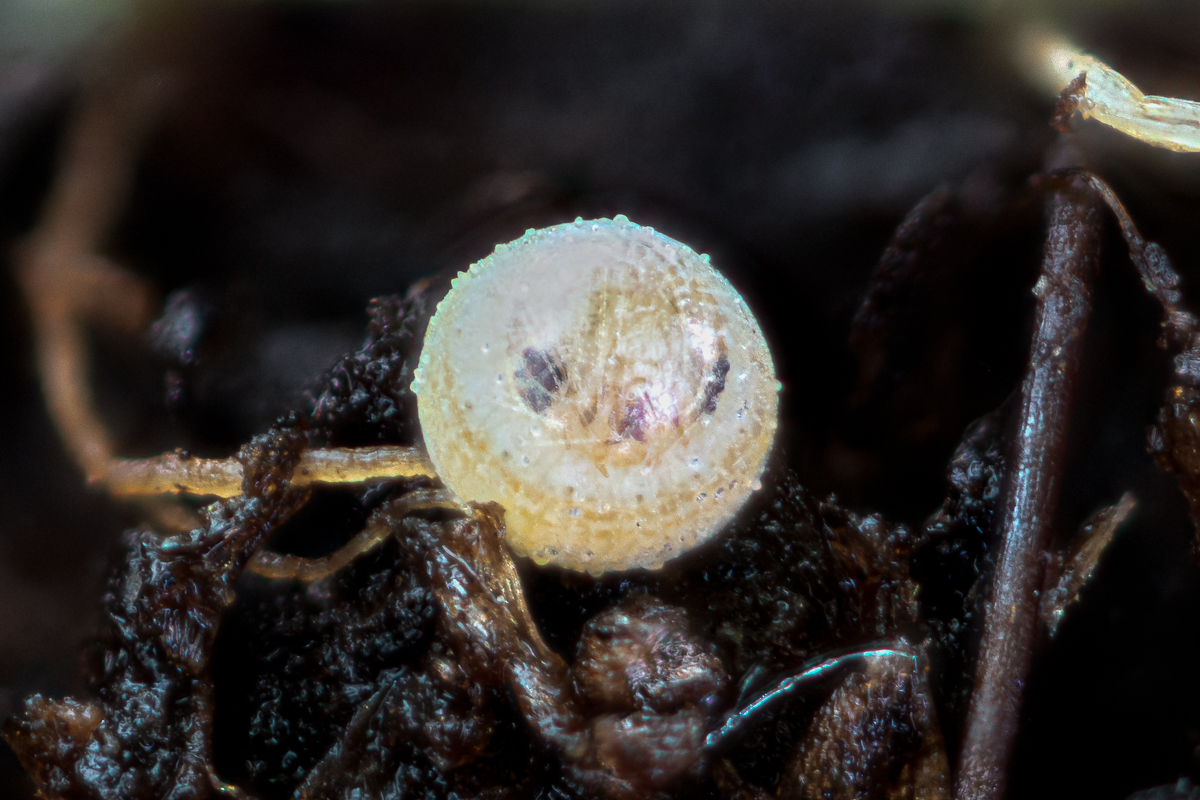
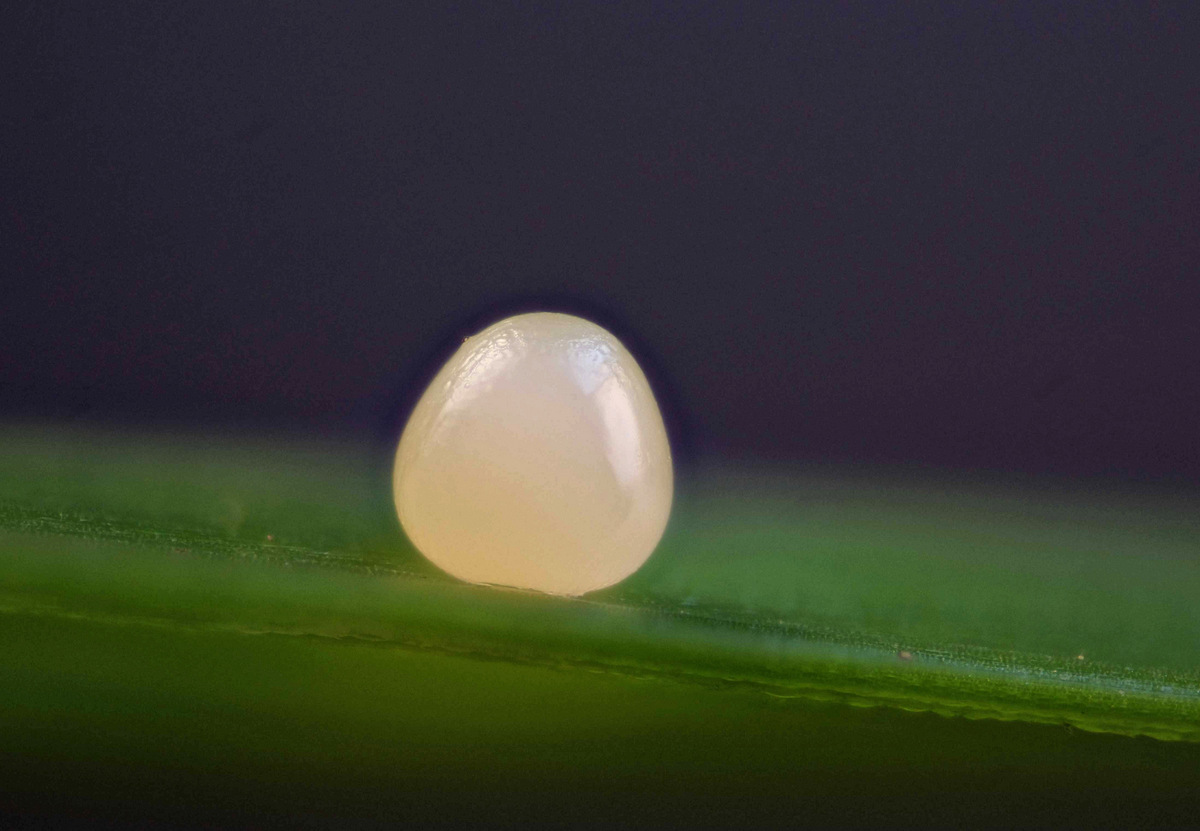
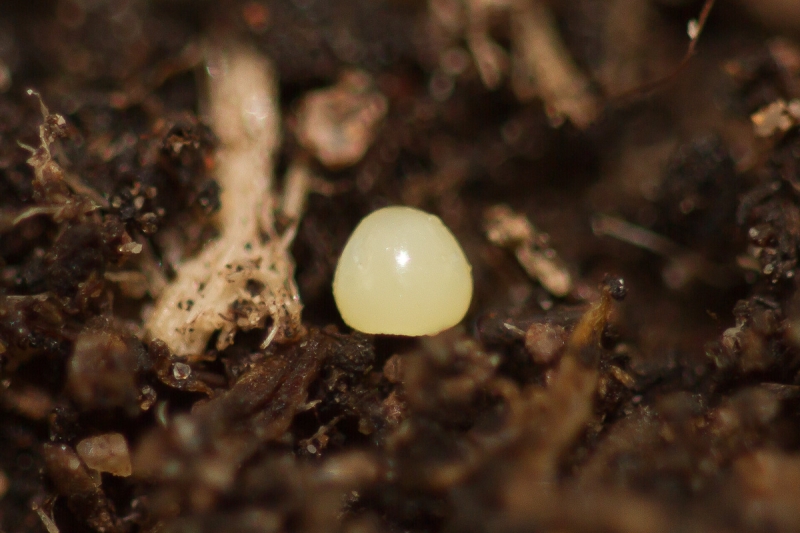
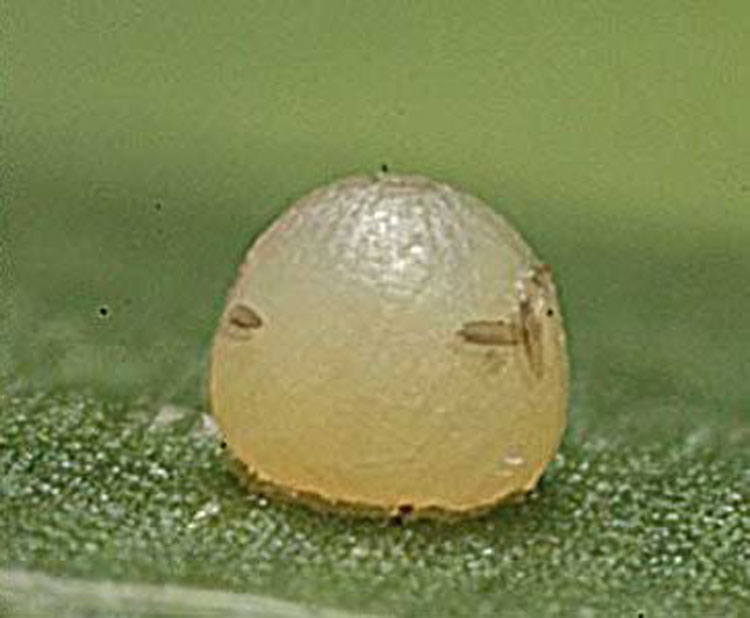
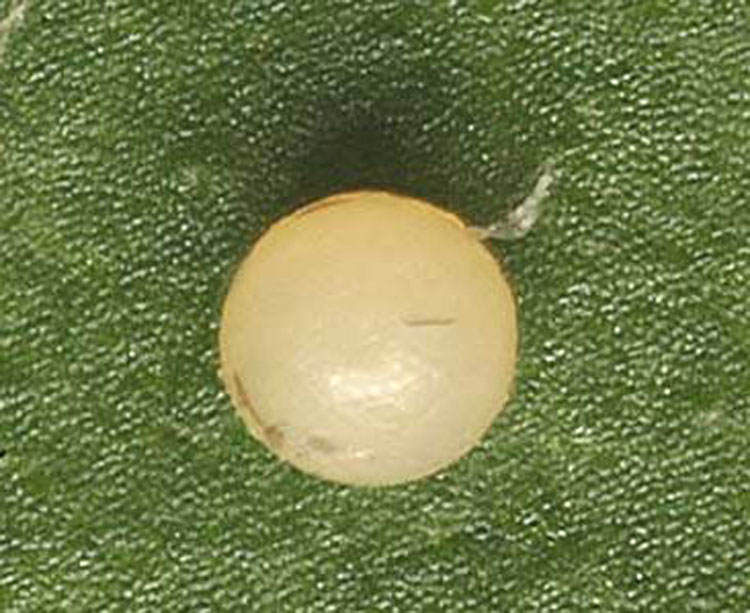
Eggs are a pale yellow when first laid, but soon turn a pale brown. The stage lasts between 2 and 3 weeks.
"In depositing, this butterfly, like M. galatea, does not attach its eggs to anything. The female settles on the grass blades and drops her eggs at random, so that they fall to the ground at the base of the grass stems. Ova laid July 14th, 1890, hatched August 1st, remaining eighteen days in the egg state. Ova laid July 24th, 1891, hatched August 13th, remaining twenty days in the egg state. A female, captured July 14th, 1901, deposited fifty-eight eggs on the 16th; these commenced hatching August 1st, being in the egg state sixteen days. The egg is 0.80 mm. wide at the base, and a little less in height; it is dome-shaped with a deeply concave base; the surface is glassy with a delicately reticulated pattern resembling honeycomb running in rows from the base to the crown, where it forms a regular network pattern, but extremely fine in texture. When first laid the colour is a pale primrose-yellow, which gradually deepens, and when a week old assumes a pale lilac-buff Just before hatching it becomes darker, and finally the larva shows clearly through the shell." - Frohawk (1924)
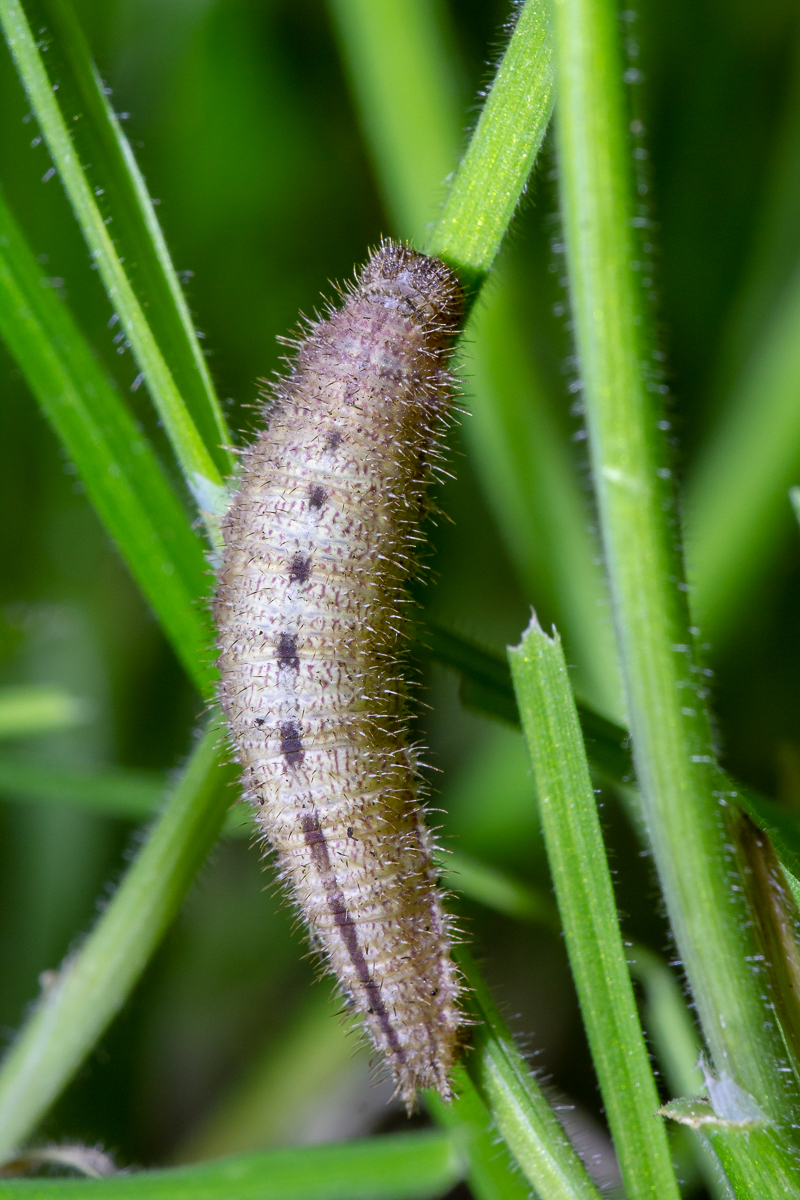
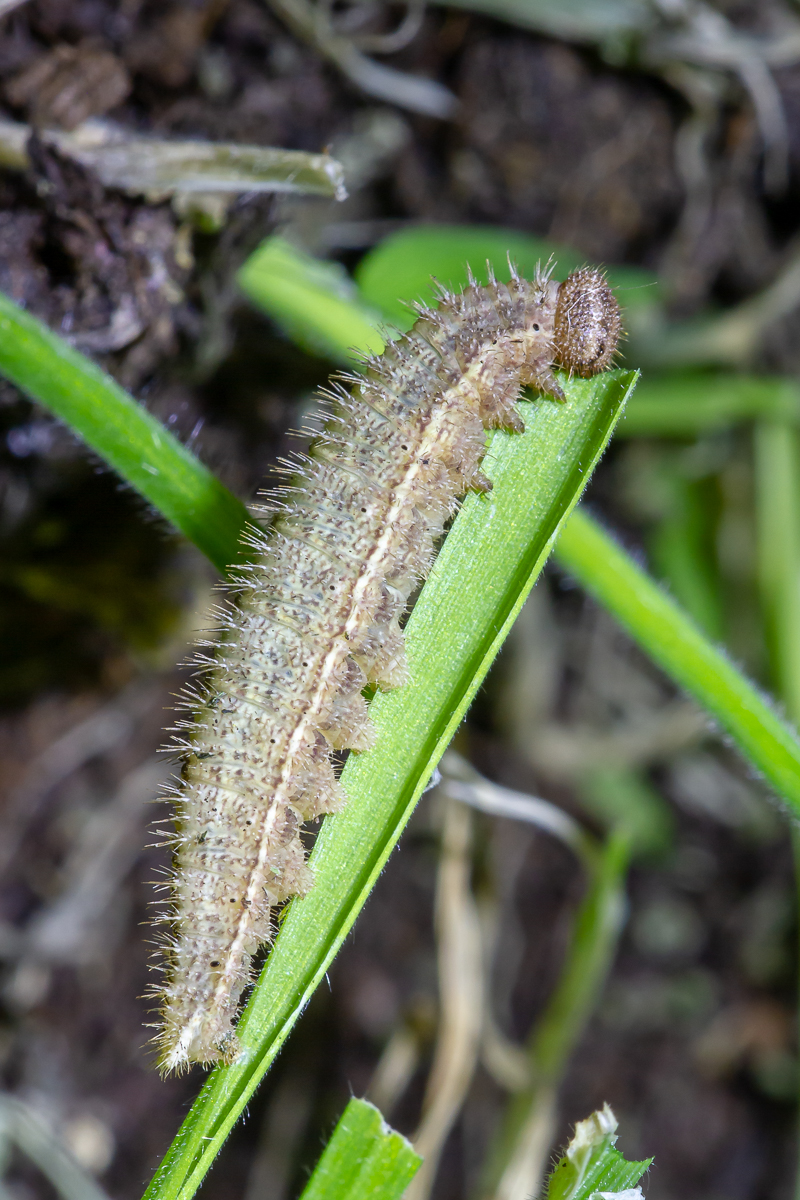
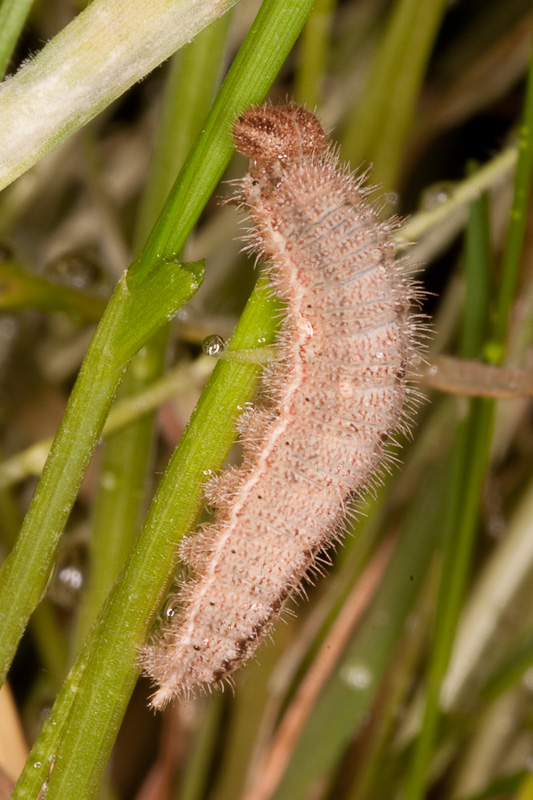
The larva is nocturnal and hides by day at the base of a grass tussock, emerging at night to feed on the tenderest parts of the foodplant. The larva hibernates while in the 3rd instar, but will feed on particularly warm evenings during the winter. Regular feeding resumes in the spring when the larvae can be found by torchlight feeding on grass stems, although they will fall to the ground with the slightest disturbance. There are 5 instars in total.
The primary larval foodplants are Cock's-foot (Dactylis glomerata), Common Couch (Elytrigia repens), False Brome (Brachypodium sylvaticum), meadow-grasses (Poa spp.) and Tufted Hair-grass (Deschampsia cespitosa).
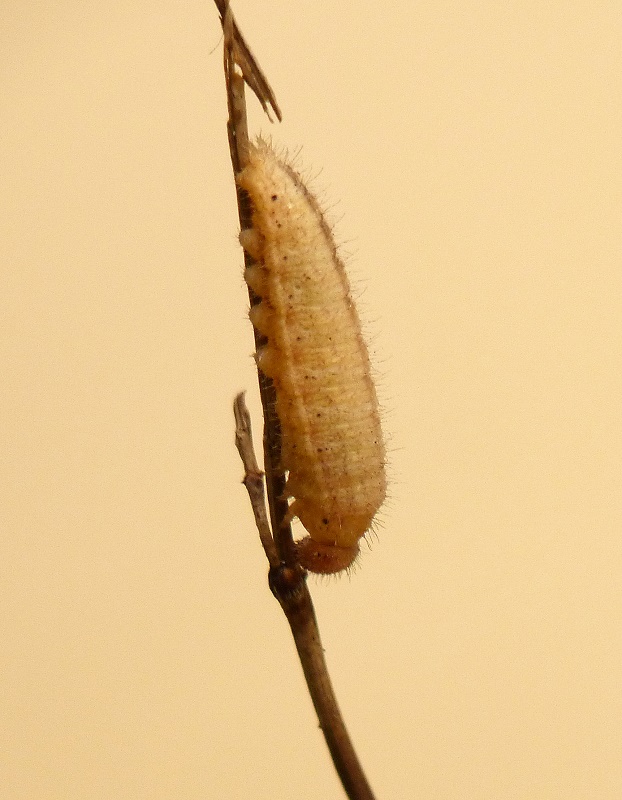
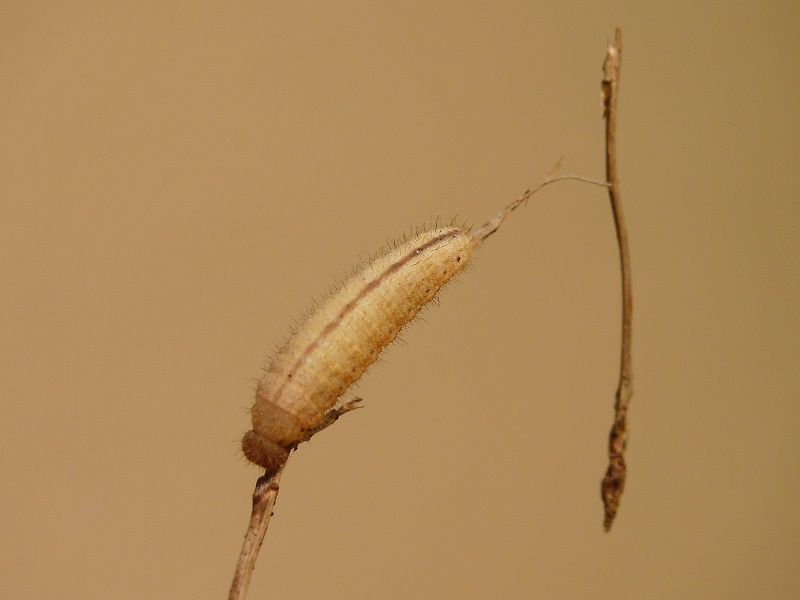
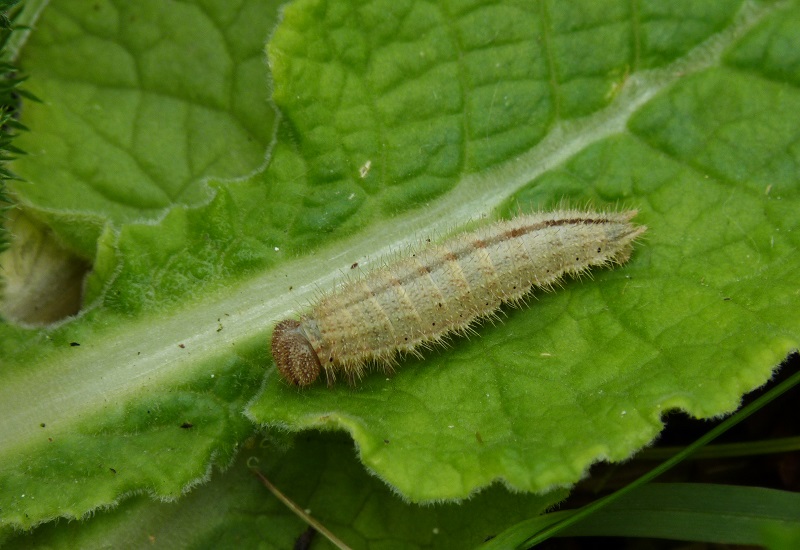
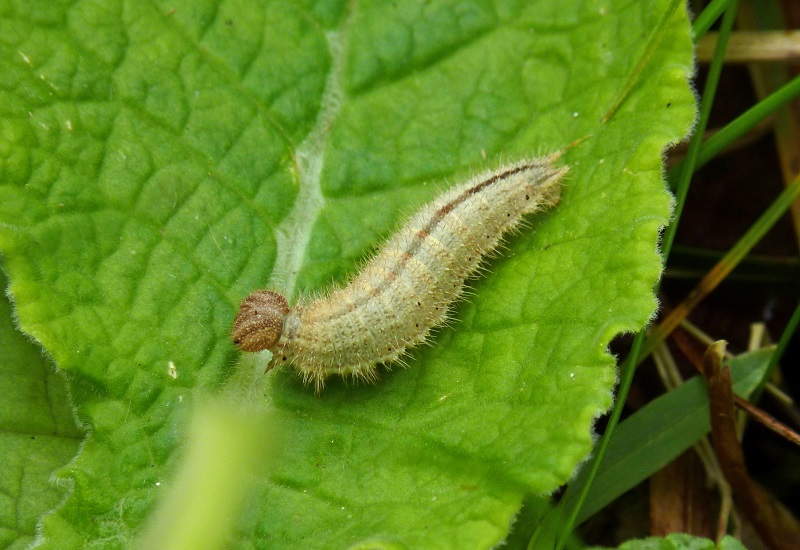
"Directly after emergence the larva measures 1.8 mm. long. The head is large, being wider than the first segment; it has a granular surface and is of an ochreous colour, with large dark eye spots and rust-brown mouth parts. It bears a number of rather long, fine, serrated ochreous-coloured hairs. The body is of uniform thickness; it is transversely wrinkled over the dorsal surface down to the spiracles; on each segment above the spiracle are three large white tubercles, two are sub-dorsal and one is super-spiracular; the first and largest of the two carries a long, serrated white hair curving backwards; the remaining two have similar but much smaller hairs, the lowest curving forwards. Directly below the spiracle is a large bulbous swelling occupying the whole width of the segment, and in its centre are two large tubercles bearing hairs similar to the others but curving downwards. All the hairs are serrated. On the claspers are two tubercles, but these carry simple spinous hairs, also directed downwards. The ground colour is a pale cream. There are three longitudinal amber-coloured stripes. These are medio-dorsal and sub-dorsal, both very narrow, and a broad spiracular band; also below the lateral swelling is a narrow but rather indistinct line of the same colour. The legs and claspers are pale ochreous. The anal points form small tubercles, terminating with two hairs. When six days old it is 3.5 mm. long. The ground colour is green, chiefly over the dorsal surface; the amber-coloured stripes have deepened to an olive-brown, and a lateral greenish-white stripe is bordered by a fine brown line; the ventral surface is pale greenish-white." - Frohawk (1924)
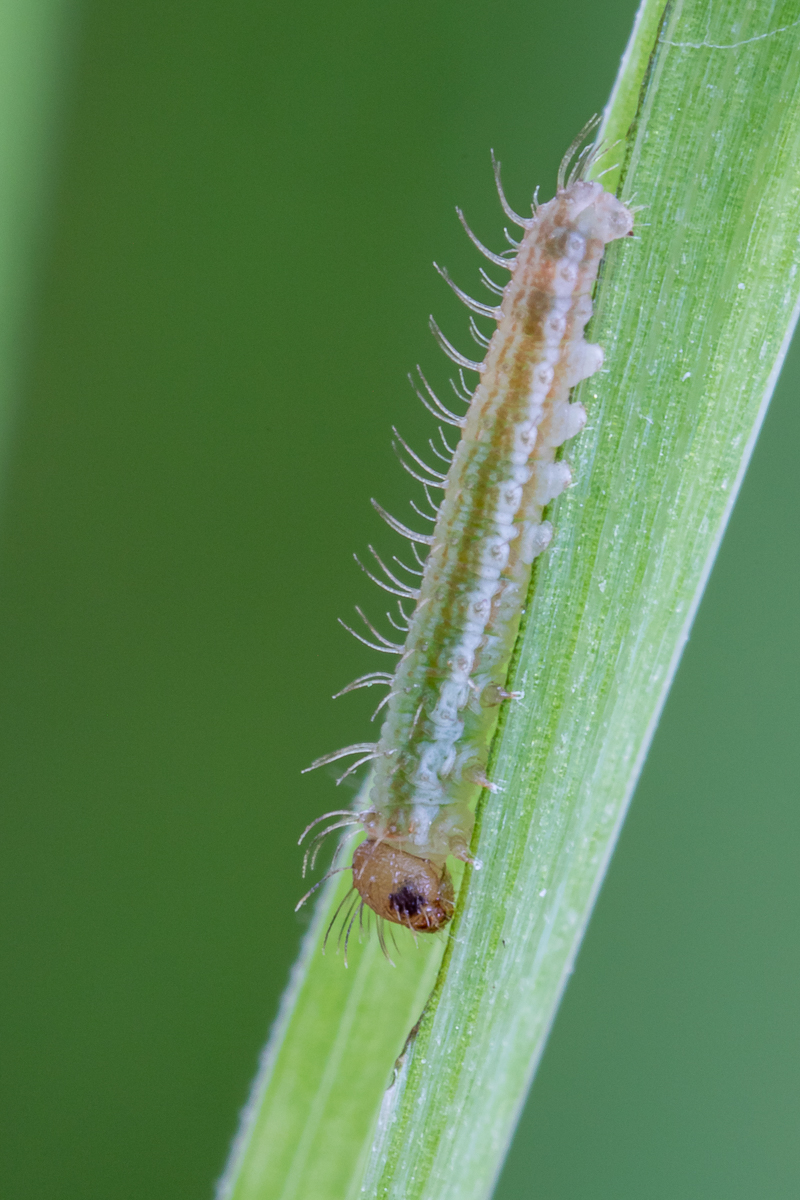
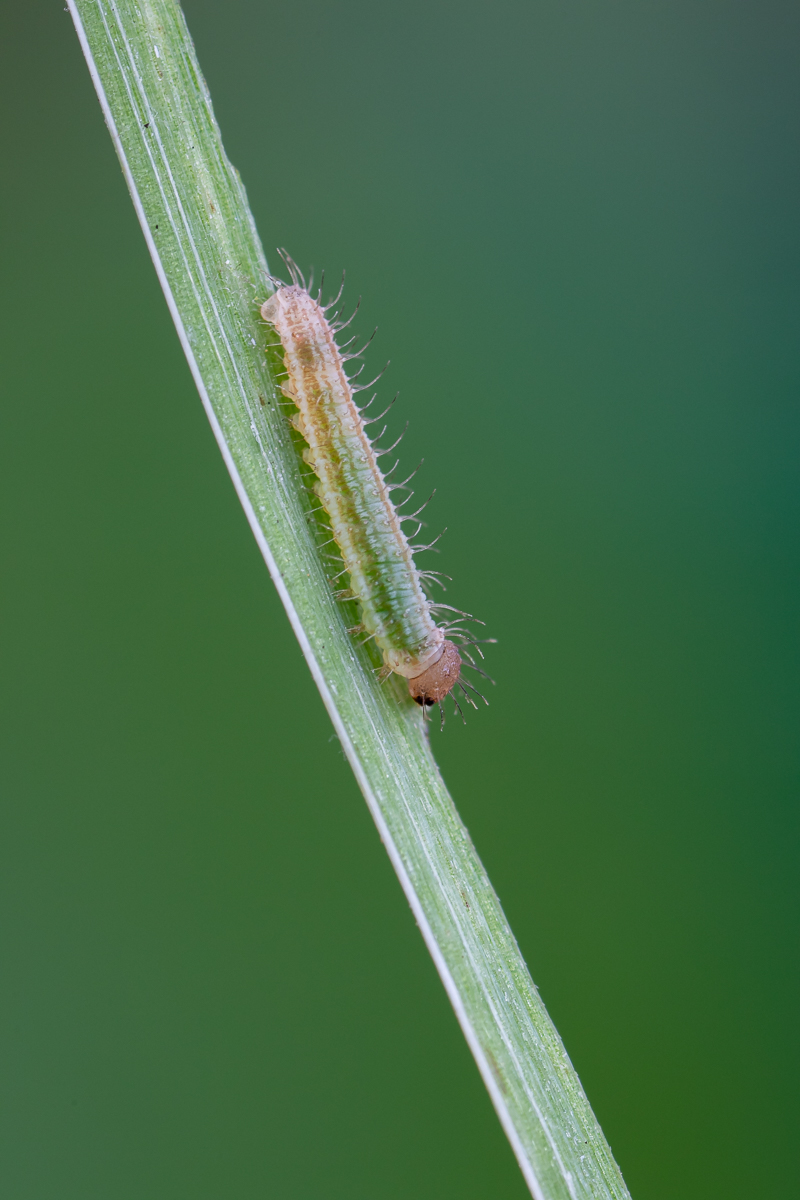
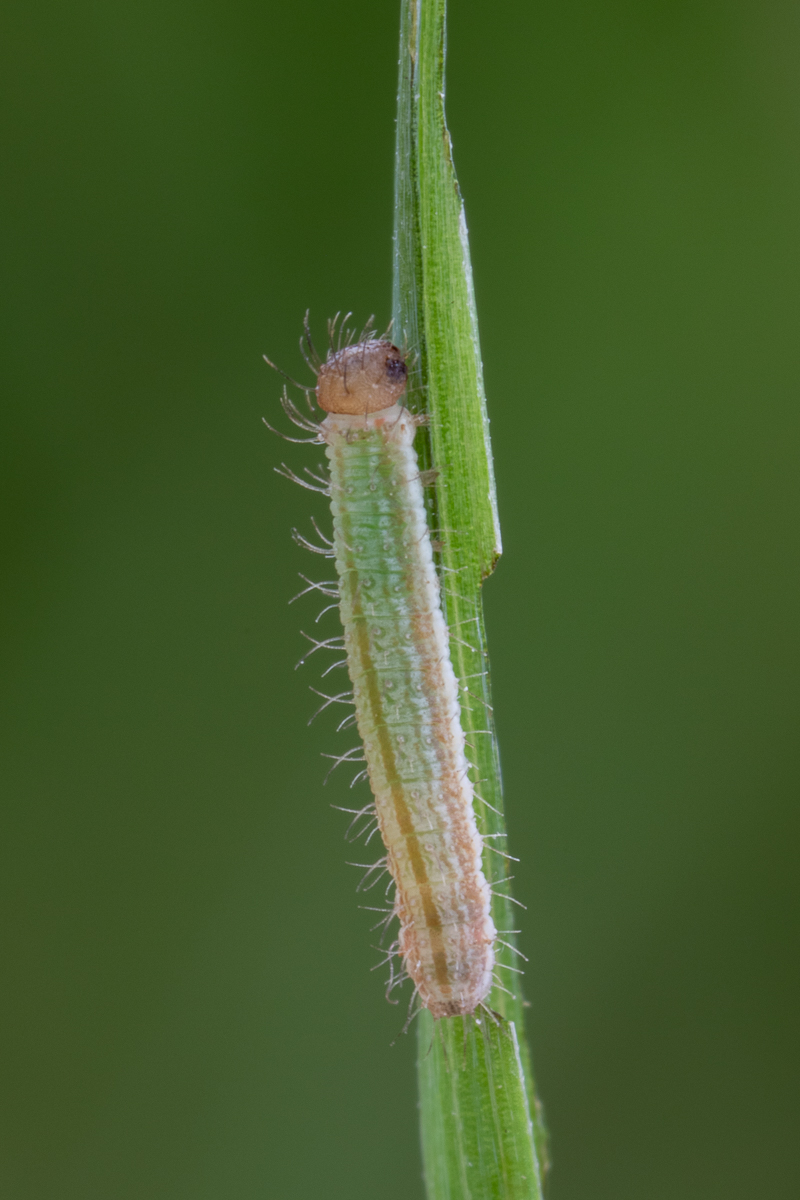
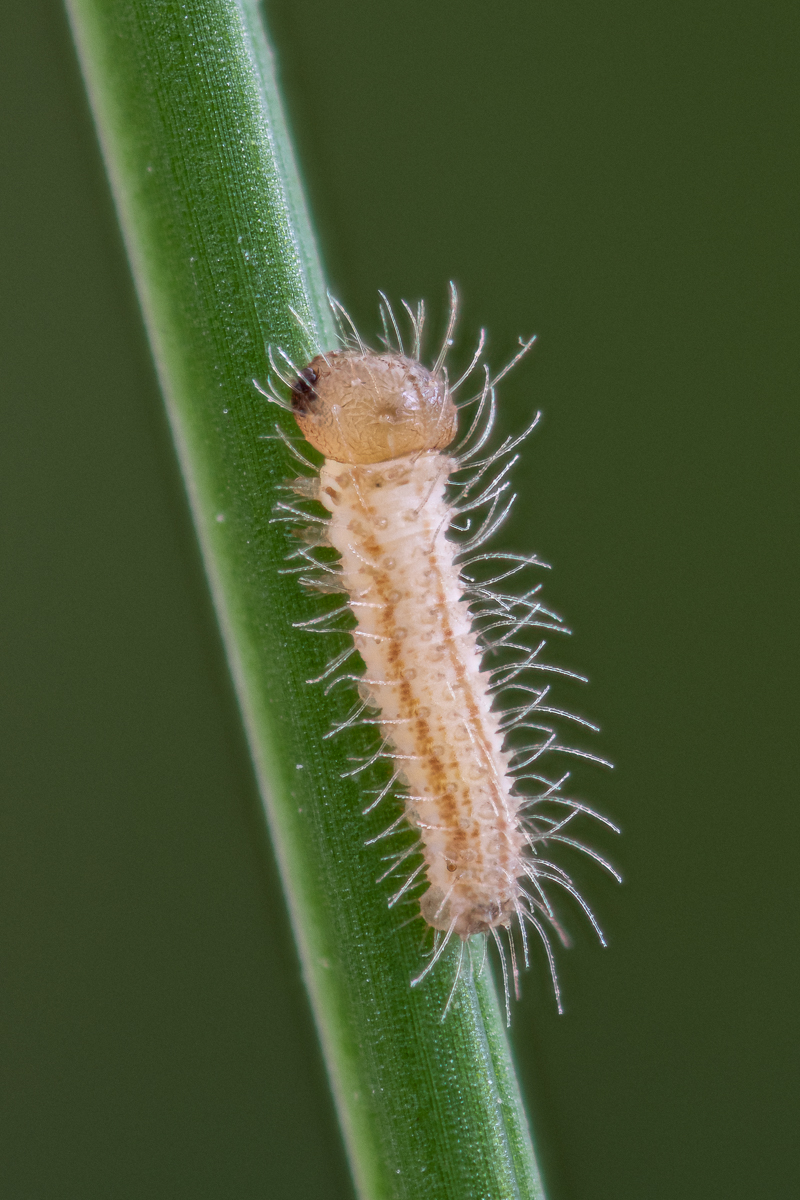
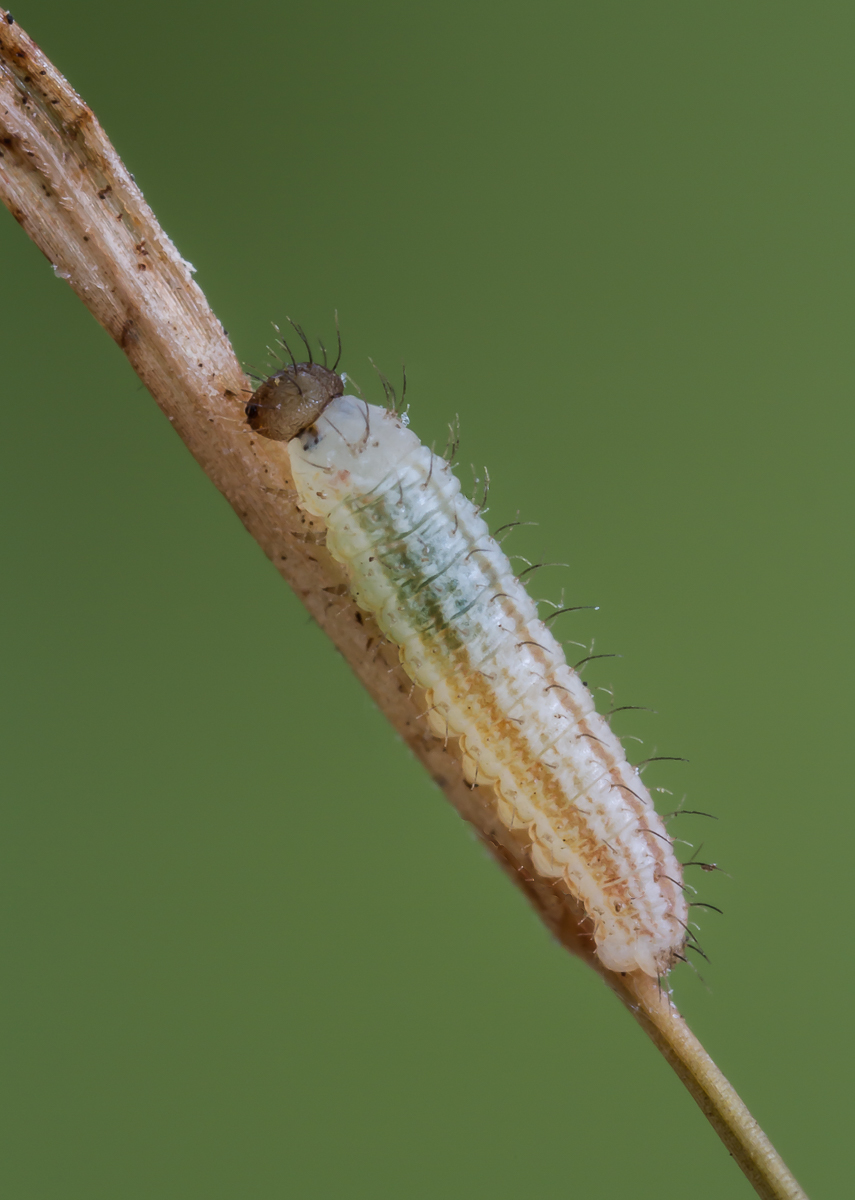
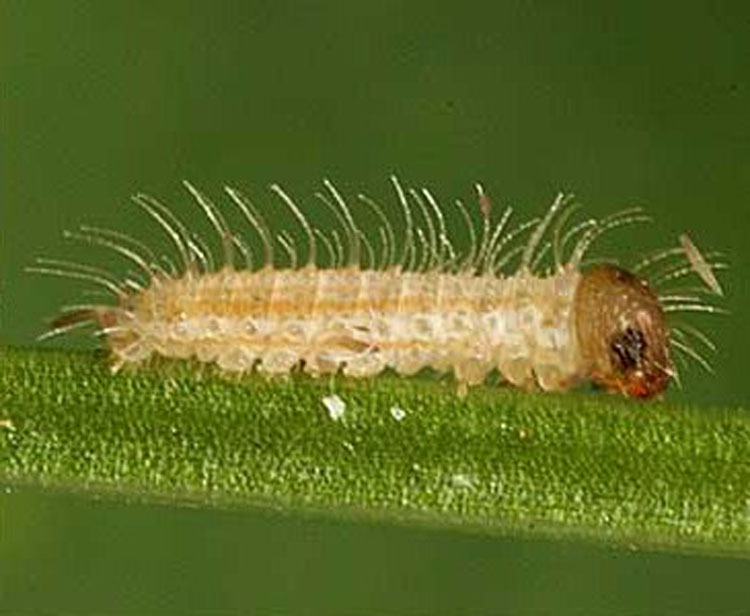
"The first moult occurred at the end of August, 1891, the first stage lasting a fortnight. Before second moult, thirty days old, it measures 6.35 mm. long. The ground colour is cream, with medio-dorsal, sub-dorsal, super-spiracular, spiracular and lateral brown lines; the first and last are the darkest and widest; the spiracles are prominent and have dark apertures. The whole body is rather densely studded with hairs of different lengths, which are serrated above the spiracles and simple below. They vary from pale cream to light ochreous-brown. The head is cream, mottled with sienna-brown and sprinkled with hairs similar to those on the body. The legs and claspers are ochreous." - Frohawk (1924)
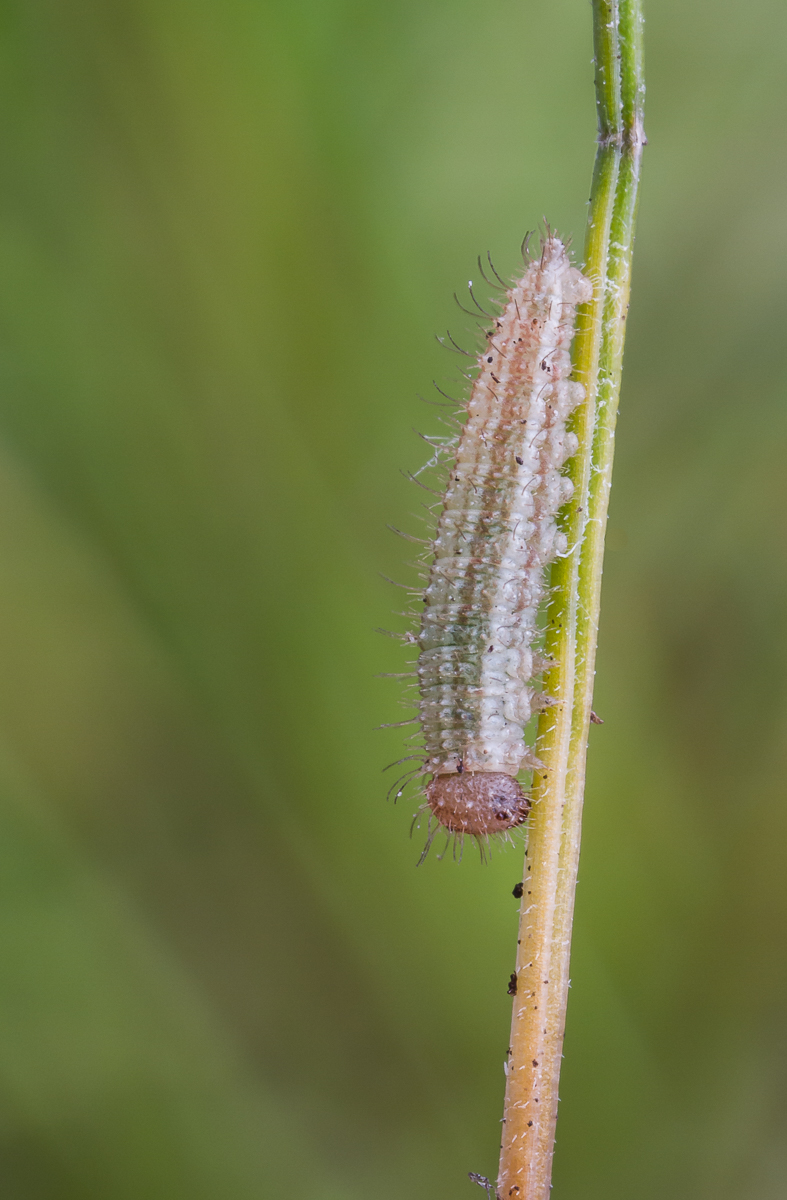
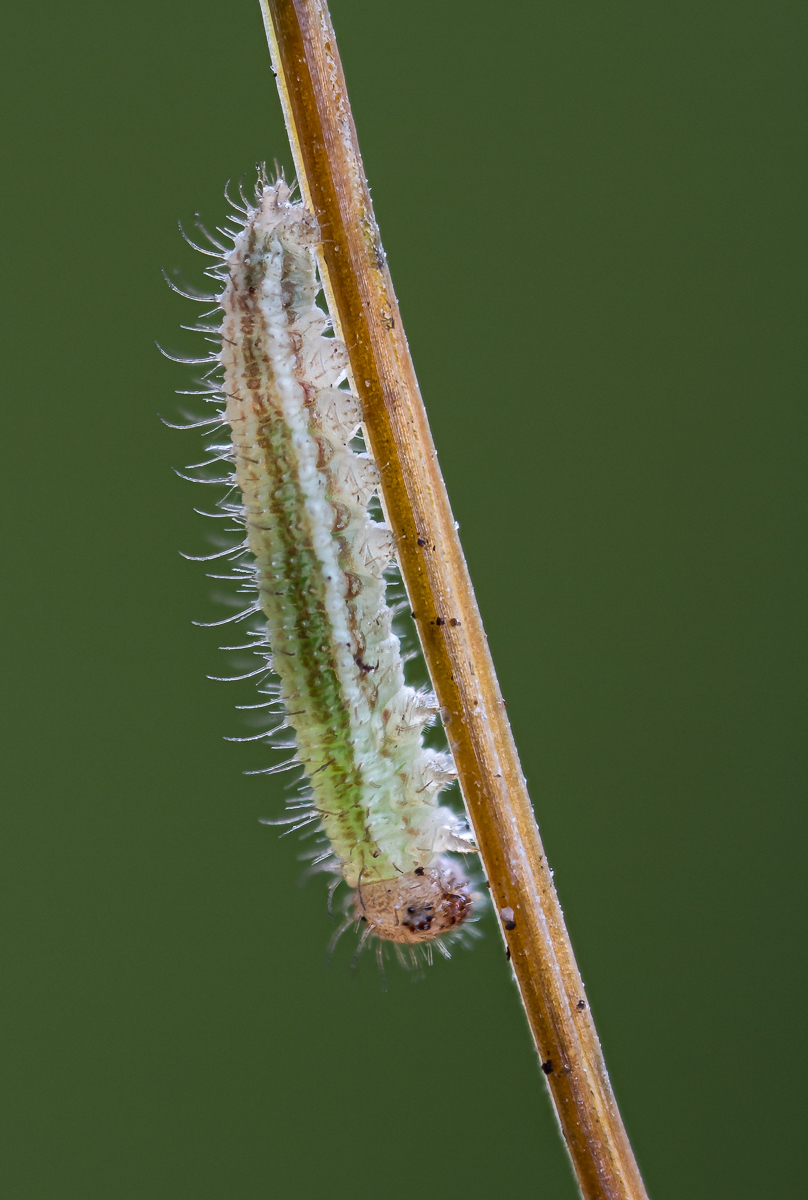
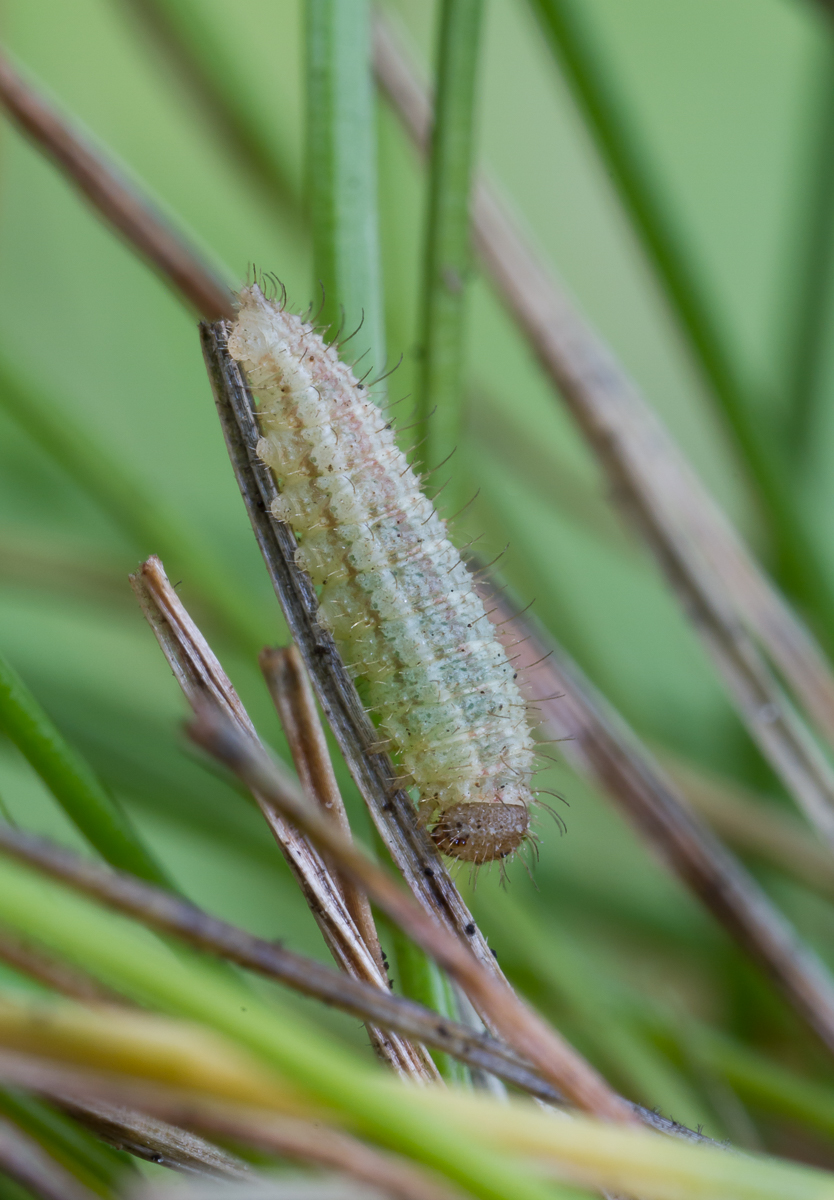
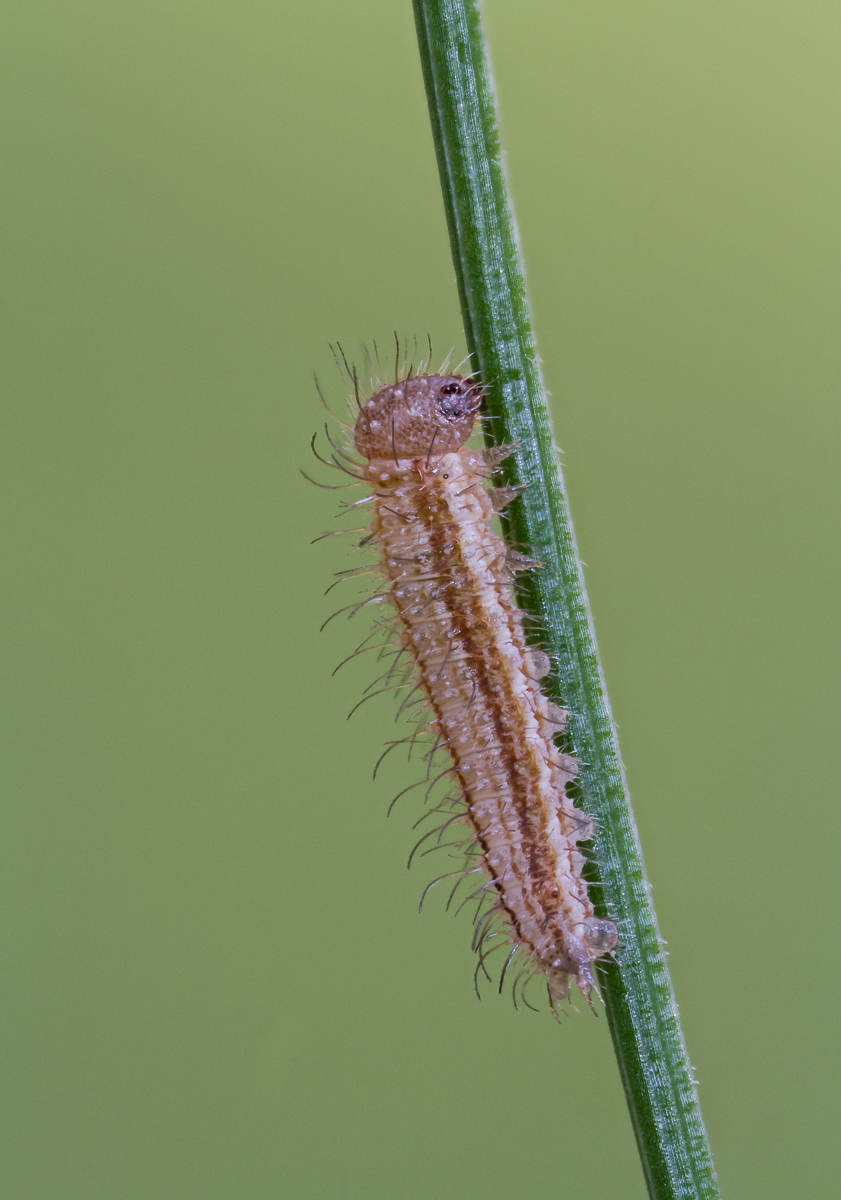
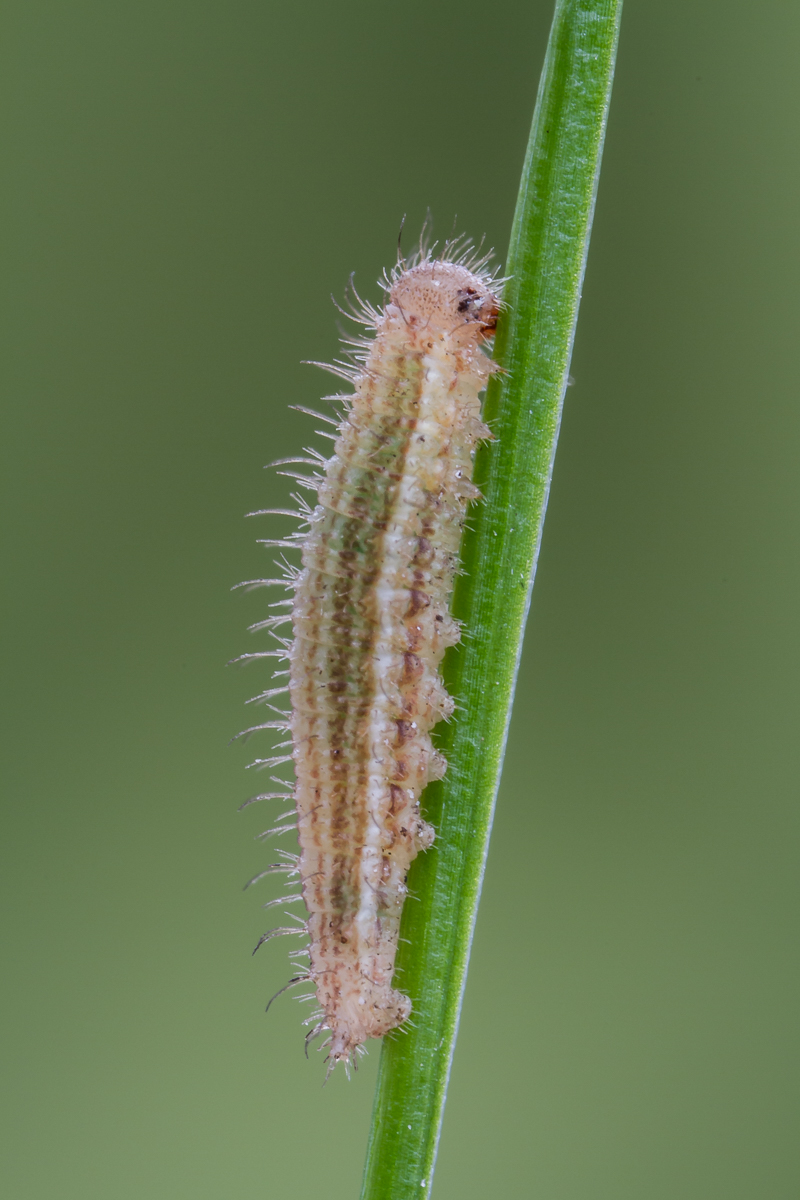
"The second moult took place during the first fortnight of October. After this moult the larva enters into hibernation, but it feeds at times during mild weather throughout the winter months. Before the third moult, 178 days old, it measures while resting 8 mm. in length; both in colour and structure it resembles the previous stage." - Frohawk (1924)
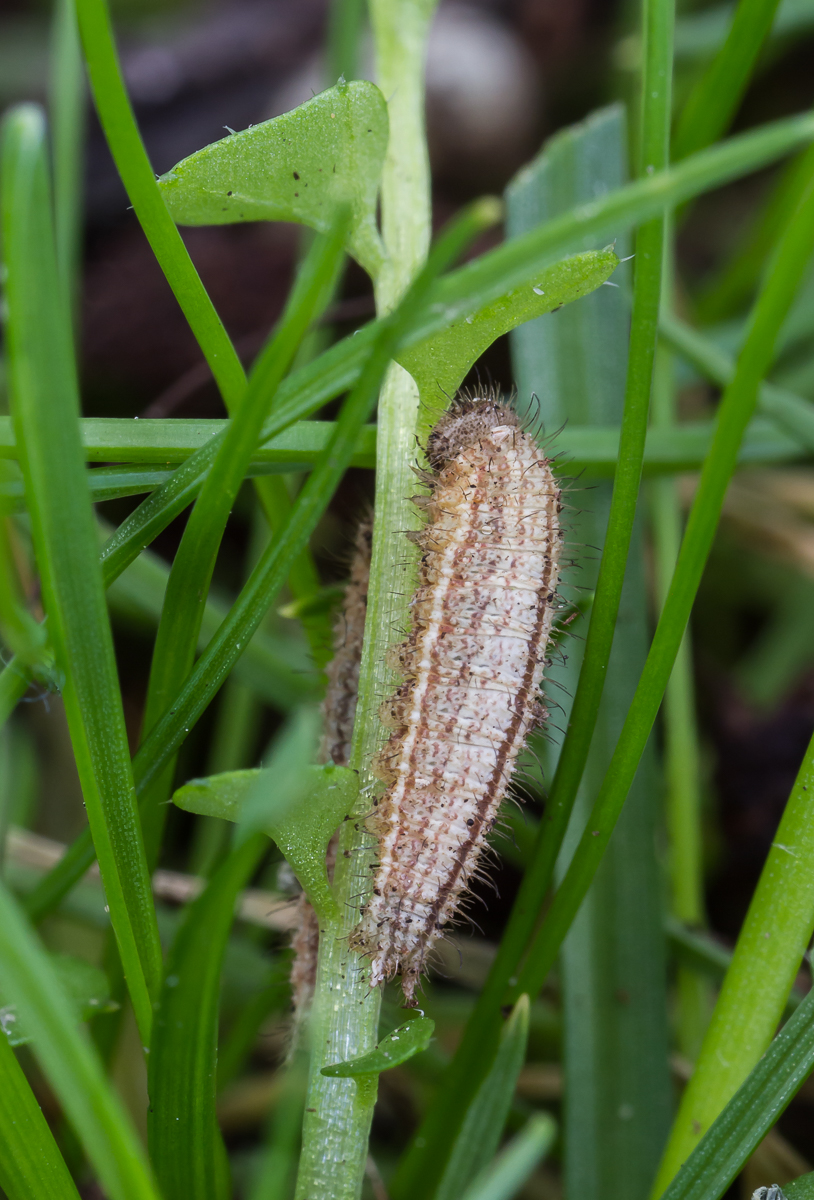
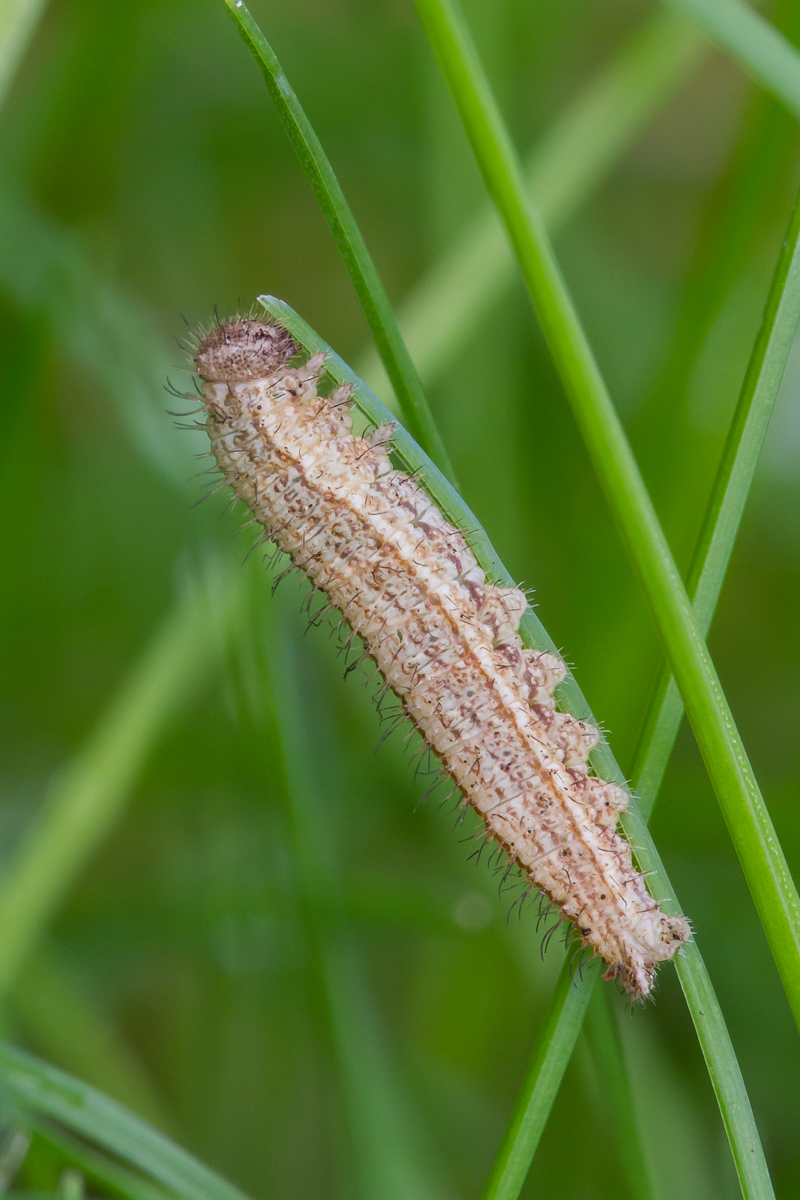
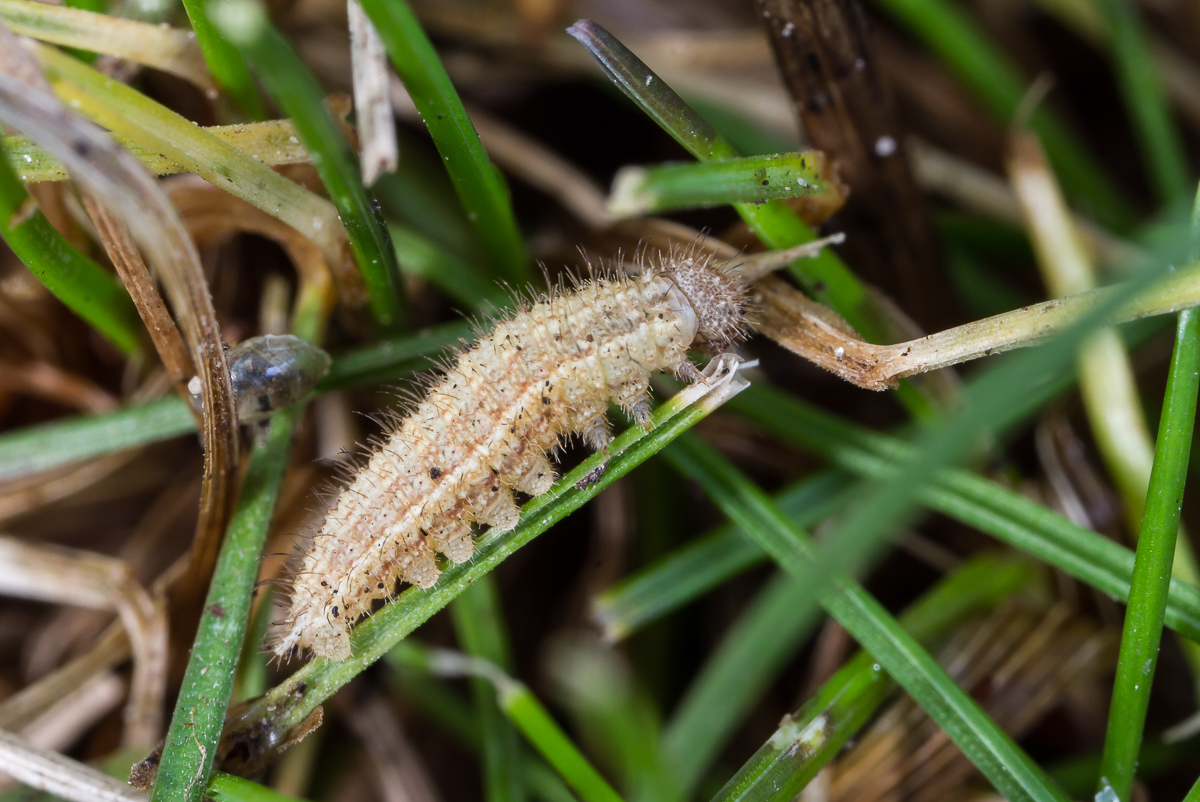
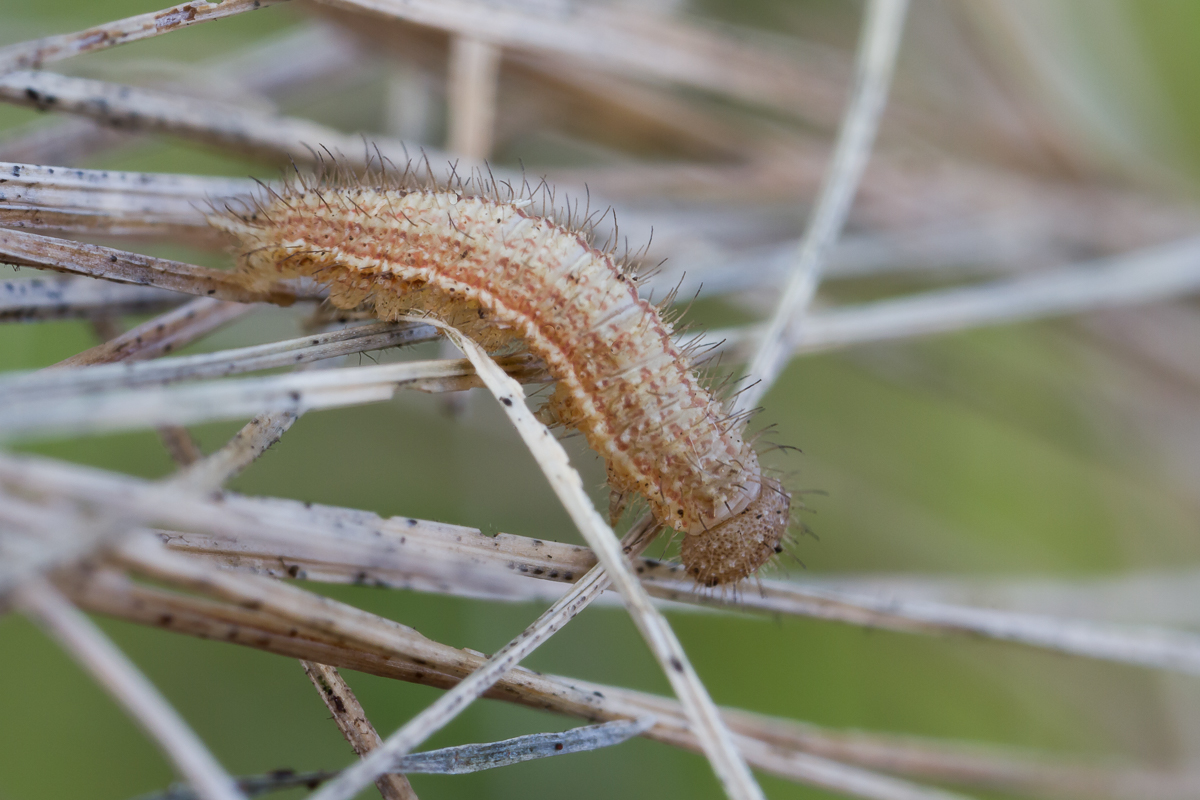
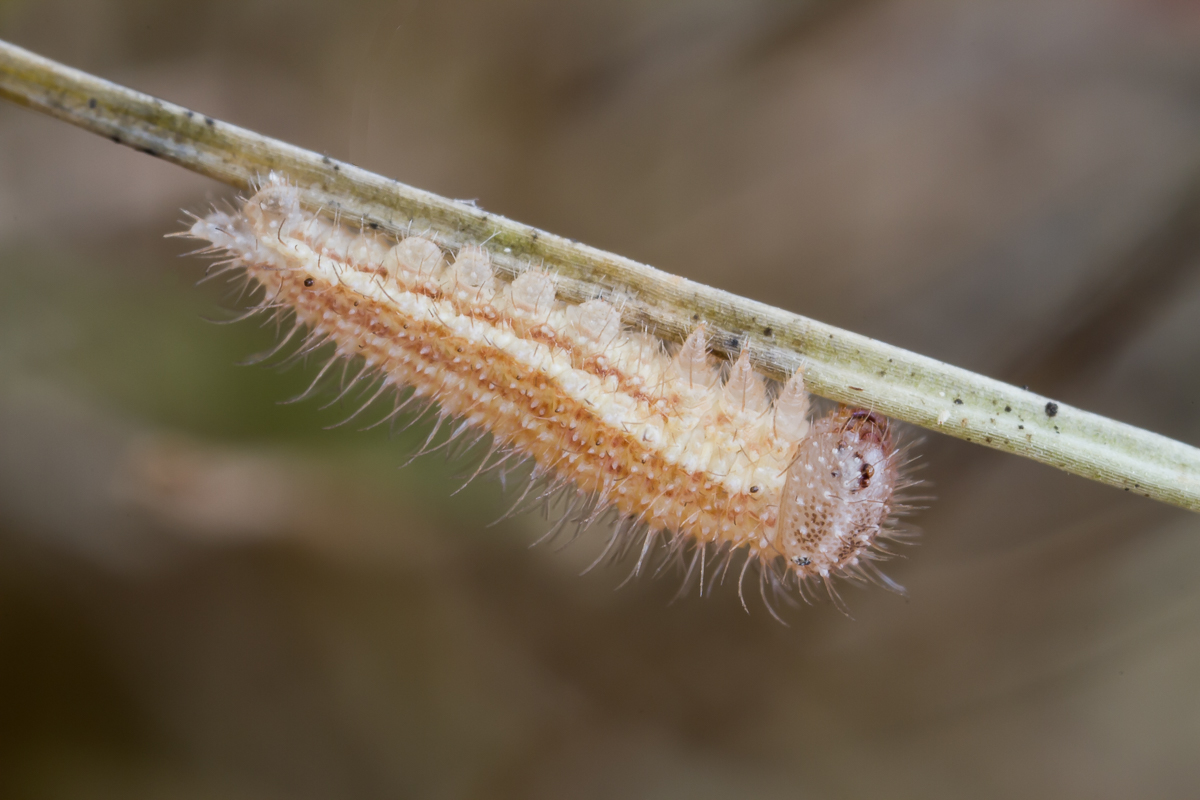
"The third moult occurs after hibernation, about March 20th. After the third moult, 268 days old (May 8th, 1892), it measures 14 mm. long. It is stout in proportion, but tapering at both ends, and with a dilated lateral ridge; the ventral surface is flattened. The ground colour is pale flesh, palest on the dorsal surface and inclining to yellowish laterally. The medio-dorsal line is chocolate-brown, faint on the first two segments, and gradually strengthening in intensity and breadth to the eighth segment; it then runs to the base of the anal points; an indistinct pale yellow sub-dorsal line runs the entire length, and a whitish lateral line bordered above by dull carmine or vinous-red; a chocolate-brown band passes along the base of the claspers, which is composed of oval blotches, beginning faintly on the first segment, increasing in size and depth of colour corresponding to the dorsal line. The entire surface is finely speckled and reticulated with vinous-red. The head is buff, with three darker bands down each lobe consisting of minute blackish warts, each bearing a fine bristle; mouth parts and eye spots dark brown; the legs, claspers and anal points pale buff. The entire surface of the larva is covered with bristles, each having a pale base and blackish apex." - Frohawk (1924)
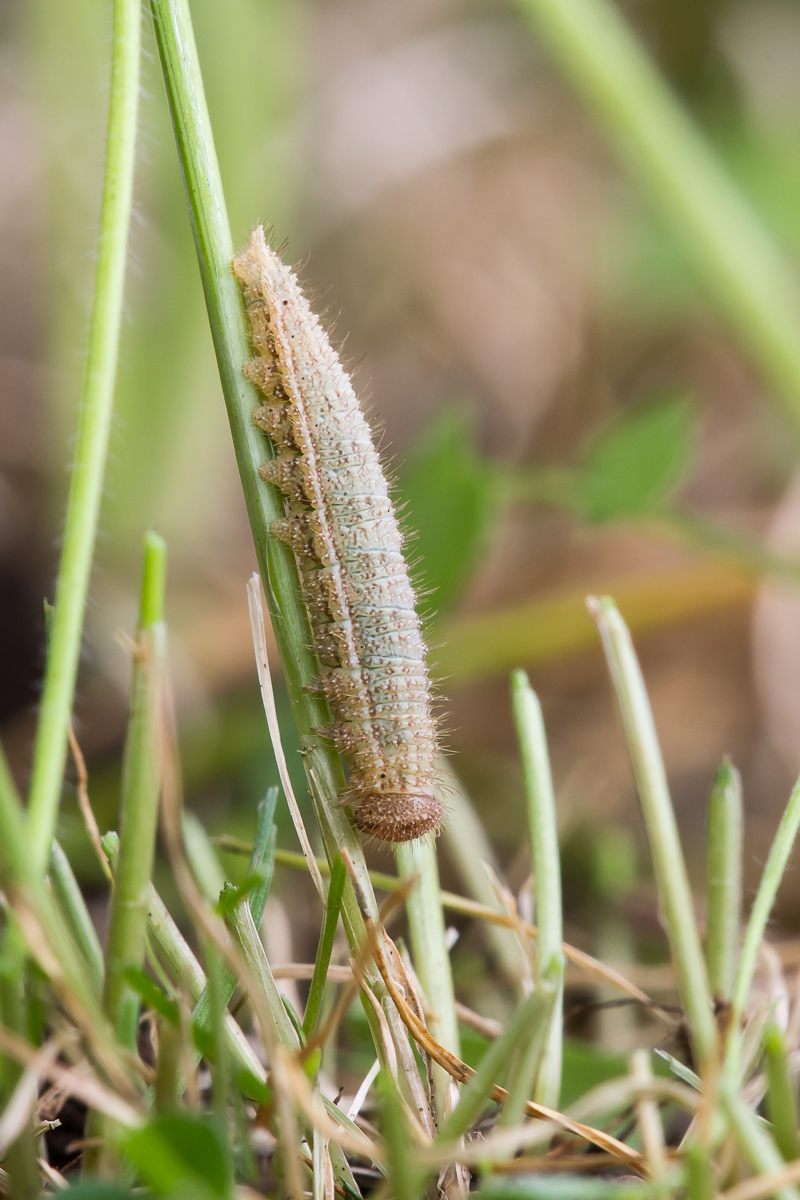
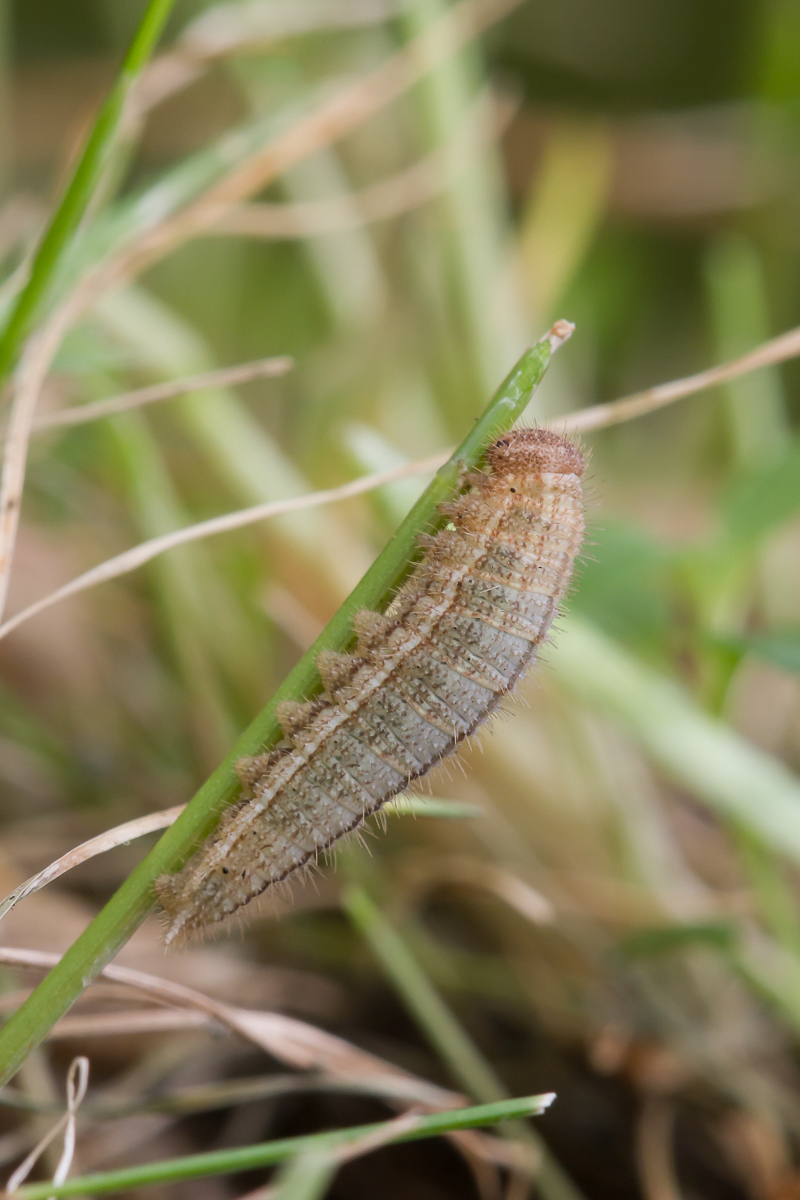
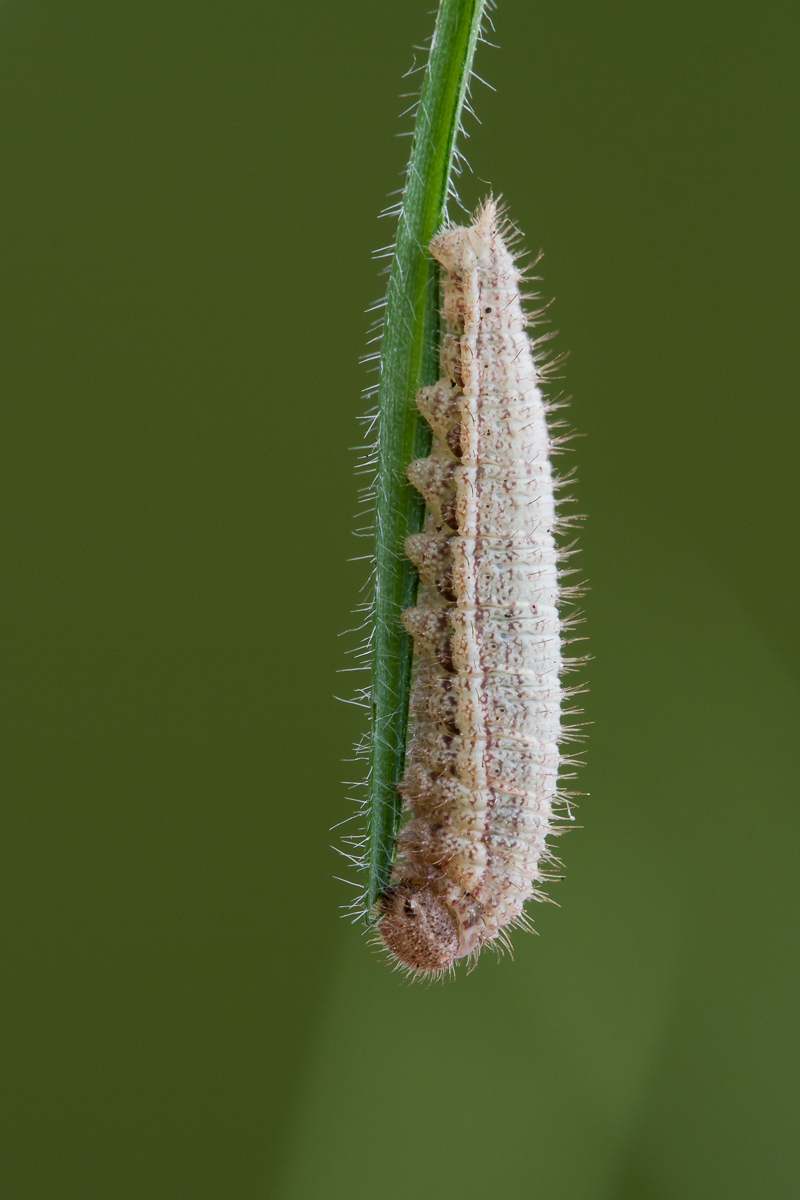
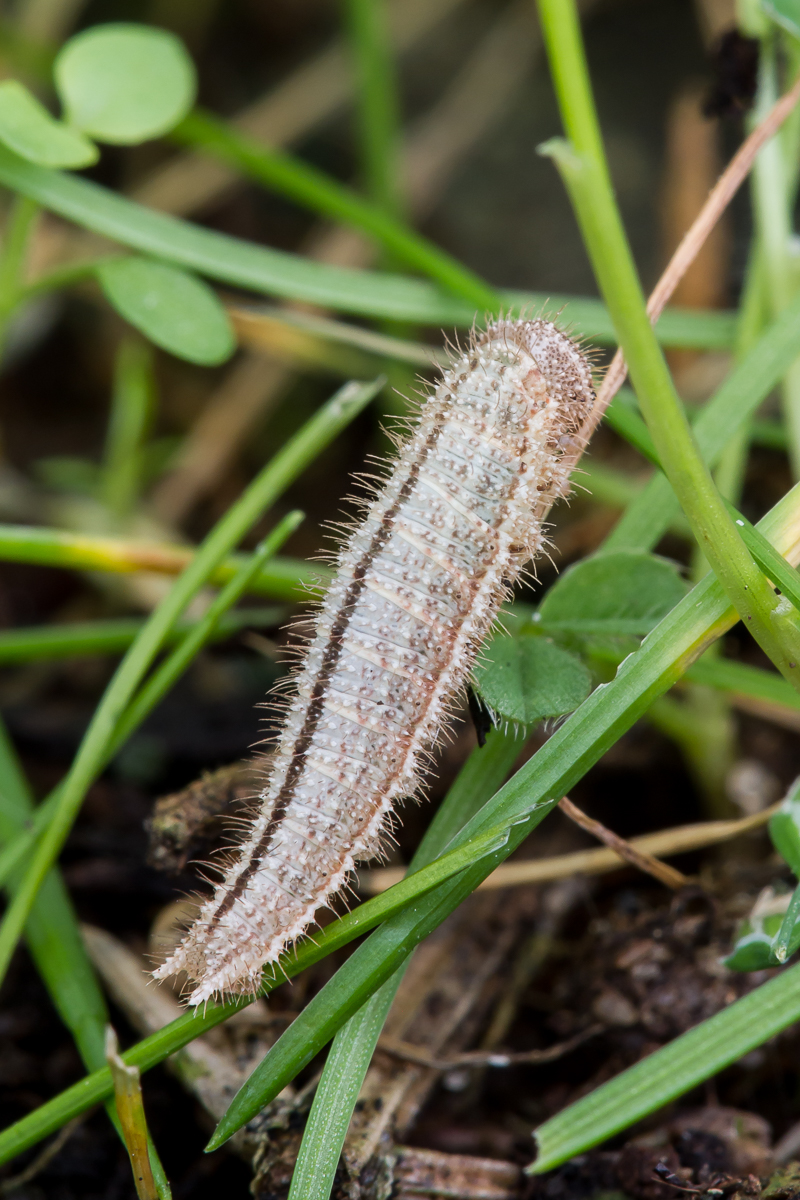
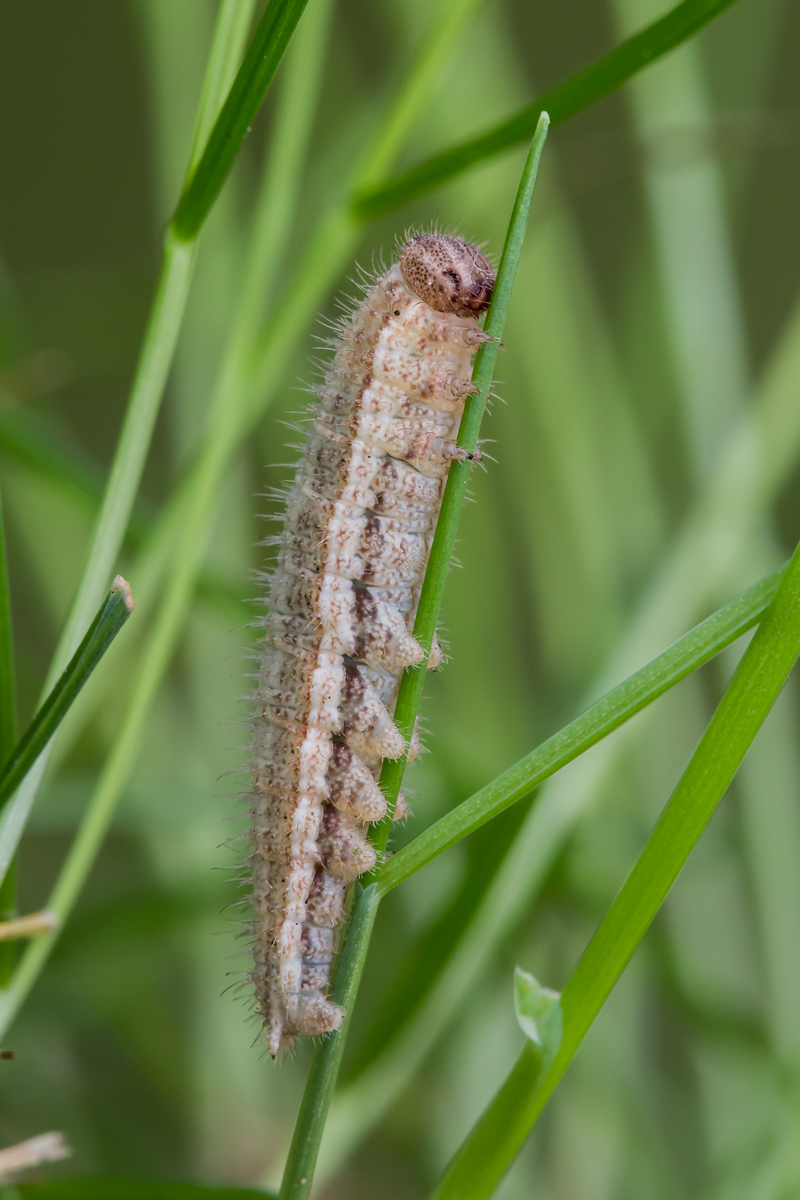
"The fourth and last moult occurred during the middle of June, 1901; some, however, pass through the last moult very much in advance of others. When fully grown the larva measures 21.2 mm. long. The head is ochreous and strongly granulated, having a very scabious appearance, each point emitting a hair. The ground colour of the body is ochreous, checkered with short longitudinal rose-coloured streaks. The medio-dorsal line is very indistinct on the first three segments, dull ochreous, and gradually deepening in colour to the last segment, and at each segmental division is a brown mark, each increasing in size and depth to the last segment. The lateral stripe is pinkish-white, bordered on each side by a lilac-rose line. The ventral surface is similar in colour to the rest of the body, and mottled with rather dark purplish blotches above the claspers; these and the legs are pale brown. The whole surface is densely sprinkled with hairs of various lengths; all the larger ones are serrated and of a horn-brown colour, with amber tips and white bases supported on white frustra; the smallest hairs (some extremely minute) are wholly white; the spiracles are black, prominent and shining. It rests in a straight position on the grass stems during the day, feeding only at night, and falls from its food on the slightest disturbance, and forms a complete ring with its head touching the anal claspers, and remains in that position for about a minute or more; it then suddenly straightens itself out to its former resting attitude. When about to pupate the larva very loosely spins a few silken threads among the roots of the grass, forming a very slight cocoon, wherein to pupate, without attaching itself in any way." - Frohawk (1924)
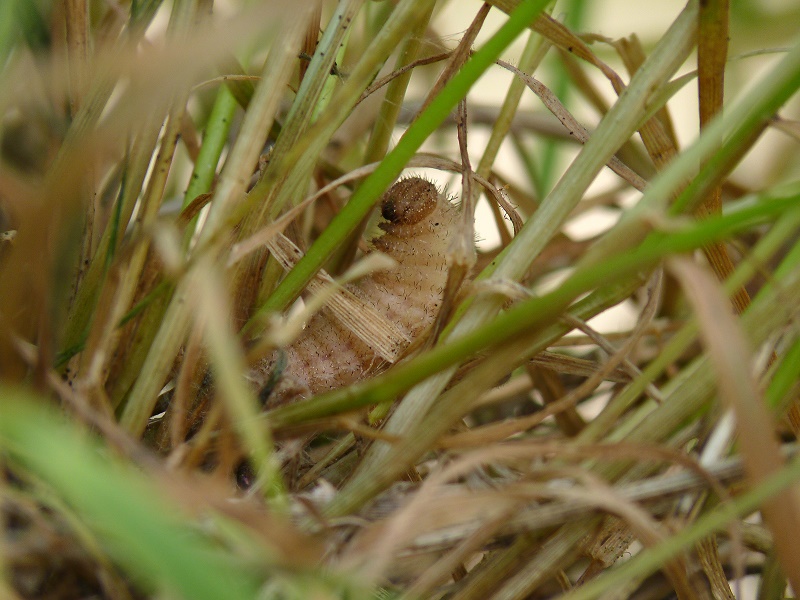
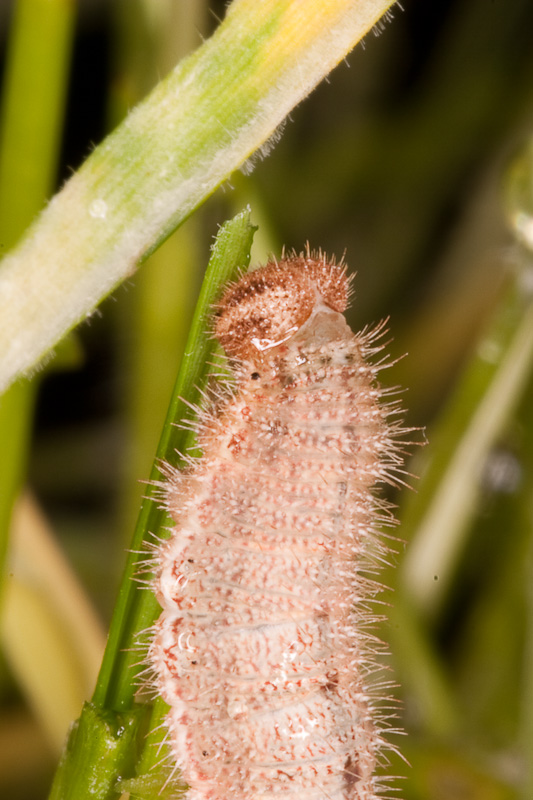
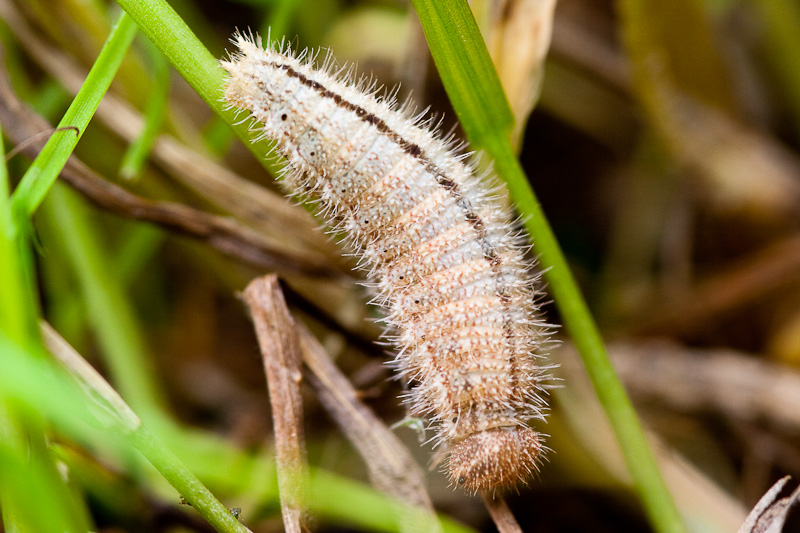
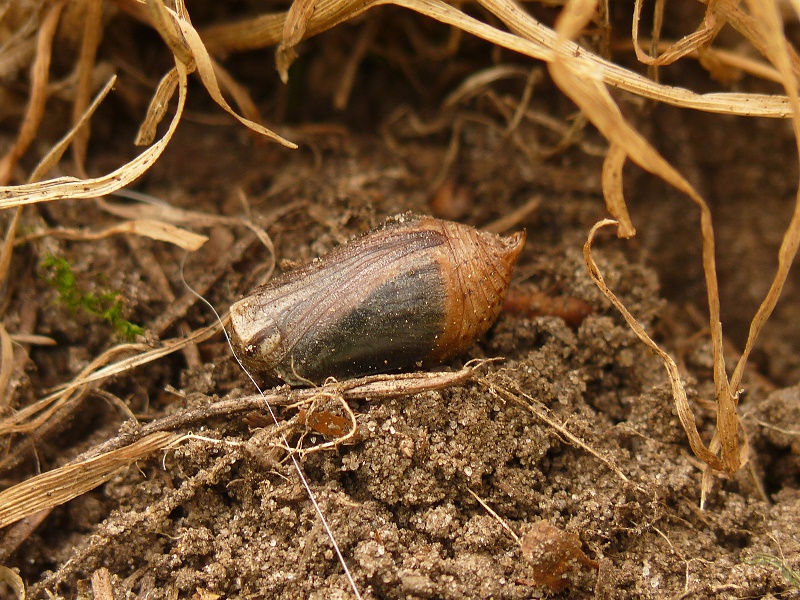
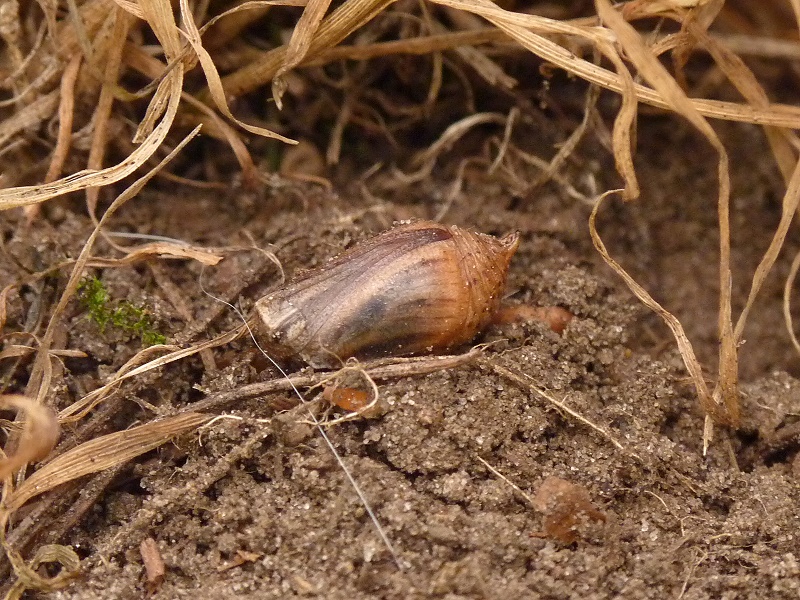
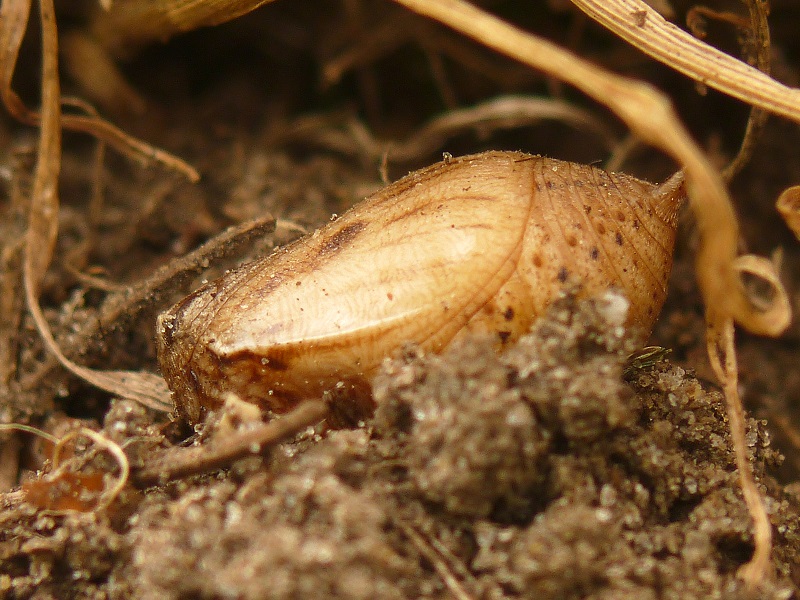
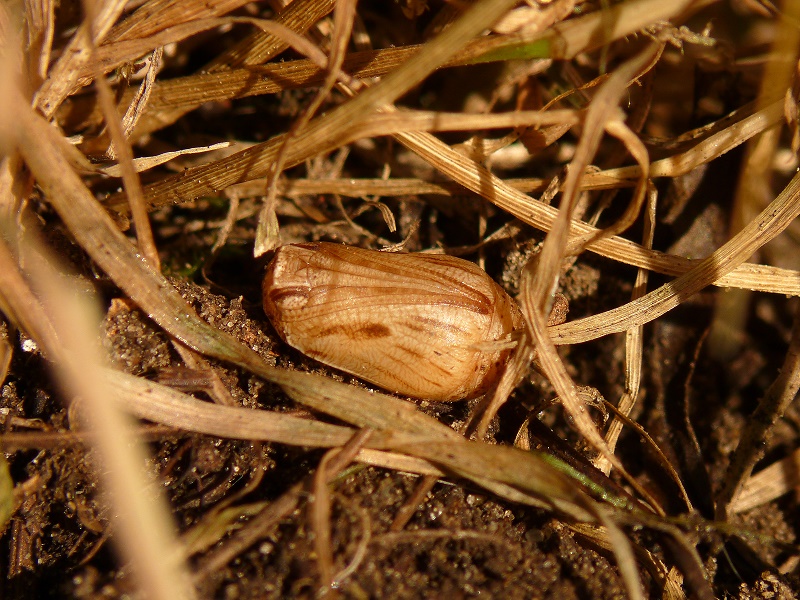
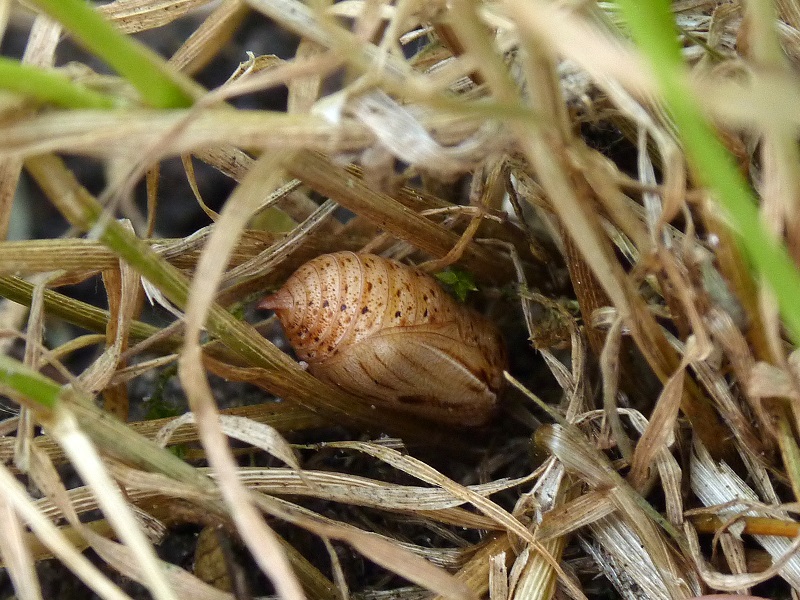
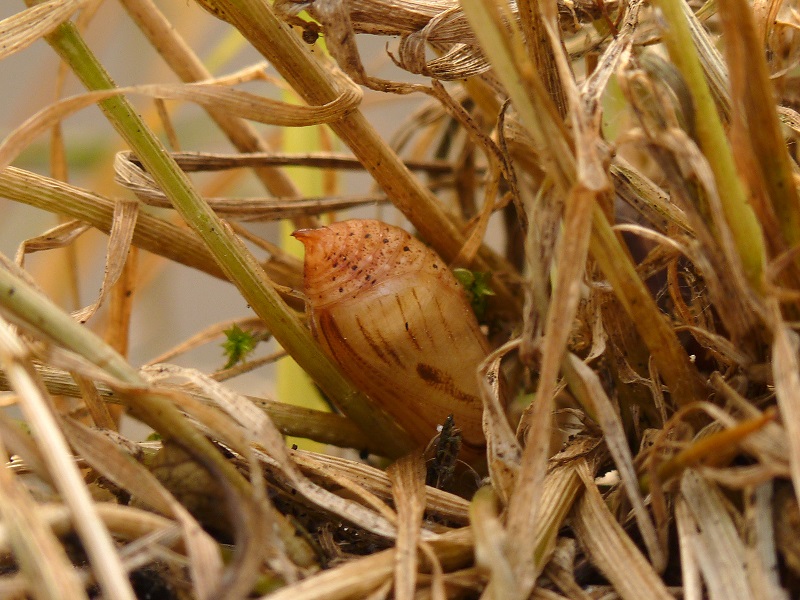
The pupa is formed in a flimsy cocoon, comprising just a few strands of silk, at the base of a grass tussock. This stage lasts around 2 weeks.
"The average length of the male pupa is 11 mm. and the female 12.7 mm. It is stout in proportion, with a short, contracted abdomen; the head is blunt without angulations; the thorax rounded and swollen, with a slight dorsal keel; base of wing rather angulated and ridged along the sub-median nervure, wings and abdomen swollen and rounded at the middle; the abdomen short, rounded, conical and abruptly attenuated, terminating in a curved cremastral point, concave ventrally and lobed laterally, without any hooks, but furnished on the dorsal extremity and extreme apex with small, straight spines. The ground colour is pale ochreous, slightly tinged with pink on the thorax and abdomen; the entire surface is finely reticulated with amber-brown; the wings are more or less longitudinally streaked with brown. In the most heavily marked examples a dark brown elongated mark fills the discoidal cell, a long narrow streak between the median and sub-median nervures, and a short streak at the base of wing; also a brown elbowed streak surrounding the base and continued along and bordering the white sub-median ridge; two blackish bands pass over the eye, bordering the central glazed band, and immediately above the eye is a dark brown spot. The thorax and abdomen (especially the latter) are speckled with dark brown dots, mostly running in longitudinal rows; the spiracles are paler brown. The whole surface, excepting the wings, is studded with minute sharply-pointed spines, and it is also granulated. After the tenth day it gradually assumes a darker hue, and finally turns dull black shortly before emergence. The pupal stage lasts about fourteen days." - Frohawk (1924)
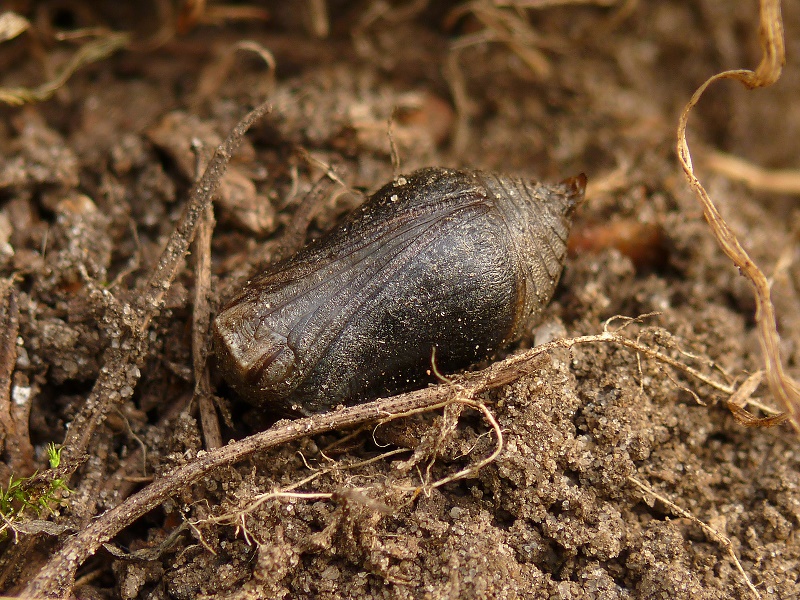
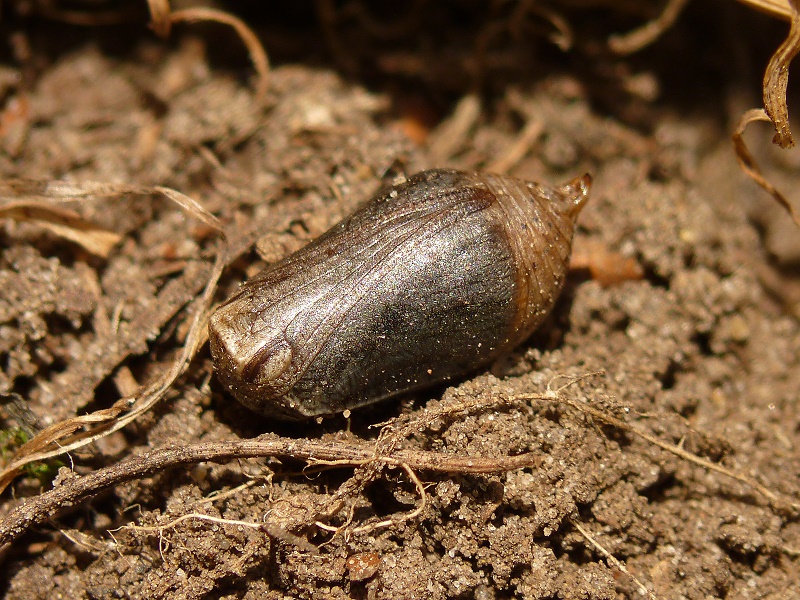
The following links provide additional information on this butterfly.