UK Butterflies
Building a Community of Responsible Butterfly Enthusiasts in Britain & Ireland
Building a Community of Responsible Butterfly Enthusiasts in Britain & Ireland
Wingspan
♂ 32 - 40 mm, ♀ 32 - 42 mm
Checklist Number
59.007
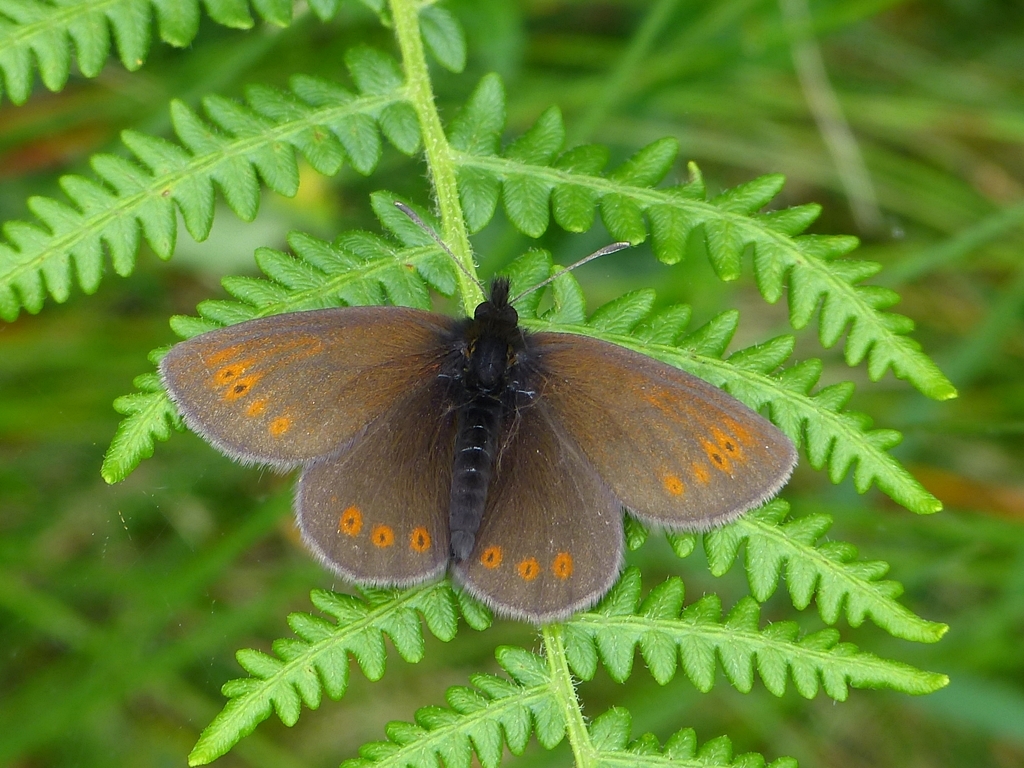
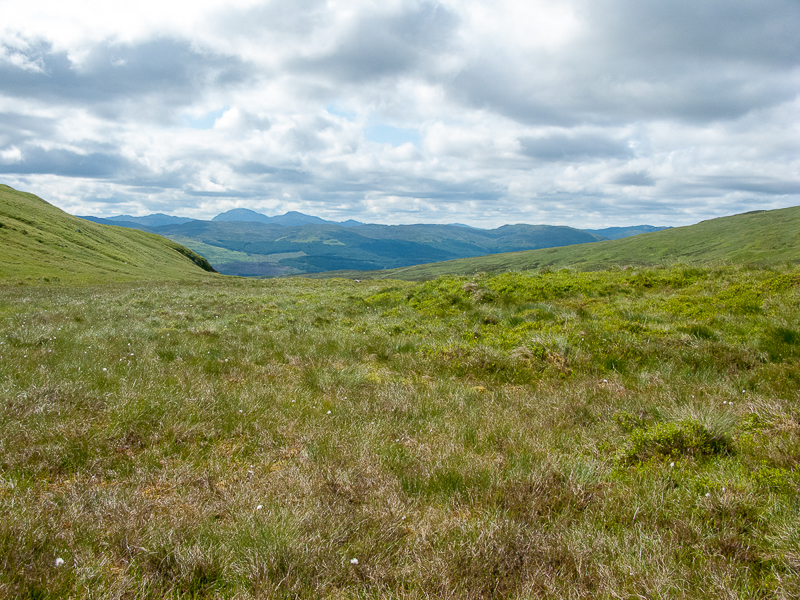
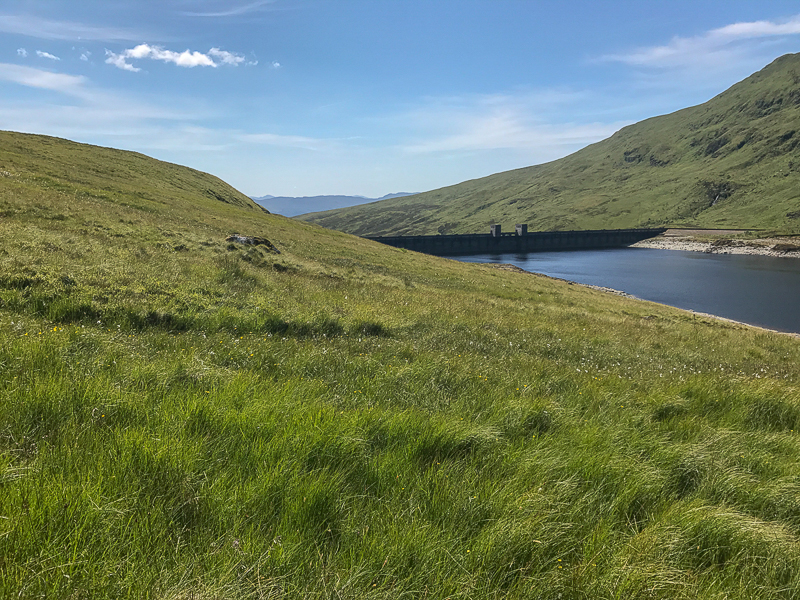
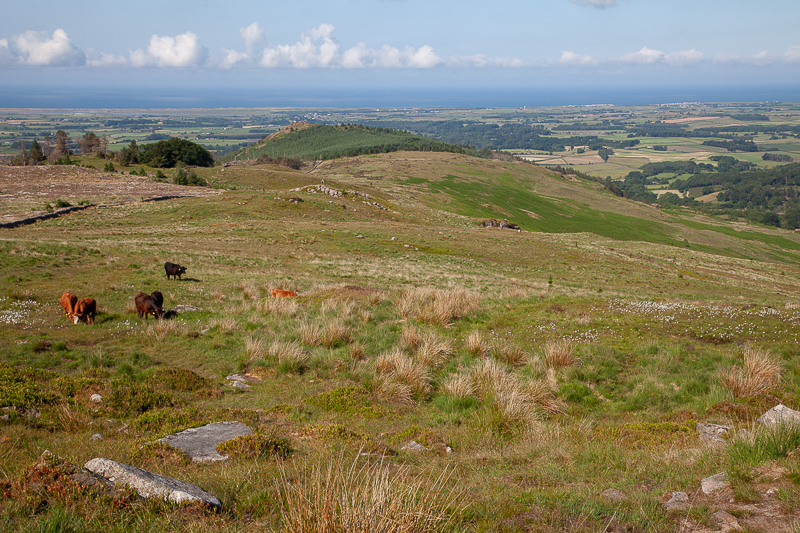
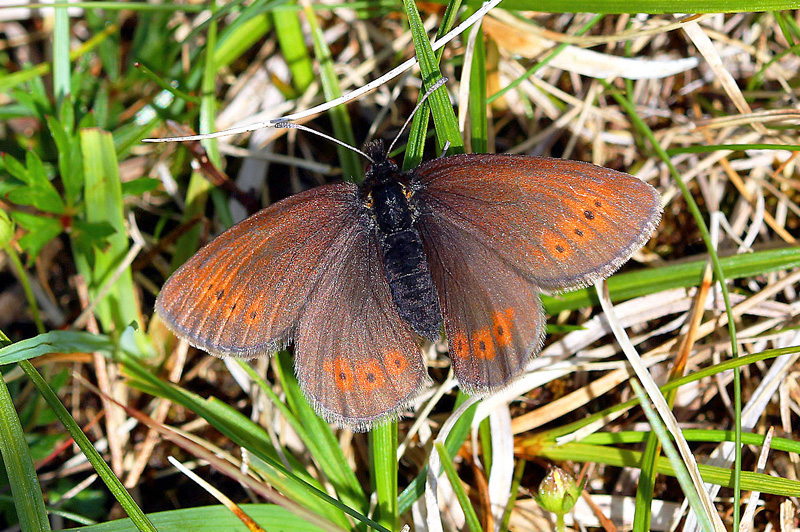
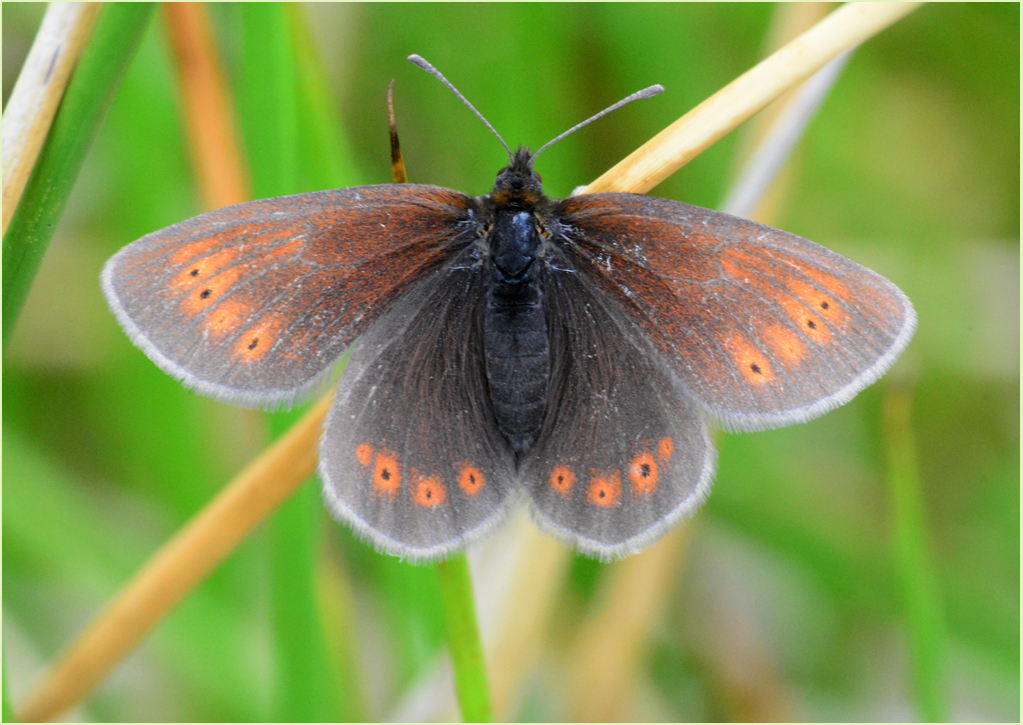
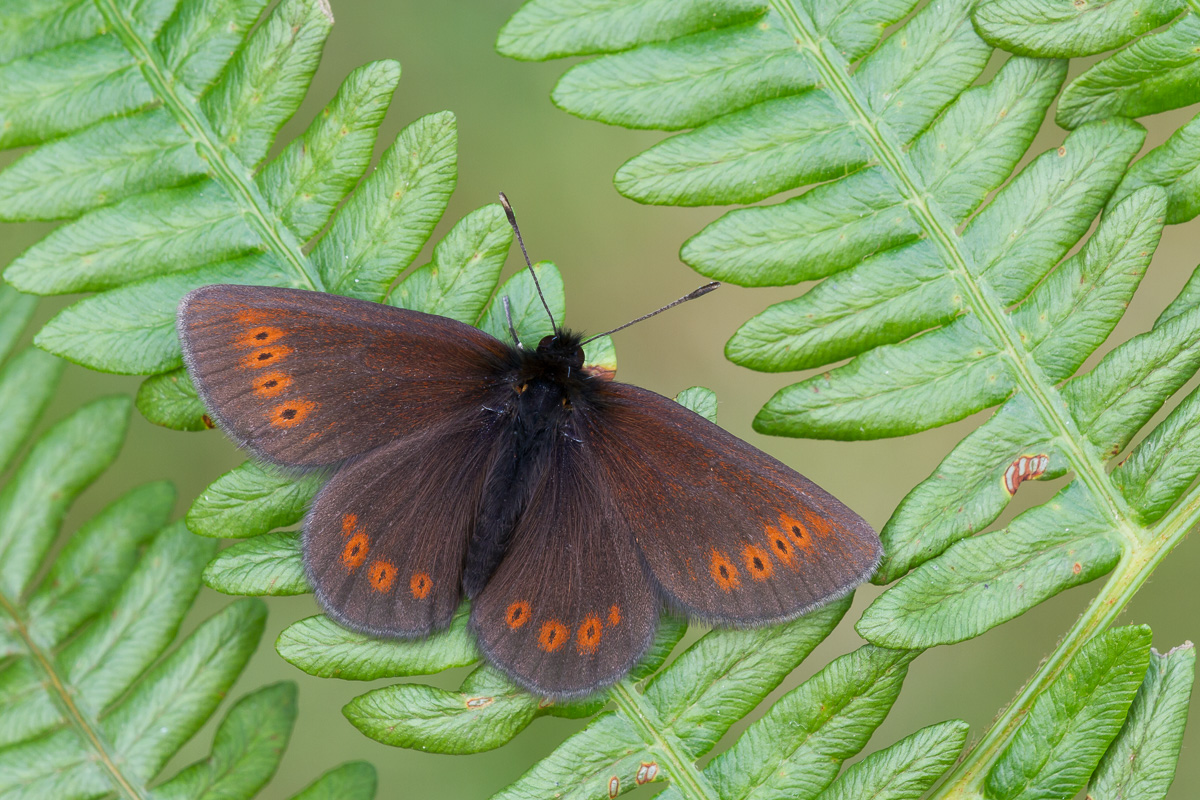
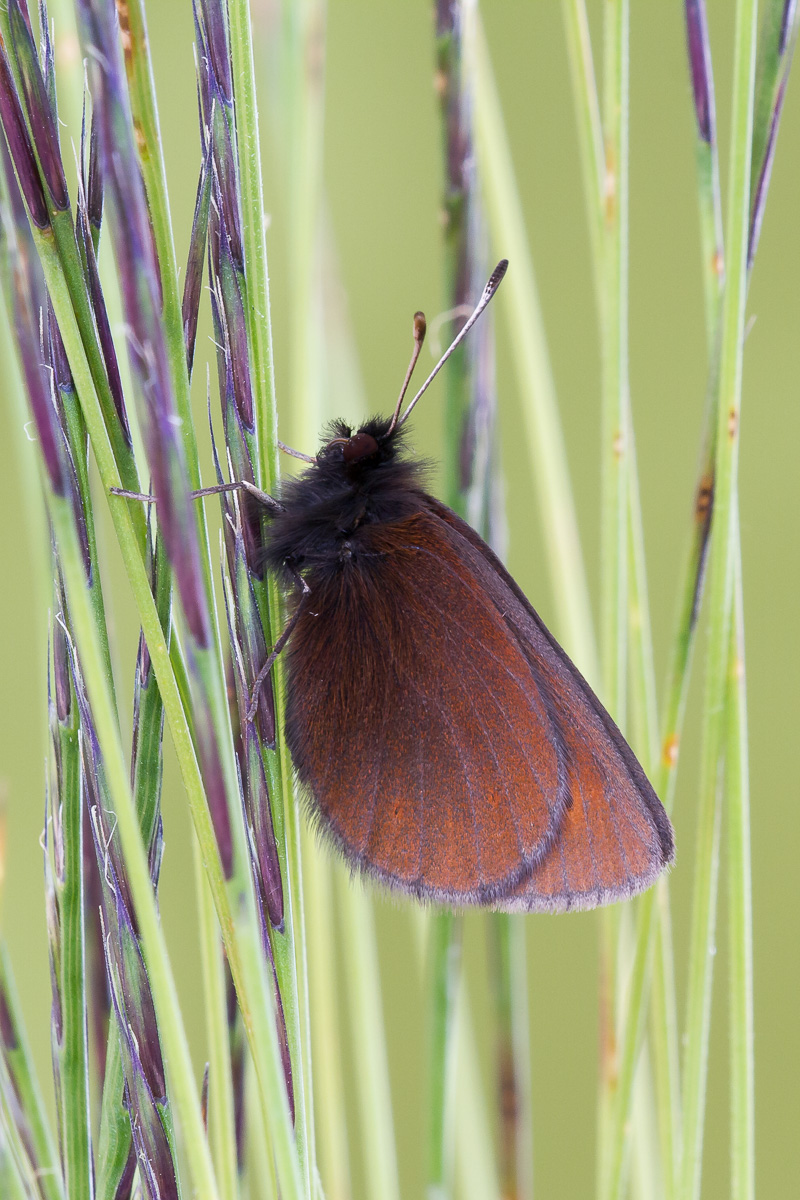
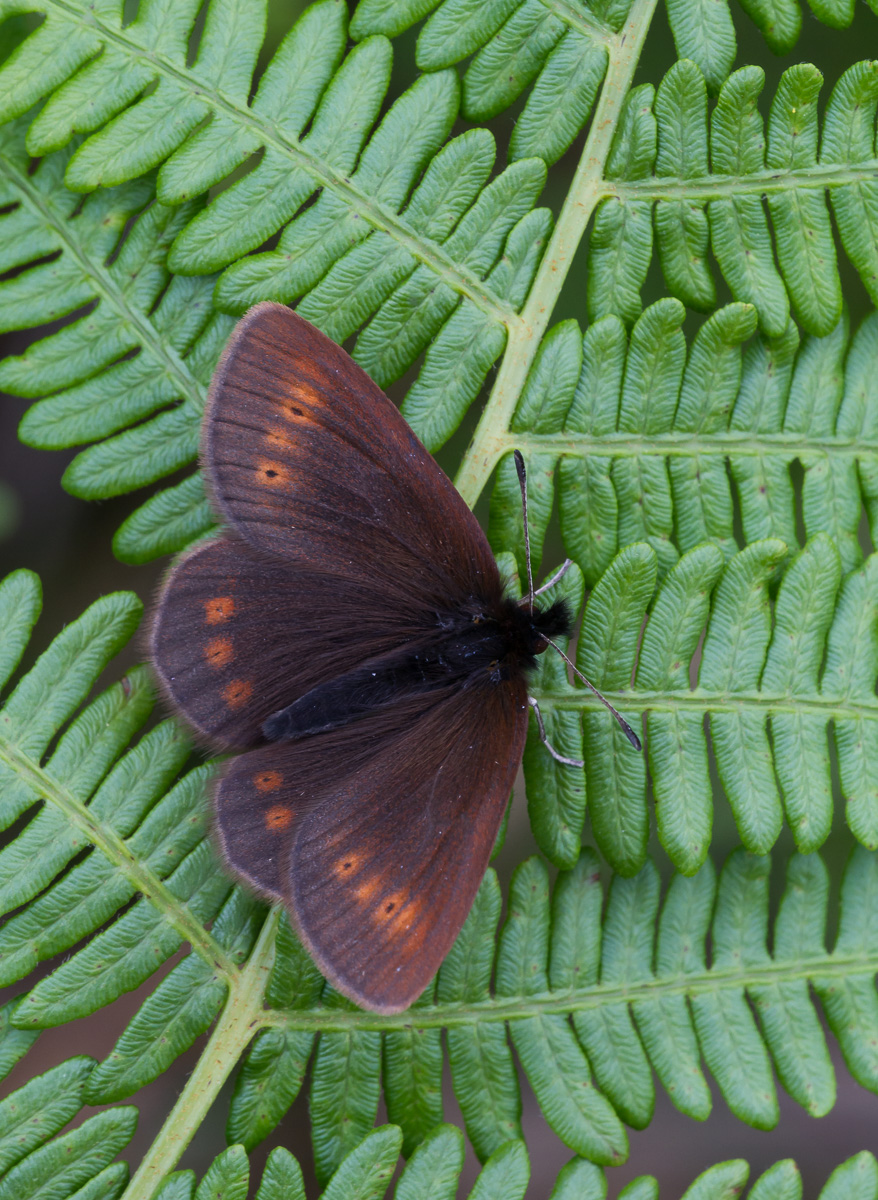
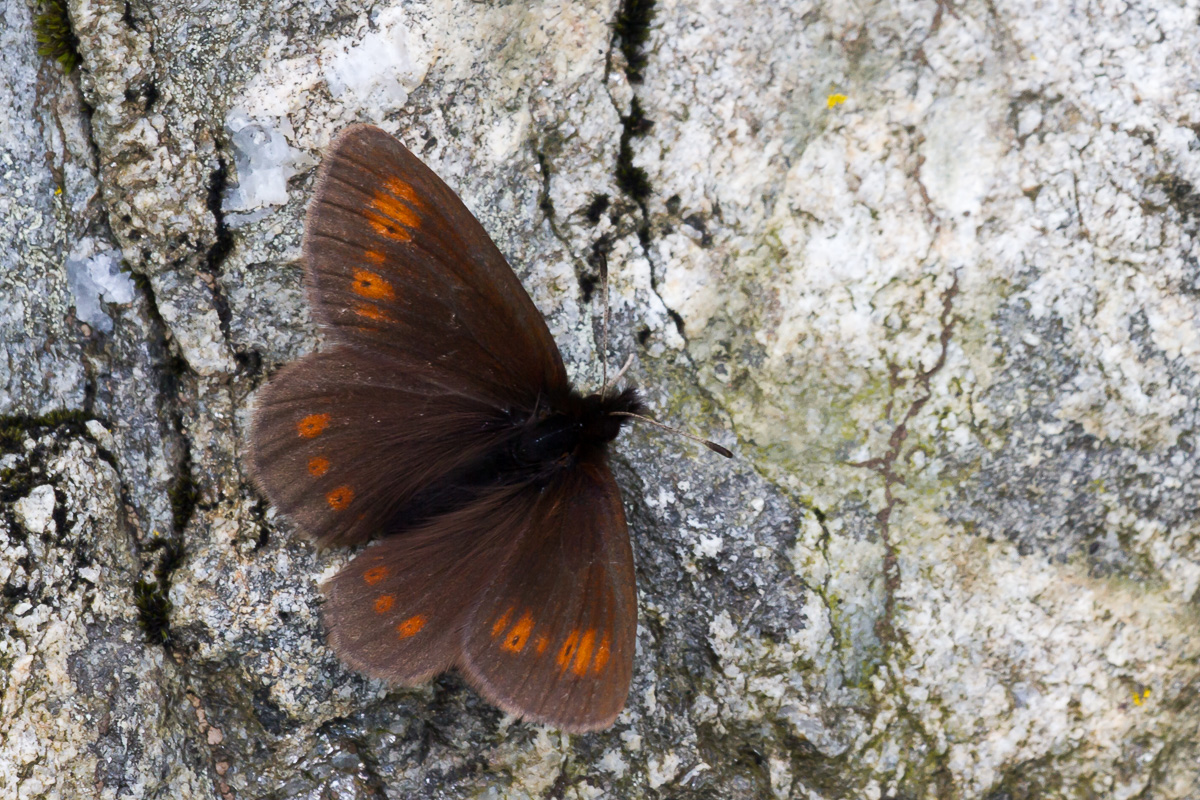
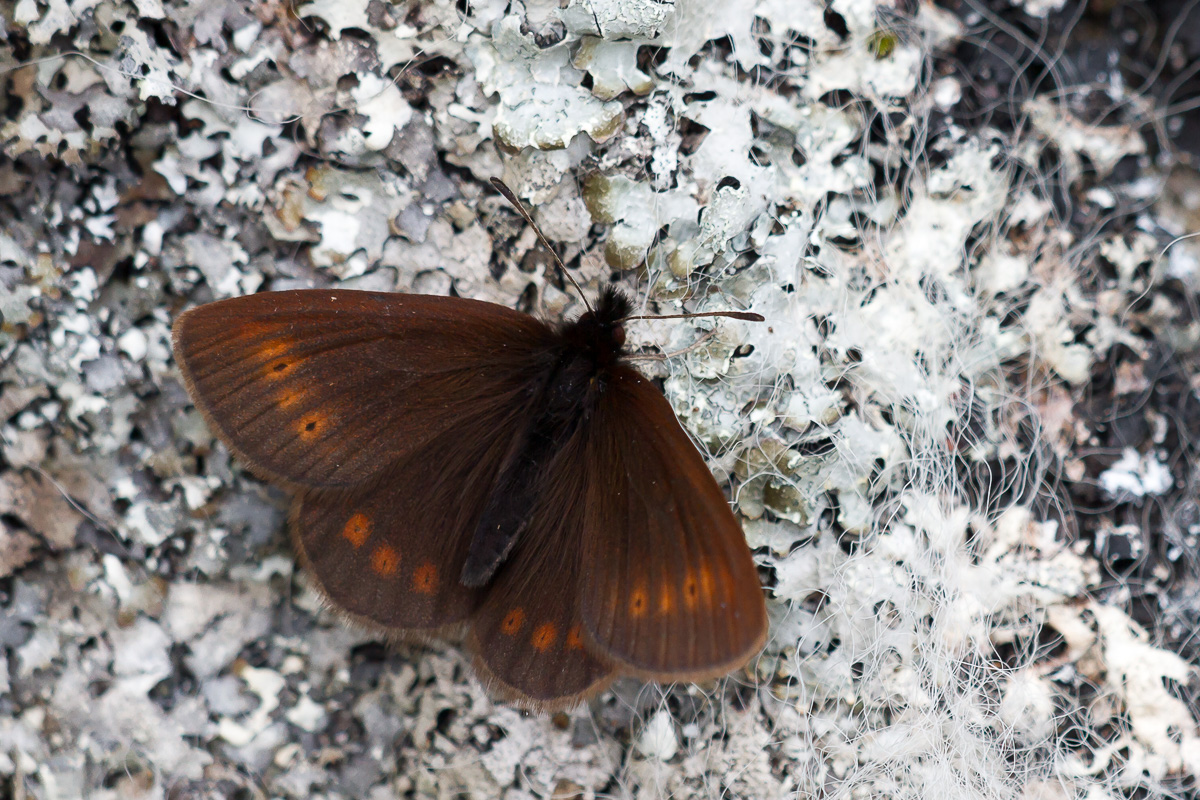
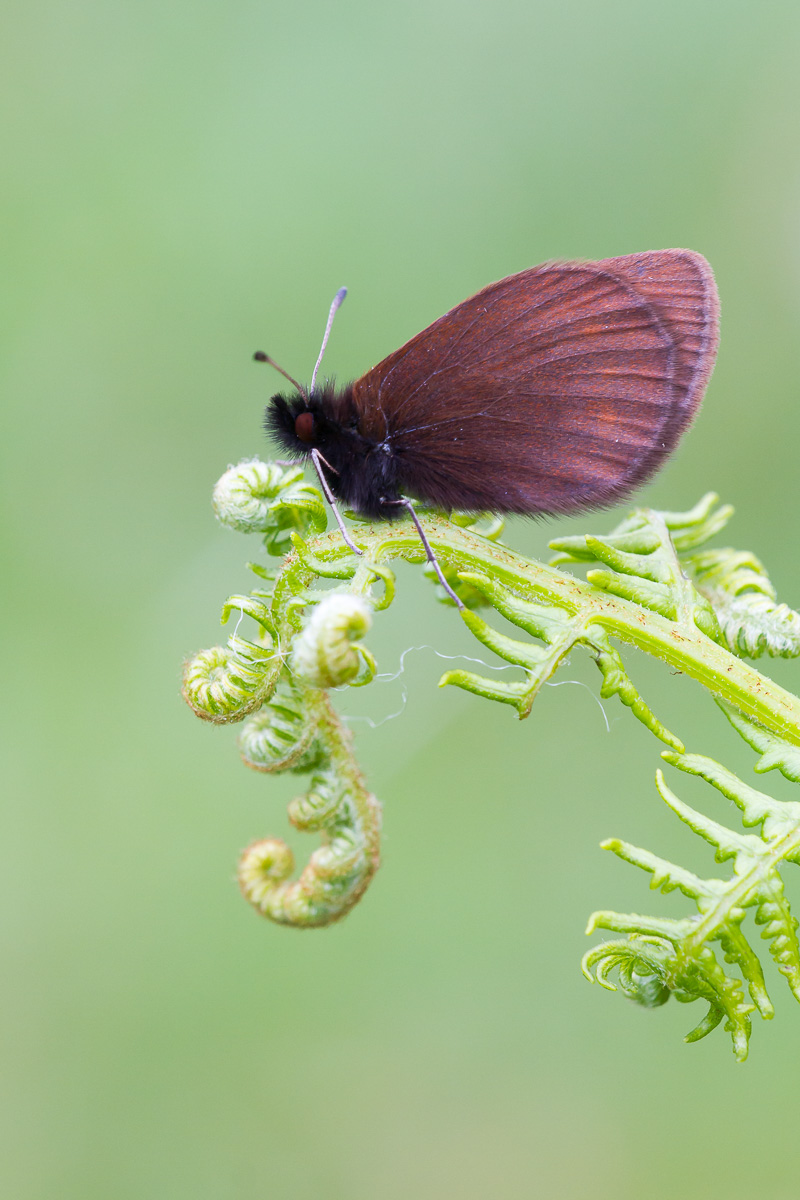
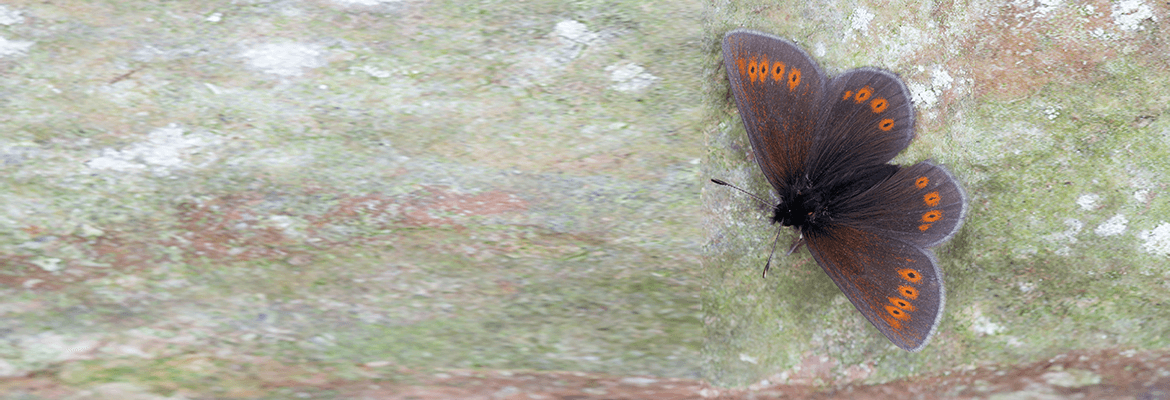
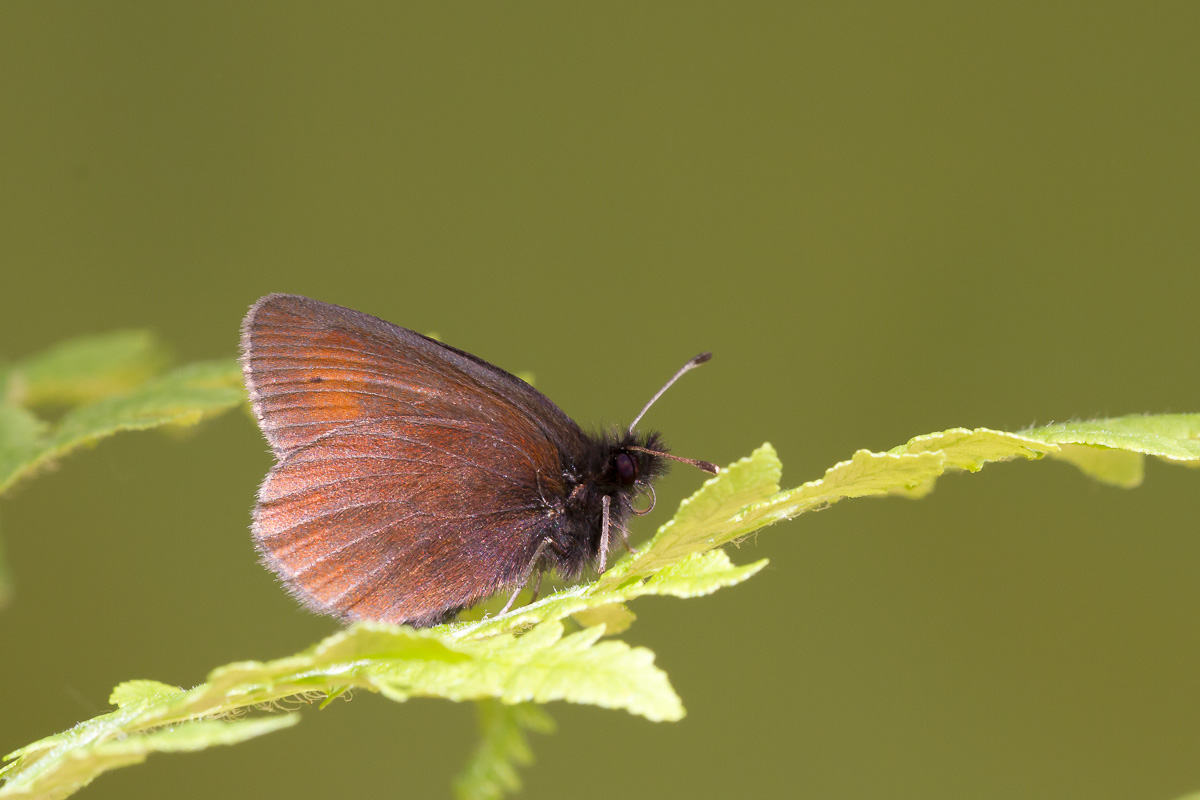
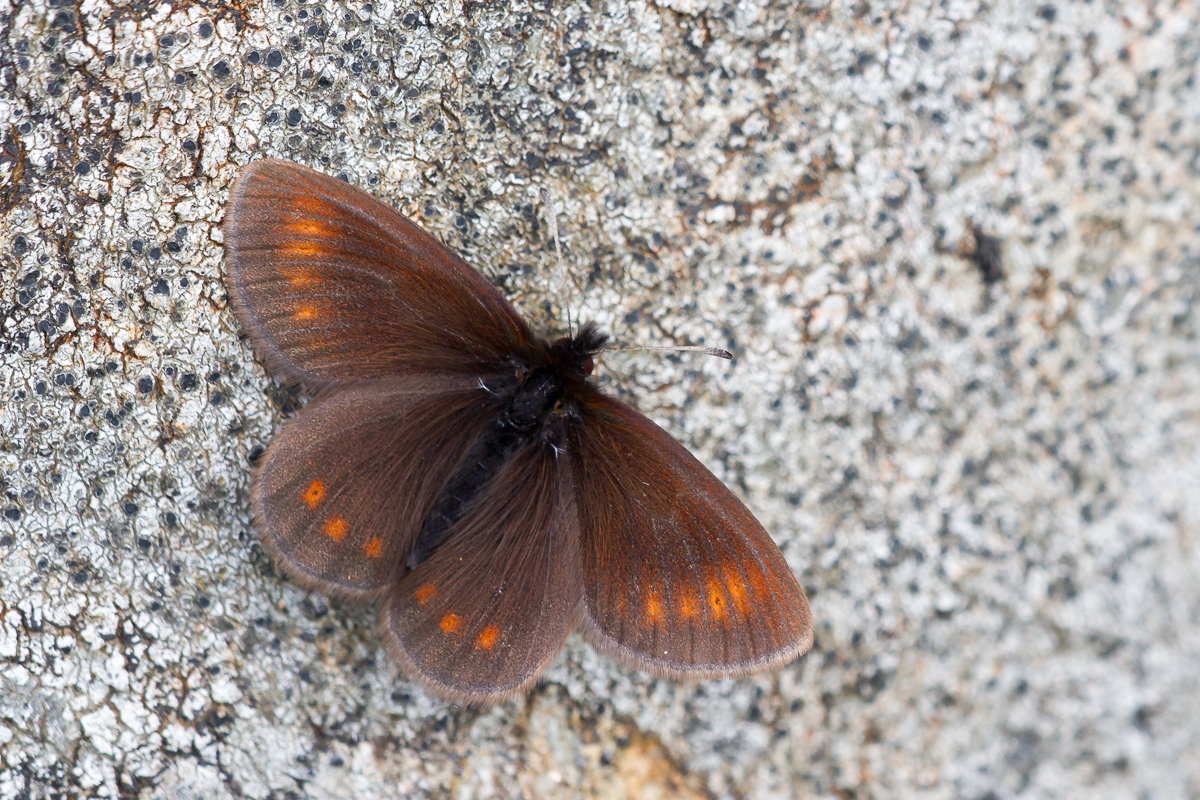
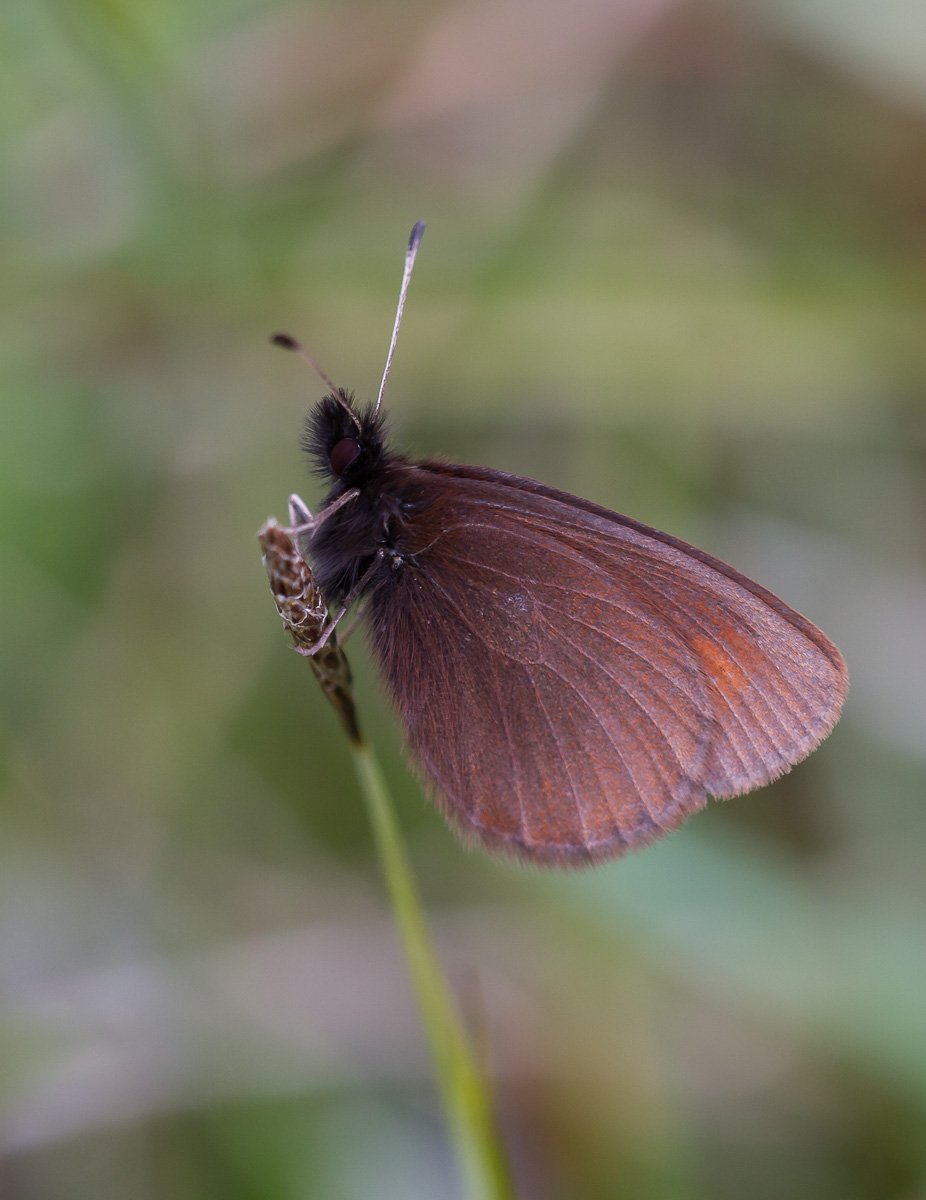
The Mountain Ringlet is one of our most difficult species to see. It is only found in discrete colonies in remote locations, has an extremely-short flight period and can be very difficult to find in anything other than bright sunshine, since the adults tend to remain sheltered deep in grass tussocks in overcast and cool conditions. Given the right temperature this butterfly will take to the air as soon as the sun shines, bringing an apparently dormant landscape to life. As its name suggests, this butterfly is found in mountainous areas, typically at altitudes between 450 and 800 metres above sea level. The butterfly forms discrete colonies in particular areas of the mountains they inhabit and, on good sites, may be seen by the hundred.
This butterfly is found in two main regions in the British Isles. In England, it is found in the Lake District of Cumberland and Westmorland. It is also found in western central Scotland, primarily in the counties of Argyllshire, West Inverness-shire and Mid Perthshire with a few scattered colonies elsewhere. The butterfly is surprisingly absent from Snowdonia and the Pennines.
On the basis of four specimens in total, this butterfly is also thought to have occurred in Ireland. There is quite a lot of history associated with the Irish Mountain Ringlet as discussed in this related article.
It is believed that this butterfly was one of the first to recolonise the British Isles after the last ice age. Despite this heritage, this species is a relatively-recent discovery, with the Lake District population being discovered in 1809 in Ambleside, Westmorland, and the Scottish population in 1844 in Perthshire.
The species was first defined in Knoch (1783) as shown here (type locality: Harz Mountains, Germany). The nominate subspecies has not been recorded in Britain or Ireland.
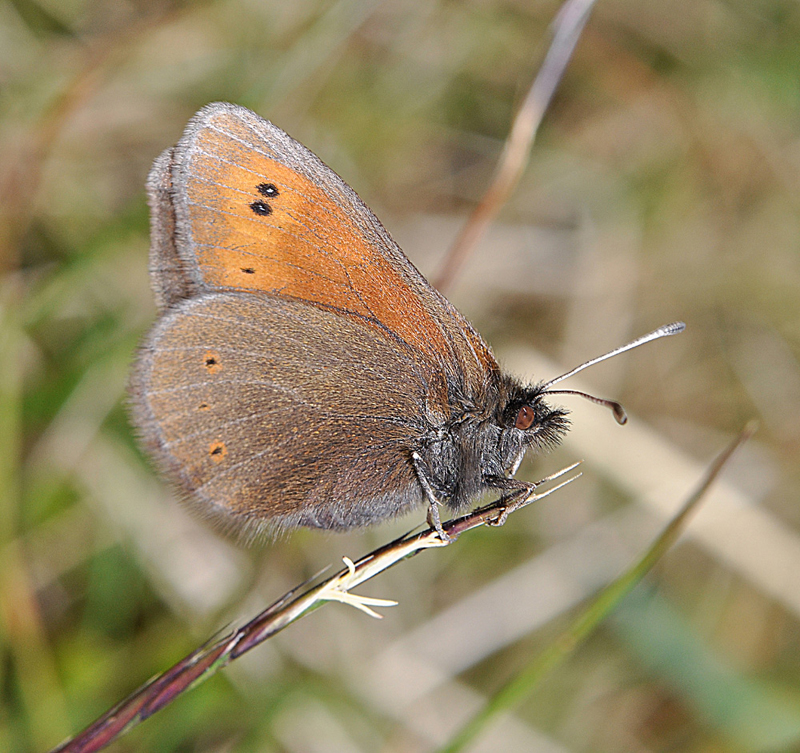
This subspecies was first defined in Haworth (1812) as shown here (type locality: Red Screes, Cumbria, England).
This subspecies is found in the Lake District. According to Warren (1936), Haworth (1812) incorrectly states the type locality as Scotland although Stoddart's specimens, the source of Haworth's description, were taken at Red Screes, near Ambleside in Westmorland.
Original (Latin)
alis supra nigro-fuscis, fascia postica communi annulari, annulis coccineis.
Habitat in Scotia.
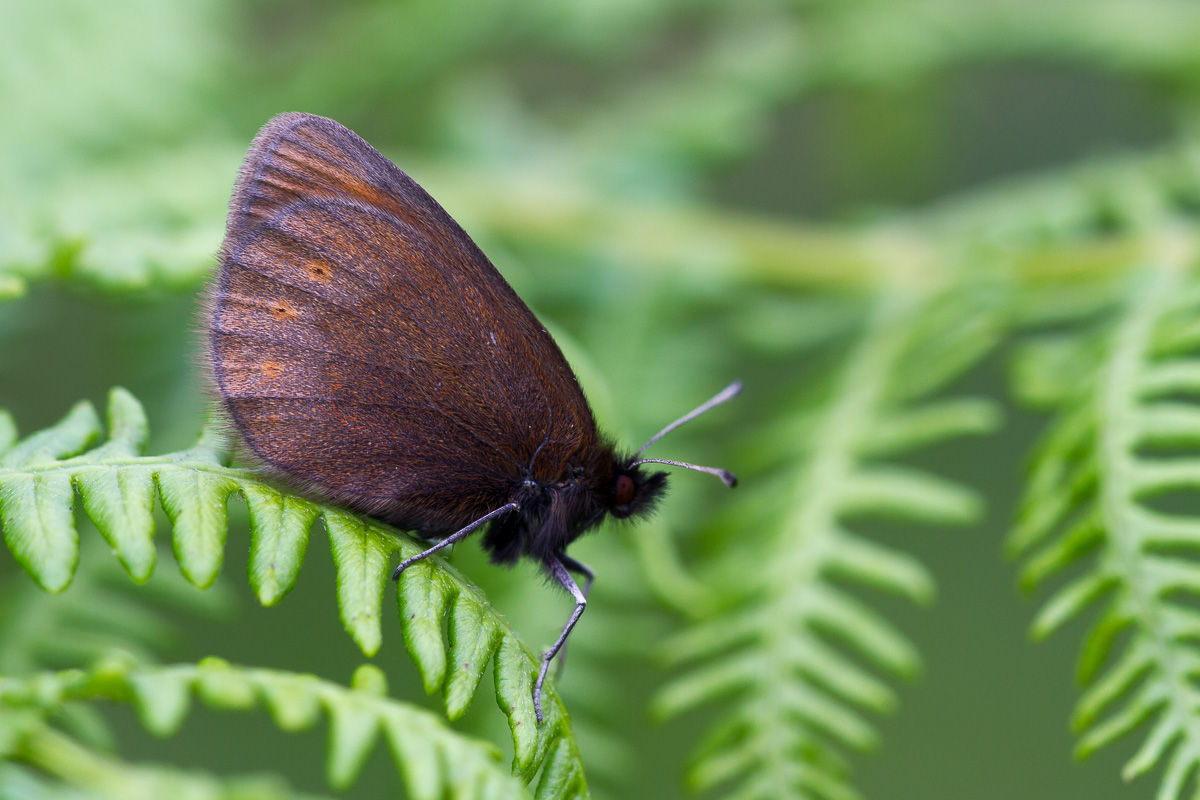
Obs. Statura et magnitudo Pap. Pamphili. Alae anticae supra annulis quatuor, horum tertius dimidiatus et aliquantillum exterior. Posticae alae annulis tantum duabus, vis. secundus et quartus anticarum alarum. Subtus alae cupreo-fuscae, anticae punctis subtribus fere evanescentibus fuscis fulvo obscure circumcinctis, loco annulorum: posticae fere omnino impunctatae.
In Museo Dom. Francillon, a captore Dom. Stoddart.
Translation
Wings blackish-brown above, the rear band on both wings ringed, with scarlet rings.
Lives in Scotland.
Obs. Size of Pap. Pamphilus. Forewings with four rings above, of which the third is diminished and slightly displaced outward. Hindwings with only two rings, corresponding to the second and fourth of the forewings. Wings coppery brown beneath, the forewings with about three almost vanishing dark points surrounded by ill-defined reddish yellow, in the place of rings: hindwings generally without spots at all.
In the Museum Dom. Francillon, from the collector Dom. Stoddart.
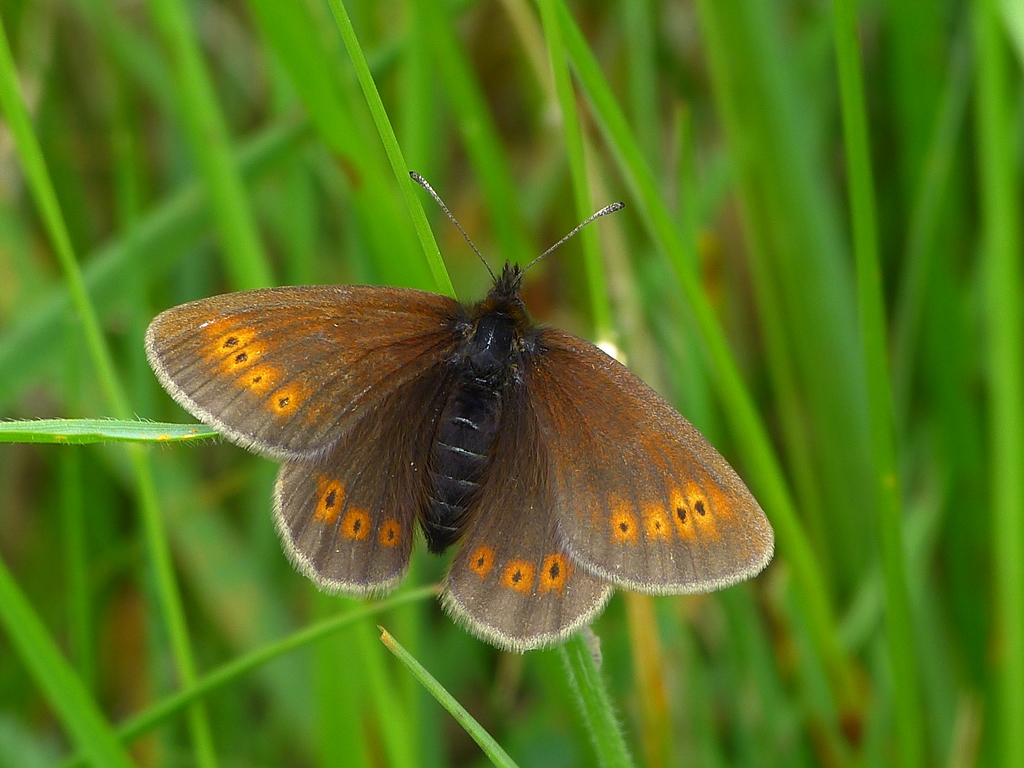
This subspecies was first defined in Cooke (1943) (type locality: Loch Rannoch, Perthshire, Scotland).
This subspecies is found in northern Scotland, north of a line between the Clyde Isles in the west and North Aberdeenshire in the east. It is found in most of the western isles and is also present in Orkney. This form differs from ssp. mnemon as follows:
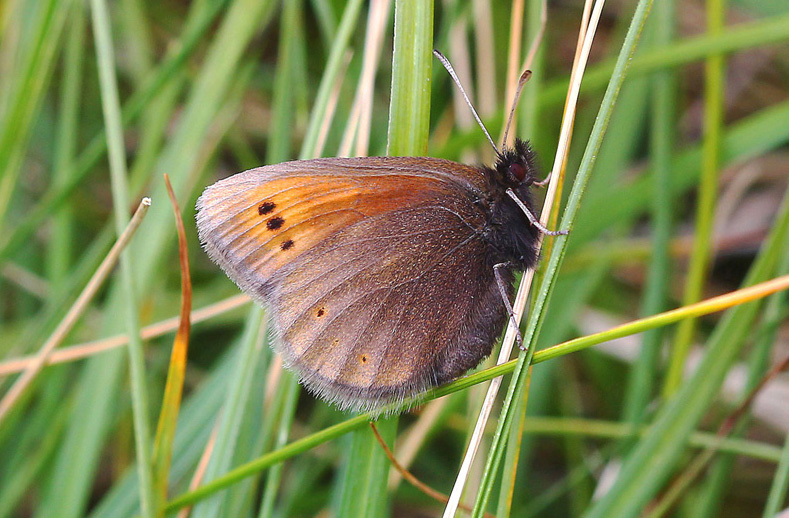
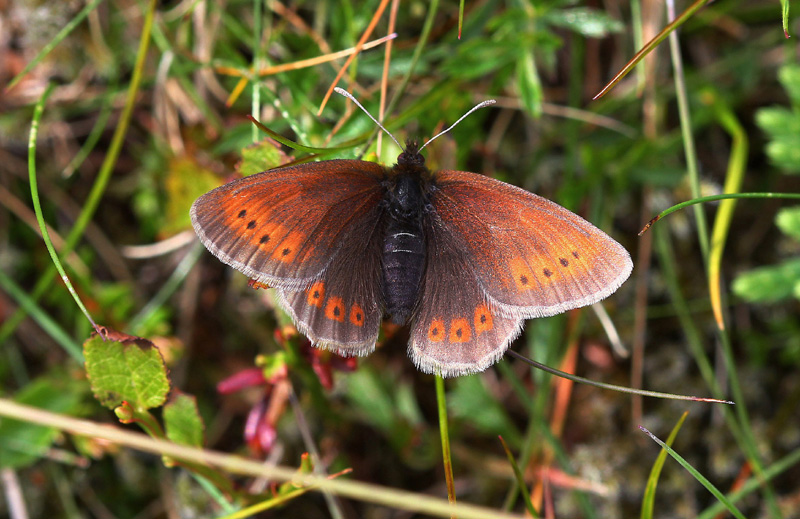
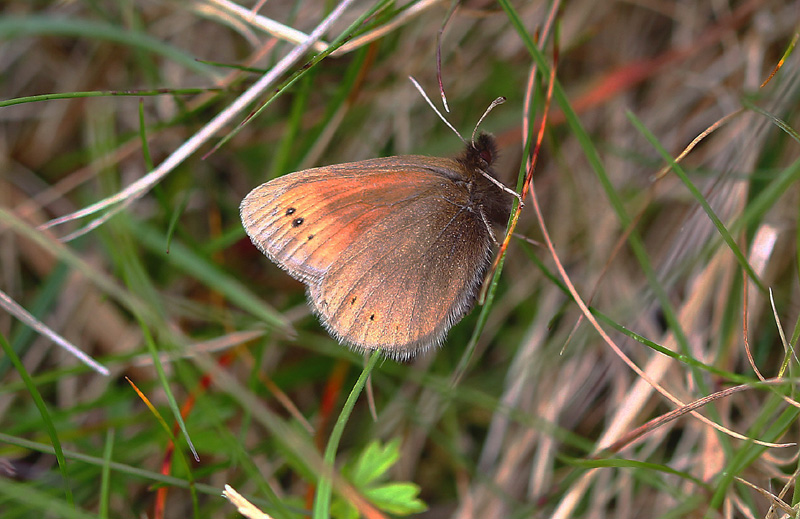
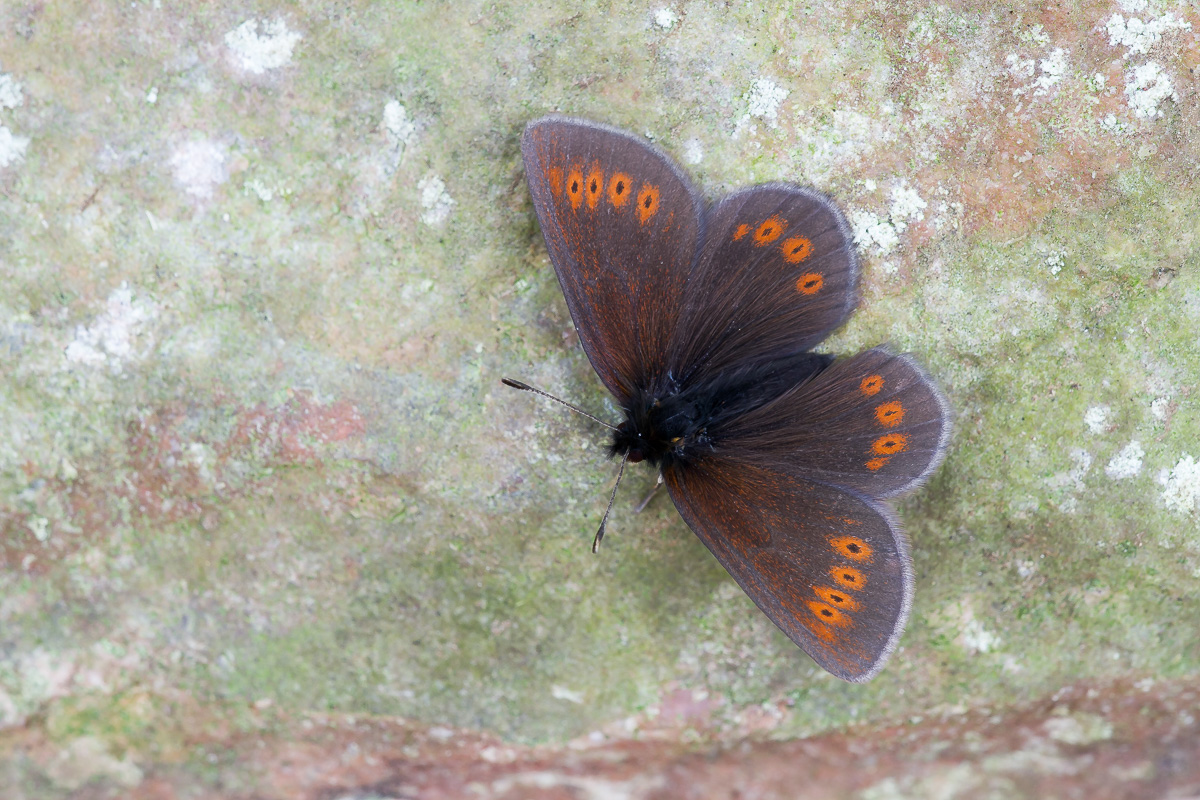
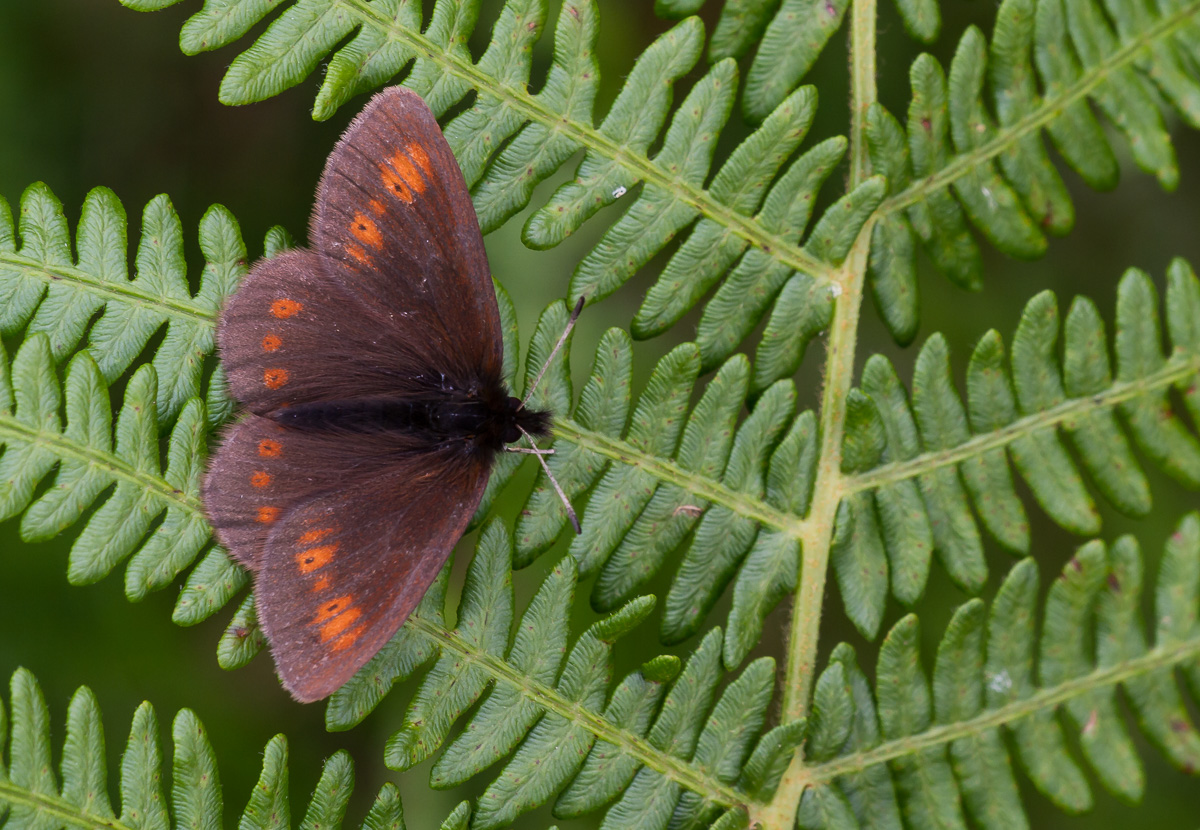
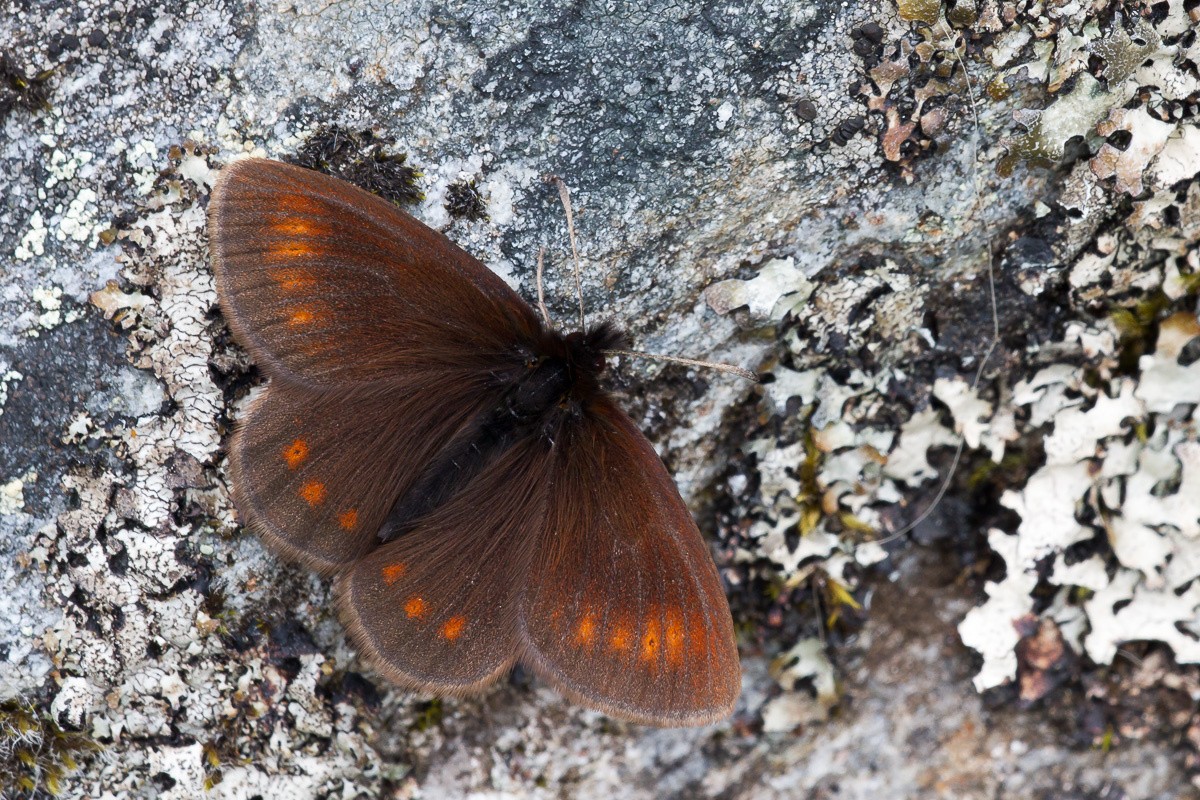
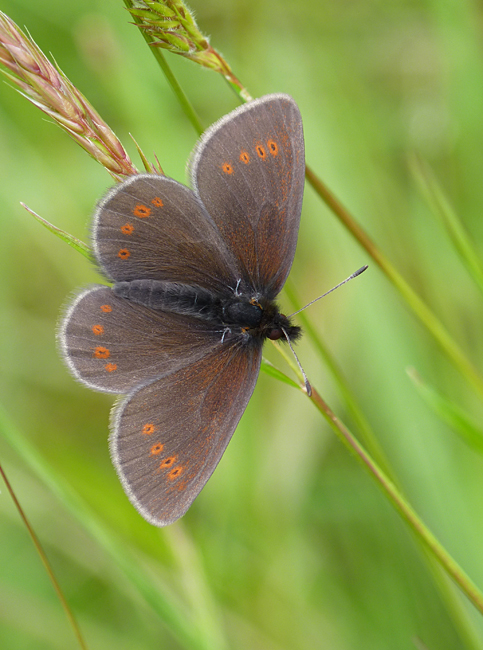
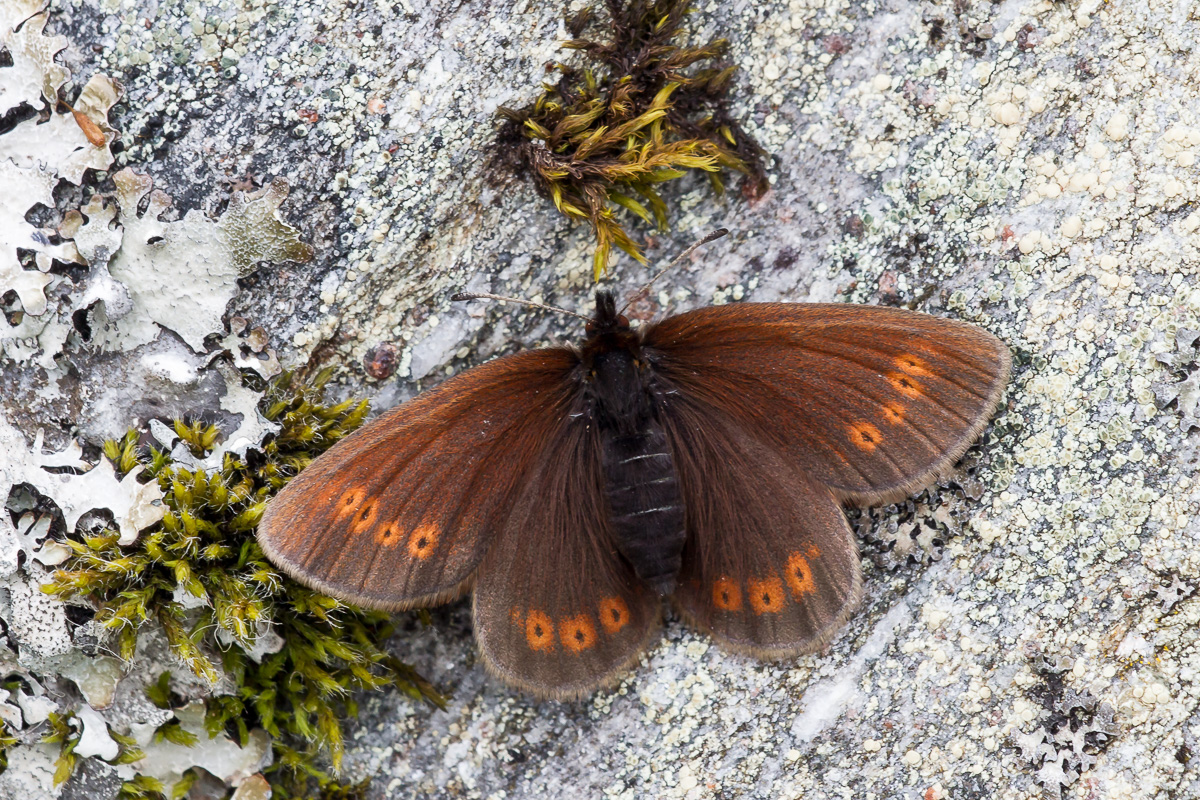
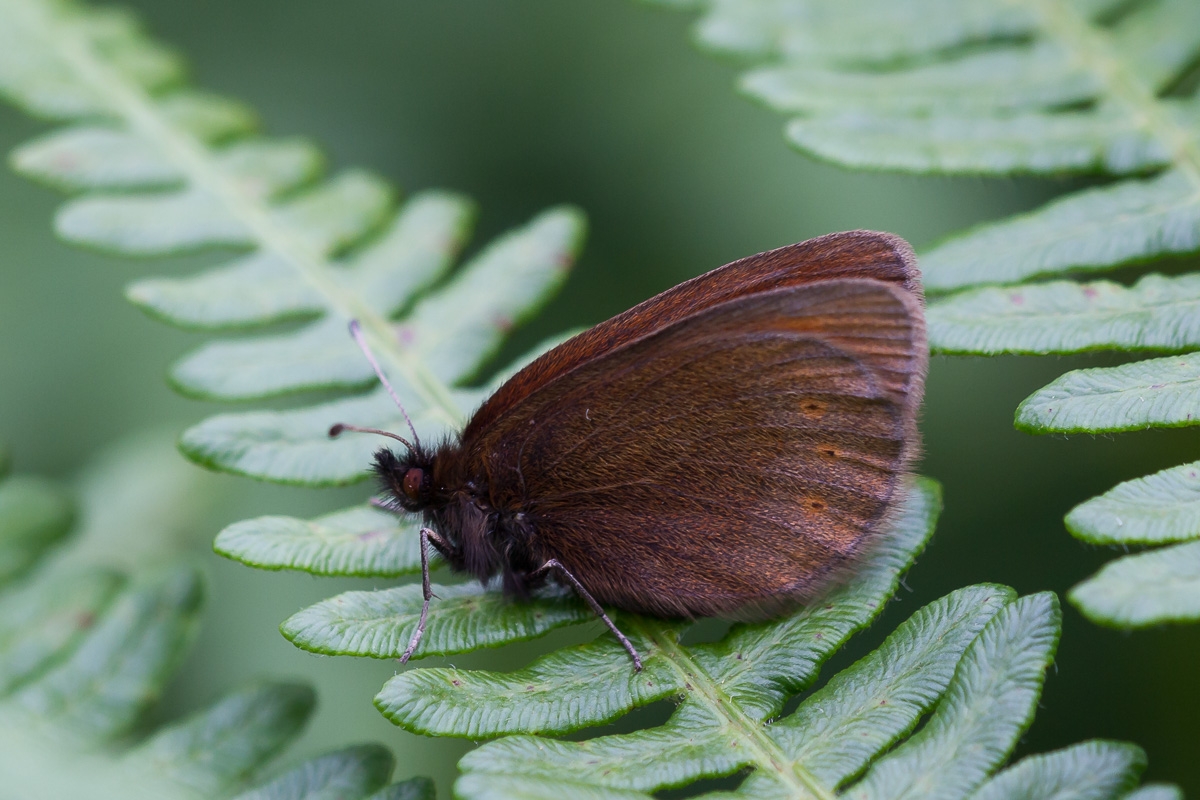
♂. On the upperside of the fore wings of the Scottish race there is a series of six or seven broad elongated bright red spots, almost forming a band, though interrupted by the veins, rather as in the illustrations of subsp. mackeri on Plate 67 (figs. 754 and 756) of Warren's Monograph of Erebia [Warren (1936)]. In all but one of my 24 specimens this band extends below vein 2. In the Westmorland race the red spots are much less conspicuous and narrower (i.e. less elongated), and do not normally extend below vein 2. It is altogether a more insignificant and duller insect. The black dots inside some of the red spots are considerably larger and more pronounced in the Scottish race. I took one or two with broad elongated red spots entirely lacking in red dots. On the underside of the fore wings the uninterrupted red band is also more conspicuous and better defined in the Scottish race. It measures about 4 mm. in breadth, except for the dent at the centre of the inner edge.
♂. Holotype 15.vii.42, Loch Rannoch, 1800 ft.
| Family: | Nymphalidae | Rafinesque, 1815 |
| Subfamily: | Satyrinae | Boisduval, 1833 |
| Tribe: | Erebiini | Tutt, 1896 |
| Genus: | Erebia | Dalman, 1816 |
| Subgenus: | ||
| Species: | epiphron | (Knoch, 1783) |
| Subspecies: | mnemon | (Haworth, 1812) |
| scotica | Cooke, 1943 |
Description to be completed.
The distribution data (2000-2009) has been made available through the generosity of Butterfly Conservation and any subspecies distribution is taken from Riley (2007). Click here to see the distribution of this species together with site information overlaid.
This is one of the more difficult species to monitor given its remote habitats and is generally considered to be under-recorded. However, it is known to have declined at several low altitude sites, possibly as a result of global warming, and is therefore a priority species for conservation efforts.
The table below shows the occurrence (distribution) and abundance (population) trends, using information from The State of the UK's Butterflies 2015 (Fox, 2015). Any UK BAP status is taken from the UK Biodiversity Action Plan (UK BAP) (2007 review).
1976-2014 (%) | 1976-2014 (%) | 2005-2014 (%) | 2005-2014 (%) | Click here to access the Biodiversity Action Plan (BAP). |  -63 -63 | Insufficient Data |  -19 -19 | Insufficient Data |
|---|
There is one generation each year, with adults emerging at the start of June in the Lake District and early July in Scotland. The flight period is extremely short at any given site, in the order of a few weeks only.


When weather conditions are suitable, males can be seen patrolling back and forth low over the ground, in search of a mate. Any brown object is investigated in the hope of finding a virgin female. The female, on the other hand, is much more sedentary - typically waiting among the grasses for a male to find her. Courtship is brief and a virgin female is quickly mated. She continues to spend most of her time hidden away among the grasses, emerging only to lay or feed from whatever nectar sources are available. Males are also known to take in minerals from damp soil.
Adults feed primarily on Bilberry (Vaccinium myrtillus), hawkweeds (Hieracium spp.), Heath Bedstraw (Galium saxatile), Meadow Buttercup (Ranunculus acris), Tormentil (Potentilla erecta) and Wild Thyme (Thymus polytrichus).
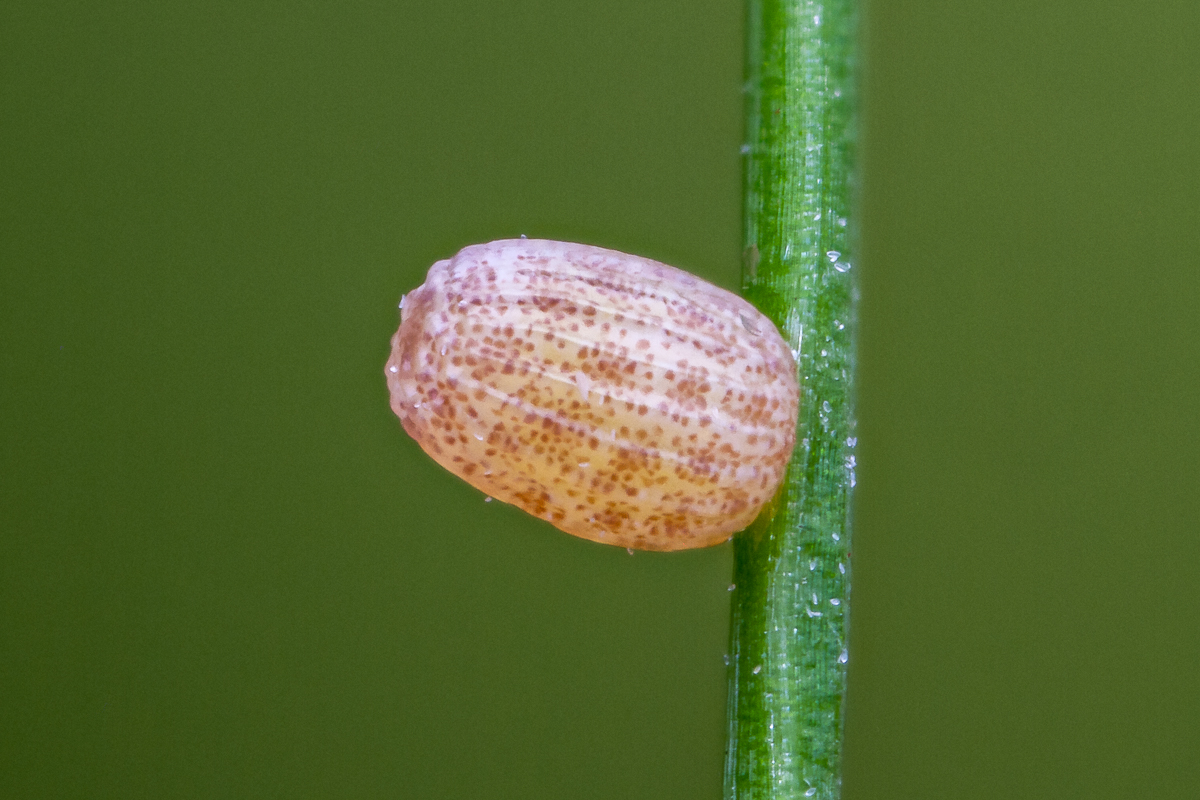
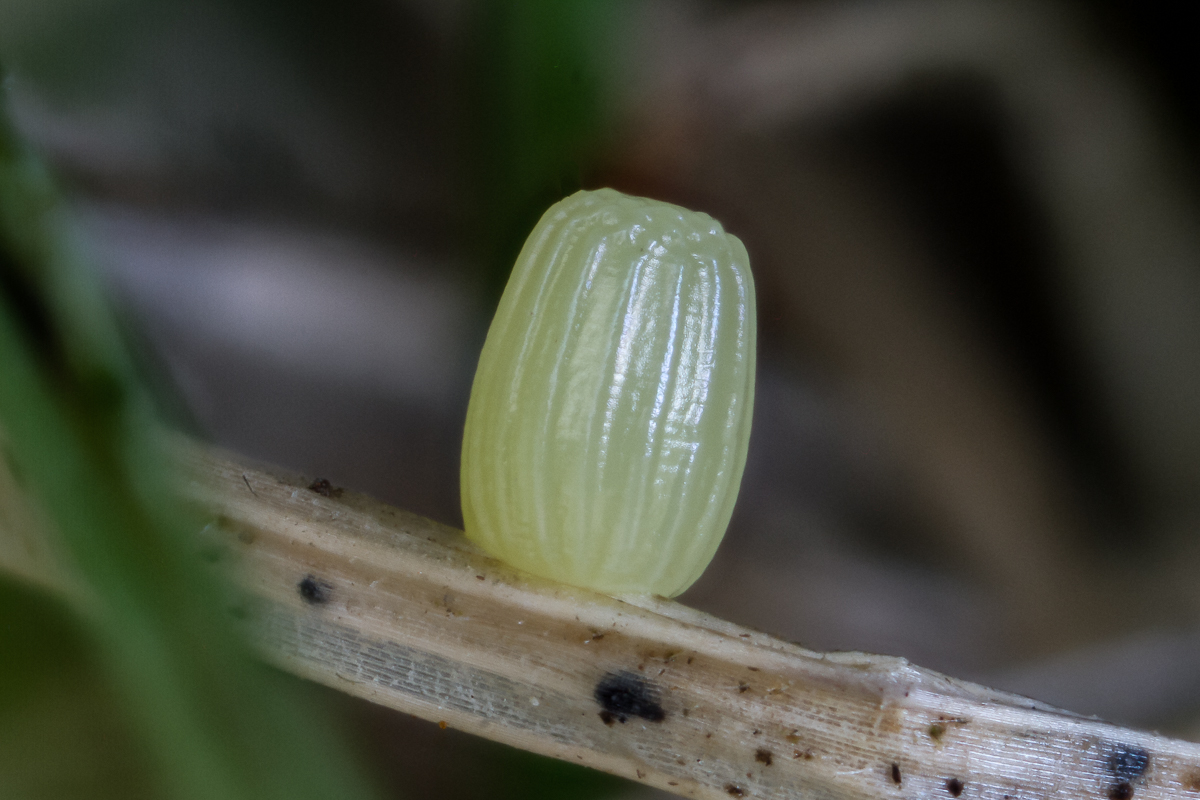
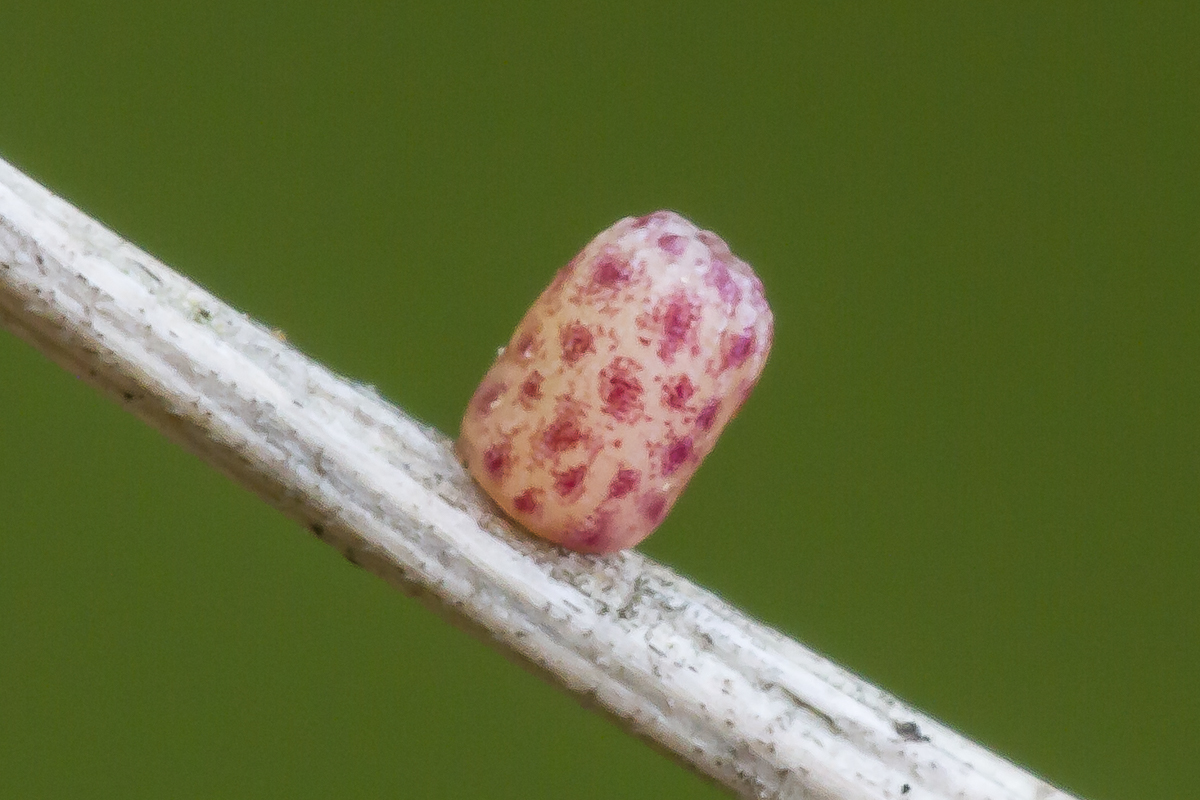
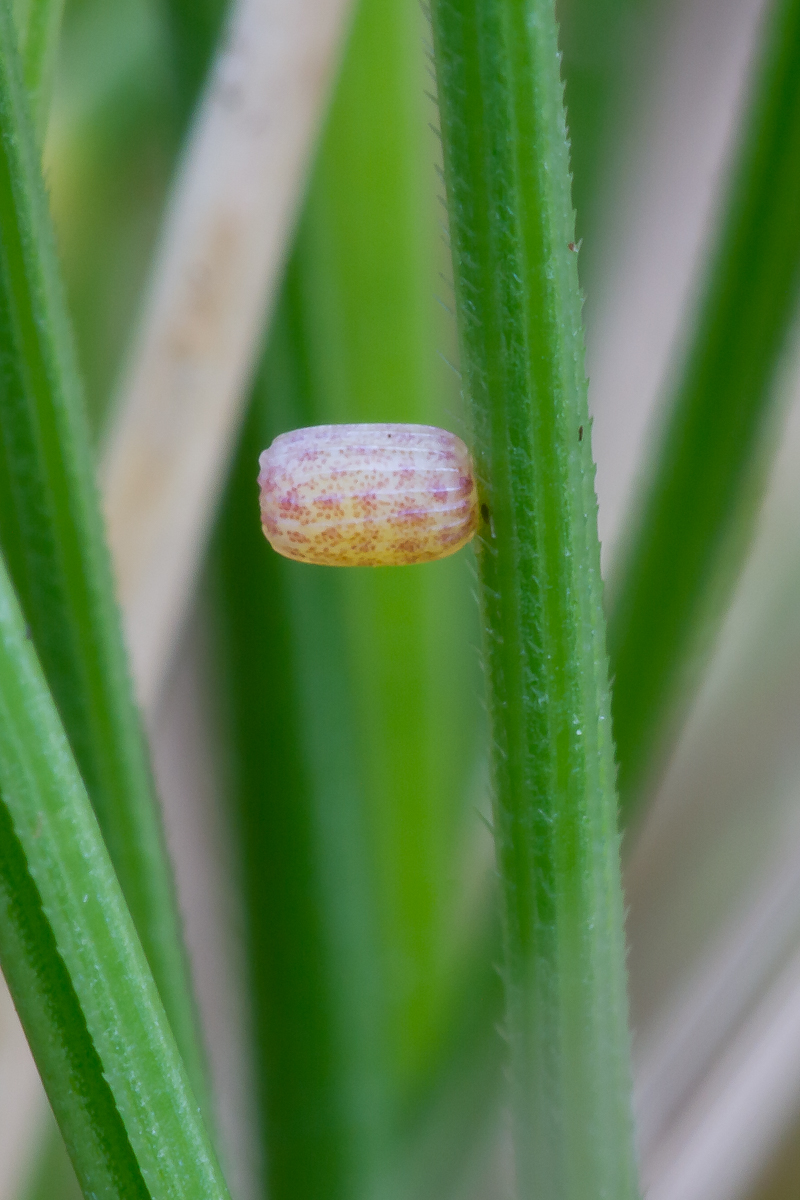
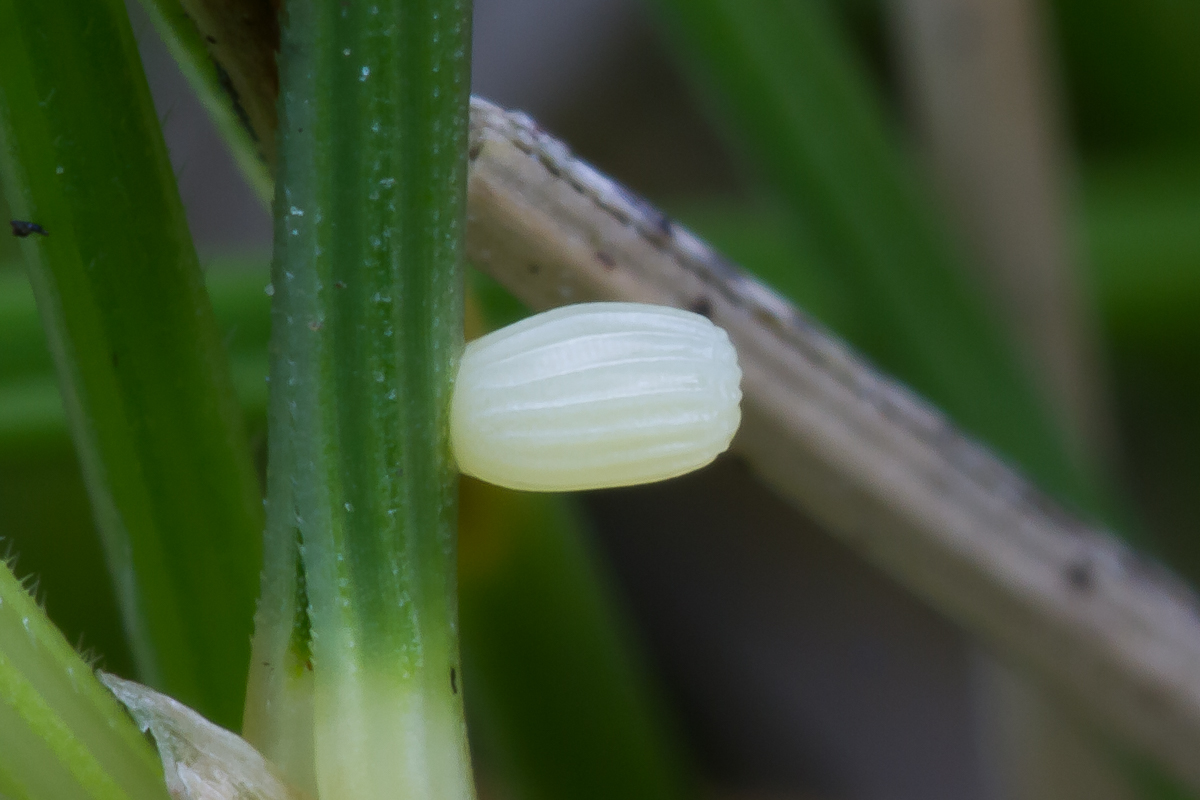
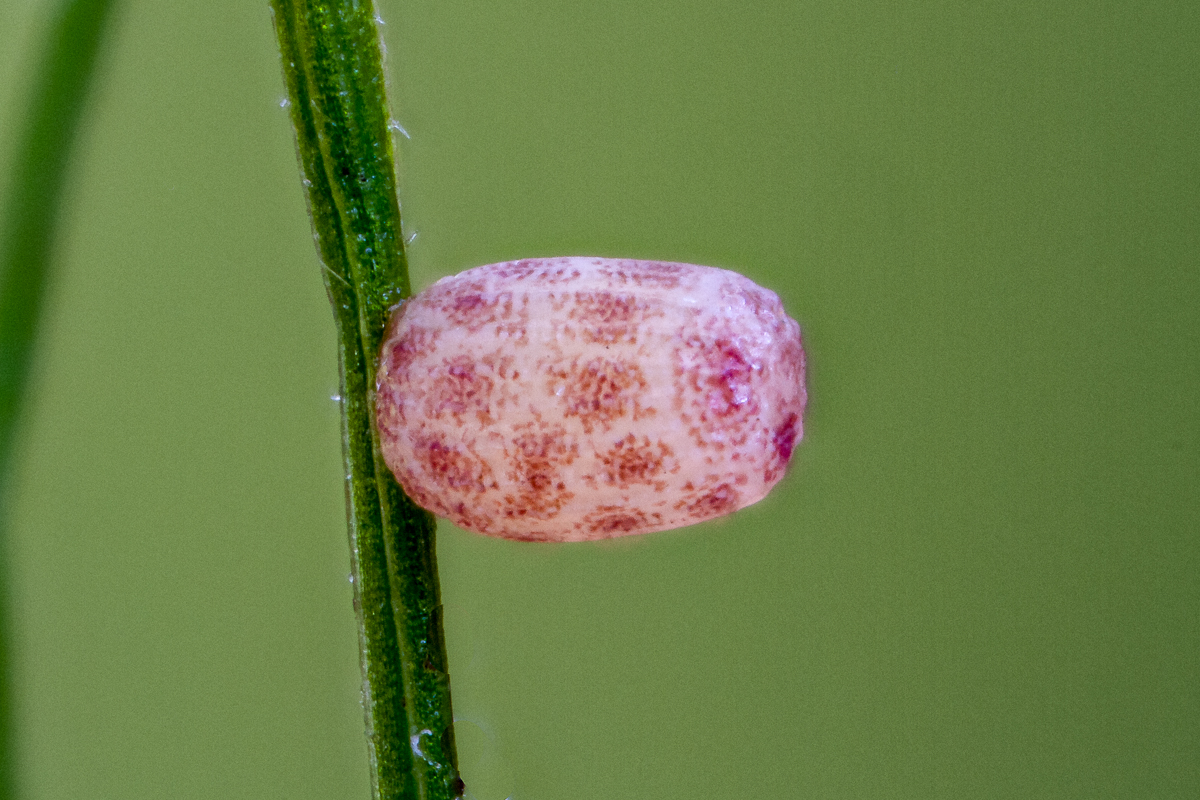
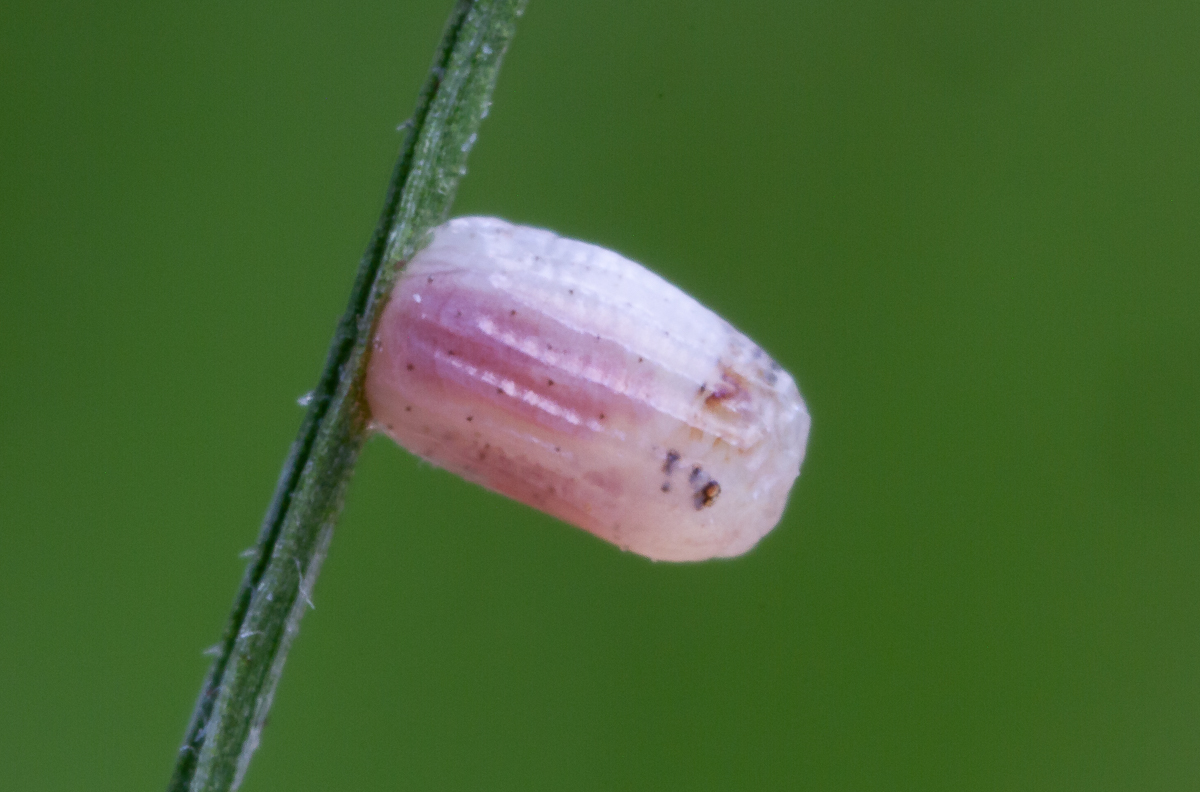
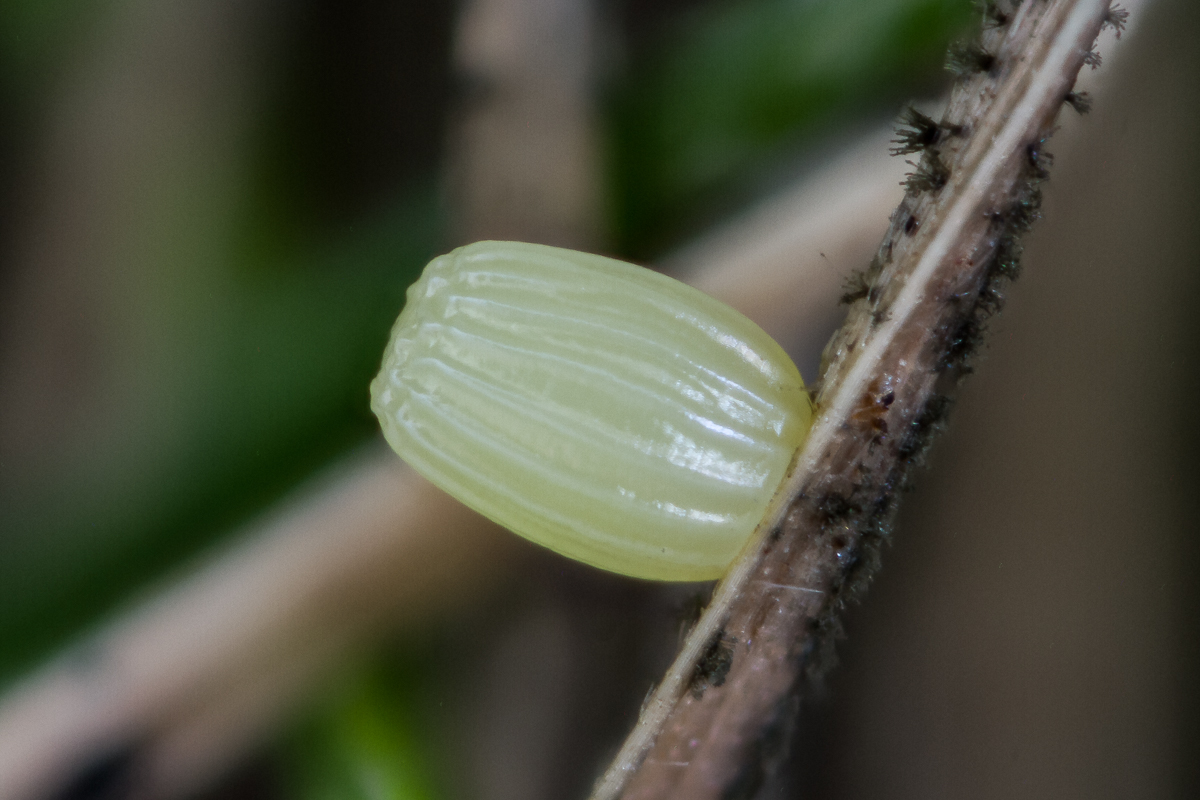
Eggs are laid singly on a blade of Mat-grass. They are pale cream when first laid, but develop brown blotches after a few days. This stage lasts 2 or 3 weeks depending on the weather. The egg is relatively-large compared with the size of the butterfly, with each female laying up to 70 eggs.
"Epiphron deposits its eggs singly on mat grass (Nardus stricta), which is the only food plant of the larva in a state of nature. Eggs laid July 6th, hatched July 24th, remaining eighteen days in the egg state. The egg is rather less than 1 mm. high, standing erect, of an oblong shape, rather fullest below the middle, with a flattened crown and rounded base. There are from eighteen to twenty longitudinal keels, some rising just below the crown, where they form a ridge, above which are angular projections; the surface between the keels is very finely ribbed transversely, the micropyle is very slightly sunken. The whole structure is irregular and asymmetrical. The colour when first laid is a bright clear yellow, which gradually becomes rather duller; on the fourth day it is speckled and blotched with pale reddish-brown; these blotches gradually deepen into rust-red; afterwards it assumes a deeper drab hue, and finally the young larva shows plainly through the delicate shell, and hatches on the eighteenth day." - Frohawk (1924)
The larva eats its eggshell after hatching and selects the tenderest leaf tips on which to feed. As winter approaches, the larvae will crawl deep into grass tussocks where they hibernate. They emerge in the spring and recommence feeding. It is believed that some slow-developing larvae may spend two years in this stage, usually the result of a late spring and short summer.
Please note that Frohawk described 4 instars, several papers describe 5 instars, and Eeles (2019) describes 6 instars, which is used as the basis here. Frohawk's descriptions have therefore been realigned with 6 instars.
The primary larval foodplant is Mat-grass (Nardus stricta). Sheep's-fescue (Festuca ovina) is also used.
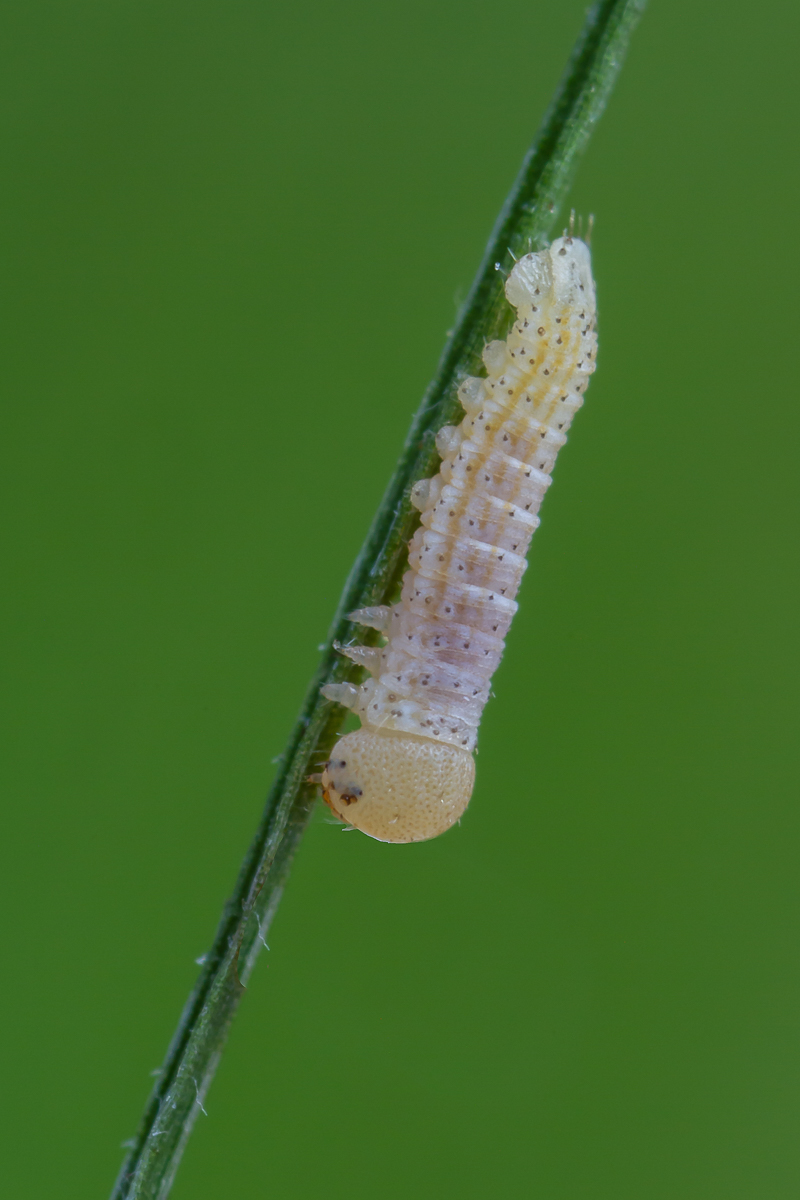
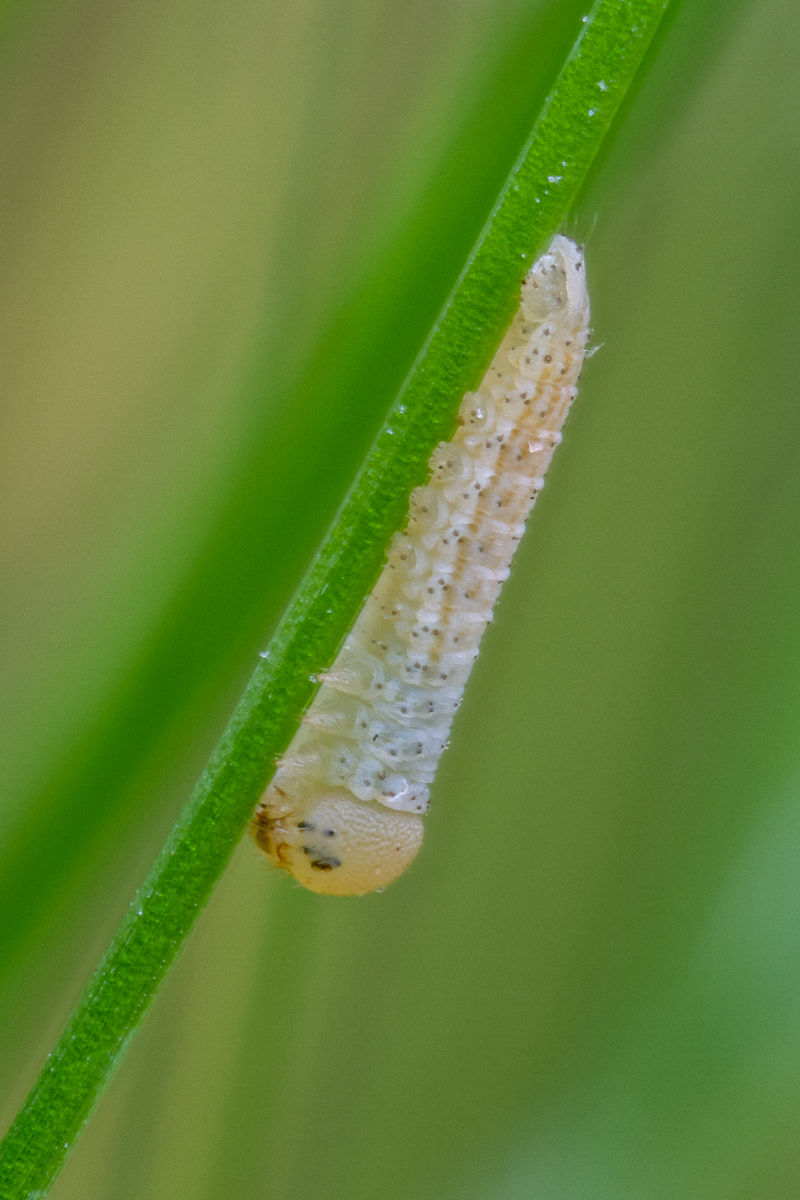
"The larva makes its exit by eating away the crown of the egg. Directly after emergence the larva measures 2 mm. long. The head is large and rounded, the surface rather deeply punctured; the clypeus is very finely outlined; there are about two dozen minute brown warts scattered over the surface, each emitting a short whitish bristle; the eye spots are black and brown, the mouth parts ochreous and dark brown; a few longer curved bristles surround the mouth. The colour of the head is pale ochreous, the punctures rather darker. The body has the first segment larger than the rest, and it gradually tapers to the anal extremity. The surface is finely granulated, of a very pale yellowish-buff, rather yellower over the ventral surface. There are in all seven longitudinal orange-tawny lines, one medio-dorsal and three on either side above the spiracles. The segments are rather deeply sub-divided and have each a number of shining black warts, each bearing a short, curved, whitish, thorn-like spine, three above and two below the spiracle on each segment; the spiracles are black and shining also; the legs and claspers are unicolourous with the body. Directly after emerging from the egg it eats a large portion of the empty shell, which forms its first meal. Before the first moult, when nineteen days old, it measures 4 mm. long; it is then rather stoutest about the fourth segment, from whence it gradually tapers posteriorly. The colour is green, with darker green longitudinal stripes and a sub-dorsal and sub-spiracular white stripe, the dark stripes being those that are orange before feeding. The head remains unchanged. It feeds principally at night, resting on the grass blades during day in a straight attitude, and falls to the ground at any disturbance. It is exceedingly sluggish in its movements." - Frohawk (1924)
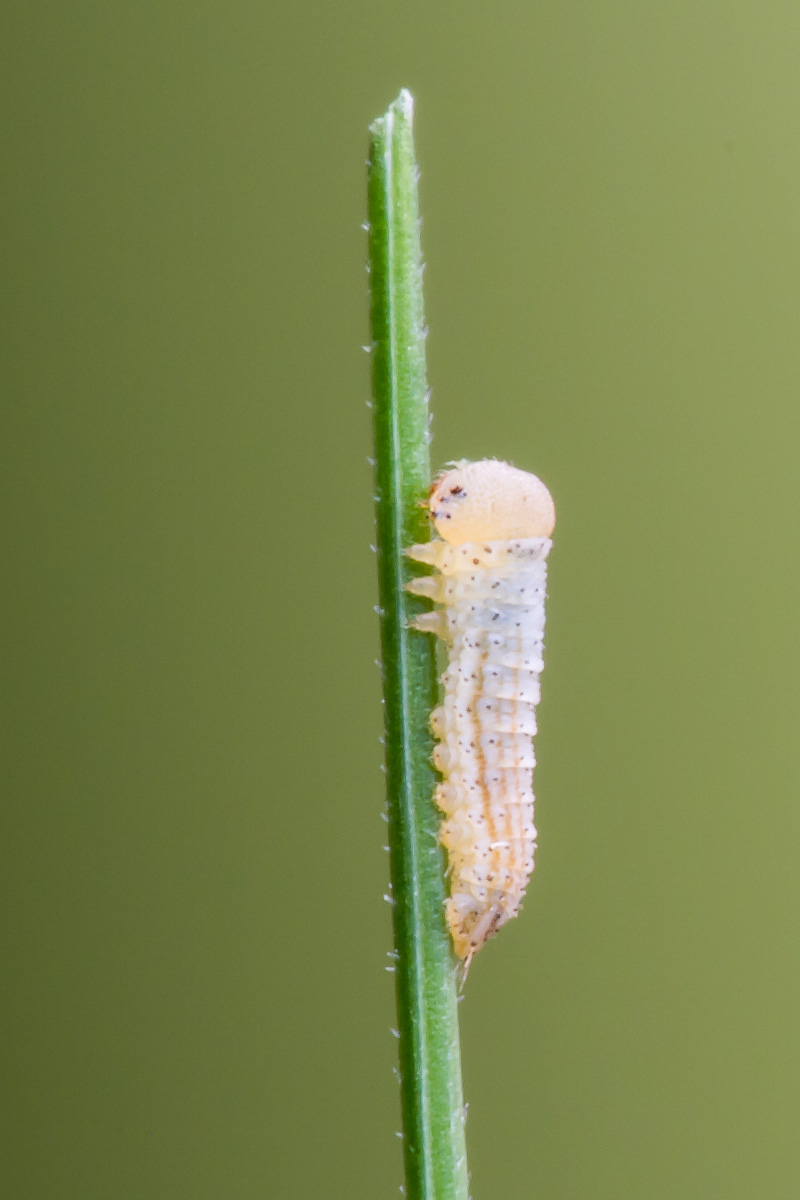
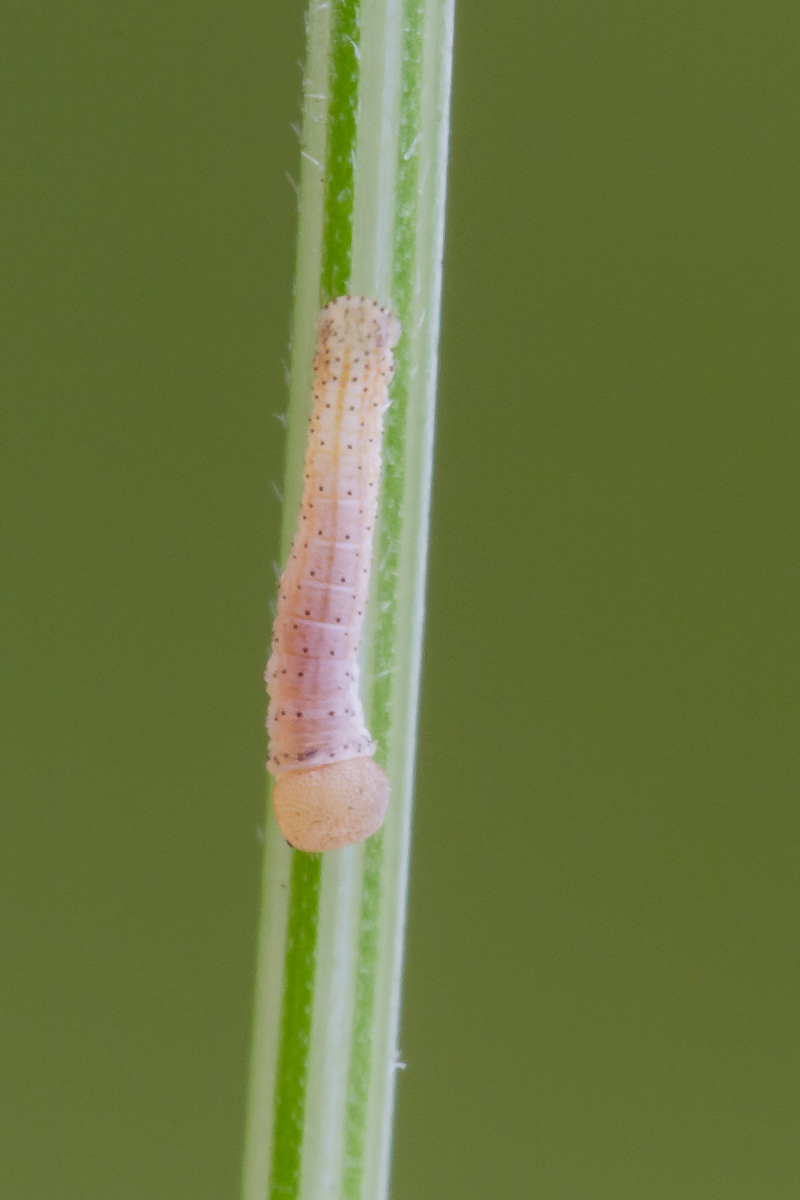
Description to be completed.
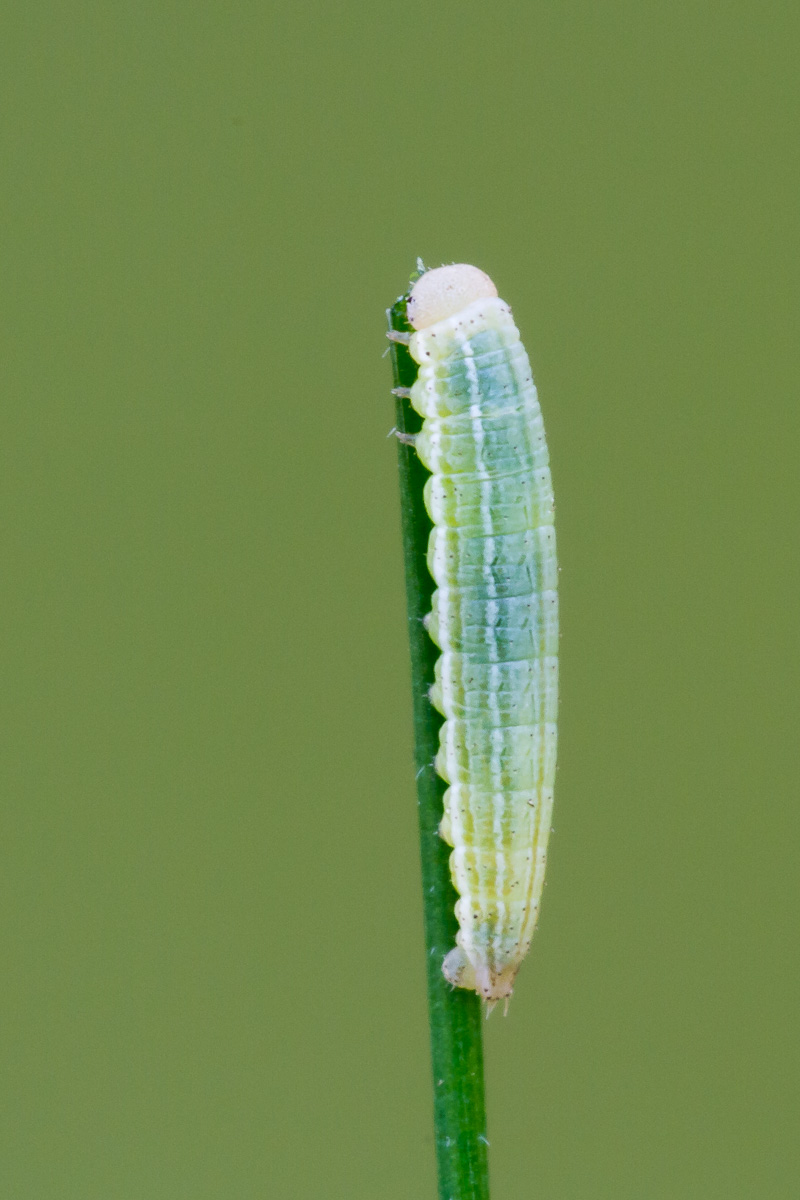
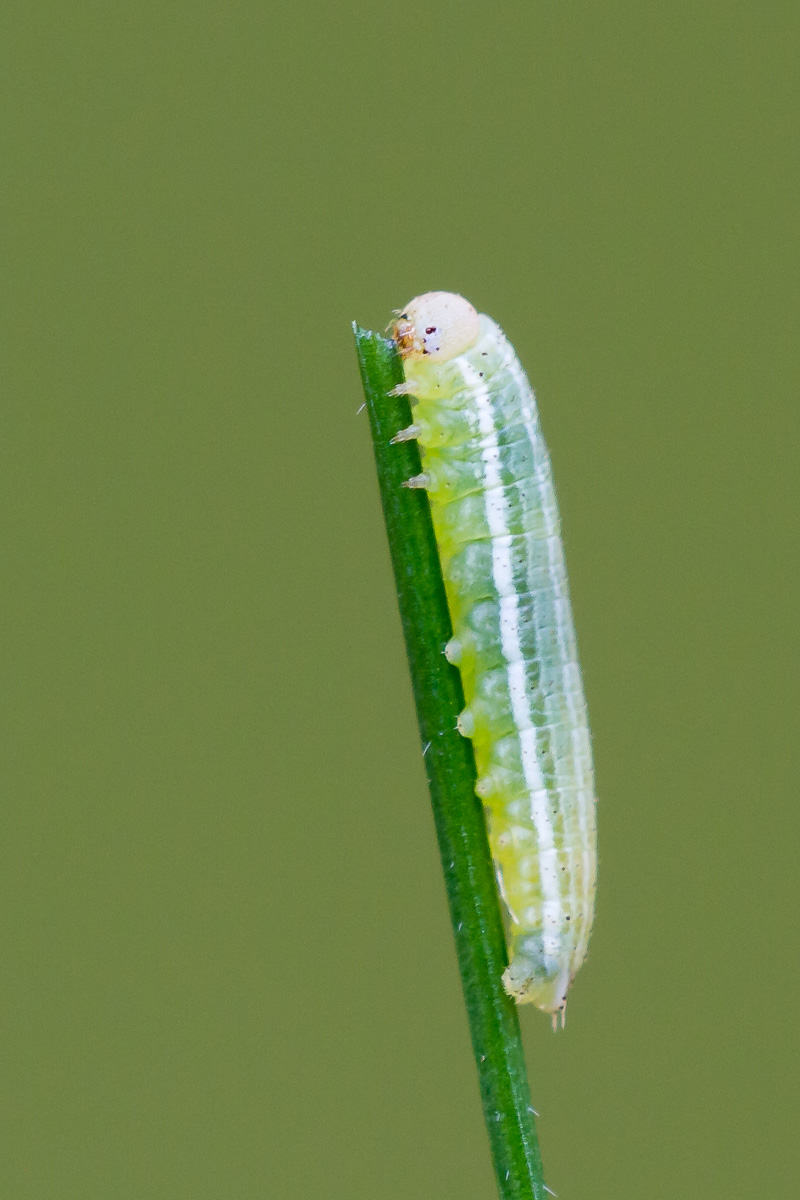
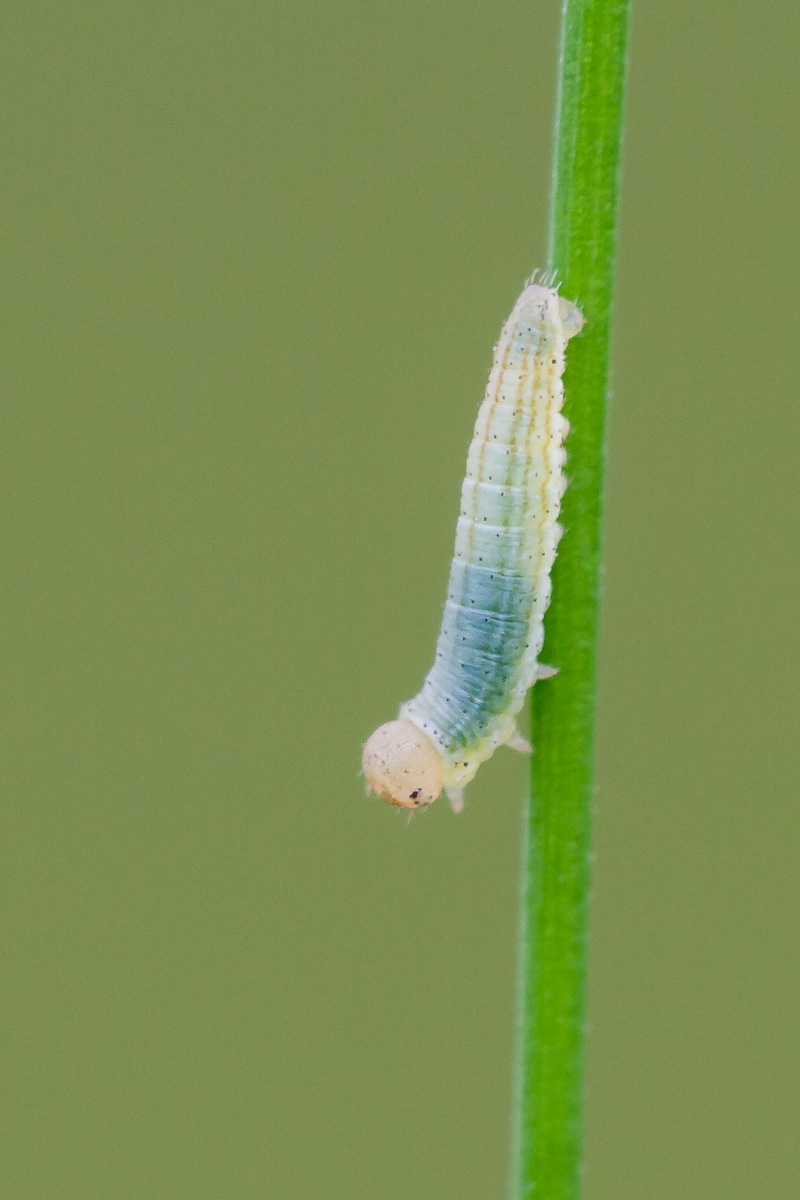
"The first moult takes place about the end of the first week in August. Shortly before the second moult it measures 6 mm. long. The colour is pale green, with a medio-dorsal darker green line; a whitish sub-dorsal line, bordered on either side by a fine darker green line; a grass-green spiracular band, bordered above by a fine subcutaneous whitish line and below by a broad and conspicuous white stripe terminating in the anal point, which is again bordered below by a grass-green band grading into the pale green of the ventral surface. The head is pale ochreous-green, marked with brownish-pink above the mouth, which is brown. The body is sprinkled with extremely minute dark brown warts, each emitting a tiny whitish spinous hair. The legs and claspers are tinged with pinkish-brown." - Frohawk (1924)
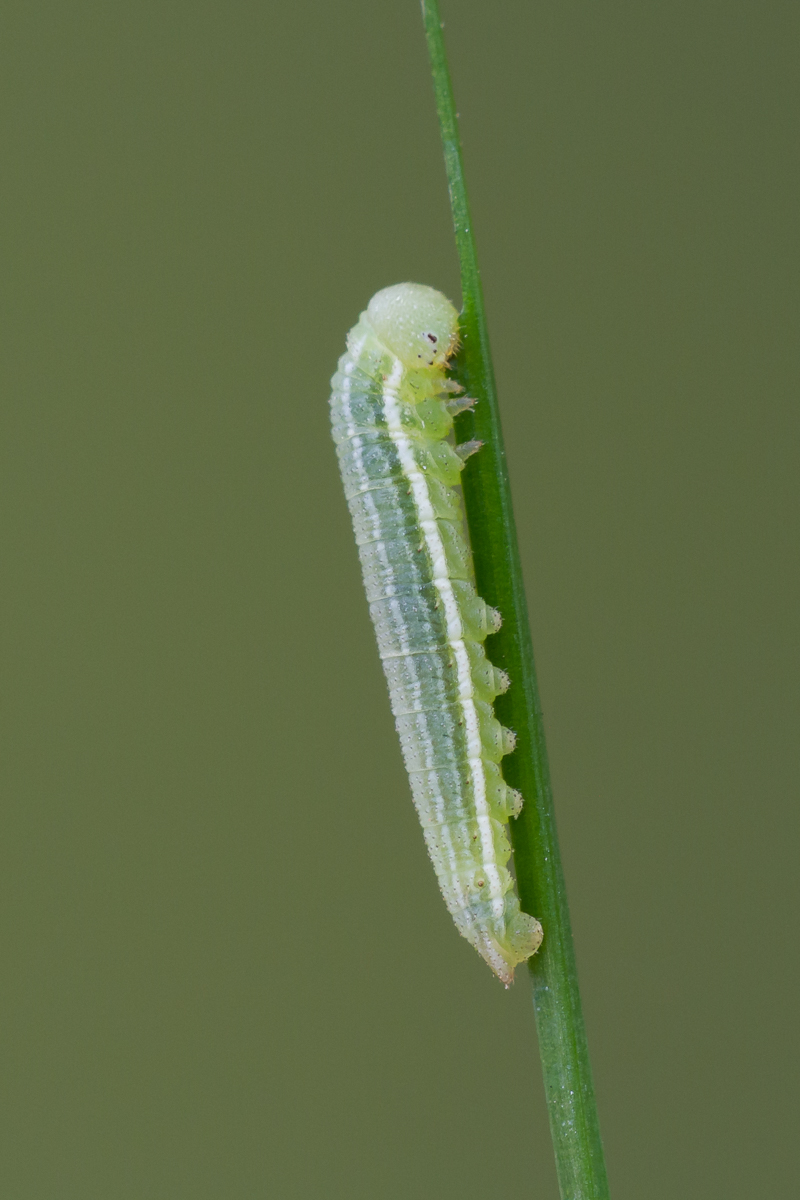
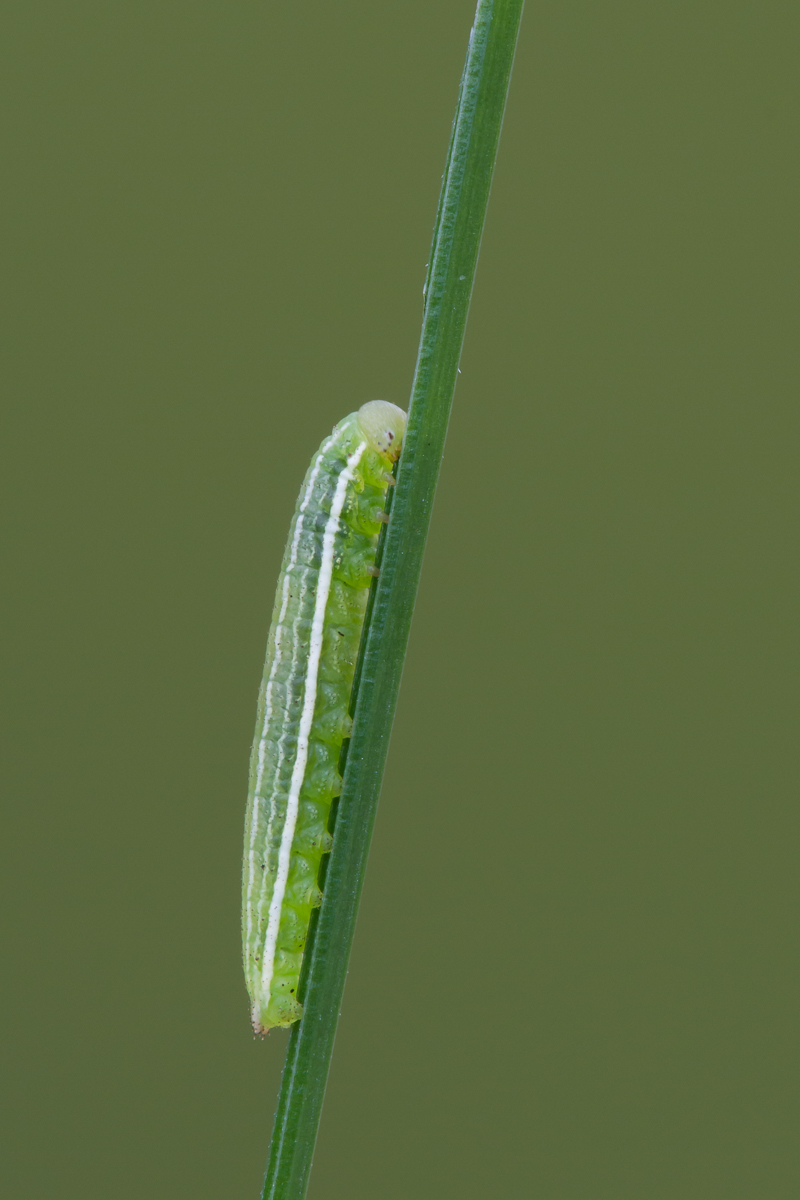
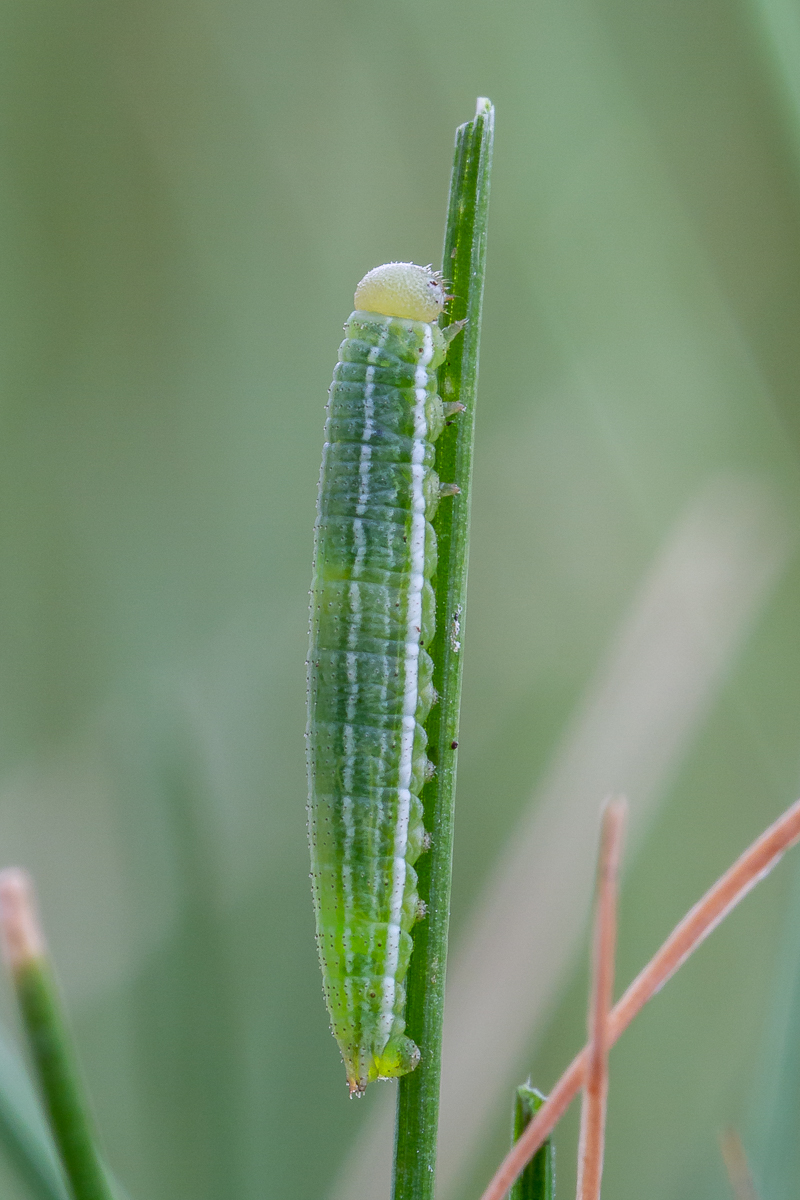
"The second moult occurs at the end of the third week of August. After the second moult, forty-five days old, it is 9 mm. long; the head in this stage is light grass-green, in other respects it is similar in colour and markings to the previous stage. The stripes are strongly defined and conspicuous. In this stage they enter into hibernation, gradually becoming less active and feeding at longer intervals between each meal. Hibernation commences during September, usually during the last ten days, and is continued in an unbroken spell for about five months, i.e., lasting until March. During the first week of March one larva was observed feeding on the tip of a blade of fescue grass. During this month the larva feed by day when the sun sufficiently warms the temperature. On March 31st this particular larva, when 240 days old, had attained a length of exactly 12 mm. All the colours had become richer and the markings clearly defined, the lateral stripe pale yellowish-white, and the sub-dorsal stripe white. In all its movements it is very slow and slug-like." - Frohawk (1924)
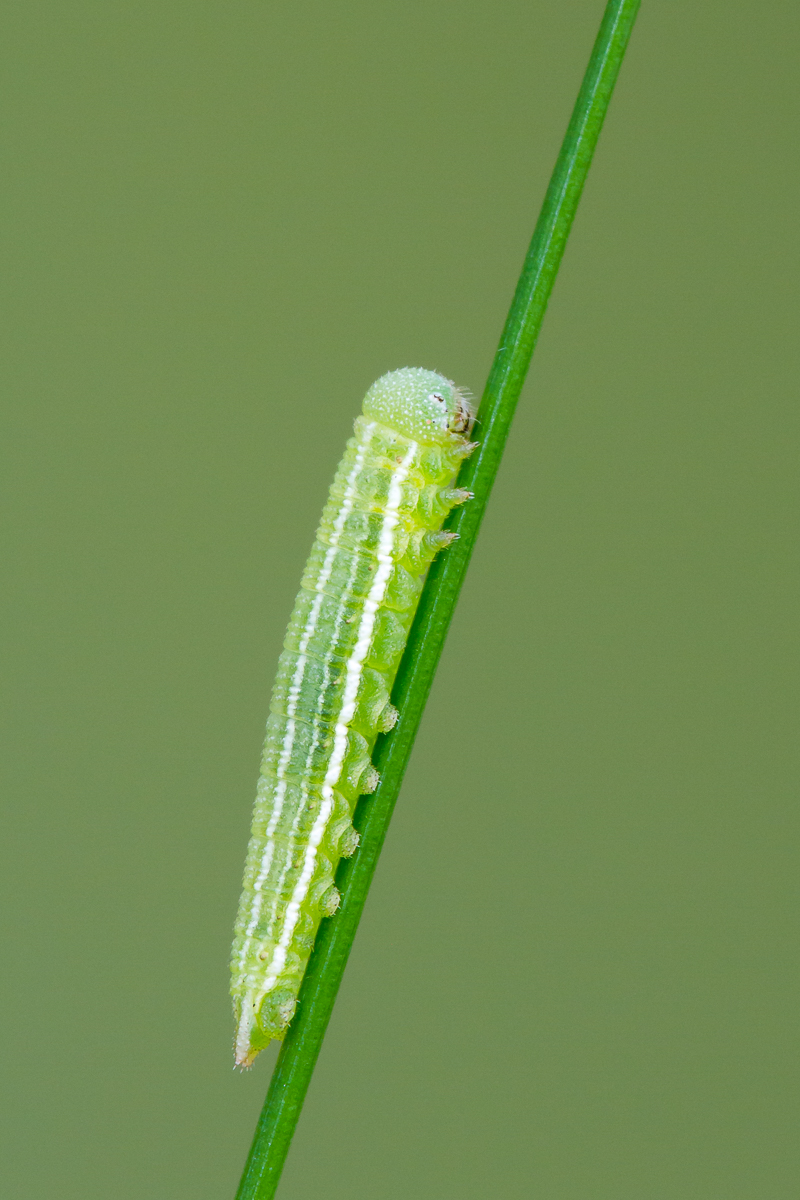
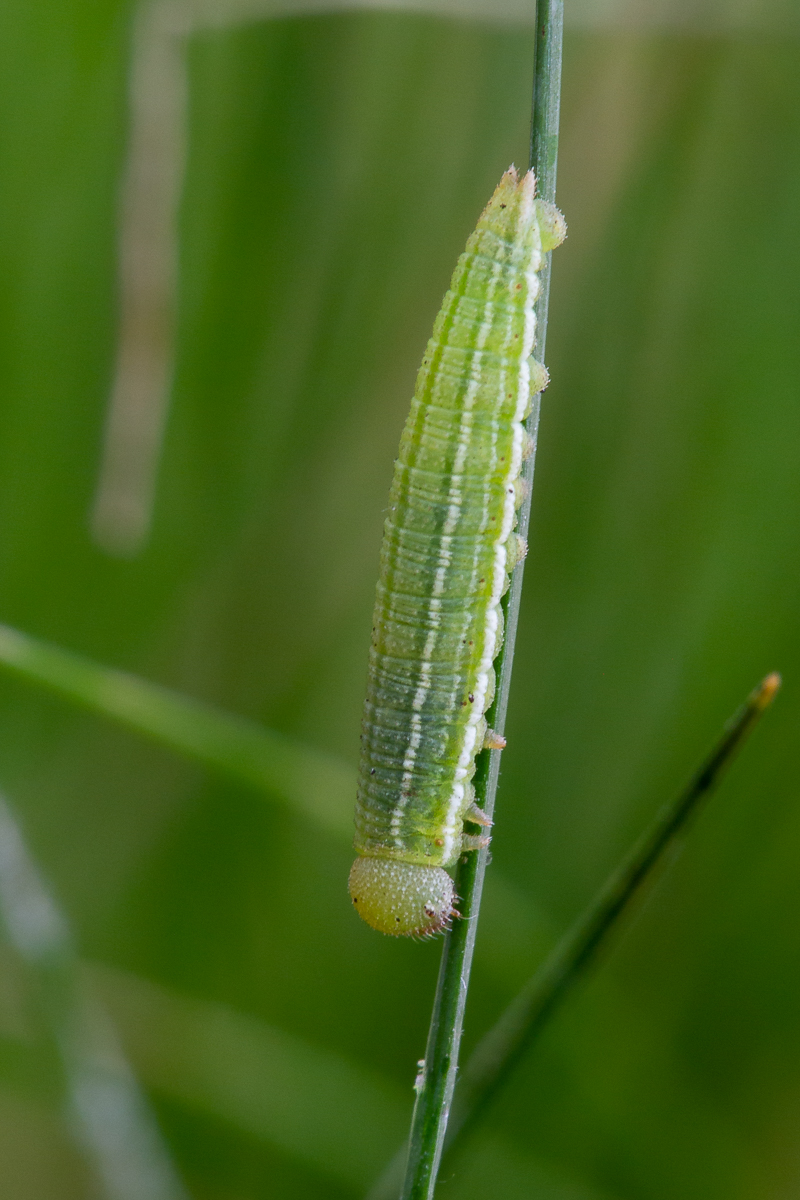
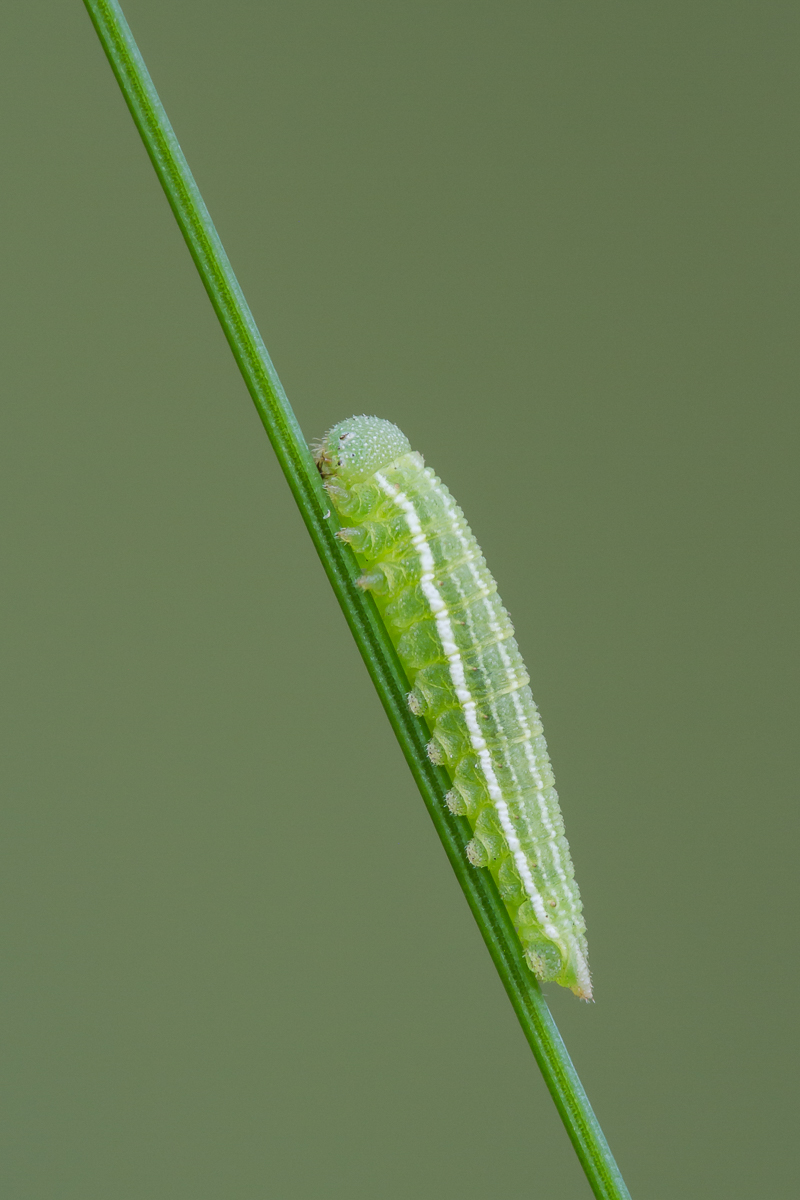
Description to be completed.
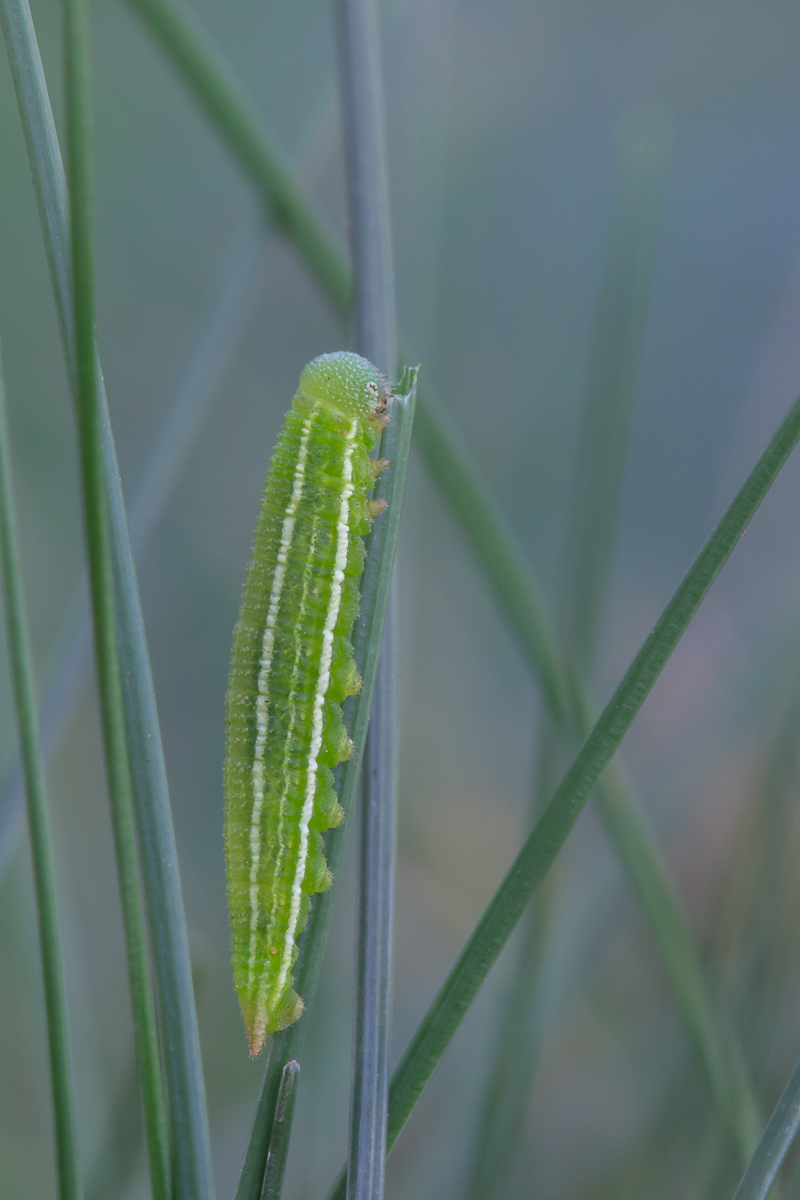
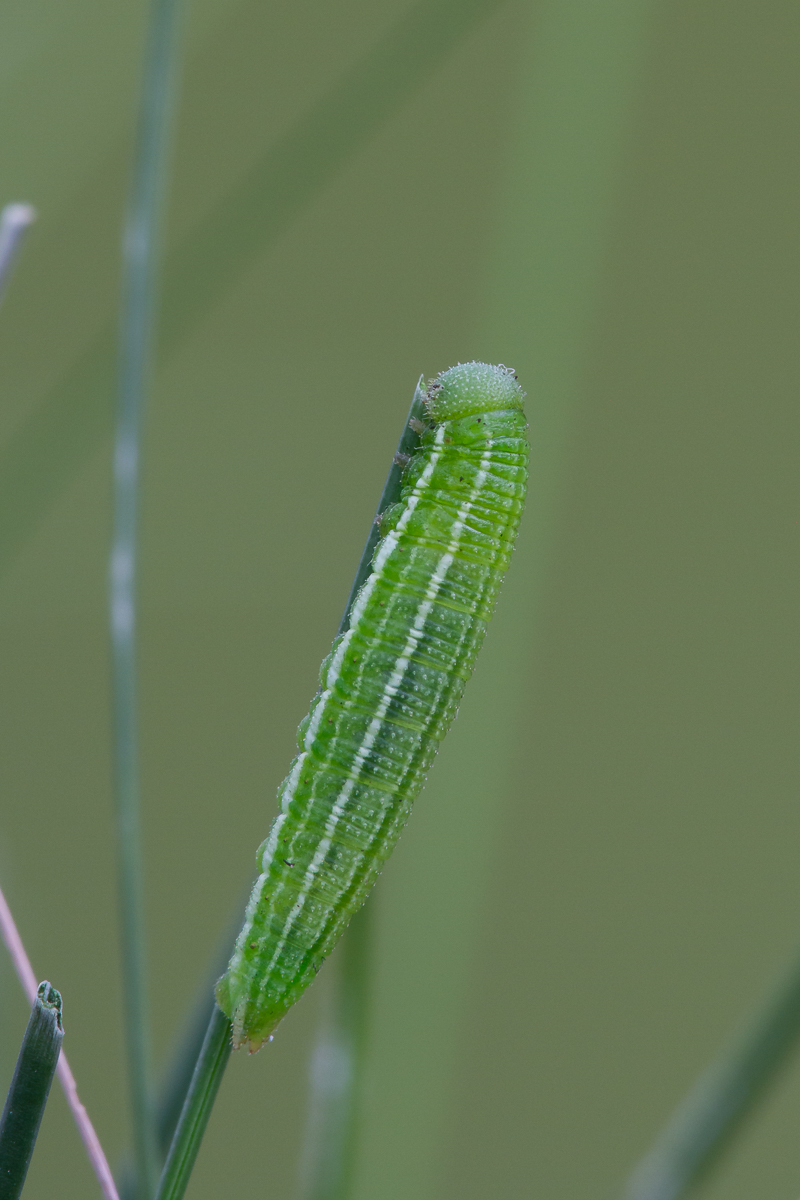
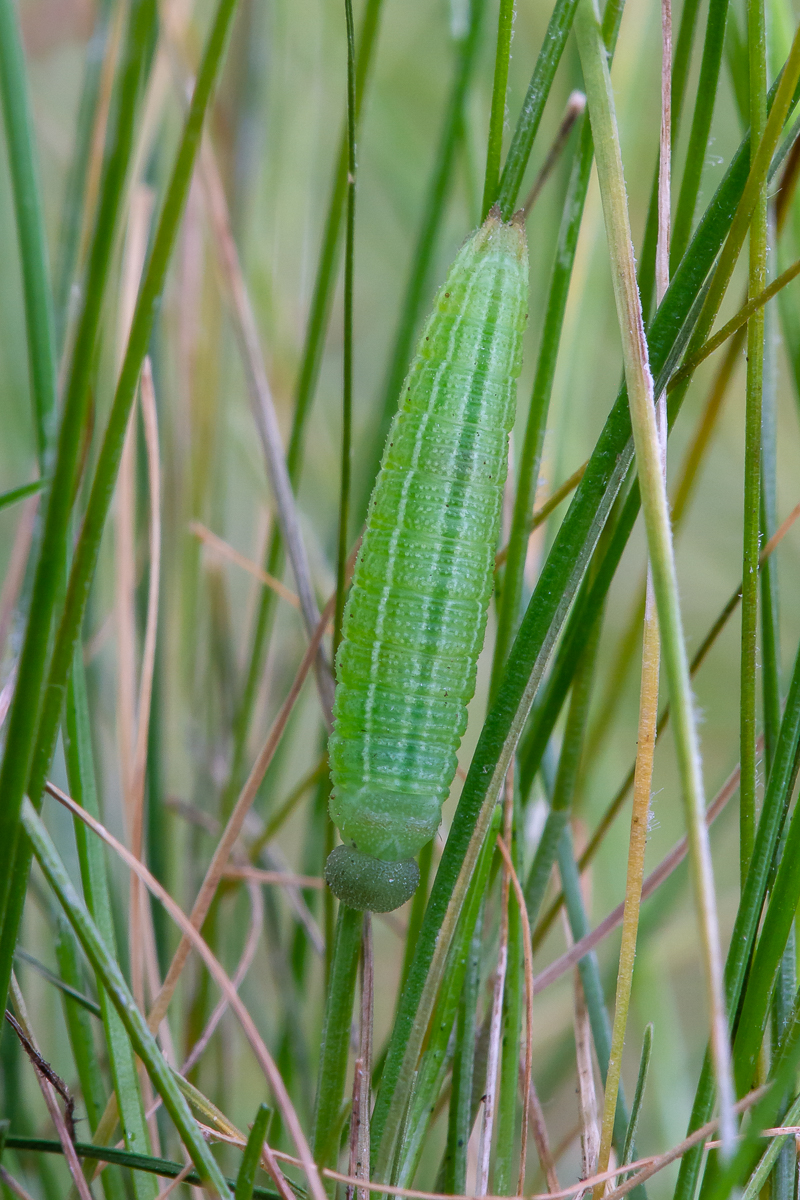
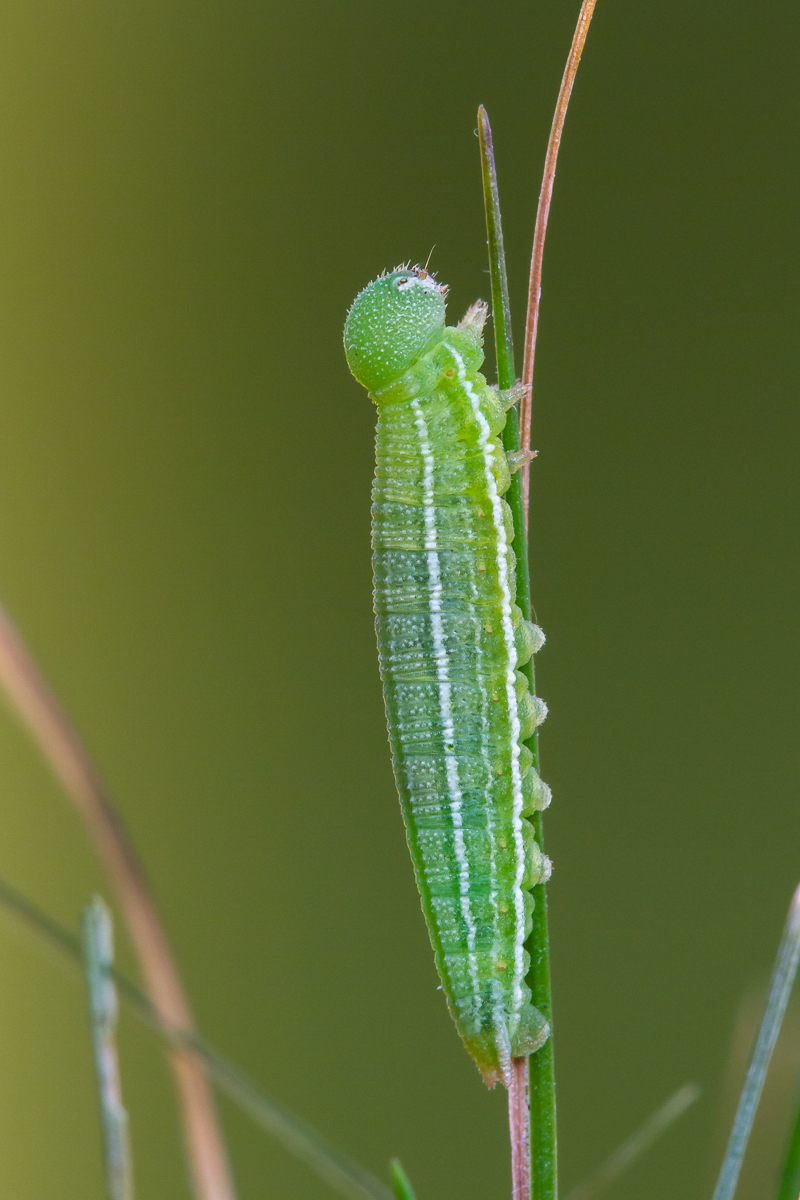
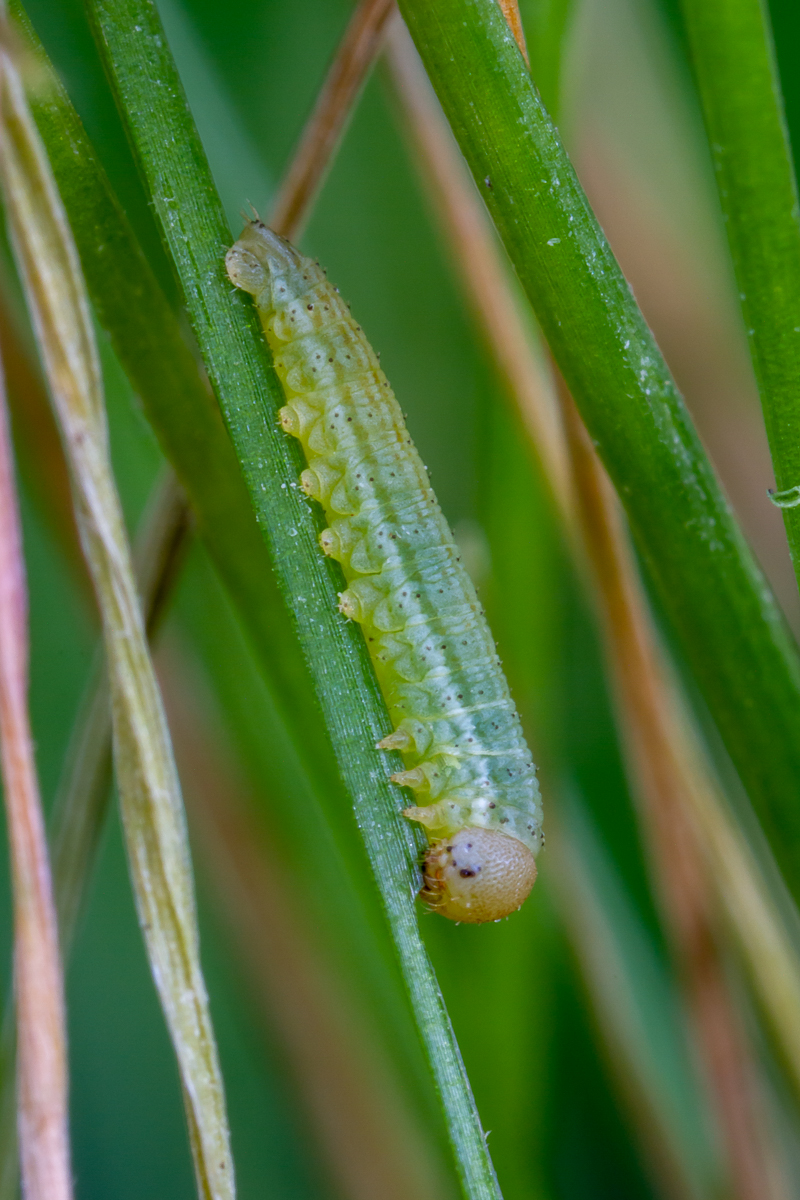
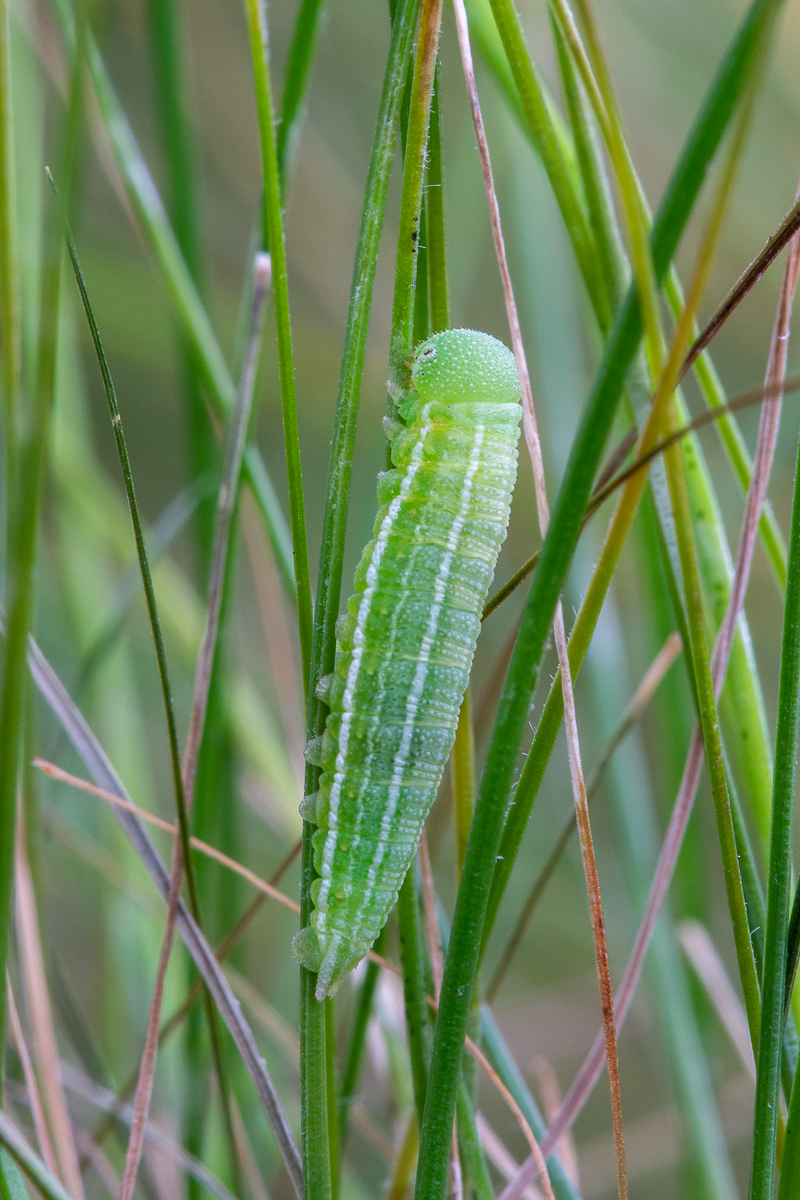
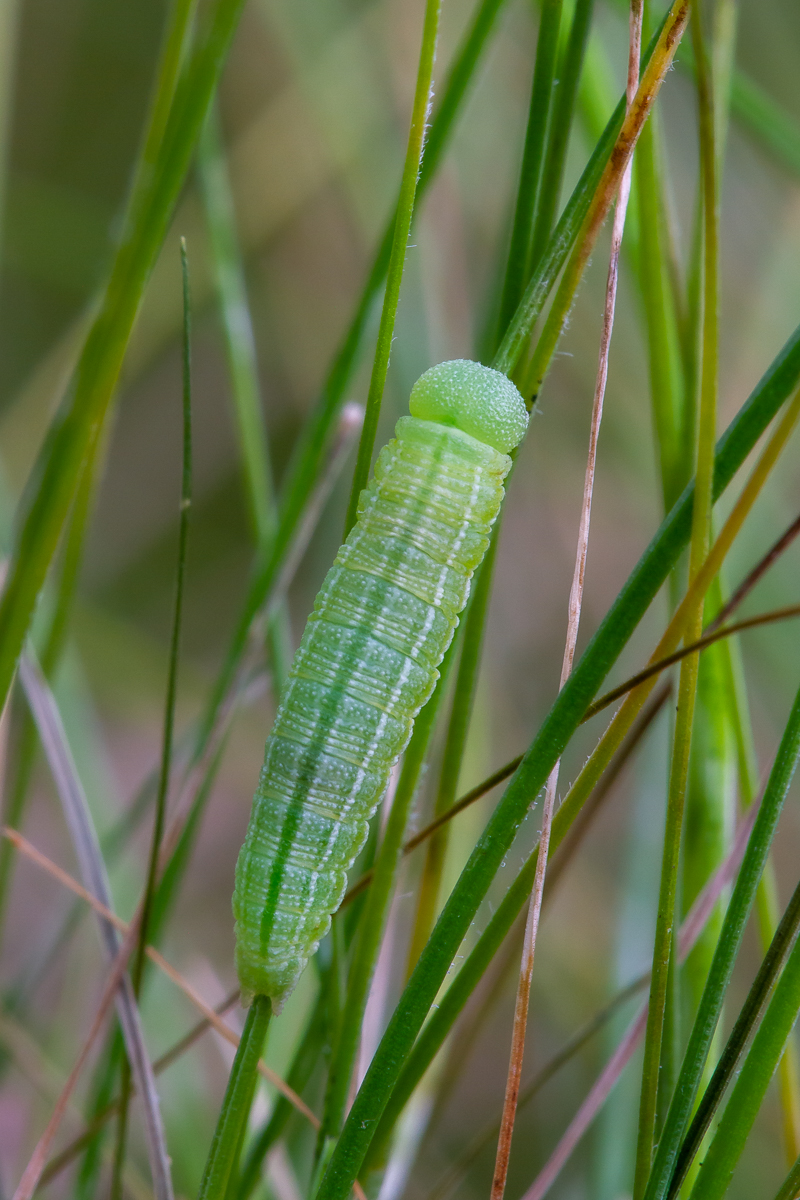
"On April 6th it spun itself up for the third moult, but owing to the continuous cold, sunless weather of the first half of the month, the average day temperature being only about 40 degrees Fahr., the larva remained undergoing the change for eight days, moulting on April 14th. The following day it fed a little, and again once on the 16th. The next day being warm with sunshine, the shade temperature 52 degrees to 55 degrees Fahr., it fed two or three times. After the third and last moult, fully grown, it measures 19 mm. long. The head is globular and green, roughly granulated and sprinkled with minute whitish bristles; mouth parts and eye spots brown and ochreous. The body is fuciform, the anal extremity terminating in a pair of points similar to those of Coenonympha pamphilus in structure, but tinged with dull ochreous instead of pink. The ground colour is grass-green, with a darker green medio-dorsal longitudinal stripe, bordered by a whitish-green line. It is boldly marked longitudinally with two conspicuous dull white stripes; the first is sub-dorsal, bordered on each side by a darker green line; the second is lateral and stands out in strong contrast against the darker green ventral surface; midway between these two stripes is a faint and fine whitish-green line, and another broader subcutaneous line of the same colour immediately below the spiracles, which are small and have a pale yellow anterior blotch. The legs are pale olive and the claspers green. The entire surface is granular and sprinkled with minute, black, claw-like points, each rising from a pale spot. Although the larvae in captivity readily feed on Poa annua, Festuca ovina and other grasses, their natural food plant in a wild state is Nardus stricta. When feeding on P. annua and other soft grasses it eats away the sides of the blades, but with Festuca, Nardus and other hard, rush-like species it eats away the ends, always starting at the extreme tip of the blade, taking slow and deliberate bites, apparently biting it through with some difficulty. During the last stage the larva frequently feed during the day, but mostly so at night. A larva which moulted on April 14th, 1913, for the third and last time ceased feeding on May 14th and pupated on the 19th, remaining thirty-five days in the last stage. Its total larval existence occupied a period of 288 days." - Frohawk (1924)
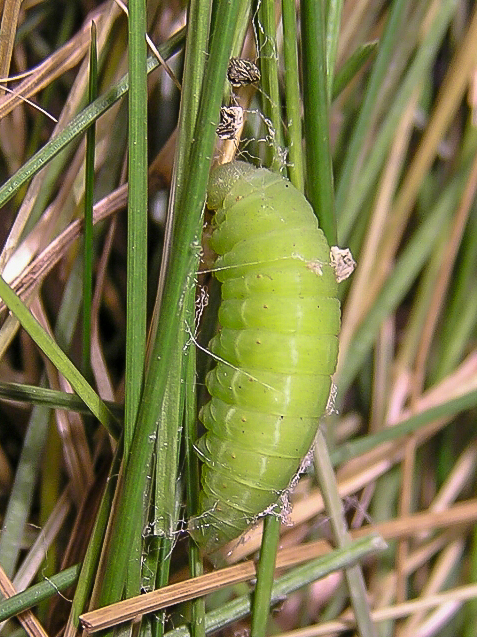
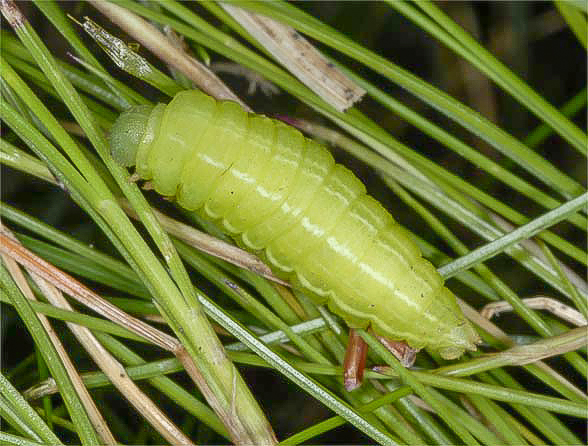
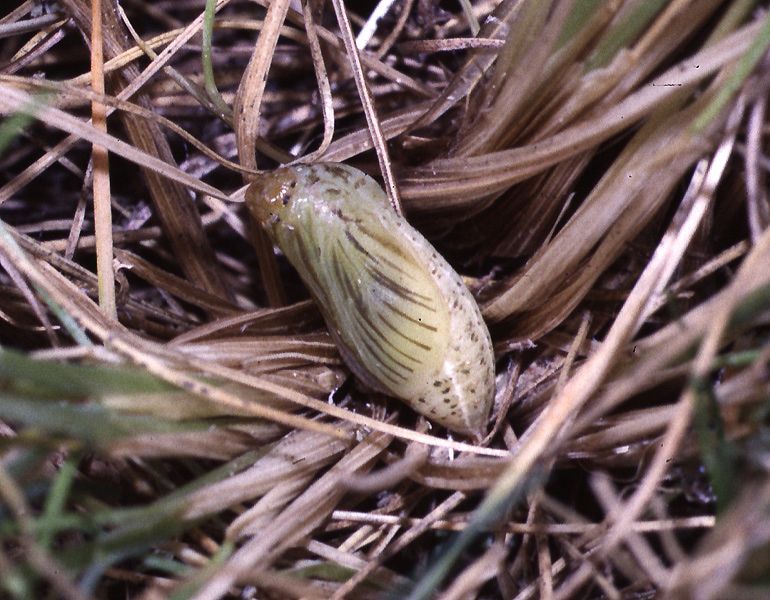
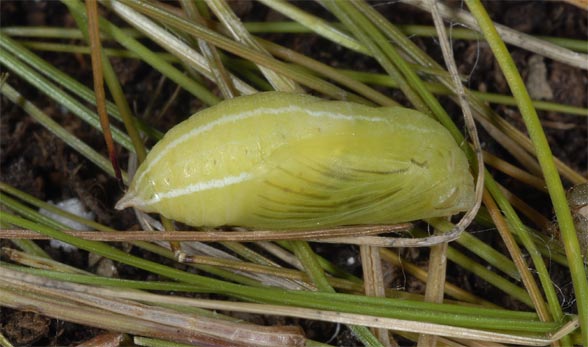
The pupa is formed deep in grass tussocks, within a loose silk structure and this stage lasts around 3 weeks. It is believed that many pupae are eaten by voles.
"The pupa measures from 10 mm. to 11 mm. long. It is more elegantly formed than that of E. blandina [E. aethiops, Scotch Argus], as it is without the dorsal swelling of the second and third abdominal segments, also rather more slender in proportion. Lateral view: The head is somewhat square in front, the thorax rounded, meta-thorax sunken; abdomen swollen at the middle, conical and tapering; the anal segment terminating in a decurved, elongated cremaster without any hooks; the abdomen and wings running in a continuous curve ventrally. Dorsal view: Head truncated, slightly angular at the base of wings, the wings and abdomen uniform in outline. The ground colour varies from light yellow-green to cream. The palest cream-coloured forms have the thorax and wings pale ochreous-buff and abdomen cream or pale primrose-yellow; in all forms the head is slightly darker. The head, thorax, limbs and wings are streaked with olive-brown; the wing streaks run parallel between the nervures and along the discoidal cell; the antenna, tongue and eye are strongly outlined with the same colour, and a medio-dorsal streak extends from the head to the meta thorax, blending into the green subcutaneous dorsal vessel, which forms a slightly darker longitudinal stripe; the abdomen is more or less speckled with olive and dusky dots, some very minute, mostly running in longitudinal rows; the largest spots are on the ventral surface. The thorax and abdomen are sprinkled with minute spines and the surface is finely granular. Being without cremastral hooks the pupa is detached, merely resting low down among the grass stems, which are loosely spun together, forming a very slight, cocoon-like structure. At first the colour is a translucent yellow-green, palest on the abdomen, which is streaked exactly similar to the larva, each stripe corresponding precisely in form and colour; all the markings and speckles are pale olive. The pupal state occupies about twenty-one days." - Frohawk (1924)
The following links provide additional information on this butterfly.