UK Butterflies
Building a Community of Responsible Butterfly Enthusiasts in Britain & Ireland
Building a Community of Responsible Butterfly Enthusiasts in Britain & Ireland
Wingspan
♂ 36 - 41 mm, ♀ 39 - 45 mm
Checklist Number
61.003
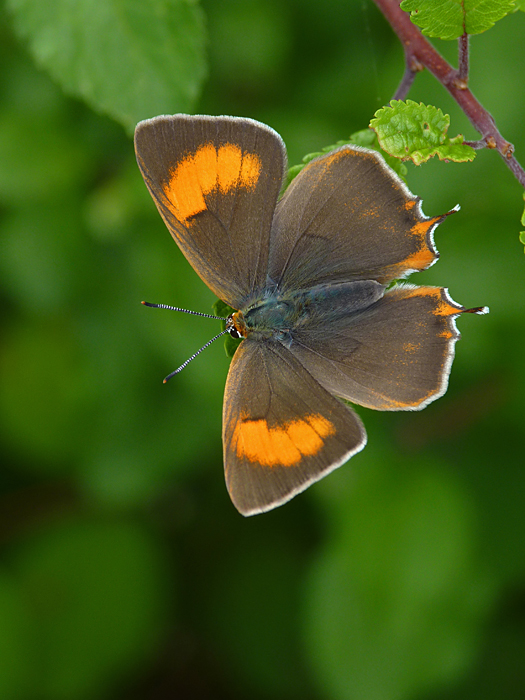
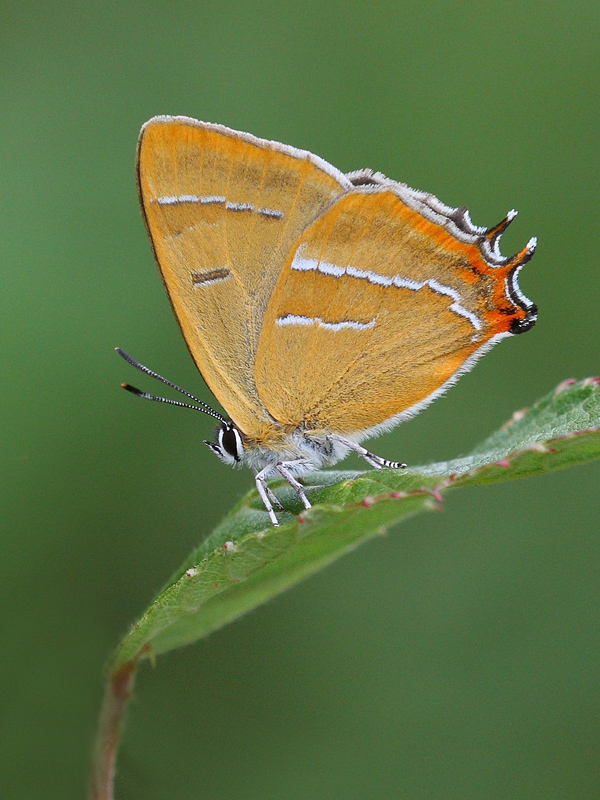
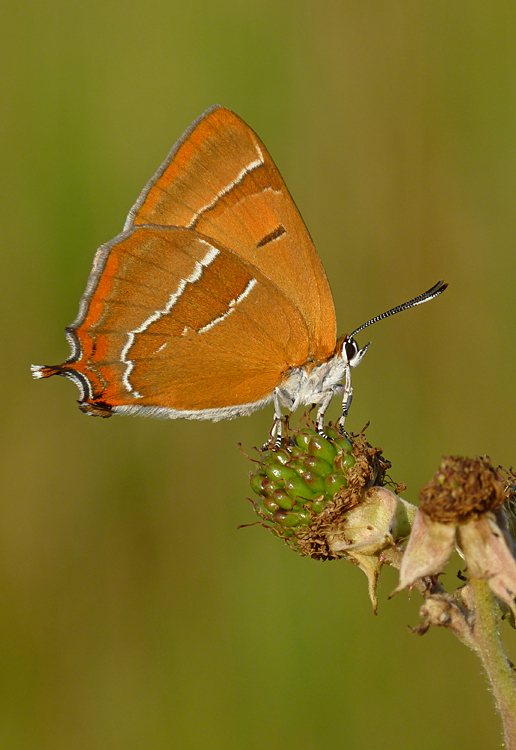
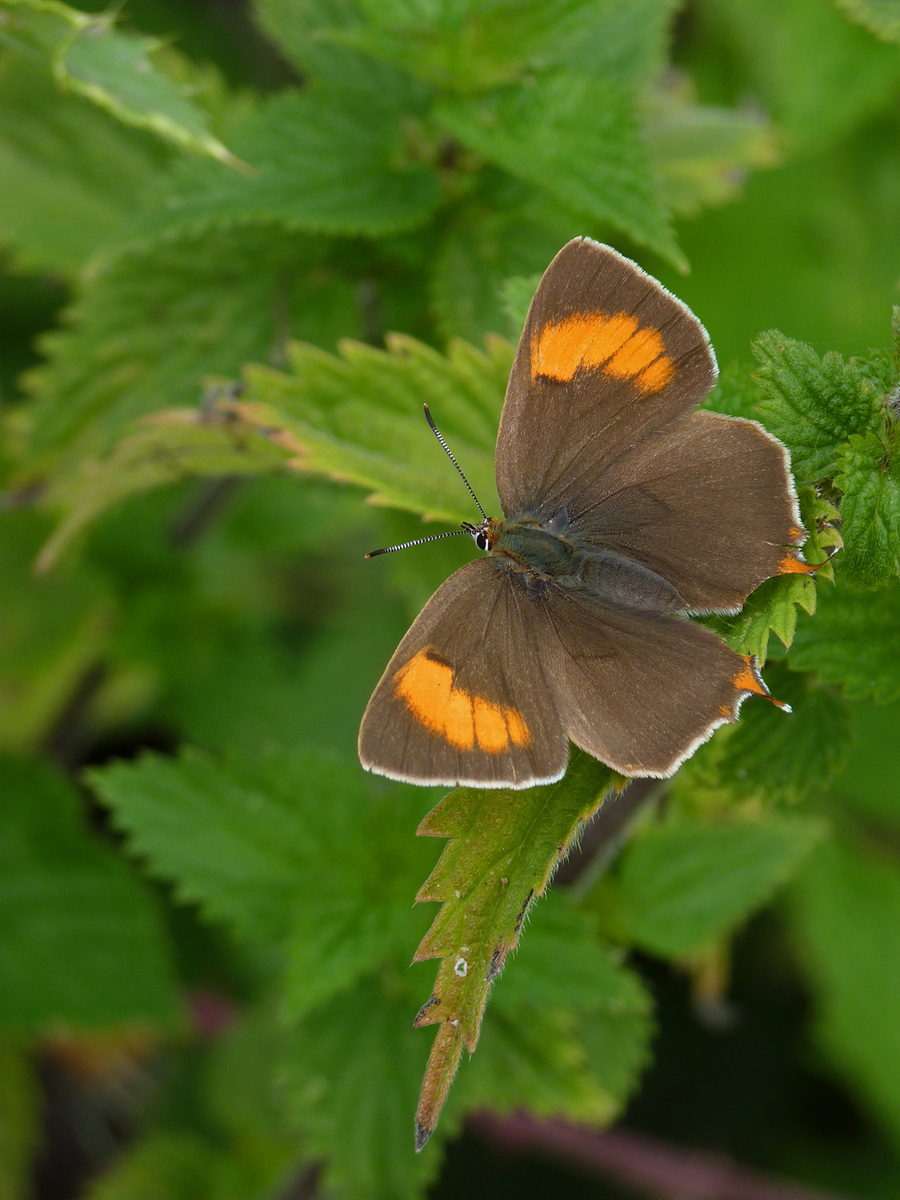
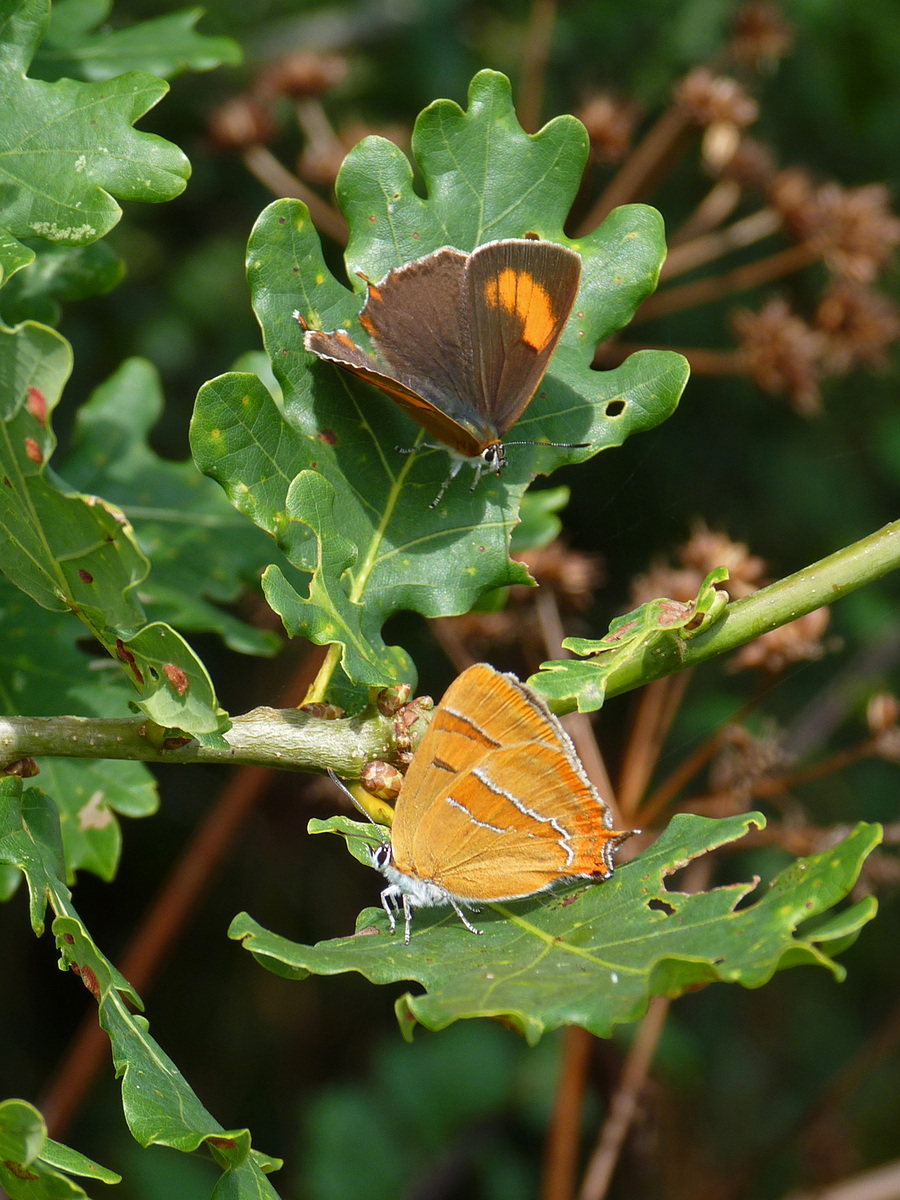
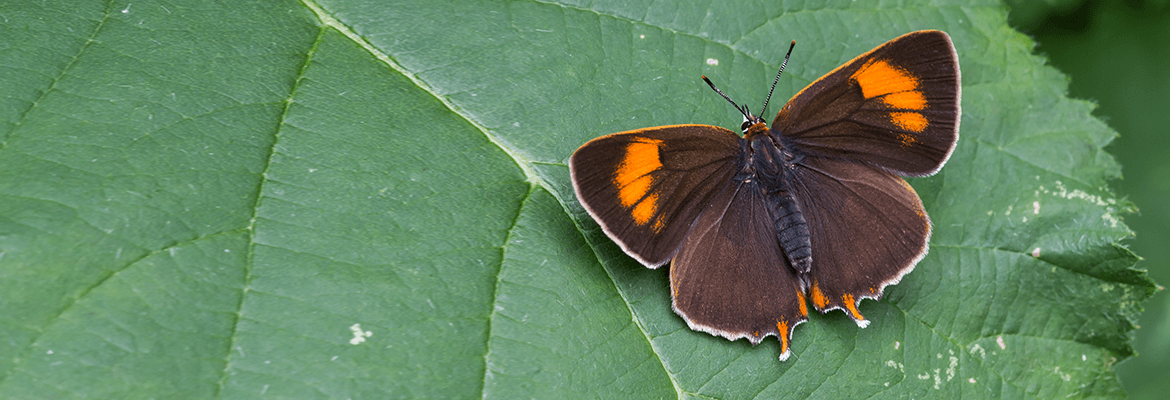
This is the largest hairstreak found in the British Isles. It is a local species that lives in self-contained colonies that breed in the same area year after year. This species can also prove elusive, since it spends much of its time resting and basking high up in tall shrubs and trees. The female is particularly beautiful, with forewings that contain large orange patches, and was once considered to be a separate species known as the "Golden Hairstreak". This species is found in the southern half of England and Wales, and also around the Burren in Ireland. In England its strongholds are in West Sussex, Surrey, Oxfordshire, Buckinghamshire, North Devon and South Devon. Strongholds in Wales are in Cardiganshire and Carmarthenshire. In Ireland it is primarily found in the Burren limestones of Clare and South-east Galway. The northernmost sites are found in North Lincolnshire.
| Family: | Lycaenidae | Leach, 1815 |
| Subfamily: | Theclinae | Butler, 1869 |
| Tribe: | Theclini | Swainson, 1831 |
| Genus: | Thecla | Fabricius, 1807 |
| Subgenus: | ||
| Species: | betulae | (Linnaeus, 1758) |
Description to be completed.
The distribution data (2000-2009) has been made available through the generosity of Butterfly Conservation and any subspecies distribution is taken from Riley (2007). Click here to see the distribution of this species together with site information overlaid.
This species lives in habitats where Blackthorn, the primary larval foodplant, is abundant, such as hedgerows and woodland.
The long-term trend for this species shows a severe decline and it is therefore a priority species for conservation efforts. Unsympathetic farming practices that involve the flailing of hedgerows containing overwintering eggs are considered to be one factor in this demise.
The table below shows the occurrence (distribution) and abundance (population) trends, using information from The State of the UK's Butterflies 2015 (Fox, 2015). Any UK BAP status is taken from the UK Biodiversity Action Plan (UK BAP) (2007 review).
1976-2014 (%) | 1976-2014 (%) | 2005-2014 (%) | 2005-2014 (%) | Click here to access the Biodiversity Action Plan (BAP). |  -49 -49 | -15 |  +8 +8 |  -58 -58 |
|---|
There is one generation each year. This is one of the latest species to emerge in the British Isles, with adults first seen on the wing in late July or early August.

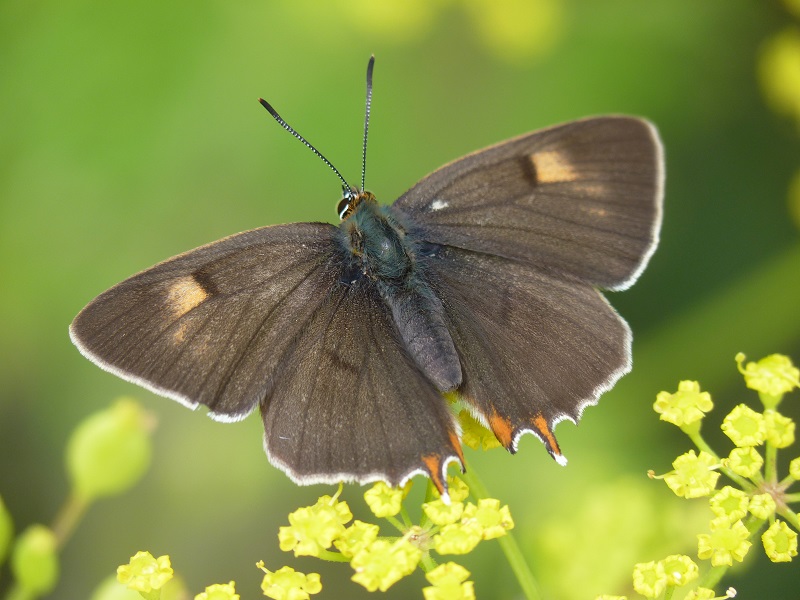
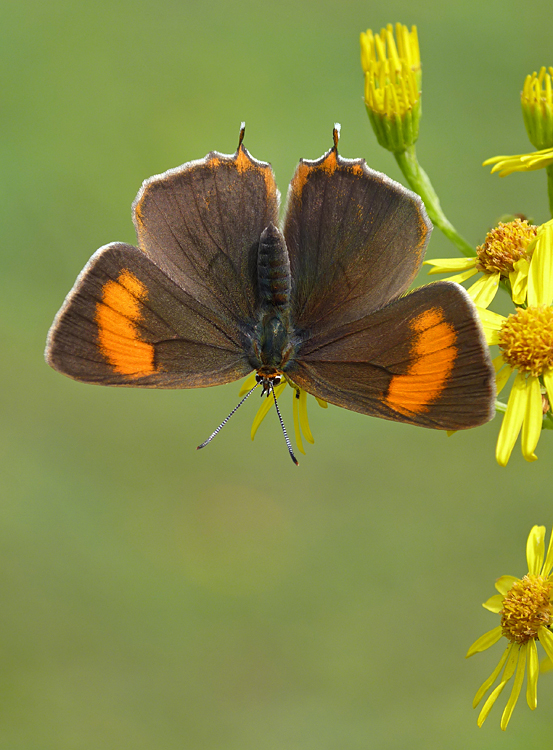
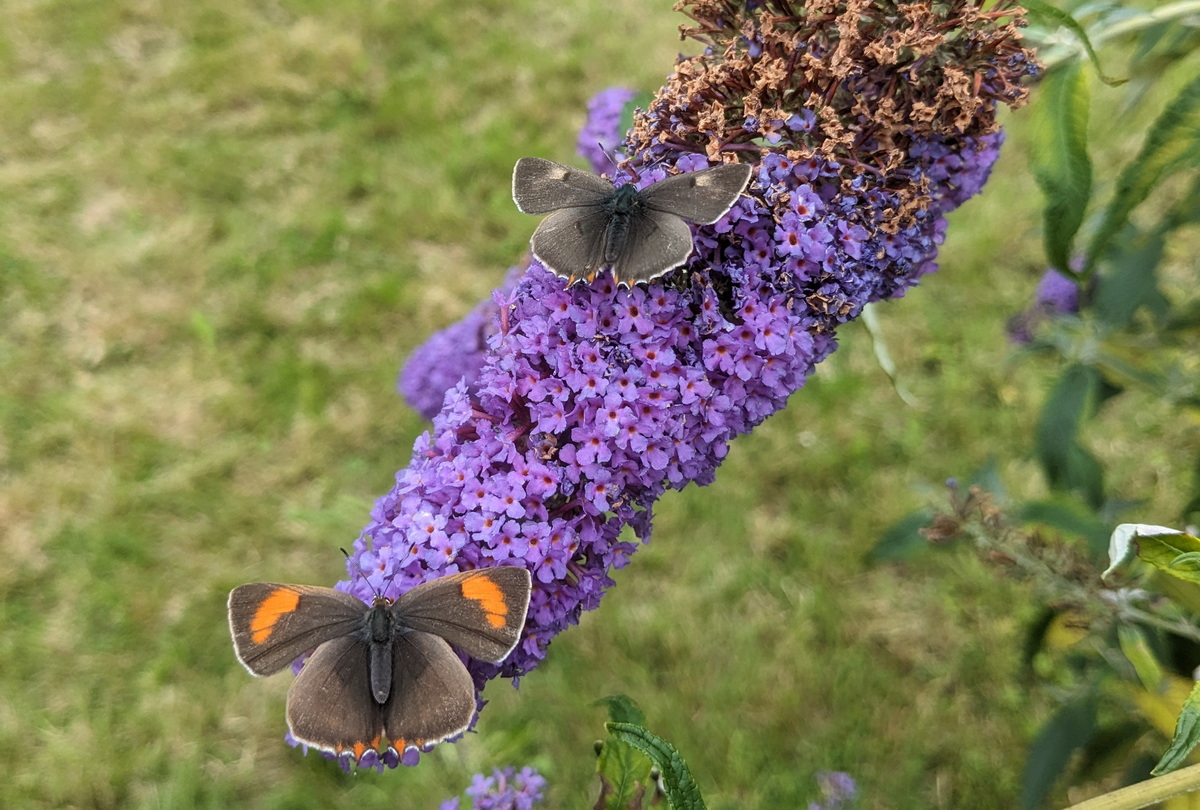
Adults emerge in the morning and males generally appear a few days before females. This is a warmth-loving butterfly, and is rarely seen on overcast days. On sunny days the adults will rest with wings open, absorbing the sun's rays on their dark brown wings which gradually close as they warm up. In flight, the adults are easily mistaken for the Gatekeeper, which flies at the same time.
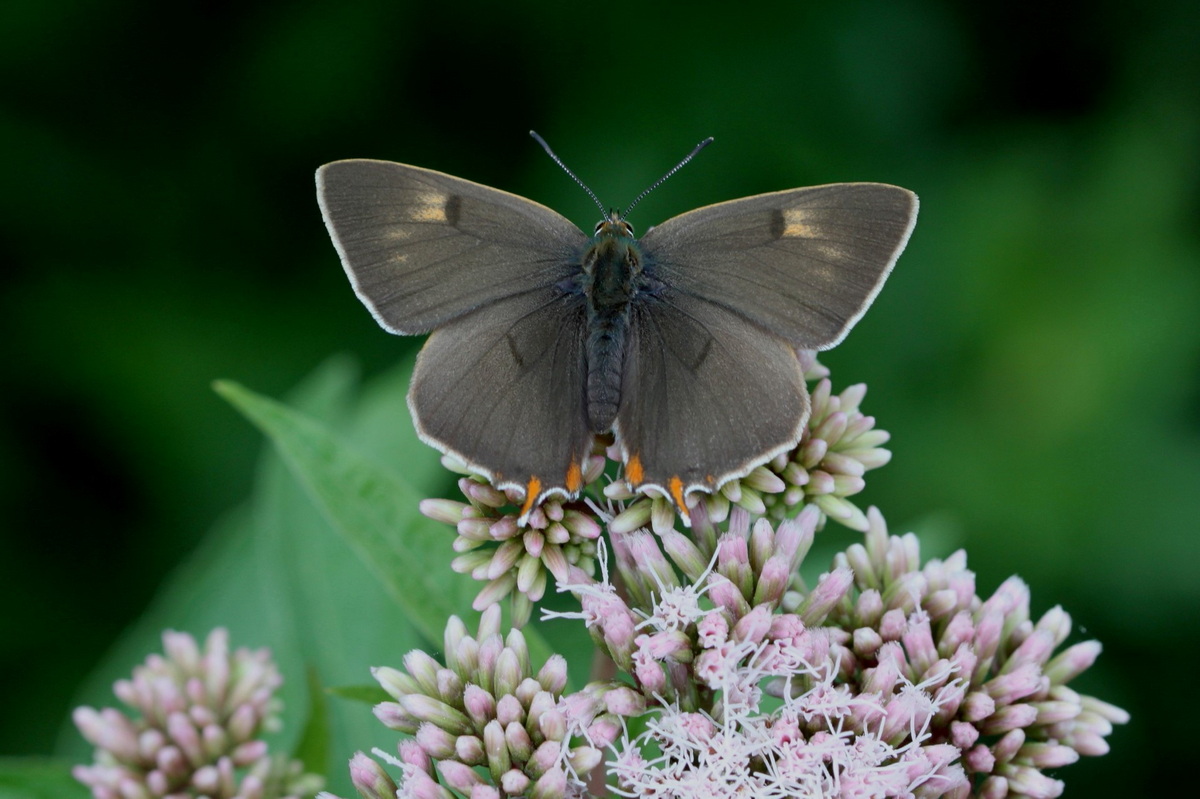
The males are the more-elusive of the two sexes, congregating high on ash "master trees" that are positioned around the breeding area, where they feed on honeydew. They occasionally come down to feed on various nectar sources, such as Hemp Agrimony, probably when honeydew is scarce. When they do come down, however, they can be remarkably tame and easy to observe. Mating occurs without any discernable courtship, typically high in a tree.
Females also spend their time on the master trees until the eggs have matured and they are ready to lay. They then disperse and alternate between basking in the warm sunshine, feeding from nectar sources, and egg-laying. Egg-laying sites are typically in sheltered areas at the edges of woodland or hedgerows where younger growth that is south-facing is favoured. The female will crawl among the branches of the foodplant, feeling the branches for appropriate sites, when egg-laying.
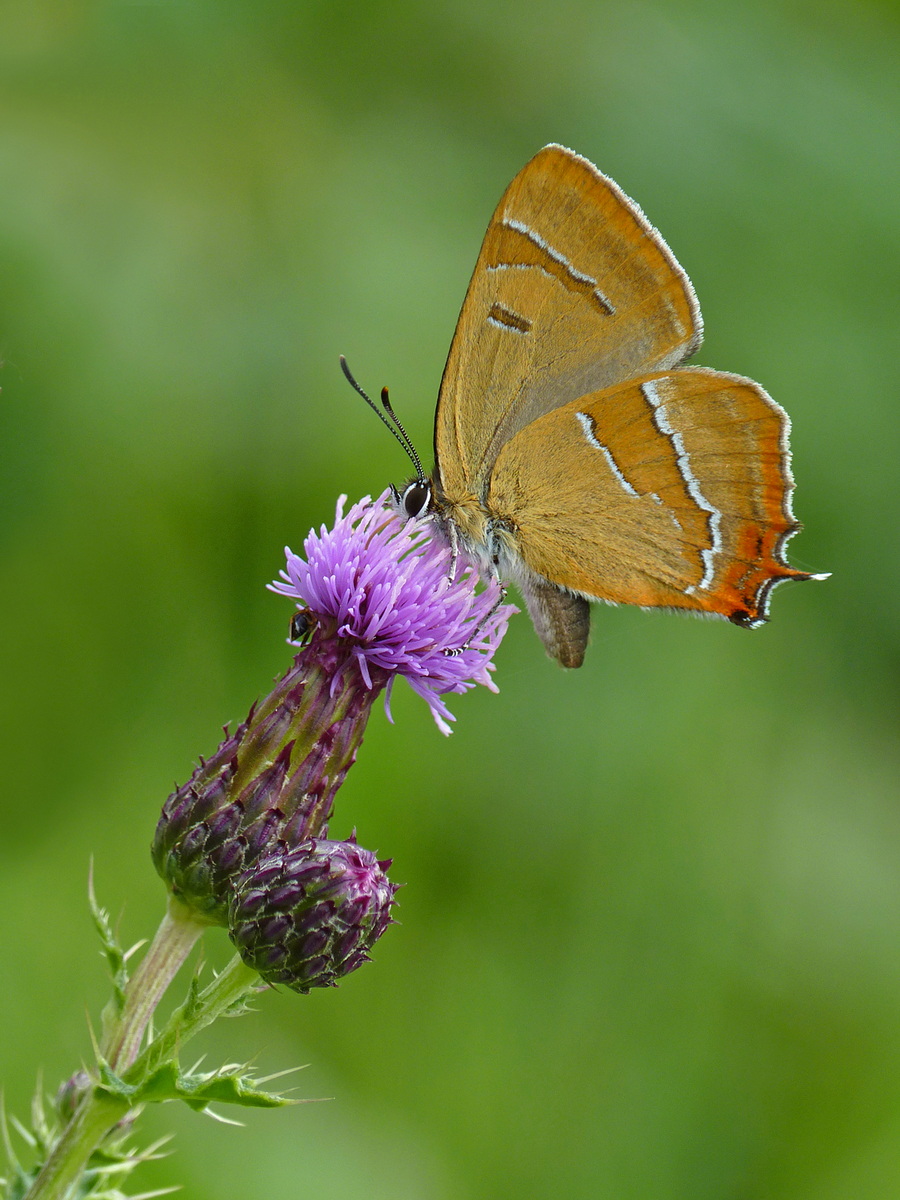
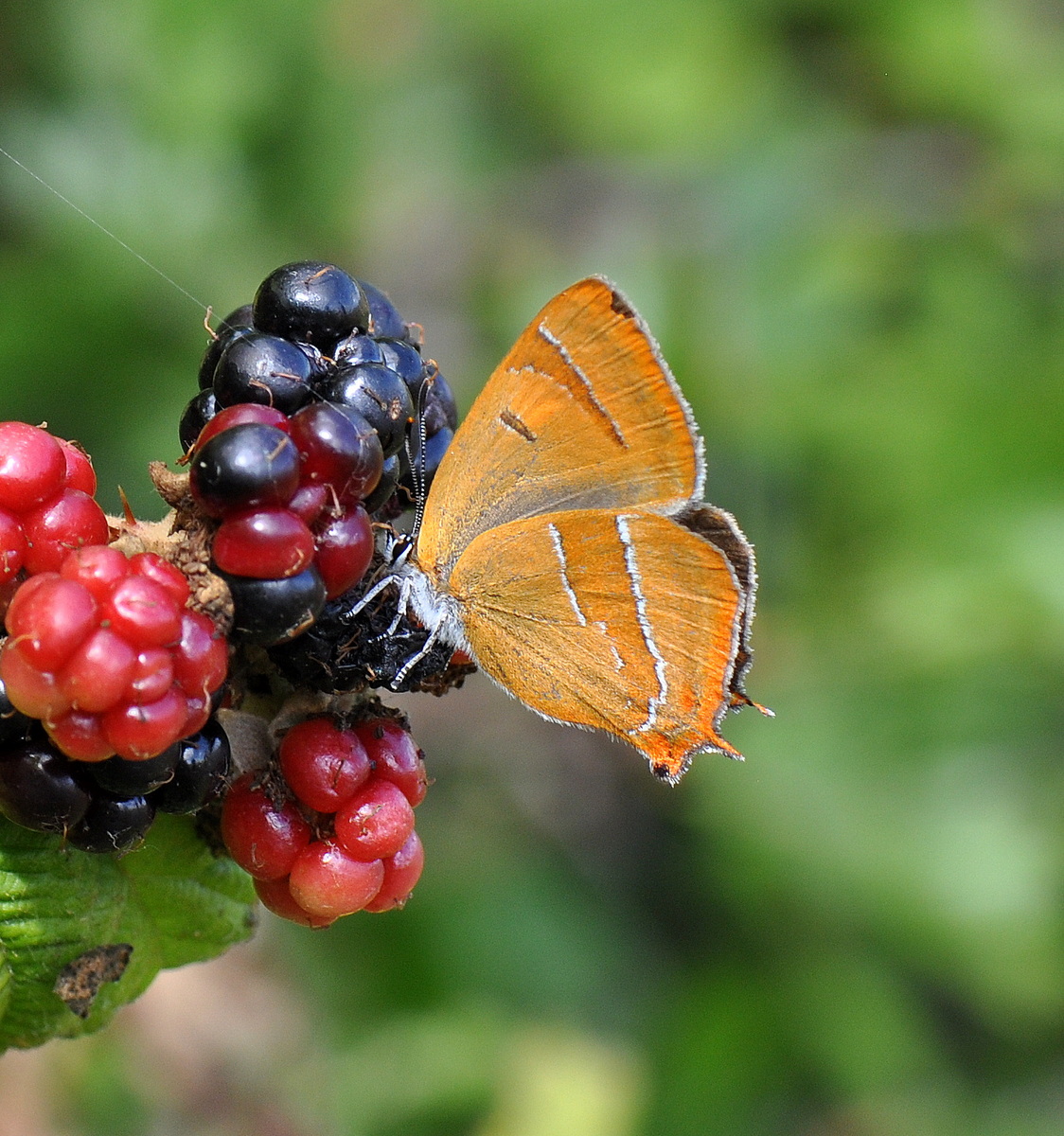
Adults feed primarily on Honeydew (N/A). brambles (Rubus spp.), Common Fleabane (Pulicaria dysenterica), Devil's-bit Scabious (Succisa pratensis), Hemp-agrimony (Eupatorium cannabinum), ragworts (Jacobaea spp.), thistles (Carduus spp. and Cirsium spp.) and umbellifers (Apiaceae spp.) are also used.
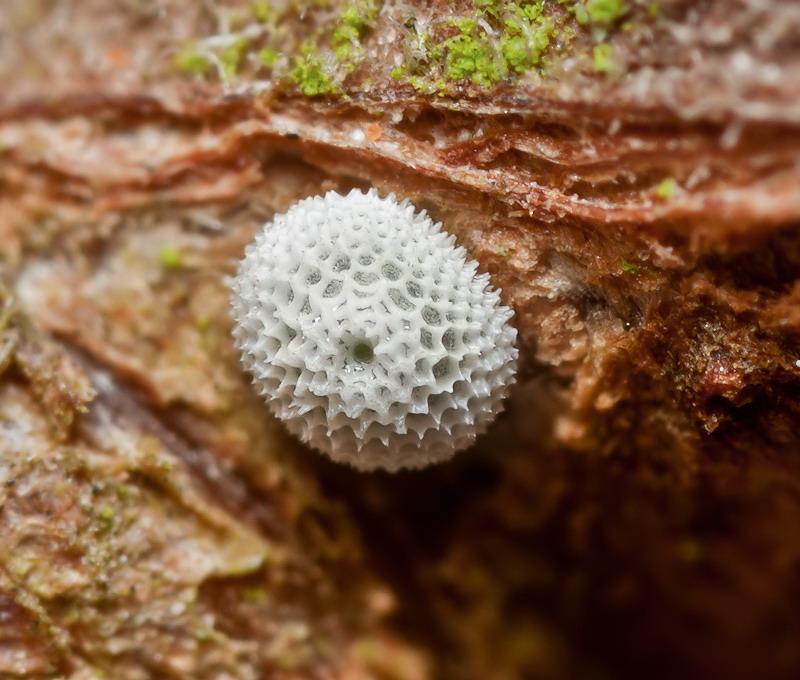
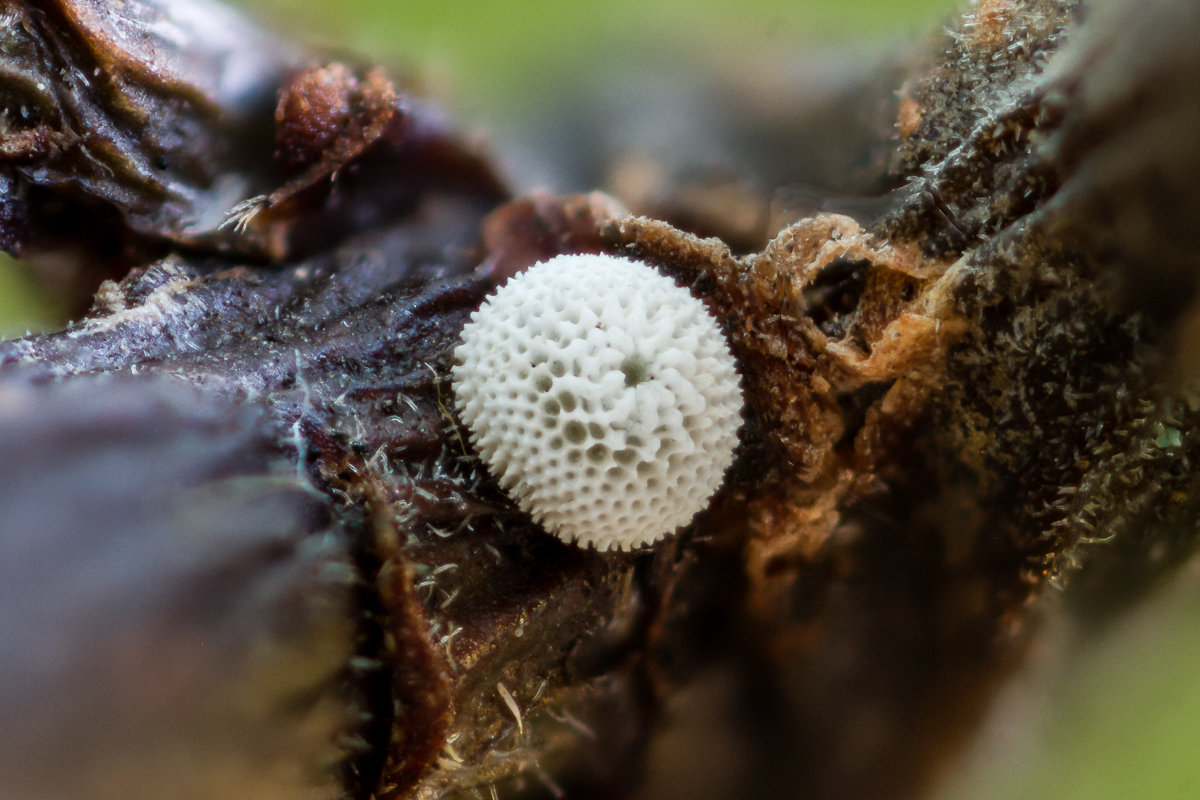
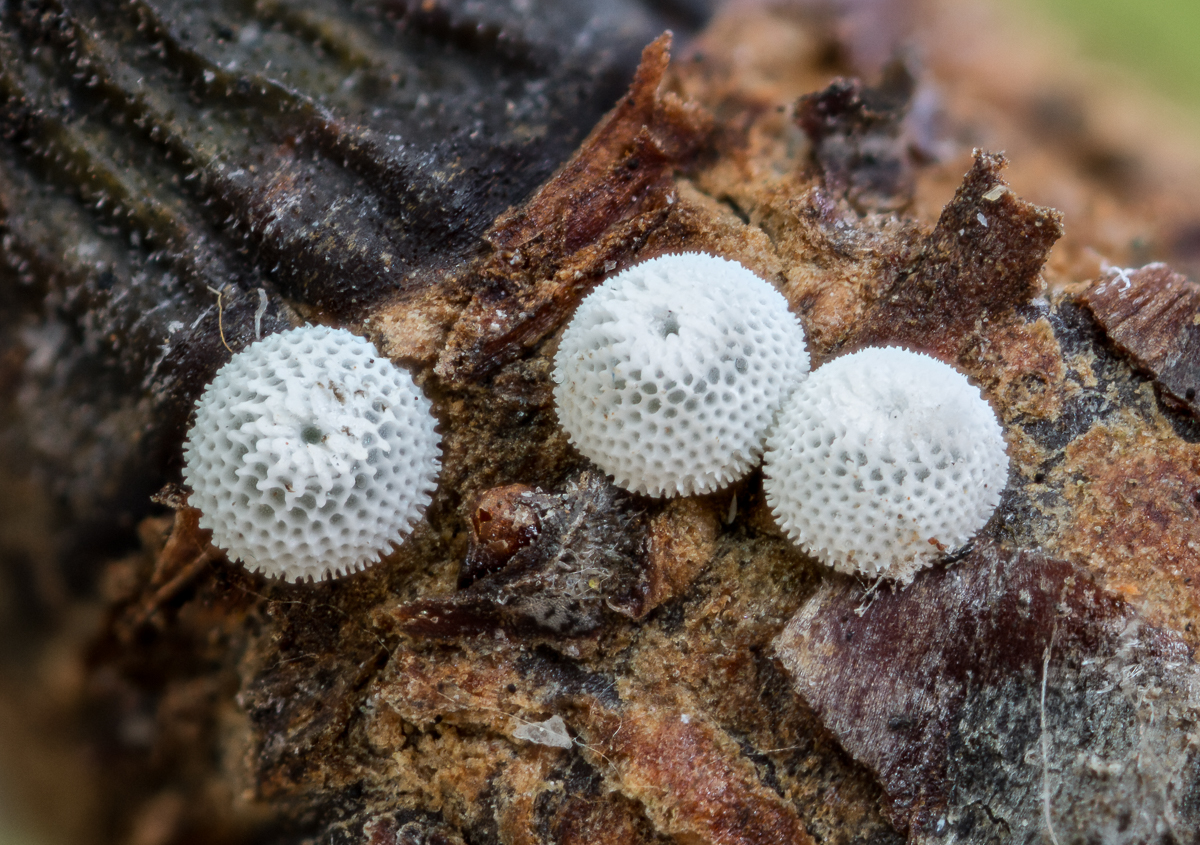
The sea urchin-shaped eggs are laid singly on the bark of the foodplant, typically at a fork in a branch that is on one- or two-year old growth that is in a sheltered area exposed to the sun. Eggs are laid at low density over large areas, but 2 or 3 eggs are found together on occasion. The larva partially develops within the egg before entering hibernation for the winter. Overwintering eggs are particularly vulnerable to hedge-trimming since they are laid on the youngest growth of the foodplant.
"Two females were captured in Huntingdonshire on September 4th, 1905; on the following day these were fed with sugar and water and placed on a branch of blackthorn; on this they deposited several eggs during the day. One of the females lived until September 20th, after laying about forty eggs. The eggs commenced hatching on April 7th, 1906, remaining seven months in the egg state. The eggs are laid singly on the twigs and smaller branches of P. communis [Prunus communis, a prior name for Prunus spinosa, Blackthorn]. The egg measures 0.65 mm. wide and less in height. It is of a compressed conical shape; one-third from the crown the side is slightly flattened, it then bulges out so that its greatest diameter is near the base, which is flat; the micropyle is sunken, with a fine granular surface. The whole surface is composed of irregular pentagonal cells, which are large and deep and most irregular round the apical third. The walls of each cell, especially near the base, are deeply toothed, and those on the crown form irregular ridges. The colour is white, and greenish-grey at the bottom of the cells." - Frohawk (1924)
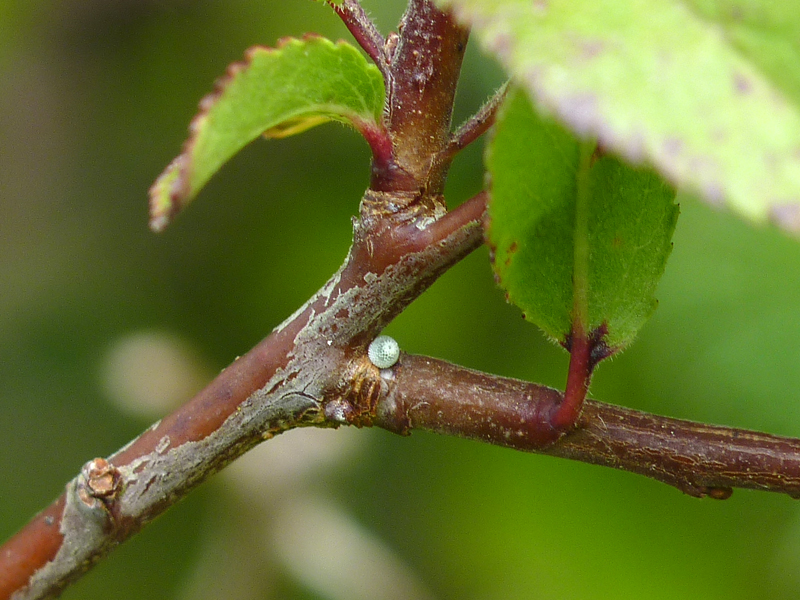
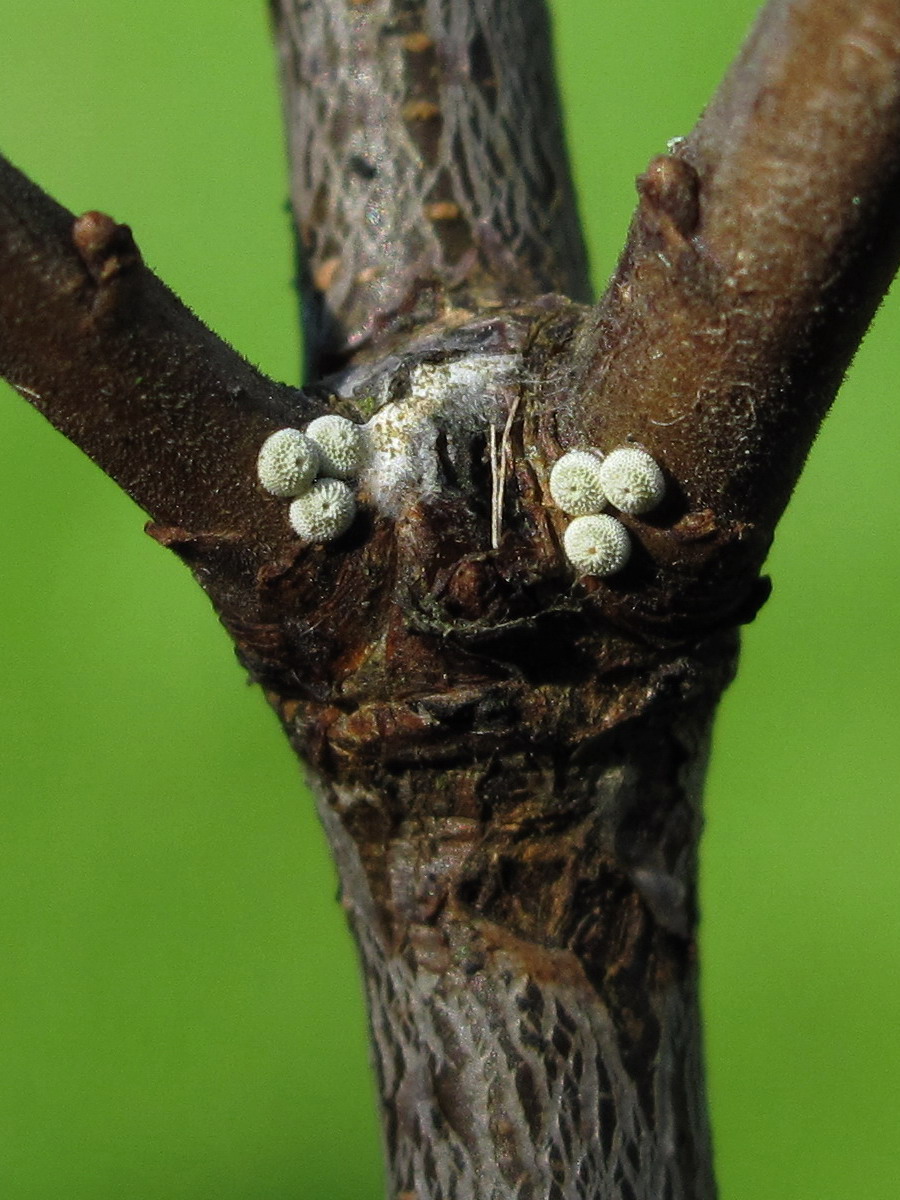
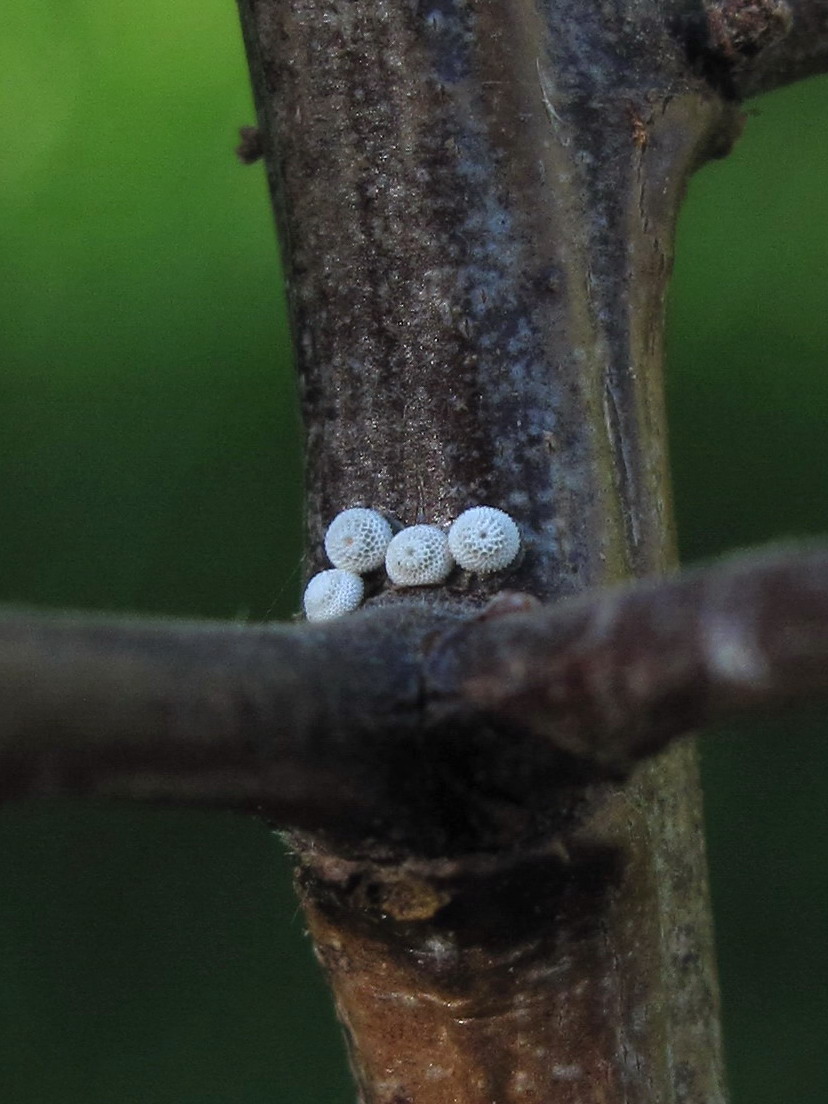
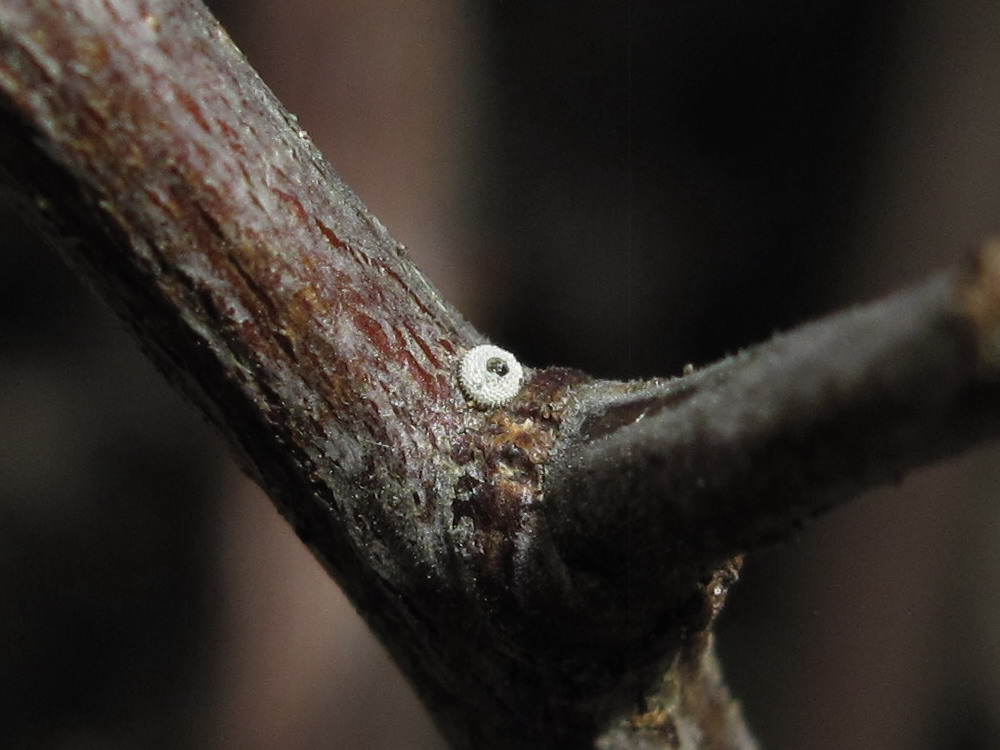
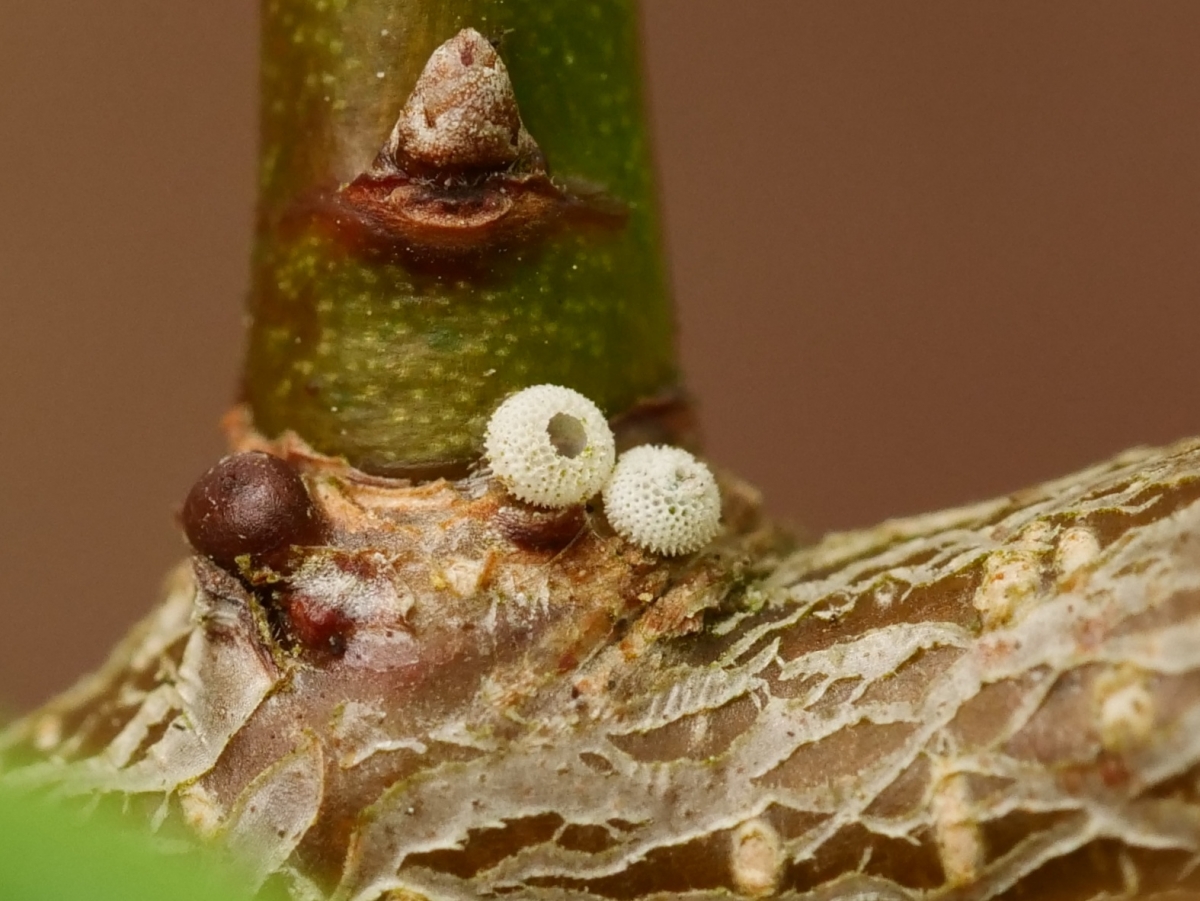
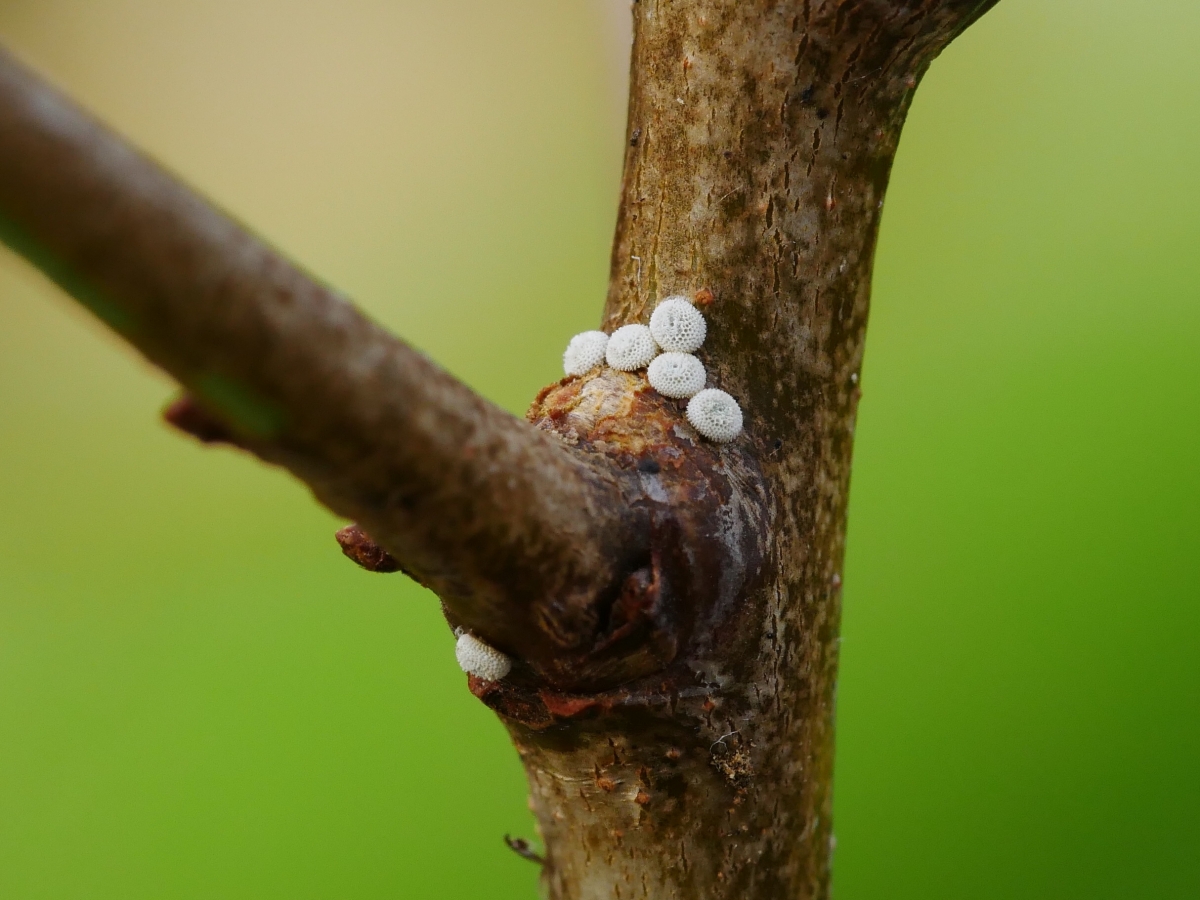
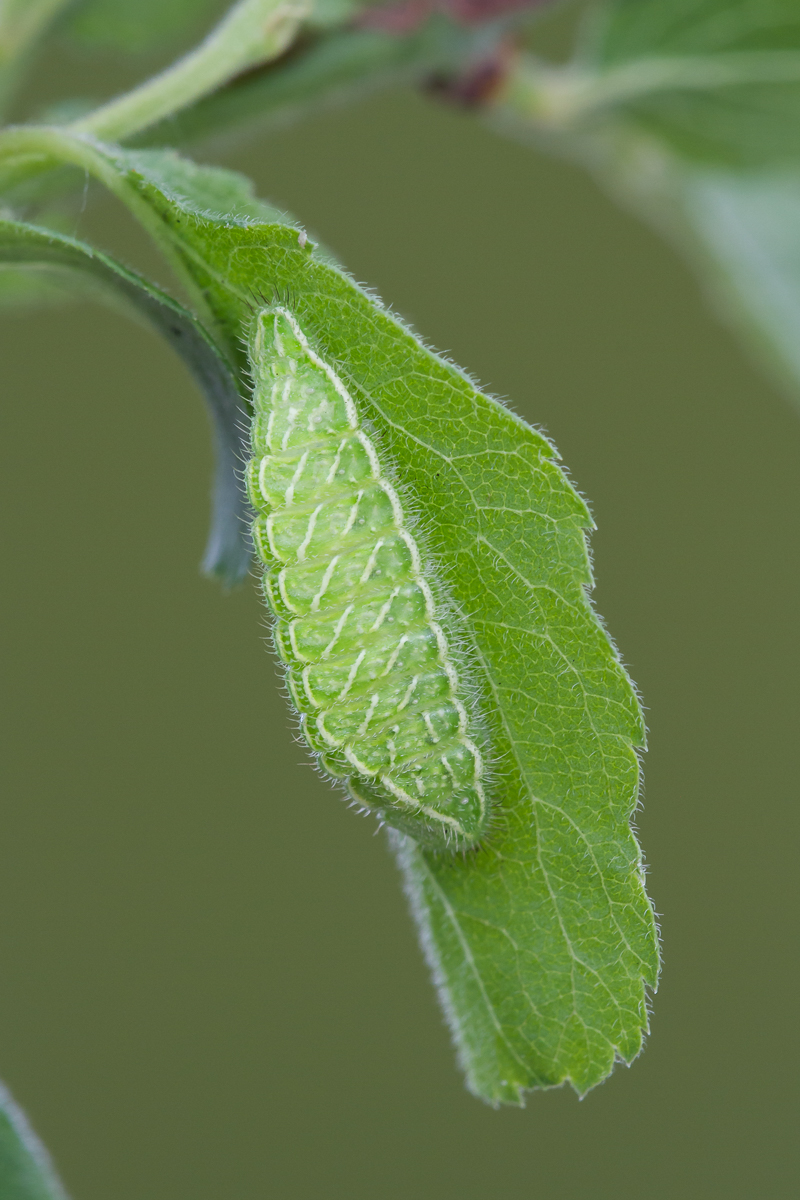
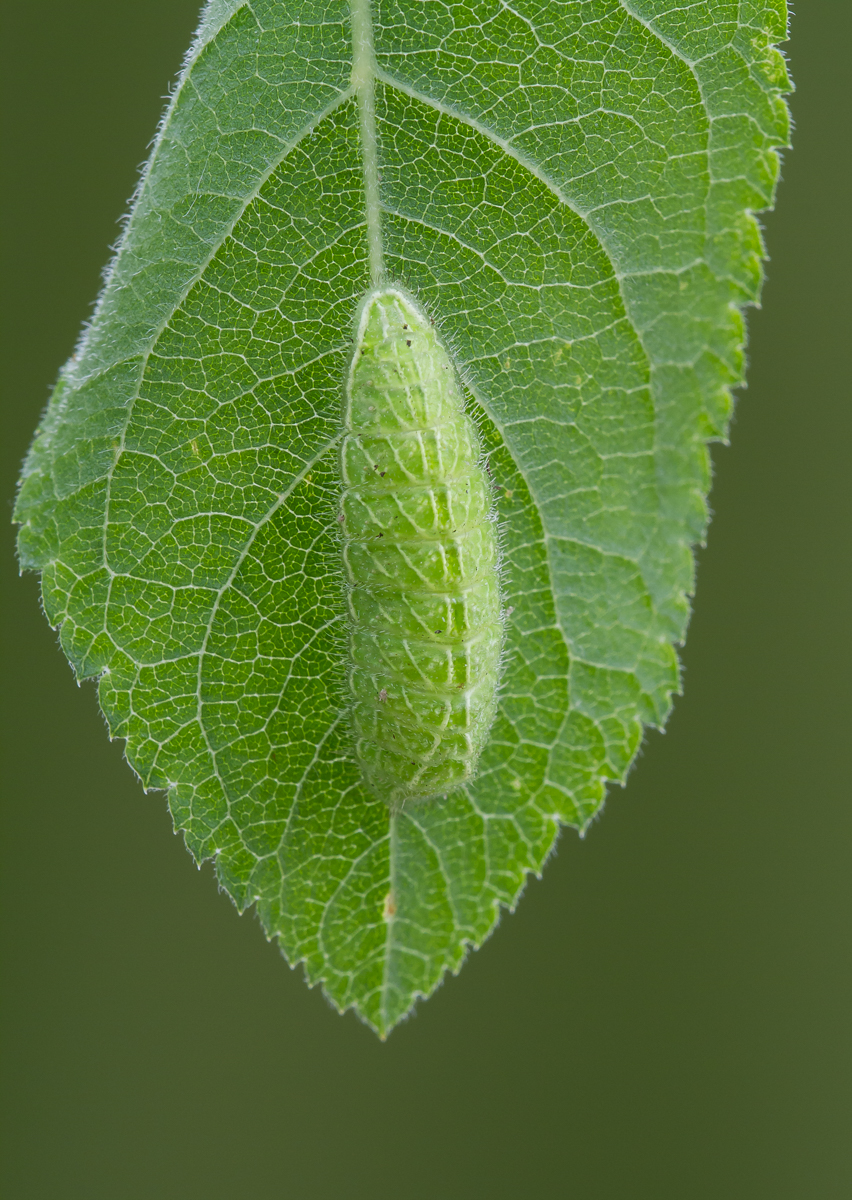
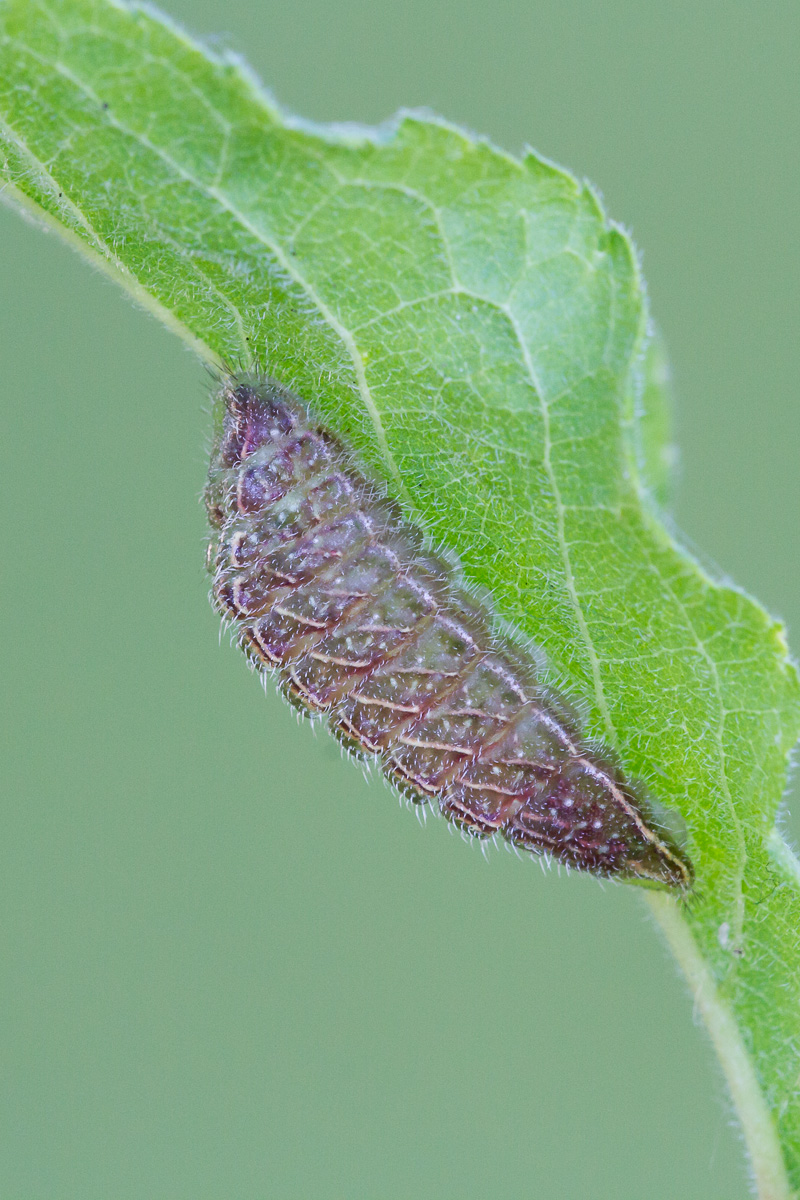
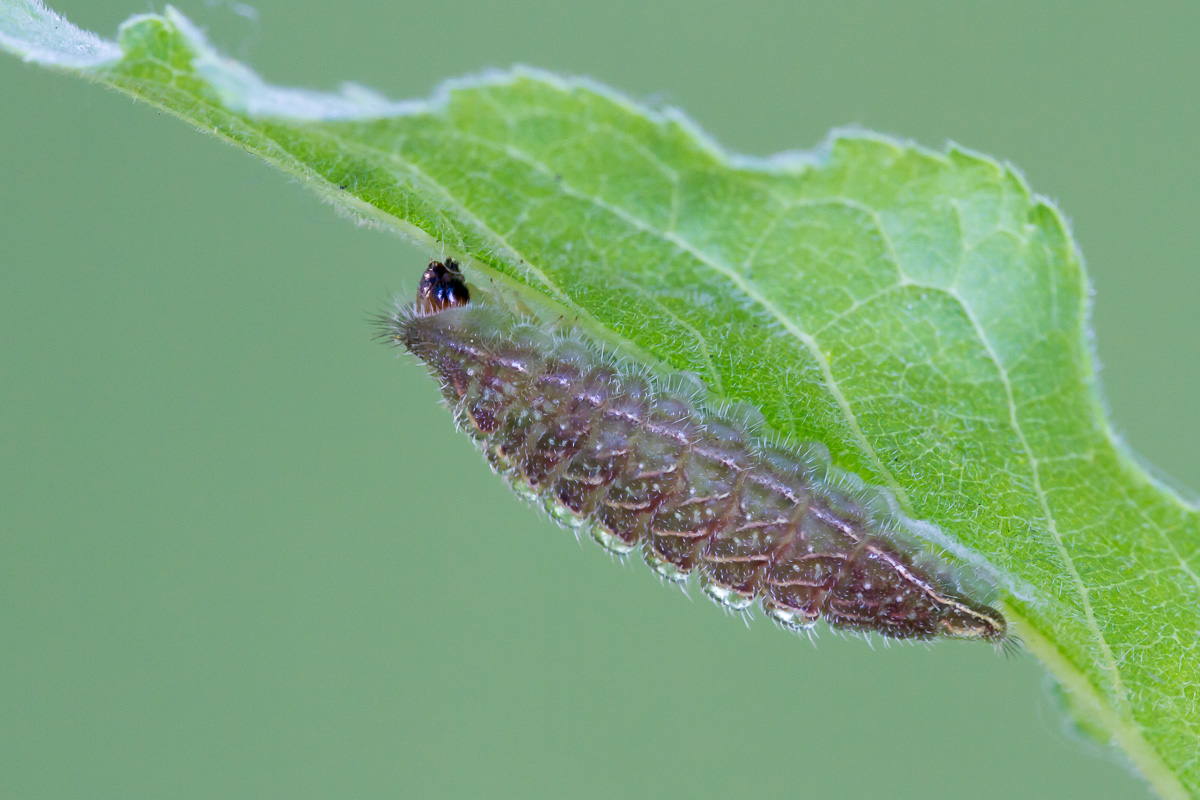
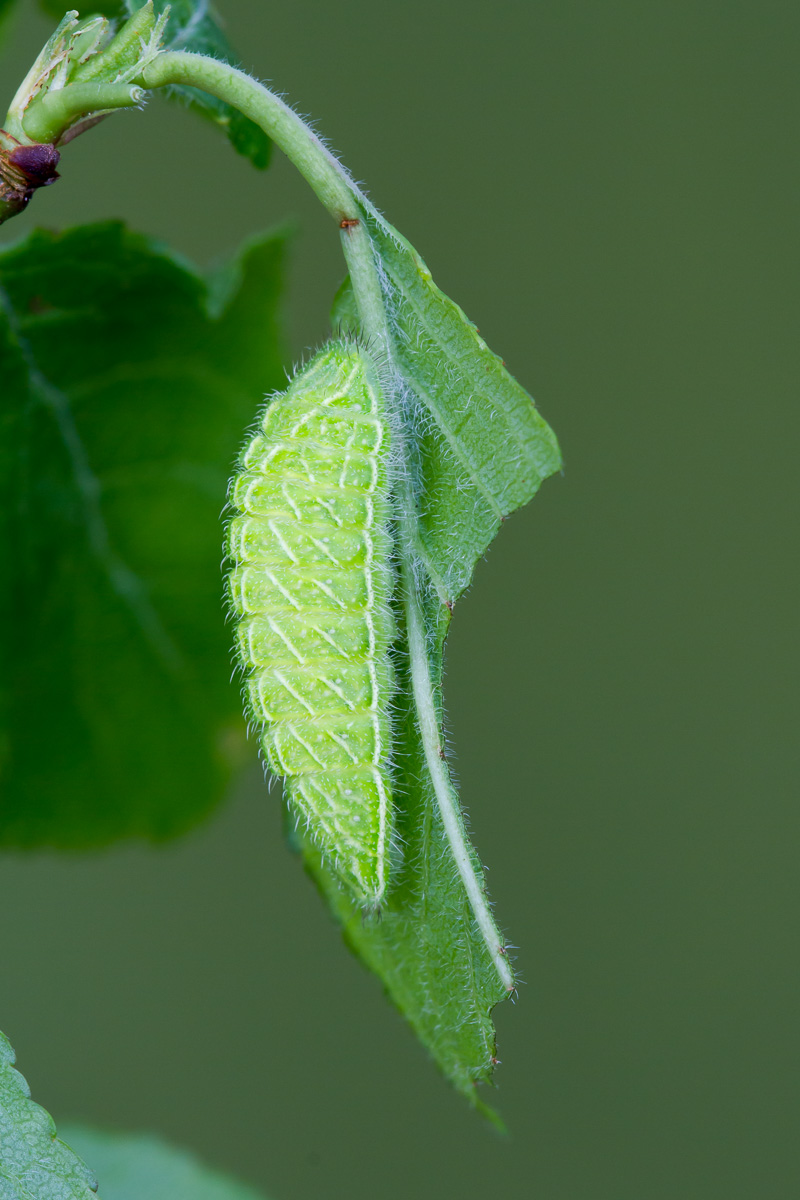
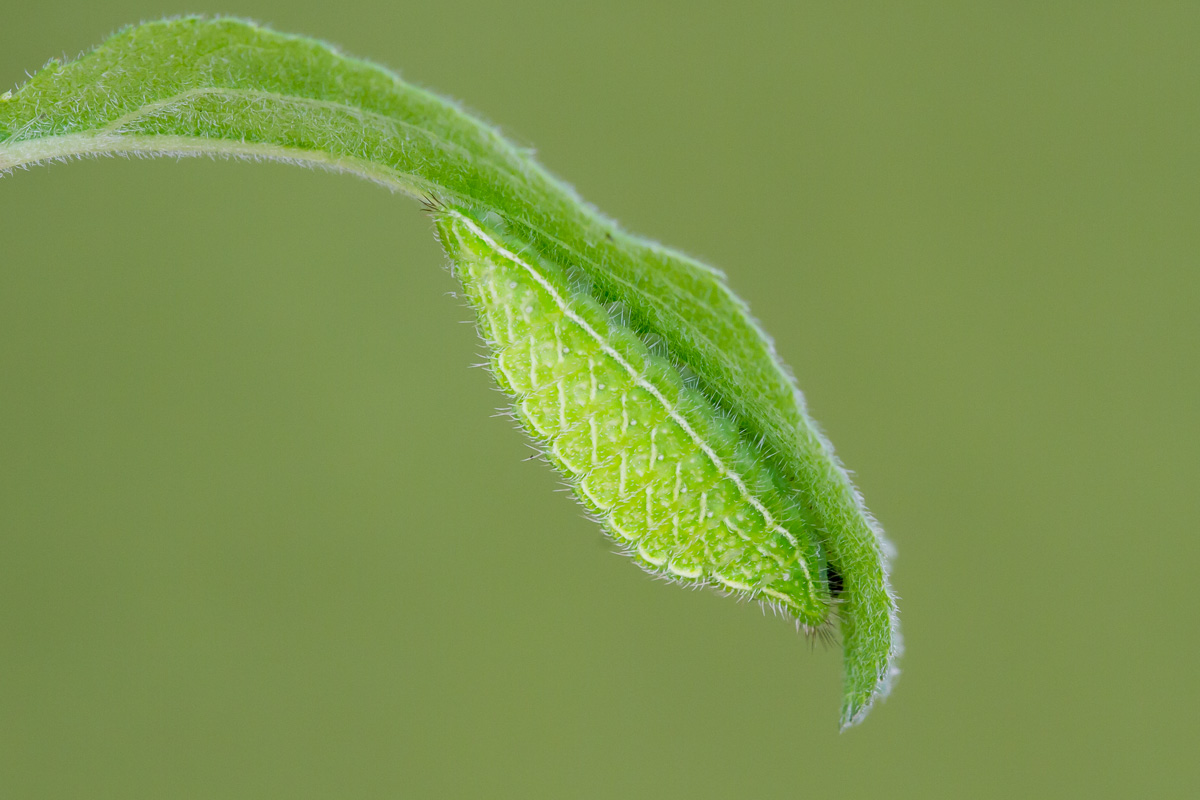
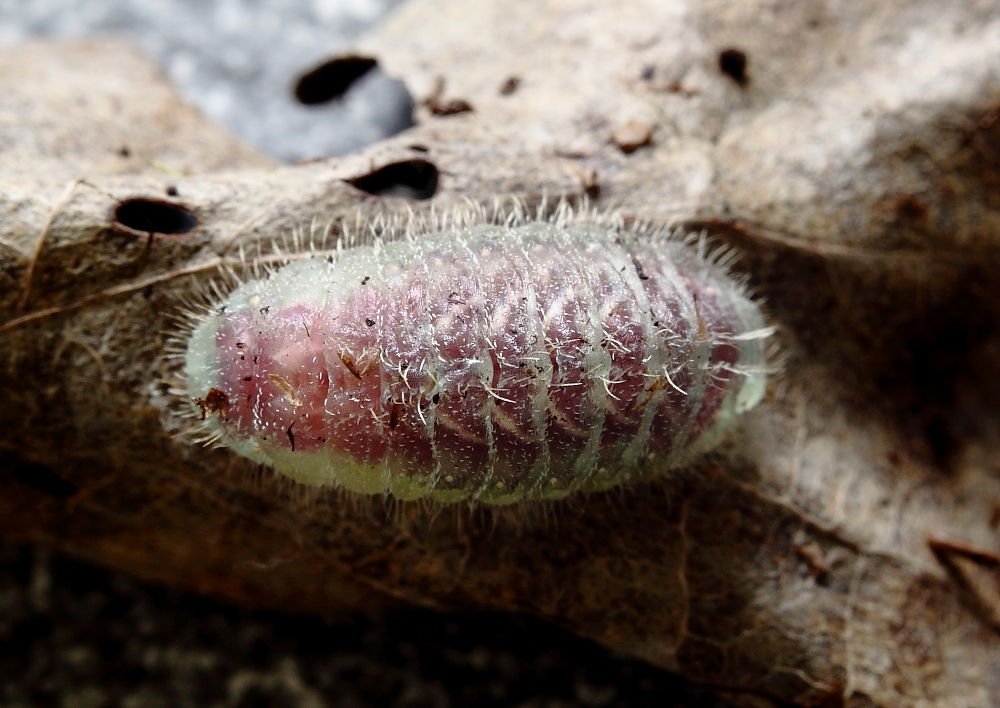
The larva emerges from the egg in spring by cutting a hole in the top of the egg and immediately enters a developing bud. The eggshell is not eaten and may be found some time after the larva has emerged. After the first moult, the larva will rest by day on a silk pad situated on the underside of a leaf, feeding away from its resting place at night, and returning to rest as dawn approaches. The bright green larva is extremely well-camouflaged, blending perfectly with the leaf on which it sits. The fully-fed larva leaves the foodplant prior to pupation, changing colour to a dull purple to maintain the excellent camouflage as it rummages around in leaf litter. There are 4 instars in total.
The primary larval foodplant is Blackthorn (Prunus spinosa). cherries (Prunus spp.) is also used.
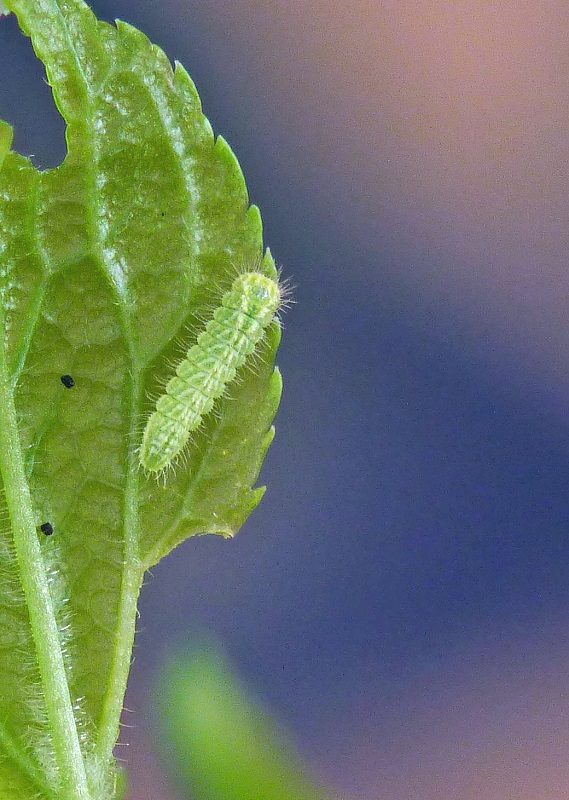
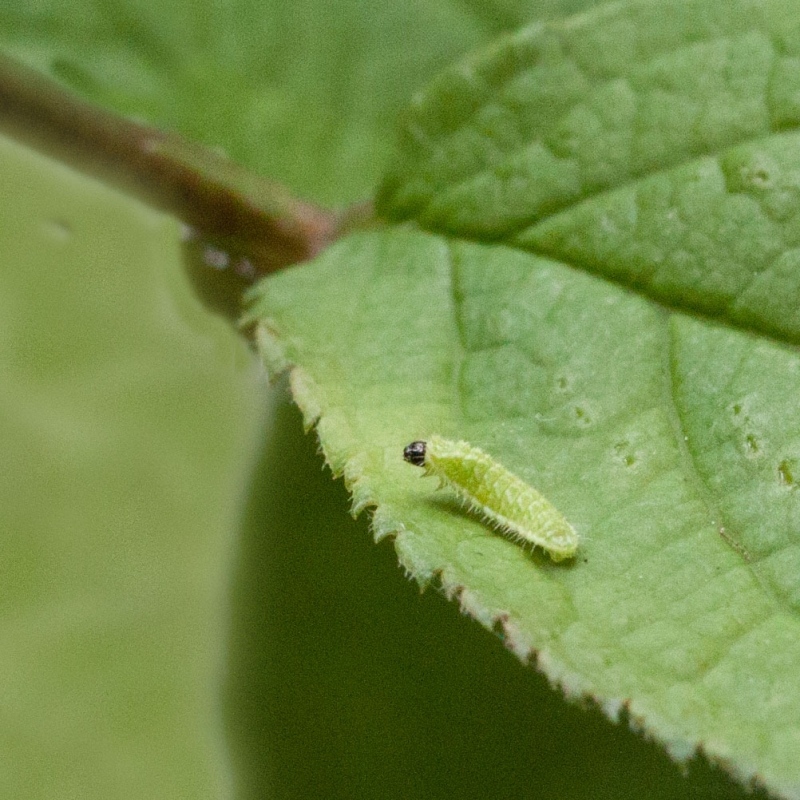
"The larva emerges through a small circular hole made by eating away the micropyle. Directly after emergence the larva measures 1.3 mm. long. In shape it resembles T. quercus, and also somewhat in the arrangement of the hairs, but the discs on the first and last segments are not dark as in quercus, but of the same colour as the rest of the surface; they are without the numerous black points which cover the whole of the rest of the body, but are checkered with dusky markings and lenticles on the anterior segment. There are also lenticles dispersed over the body, one above the spiracle and one below the lateral lobe on each segment. The long hairs form longitudinal dorsal rows, placed in two pairs on a segment; the anterior pair is very long and curving backwards; immediately in front of these is an exceedingly short pair; both the others have frustum-like bases of a pale olive colour with black summits; just above the spiracle are two very minute, short, curved hairs, and four long ones below on the lateral lobe, three in a line and one below, the central one being the longest; these all project laterally; all the hairs are rough, like white frosted glass, and finely serrated. The hairs below the lateral ridge are simple, white and glassy. The ground colour is a pale greenish-ochreous, thickly sprinkled with minute black points. The head is shining bronze-black and bears a few excessively fine white hairs. The legs are olive-brown. Before first moult it measures 2.5 mm. long, i.e., when it is nine days old." - Frohawk (1924)
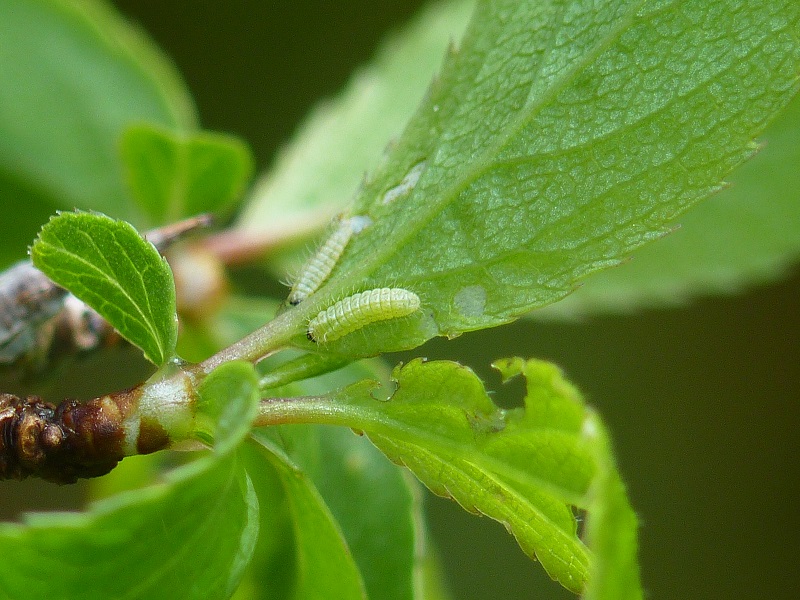
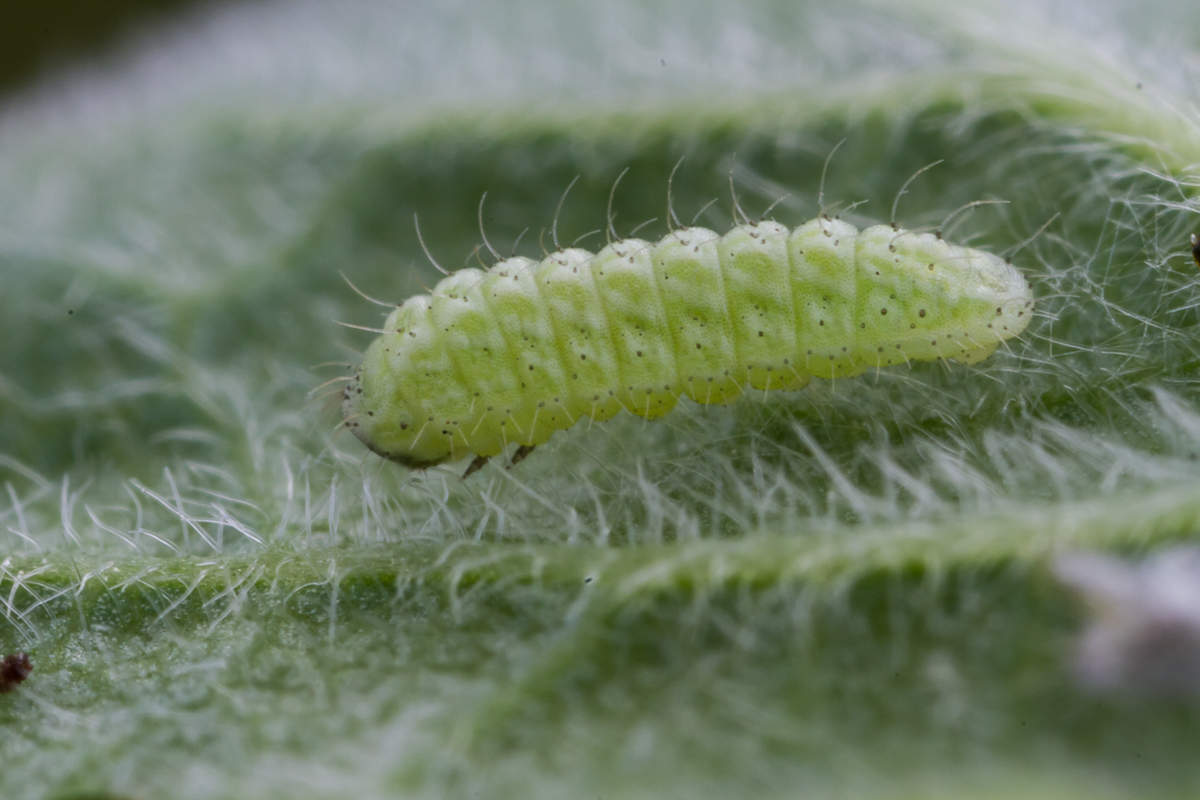
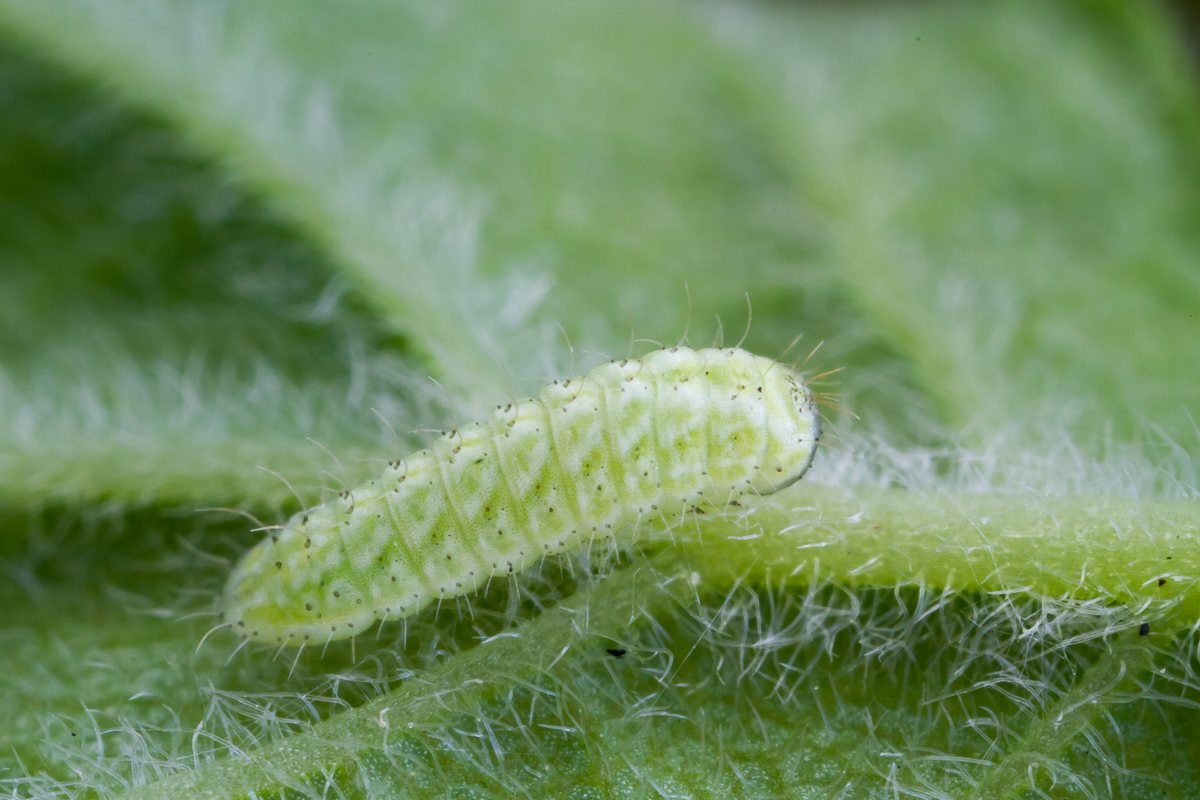
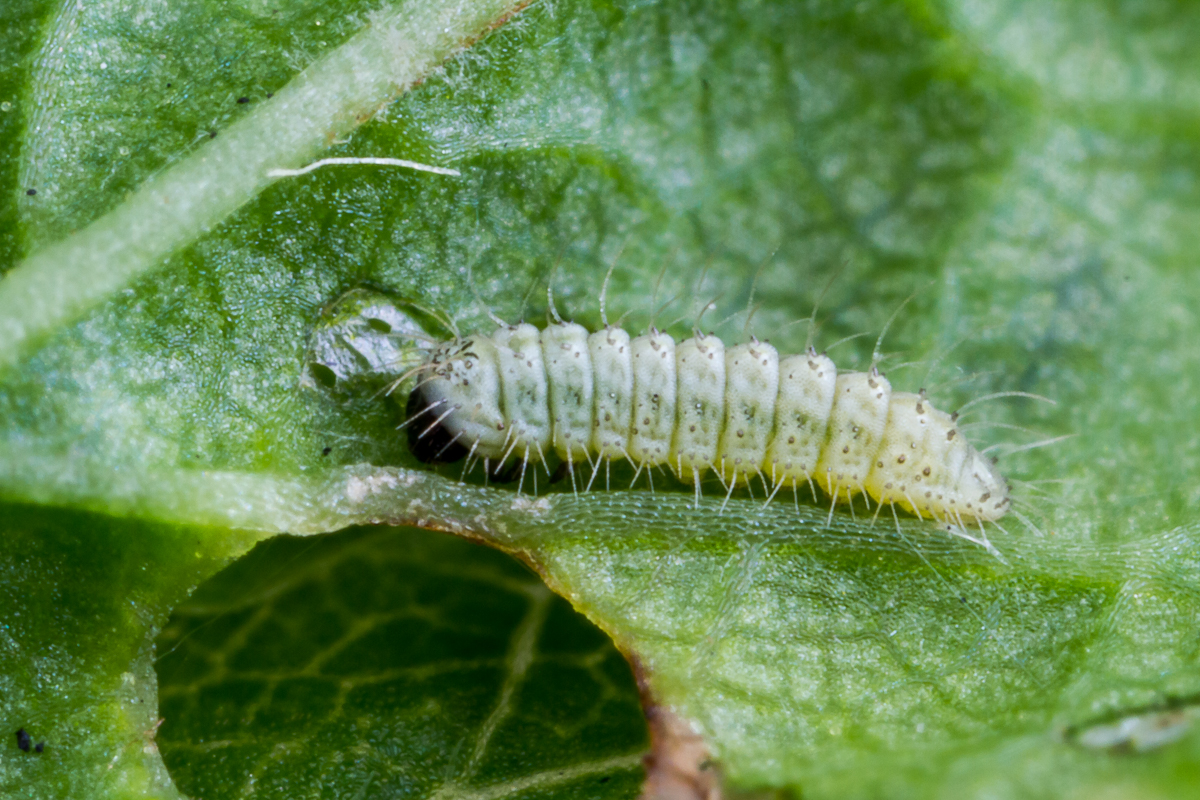
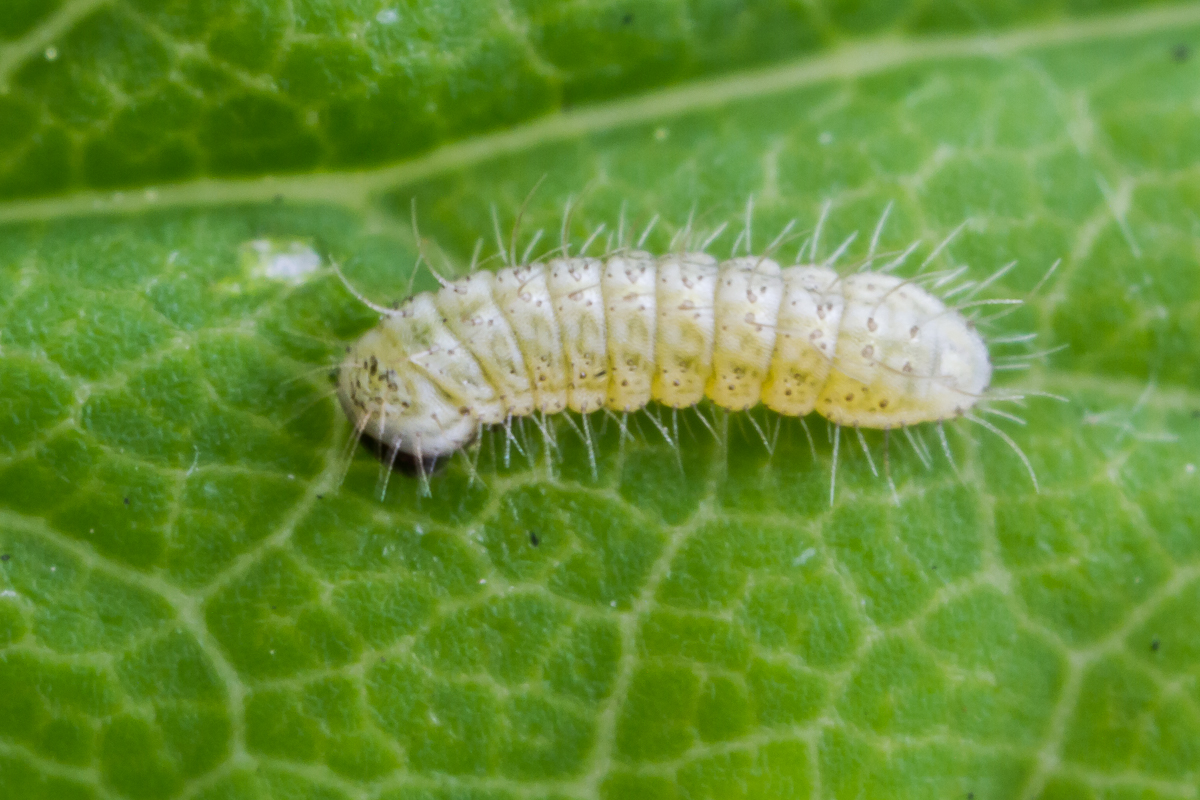
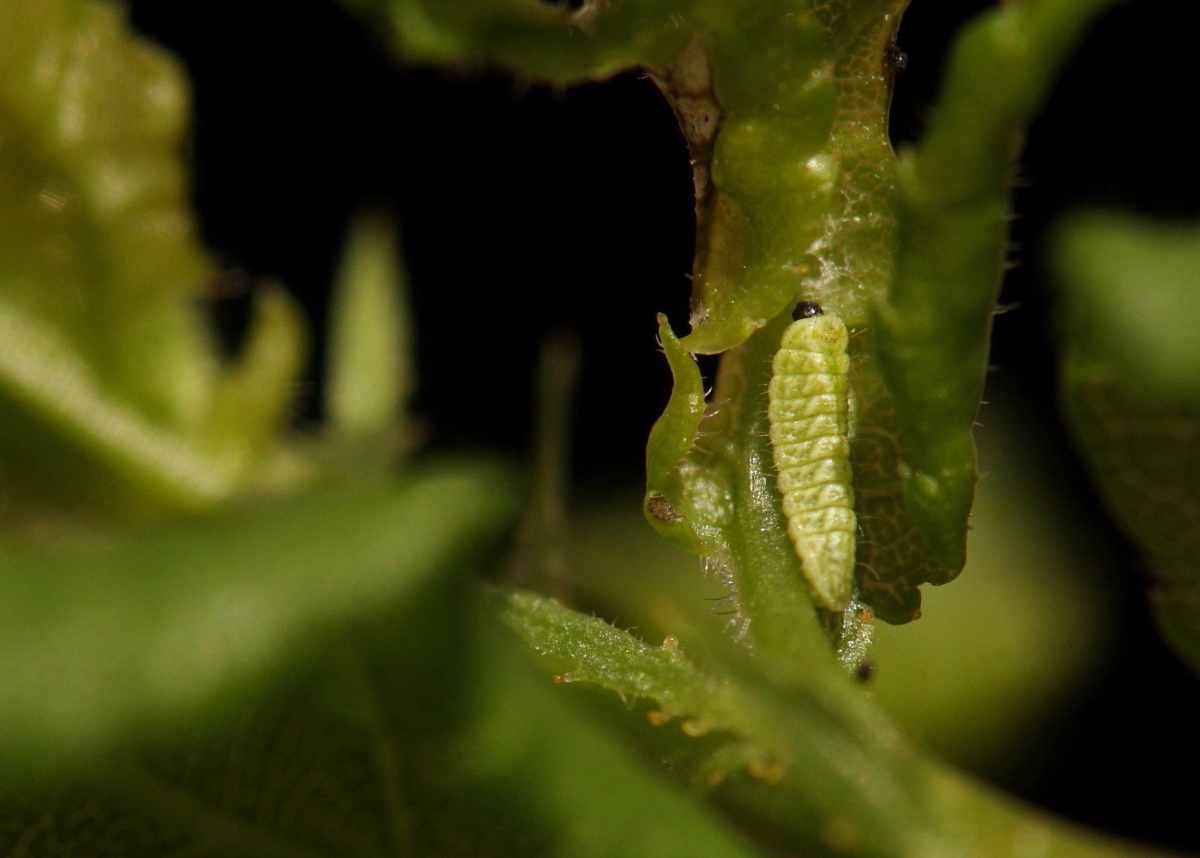
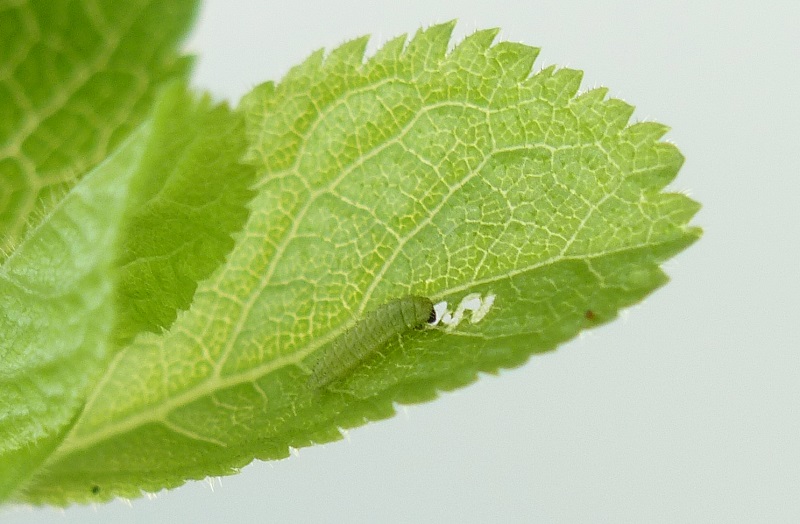
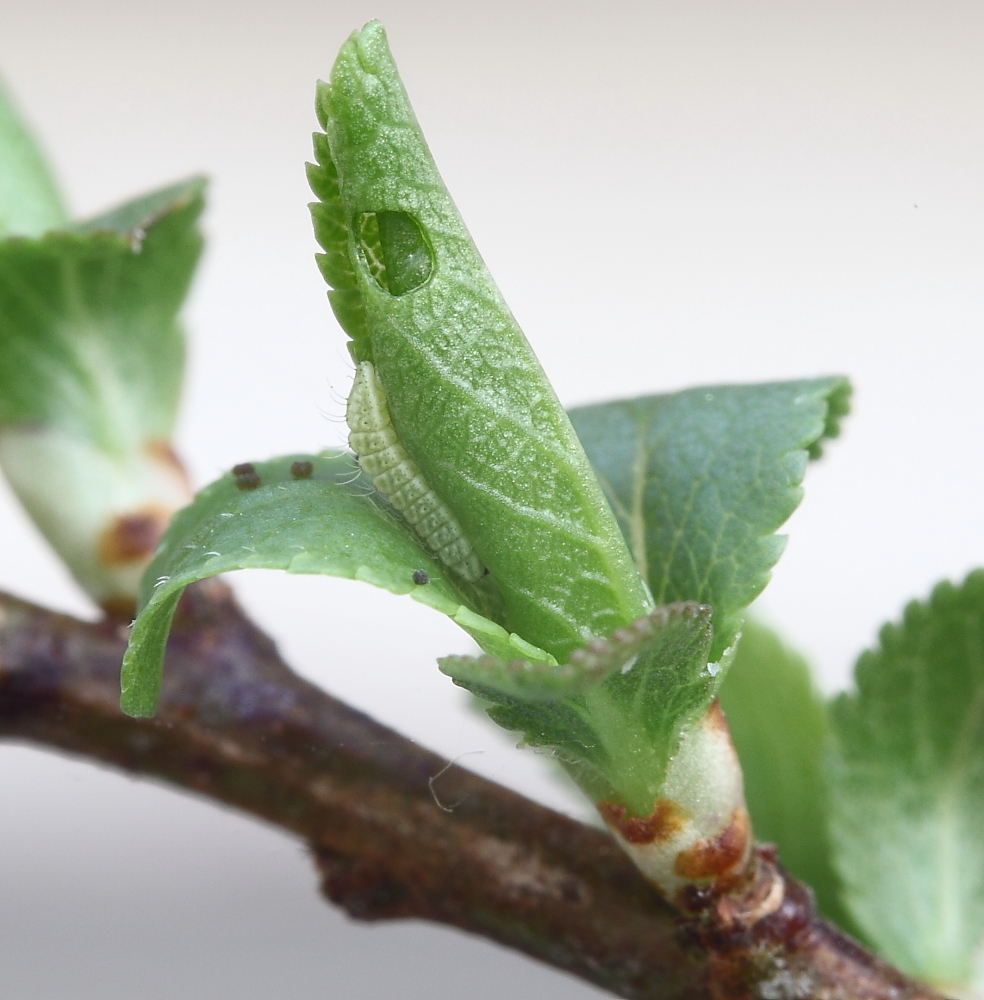
"The first moult May 22nd, 1902. Before second moult it measures 4.8 mm. long. The first and last segments are compressed; the second to ninth segments inclusive are humped dorsally, the sides flattened; the lateral ridge dilated; the segmental divisions deeply incised. The ground colour is a light green with longitudinal dorsal, lateral and oblique side stripes, all of light lemon-yellow. The head is bronze-black." - Frohawk (1924)
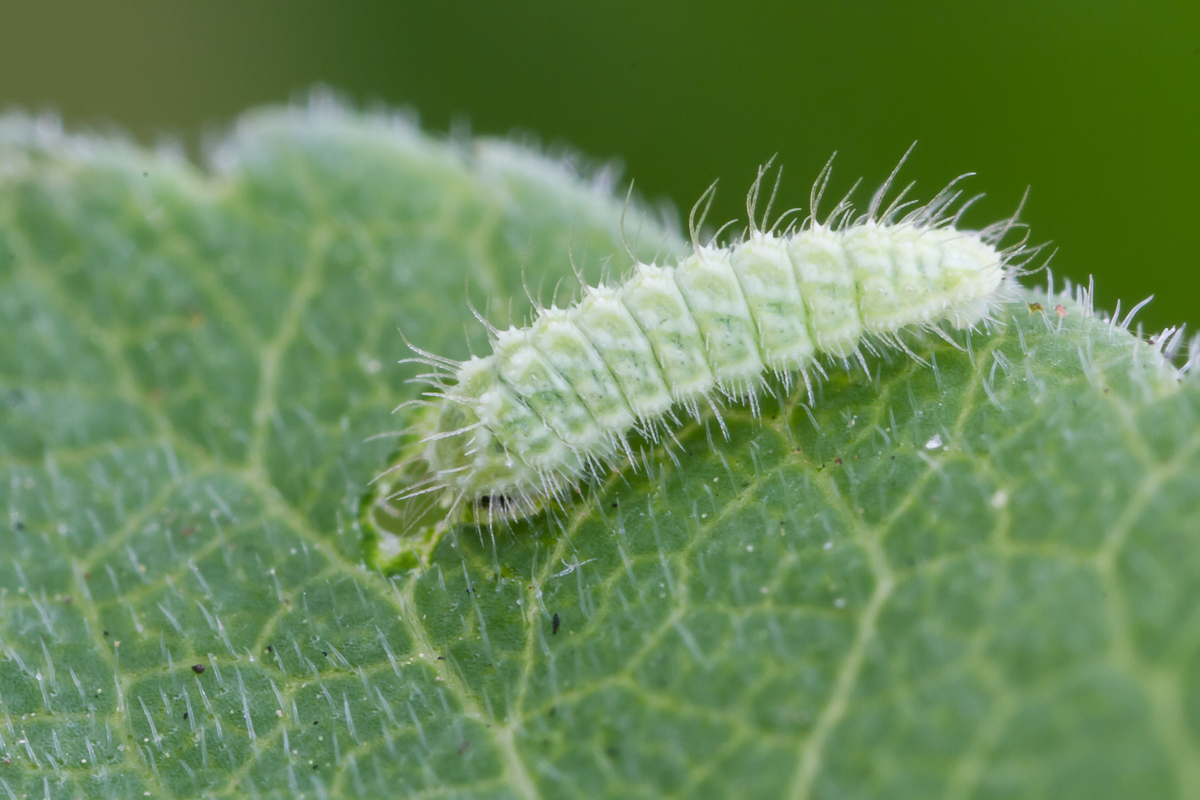
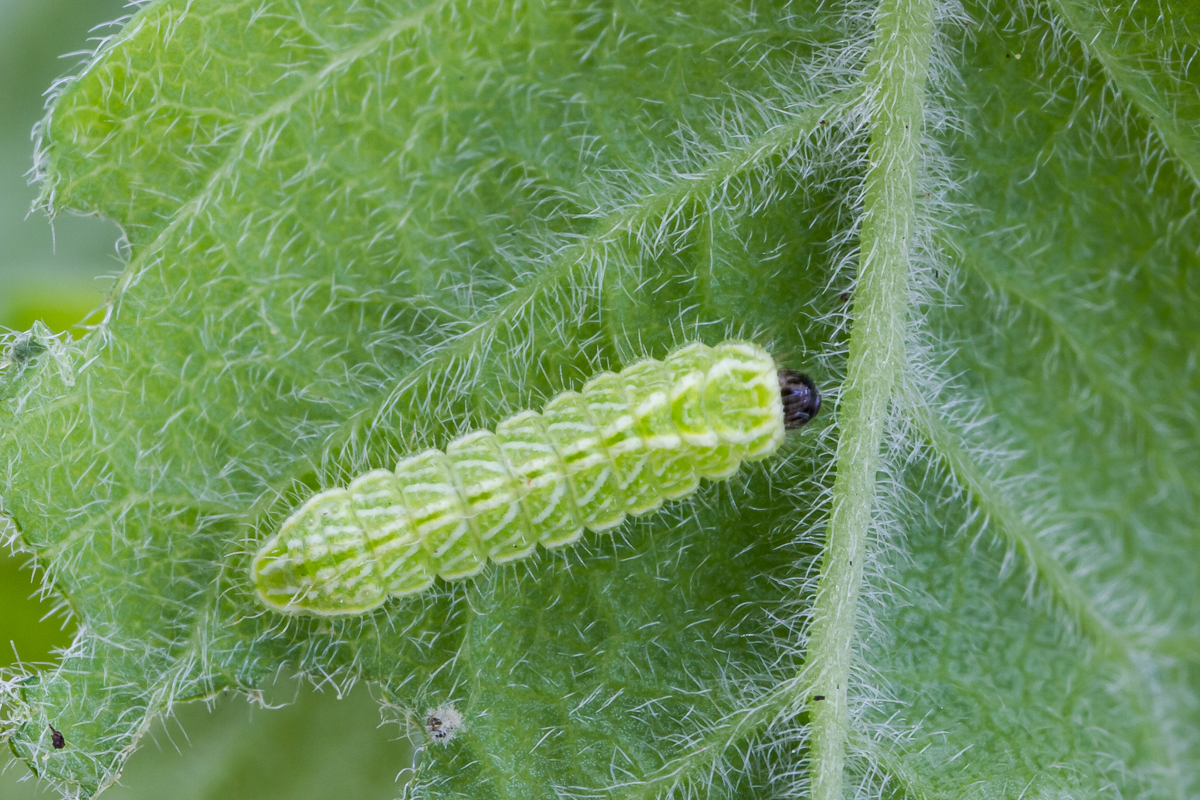
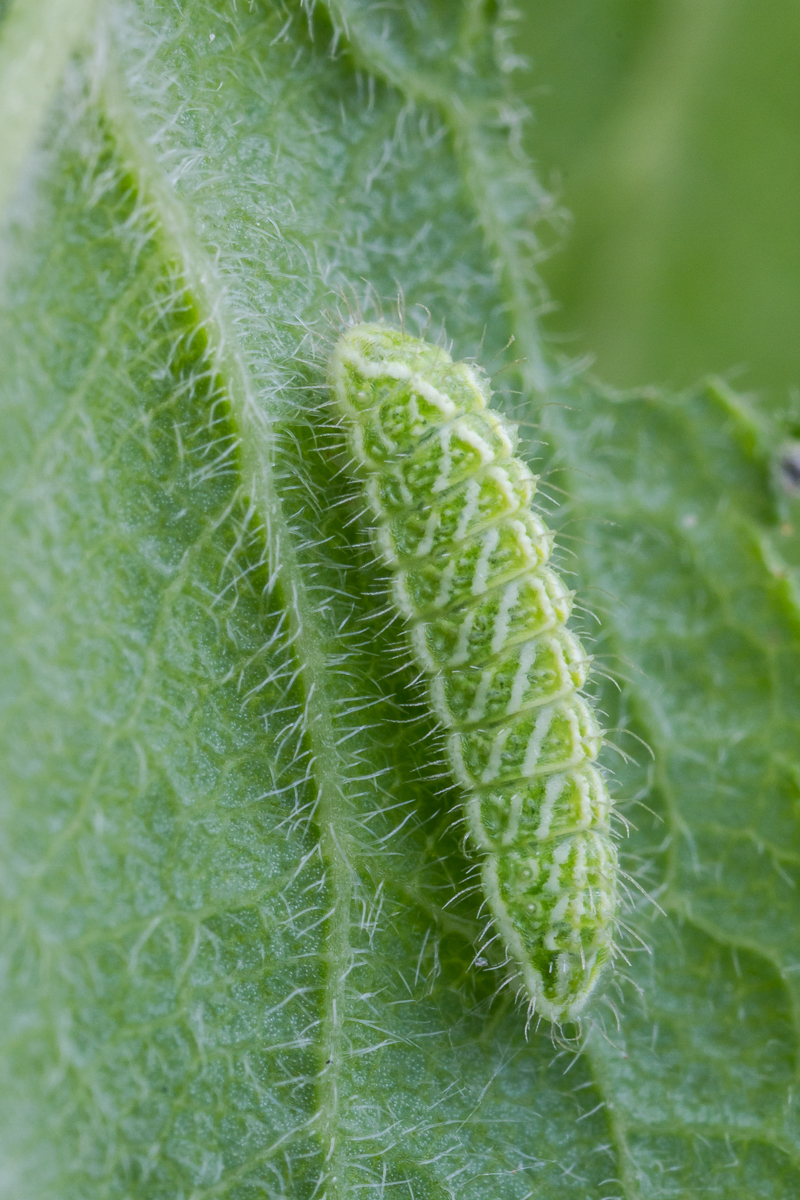
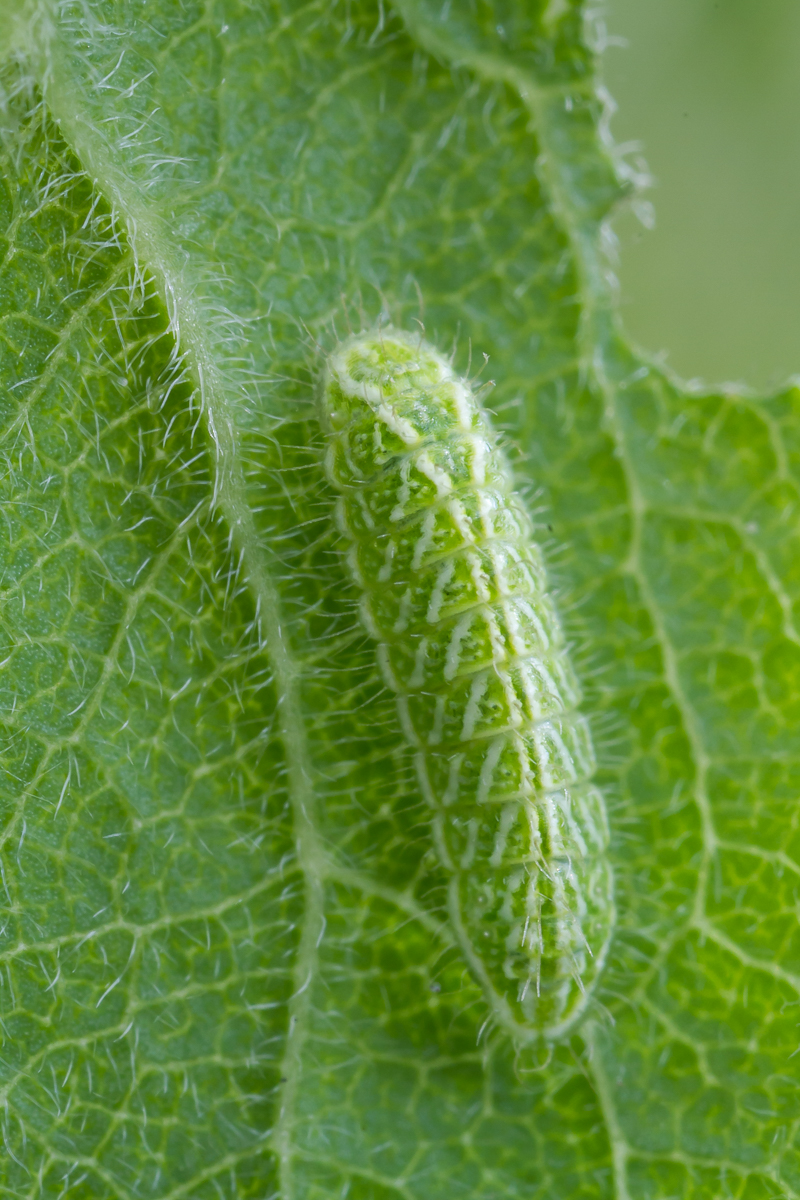
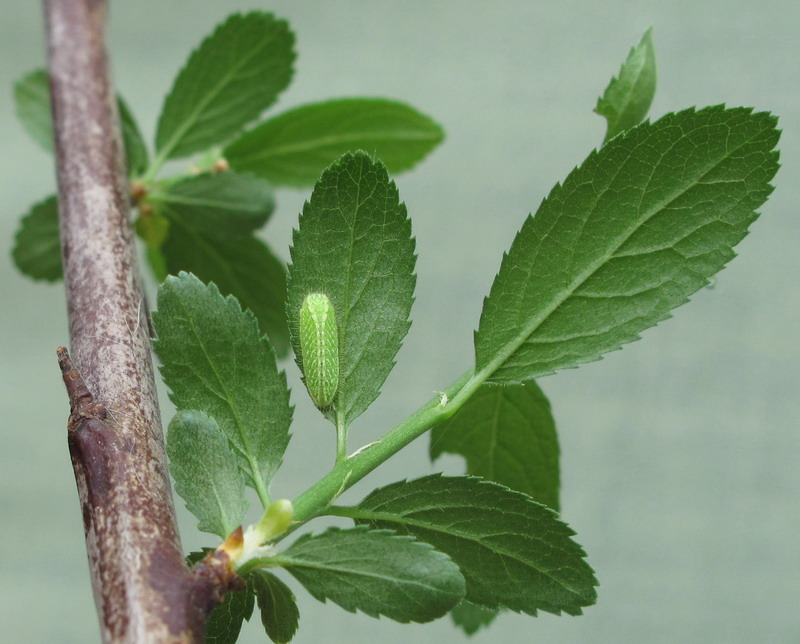
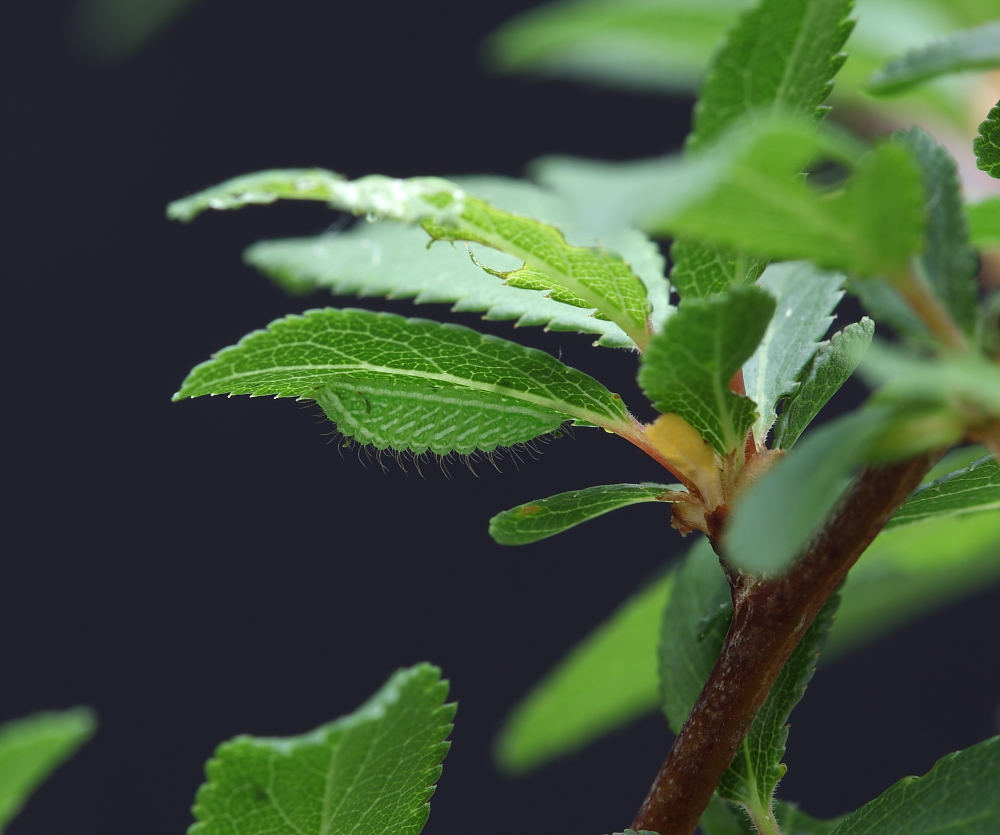
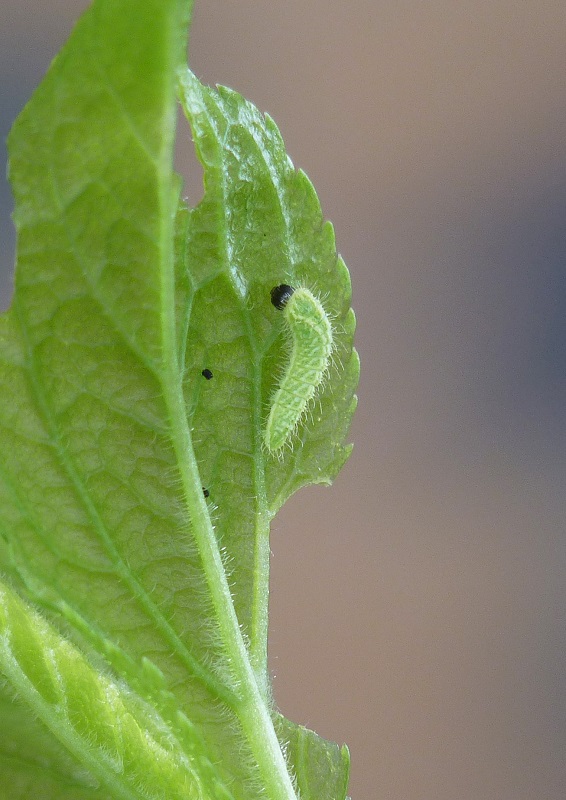
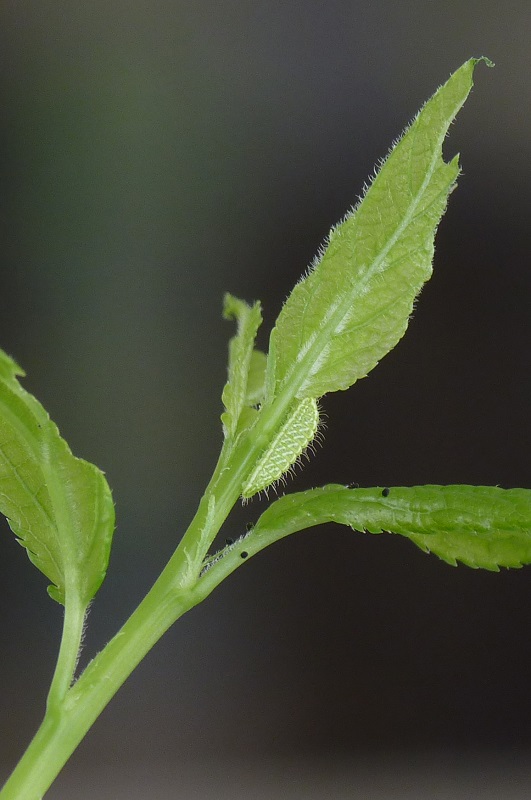
"The second moult June 1st, 1902. Before third moult it measures 9.5 mm. in length. It is similar to the previous stage, but all the markings are clearly defined; the spaces between the oblique stripes are checkered with light mottlings; all the hairs are serrated and white, except those of the dorsal series, which are slightly ochreous. They usually rest on the under side of the leaves." - Frohawk (1924)
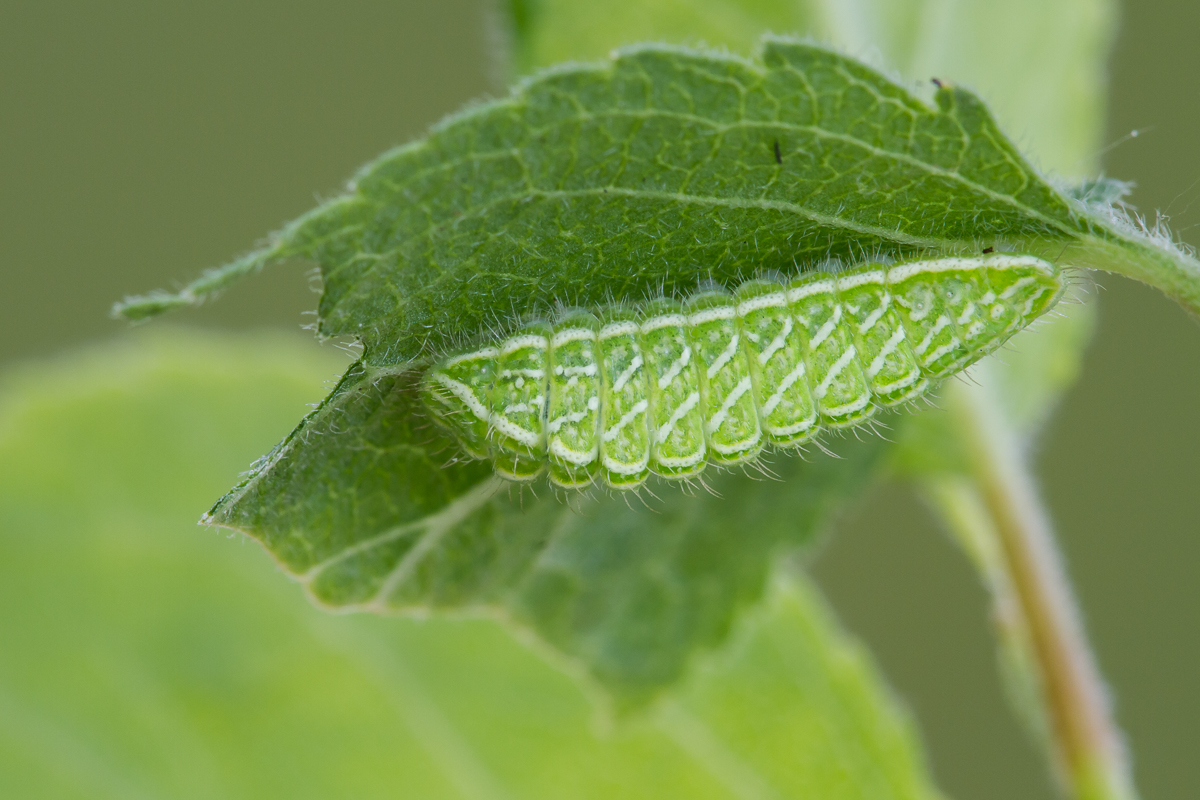
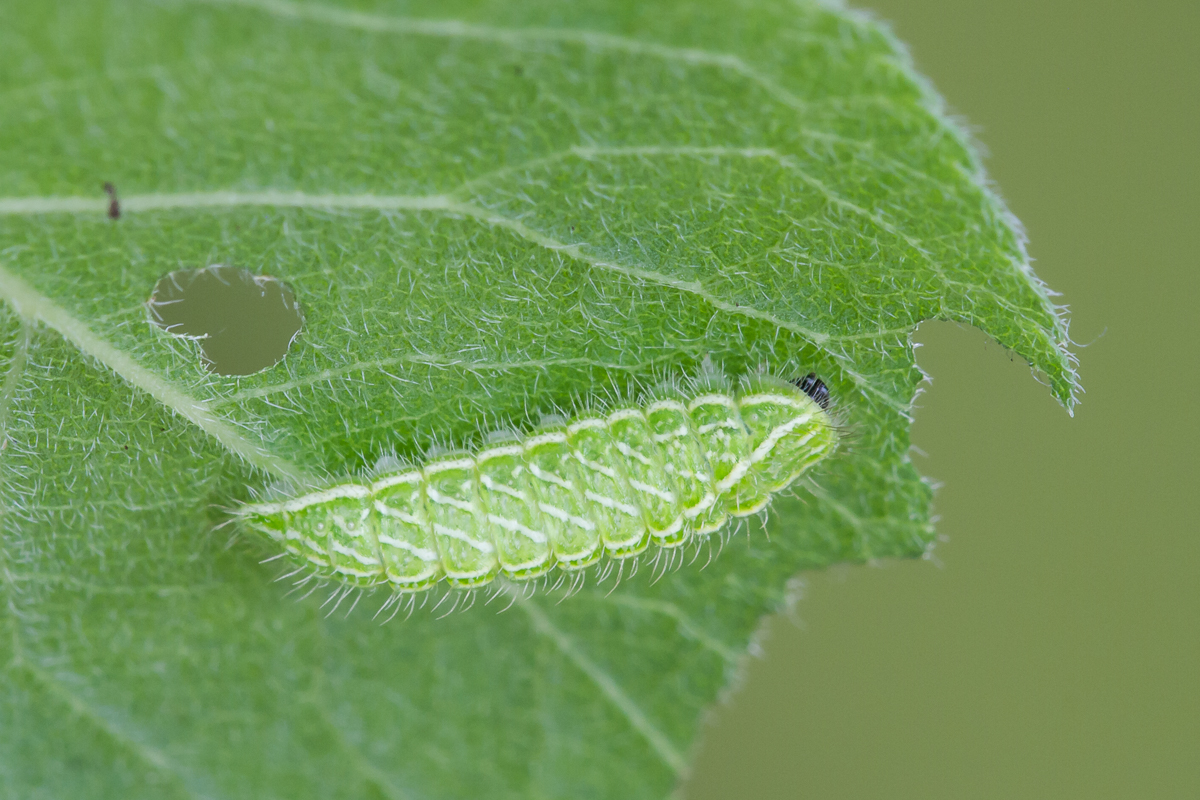
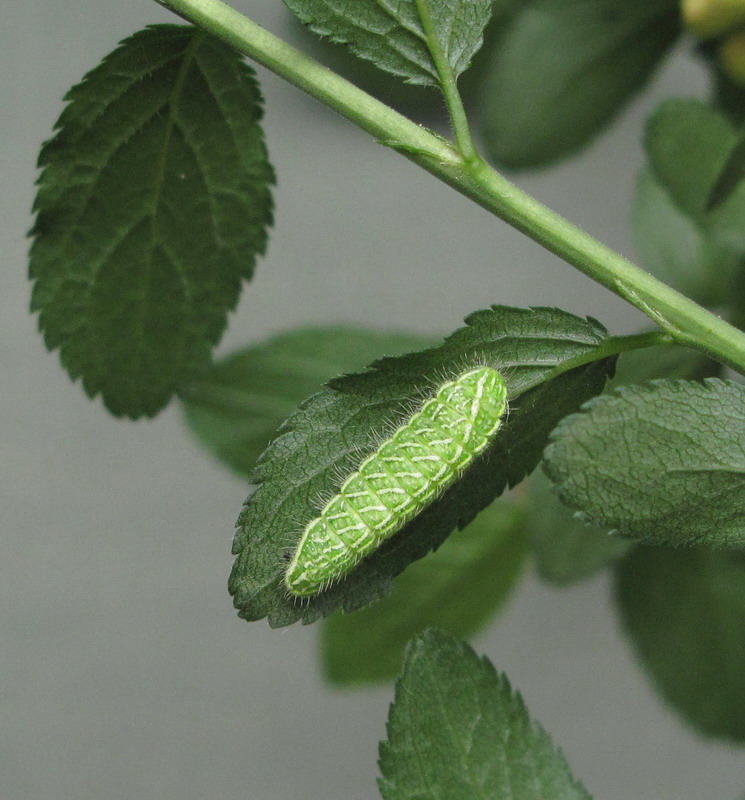
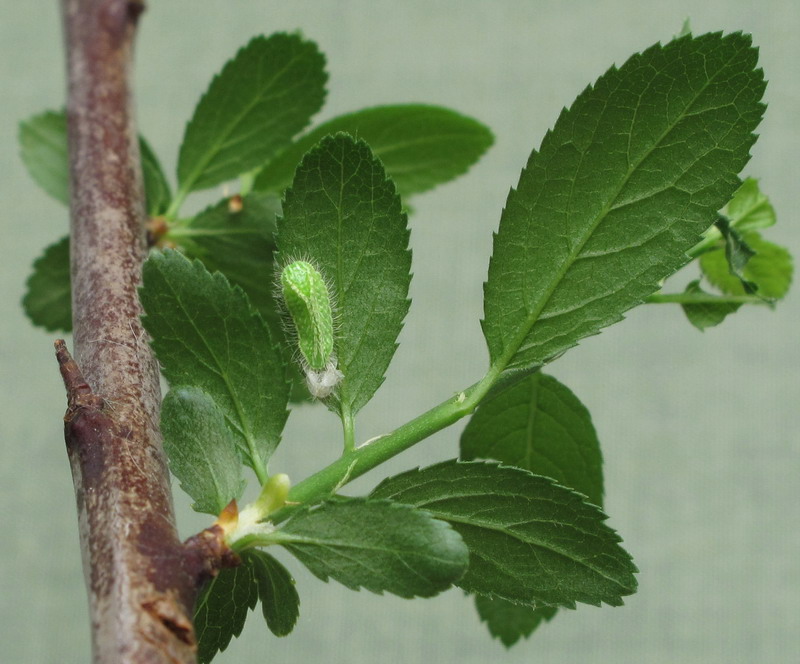
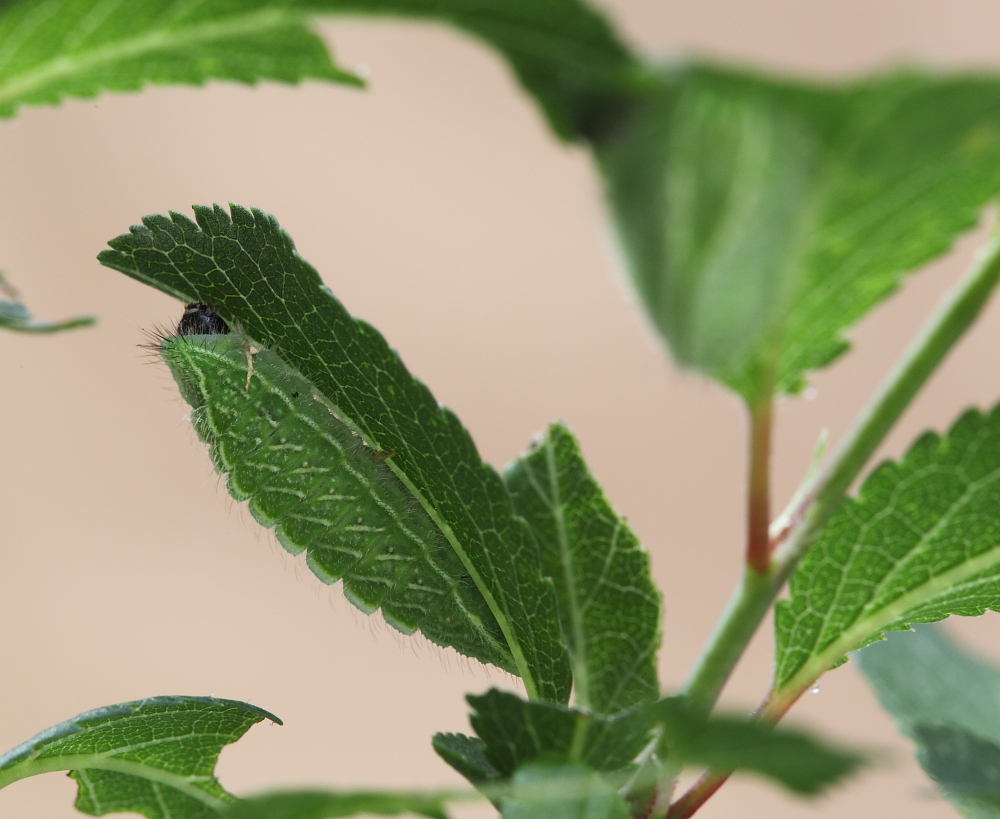
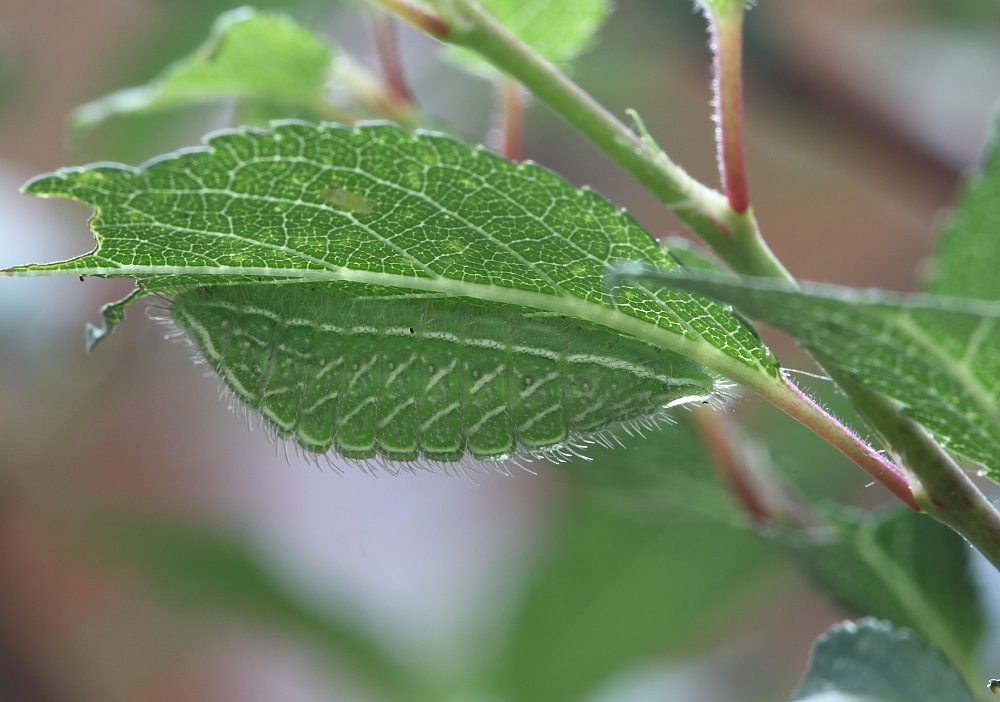
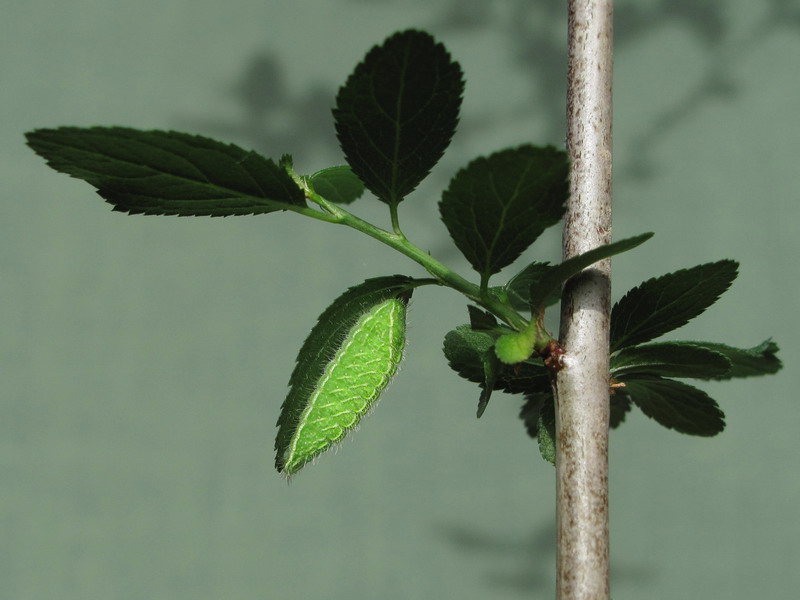
"The third and last moult, middle of June, 1902. After third and last moult, fully grown, it measures from 16 mm. long to 19 mm., the larger being the females. It is of the usual Thecla shape, resembling a chiton shell. The sides are flattened, the ventral surface very flat, so that when viewed end on it forms a triangle. The first segment is compressed dorsally, rounded laterally, with a slight notch in front, and completely overlaps the head, which is quite concealed while at rest. The segmental divisions form deep incisions, especially on the dorsal surface, where each segment is so much elevated that they form a medio-dorsal ridge of transparent projections resembling green glass. Along each side of the ridge is a longitudinal line of a very pale greenish-yellow, appearing almost white; these two lines are very close together and are subcutaneous, and show through the transparency from side to side. From the fourth segment inclusive there is no dorsal furrow, consequently the dorsal ridge diverges, or rather widens out over the three anterior segments, leaving the space between sunken and giving rise to the compressed anterior segment. It also widens out over the last three posterior segments, the anal one being considerably flattened and slightly bifid like the first, with a dilated lateral ridge which is continuous the entire length of the body. It is widest across the fifth segment, from which it very gradually tapers to the anal segment. While at rest the legs and claspers are almost invisible, owing to the flatness of the ventral surface and the projecting lateral ridge. The larva also has the habit of compressing itself closely upon the surface on which it rests, usually the under surface of a blackthorn leaf. The entire dorsal surface is glossy semi-transparent, and very finely reticulated, of a clear pure green, with two very light and pale greenish-yellow oblique stripes on the side of each segment except the first and last; a longitudinal lateral line and the dorsal line already described are of the same pale yellowish colour. The ventral surface, including the legs and claspers, is wholly of a pale bluish-ashy-green. The upper surface is sprinkled with minute curved white bristles, which are developed on the two last segments surrounding the spiracles into fine white hairs with long pectinations; above the dorsal yellow line is a fringe of whitish bristles curving backwards, and along the lateral ridge is a fringe of longer bristles projecting and curving slightly downwards; this fringe extends all round the larva. The under surface is likewise clothed with fine white bristles. All the hairs and bristles are serrated and have pedestal-like bases with slightly fluted sides. The head is sienna-brown over the basal half; the remainder is blackish-brown, beset with fine white bristles. As soon as the larva becomes fully grown and ceases feeding it changes to a dull lilac colour, tinged with olive-green below the spiracles, and the markings become pale pink of more or less intensity; the oblique stripes sometimes vary from pale cream to pink. It has exactly the appearance of having been dipped into purplish dye. The particular specimen described (which the author found on May 18th, 1902, in Huntingdonshire, it was then quite small, in its first stage) stopped feeding on June 25th after crawling restlessly about all day; it was then supplied with moss, under which it at once disappeared, and pupated early morning on June 30th, 1902. The larvae thrive best and produce large imagines when fed upon the succulent young shoots of any variety of cultivated plum. On June 30th, 1907, the author secured by beating blackthorn bushes in Huntingdonshire eight Z. betulae larvae; all except one were about full-grown. Therefore in a state of nature the larva of this butterfly attains full growth and pupates at the end of June or early in July." - Frohawk (1924)

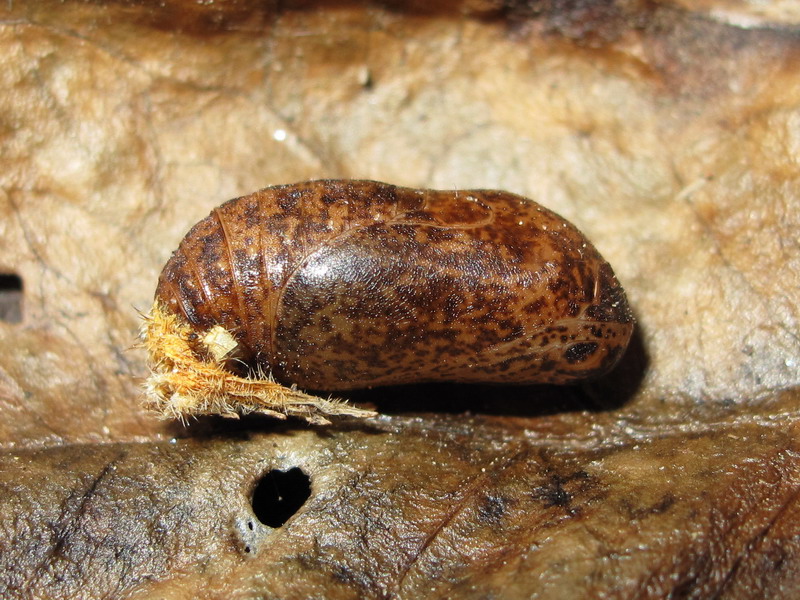
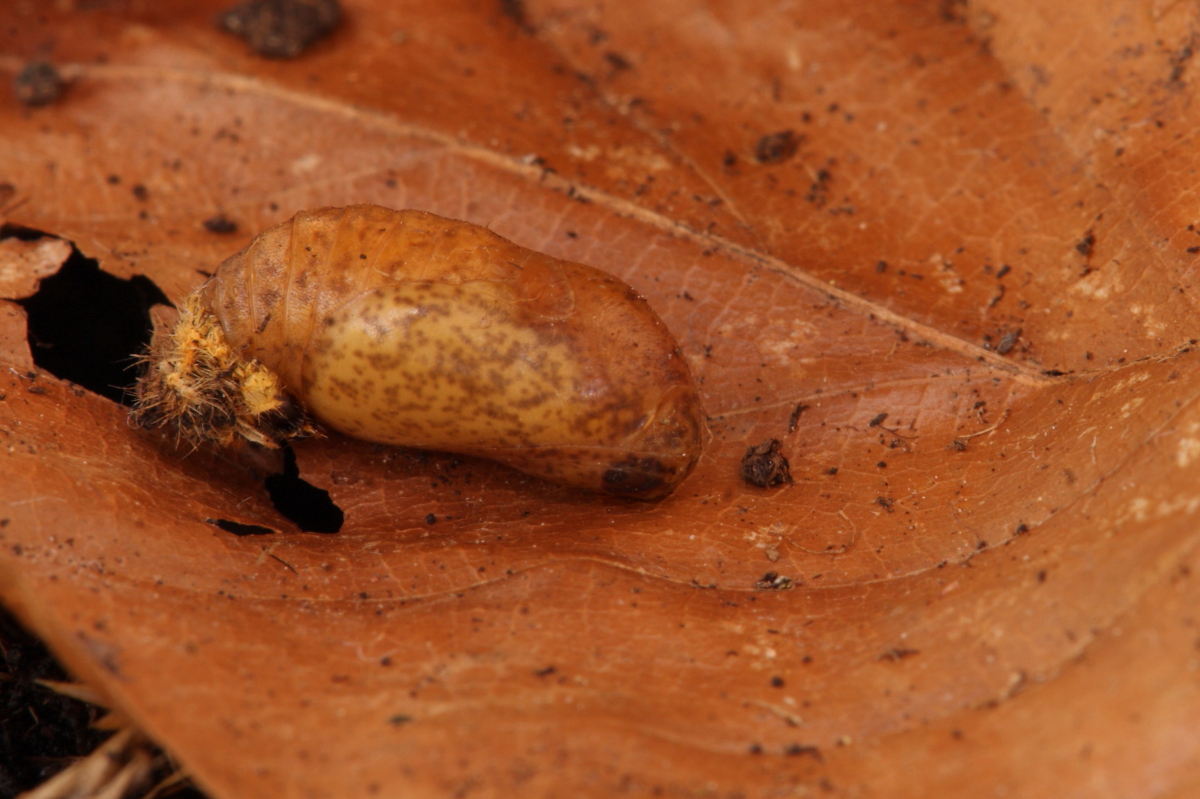
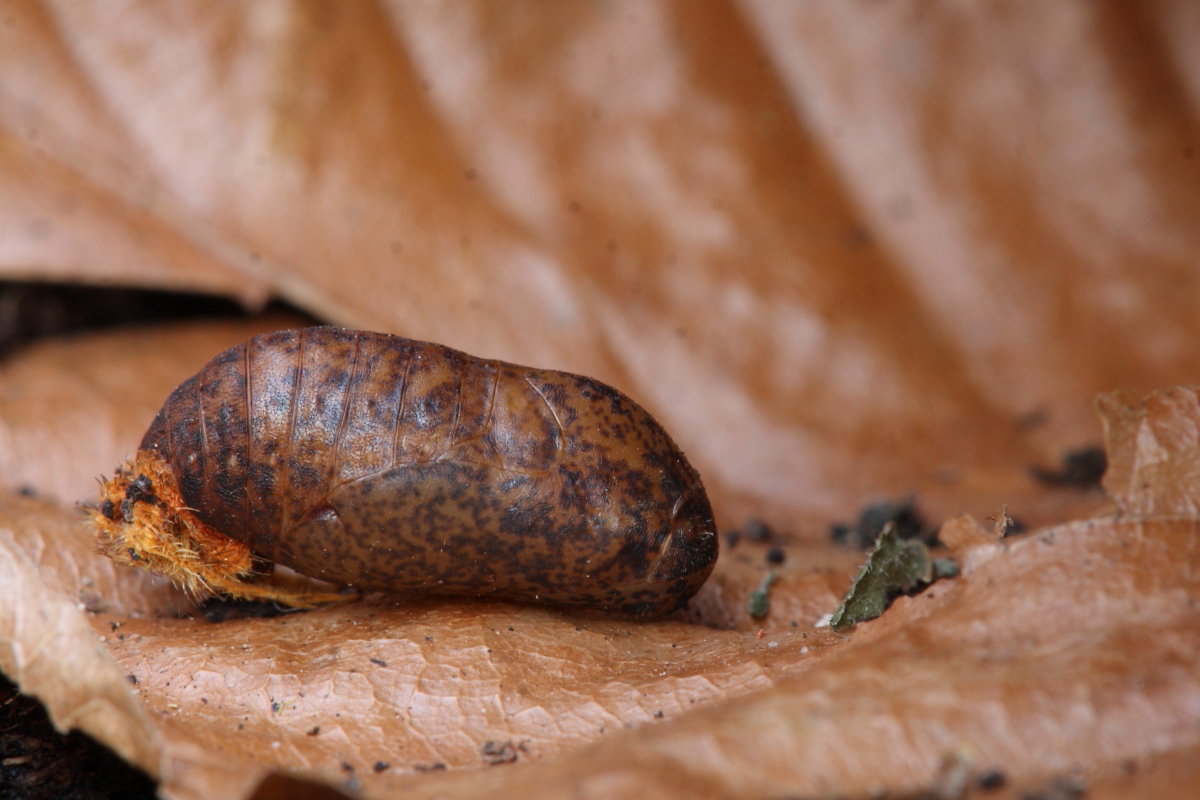
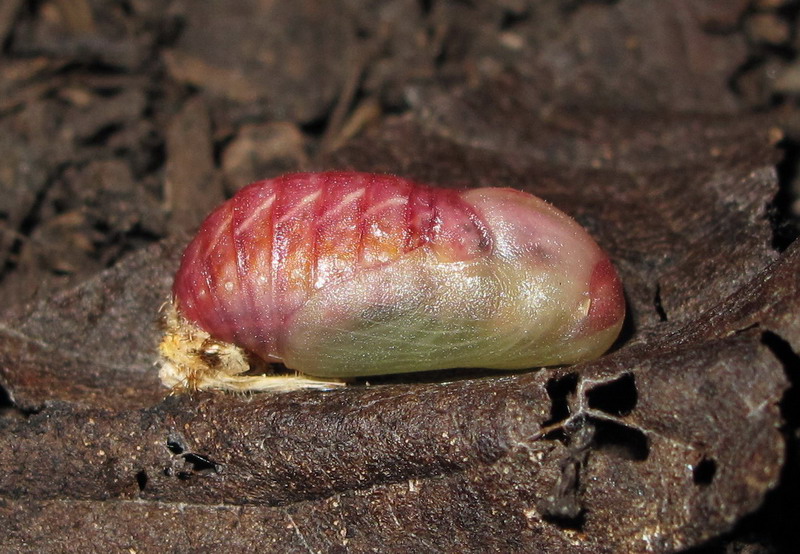
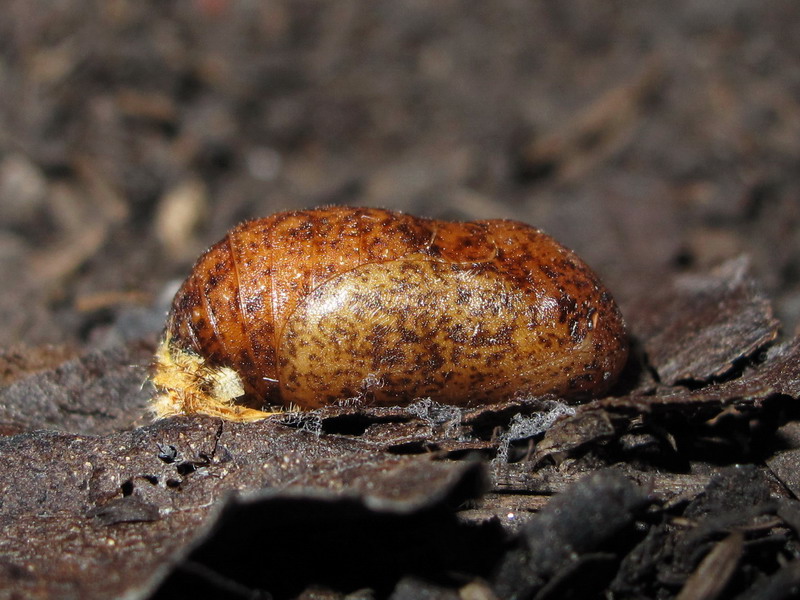
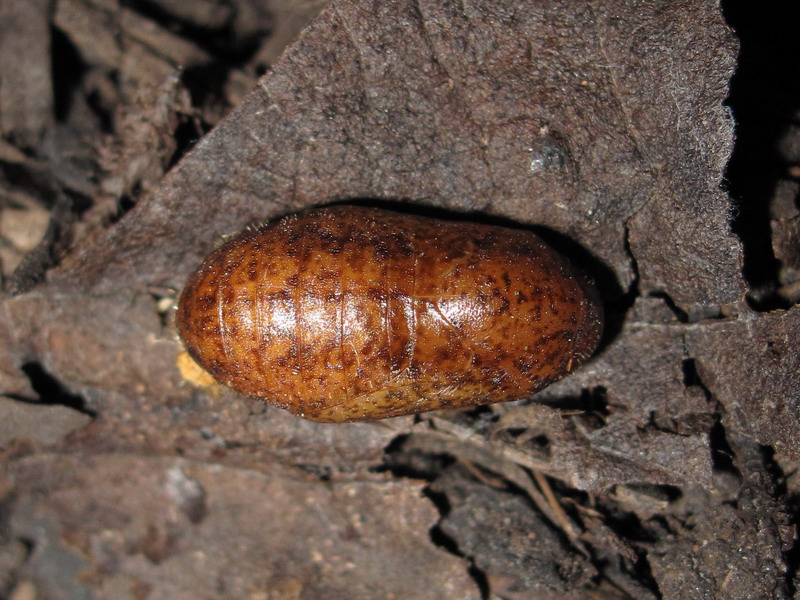
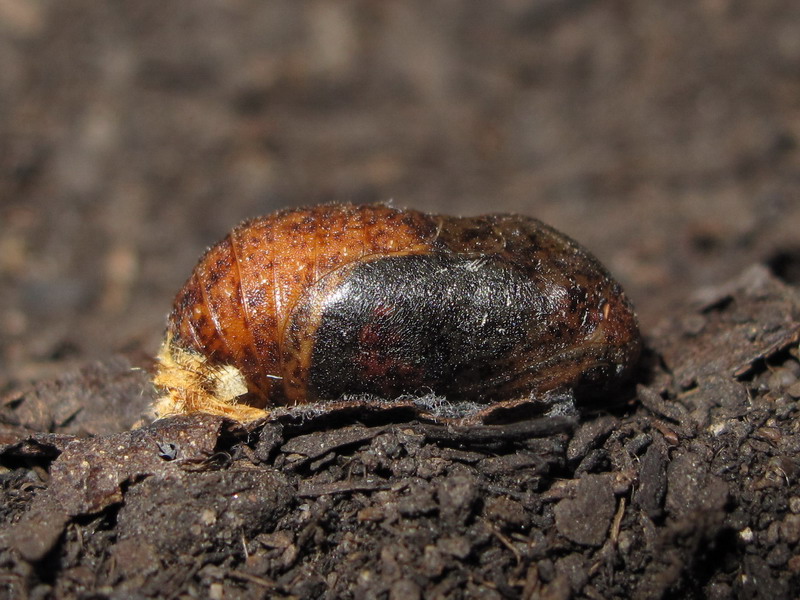
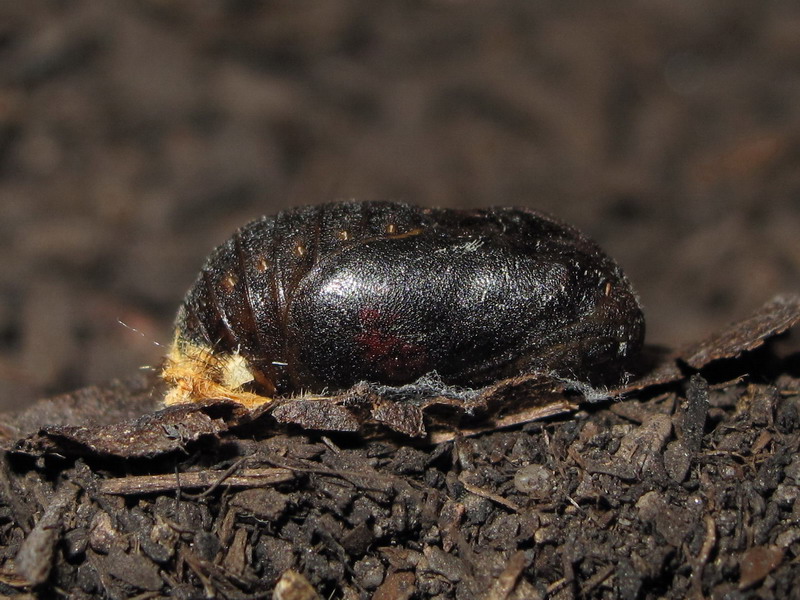
The pupa is formed in a crevice in the ground, amongst the leaf litter or at the base of a plant. It has been known for a pupa to be buried by ants, which find it highly attractive, in a loose cell of dry earth. It is believed that mice and shrews are responsible for eating large numbers of pupae in the wild. This stage lasts around 4 weeks.
"The female pupa measures 12.7 mm. long, the males being rather smaller. Lateral view: The head is rounded and runs in a line with the swollen rounded thorax; it is slightly sunken at the meta-thorax; the abdomen swollen and rounded, curving to the anal segment, which remains embedded in the larval skin. When this is removed the rounded anal segment shows a small cluster of extremely minute short spines in place of hooks. The ventral surface is almost straight. Dorsal view: The head is rounded, the base of wings slightly angular, wing gradually swelling to the third abdominal segment where the body is widest, it then tapers to the rounded anal extremity. The entire surface is covered with a finely ridged reticulated network pattern, and, except the wings, is studded with minute, somewhat club-shaped hairs, which are on the head and pro-thorax elongated and finely ciliated. The ground colour is an ochreous-brown, speckled and blotched with deep purplish-brown, the largest blotches occurring on the abdomen, where they form longitudinal series; the spiracles are pale ochreous and rathe prominent." - Frohawk (1924)
The following links provide additional information on this butterfly.