UK Butterflies
Building a Community of Responsible Butterfly Enthusiasts in Britain & Ireland
Building a Community of Responsible Butterfly Enthusiasts in Britain & Ireland
Wingspan
♂ 30 - 42 mm, ♀ 40 - 50 mm
Checklist Number
59.033
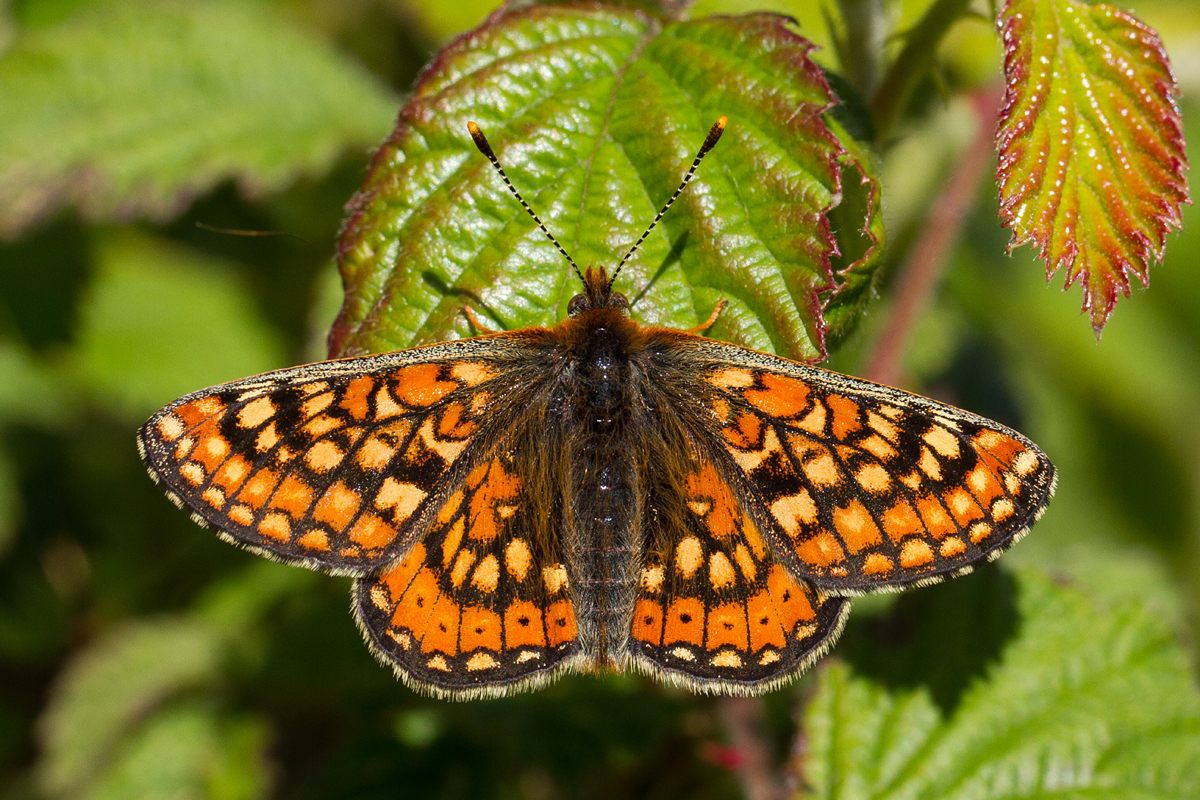
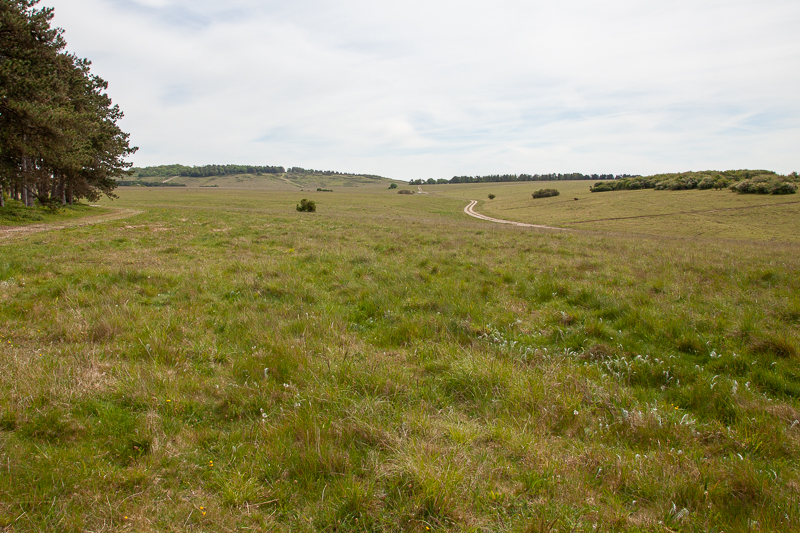
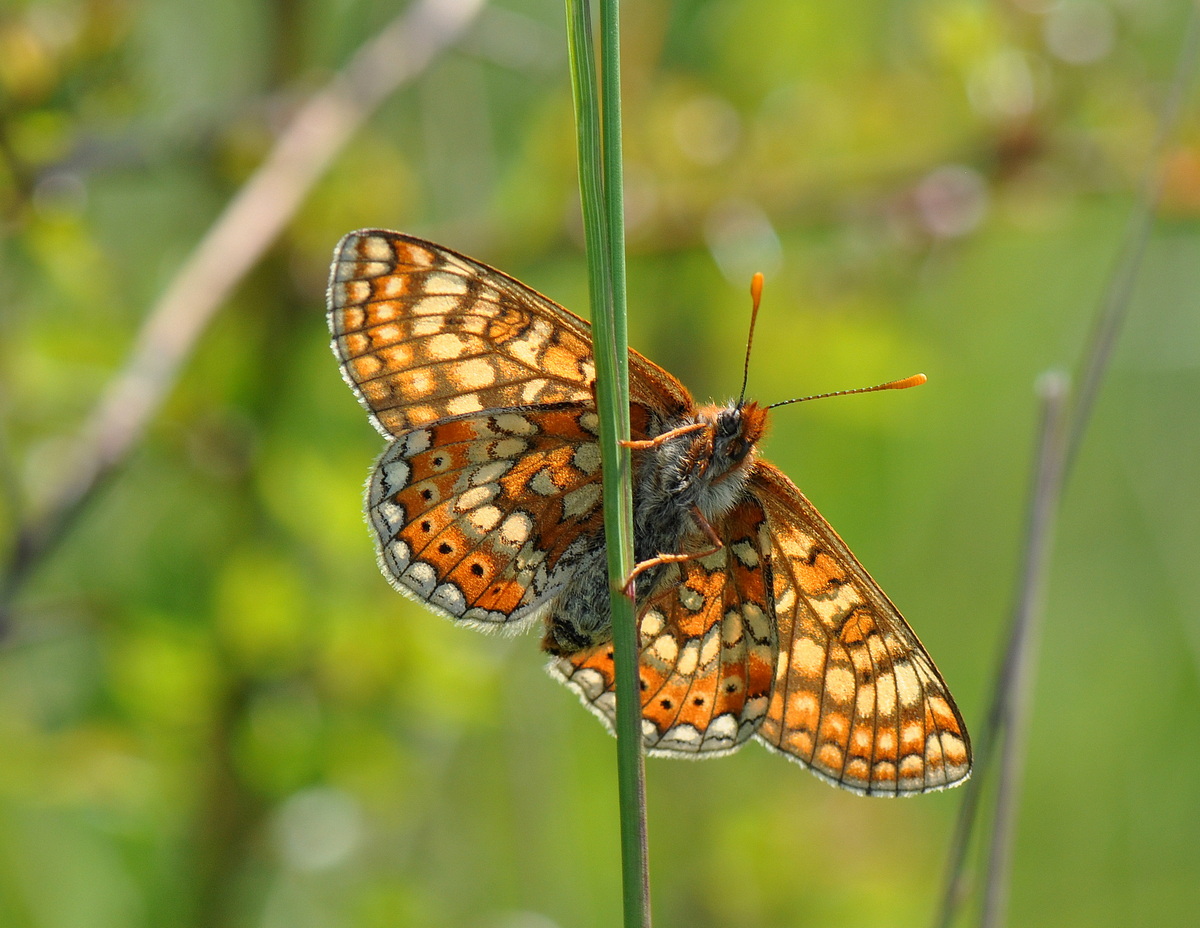
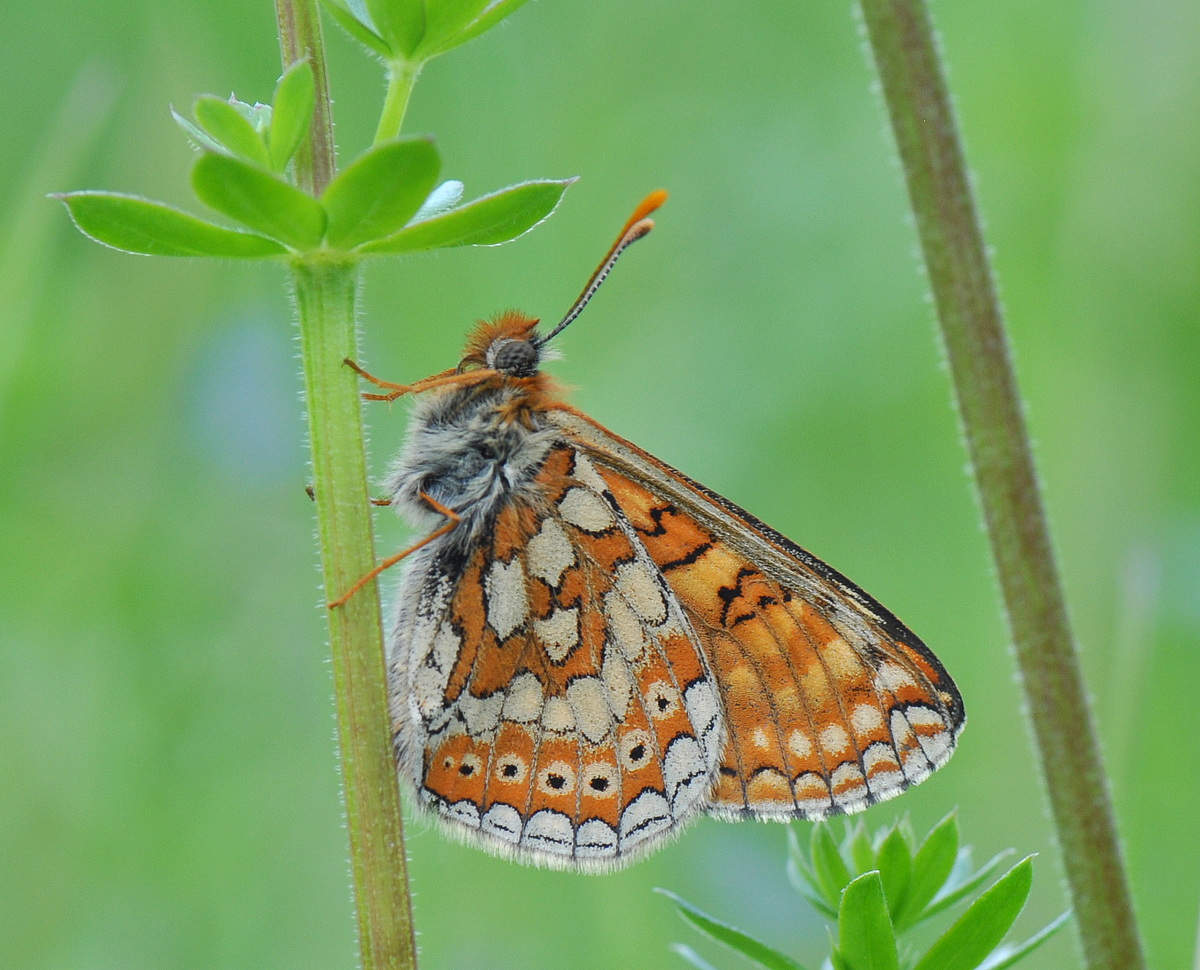
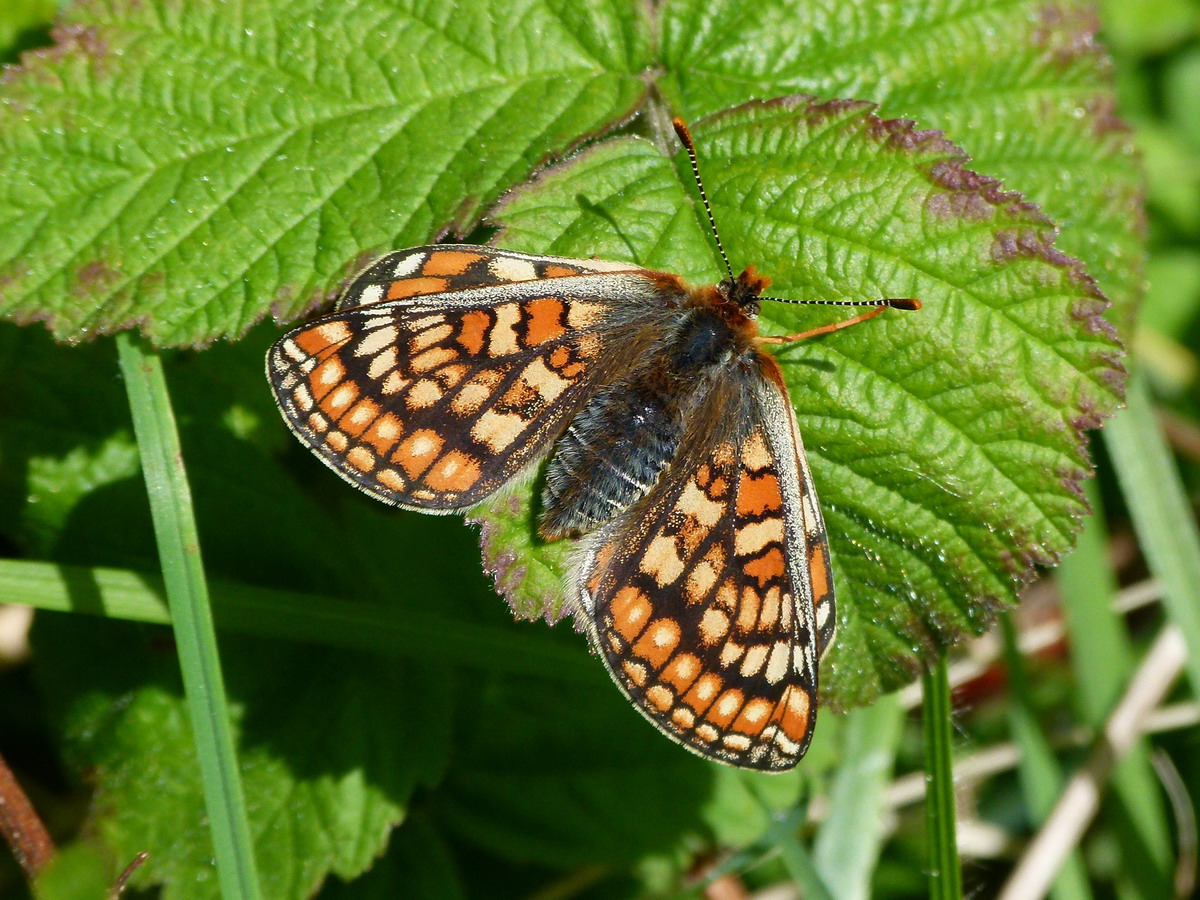
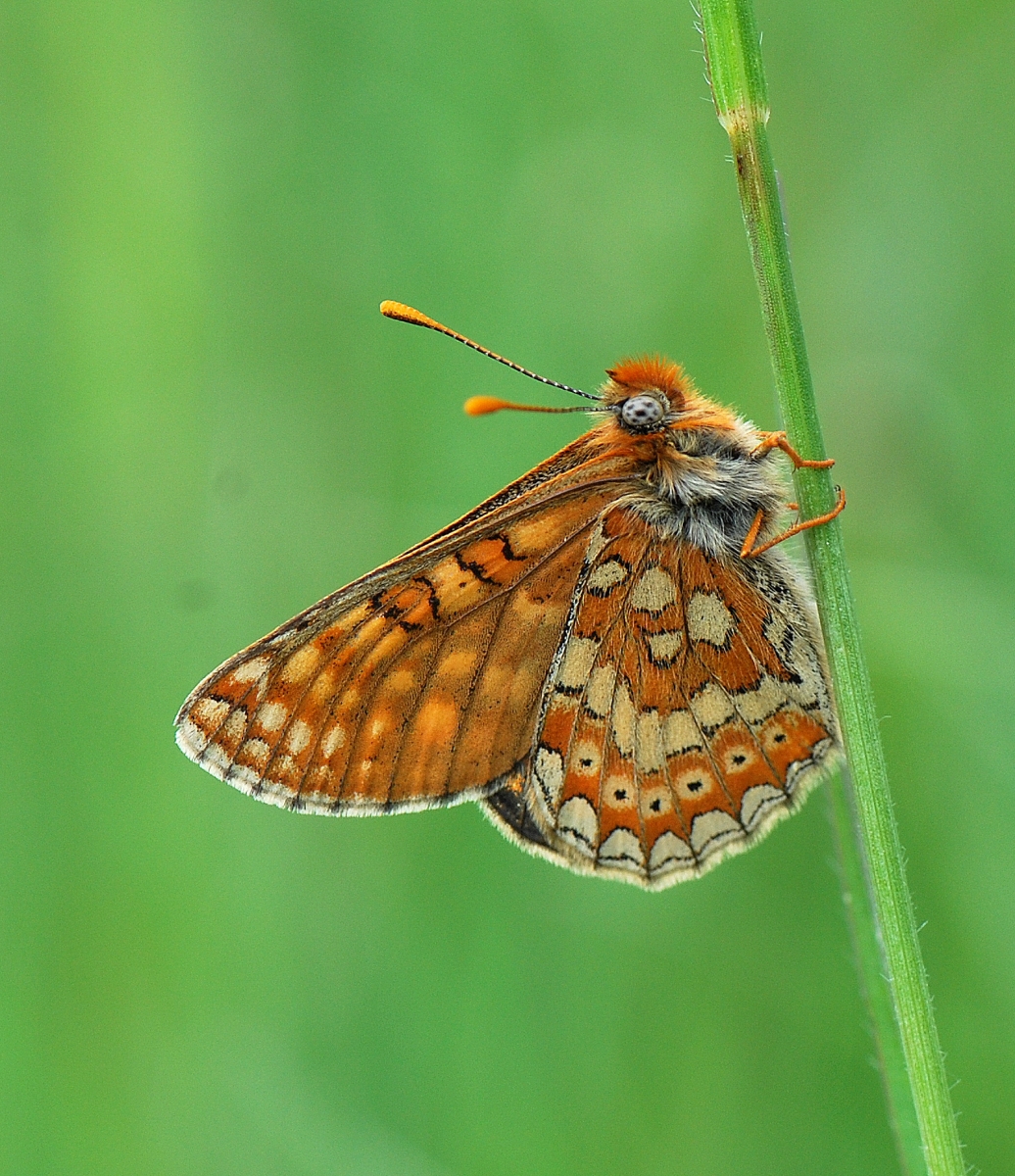
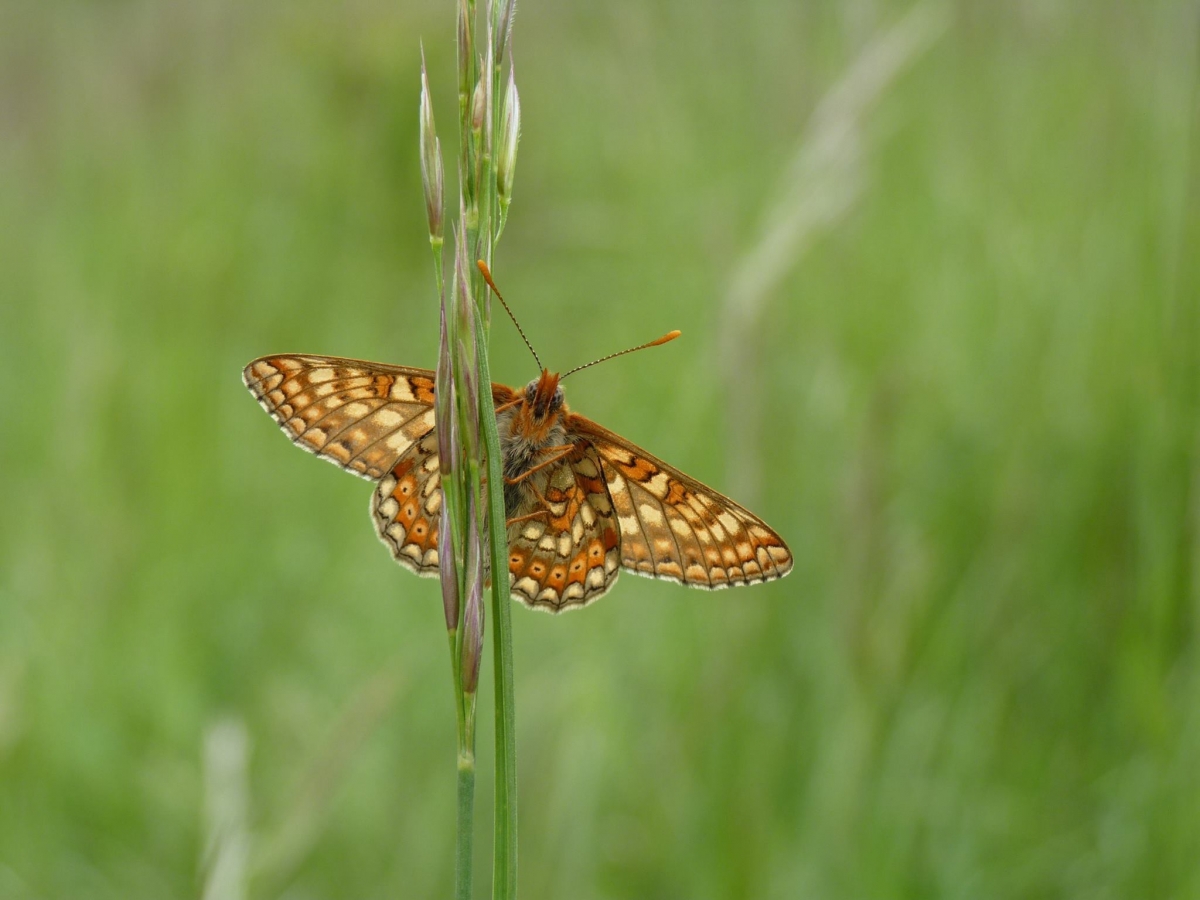
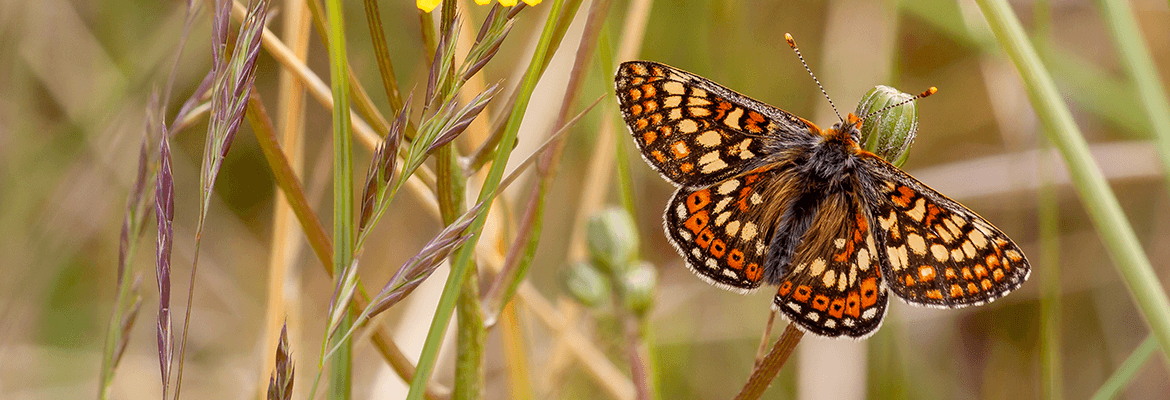
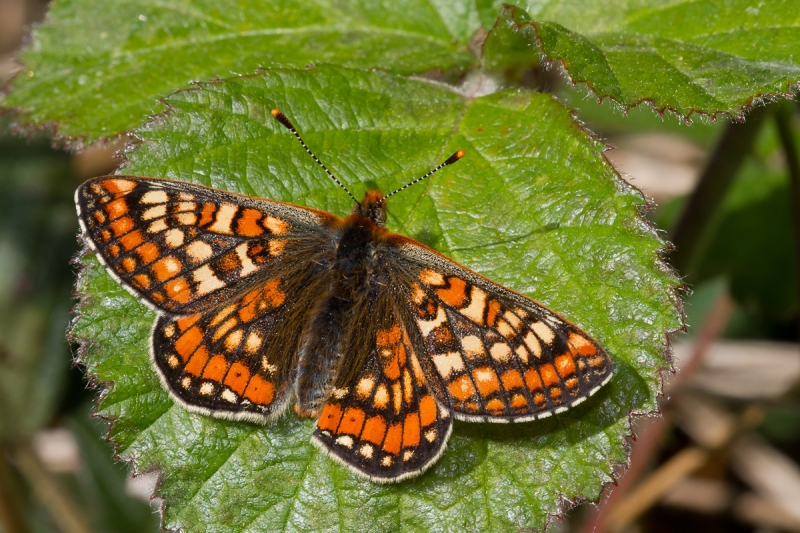
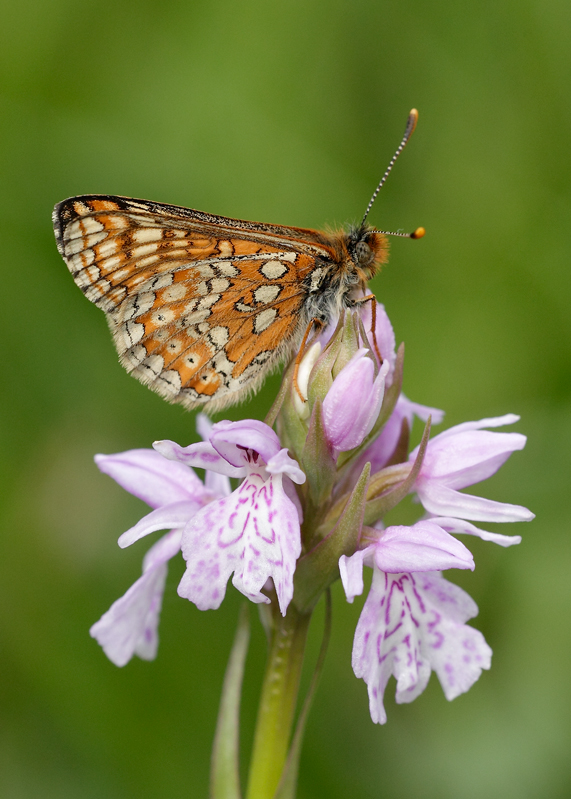
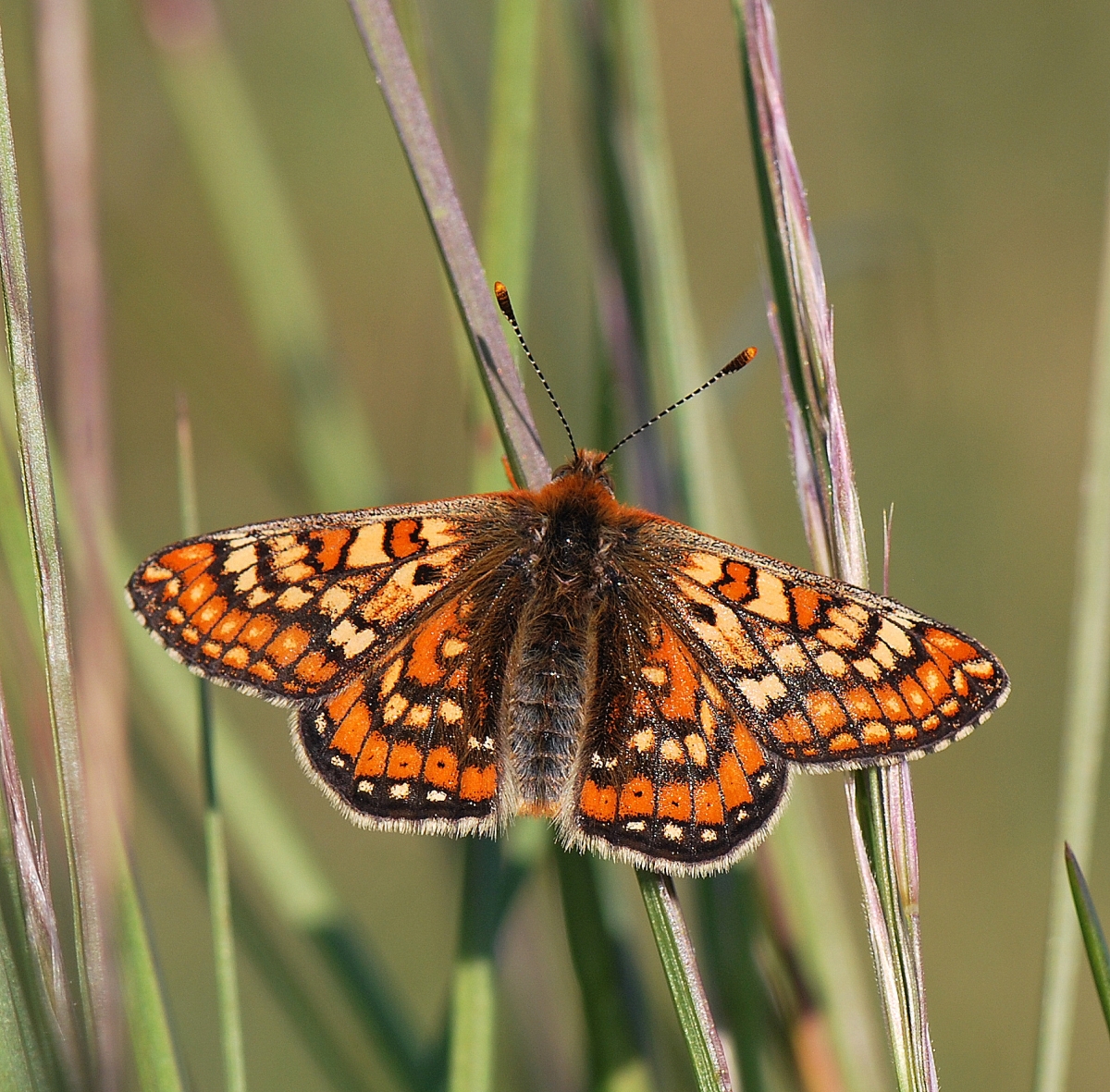
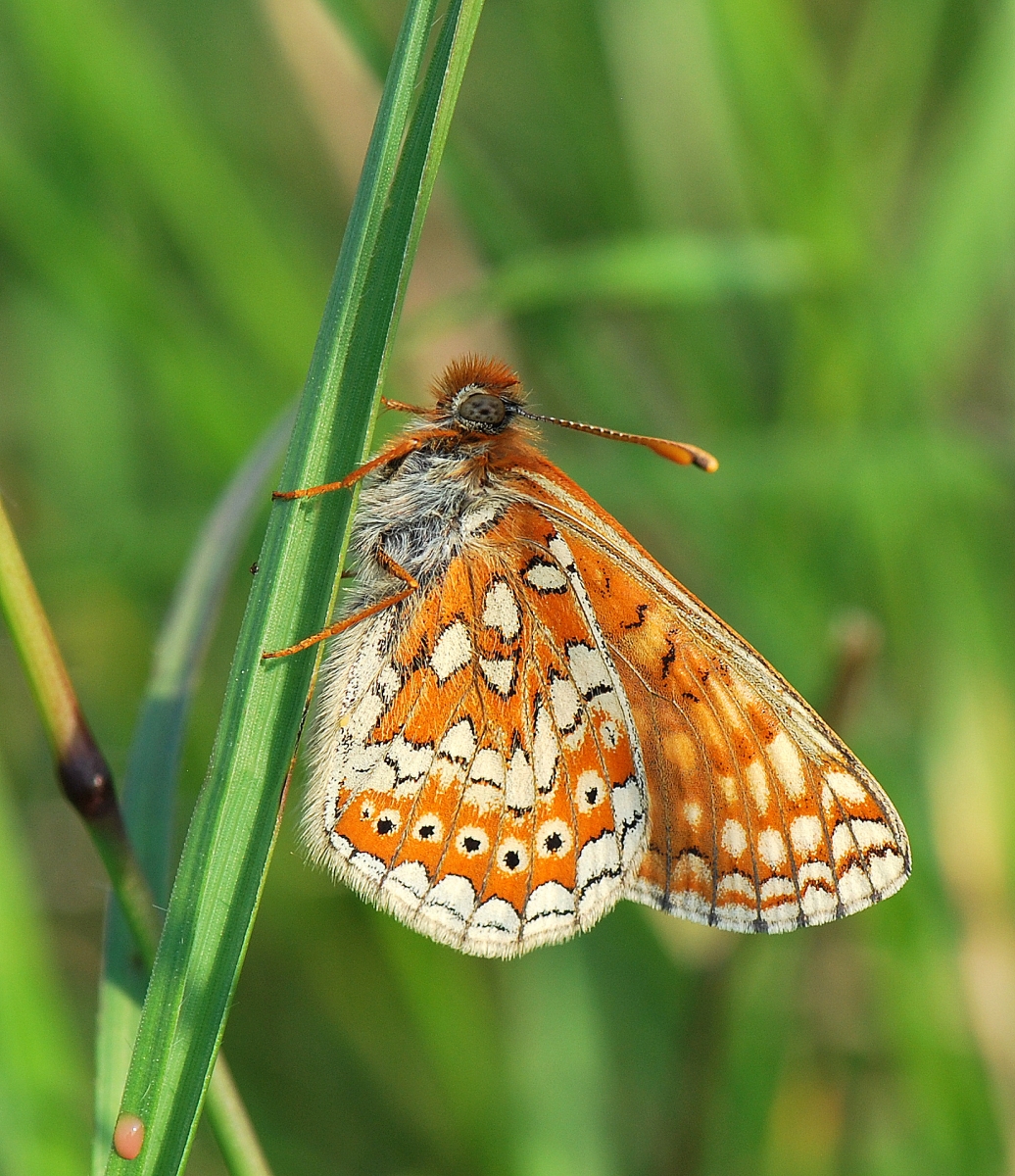
The Marsh Fritillary has the most colourful uppersides of all of our fritillaries, being a highly-variable chequered pattern of orange, brown and yellow markings. The bright colours fade after a few days and leaves the butterfly with a shiny appearance - early Lepidopterists naming this butterfly the "Greasy Fritillary" as a result. This butterfly is primarily a wetland species as its modern name suggests.
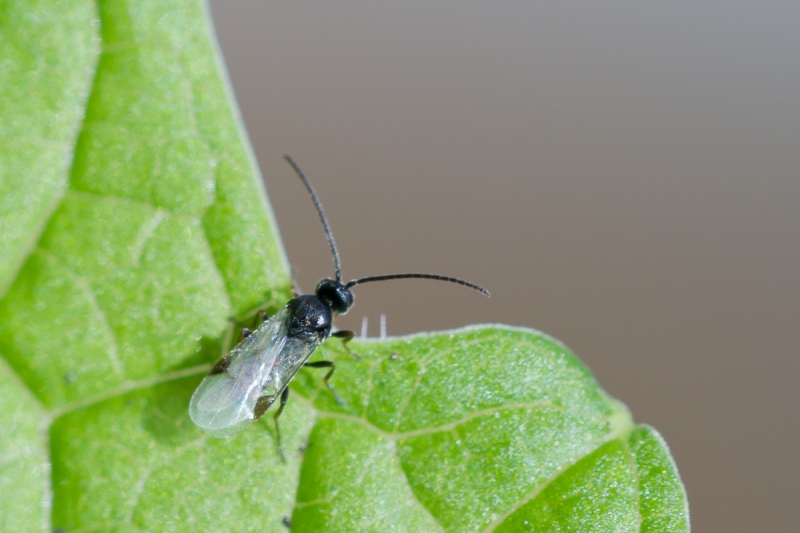
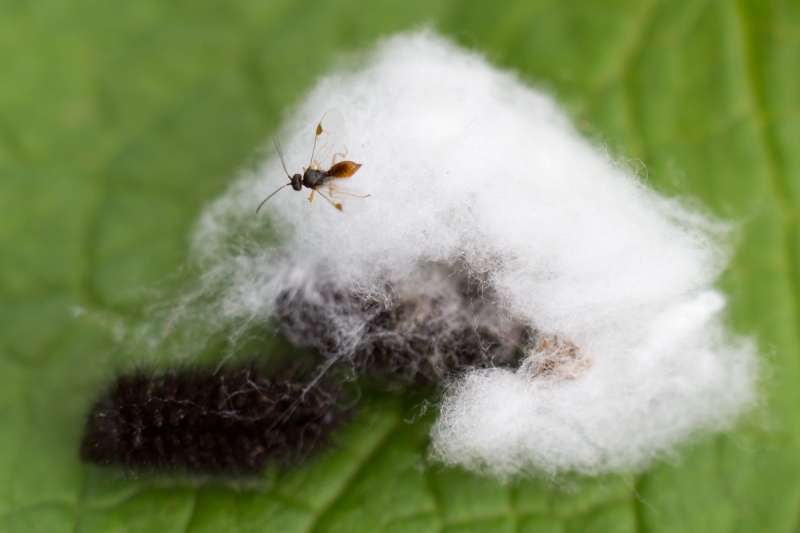
Colonies of this butterfly are known to fluctuate wildly in numbers. It may be present in some numbers one year, for the population to crash the following year before recovering as unexpectedly. This species does not do well in adverse weather conditions and also suffers greatly from larval parasitism by an Apanteles species of wasp. Unfortunately, this charming butterfly is one of our most threatened species and has suffered severe declines in recent decades.
The butterfly is found primarily in south-west England with a small population in north-west England, the islands of south-western Scotland and the adjacent mainland, and north-west and south-west Wales. It is also locally widespread in Ireland. It is not found in the Isle of Man or Channel Islands. This butterfly forms discrete colonies and even the slightest barrier will prevent dispersal - such as a hedge or a river. Colonies are typically part of a meta population with several colonies located close to one another.
This species was first defined in Rottemburg (1775) as shown here (type locality: Paris, France).
The population in the British Isles is represented by the nominate subspecies.
| Family: | Nymphalidae | Rafinesque, 1815 |
| Subfamily: | Nymphalinae | Rafinesque, 1815 |
| Tribe: | Melitaeini | Newman, 1871 |
| Genus: | Euphydryas | Scudder, 1872 |
| Subgenus: | ||
| Species: | aurinia | (Rottemburg, 1775) |
Description to be completed.
The distribution data (2000-2009) has been made available through the generosity of Butterfly Conservation and any subspecies distribution is taken from Riley (2007). Click here to see the distribution of this species together with site information overlaid.
The Marsh Fritillary is declining throughout Europe to the point that the British Isles is considered one of the few strongholds for this species. Even so, this butterfly has also suffered severe declines in the British Isles, especially in eastern England and eastern Scotland and this species is therefore a priority species for conservation efforts. Although widespread in south-west England and Wales, this butterfly is declining by over 10% each decade. The declining fortunes of this species are believed to be the result of inappropriate habitat management, coupled with the need for sufficient habitat for the butterfly to form meta populations, where local extinctions can be reversed by recolonisation from neighbouring colonies.
The table below shows the occurrence (distribution) and abundance (population) trends, using information from The State of the UK's Butterflies 2015 (Fox, 2015). Any UK BAP status is taken from the UK Biodiversity Action Plan (UK BAP) (2007 review).
1976-2014 (%) | 1976-2014 (%) | 2005-2014 (%) | 2005-2014 (%) | Click here to access the Biodiversity Action Plan (BAP). |  -79 -79 |  -10 -10 | -22 | -64 |
|---|
Adults emerge in the middle of May, reaching a peak in early June. Adults in northern Scotland emerge slightly later. There is one generation each year.

As for most butterfly species, the males emerge a few days before the females and set up small territories centred on a particular plant or flower. They will dart up to investigate any passing butterfly flying nearby. They will also patrol suitable areas, in the hope of finding a newly-emerged female. Once a female is found, the male flutters around her for a short while before mating takes place. Before separating, the male seals the genital opening in the female with a substance that prevents another male from mating with her - essentially providing a "chastity belt". Both adults are avid nectar feeders and will feed from a variety of flowers, favourites including Buttercups and Thistles.
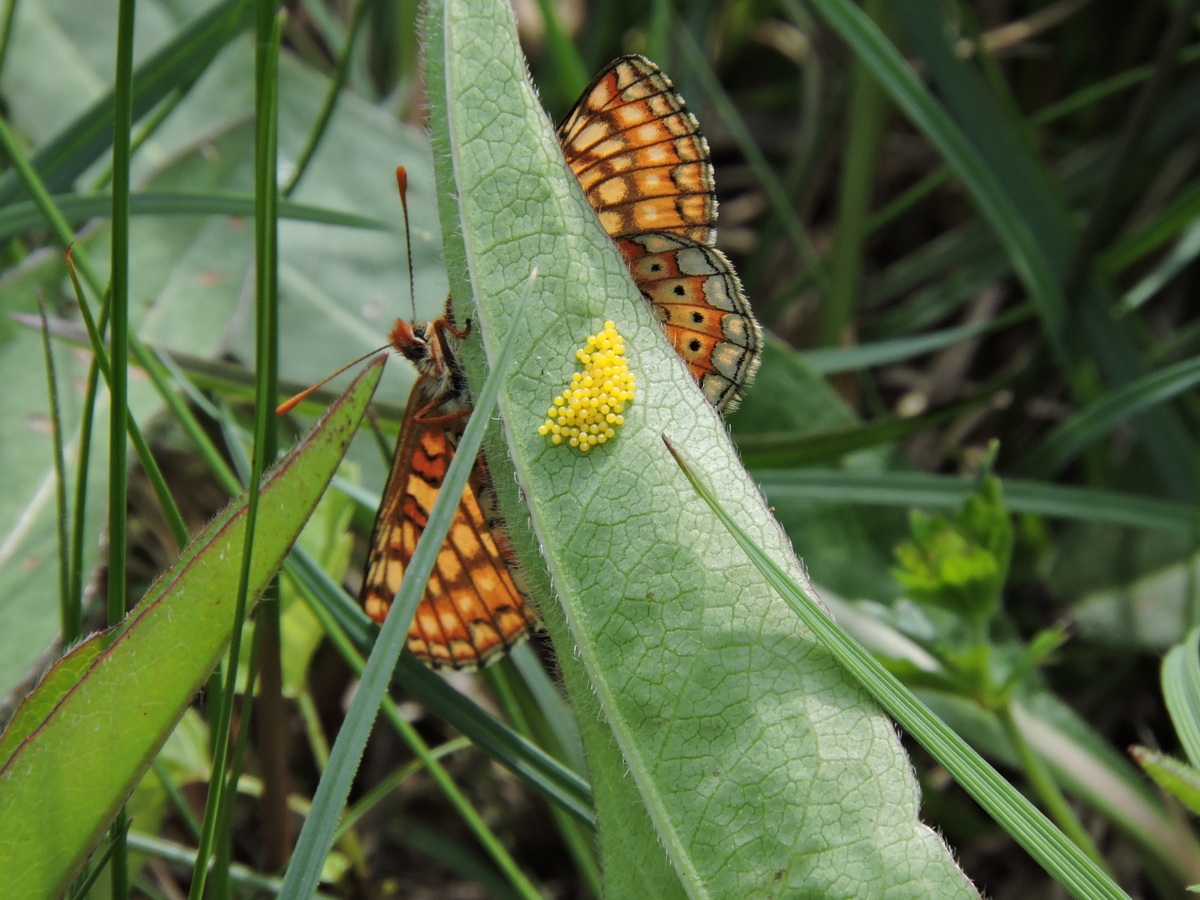
The female will search out large foodplants when egg-laying, typically choosing one of the larger leaves on which to lay. She is quite conspicuous as she makes her slow flight looking for suitable plants on which to lay, no doubt weighed down by her load of eggs.
Neither sex wanders far from where it emerged, although those emerging later in the flight season are often seen some distance from the main breeding grounds; this dispersal may be a mechanism by which this species colonises new sites.
Adults feed primarily on Betony (Betonica officinalis), Bugle (Ajuga reptans), buttercups (Ranunculus spp.), Cuckooflower (Cardamine pratensis), dandelions (Taraxacum spp.), hawkweeds (Hieracium spp.), knapweeds (Centaurea spp.), Ragged-Robin (Silene flos-cuculi), thistles (Carduus spp. and Cirsium spp.) and Tormentil (Potentilla erecta).
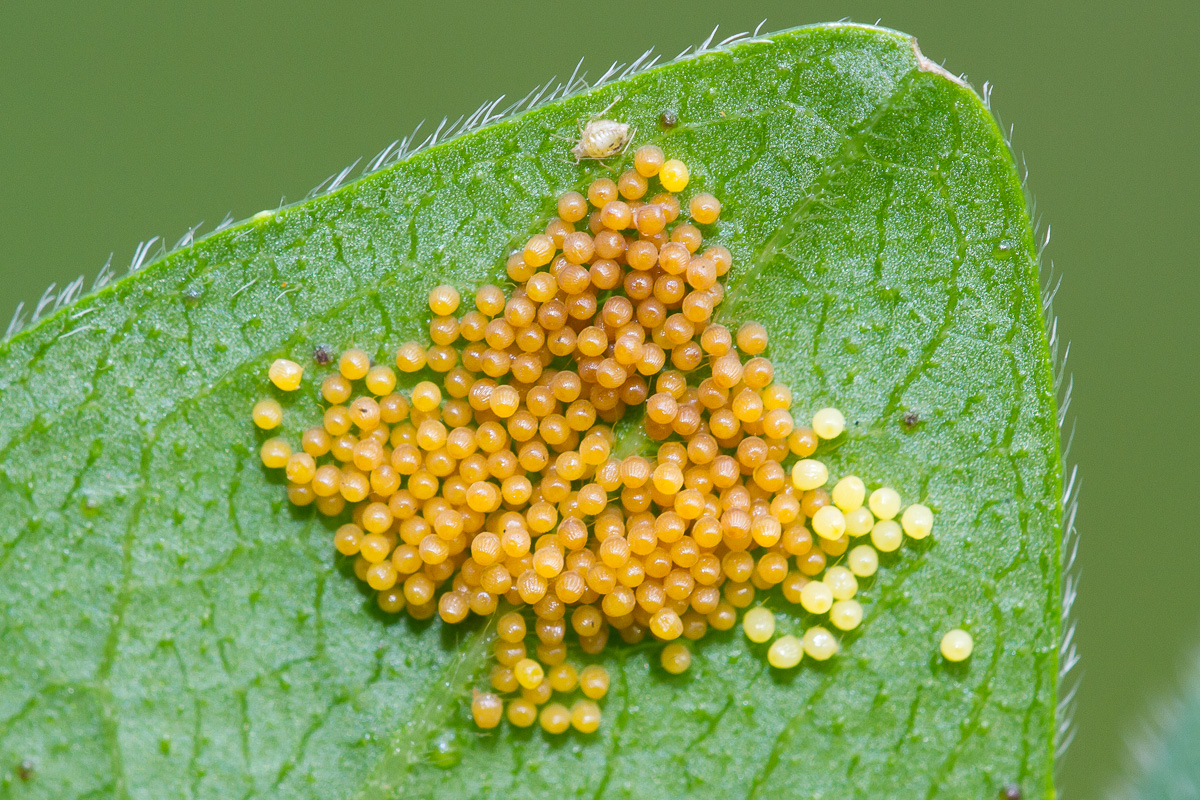
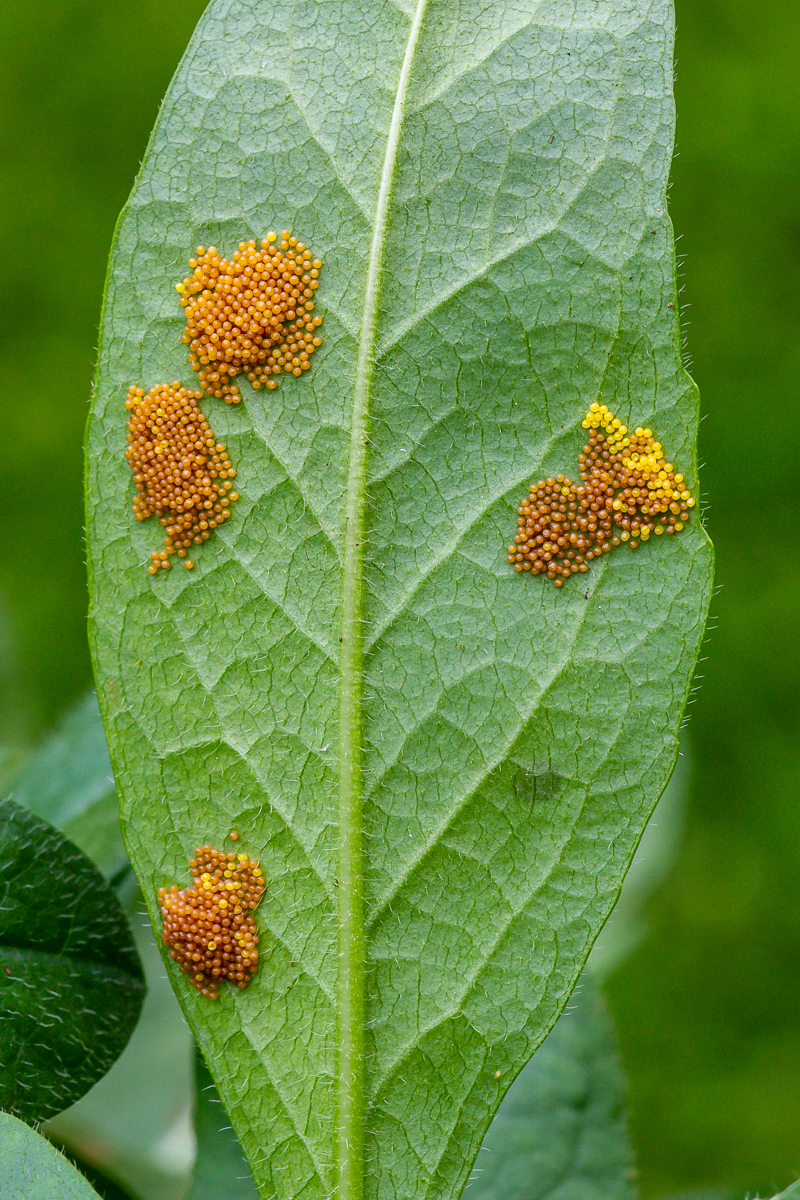
Eggs are laid in large batches on the underside of a leaf of the foodplant and, although the average batch contains around 300 eggs, some batches have been known to contain an incredible 600 eggs. Not surprisingly, the whole process can take several hours. Having laid their initial batch of eggs, additional eggs develop inside the female and these are subsequently laid in smaller batches.
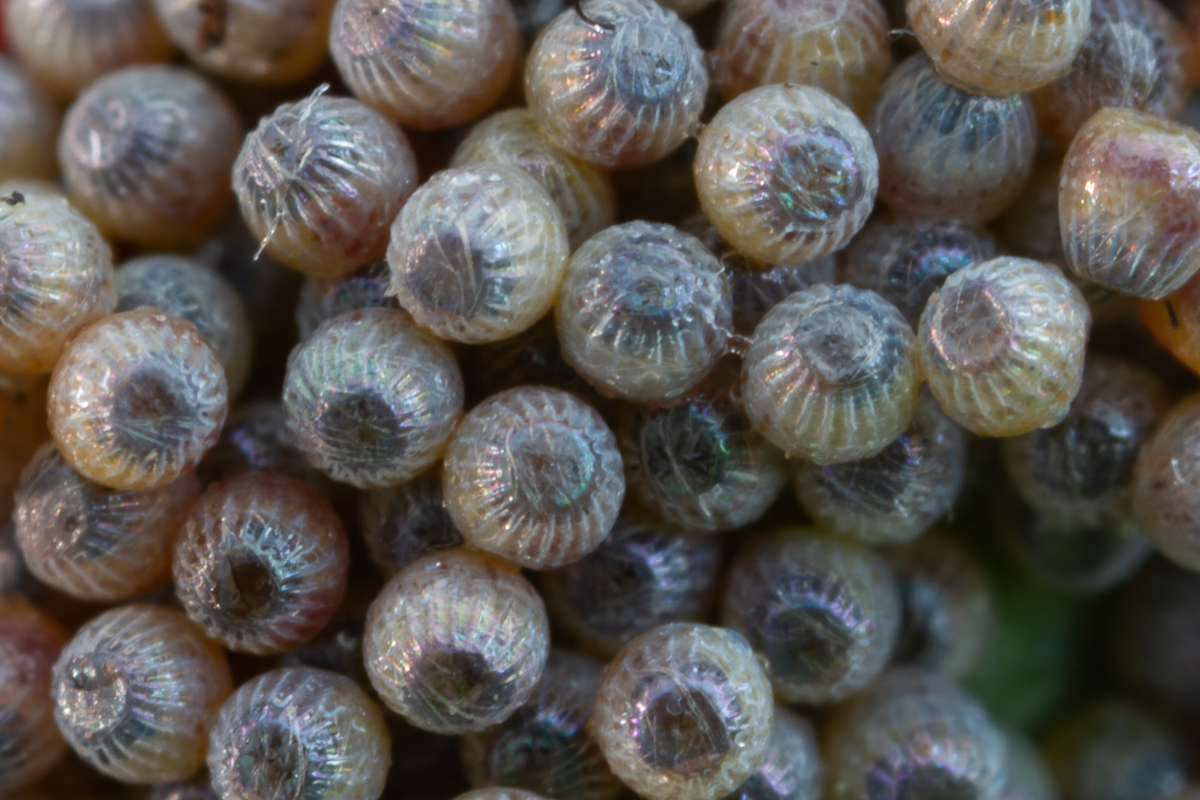
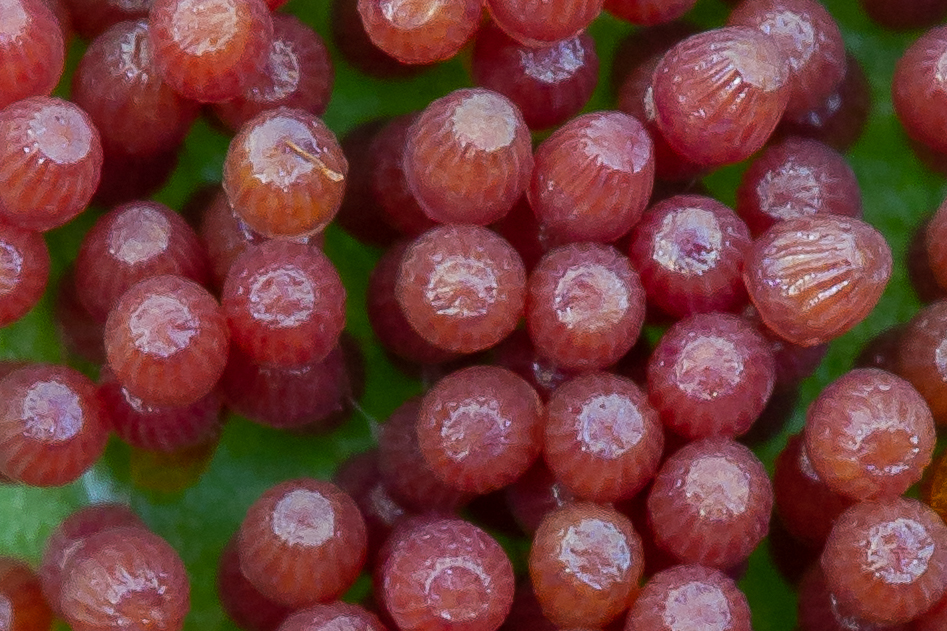
Eggs are laid in neat formations, and typically in 3 or 4 neat layers. Eggs are a pale yellow when first laid, but turn dark grey just before hatching. This stage lasts between 3 and 4 weeks.
"On June 17th, 1904, three females were captured in Woolmer Forest, Hants, and placed on growing plants of Scabiosa succisa the following day. On the 23rd one of the butterflies deposited a large batch of eggs on the under side of a leaf of the plant, which occupied her for two hours from 1.30 until 3.30 p.m. On the 28th another started depositing about 1.30 p.m. and continued until about 5.30 p.m.; during the whole time she clung to the leaf, with closed wings, depositing a great number of eggs in a heaped-up batch; in the centre they were laid four or five deep, and two or three deep elsewhere; they numbered in all about 500 or more. Those laid on the 23rd were between 400 and 500. One of these two females again laid a small batch on June 30th; these hatched on July 21st. The egg state lasts twenty days. The egg is 0.8 mm. high, of an ovate form, but broadest just below the middle; the base is rounded; the crown is slightly sunken; there are about twenty rather bold but irregular ribs running from the crown downwards to nearly half the length, where they branch off in wavy curves, disappearing about two-thirds down, leaving the basal third of the surface smooth; the ribs are smooth and triangular. When first laid the egg is a clear lemon-yellow; the smooth, glassy-like surface produces pearly high light reflections; they gradually assume, by the fourth day, an ochreous-yellow, but a single egg under the microscope appears of a brighter and clearer citrine-yellow than those in a batch, and shows numerous darker rings with light centres on the shadow side, which are under-surface markings. On the eighth clay they attain a brownish-drab colour, and finally a more leaden hue, the dark head of the larva showing through the shell." - Frohawk (1924)
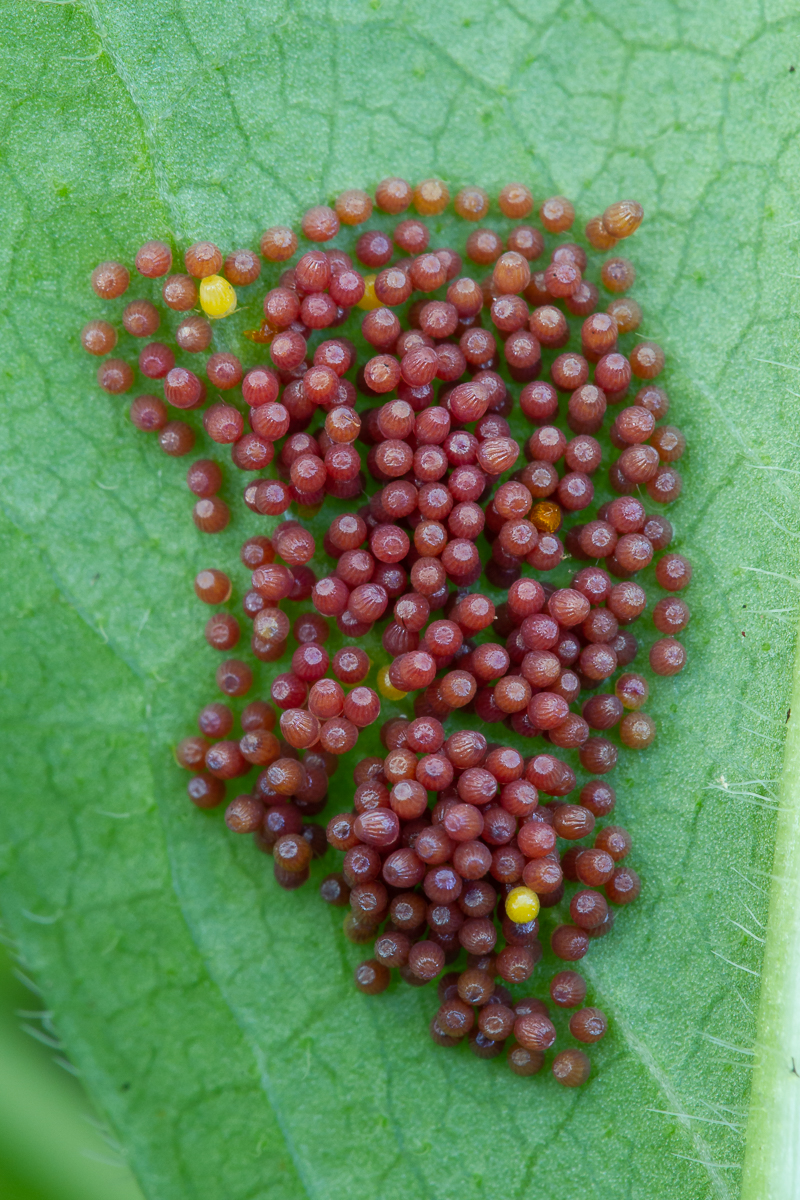
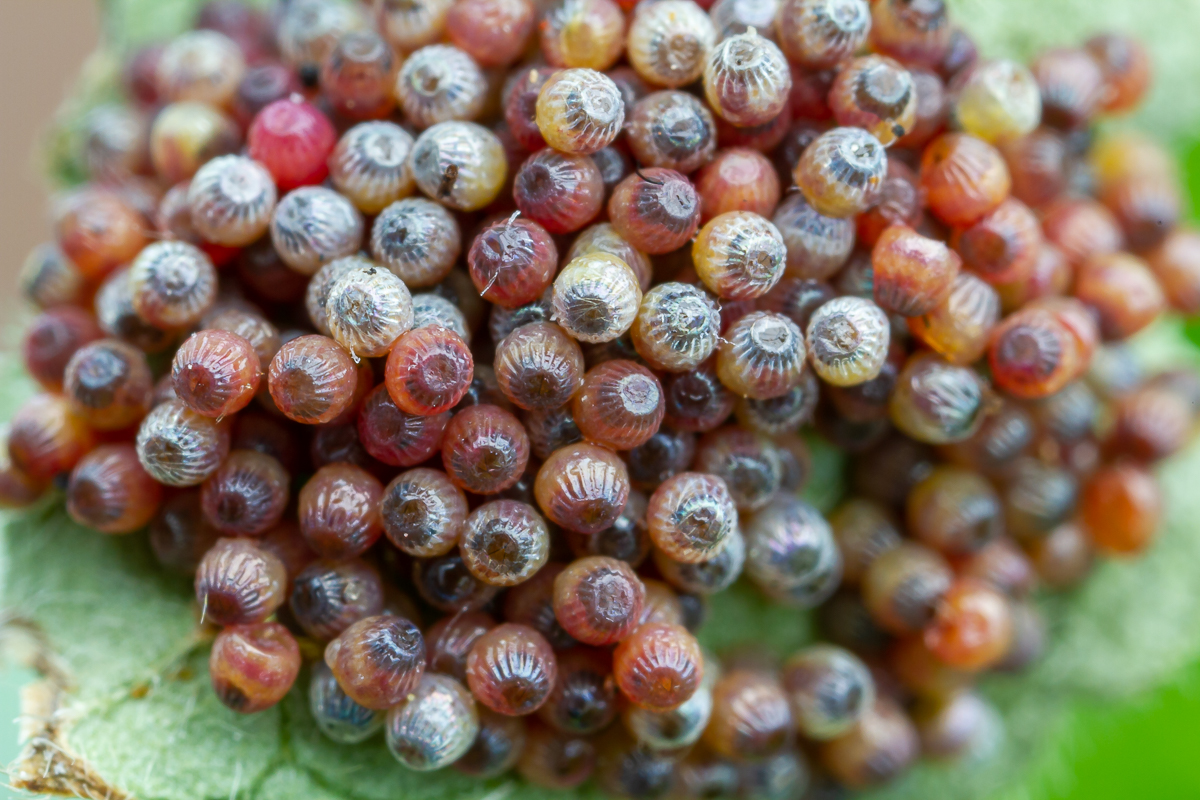
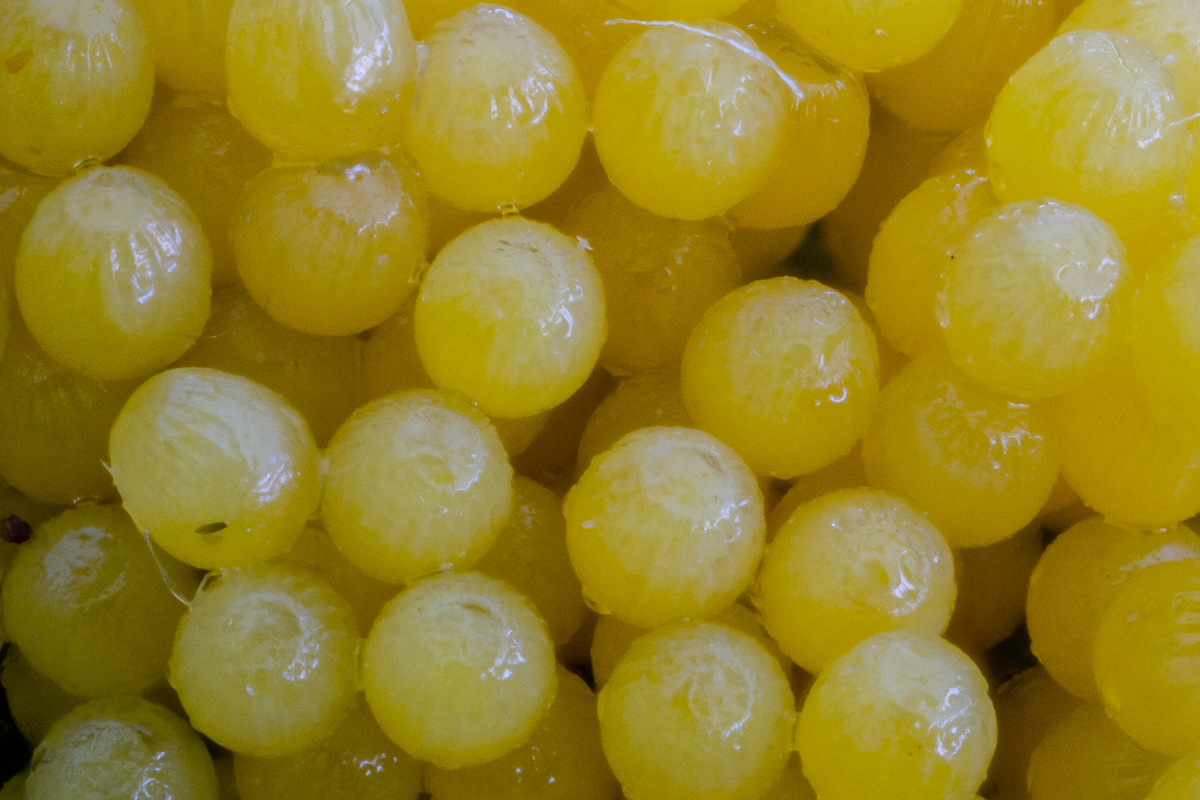
On emerging from their eggs the larvae spin a silk web, by binding together leaves of the foodplant, in which they live and feed. Larvae build new webs as they grow and even move to a new plant if necessary. In later instars, the webs can be quite conspicuous on the foodplant. Larvae will also bask on the outside of the tent absorbing the sun's rays, where their increased temperature aids digestion.
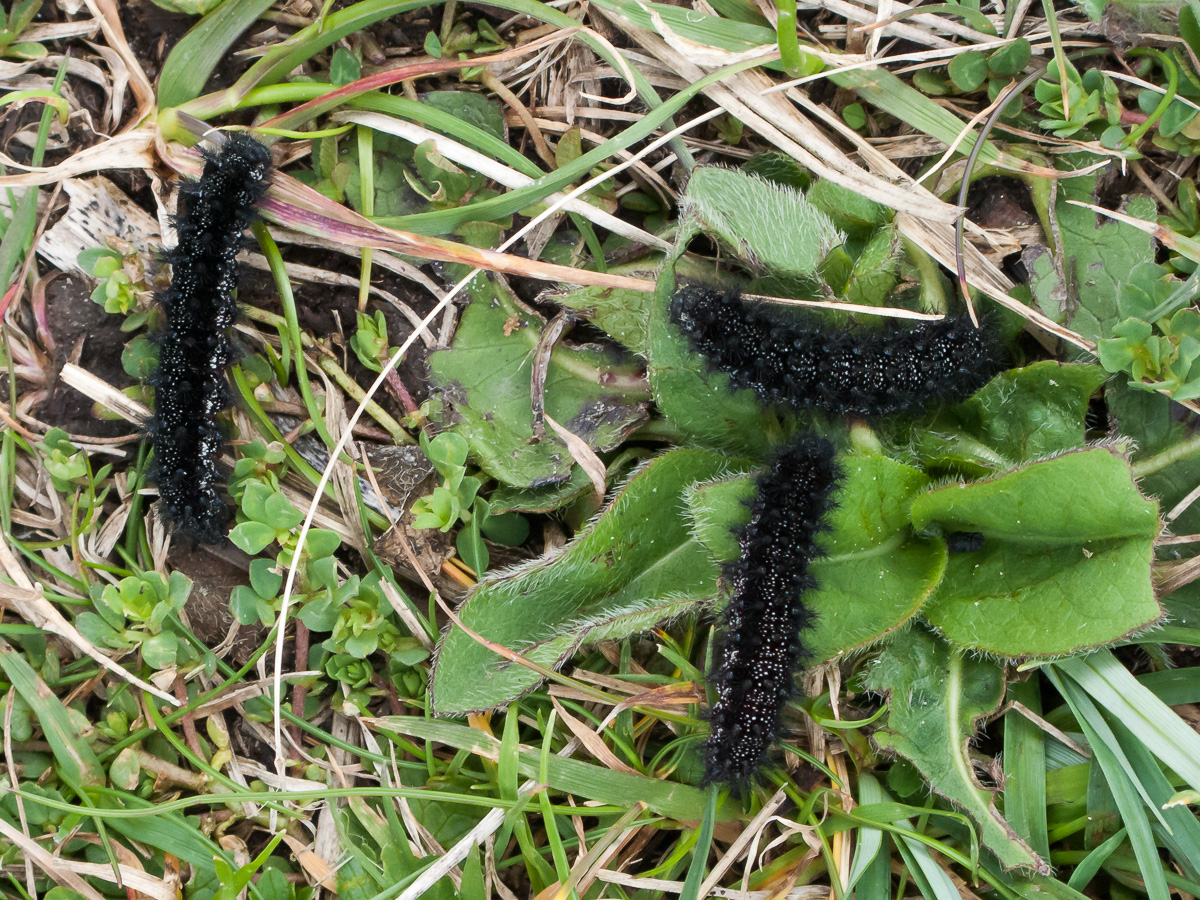
After changing into the 4th instar, the larvae build a dense nest of silk low down in vegetation in which they hibernate. Larvae will emerge from their nest with the onset of spring and can be seen basking in warm sun as early as February. Larvae eventually split into smaller groups, continuing to build silk webs where they bask together to keep their body temperature relatively high, even on cool days. More-mature larvae tend to feed alone and are often found wandering across open ground looking for their next meal or, eventually, a pupation site. If there is a shortage of foodplant, the larva is known to feed on alternative food sources, such as Honeysuckle growing in hedgerows. There are 6 instars in total.
The primary larval foodplant is Devil's-bit Scabious (Succisa pratensis). Field Scabious (Knautia arvensis) and Small Scabious (Scabiosa columbaria) are also used.
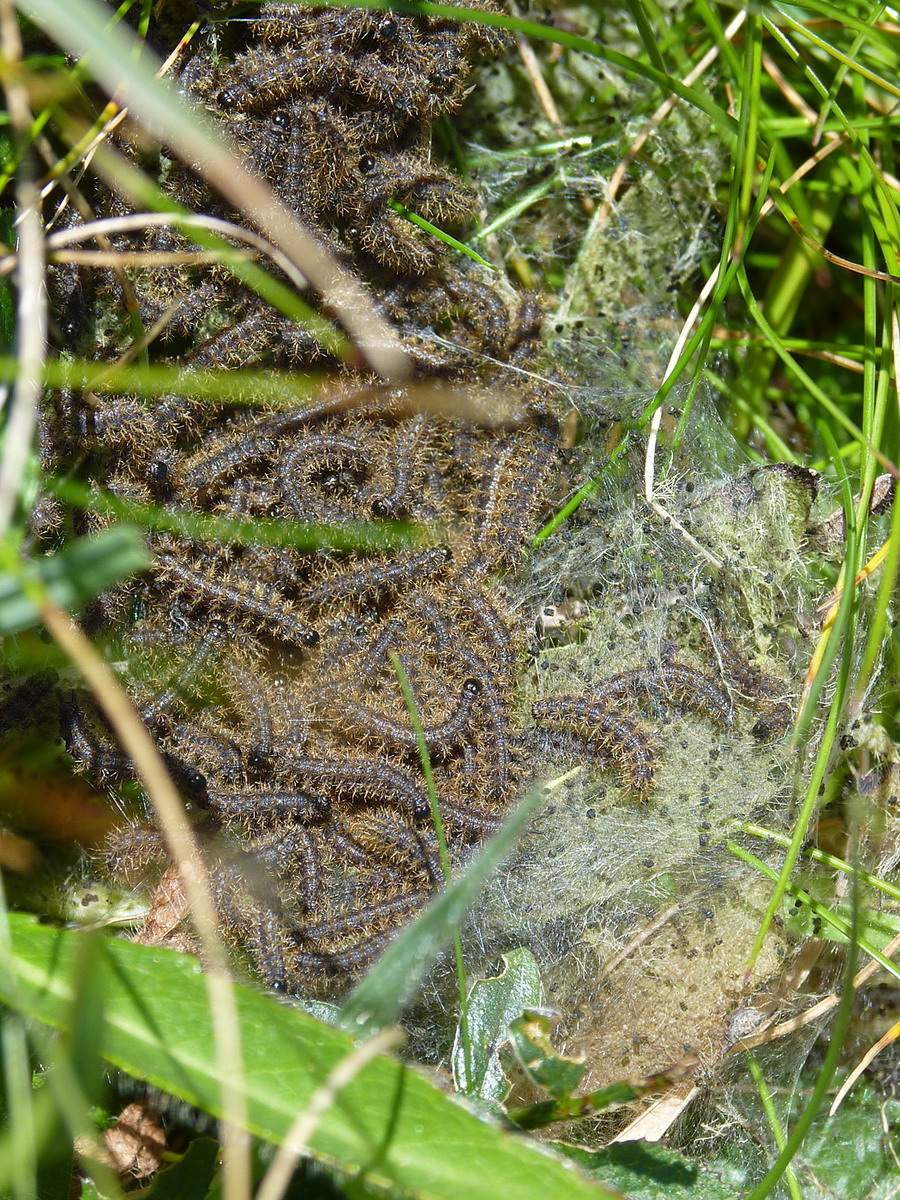
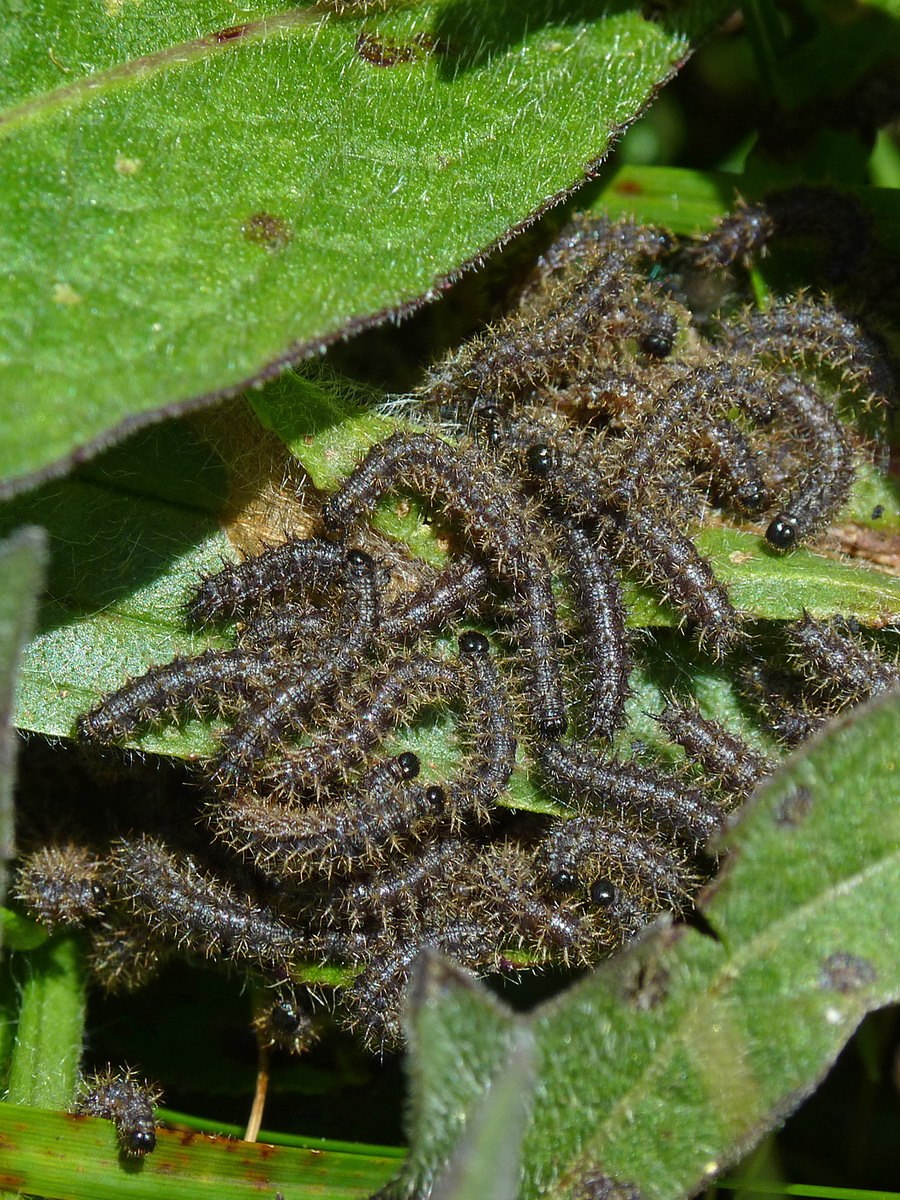
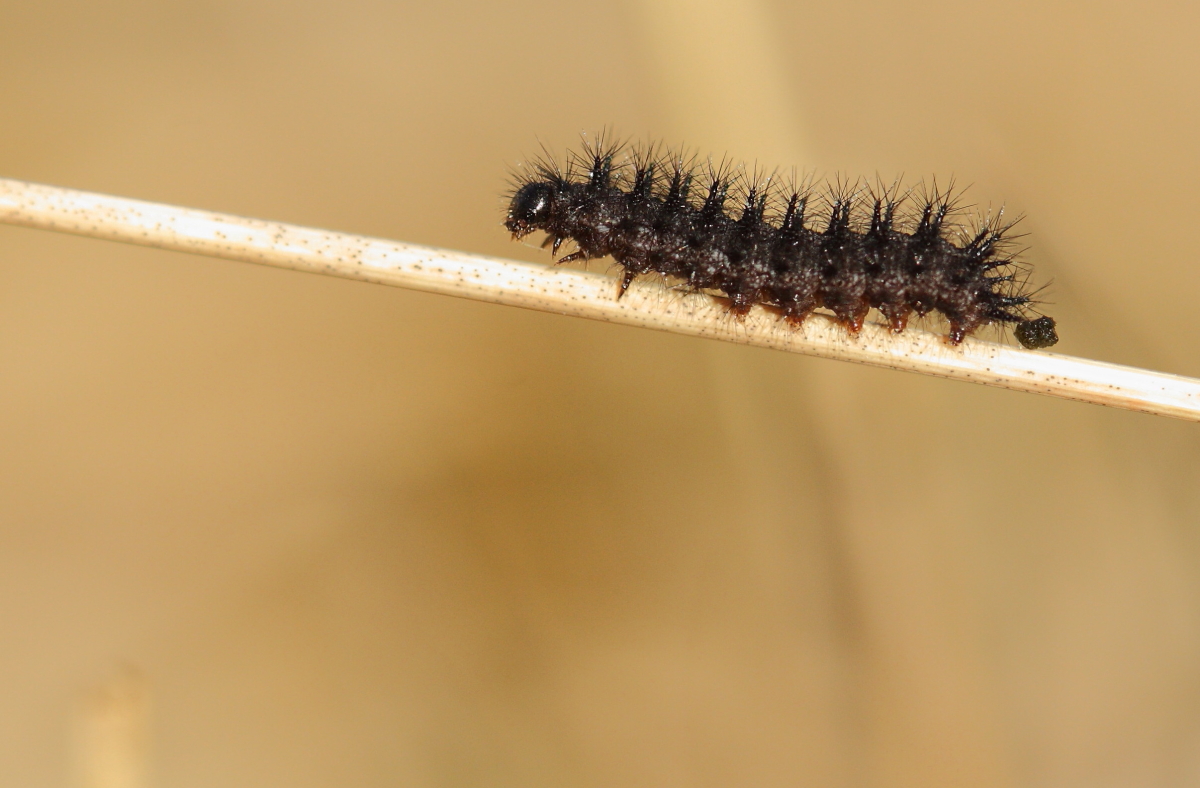
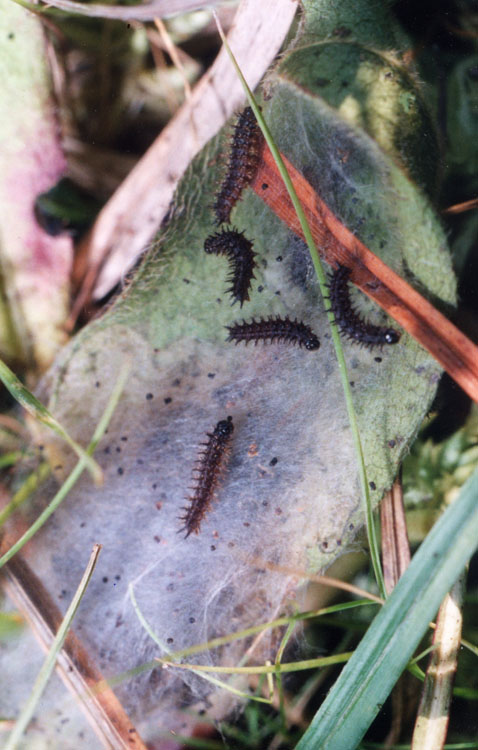
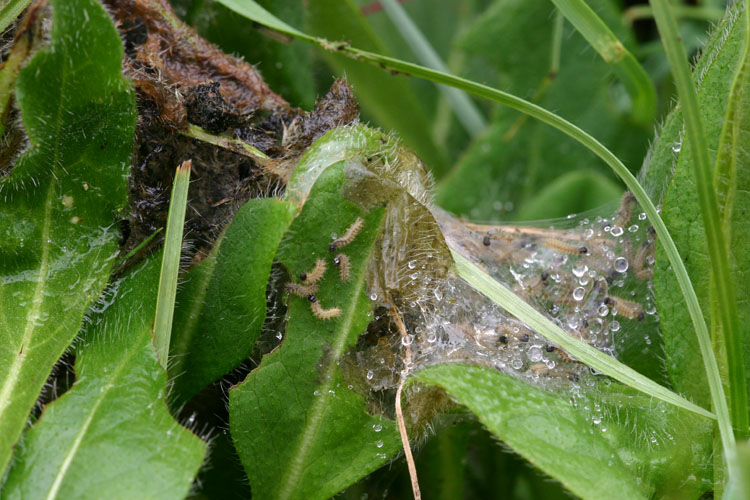
"Directly after emergence the larva measures 1.2 mm. long. The head is bilobed and large in proportion, black and shining, and it bears several whitish, finely serrated hairs. The body is densely covered with minute darkish points. Above the spiracles are six longitudinal rows of rather long, gently curved, white, serrated hairs with shining brown bulbous bases; along the lateral folds and ventral surface are other similar but straighter hairs; the spiracles are brown. Each segment has a central sub-division reaching to the spiracle, then diverging off into lobes. The entire colour of the body, legs and claspers is a pale ochreous-yellow. When about twelve days old, shortly before first moult, it measures 3.2 mm. long; the ground colour is pale cream with a medio-dorsal series of ochreous-brown longitudinal marks, two on each segment; it is also mottled and ringed with the same colour along the sides, forming a series of pale, conspicuous, round spots; the hairs have developed black shining bases, and a black shining sub-dorsal transverse band on the first segment. As soon as hatched the larva commence spinning a web over the food plant, and live in one great company under its protection. When a few days old, after denuding the leaves on which they feed under the dense envelope of web, they leave in a body to spin a fresh abode, covering that part of the plant with silk upon which they rapidly crawl." - Frohawk (1924)
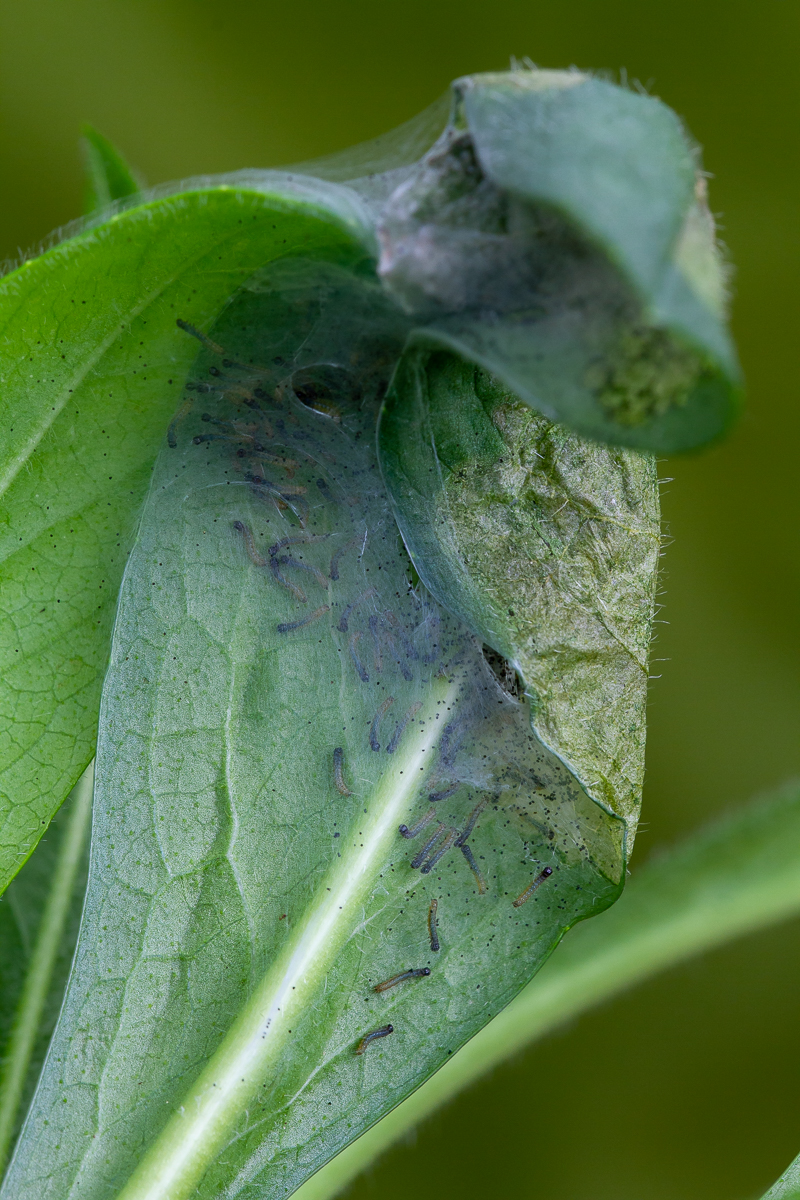
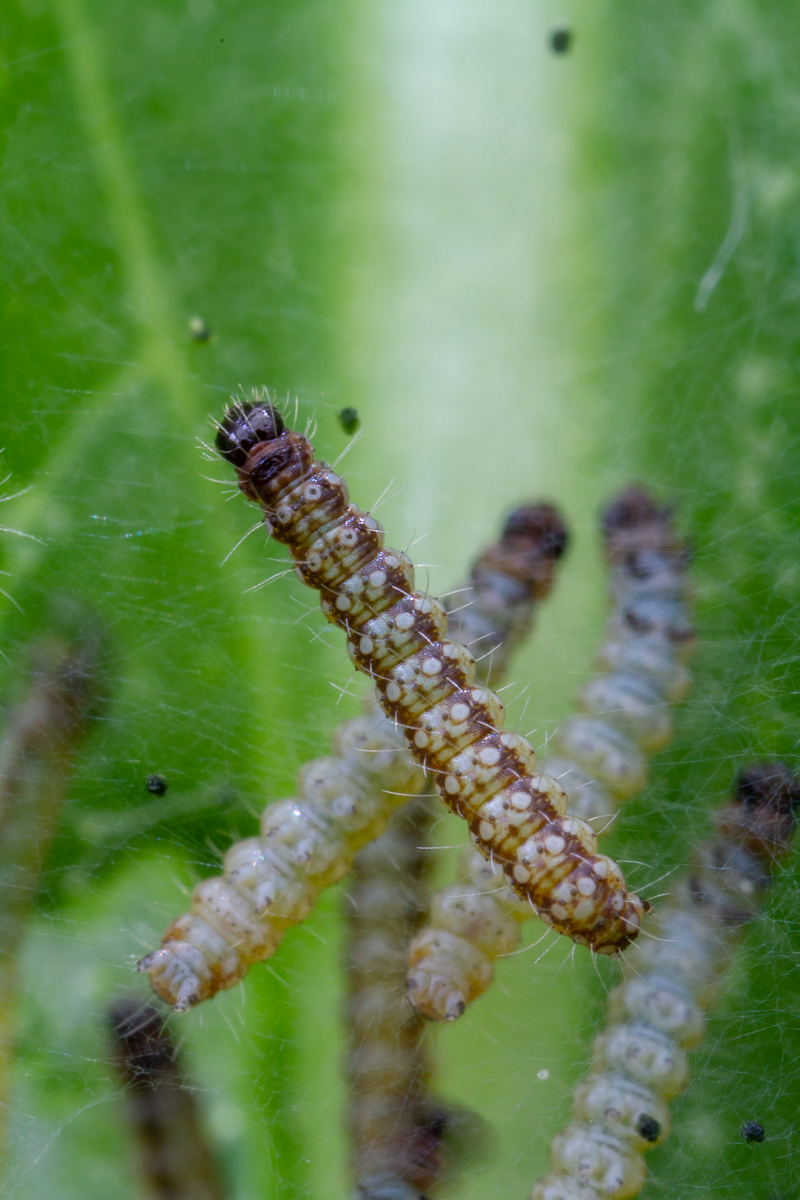
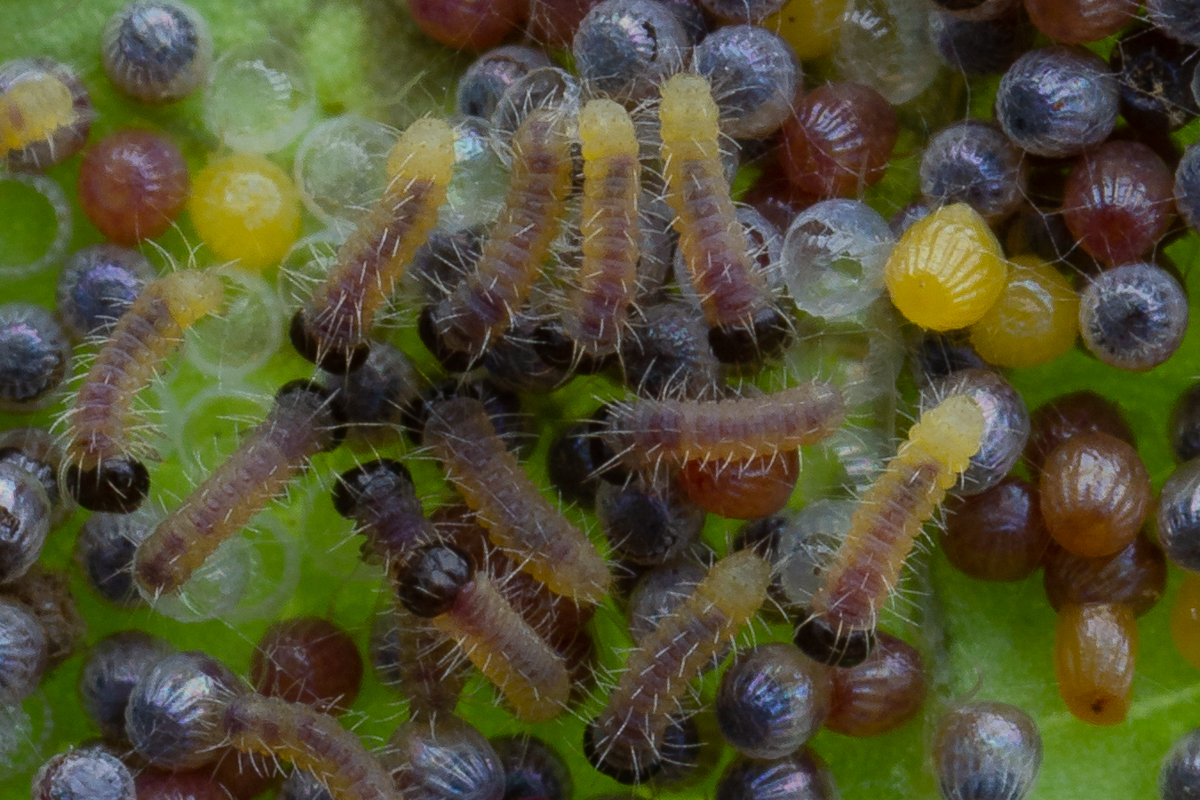
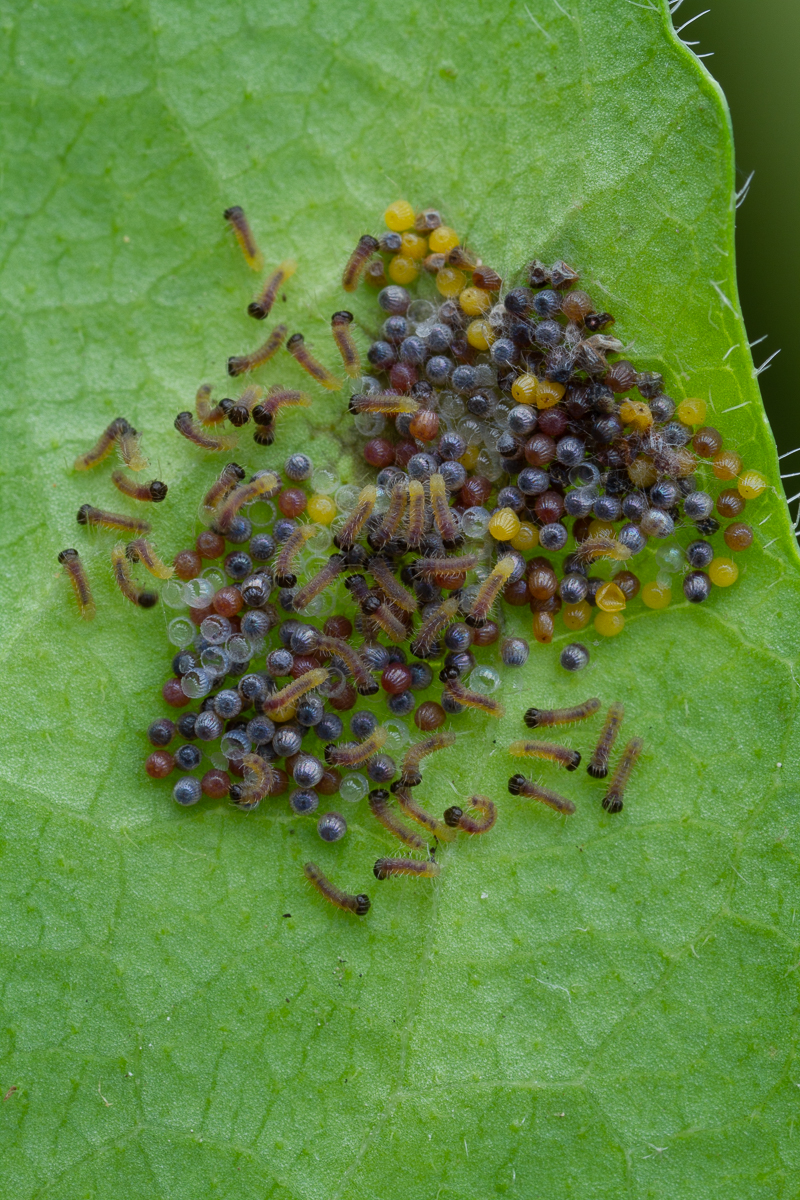
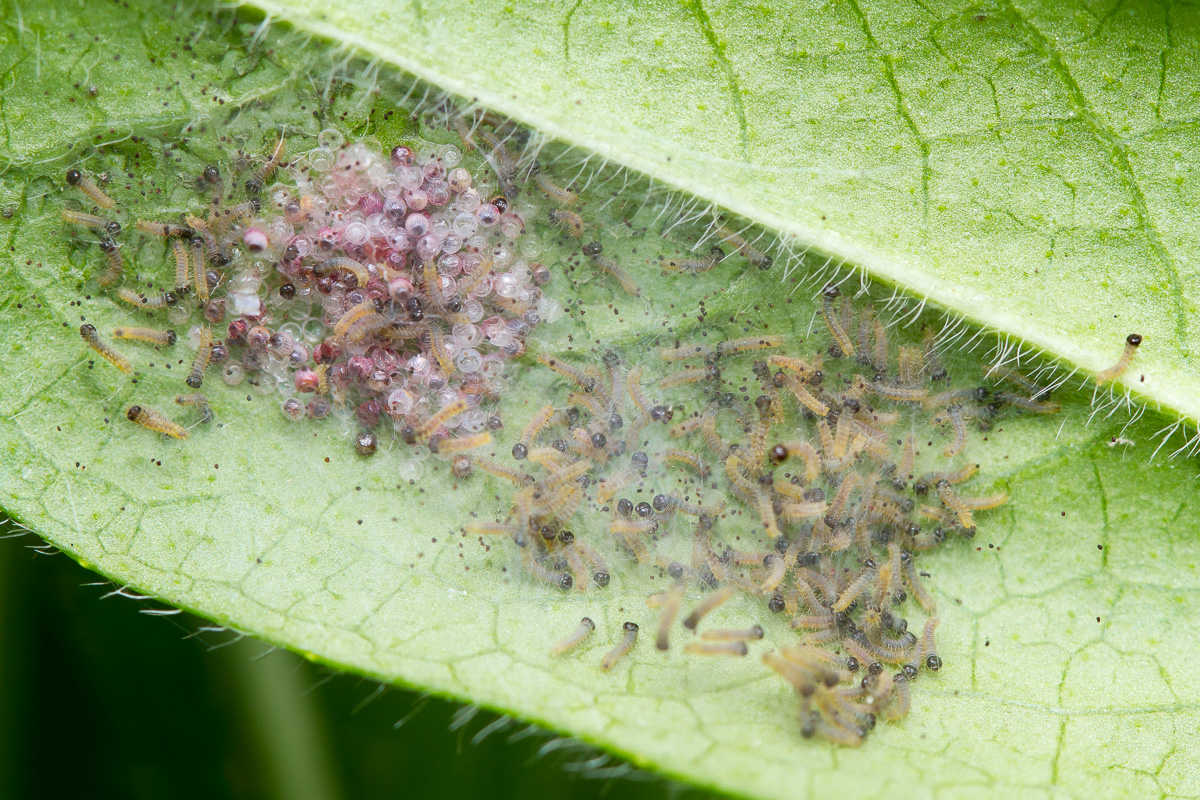
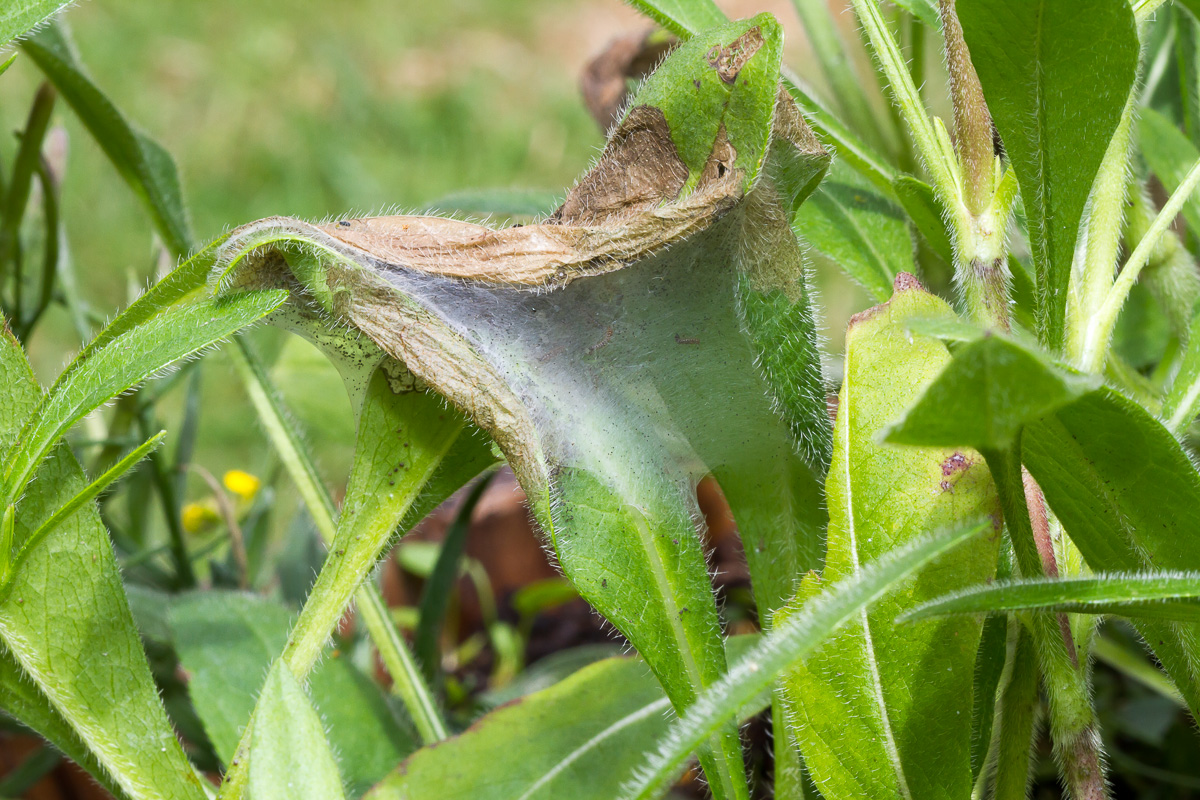
"The first moult occurred on July 26th, 1904. After the first moult, twenty-two days old, it is 5.4 mm. long. The head is black and bears several pale-coloured hairs. The body has the segmental divisions deeply marked and is sprinkled thickly all over with minute black points, and seven longitudinal rows of rather short conical spines, each bearing a number of serrated whitish bristles; the first row is medio-dorsal, the second sub-dorsal, the third super-spiracular and the fourth sub-spiracular; along the ventral surface are dark, blunt tubercles bearing similar bristles. There are two forms of colouring of the larvae, one having the ground colour a pale ochreous-yellow, mottled with darker ochreous, including the spines and claspers, the other, a much darker variety, having blackish spines and a general dusky appearance, the ground colour being pale greyish-ochreous with darker mottlings. They continue living in company, spinning a dense covering of web over the plant and feeding under it; there are always a few small holes in the web, forming little tunnels leading into the interior." - Frohawk (1924)
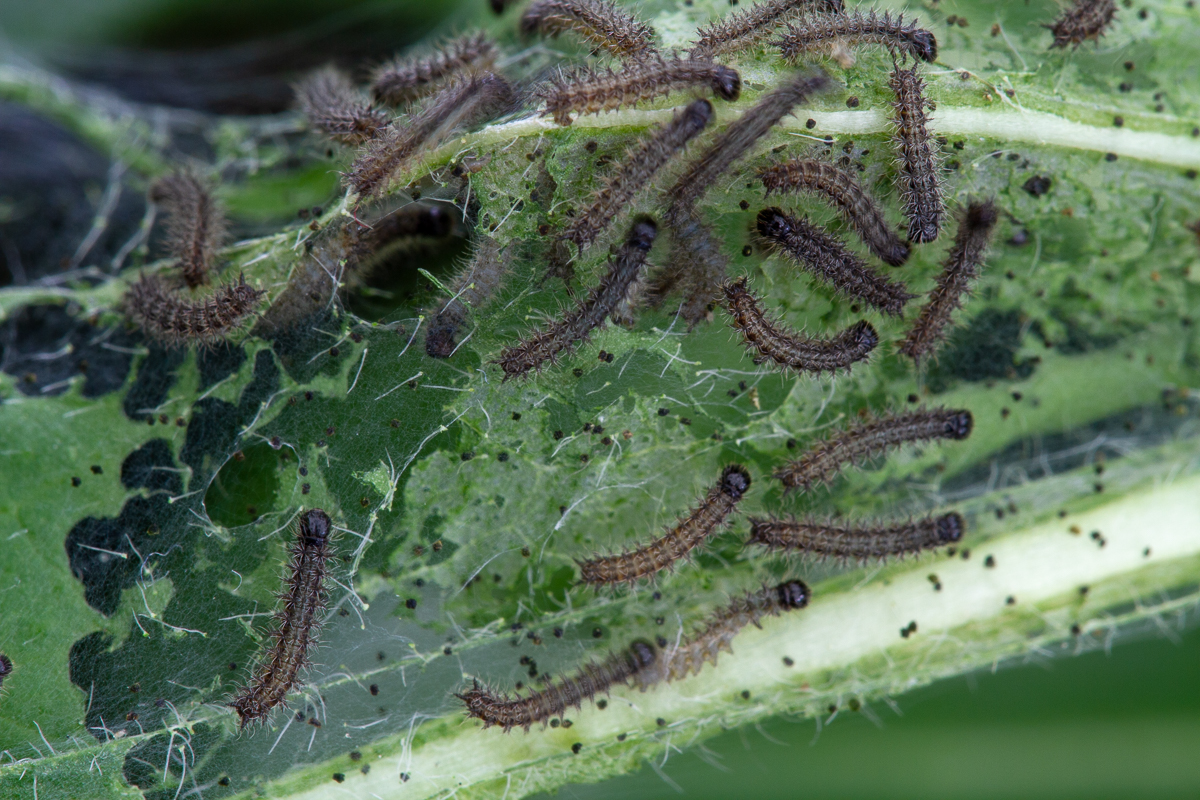
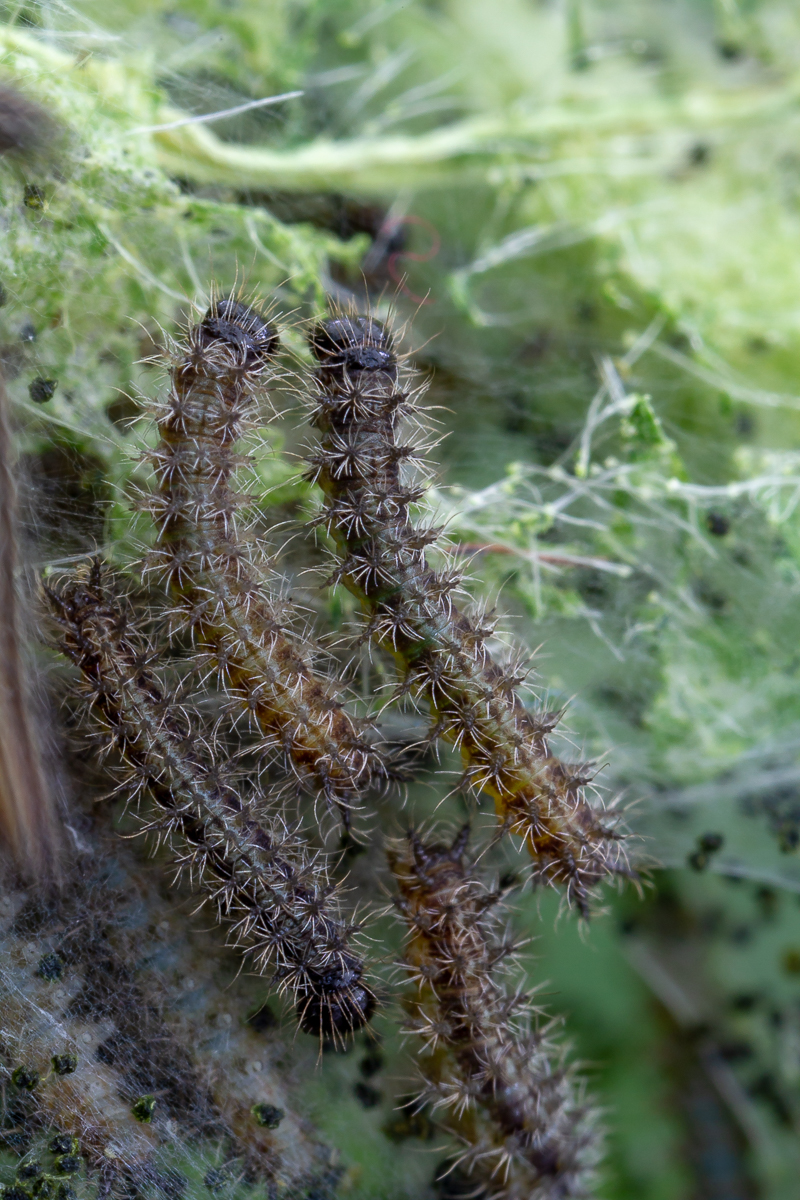
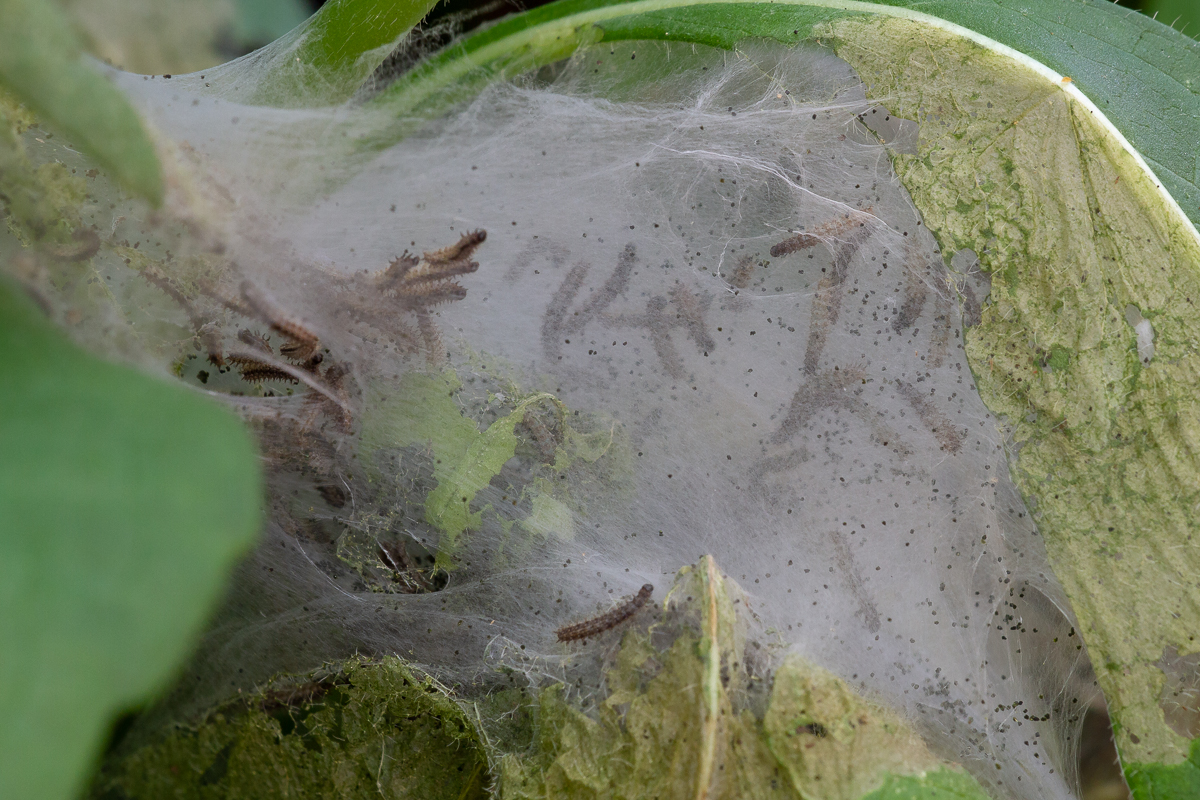
"The second moult took place in the beginning of August. The last brood that hatched, July 21st, moulted the second time on August 8th, so that all three broods were in the same stage from that date. Before the third moult it measures 7.6 mm. in length. It is similar to the previous stage, excepting the spines are longer and the whitish mottlings of the spiracular line are more distinct. There are still two decided forms of the larvae, as in the former stage, one being wholly black above and ochreous-brown below, with greyish mottlings, the other dusky above and ochreous below, the spiracular line of white mottlings is very distinct and all the spines and hairs are ochreous. The head is black and shining and beset with black hairs; the legs are black and the claspers pale ochreous." - Frohawk (1924)
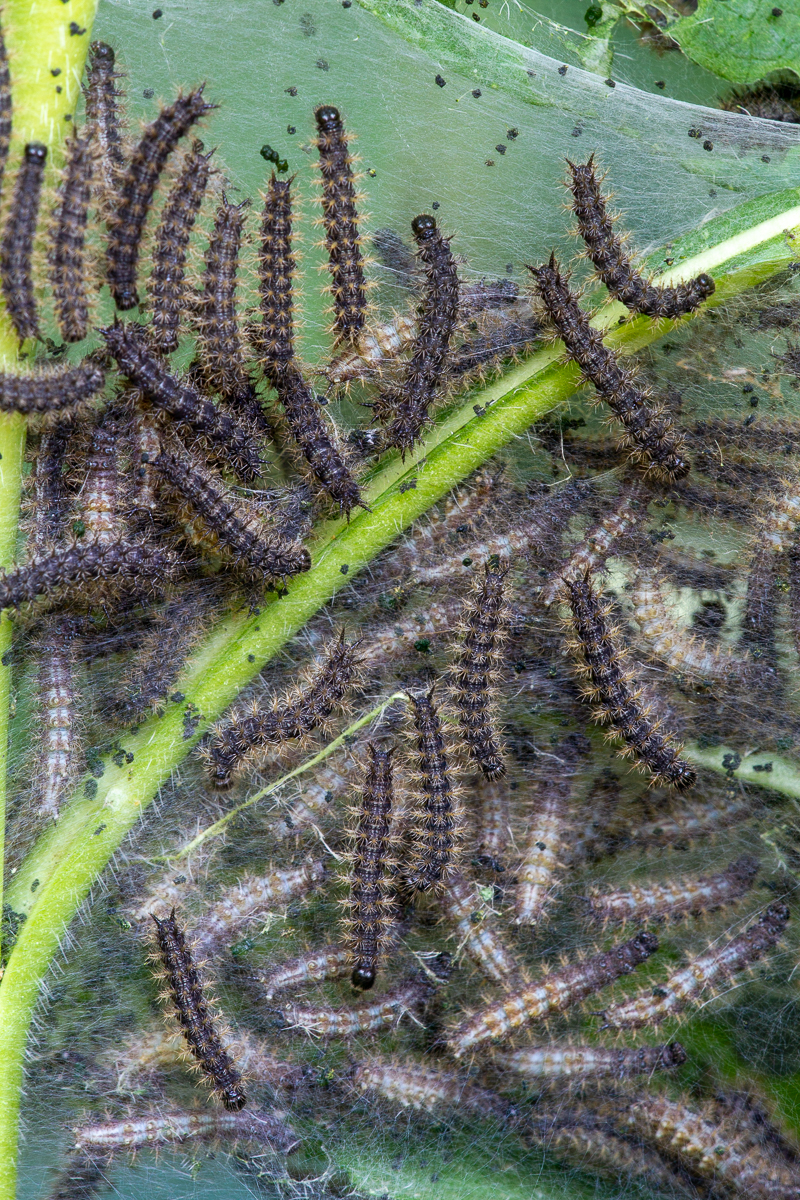
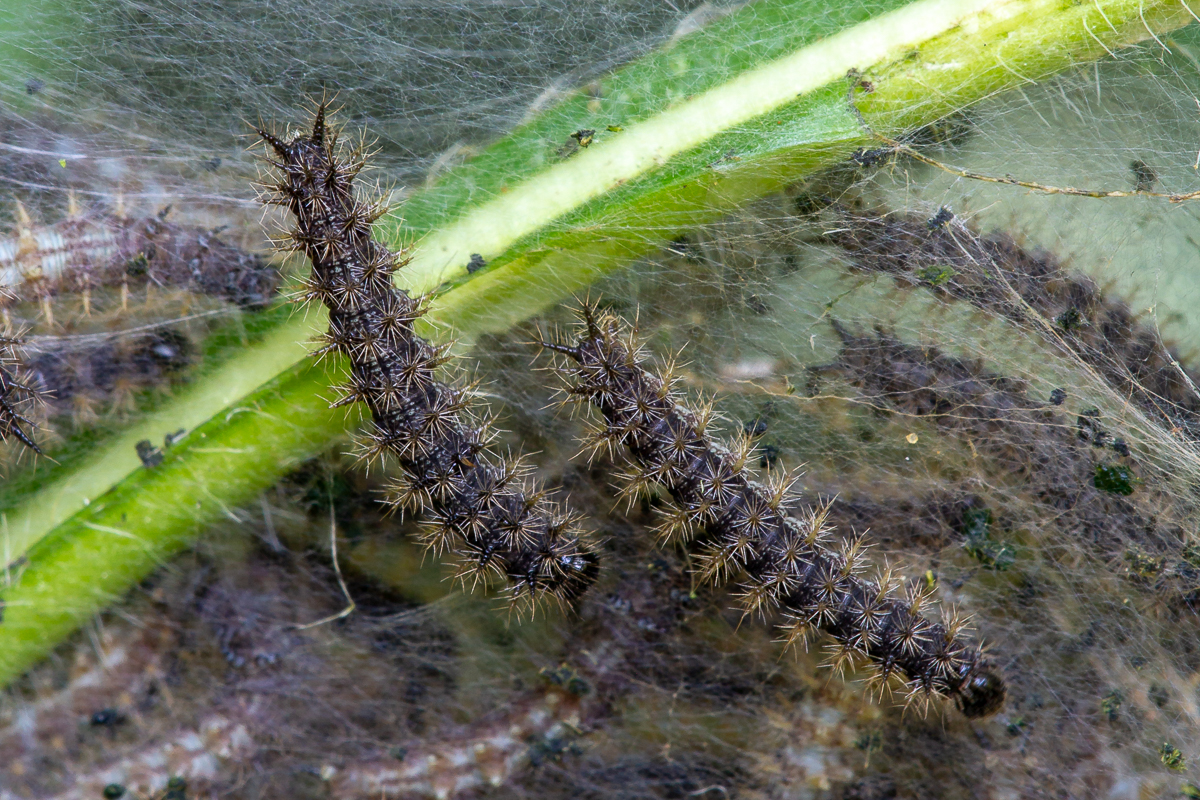
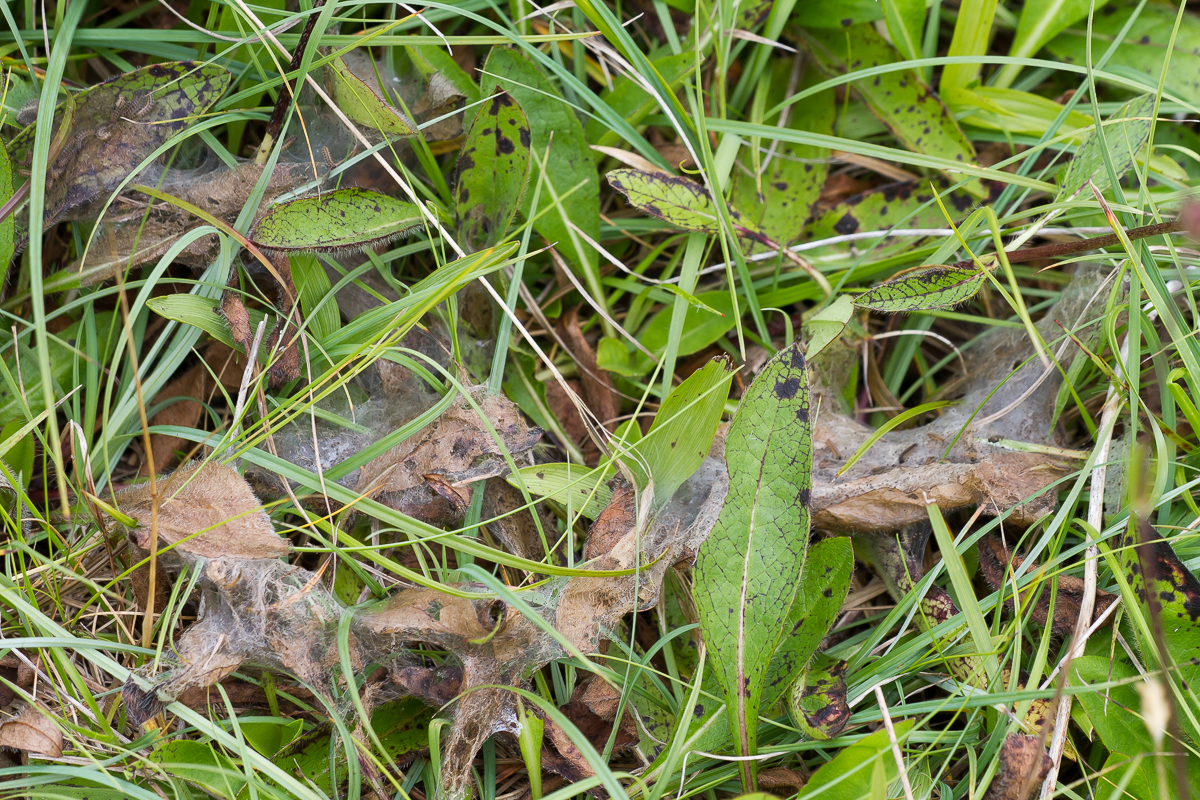
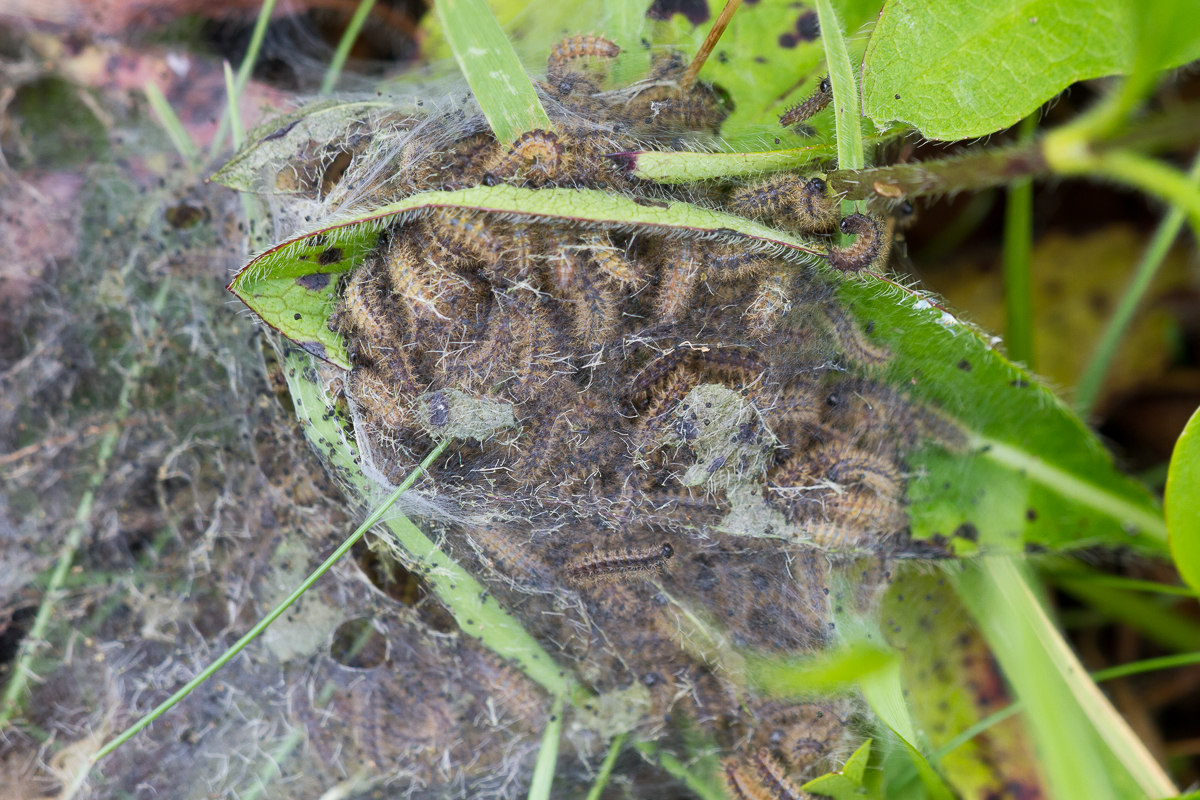
"The third moult occurred from August 15th to 20th; the majority moulted on the 16th. From the 13th they remained in the web, moulting. A few days after moulting they became active in the sunshine, and almost daily roamed about while the sun shone upon them; afterwards they always returned to the web, but during these days not any were seen feeding. On August 25th a big brood left the old web and spun a dense, compact web among the leaves of a young plant and remained hidden in it for hibernation. The other batches of larvae did the same during the following and remaining days of August, so that three compact nests were spun among the leaves of separate plants, and all entered into hibernation by the end of August. It must be noted that after the third moult, which is the hibernating stage, apparently no food is eaten before hibernation. On February 5th, 1905, a fine, warm day, with a shade temperature over 5o degrees, many of the larvae emerged from the webs and basked in the sunshine; when the sun disappeared they again retreated into their hibernacula. February 7th, although a dull, wet day, but mild, a large number of larva left their webs, especially those kept out of doors (two pots of scabious containing the larvae were kept out of doors, and two pots in a cold glass-house, where each had remained the whole period of hibernation); early in the afternoon they returned to the web for shelter. Excepting during cold weather, they daily did the same, always retreating into their webs at sundown. Towards the end of the month several had fed a little, the scabious leaves being finely perforated. After third moult, which takes place during hibernation, or directly after, it measures 7 mm. long. The head is shining black, beset with fine bristles; the body is velvet-black with dirty white speckles, forming a longitudinal spiracular band; all the spines (tubercles) are deep shining black and covered with numerous long, black, serrated spinelets. The legs are black, the claspers brown, and the feet ochreous. Upon the slightest disturbance it rolls in a ring and remains so for several minutes." - Frohawk (1924)
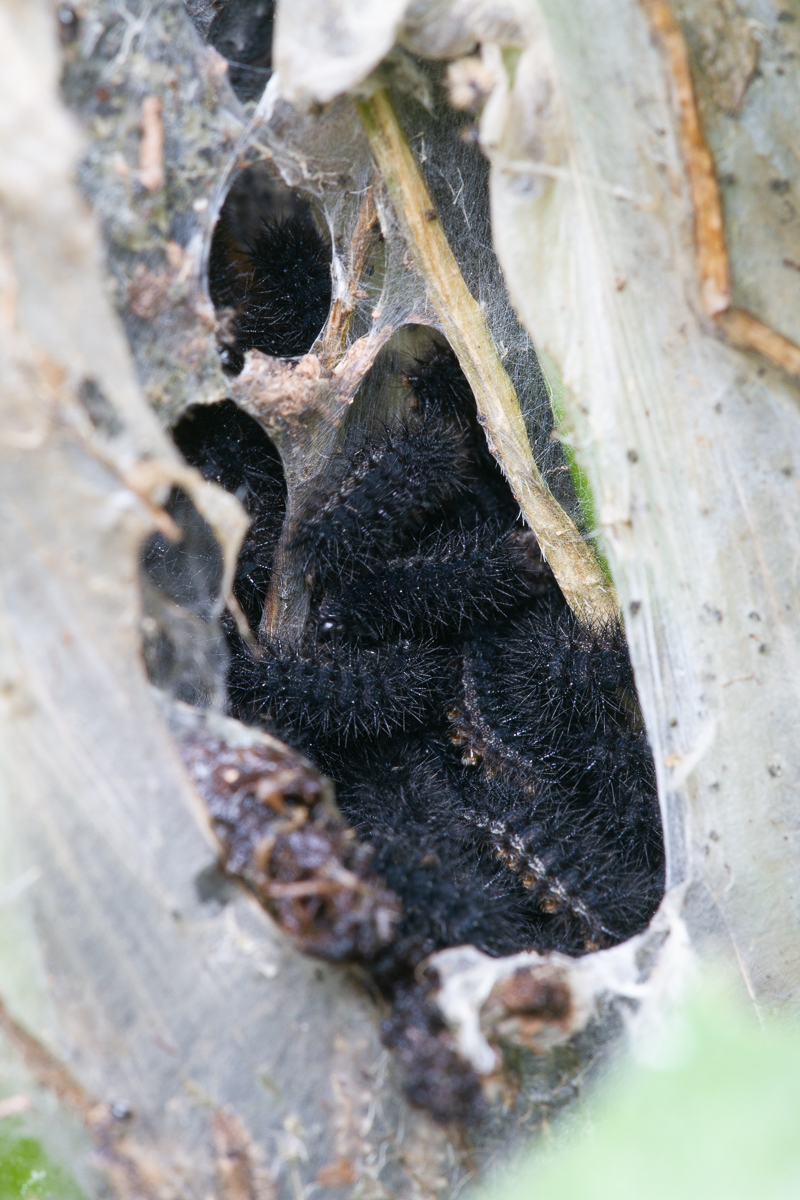
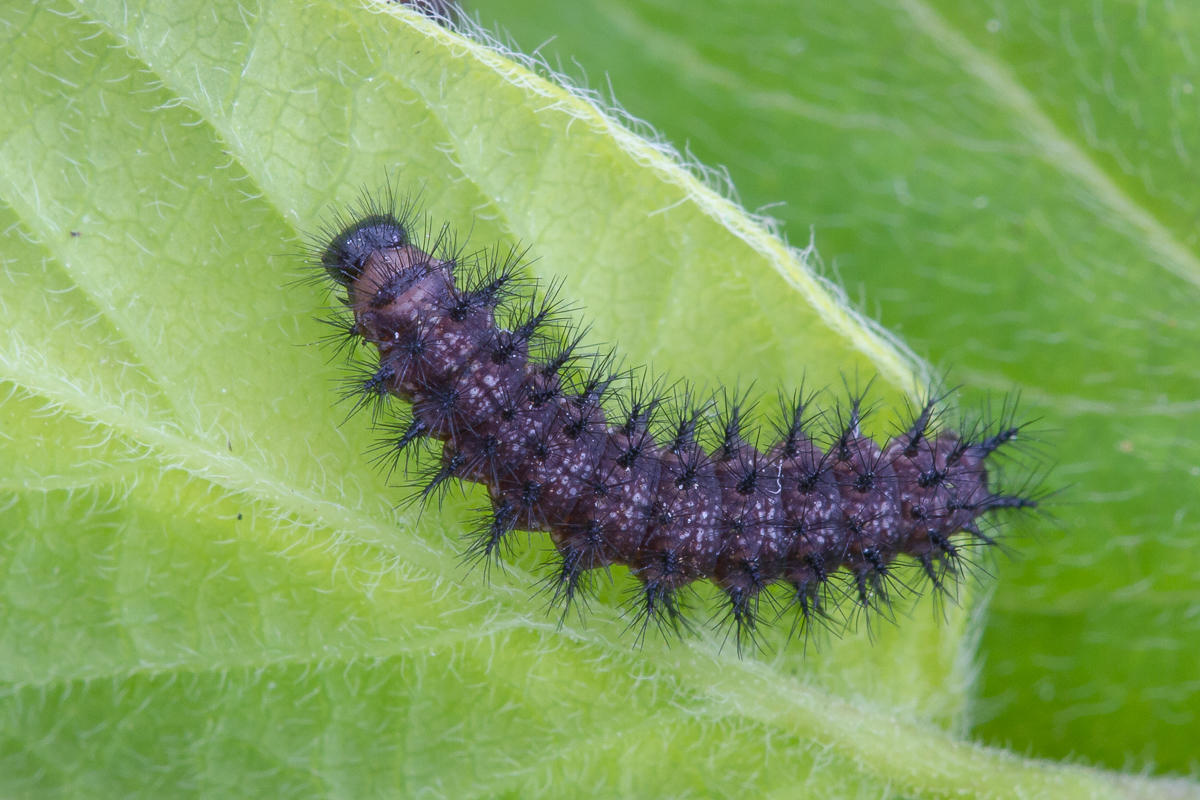
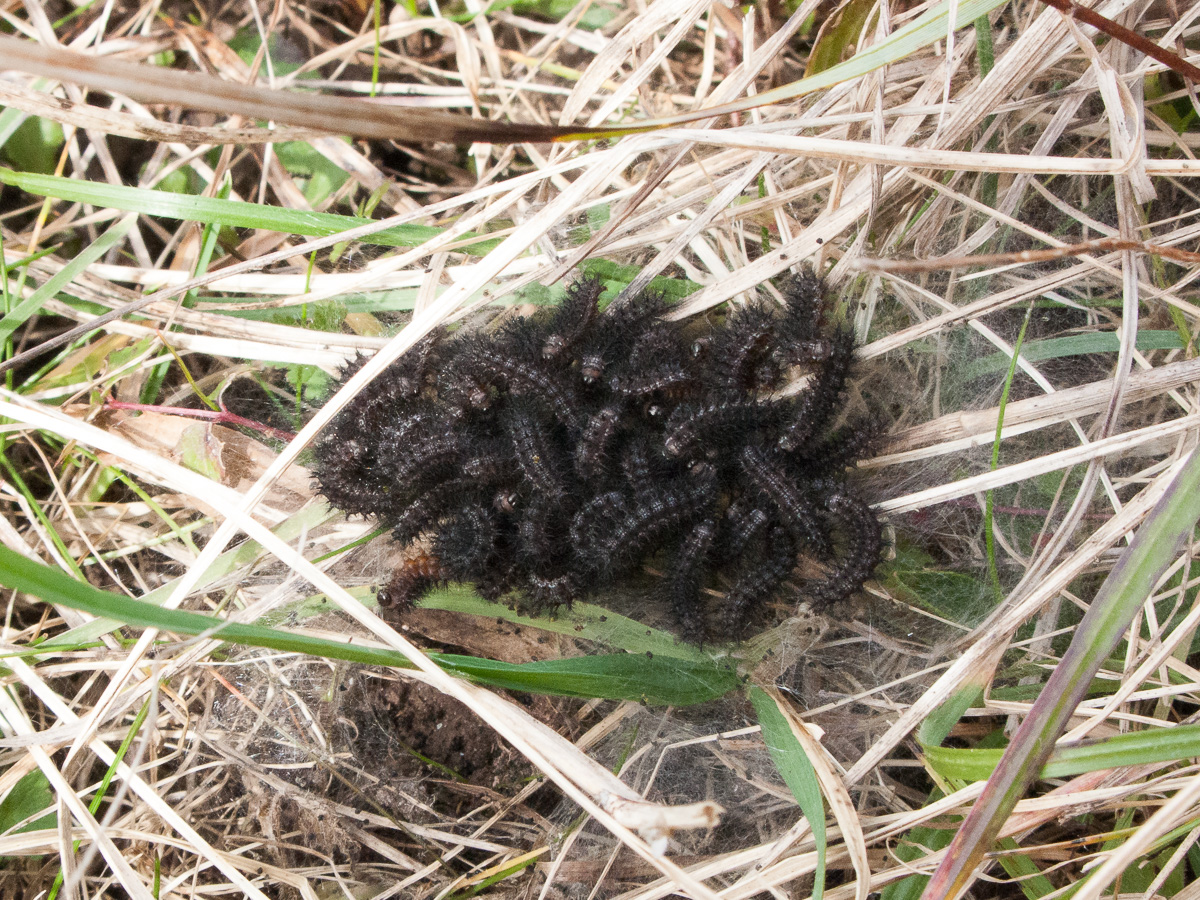
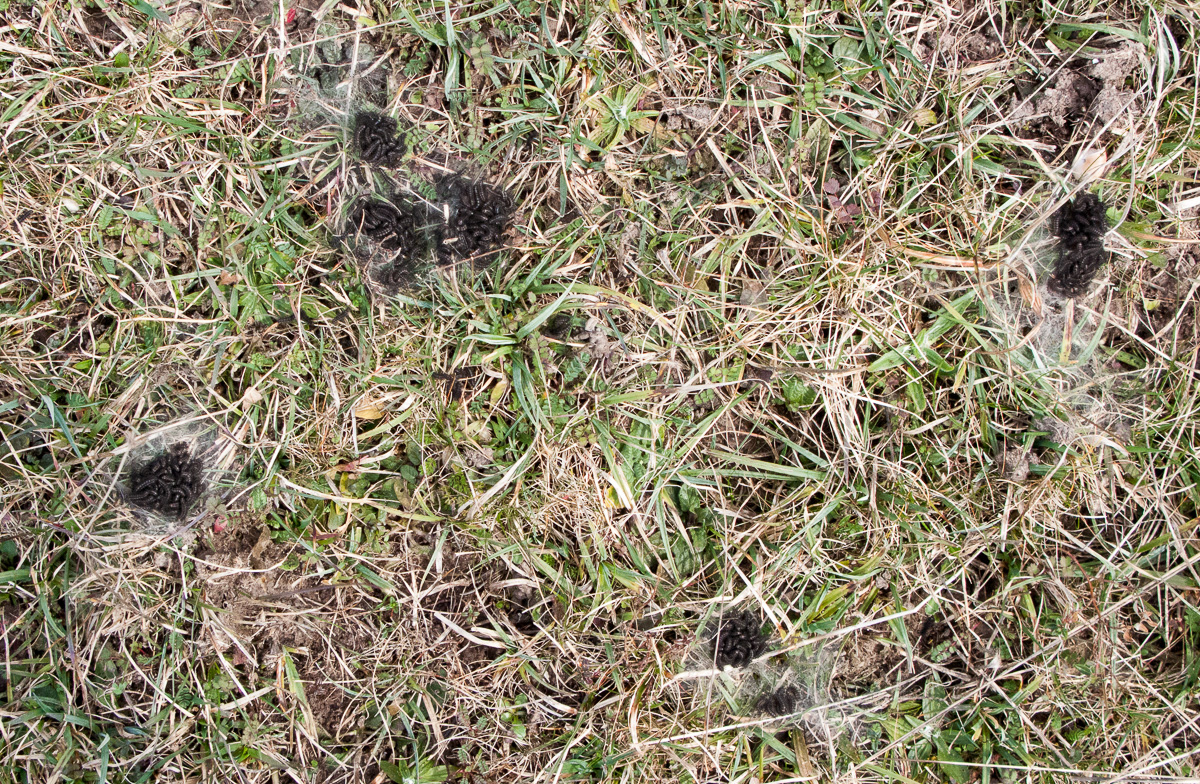
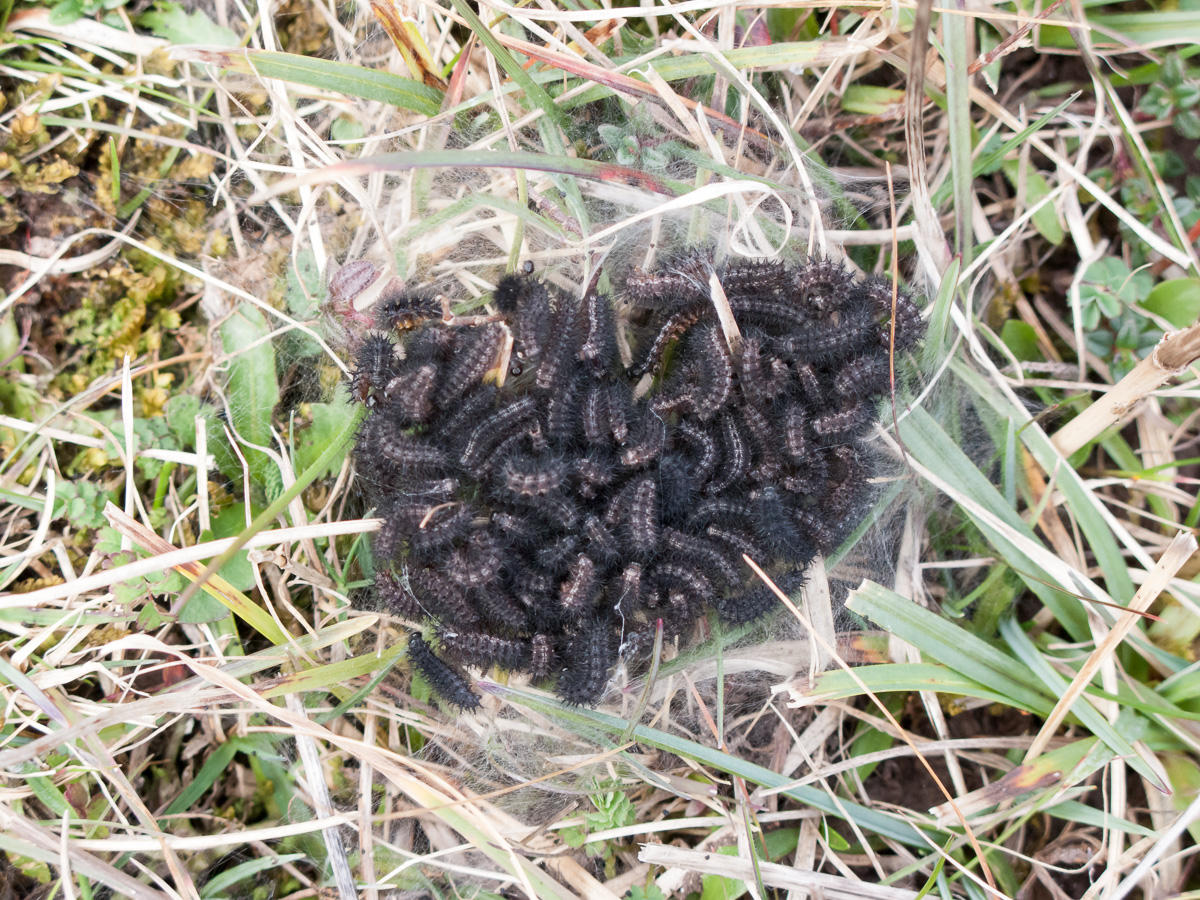
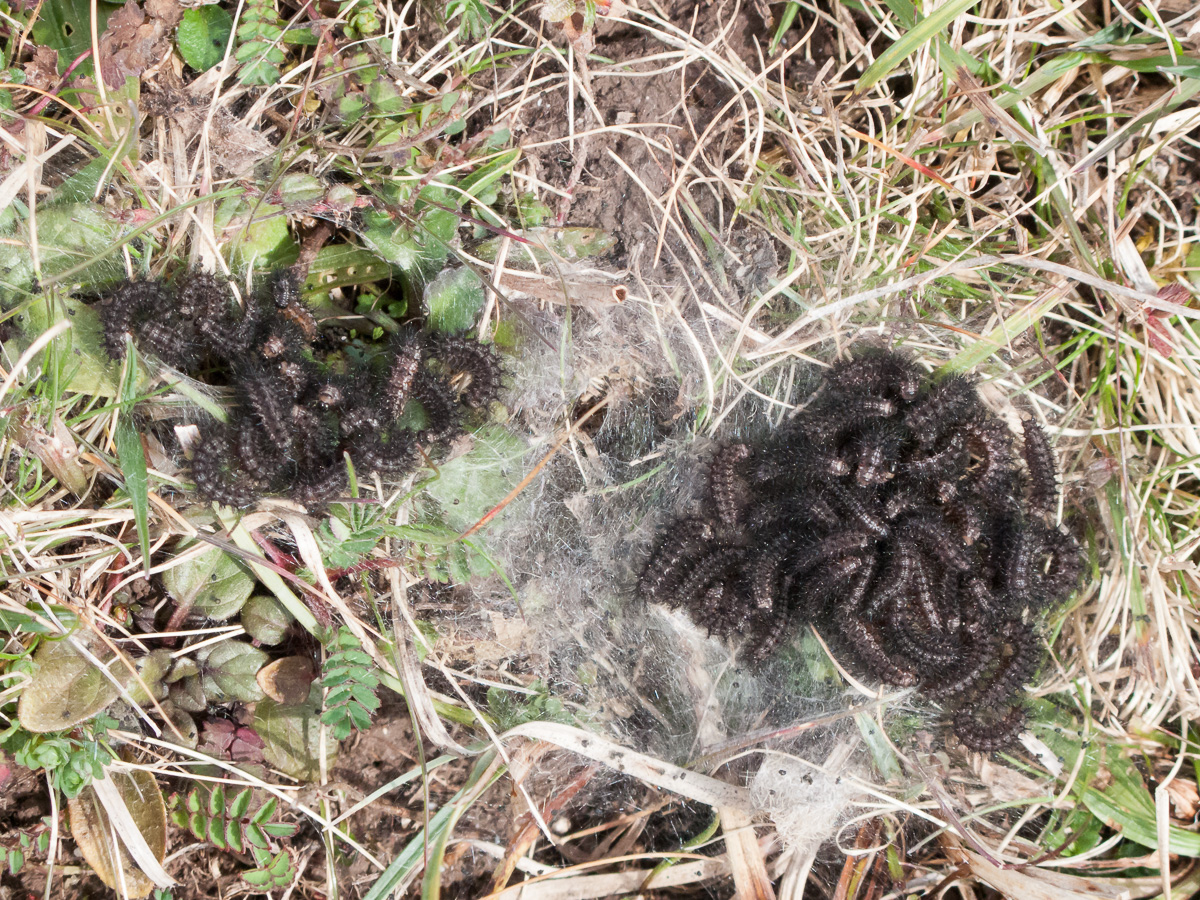
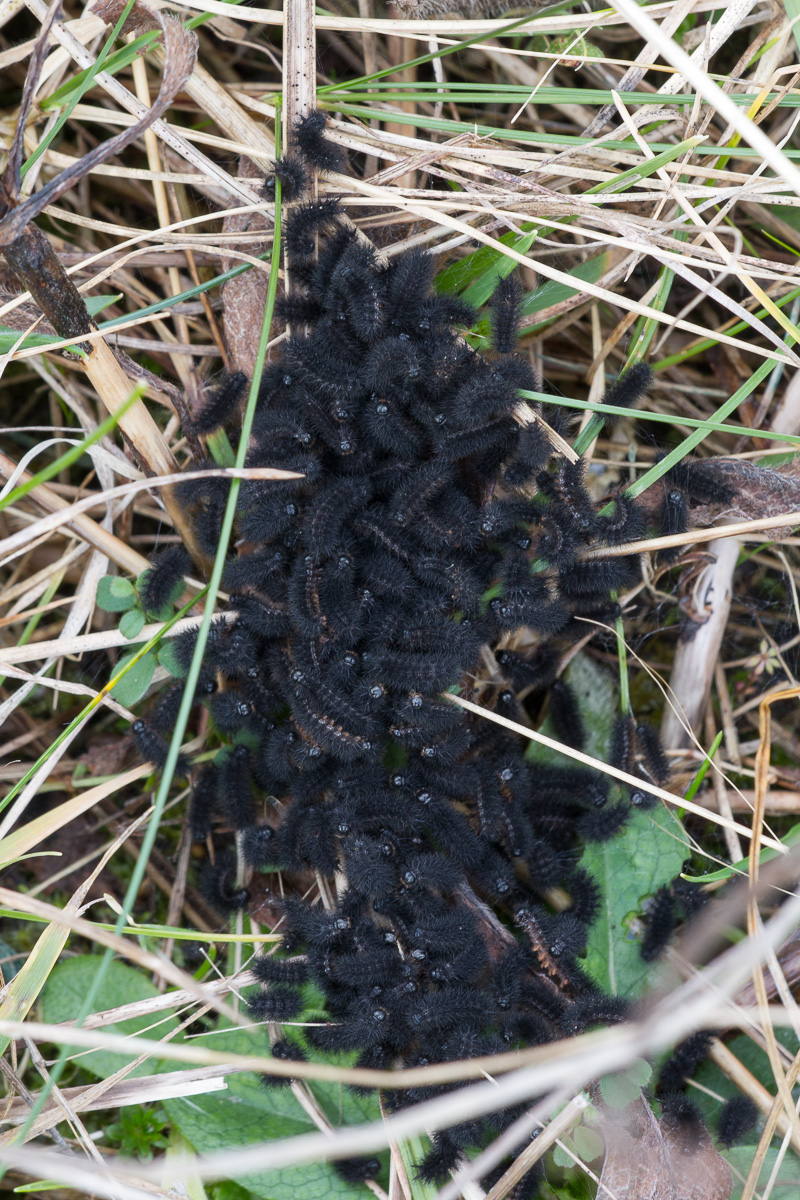
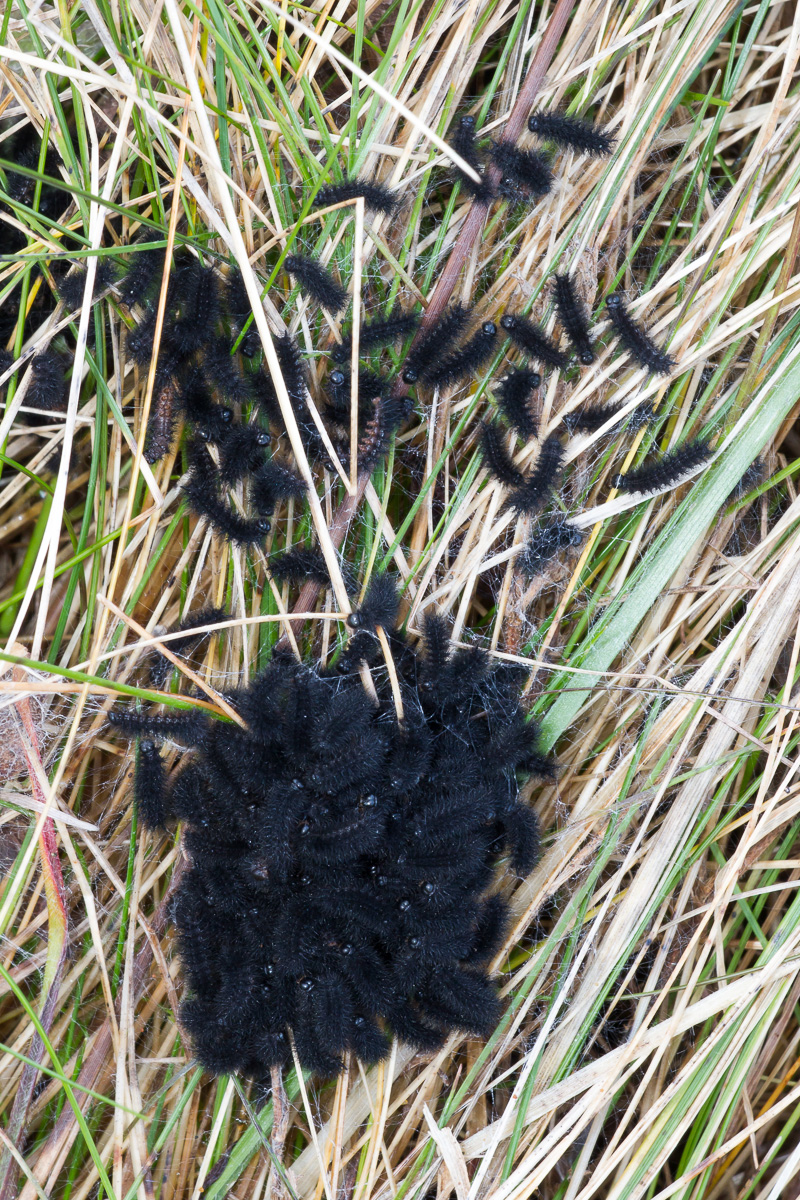
"During the last two or three days of March and first few days of April all the larvae moulted the fourth time. After this moult they scatter and live separately, and without spinning a web to live in. About eight days after the fourth moult it measures 16 mm. long, and resembles the previous stage, excepting the colouring of the lateral and ventral surface, which is clear reddish-brown; the claspers are more ochreous and the spiracular series of grey-white speckles forms a checkered longitudinal band, clearly defined. The spiracles are outlined with grey-white and the dorsal surface is finely speckled with the same colour." - Frohawk (1924)
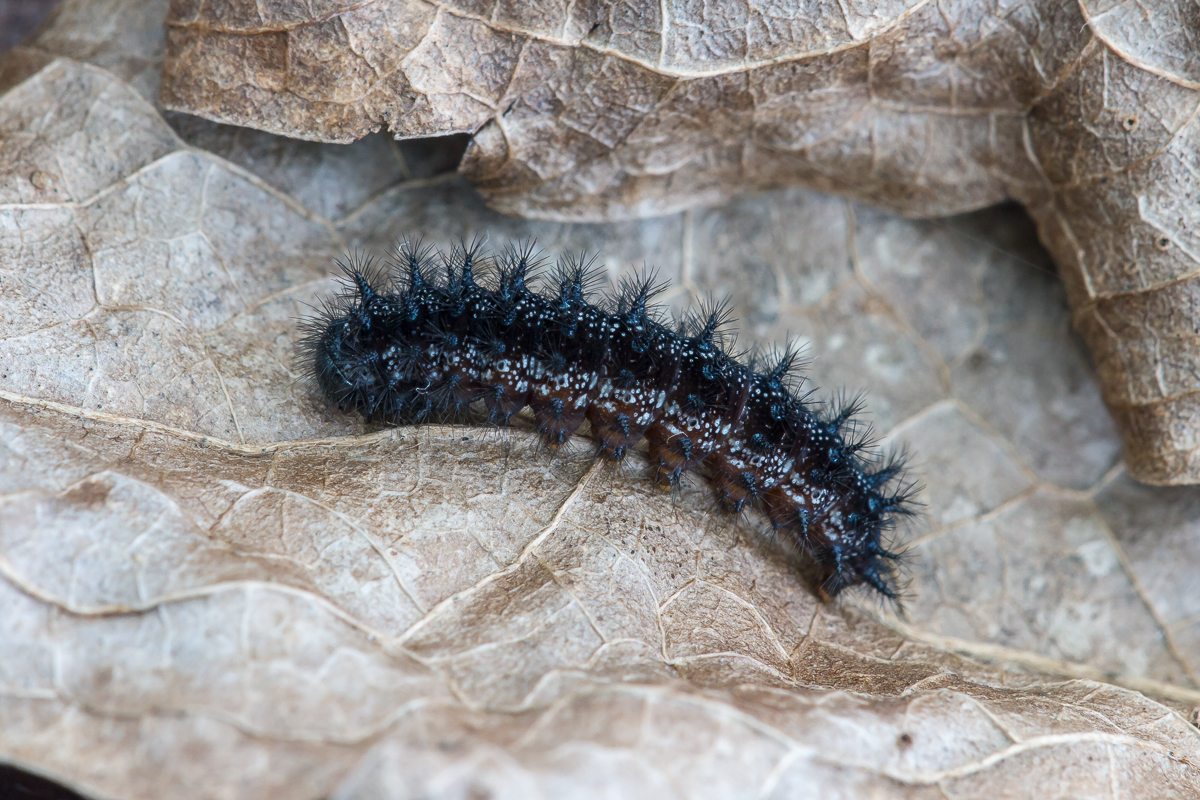
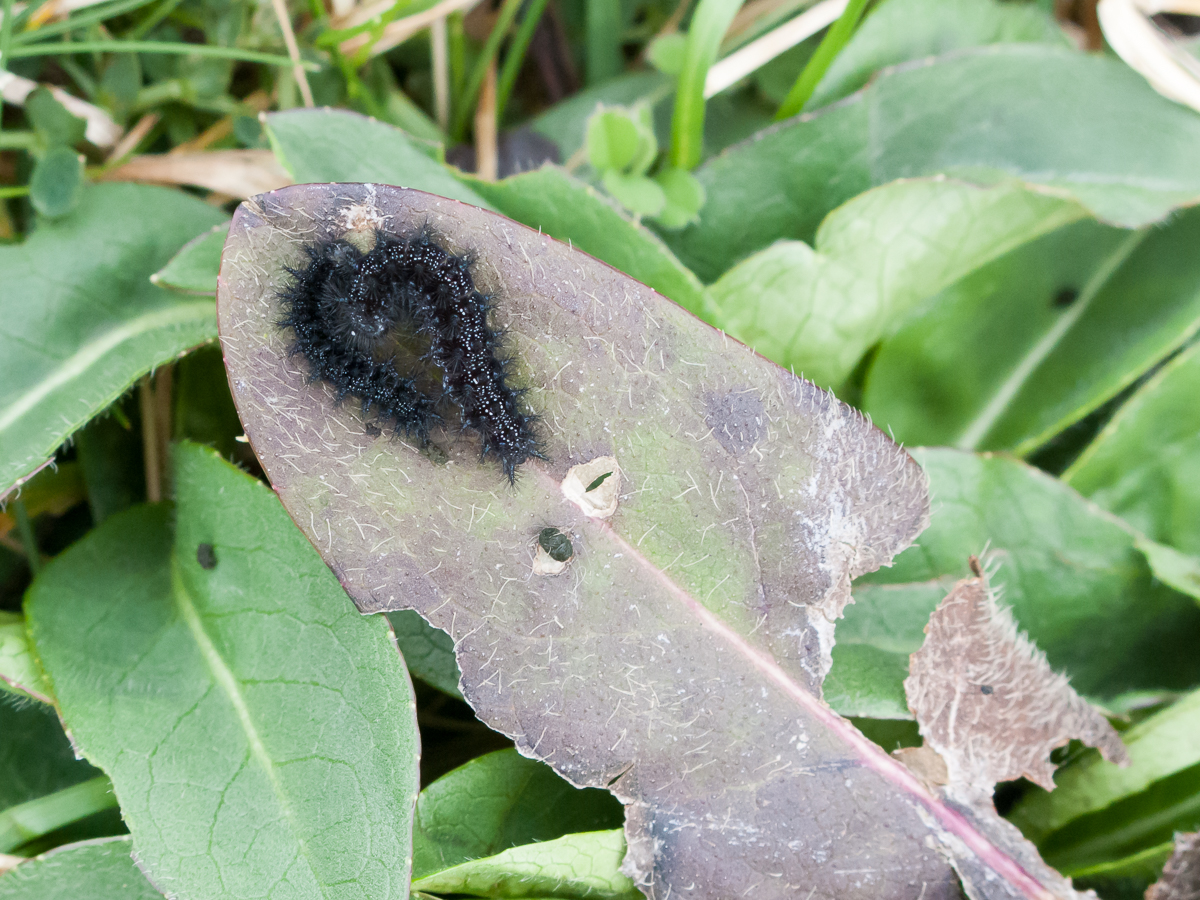
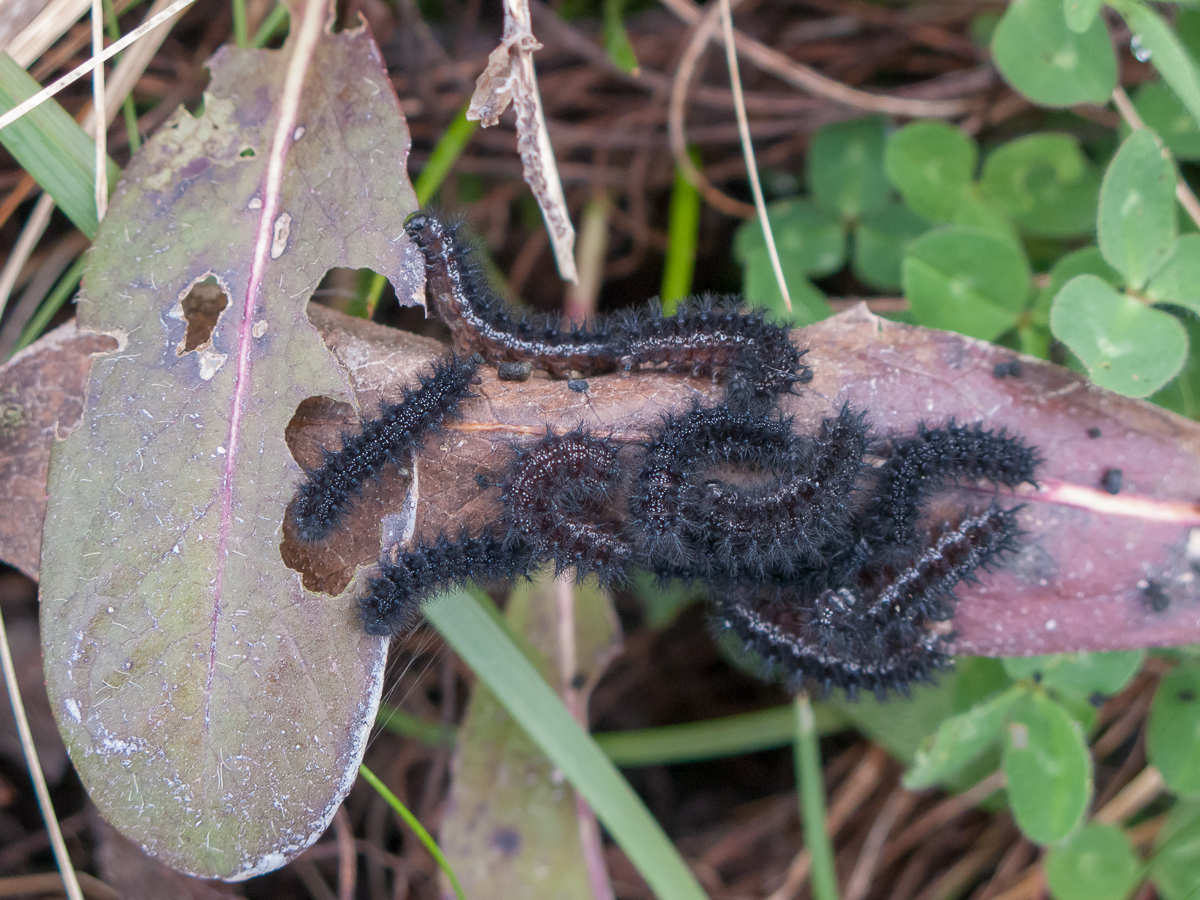
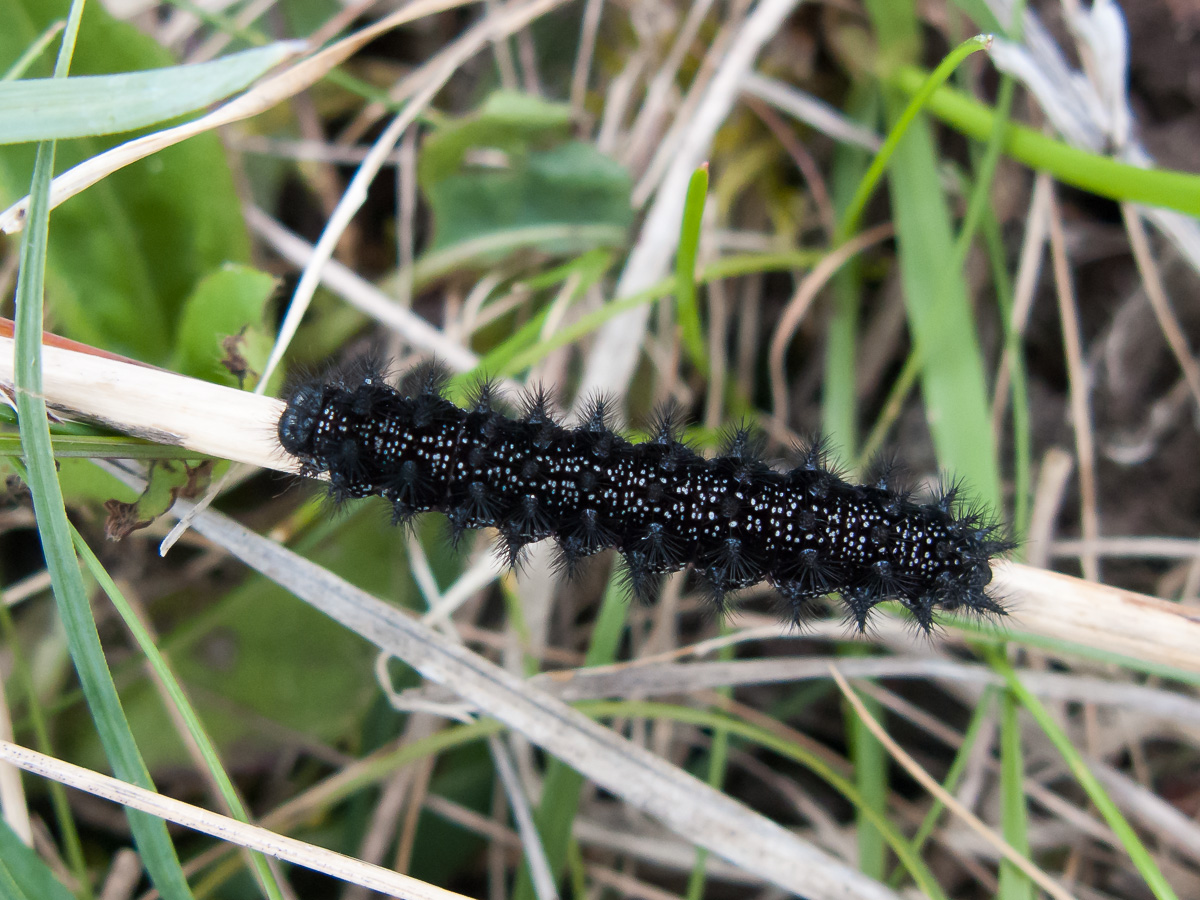
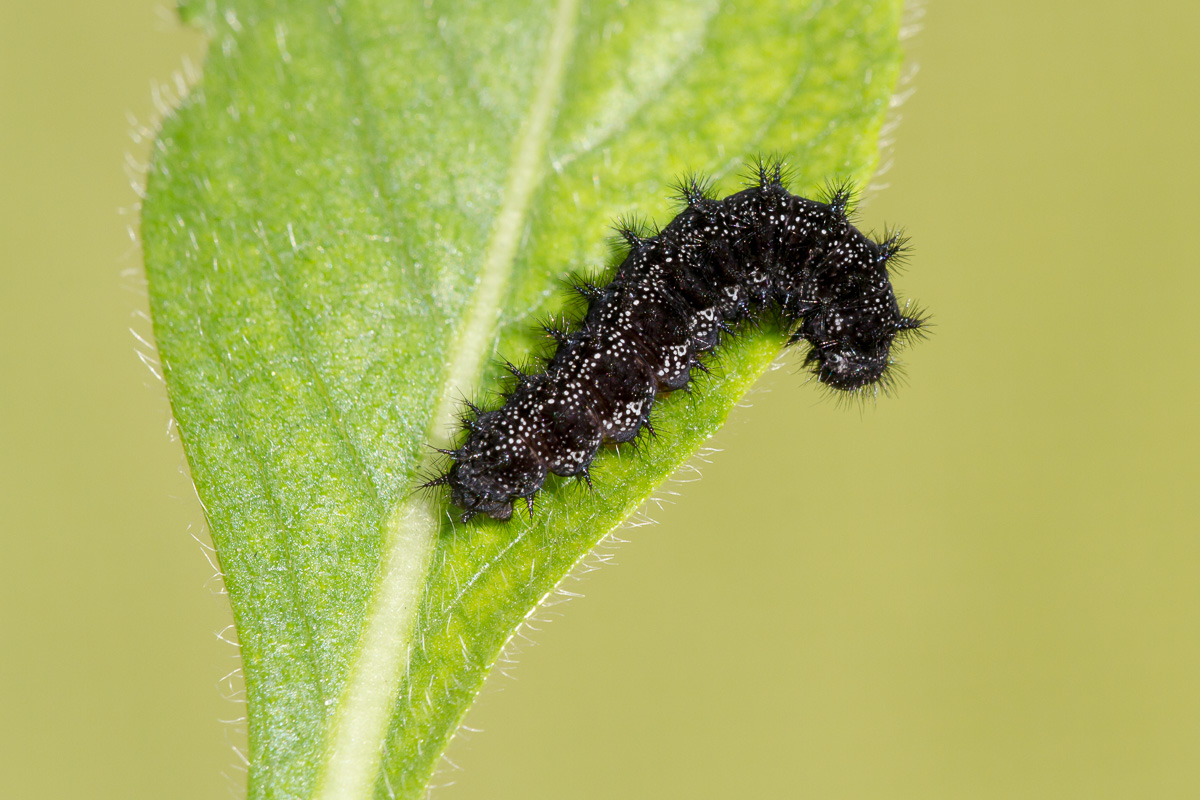
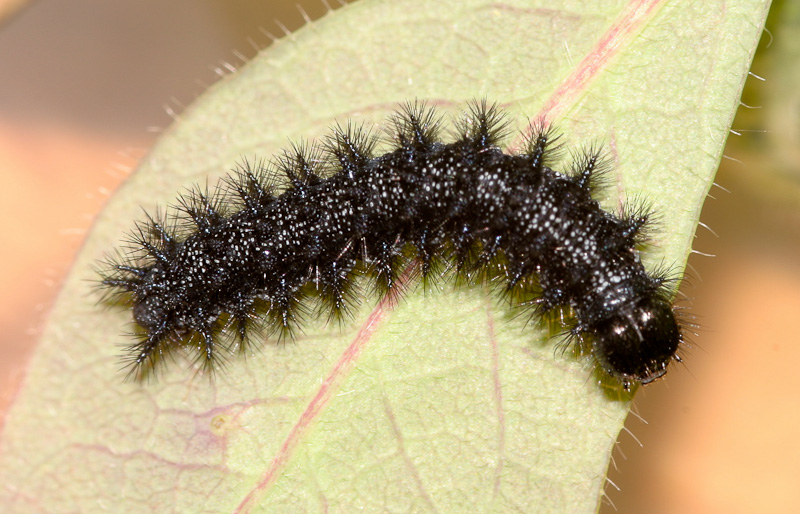
"The fifth moult occurred during the middle of April. Many moulted between the 15th and 20th. After the fifth moult, fully grown, 290 days old, the length varies from 25.4 mm. to 30.2 mm. The body is cylindrical, but tapering at either end; the first segment is much smaller than the second. There are seven rows of rather short, shining black, conical tubercles, one row medio-dorsal, two sub-dorsal and one sub-spiracular; these encircle each segment in a row, and all bear a large number of black bristles, the longest are at the base and decrease in length as they ascend to the apex; below the sub-spiracular tubercle are two small ones close together side by side, bearing a cluster of slender bristles; in all there are seventy-five tubercles. The head and legs are shining black and bristle-bearing. The whole of the upper surface to just below the spiracular region is velvety-black; the lateral and ventral surface is sienna-brown and striped longitudinally with dirty white, which passes along the legs and claspers, the remaining portion of the claspers is ochreous; the spiracular area is sprinkled with pearl-white spots of various sizes, and the black spiracle is surrounded with a white floral design, but varying in shape, some are of a regular primrose pattern; in all the spots form a speckled spiracular stripe; the dorsal region is also speckled with white; each spot surrounds a fine black bristle. The first larva became fully grown by the end of April and pupated on May 2nd, followed by others daily. Upon the least disturbance they fall from the plant and roll up in a ring, remaining still for a minute or more. They can easily be induced to unroll themselves by touching their sides. They crawl rapidly." - Frohawk (1924)
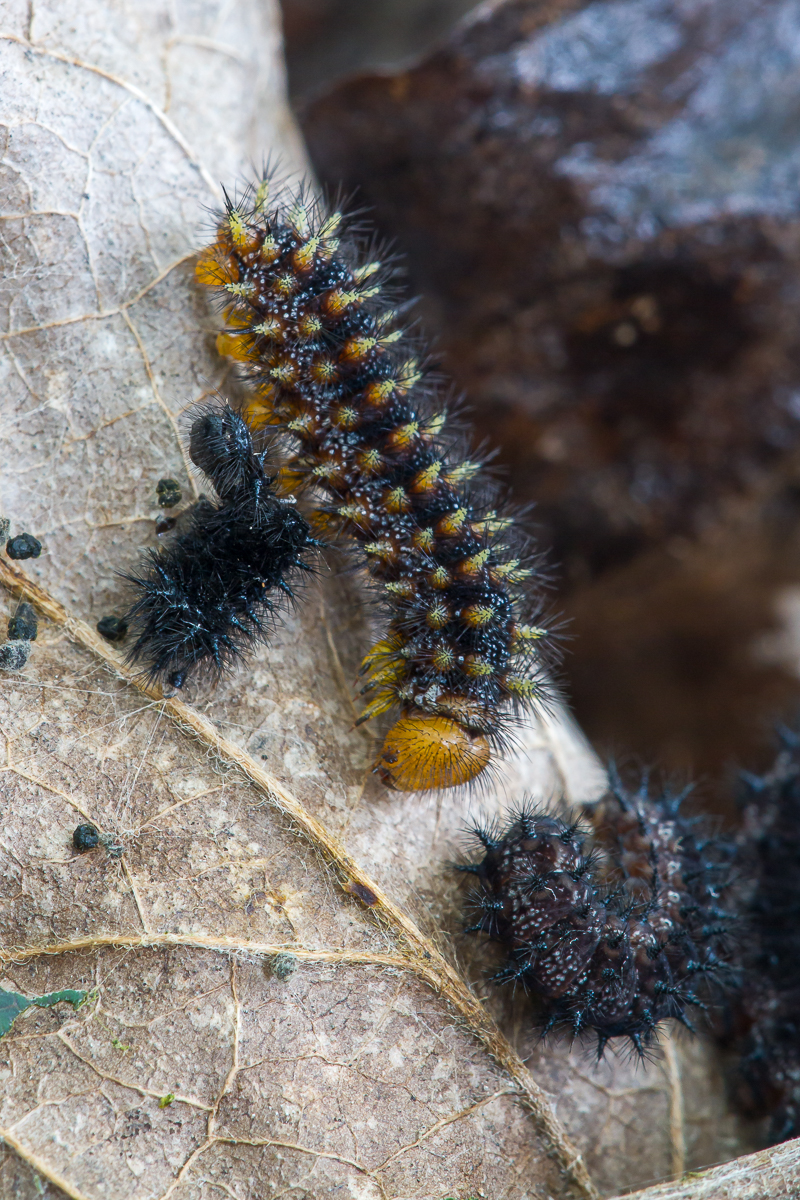
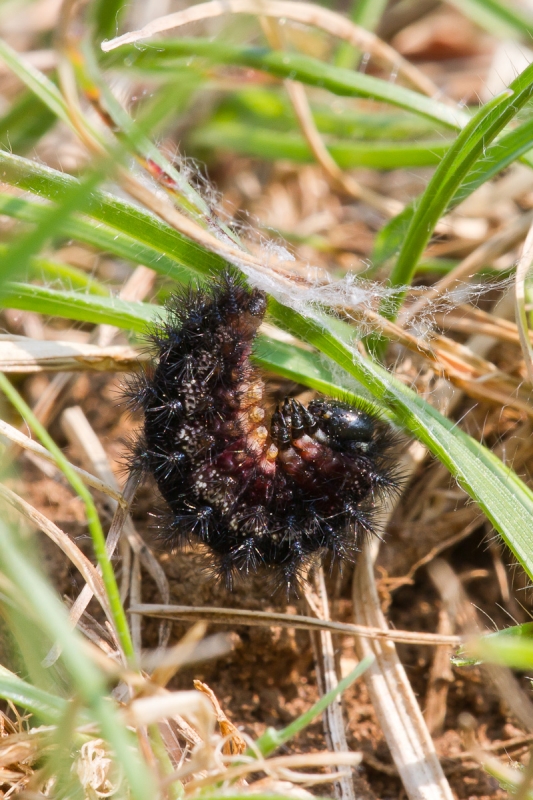
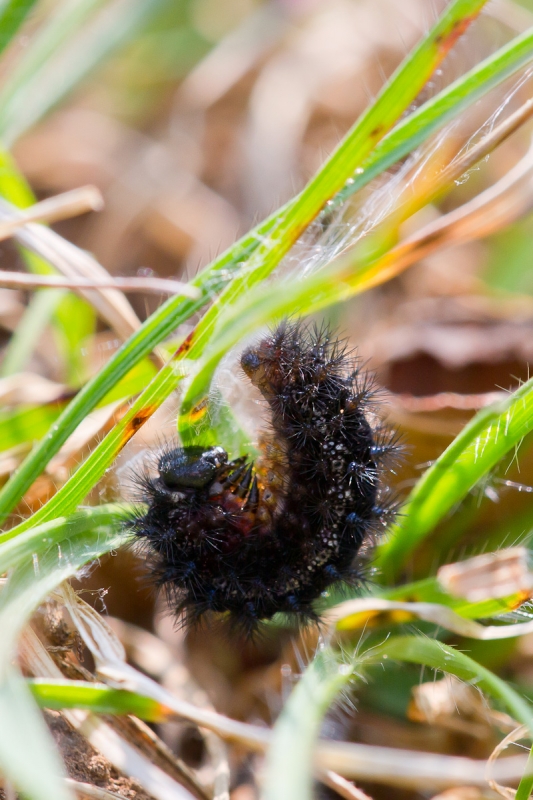

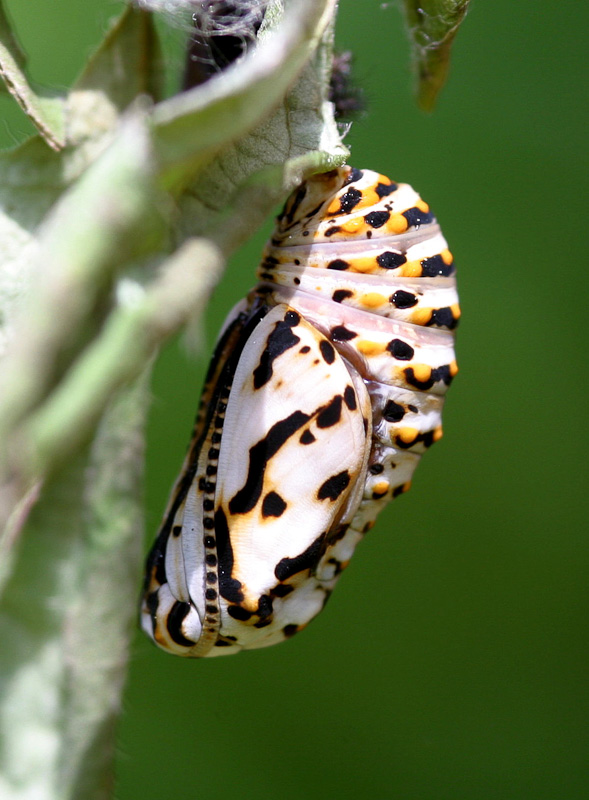
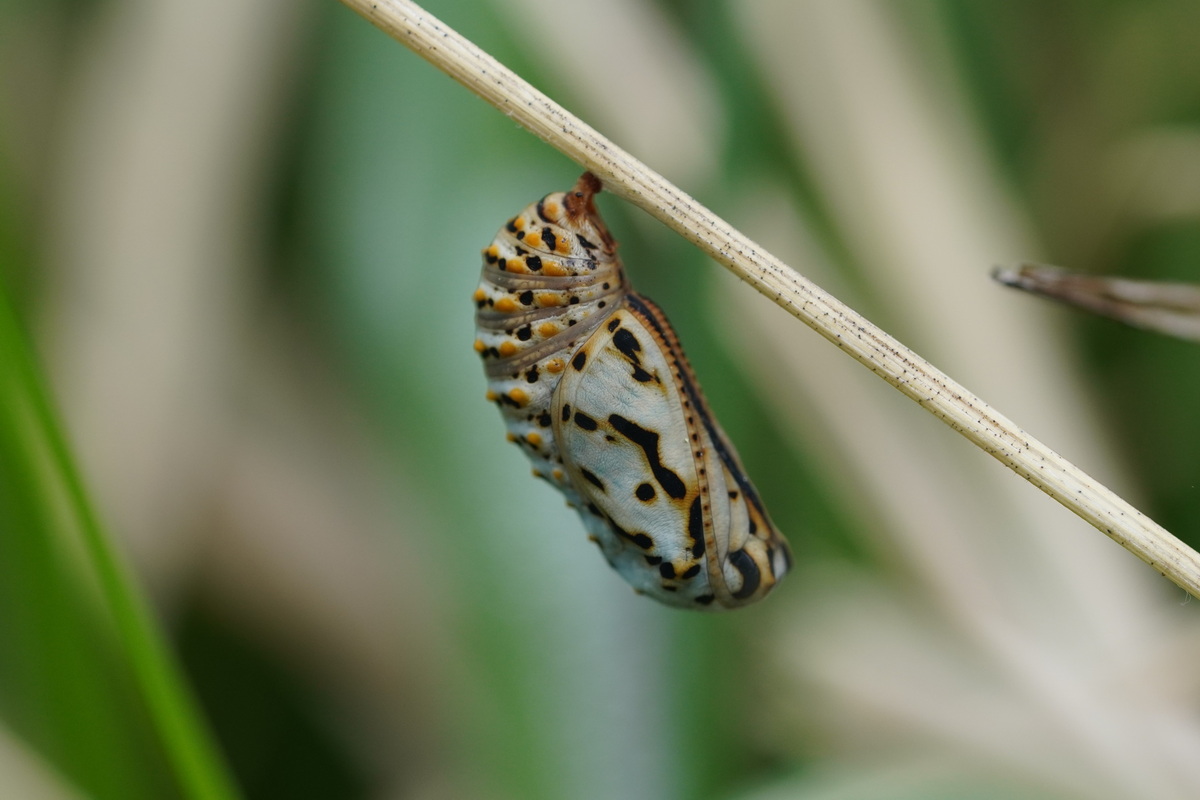
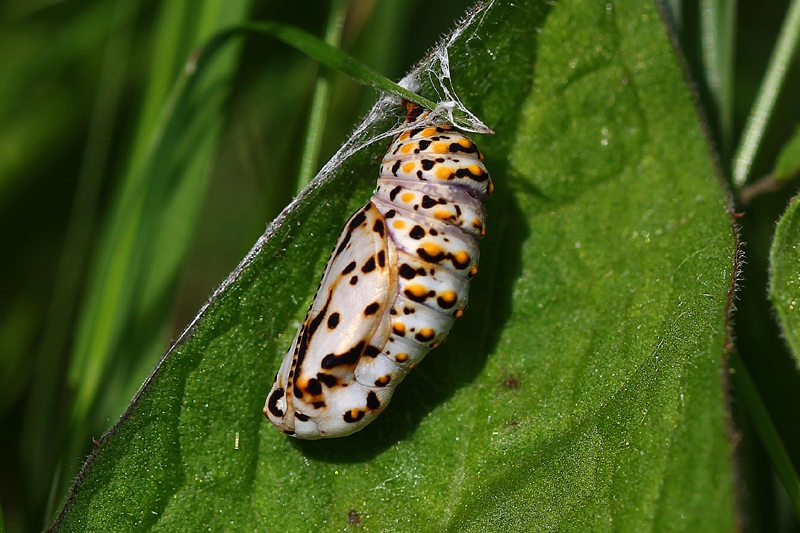
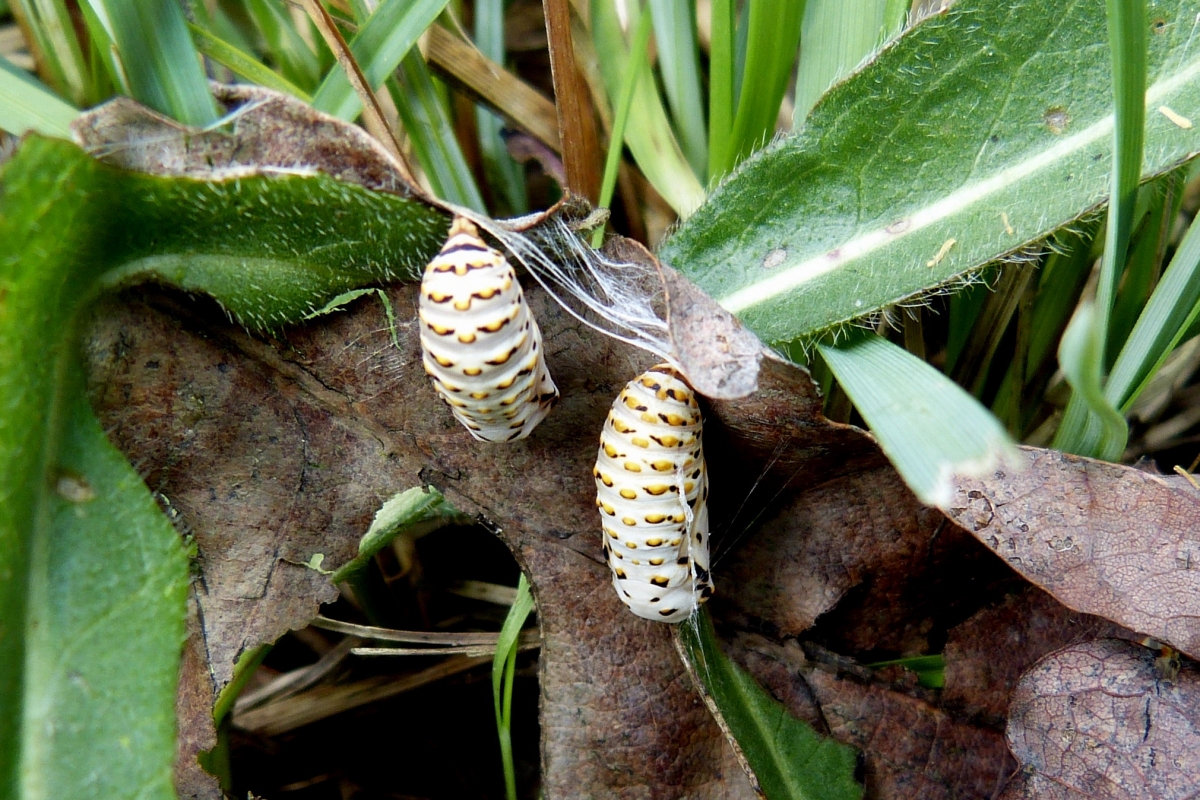
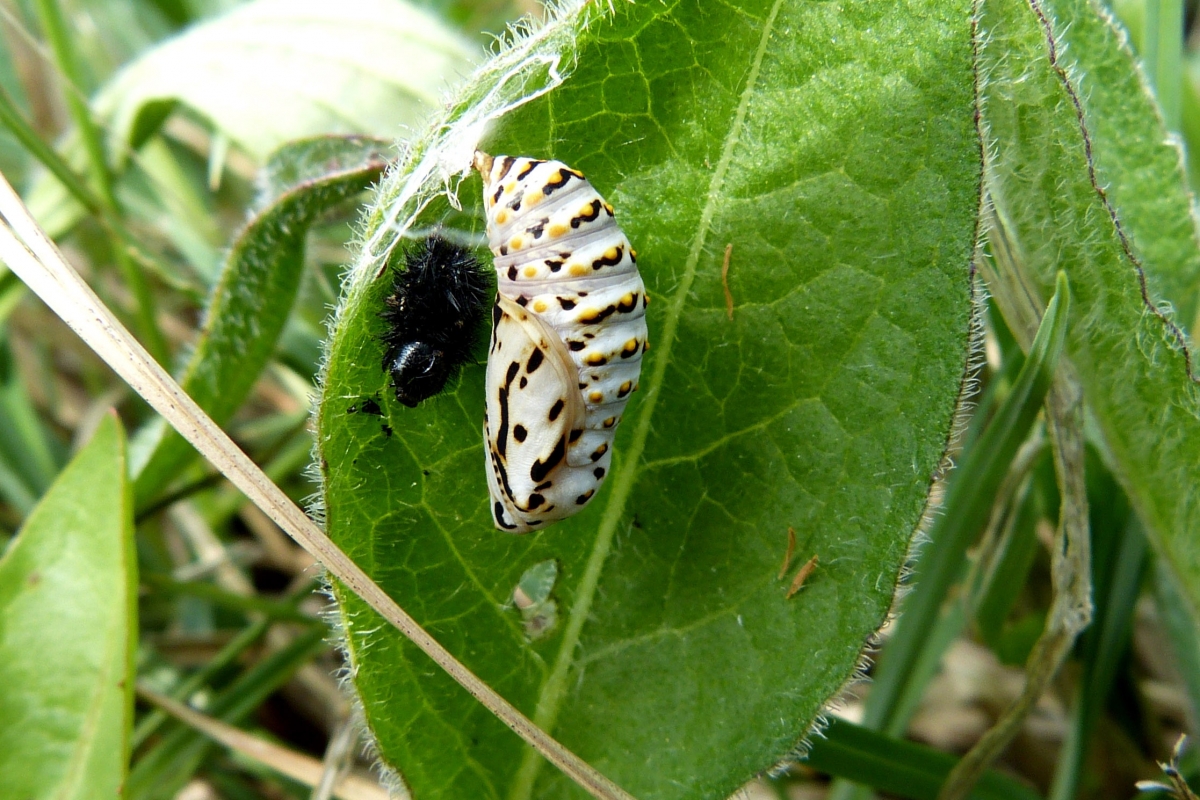
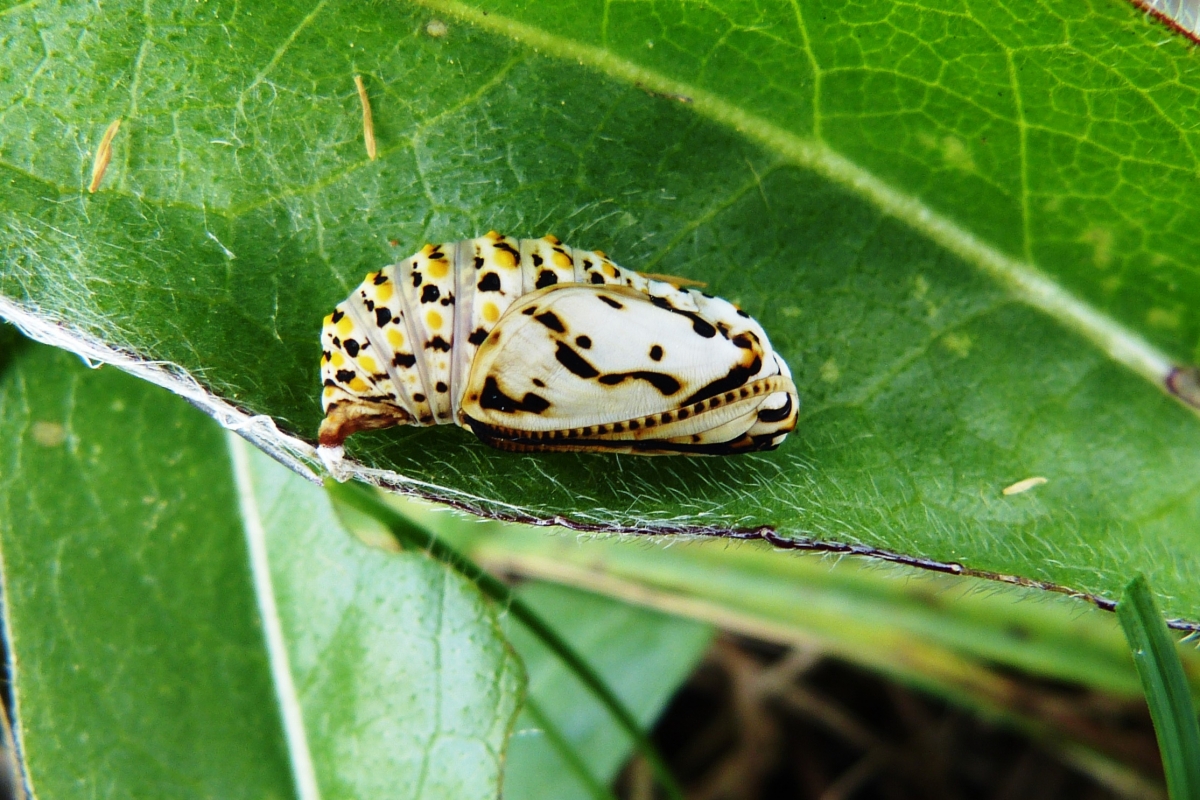
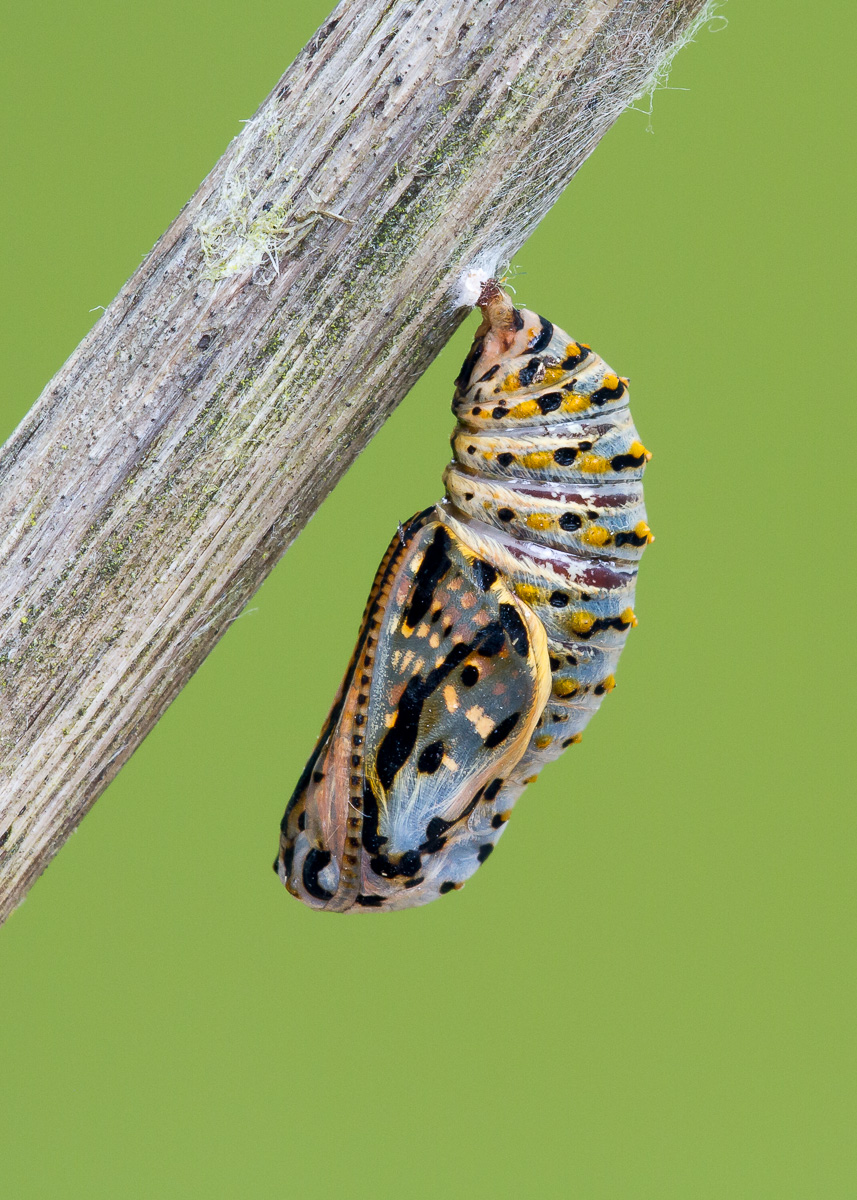
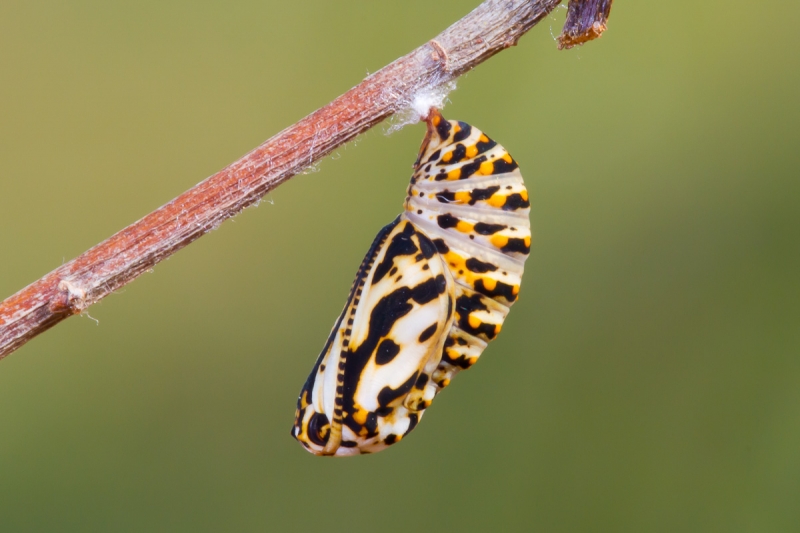
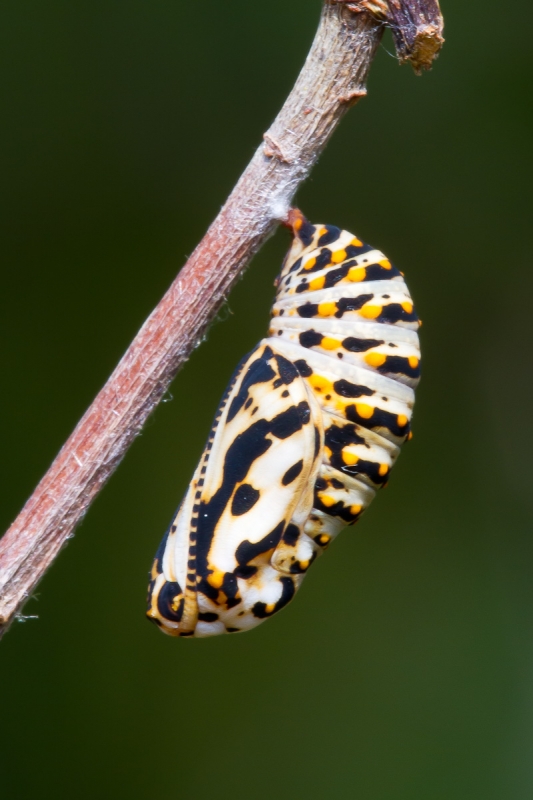
The pupa is formed head down, attached to a twig or plant stem by the cremaster. The pupa is essentially white, with a beautiful mix of black, brown and orange markings. This stage lasts between 2 and 4 weeks, depending on temperature.
"The pupa measures from 14.8 mm. to 12.7 mm. long. Side view: Head is rounded, with very slight triangular points; the thorax is slightly sunken at meta-thorax; the abdomen is convex and curves to the cremastral process; the ventral surface of the abdomen is contracted, and the wings are swollen. Dorsal view: The head is blunt and slightly bibbed, the base of wings angular; it is slightly concave at the waist; the middle of the abdomen is convex, it then tapers to the anal segment. The ground colour of the head and thorax is pearl-grey-white; the wings are whitish, more or less clouded with lilac-grey; the abdomen is pale yellowish; the wings, head and thorax are boldly spotted and scrolled with black, forming wavy bands, and orange knobs replacing the larval tubercles; the spiracles are black and very inconspicuous, being placed in the centre of black blotches, forming a longitudinal series; a similar but smaller series of spots forms a sub-spiracular row; the antennae are alternately banded with black and orange. The whole surface is finely striated. Excepting the wings there are extremely minute club-shaped bristles sparsely scattered over the body. Before emergence the pupa assumes a leaden-grey colour, and the wings are red-brown and black. The first imago emerged May 29th, followed daily by others. Two that pupated May 15th emerged on May 30th, being fifteen days in the pupal state. The weather from May 23rd to the end of the month was exceptionally warm, the shade temperature from 75 degrees to 80 degrees, which hastened the emergence of all the imagines." - Frohawk (1924)
The following links provide additional information on this butterfly.