UK Butterflies
Building a Community of Responsible Butterfly Enthusiasts in Britain & Ireland
Building a Community of Responsible Butterfly Enthusiasts in Britain & Ireland
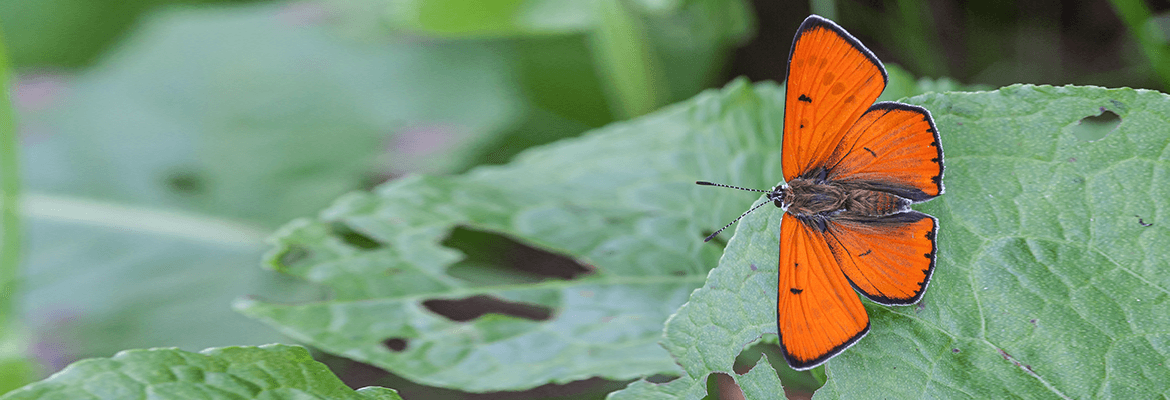
Wingspan
♂ 44 - 48 mm, ♀ 46 - 52 mm
Checklist Number
61.002
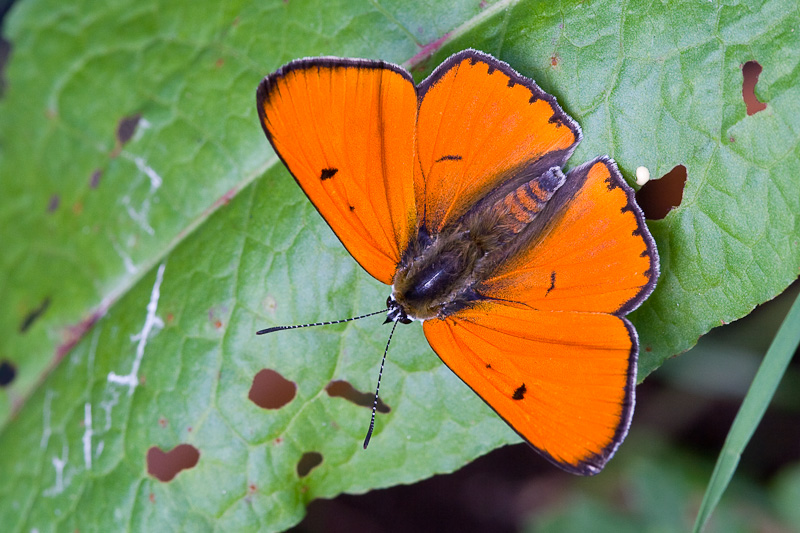

The Large Copper was first discovered from Dozen's Bank near Spalding in Lincolnshire in 1749. It became extinct in the British Isles in 1851 and was last recorded at Bottisham in Cambridgeshire. There is no doubt that the demise of this most spectacular butterfly was the result of changing fenland management and, in particular, the draining of the fens. On the continent this species lives in discrete colonies ranging from a few dozen adults to many hundred.
There have been several introduction attempts, the first at Woodwalton Fen, in Huntingdonshire, in 1927. On several occasions, the population had to be subsequently re-introduced or supplemented from captive stock. The British subspecies, dispar, was endemic to the British Isles and reintroductions have tended to use stock from the Netherlands, which is of the rare subspecies batavus. Unfortunately, all reintroduction attempts have ultimately failed. A project is being undertaken at Keele University to determine the feasibility of a Large Copper re-establishment programme in the British Isles. This species is extinct in the British Isles. Although the species was never widespread, it is believed that its former range also included Lincolnshire, Huntingdonshire, Norfolk and Somerset.
This species was first defined in Haworth (1803) as shown here (type locality: Cambridgeshire, England).
The nominate subspecies is extinct.

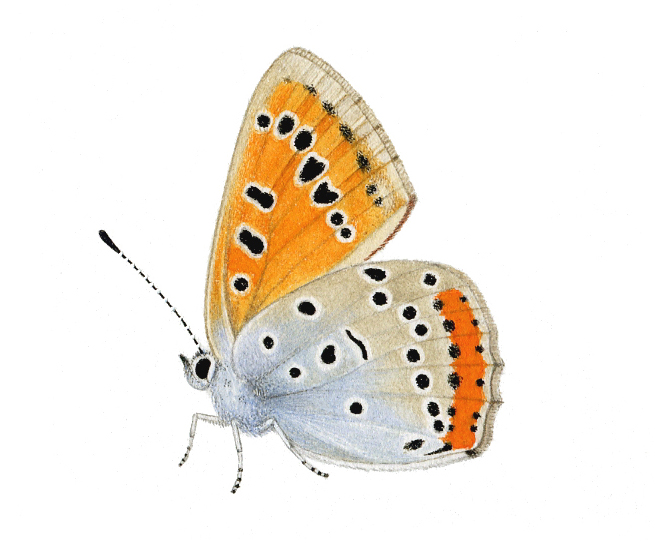
This subspecies was first defined in Werneburg (1864) as shown here (type locality: Germany).
This subspecies was introduced in the British Isles although this was ultimately unsuccessful.
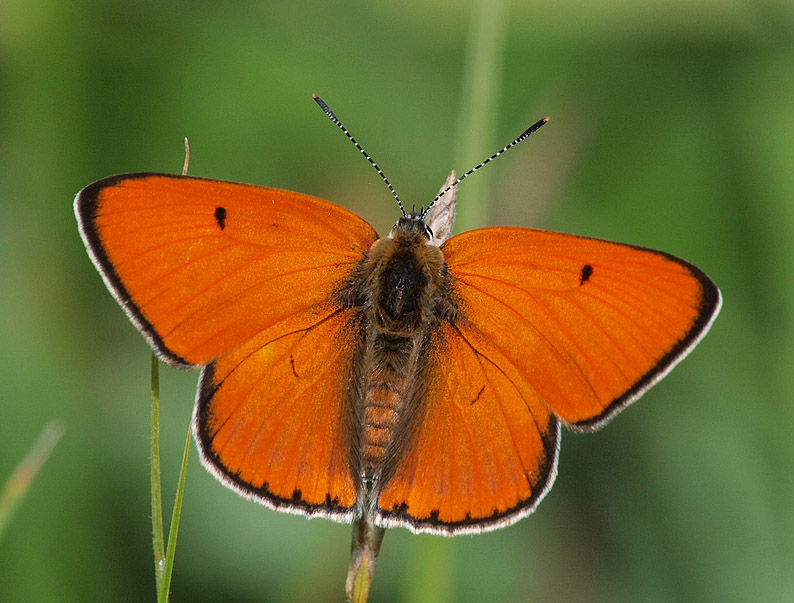
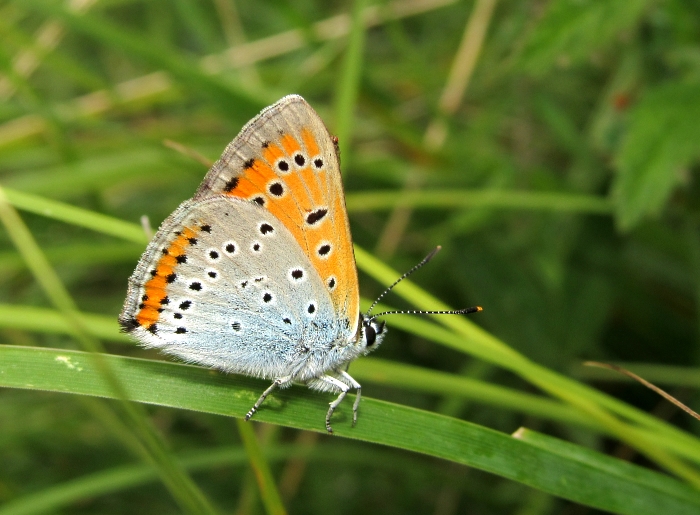

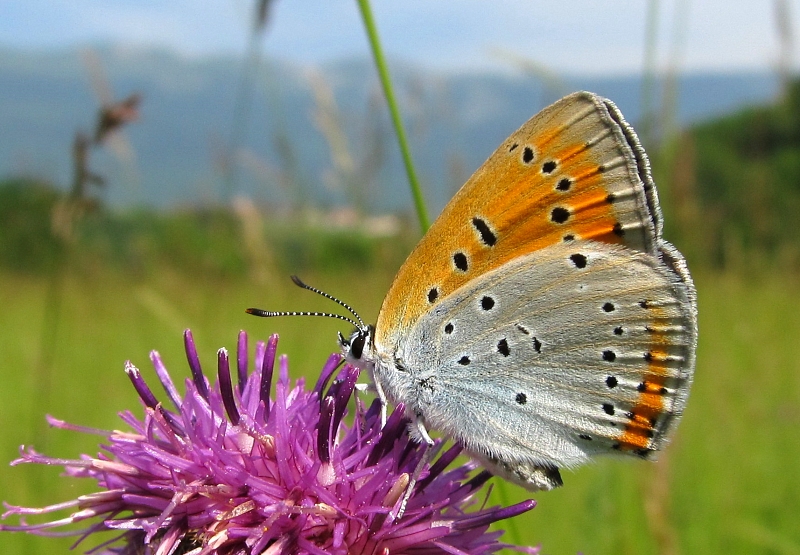
This subspecies was first defined in Oberthür (1923) (type locality: Netherlands).
This subspecies was introduced in the British Isles although this was ultimately unsuccessful. In describing this subspecies, Oberthür simply stated that the Dutch race should be given a name to indicate its origin. In order to distinguish it from the English race he gave it the name batavus (Batavia is a former name for Holland). According to Emmet (1990) this subspecies differs from the nominate subspecies as follows:
| Family: | Lycaenidae | Leach, 1815 |
| Subfamily: | Lycaeninae | Leach, 1815 |
| Tribe: | Lycaenini | Leach, 1815 |
| Genus: | Lycaena | Fabricius, 1807 |
| Subgenus: | ||
| Species: | dispar | (Haworth, 1803) |
| Subspecies: | dispar | (Haworth, 1803) |
| rutilus | Werneburg, 1864 | |
| batavus | (Oberthür, 1923) |
Description to be completed.
This species is extinct in Britain and/or Ireland.
| 1.1 Extinct |
In the British Isles this species inhabited the East Anglian fens and probably other areas within southern England before becoming extinct.
No conservation action is relevant for this species.
This species had one generation each year, with the adults emerging in July and flying into August.

This species only flies in sunshine and therefore relies on good weather to allow it to fly and, therefore, court, mate and lay eggs. The males set up loose territories and will intercept any creature that flies past. If a virgin female is encountered then the two will typically settle, and the male will flap his wings for a short time before mating takes place.
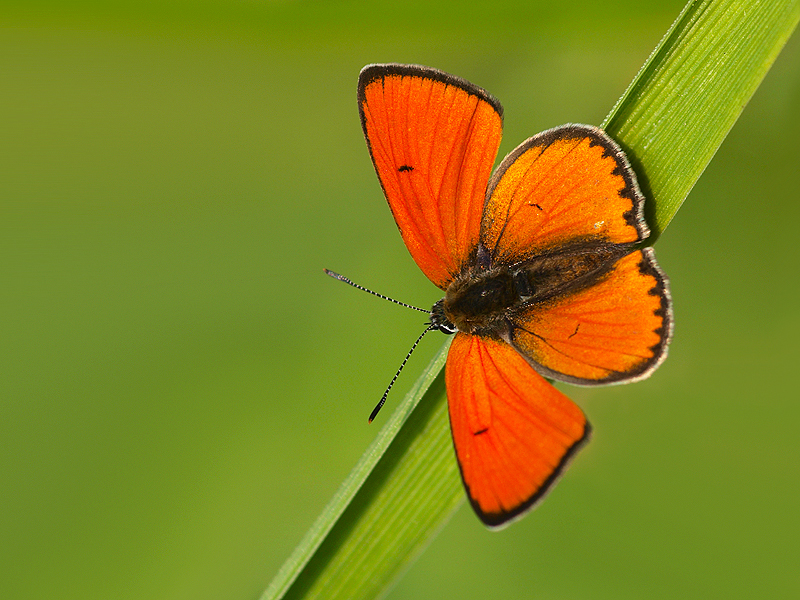
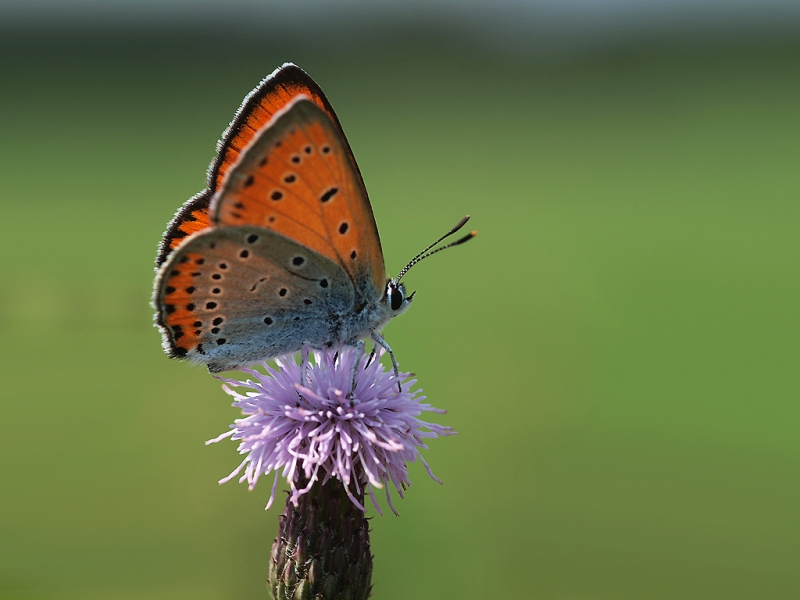
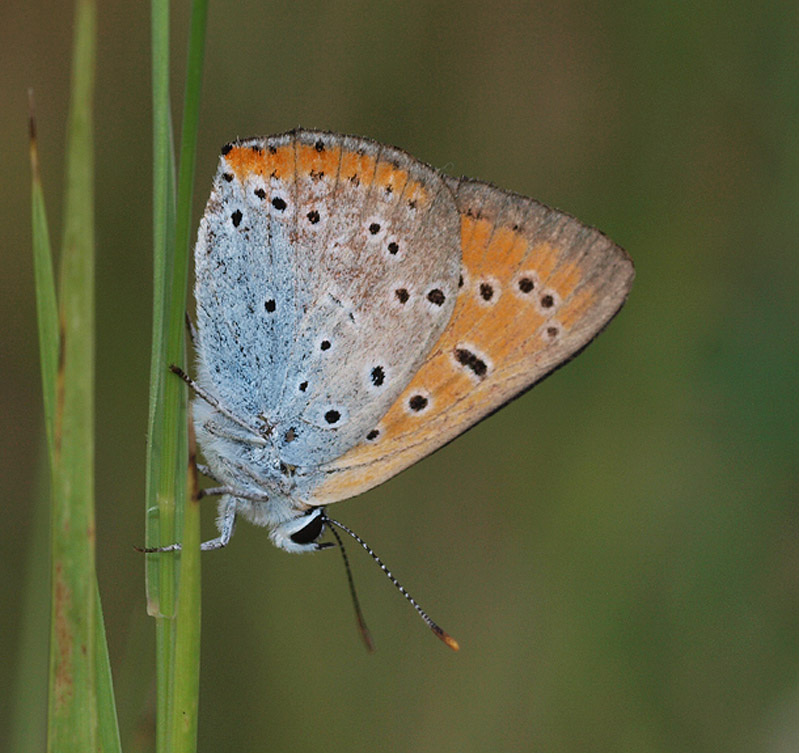
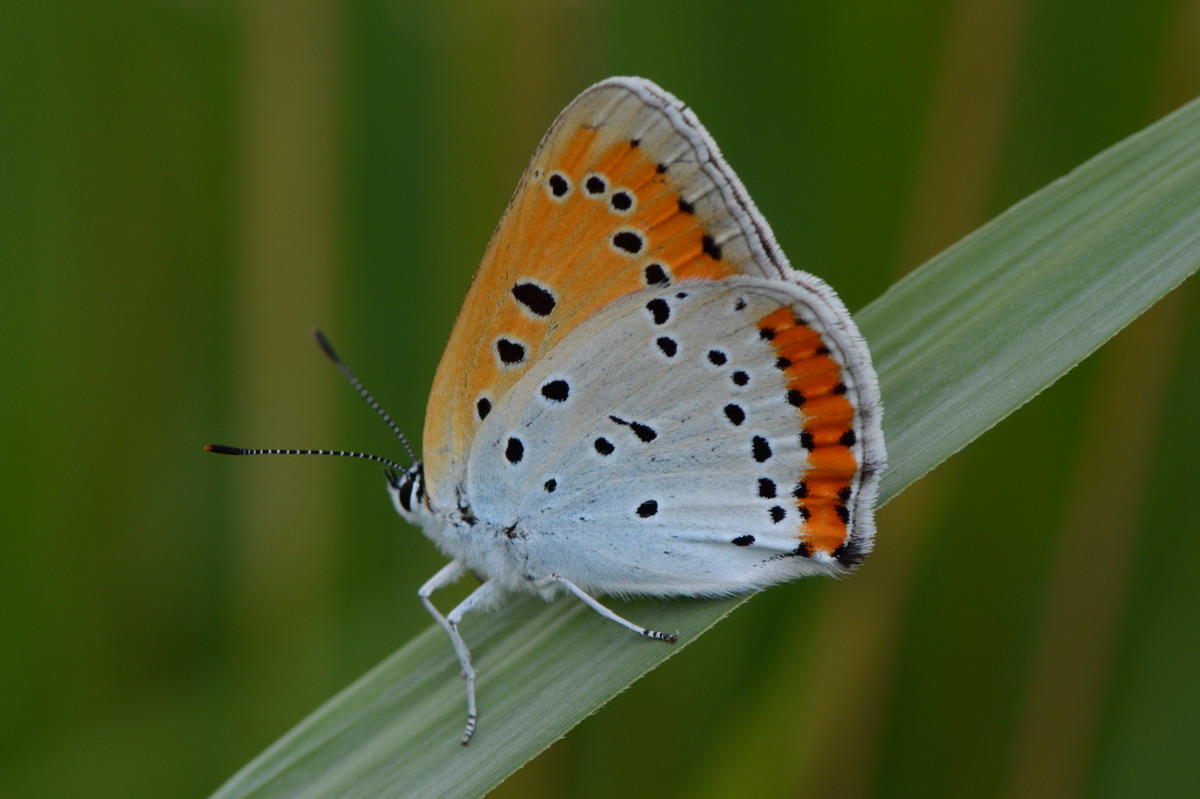
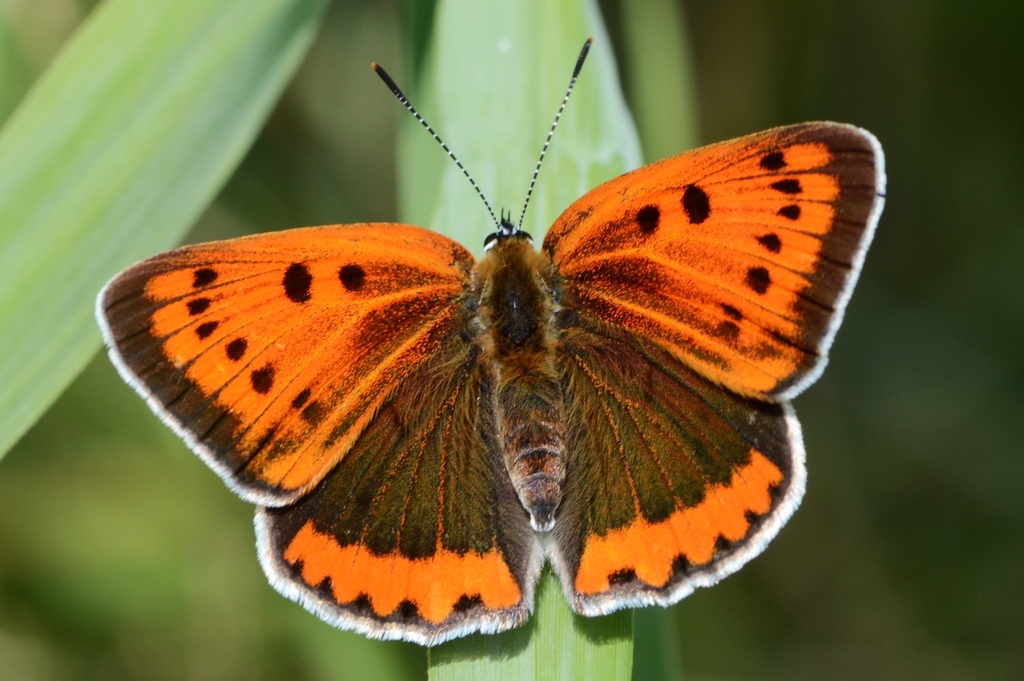
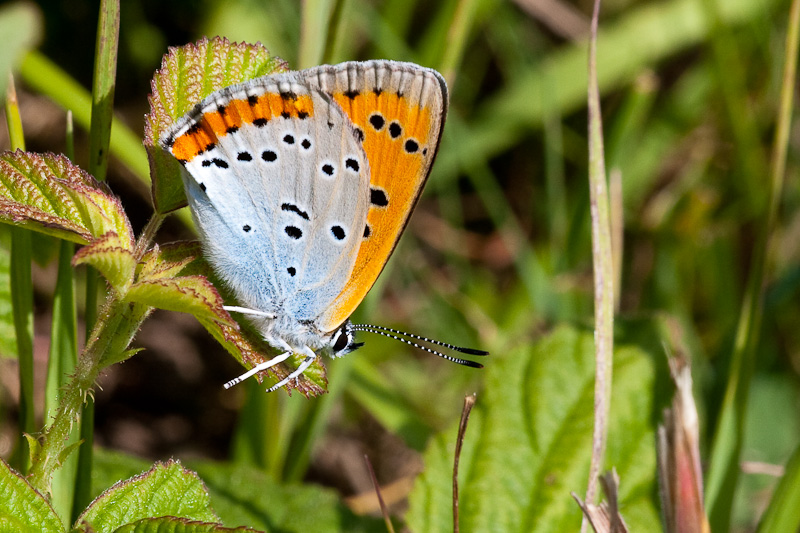
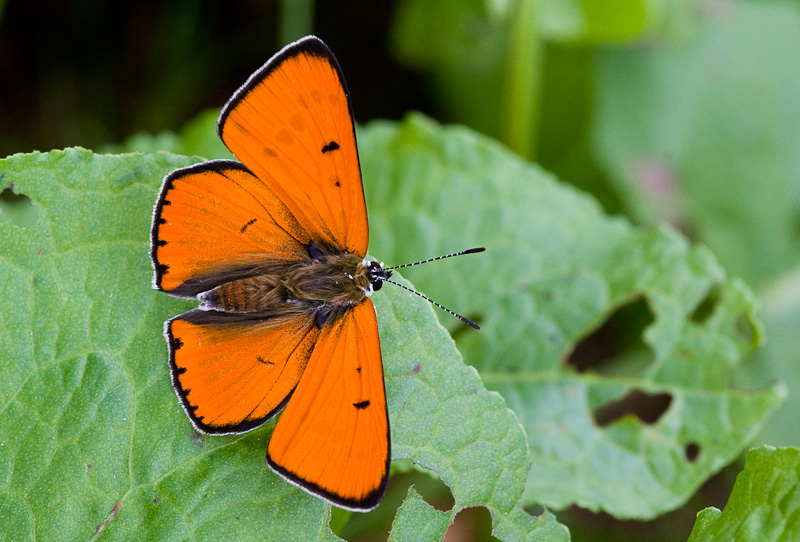
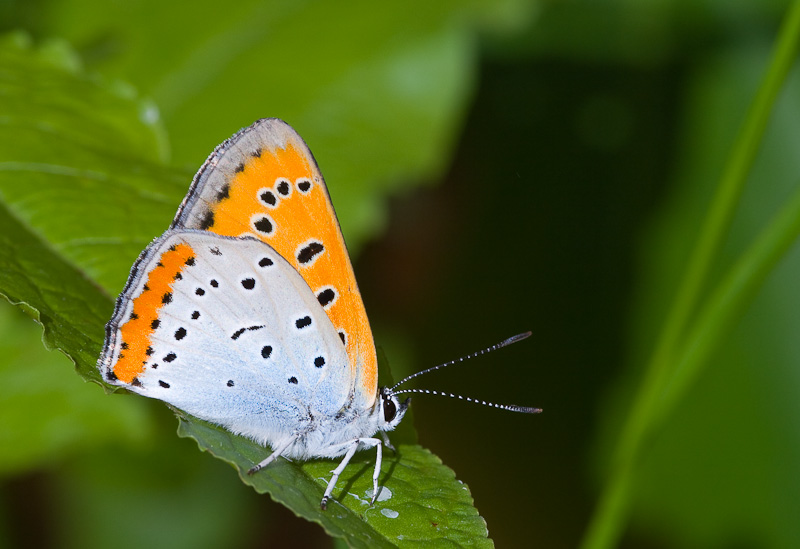
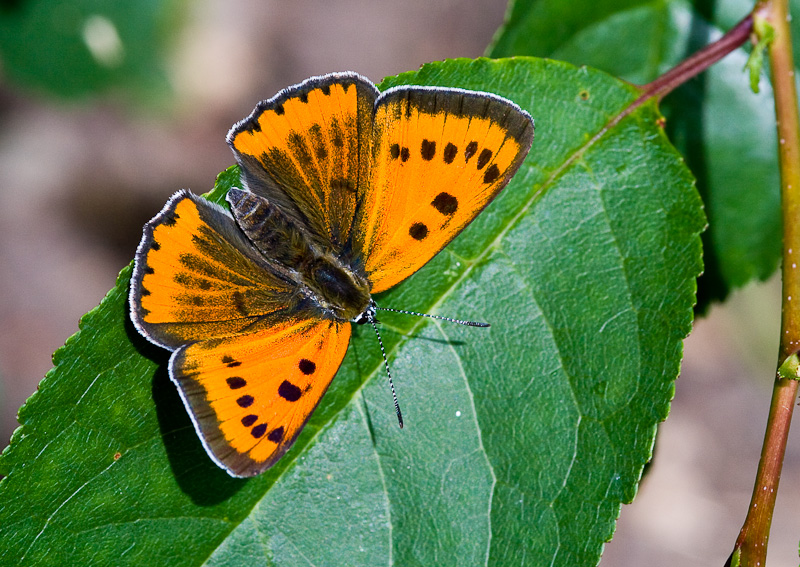
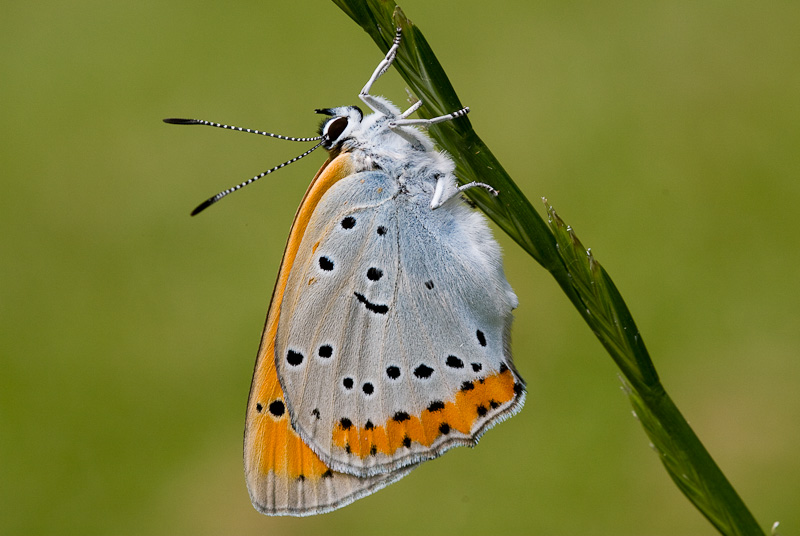
The scientific name of this species, dispar, refers to the disparity between the two sexes. The upperside of the male is generally of a uniform copper colour with little patterning, where as the upperside of the female not only has distinct markings on the forewings, but also has a very different markings on the hindwing which are more dark brown than copper in colour.
Description to be completed.
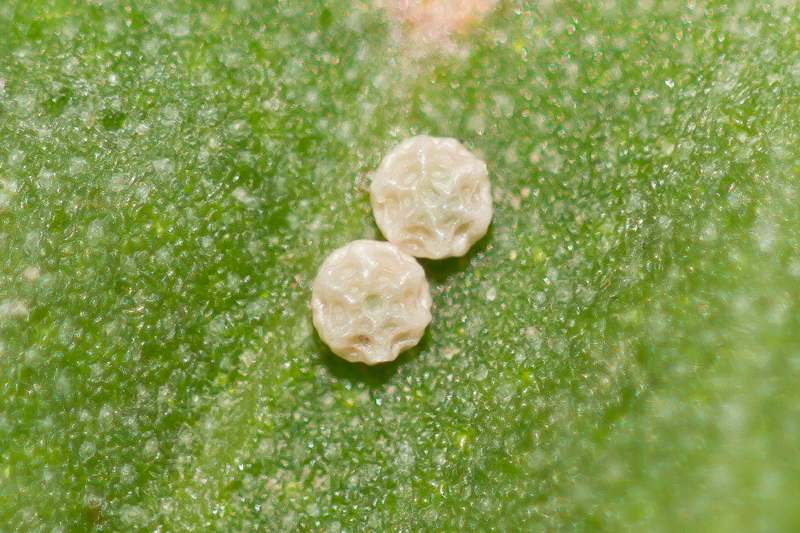
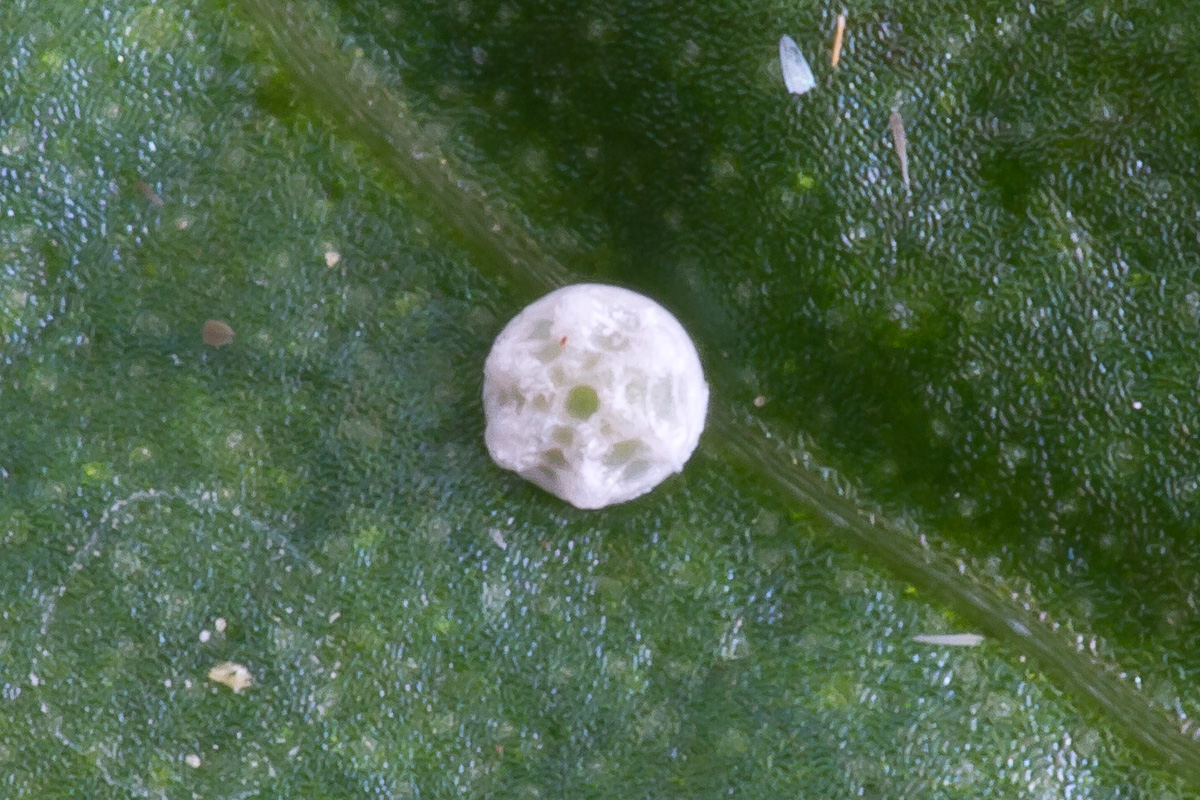
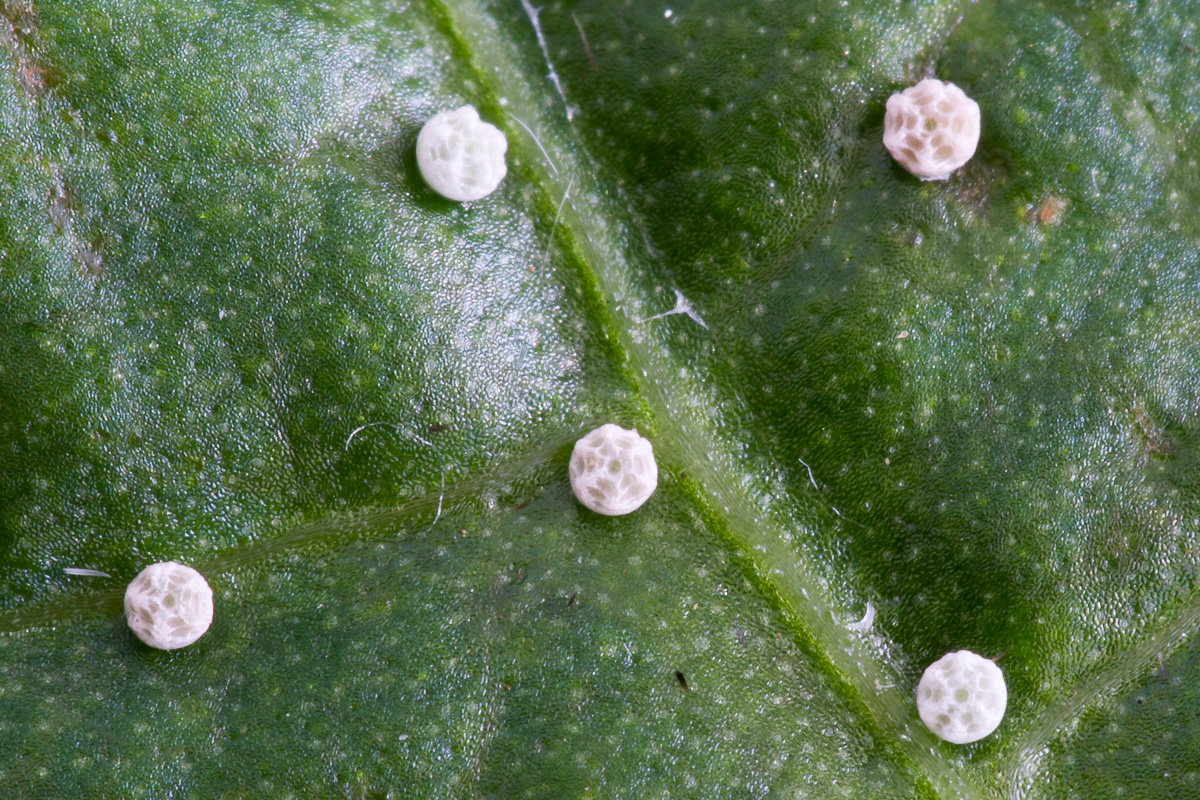
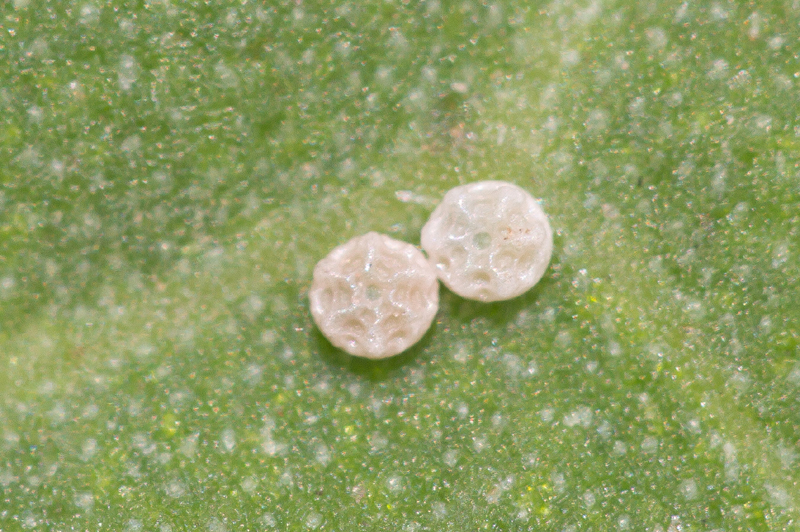
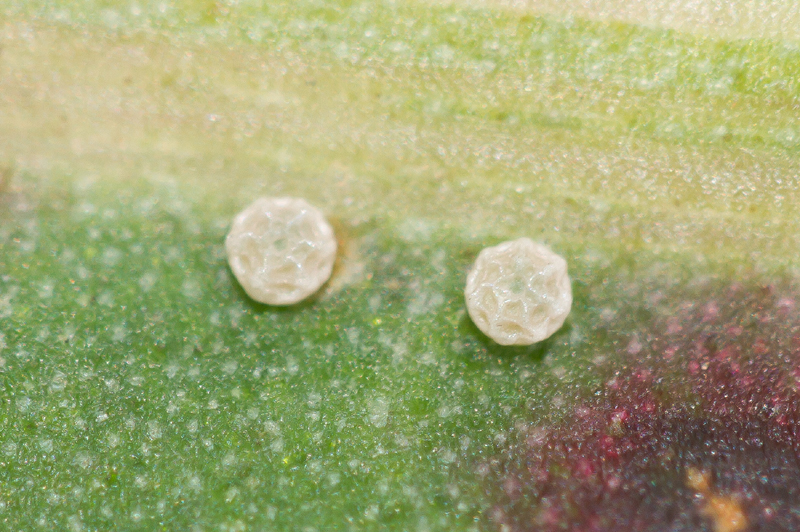
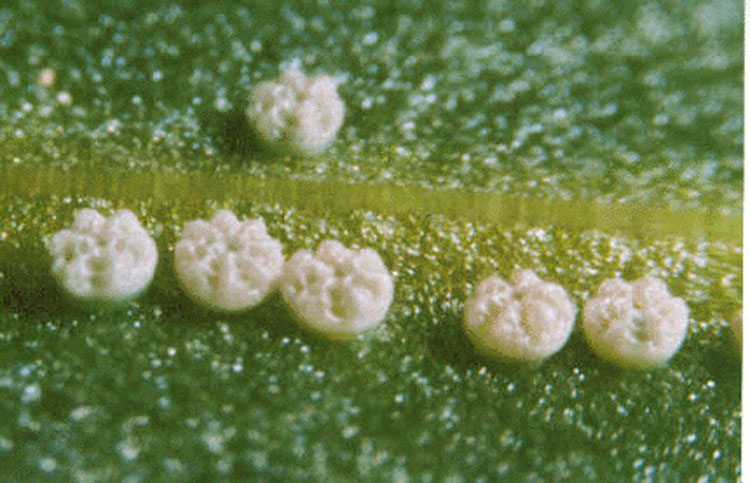
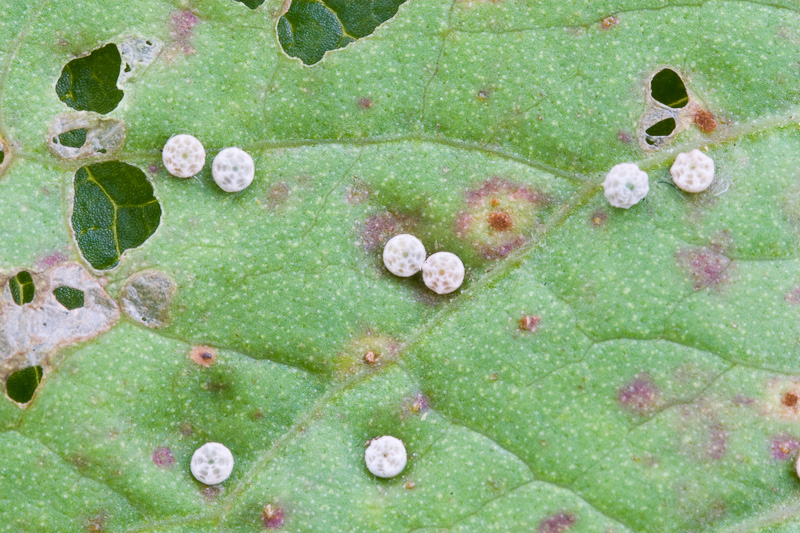
The white eggs are laid singly on the foodplant, with several eggs sometimes being found together on the same leaf. These are typically on medium-sized plants that are away from water and mixed in with the surrounding vegetation. The eggs hatch in approximately 2 weeks.
"Through the kind assistance of the Hon. N. Charles Rothschild, the author received from Hungary three living females of Chrysophanus dispar var. rutilus on June 4th, 1906; these were at once fed and placed on two growing plants of the great water-dock (Rumex hydrolapathum). The following day a few eggs were deposited, and many more were daily laid for about a week ... The eggs are laid singly and scattered over both surfaces of the leaves, sometimes laid in little groups of three or four. In a state of nature the female always deposits her eggs on those plants which are more or less covered by the surrounding vegetation. Plants that are quite exposed are never selected. They are small in proportion to the butterfly, being only slightly larger than those of C. phlaeas, measuring only 0.65 mm. wide and 0.40 mm. high. They are shaped like a coronet, with a bold cellular pattern on the crown; the micropyle is sunken, which is surrounded by about six or seven (varying in different specimens) crescentic cells; these are followed by about the same number of much larger cells, and round the sides the cells become very much less, altogether disappearing before reaching the base, which is somewhat irregularly fluted. The walls of the cells are well developed, standing in high relief, and form a fairly regular flower-like pattern, the cells being deep, excepting those below the bulging side of the egg. The whole of the upper surface is finely granular, resembling rough white oxidized silver with shadows of greyish-green; the basal fourth is shining transparent green; the base is deeply embedded in glutin, affixing it firmly to the leaf. Before hatching they change to an opaque creamy-white colour." - Frohawk (1924)
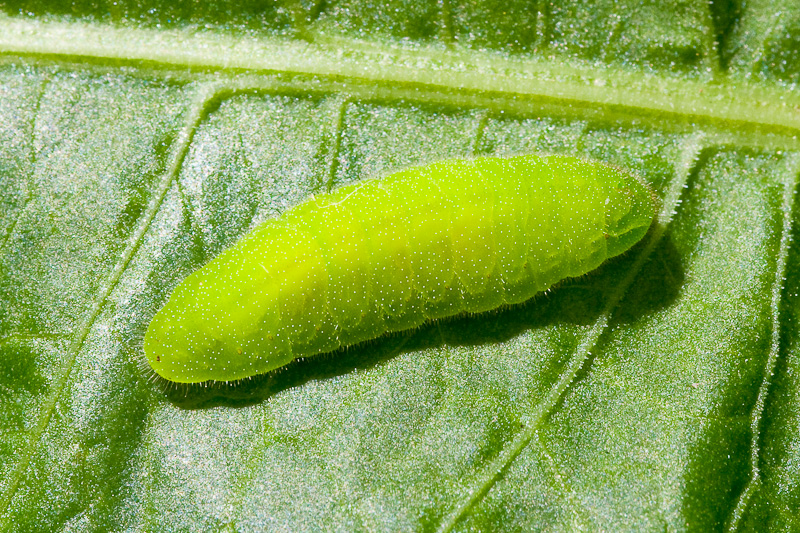
The larva does not eat its eggshell on hatching and proceeds to feed on the underside of the leaf. As for its close relative, the Small Copper, the larva forms a small groove on the underside, leaving the upper surface of the leaf intact. The larva rests in this groove when not feeding. After the second moult, the larva creates holes in the leaf surface and moves to the midrib of the leaf prior to moulting. The larva also overwinters while in the stage of development, at the base of the foodplant, typically within leaf litter. It has been shown that the larva is not prone to flooding in the fens and can survive submerged for over 2 months. There are 4 instars in total, this stage lasting between 10 and 11 months.
The primary larval foodplant is Water Dock (Rumex hydrolapathum).
"They started hatching on June 21st, remaining in the egg state sixteen days. The young larva emerges by eating a circular hole in the crown, but does not feed on the shell after it is free, merely eating away a hole to allow its escape. Directly after emergence the larva measures only 1.2 mm. long; the rather large head is olive-yellow with pale amber-brown mouth parts; the clypeus is brown and the eye spots are black; the first segment is compressed and projecting in front, overlapping the head; the remaining segments humped dorsally, sides sloping and concave, and a swollen, dilated lateral ridge. Along the dorsal surface are two rows of very long white, finely serrated hairs, two pairs on each segment, closely placed, all curving backwards, and on each segment along the lateral ridge are three more similar hairs projecting laterally and slightly curving downwards; these form a projecting fringe all round the larva; on the ventral surface are short, whitish, simple hairs; on the front of each segment is a sub-dorsal minute brownish hair with a dark base, and three other still smaller white ones on the side; they are all extremely minute; above the black spiracle is a black lenticle. The entire surface is a light citrine-yellow, and covered with granulations. Directly after quitting the egg it crawls to the under surface of the leaf and eats into the cuticle and lies in the furrow eaten out, with the lateral fringe of hairs lying flat on the surface overlapping the edges of the furrow. After making a little channel, often not more than its own length, just to lie in, it moves to another spot and eats out another groove, and so on to another; so that after feeding in this way for a few days, several little transparent channels of various lengths are cut into the leaf, but not perforated, as they leave a thin membrane on the upper side. If a portion of the leaf is curled over so as to leave the under surface uppermost, they then feed on the upper cuticle; therefore they are indifferent as to which surface they feed on so long as they are underneath. They crawl rapidly and appear to be continually feeding. Before first moult the larva measures 3 mm. long and is of a pale semi-transparent yellowish-green colour. They continually shift their quarters, never remaining to feed in the same place long." - Frohawk (1924)
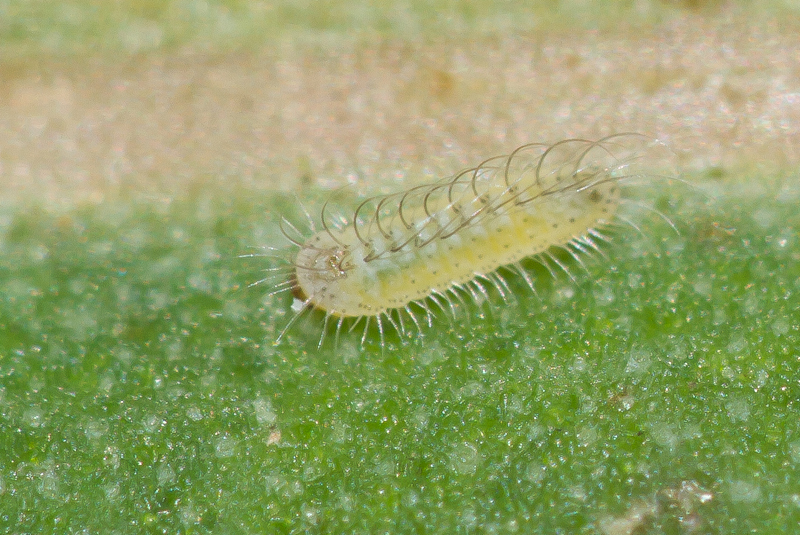
"The first moult took place on June 26th, the first stage lasting only five days. Before the second moult it is 5.44 mm. long. The whole formation is similar to the first stage; the segments are boldly humped dorsally, the sides flattened and sloping, the body being somewhat depressed; the dorsal surface forms a gentle curve from one end to the other; the ventral surface is flattened. The dorsal hairs, which are now more numerous, are much stouter and shorter in proportion; they are pale with brown tips, and the base of each is amber-brown; several minute hairs are dotted over the side, about ten on each segment on either side; all the hairs are serrated. The spiracles are rather prominent and brown; behind each spiracle are two pale lenticles, only slightly darker than the ground colour; the head is very pale greenish-yellow, with black eye spots and brown mouth parts; the entire body, including the legs and claspers, is of a pale green and the whole surface finely cellular. They feed chiefly on the under side of the leaves, and when moulting usually lie along or quite near the midrib ... During the middle of August the author received living females of this species from Colmar, Alsace-Lorraine, which deposited freely upon dock and sorrel. The eggs hatched at the end of August and beginning of September. They fed and grew much more slowly than the summer brood. During September they moulted once, and entered into hibernation in the beginning of October. In December the two plants were examined upon which they hibernated, and those upon the living plant of dock (with plenty of green leaves) were found to be dead, while a large number of those upon the plant that had died down, with only brown shrivelled leaves, were alive and apparently healthy, hibernating in the folds of the damp dead leaves. Before hibernating the larva gradually changes to a more or less lilac hue, which chiefly forms broad medio-dorsal, sub-dorsal, and lateral longitudinal bands, which are separated by more or less greenish stripes. This remarkable change of colour from pure green (a colouring retained unchanged throughout its existence in summer) is a wonderful instance of protective colouring which exactly harmonizes with the surroundings of the hibernating larva; the dull lilac and greenish produce a most protective combination of colour which renders the larva very inconspicuous on the dead leaves. After hibernation, and before the second moult, they gradually lose the lilac colouring and revert to the normal green. On February 27th several larvae were alive; some were crawling actively about, and a few were on the under side of the young freshly grown leaves, while others were still hibernating in the folds of the dead leaves. No further description of these hibernated larvae is given, as they agreed in all respects with those previously described." - Frohawk (1924)
"The second moult on July 2nd, the second stage also lasting five days. Before the third moult it measures 9.50 mm. long. It is similar to the previous stage in general structure excepting several additional hairs, and it is studded with white clubbed processes resembling frosted glass. The colour is a clear light green, with slightly darker green medio-dorsal and lateral longitudinal lines and oblique side stripes. The head is pale shining ochreous-green, eye spots black, and mouth parts brown. In this stage they perforate the leaf, eating large holes all over it." - Frohawk (1924)
"The third and last moult occurred on July 7th, the third stage also only occupying five days. After the third moult fully grown, it measures from 19 mm. to 21 mm. long. The dorsal surface forms a complete curve from the first to last segment, and has no longitudinal dorsal furrow; the sides are sloping to the lateral ridge; the ventral surface is much flattened overlapping the claspers and legs, completely hiding them; both the anterior and posterior segments are rounded and projecting, the former quite concealing the head, which is withdrawn into the segment while at rest; the body is widest at the fifth segment; the head is rather small, shining, and of a very pale ochreous-greenish; eye spots black, mouth parts brown; the segments slightly humped dorsally; the segmental divisions inconspicuously defined. The whole colouring is a clear brilliant green, with slightly darker markings showing in certain lights, of which the oblique side stripes and dorsal lines are the plainest; the spiracles are outlined with rust-brown. The entire surface is sprinkled with tiny pure white knobs on short stalks, resembling rough frosted glass formed almost exactly like young unexpanded mushrooms; also short spinous,serrated hairs are densely strewn over the whole surface; the longest cover the dorsal and lateral regions; most have the apical half brownish, but many are extremely small and indistinct and wholly green like the body. The surface is finely granulated, of a cellular pattern; the legs and claspers are closely united, being placed almost touching at the base of each pair, occupying a medio-ventral line. The larva of this butterfly are myrmecophilous, though they do not possess a gland such as is present in the Lycaenas. In the Berlin district, where this insect is still common, ants (Myrmica rubra ruginodis) are in constant attendance on them, licking the sweet secretion that exudes from the skin of the larvae. The larvae are thus protected by the ants from their enemies, while the ants in turn get nourishment and pleasure from the secretion of the caterpillar. In Great Britain, where some German larvae were kept free out of doors, ants (Myrmica rubra levinodis) visited them at once, showing that the ant has retained the habit though the species had long been extinct in these islands. They are sluggish in their movements, crawling with a slow gliding motion, but eat voraciously, and grow rapidly. The first one pupated on July 12th, again occupying five days in the last larval stage. In each stage the first one was rapidly followed by the greater part of the large number then under observation, so that the dates given apply to the majority. The larval state only occupies twenty-one days." - Frohawk (1924)

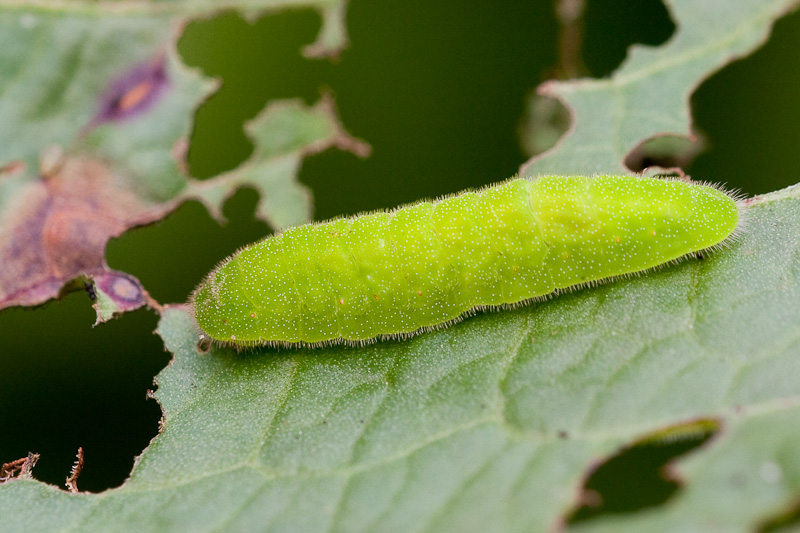
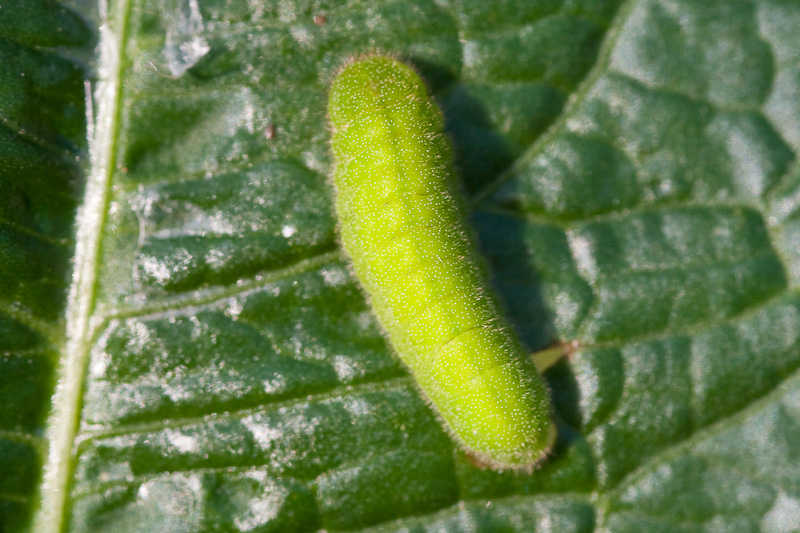
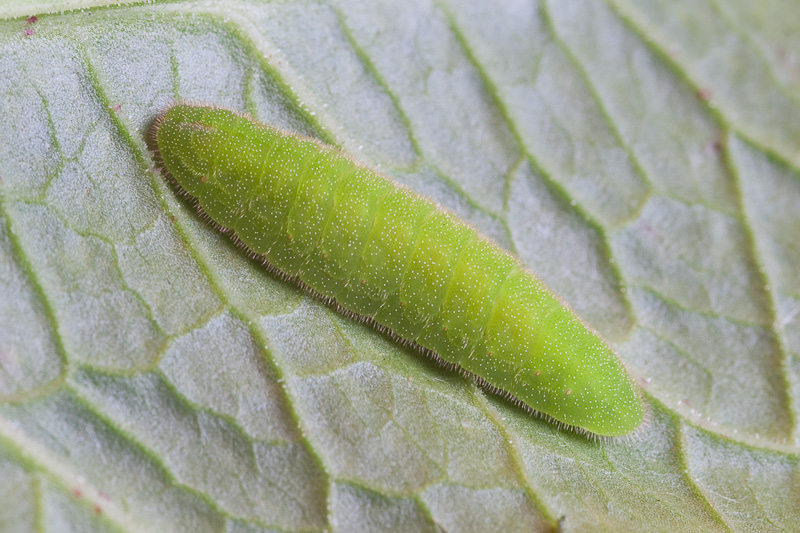
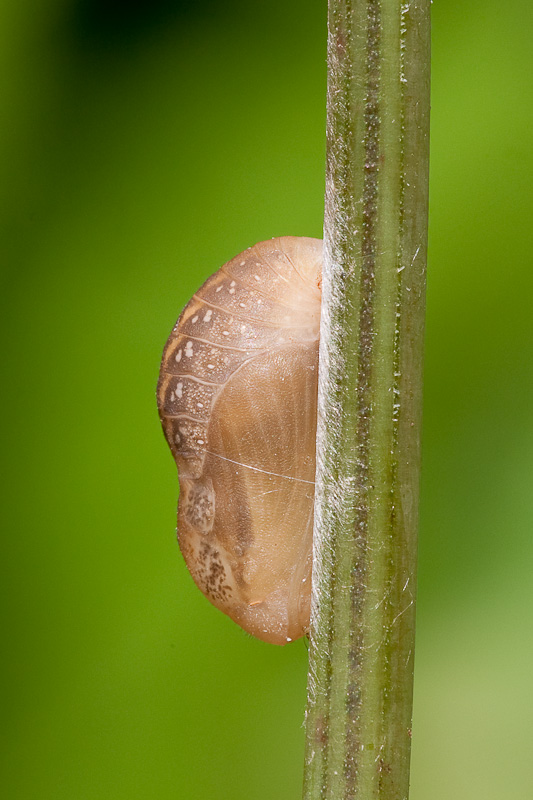
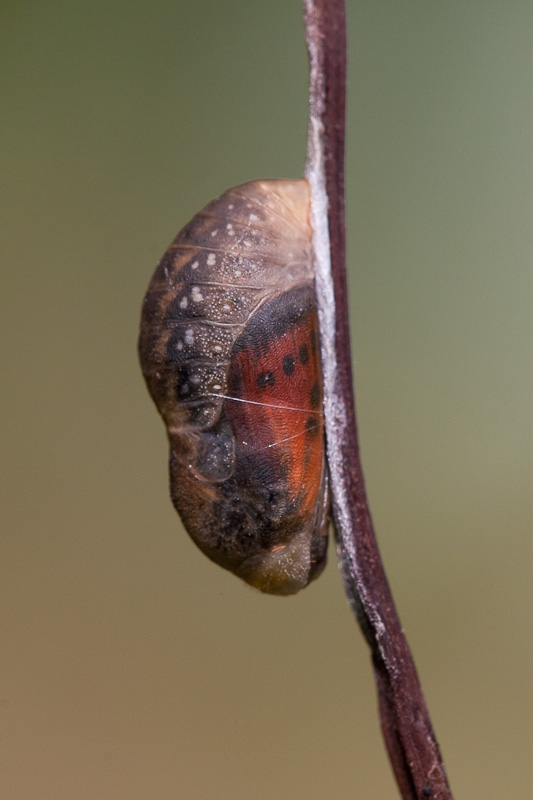
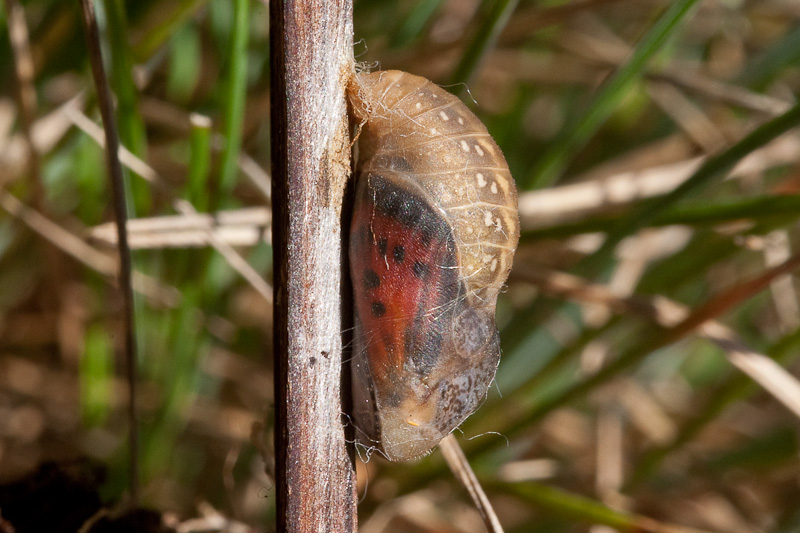
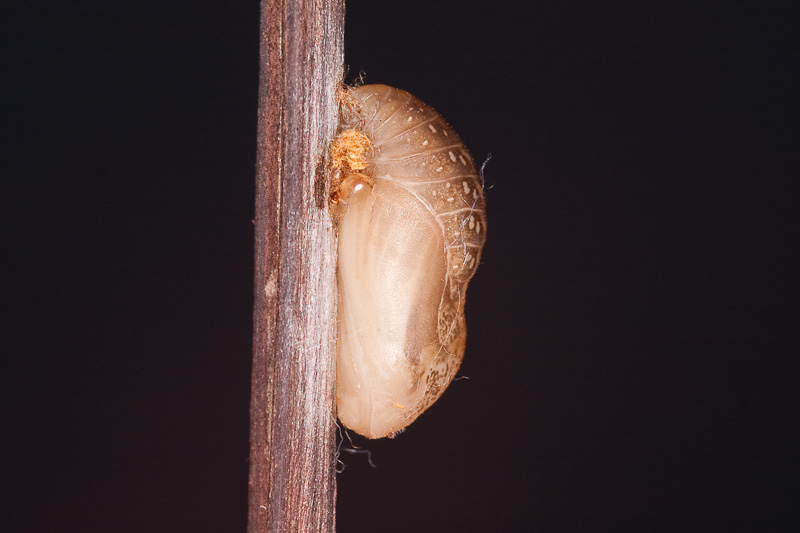
The pupa is attached head-down to a stem of the foodplant, attached by a silken girdle and the cremaster. This stage lasts between 1 and 6 weeks, depending on temperature.
"Directly after pupation the colour is ochreous-yellow changing through greenish, and the markings gradually deepening. All the markings are clearly defined in ninety minutes after pupating; in twenty-four hours the colouring and markings are perfected. The pupa measures in length from 11 mm. to 12.7 mm., and 6.3 mm. in width; it is stout, dumpy and rounded. Side view The head is slightly angular, due to the ridge in front; thorax convex; abdomen forms a complete curve to the anal extremity, which is ventrally much compressed, and clothed with cremastral hooks; the ventral surface forms almost a straight line. Dorsal view: Head rounded, swollen across the thorax, concave in the middle; abdominal segments swollen and rounded, widest at the third and fourth segments; anal extremity bluntly attenuated. Colouring of head, thorax and wings pale ochreous; a dusky-brown medio-dorsal longitudinal line; abdomen pale ochreous-brown dorsally, oblique yellow-ochreous stripes bordered below by a dark brown band spotted with buffish-white, two or three spots on each segment; rest olive-brown, blending into ochreous at the extremity; spiracles prominent and whitish; thorax speckled sub-dorsally with olive-brown. The whole of the head, thorax and abdomen sprinkled with minute whitish floral vase-like processes, expanding into cleft petal-like formations surrounding the mouth of the vase; also the surface is covered with tiny circular discs, and raised dark brown and black reticulations of an irregular network pattern; also on the head are numerous minute white hairs with branching tips—the whole forming a wonderfully elaborated decorative surface. Before emergence the entire colour deepens until the final colouration of the imago shows through the shell. It is firmly attached to a stem of the plant, or under surface of the leaf, by a cincture round the middle, and the cremastral hooks securely anchored to a pad of silk spun on the surface." - Frohawk (1924)

The following links provide additional information on this butterfly.