UK Butterflies
Building a Community of Responsible Butterfly Enthusiasts in Britain & Ireland
Building a Community of Responsible Butterfly Enthusiasts in Britain & Ireland
Wingspan
♂ 52 - 58 mm, ♀ 54 - 62 mm
Checklist Number
58.010
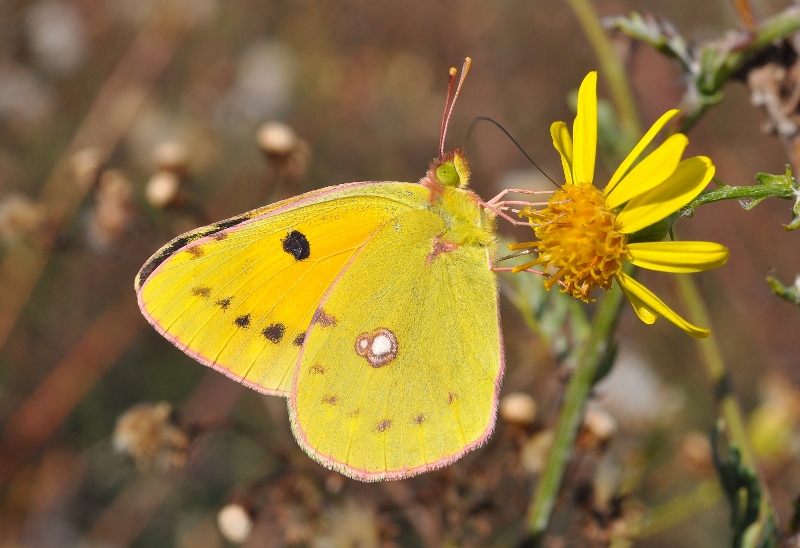
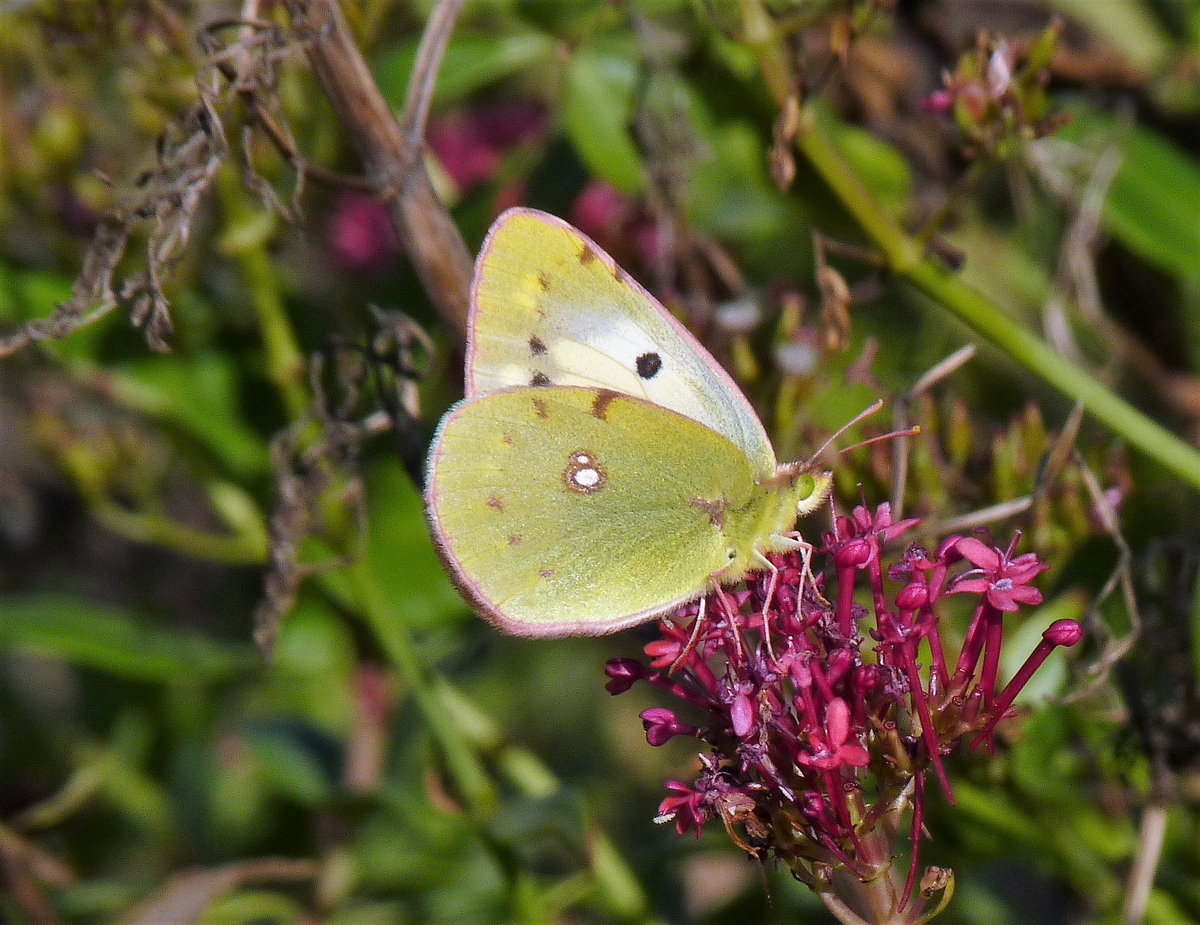
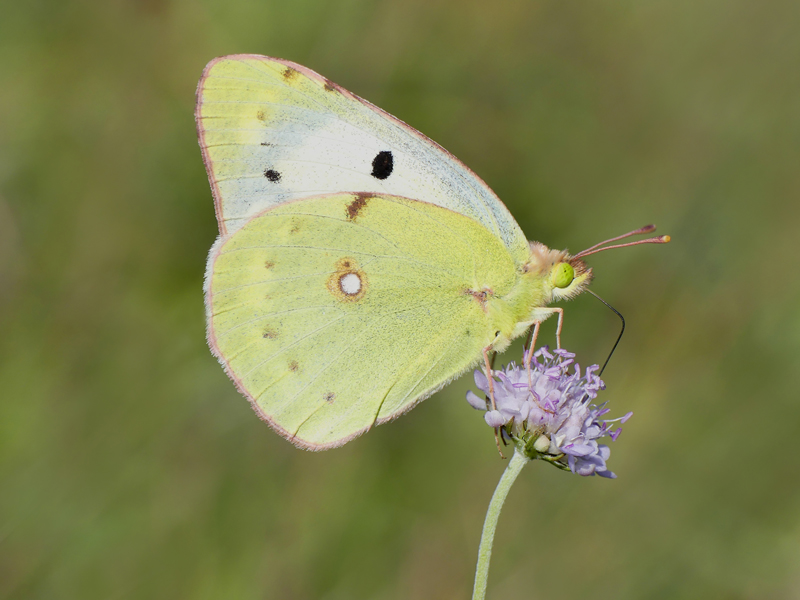
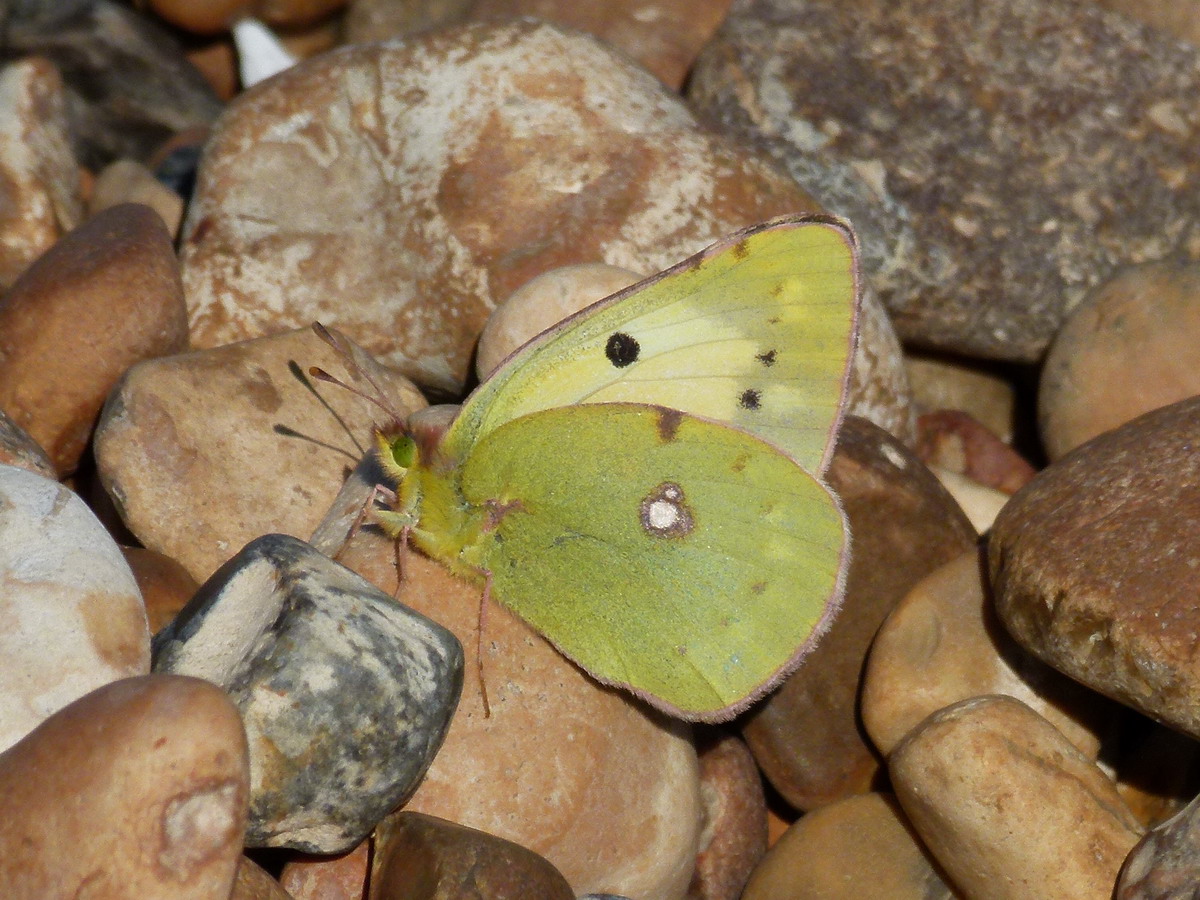
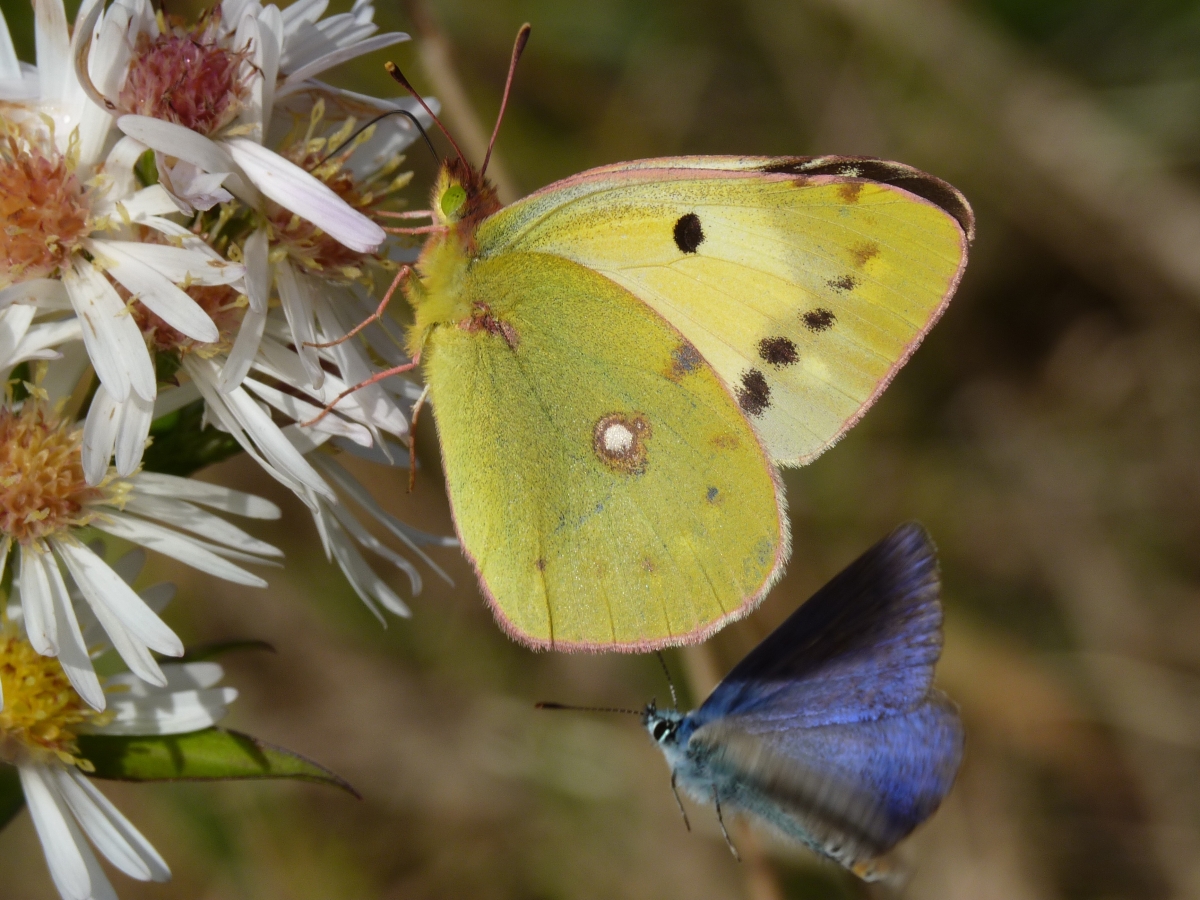
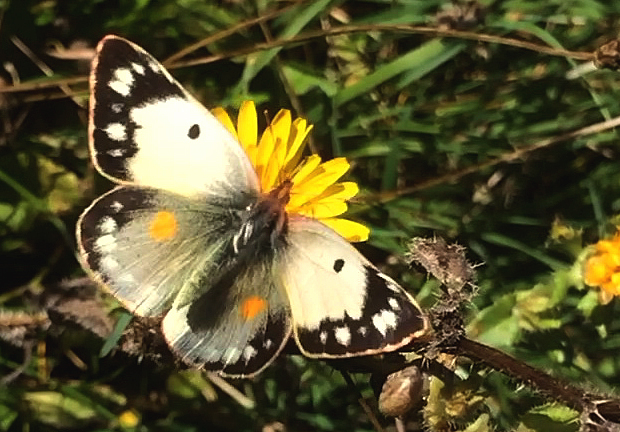
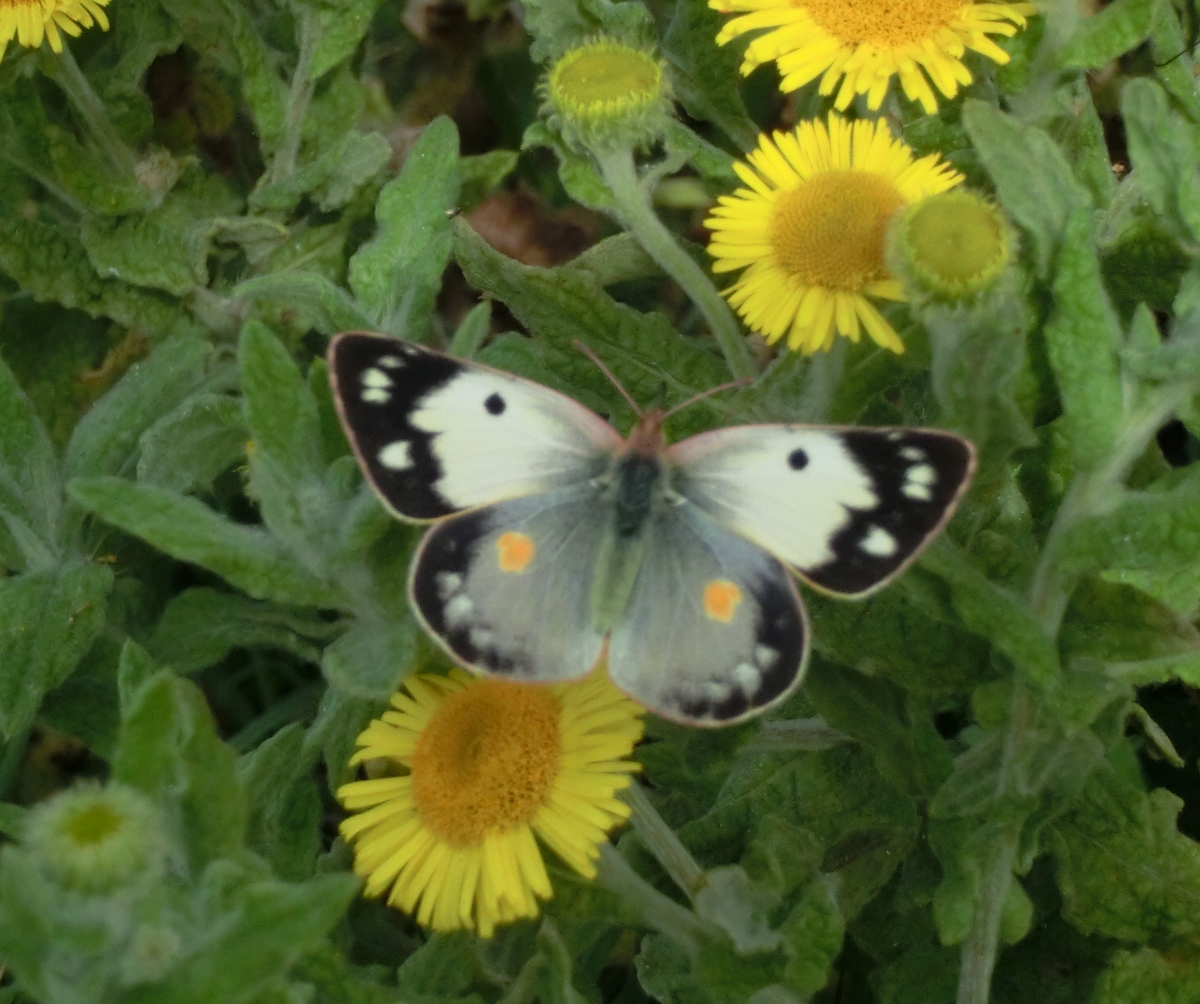
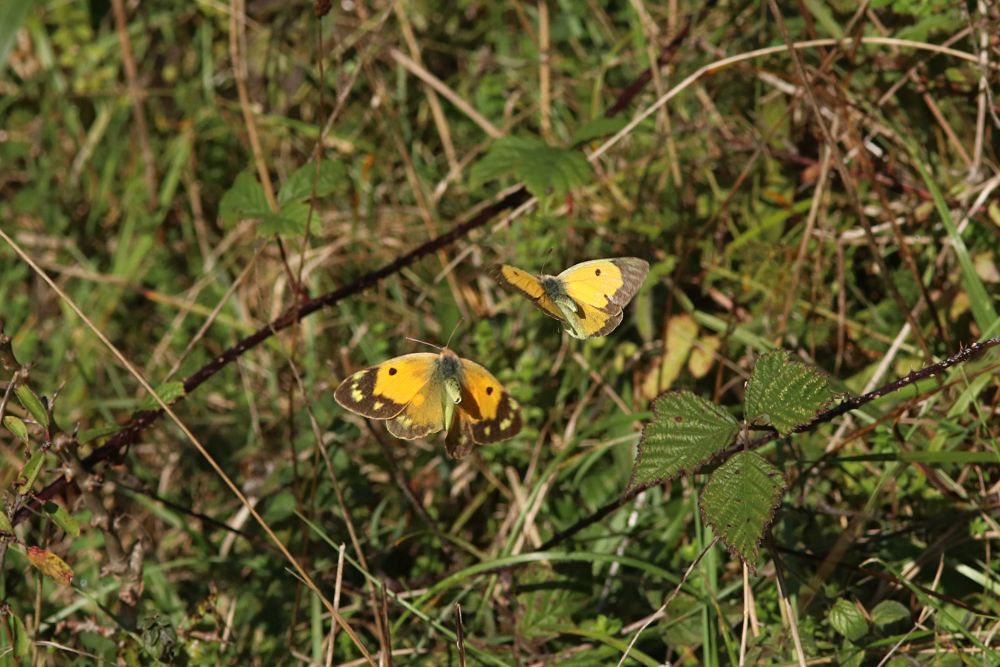
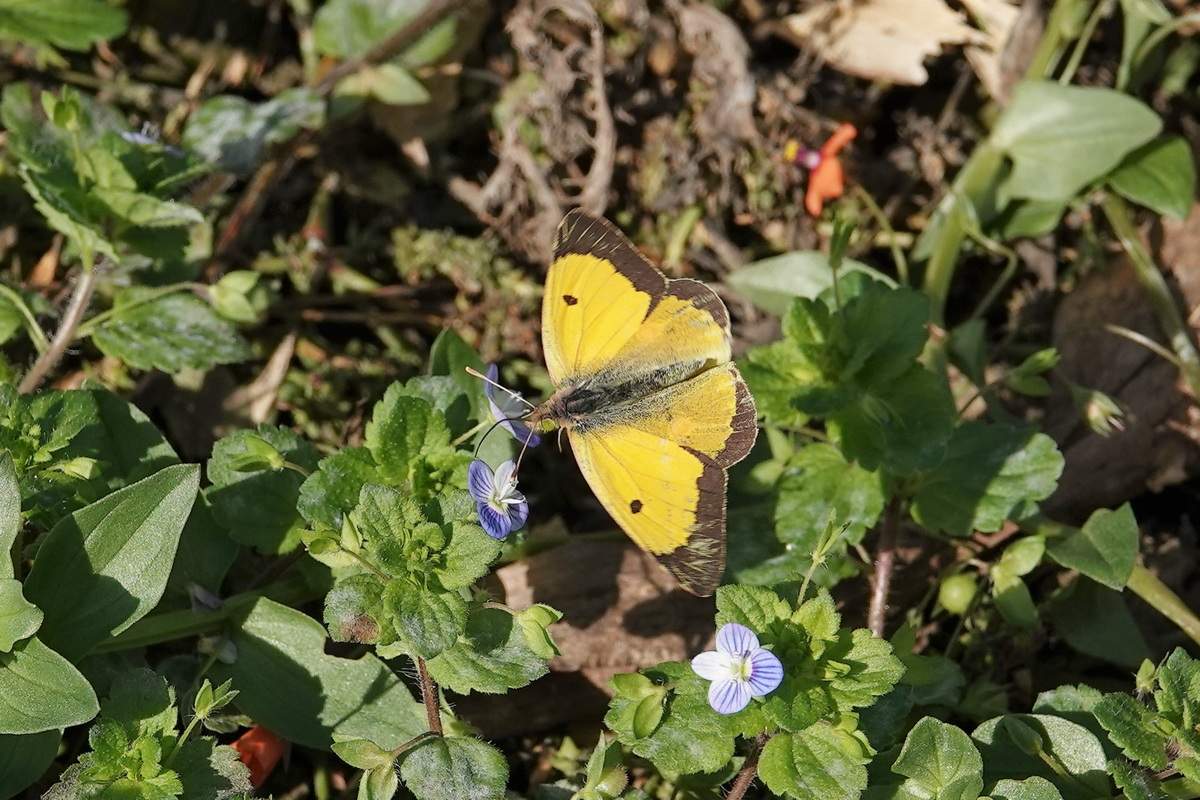
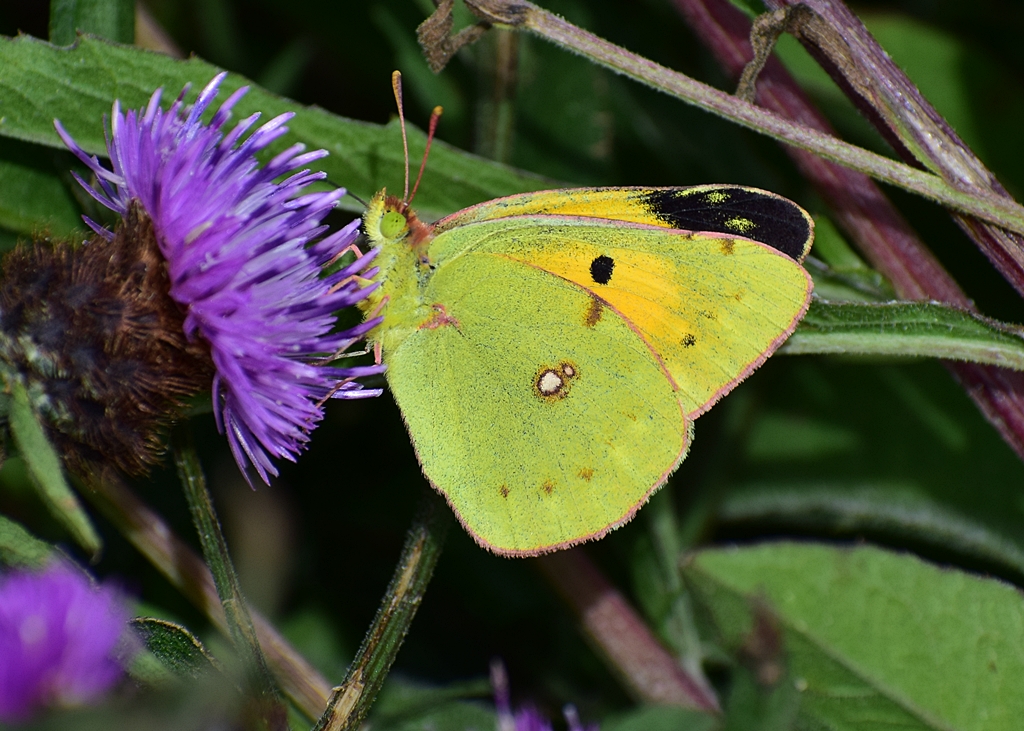
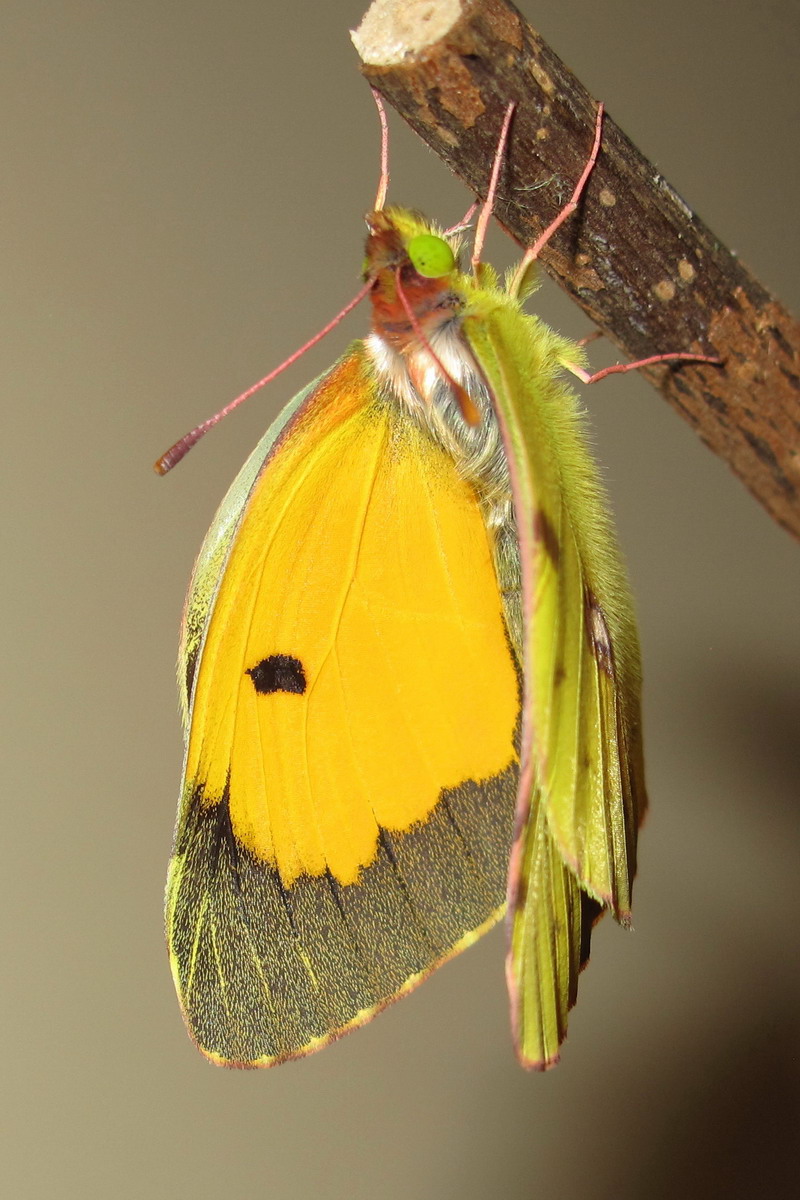
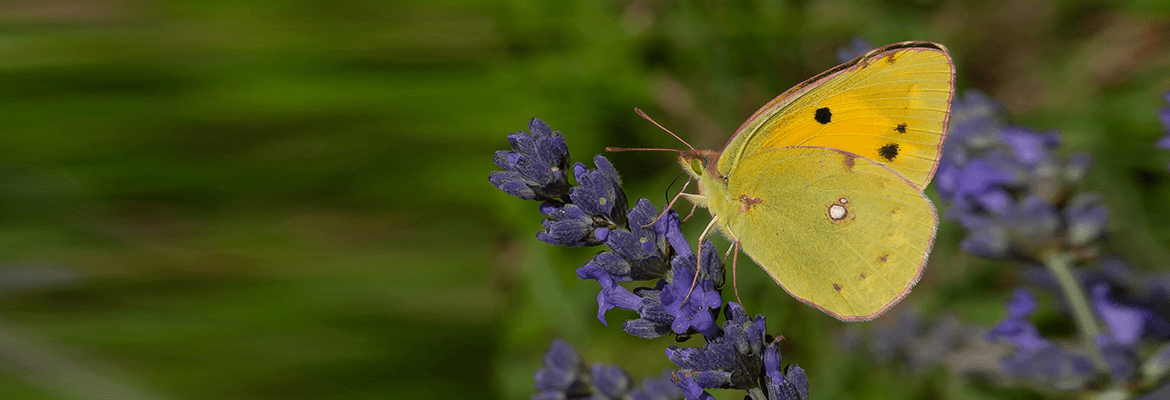
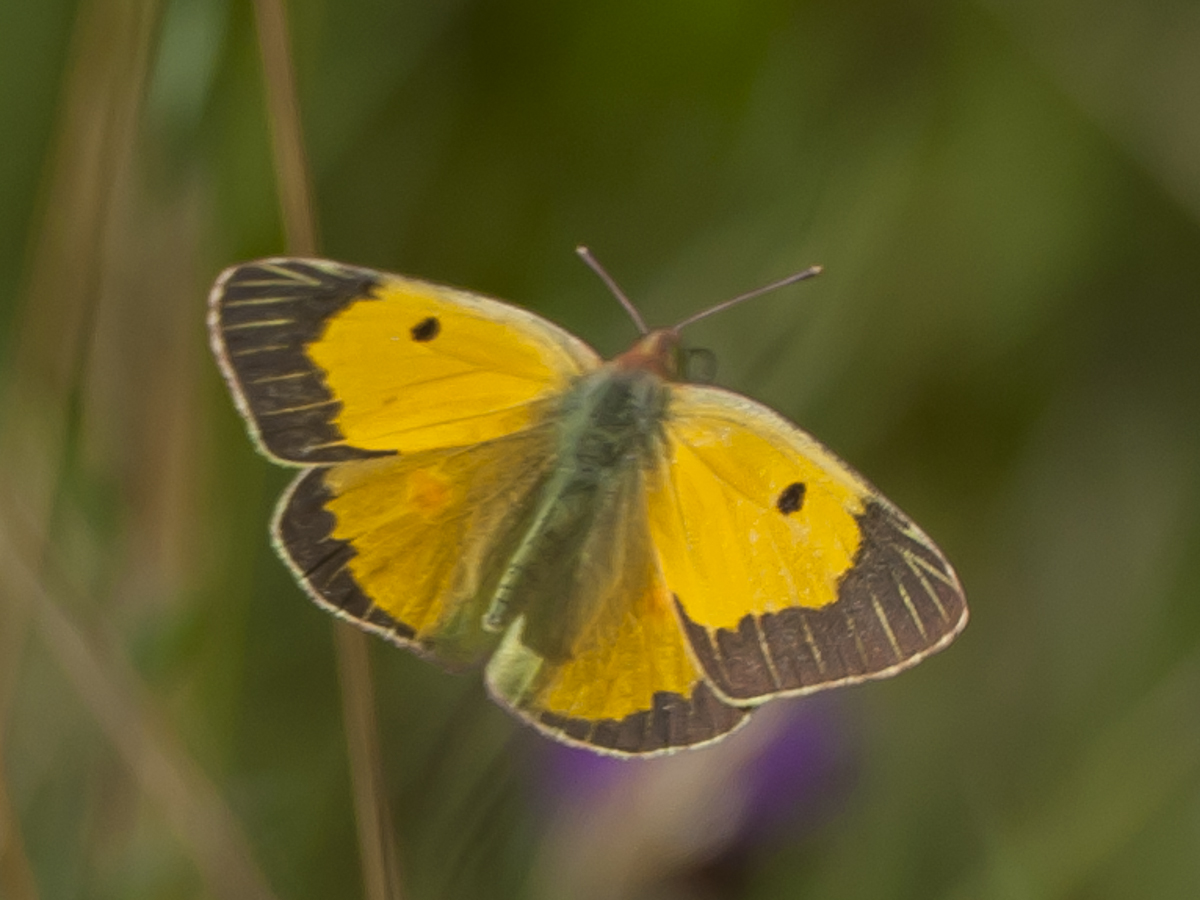
The Clouded Yellow is primarily an immigrant to the UK, originating from north Africa and southern Europe, with numbers varying greatly from year to year - an estimated 36,000 butterflies appearing in one of the infrequent "Clouded Yellow" years in 1947. In more recent years, it has been shown that this species has successfully overwintered in the south of England. However, it is believed that the majority of individuals perish, since both larva and pupa of this continuously-brooded species are easily killed by damp and frost. In good years this species can produce up to 3 generations in the UK. In flight, this species is often mistaken for one of the commoner "whites", but the orange-yellow colour is quite distinctive, even in flight, and unlike any other species. The Clouded Yellow has a distribution befitting a highly-migratory species, and can be found anywhere in the British Isles. Many immigrants remain near the coast where they feed, mate, and lay eggs. Others disperse inland and this species is found in both Scotland and Ireland in good years.
This form was first defined in Hübner (1779) as shown here and as shown in this plate (type locality: Not stated).
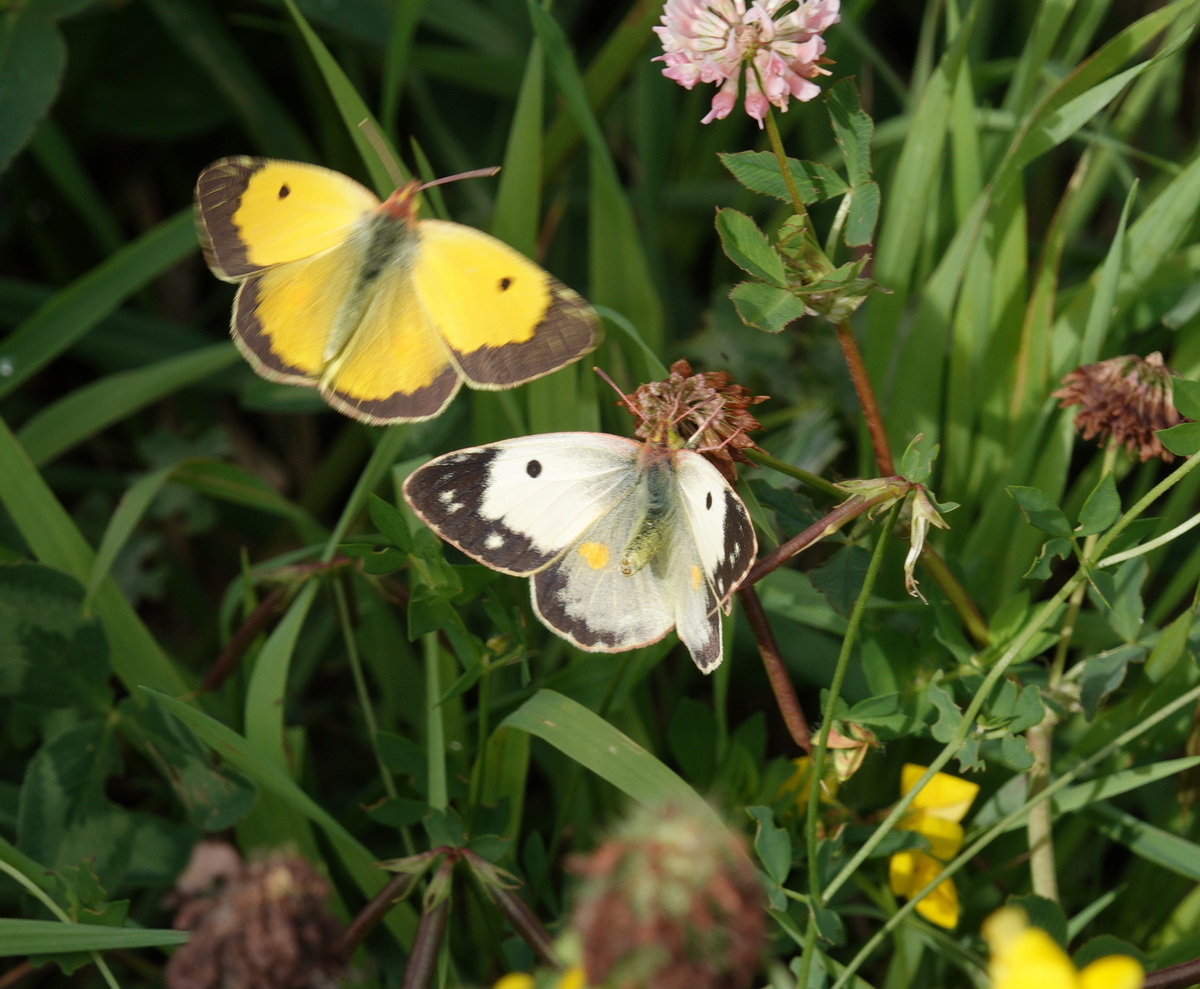
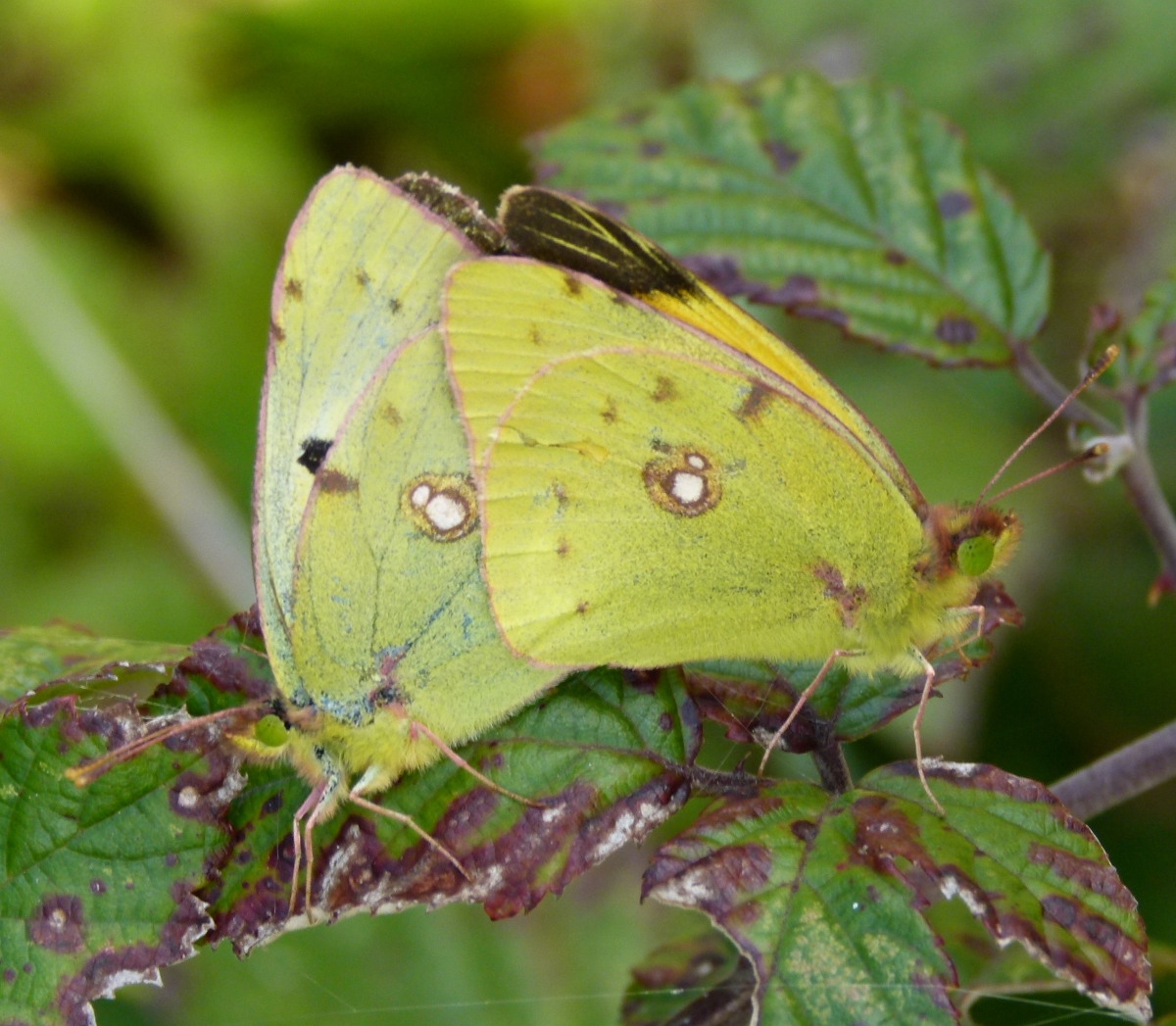
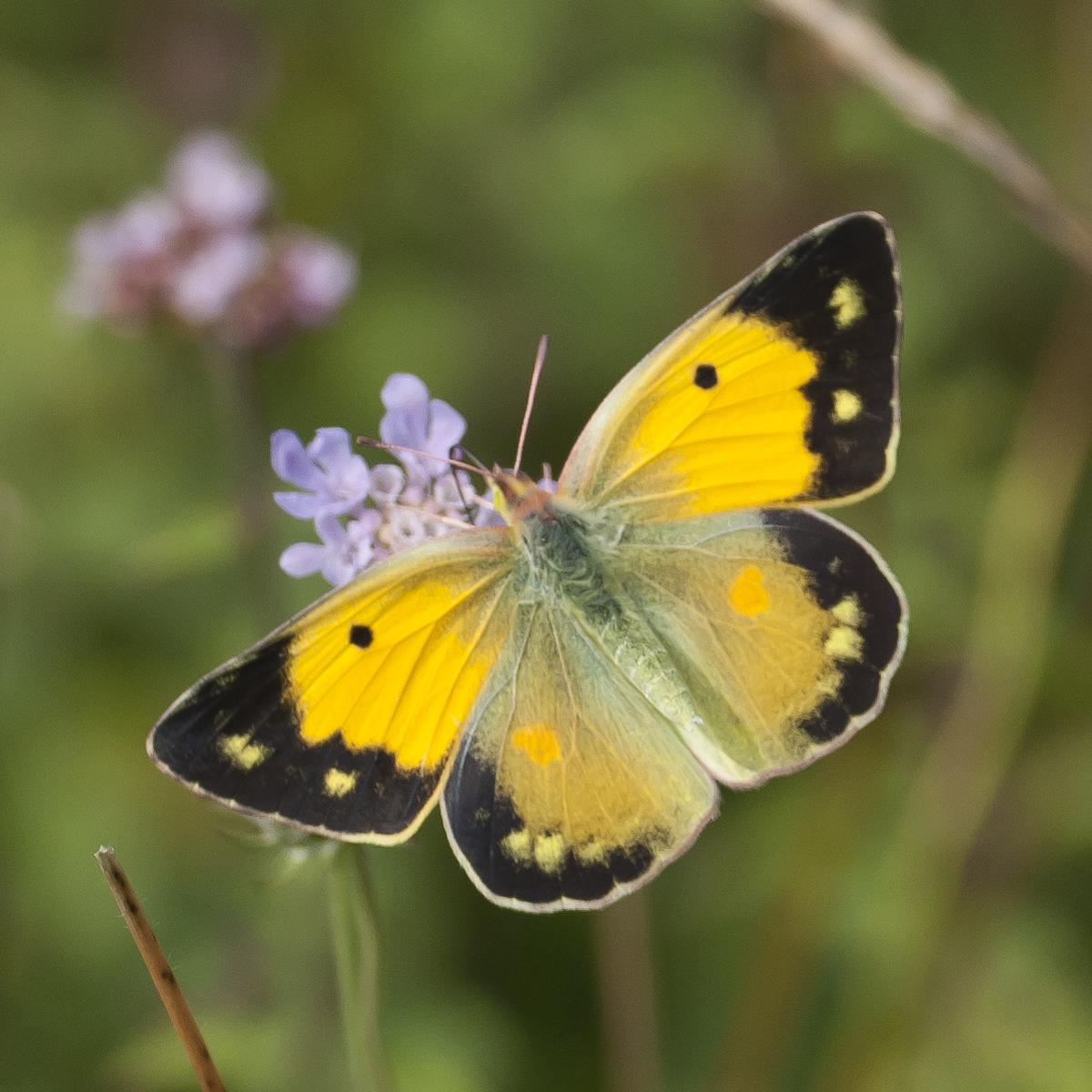
The form helice occurs in the female, where the individual is a creamy white, rather than yellow, in colour.


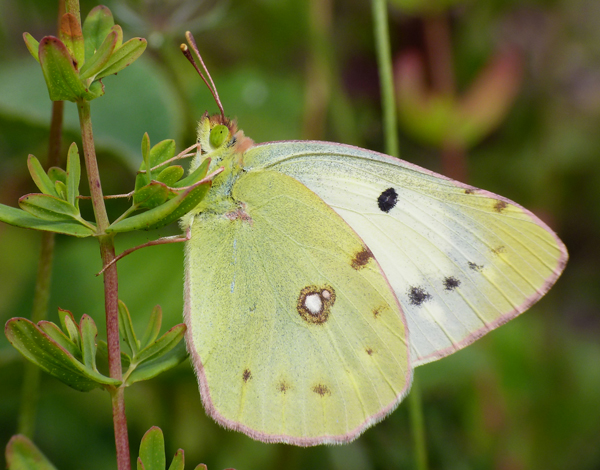
This species was first defined in Geoffroy (1785) as shown here (type locality: Paris, France).
Both forms of this species are found throughout the British Isles.
| Family: | Pieridae | Swainson, 1820 |
| Subfamily: | Coliadinae | Swainson, 1820 |
| Tribe: | Coliadini | Swainson, 1827 |
| Genus: | Colias | Fabricius, 1807 |
| Subgenus: | ||
| Species: | croceus | (Geoffroy, 1785) |
| Subspecies: | croceus | (Geoffroy, 1785) |
| Form: | helice | Hübner, 1779 |
| croceus | (Geoffroy, 1785) |
Description to be completed.
The distribution data (2000-2009) has been made available through the generosity of Butterfly Conservation and any subspecies distribution is taken from Riley (2007). Click here to see the distribution of this species together with site information overlaid.
This butterfly can be found in just about any open habitat in the countryside, including coastal cliffs, open downland, and fields containing the larval foodplants of Clovers, Lucerne and Bird's-foot Trefoil.
The Clouded Yellow is one of the most-widespread species in Europe and is not a species of conservation concern.
The table below shows the occurrence (distribution) and abundance (population) trends, using information from The State of the UK's Butterflies 2015 (Fox, 2015). Any UK BAP status is taken from the UK Biodiversity Action Plan (UK BAP) (2007 review).
1976-2014 (%) | 1976-2014 (%) | 2005-2014 (%) | 2005-2014 (%) |  +84 +84 | +734 |  -19 -19 |  -57 -57 |
|---|
The first immigrants of this species start to arrive on our shores in late May or early June, with much larger numbers appearing in July and August as the offspring of the first arrivals mingle with new immigrants. This species has been recorded as overwintering larvae at coastal undercliffs and the resulting adults may be seen as early as March in some years.
"The earlier stages of Edusa [croceus] are rapidly passed through during warm summer weather, as the following notes indicate. Eggs laid August 21st, hatched August 27th. First moult of larva September 2nd; second moult September 13th; third moult September 10th; fourth and last moult September 26th; pupated October 15th; imago emerged November 16th (the last imago of this brood emerged December 8th), the entire period occupied by the ova, larvae and pupae of this second brood being eighty-seven days; while the first brood, from eggs laid in June, only occupies about fifty-four days from the deposition of the eggs to the emergence of the imagines." - Frohawk (1924)

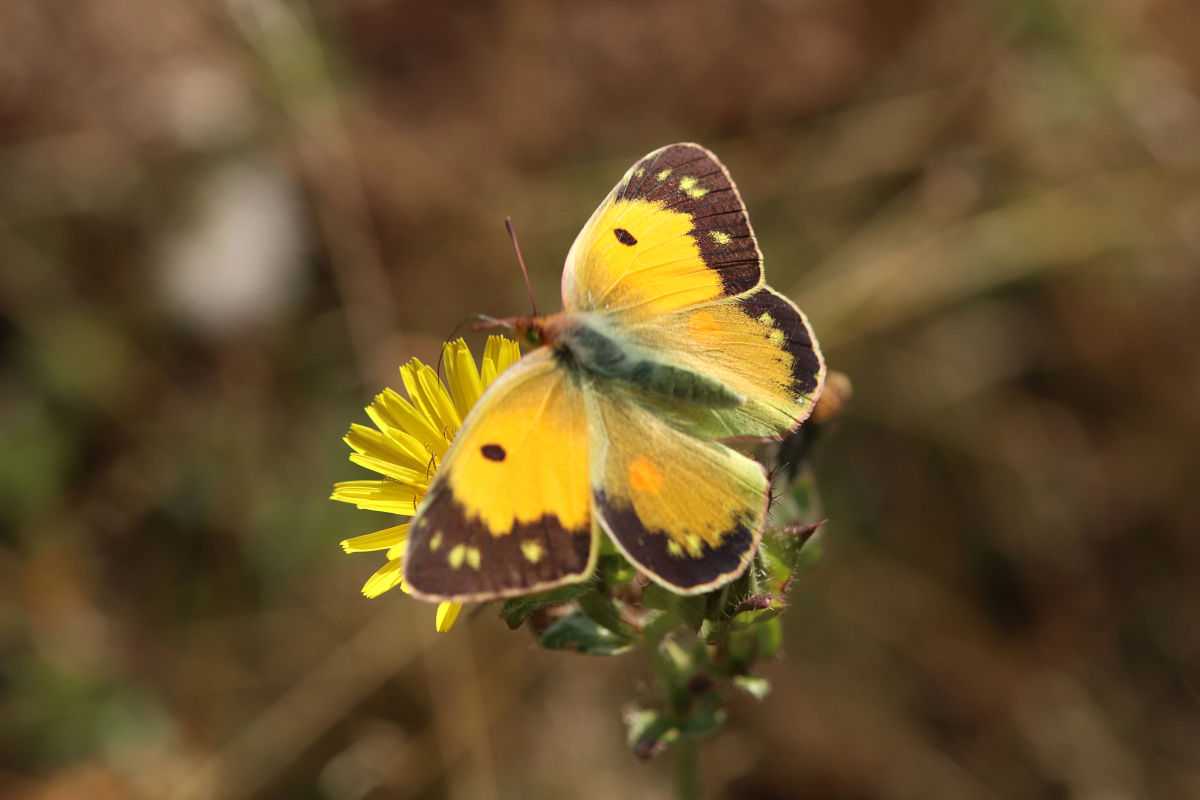
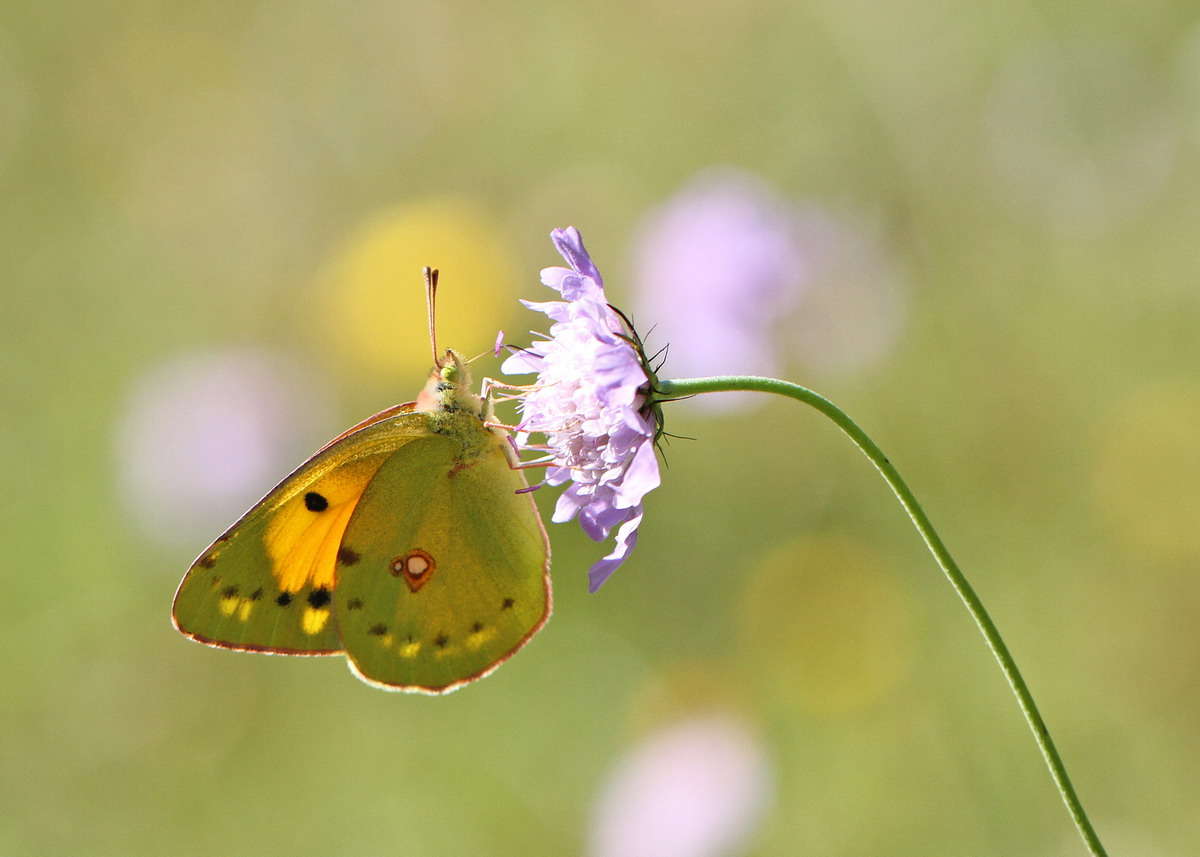
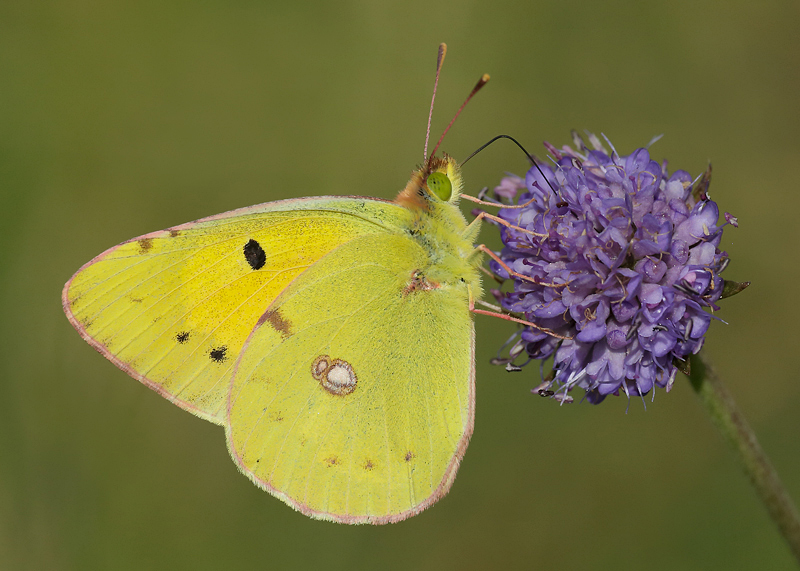
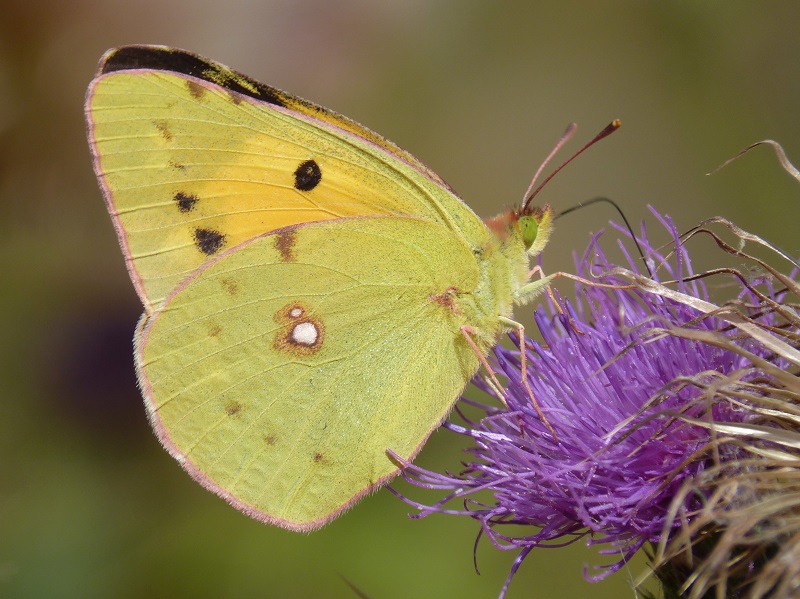
This strong-flying butterfly always settles with its wings closed and so the dark borders on the uppersides of the wings are only visible when in flight. There is no elaborate courtship and, having mated, the female is subsequently able to lay an extraordinary number of eggs - up to 600 have been recorded from a single female.
Adults feed primarily on Common Fleabane (Pulicaria dysenterica), dandelions (Taraxacum spp.), knapweeds (Centaurea spp.), ragworts (Jacobaea spp.), thistles (Carduus spp. and Cirsium spp.), vetches (Vicia spp.) and Wild Marjoram (Origanum vulgare).
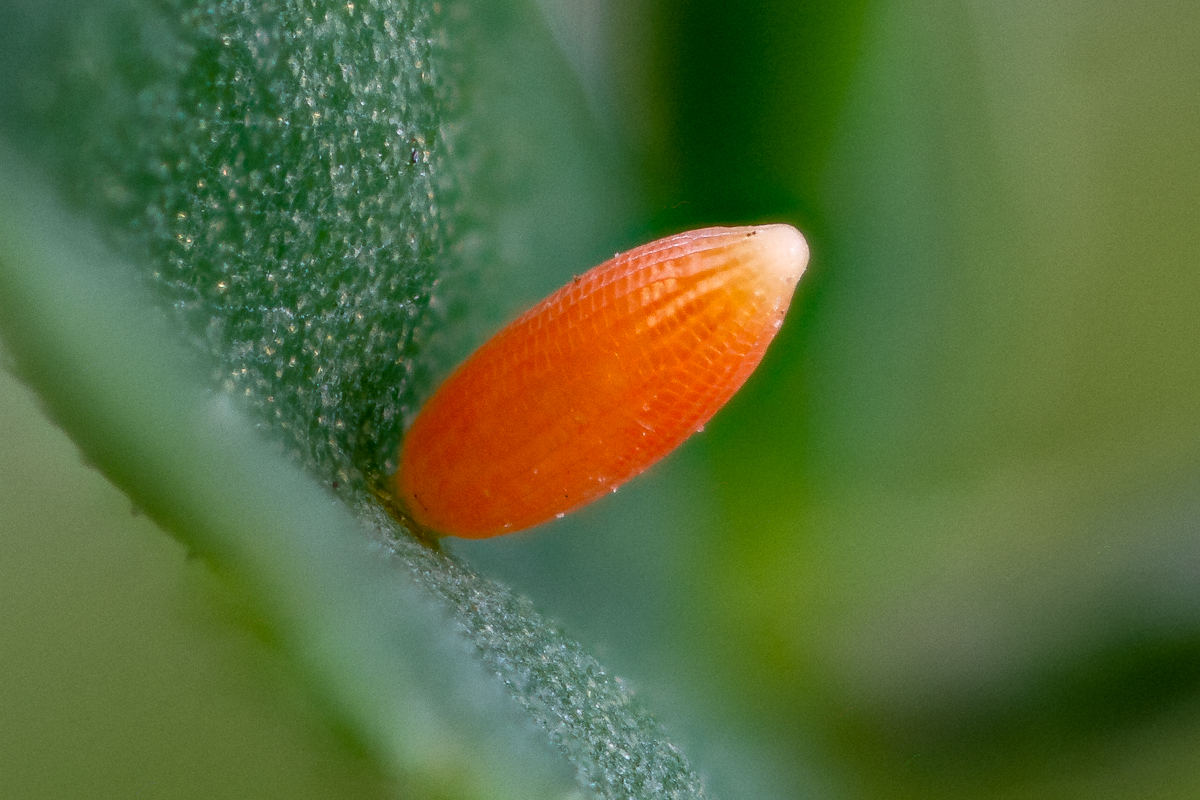
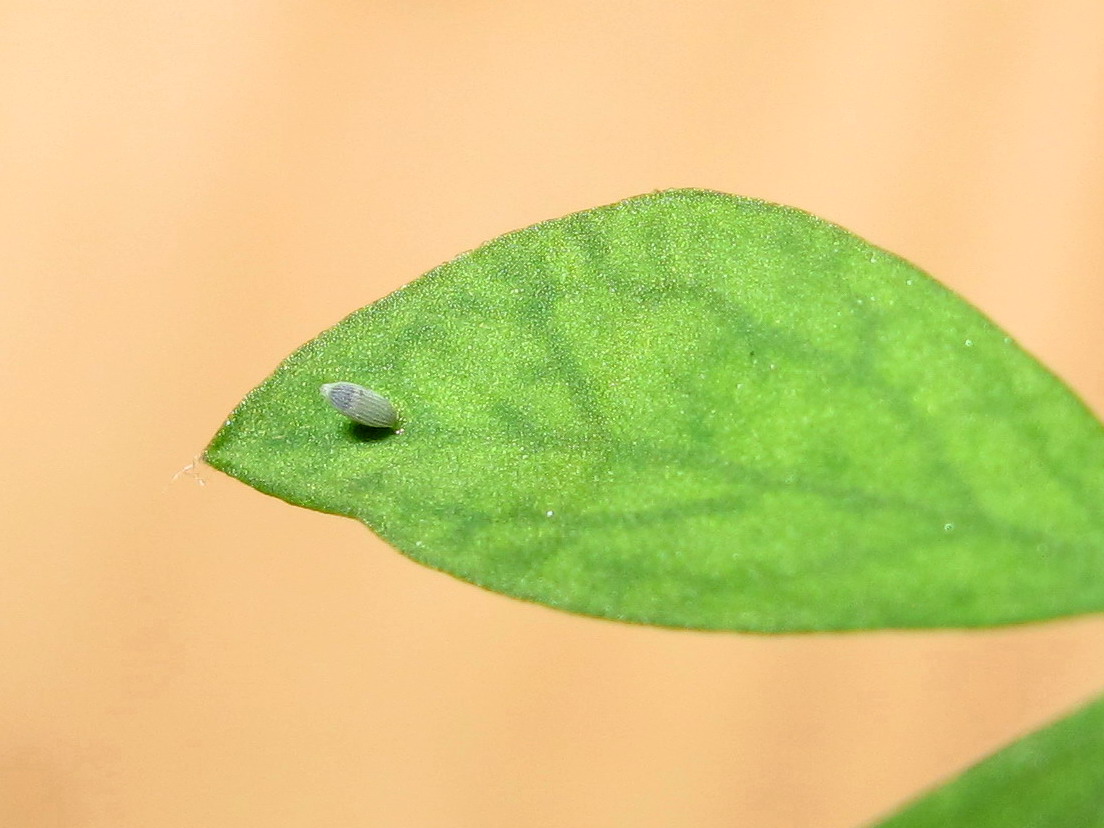
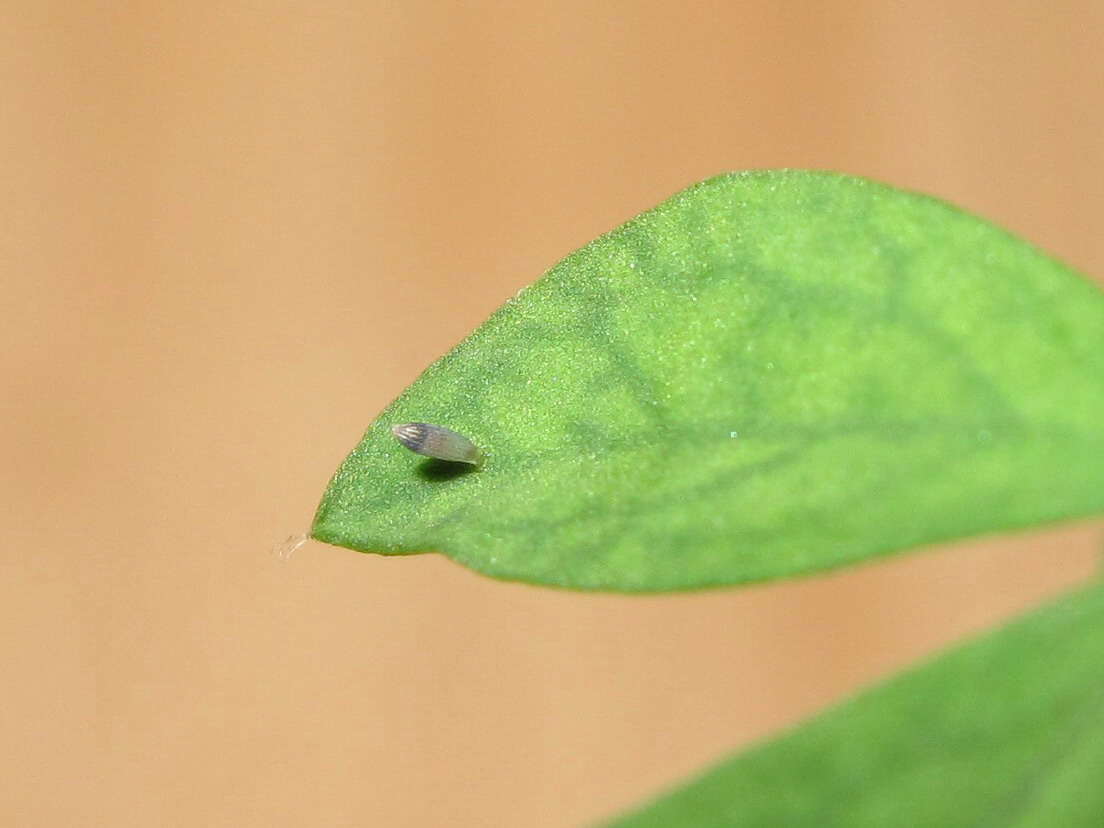
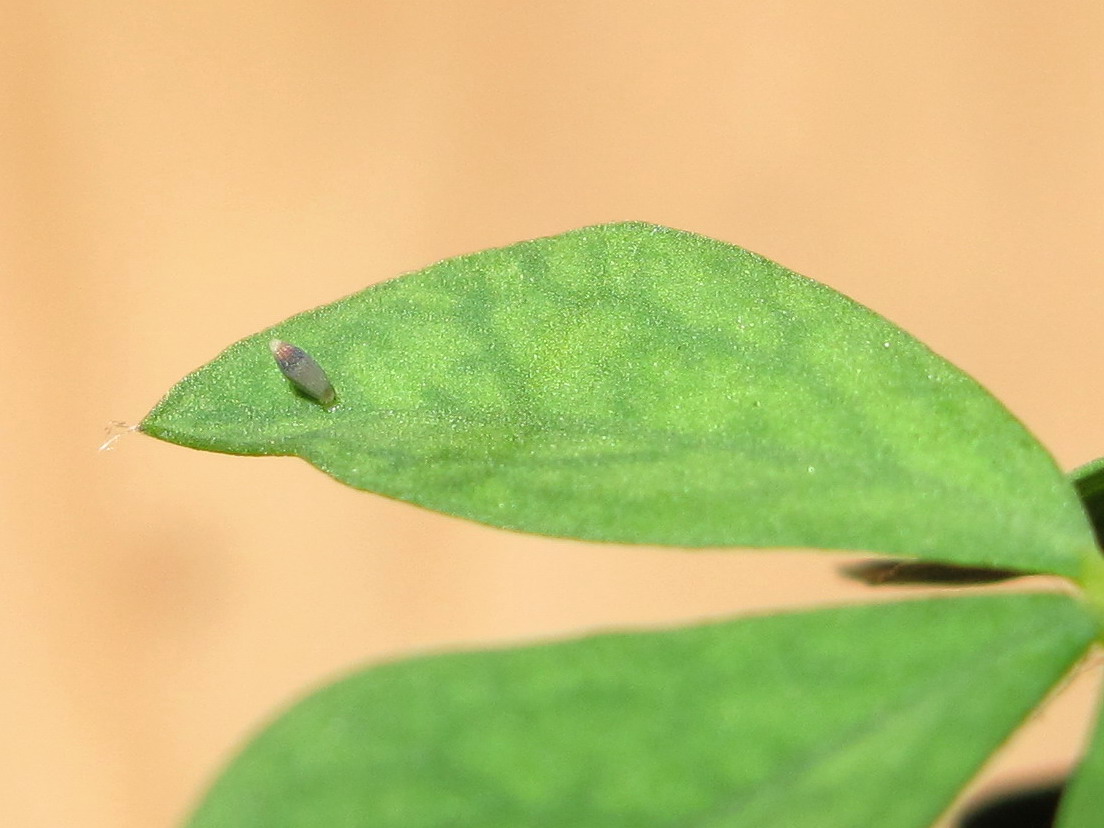
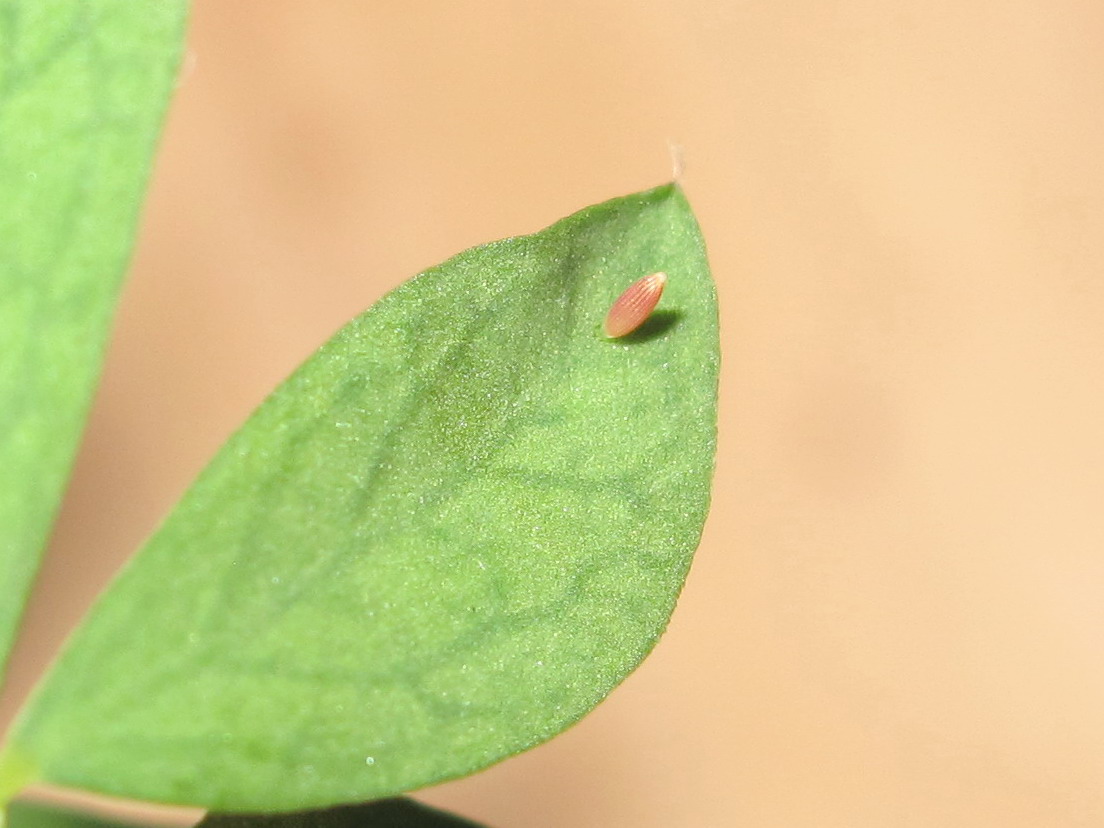
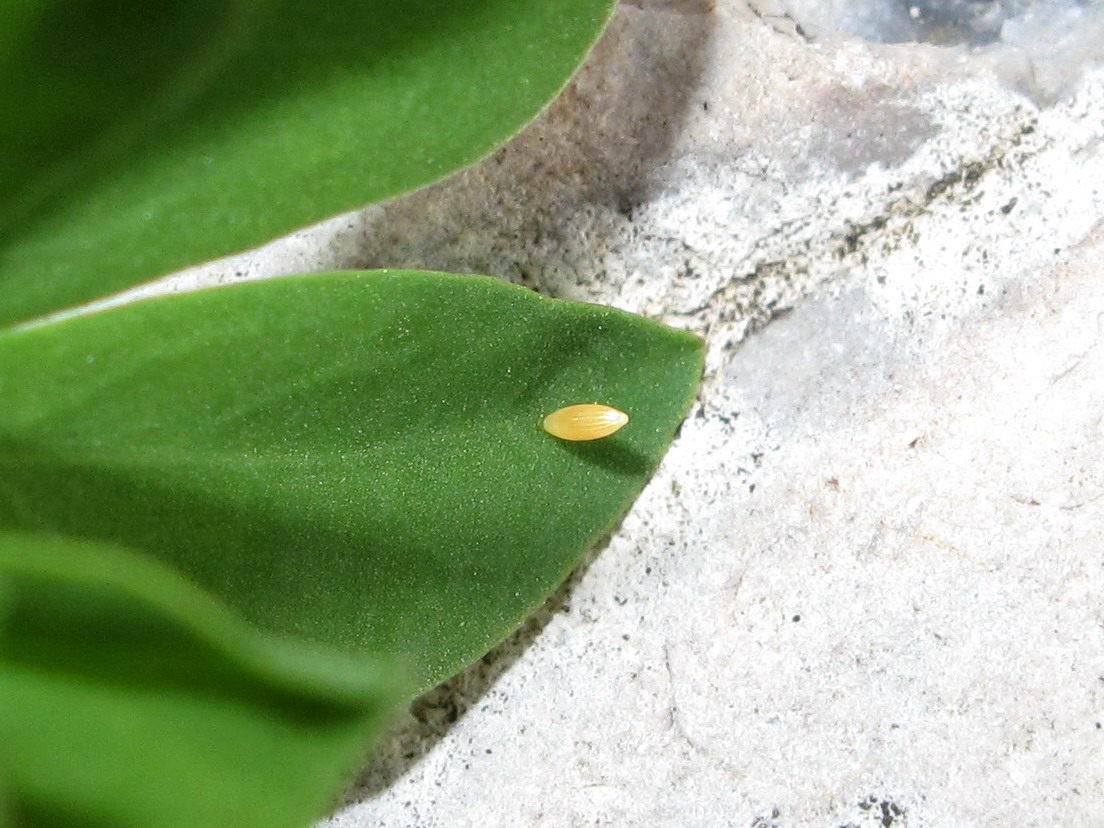
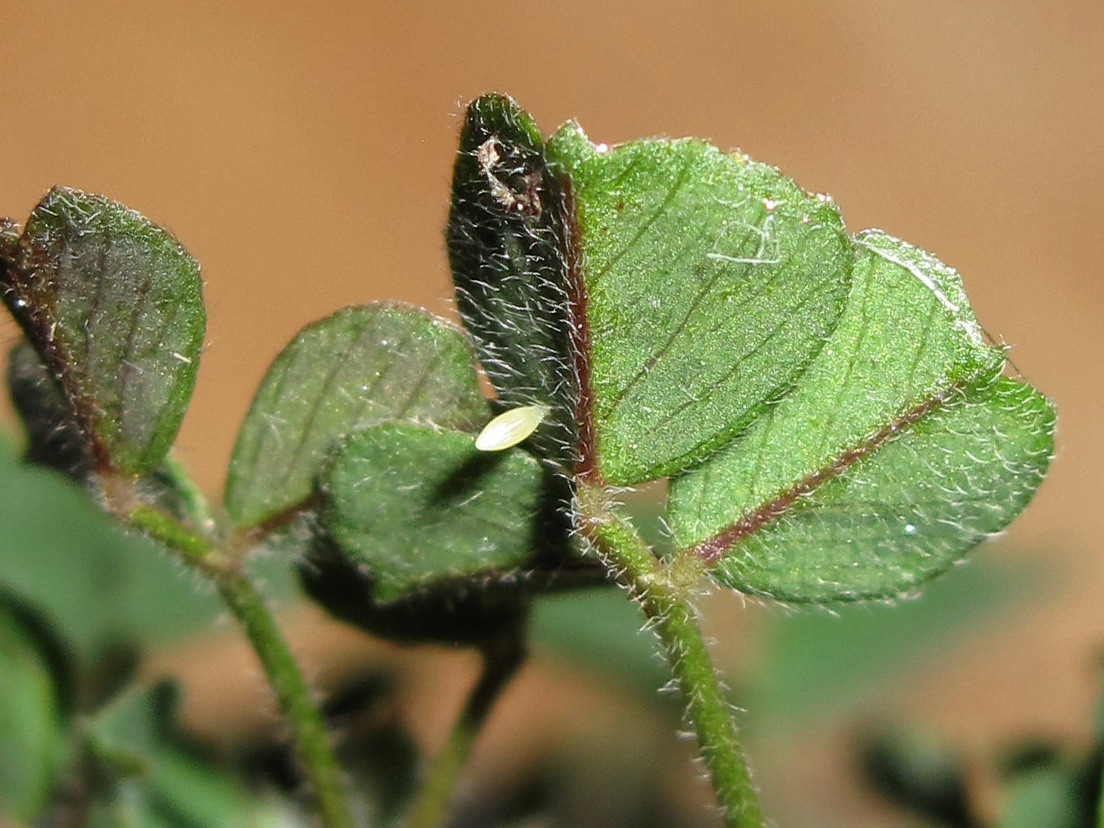
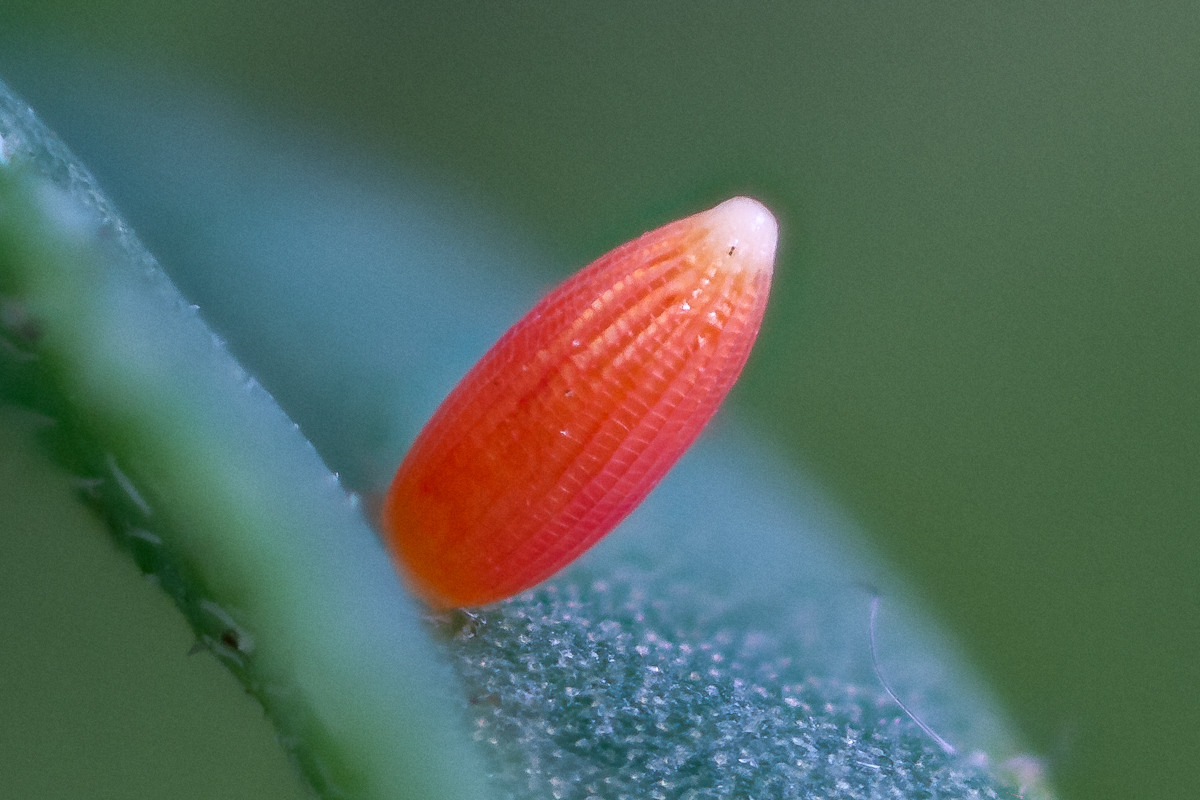
The skittle-shaped eggs are laid singly on the upperside of leaves of the foodplant. They are pale yellow when first laid, turning orange prior to hatching, and hatch in about a week.
"Edusa [croceus] deposits its eggs singly on the upper surface of the leaves of clover, lucerne, bird's-foot trefoil and other kinds of leguminous plants. The duration of the egg stage of the early and late broods varies considerably in accordance with the temperature. Eggs laid on June 7th, 1892, hatched June 13th, remaining six days in the egg state. Eggs laid on August 27th, 1895, hatched September 3rd, being seven days in the egg state. Eggs laid on September 13th, 1892, hatched September 23rd, the egg state lasting ten days. The following notes refer to a freshly emerged female edusa [croceus], captured August 25th, 1895. She started depositing a few eggs on August 27th, during a brief spell of sunshine at 4 p.m. During the following eight consecutive days, August 28th to September 4th inclusive, she laid eggs daily as follows: 100, about 80, about 60, 50, 50, 80, 50 and 24; she died on the following day, September 5th. Upon dissection it was found that her abdomen was quite empty, not a single egg remaining; therefore, from the perfect condition of the specimen when captured, she had in all probability not previously deposited. The number of eggs laid by this female, about 500, is probably the full complement of eggs laid by this species. The egg is 1.1 mm. high and 0.5 mm. in diameter, of an elongated ovate form; both ends are much attenuated, but rounded. It is slightly concave just below the summit; there are about twenty longitudinal keels, the majority of them running the entire length. A few commence about one-sixth below the summit. It is very delicately ribbed transversely, the ribs numbering about thirty-six. When first laid the egg is of a yellowish pearl-white, gradually becoming deeper in colour, approaching creamy-yellow. When about twenty-four hours old it assumes a light copper-pink hue, from which it gradually deepens into a rosy-orange-pink. In the high lights the shell glistens with blue, the orange colouring showing in shadow; both the summit and base are tipped with yellow. It remains the beautiful rosy colouring until about a day before hatching, when it finally changes to a leaden or purplish-grey." - Frohawk (1924)

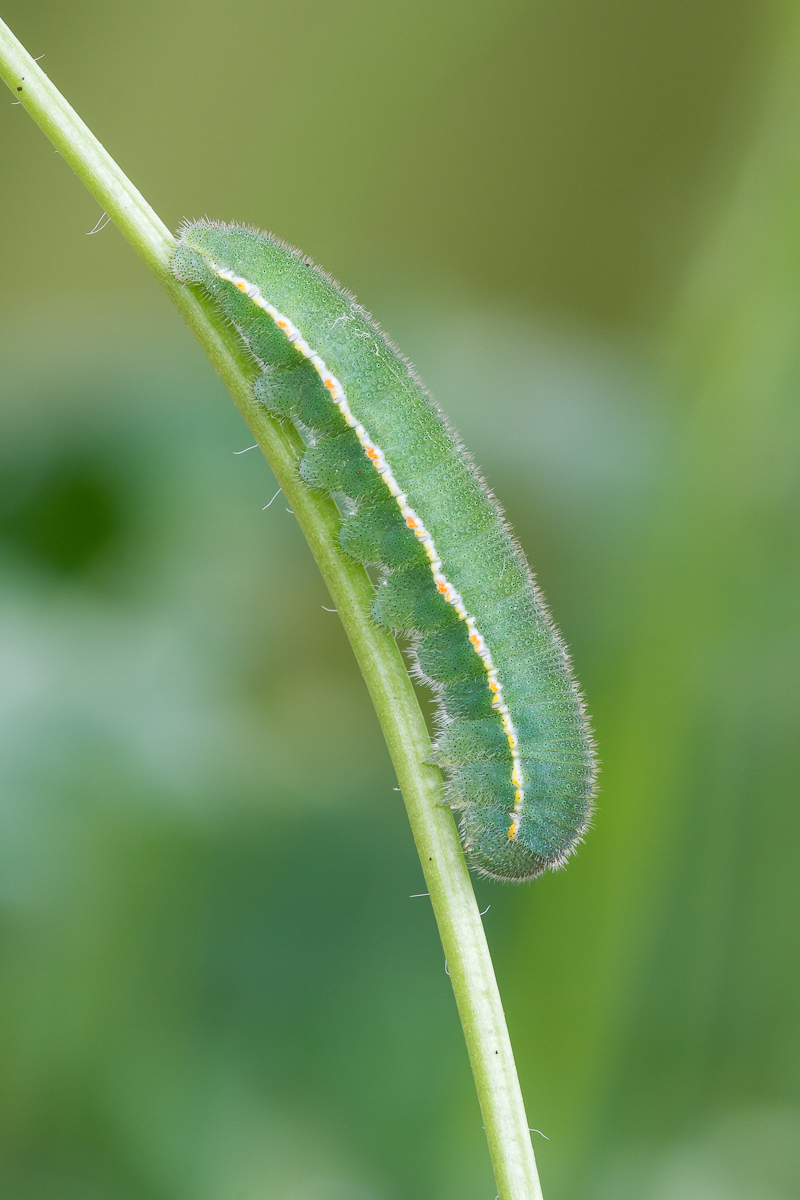
The rate of growth of the larva is greatly dependent on conditions, especially temperature. The duration of this stage is therefore highly variable, ranging from 3 to 6 weeks. There are 5 instars in total.
The primary larval foodplant is clovers (Trifolium spp.). Common Bird's-foot-trefoil (Lotus corniculatus) and Horseshoe Vetch (Hippocrepis comosa) are also used.
"The young larva upon emerging consumes the greater part of the egg-shell, which is its first meal. Directly after emerging the larva is 1.5 mm. long, of a pale ochreous or olive-yellow colour; the head is black and granular; both the head and body are sprinkled with club-shaped tubercles, the apex being mushroom-shaped. The longest and finest are situated on the anal segment, those on the head being extremely short but strongly clubbed. It feeds on the cuticle of the upper surface of the leaf. When eight days old, June 19th, 1892, the larva measured 2.8 mm. long, and was of a very pale creamy-yellow-green colour. On that day it crawled to another leaflet of clover and spun a little layer of silk on the under surface, and thereto fixed itself for moulting for the first time, which took place on June 21st, the first stage lasting ten days." - Frohawk (1924)
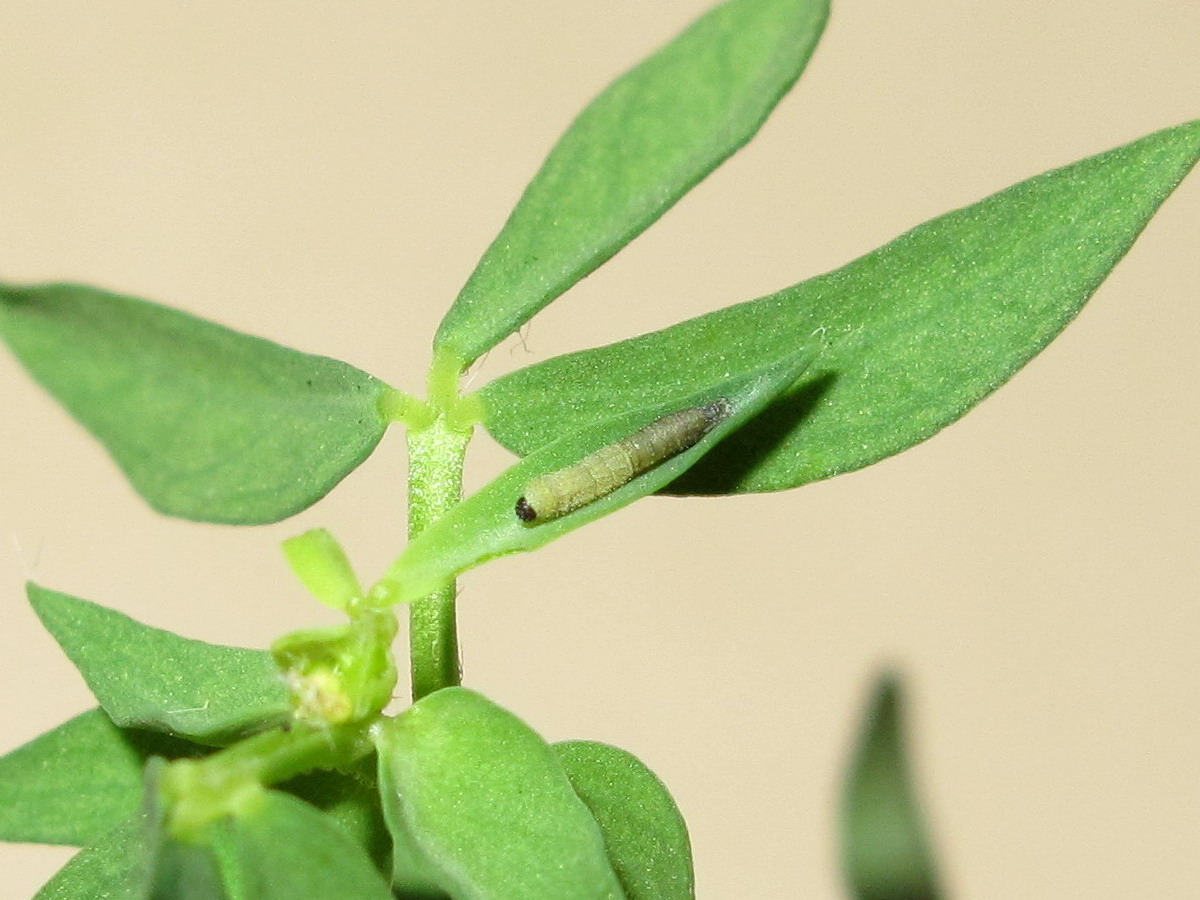
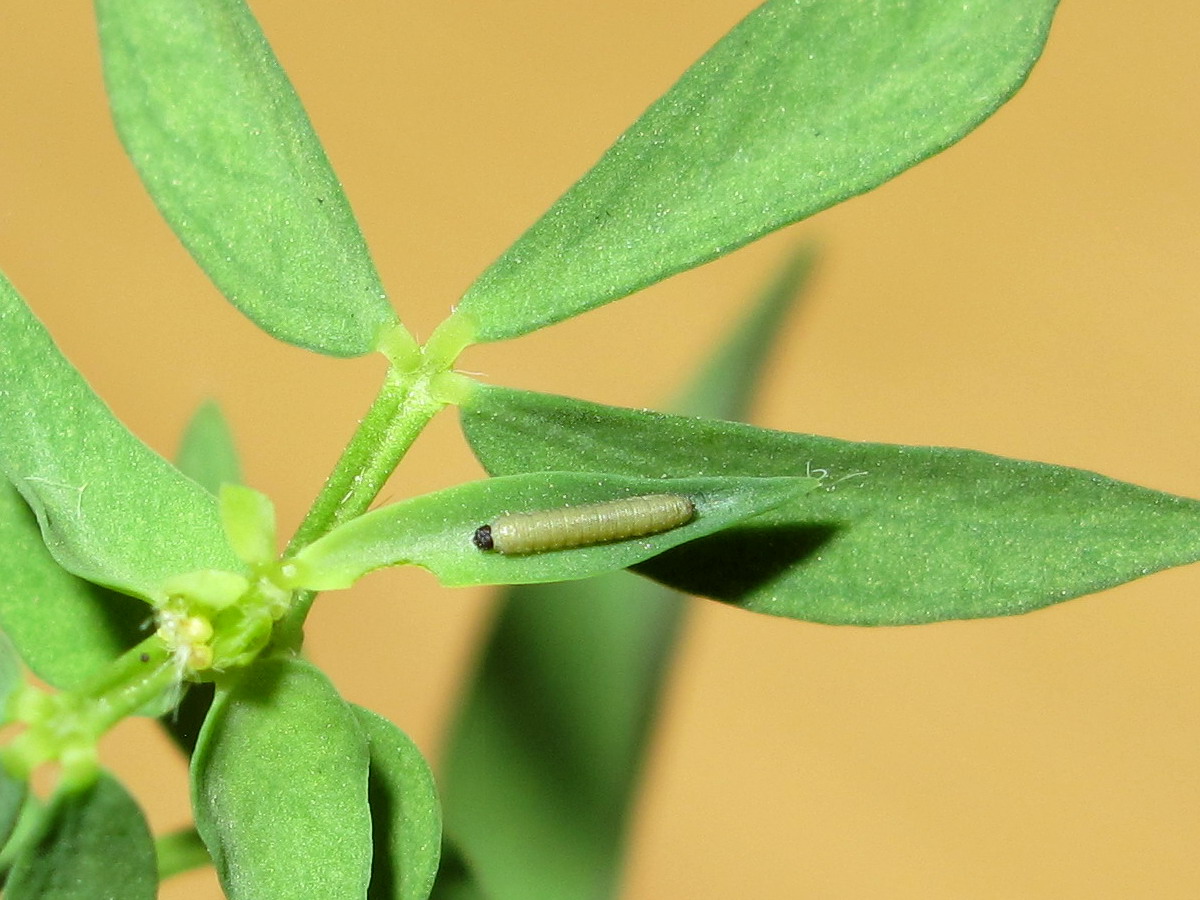
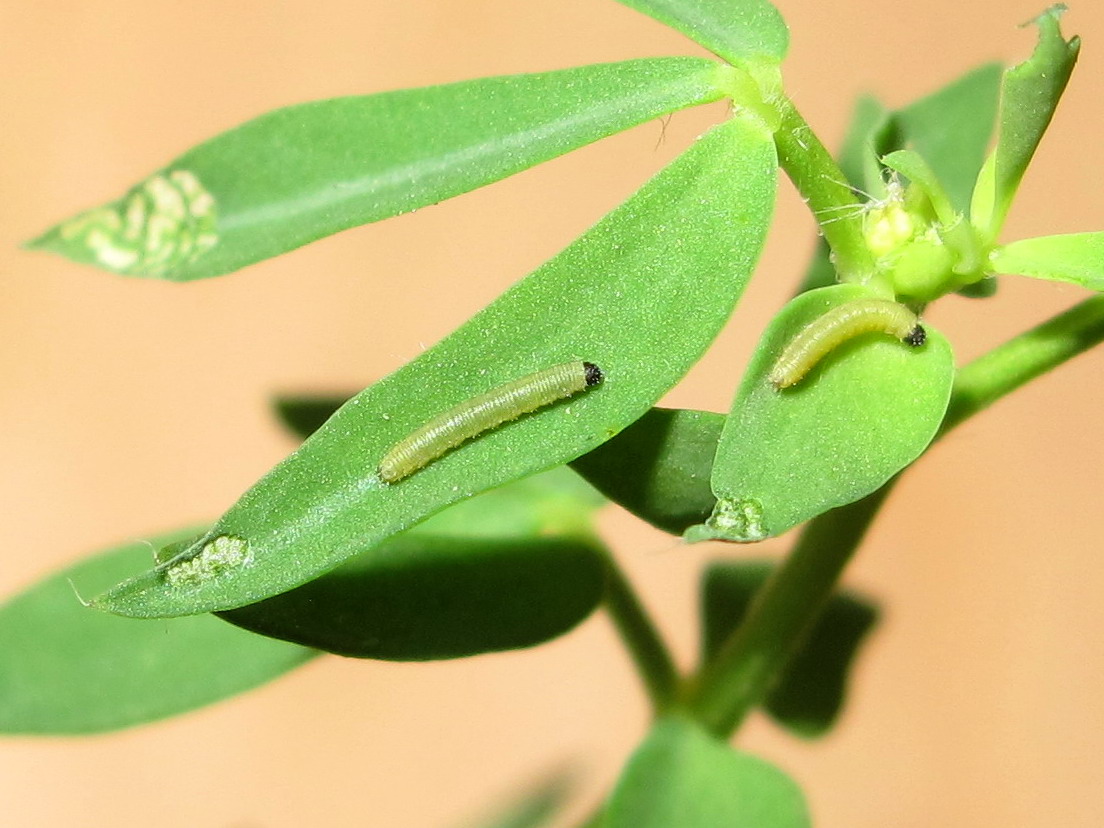
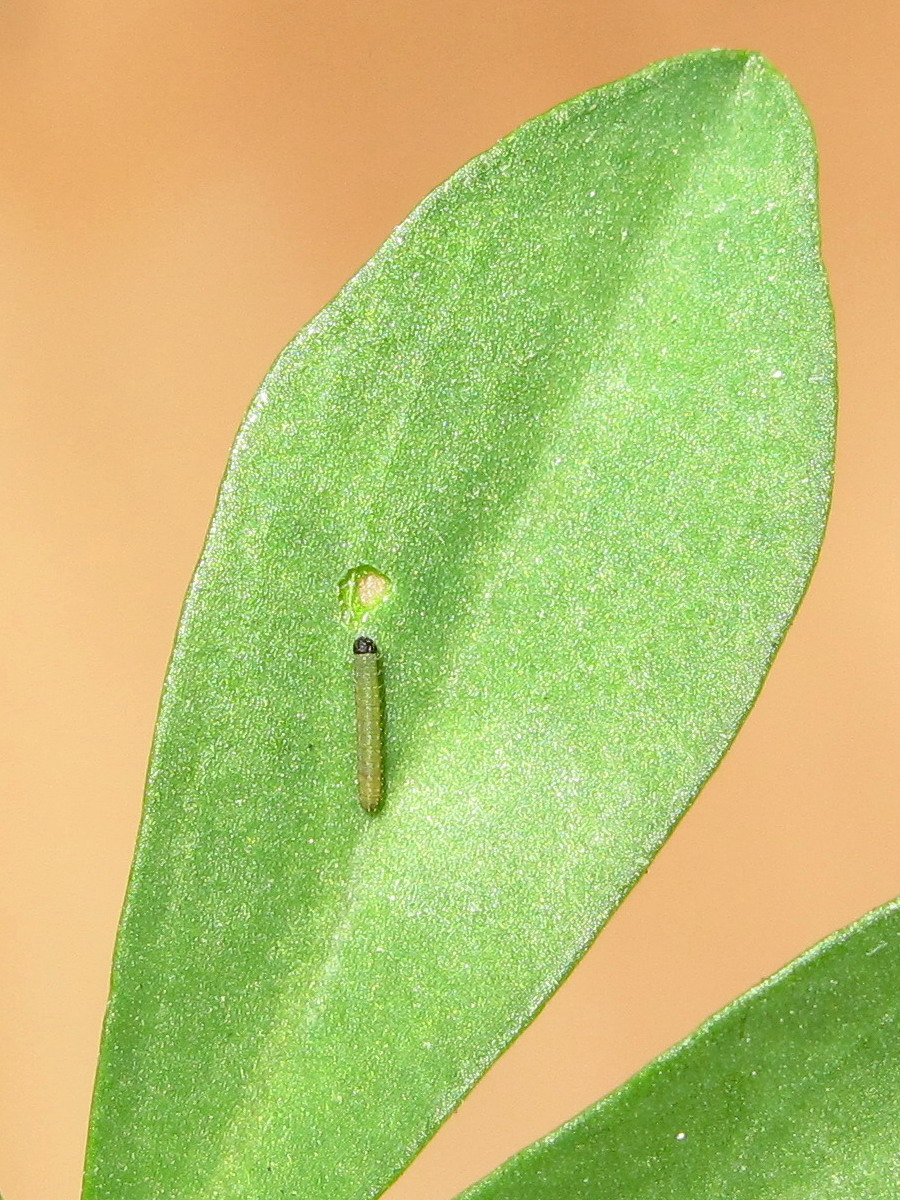
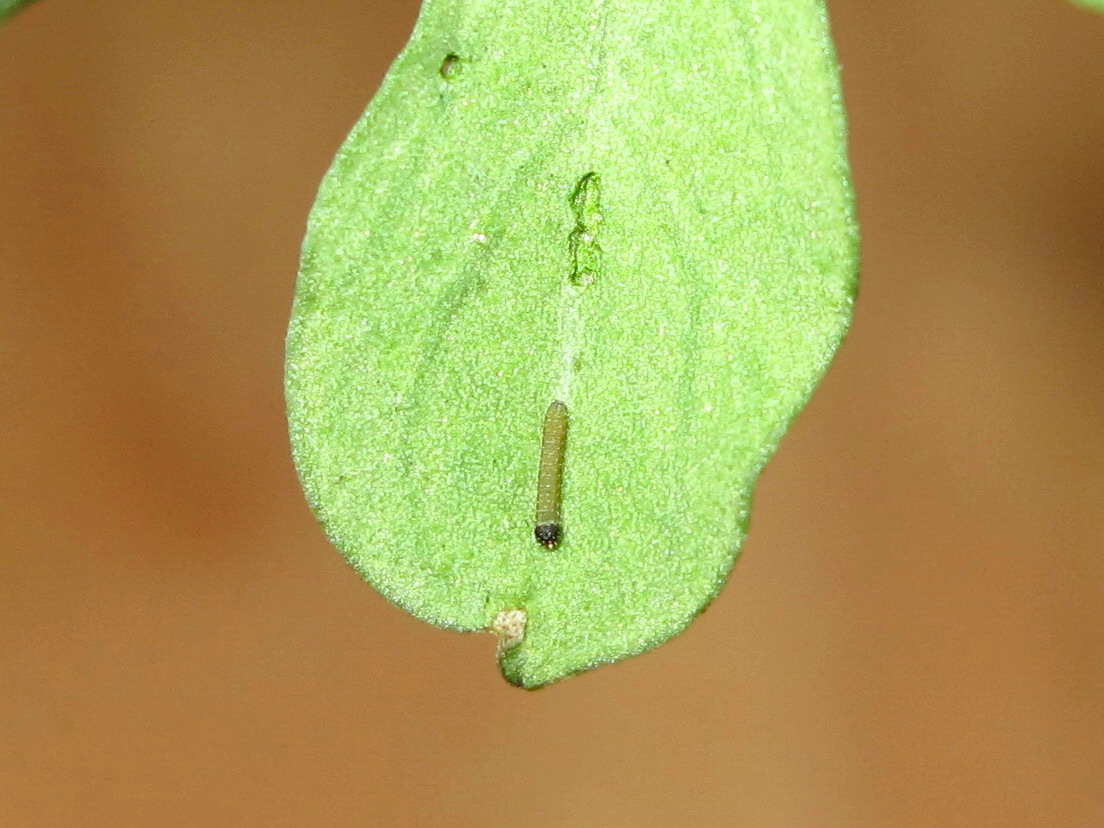
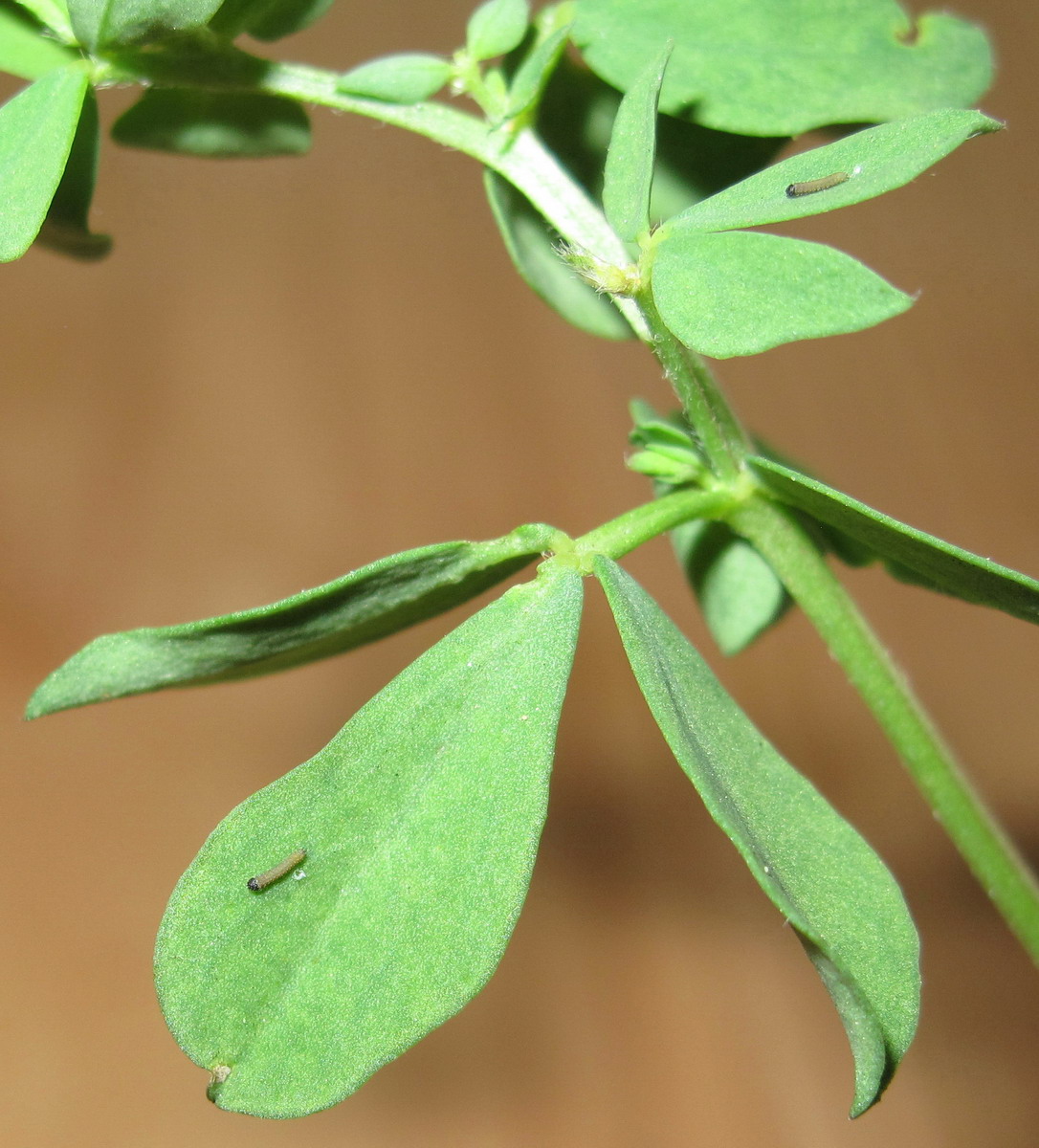
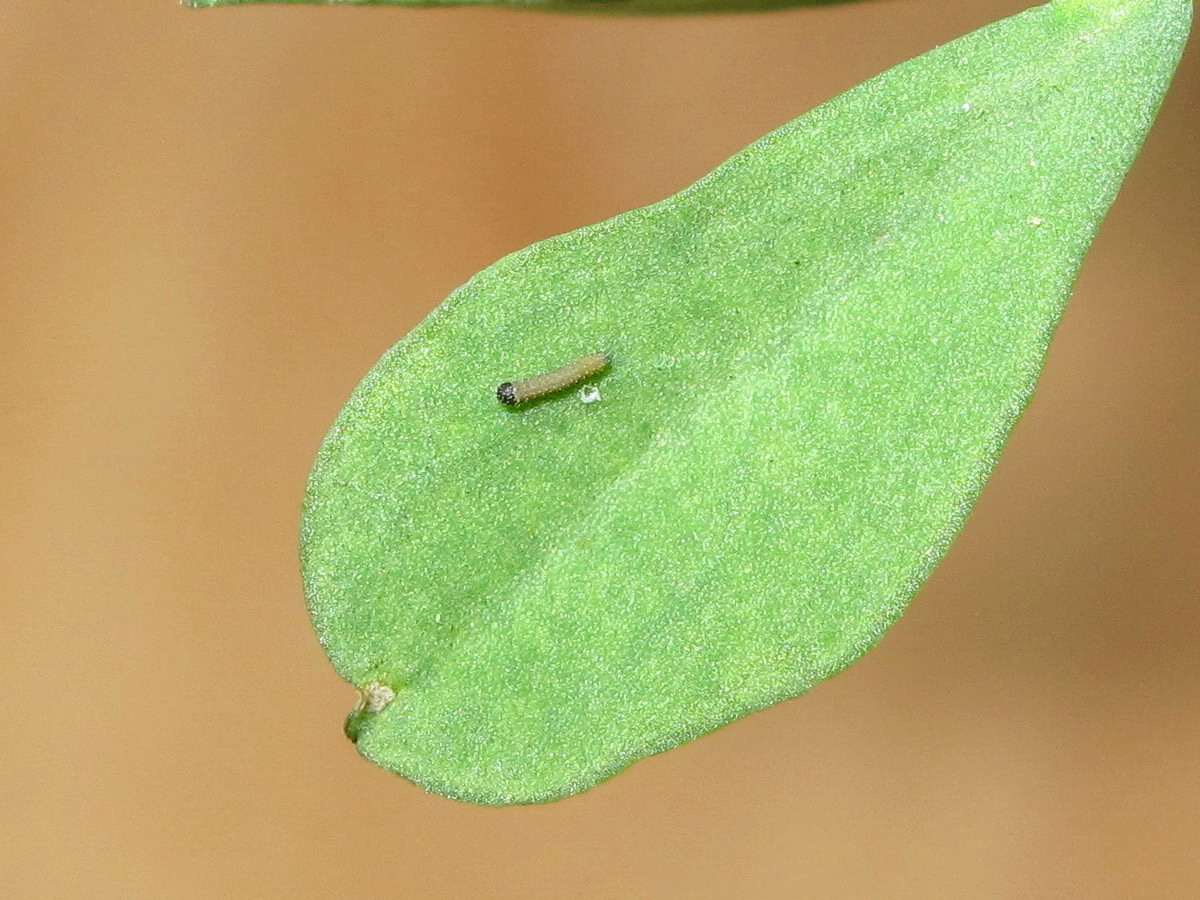
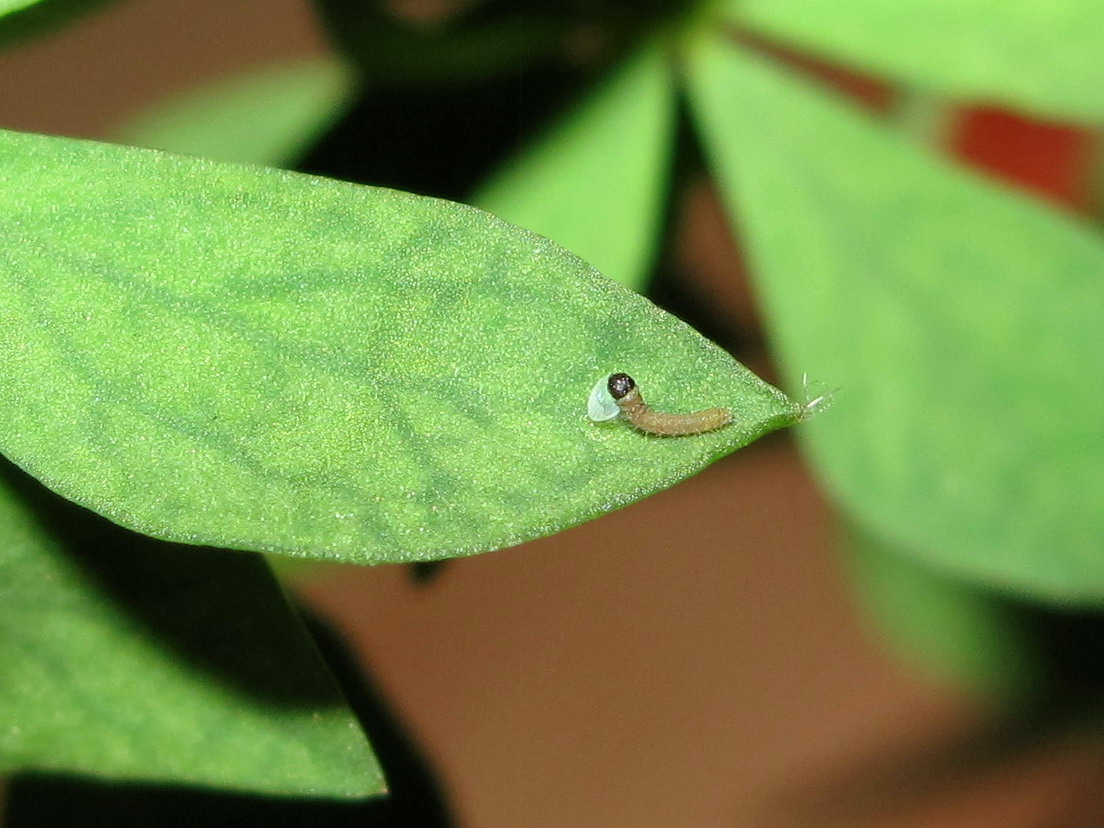
"The colour after the first moult is a dull smoky or grey-green, the head dusky-brown, both the head and body being clothed with very short fine hair or pubescence, only visible by the aid of a lens, which also brings into view indications of a lateral whitish stripe and a smoky leaden hue prevailing over the under surface. Its first meal after moulting consists of its cast skin. It now perforates the leaves when feeding, whereas previous to moulting it fed only on the cuticle, leaving the internal fibres. On June 29th several larvae were in their second stage, having only moulted once, but the majority were in their third stage, and were almost ready for their third moult. Before second moult the larva measures 4.20 mm. long; the colour is pale yellowish-grey-green; head and body minutely sprinkled with black dots, each emitting a tiny white hair; the segmental divisions are clearly defined and each segment is wrinkled transversely; the ground colour of the head is brown; the anal segment is slightly darker than the rest of the body. It rests in a perfectly straight position along the midrib of the leaflet with its head towards the base." - Frohawk (1924)
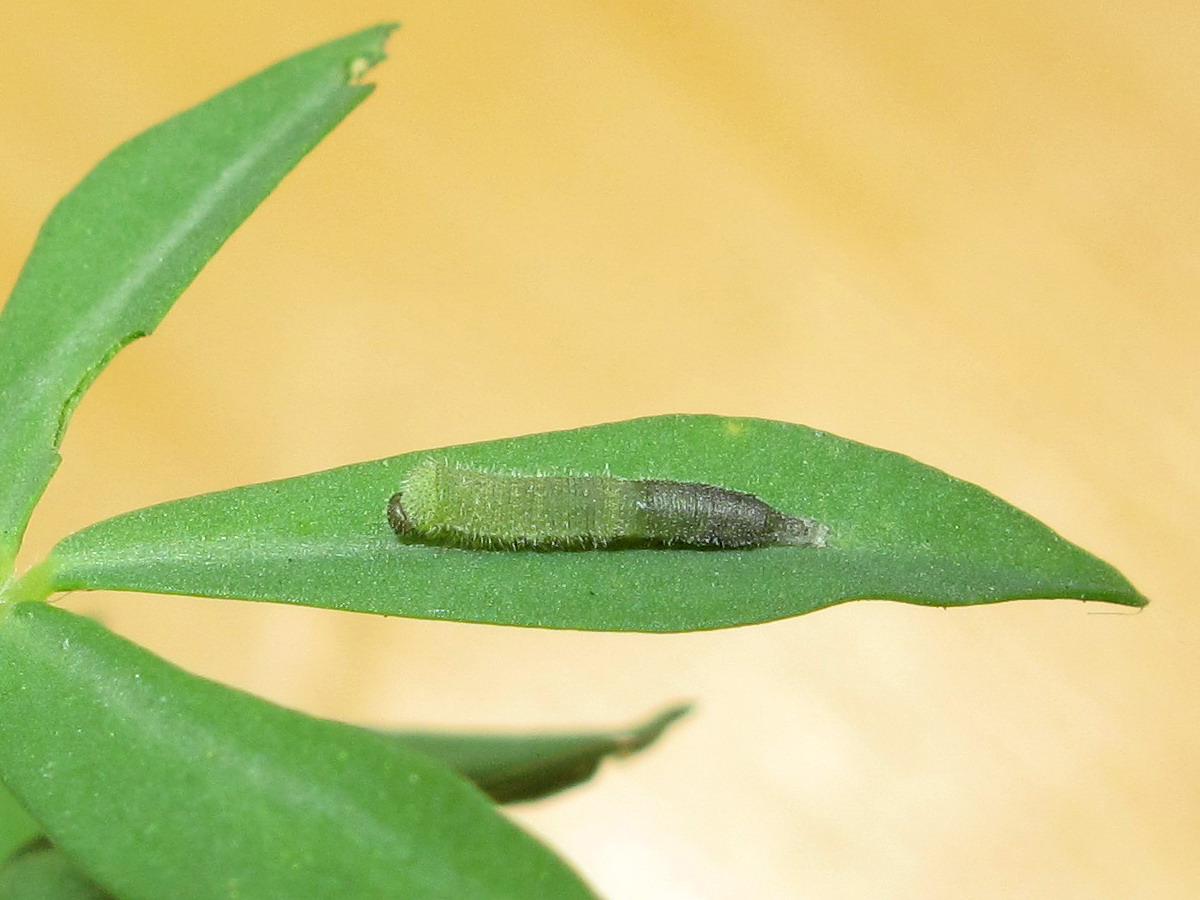
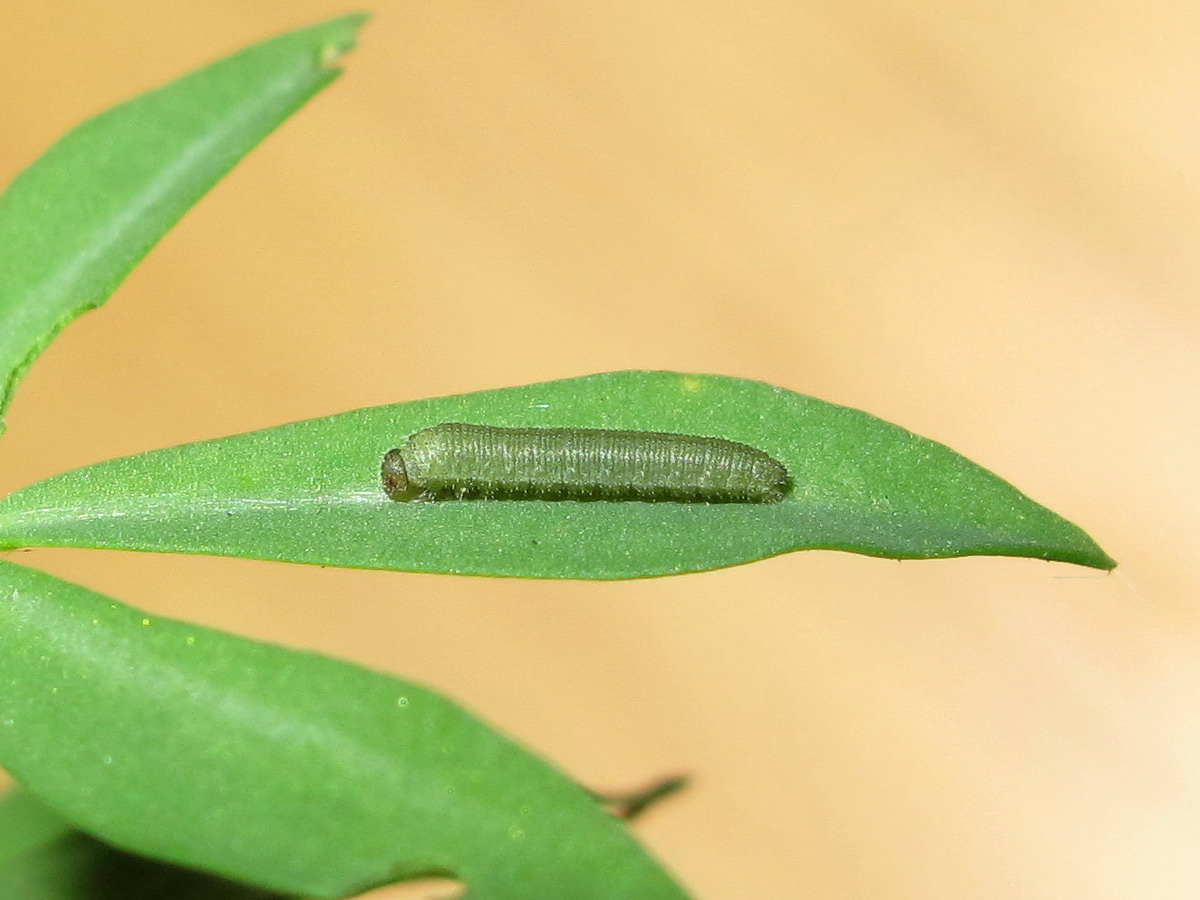

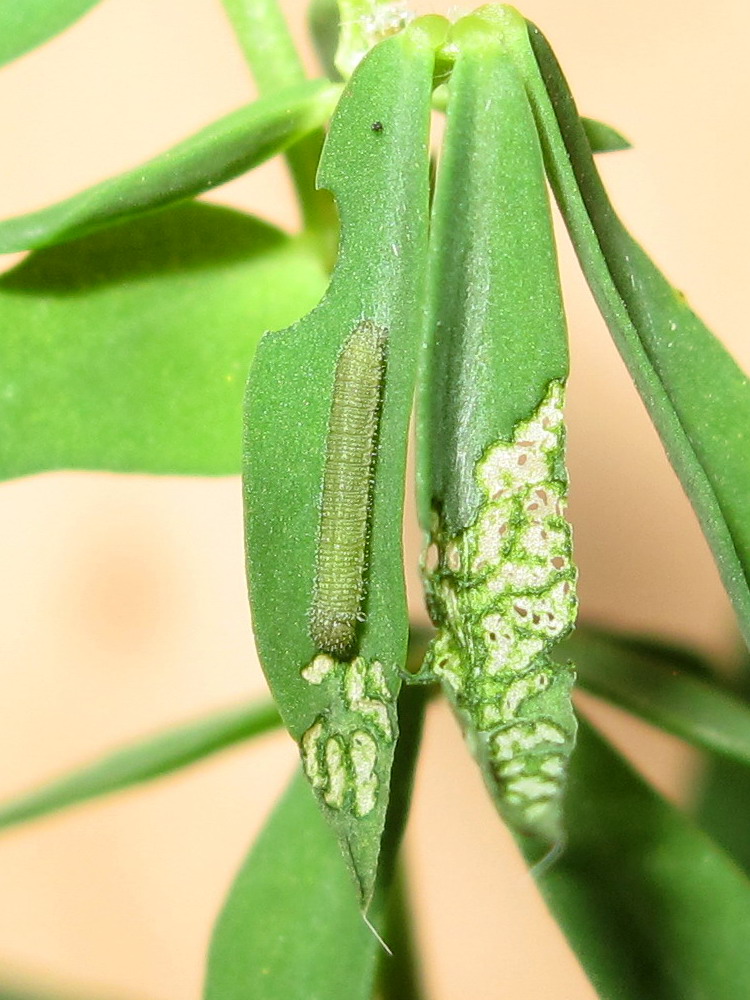
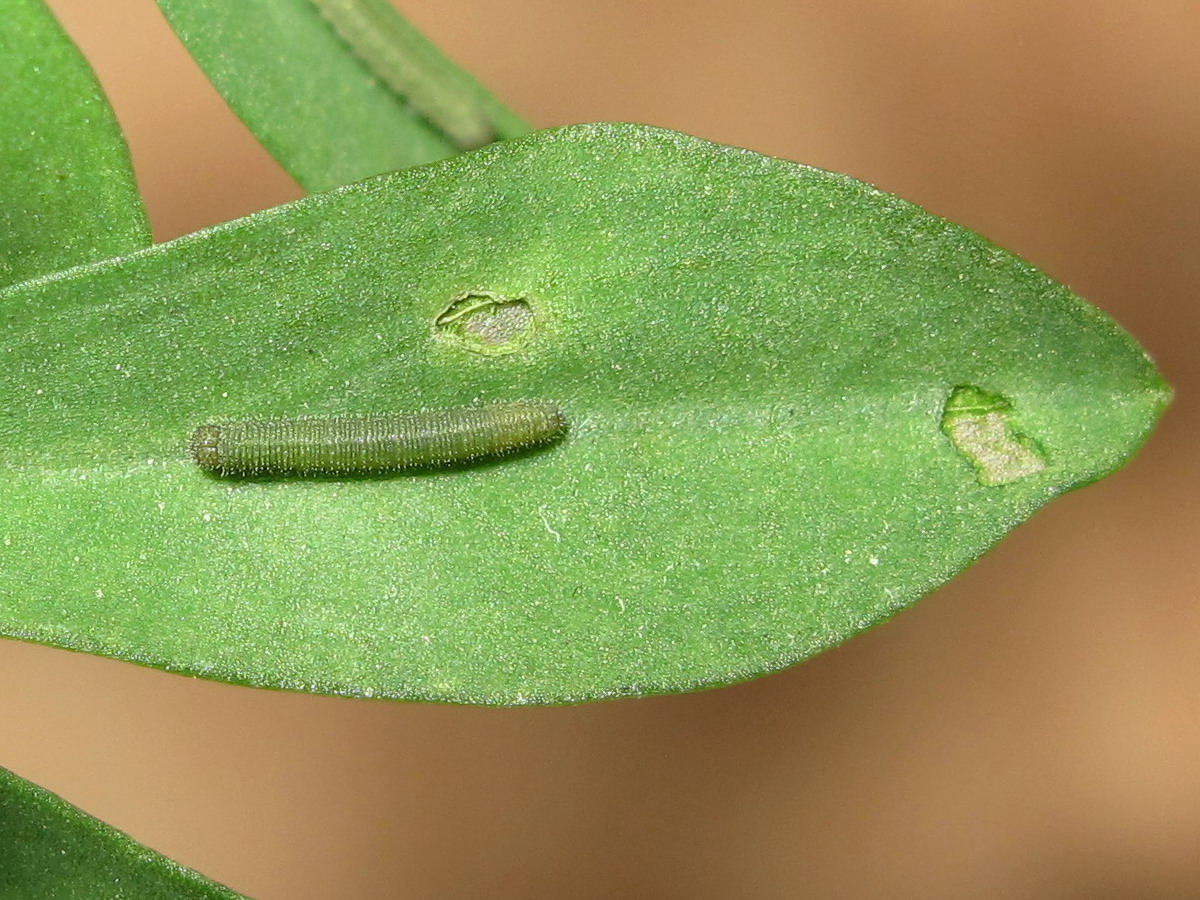

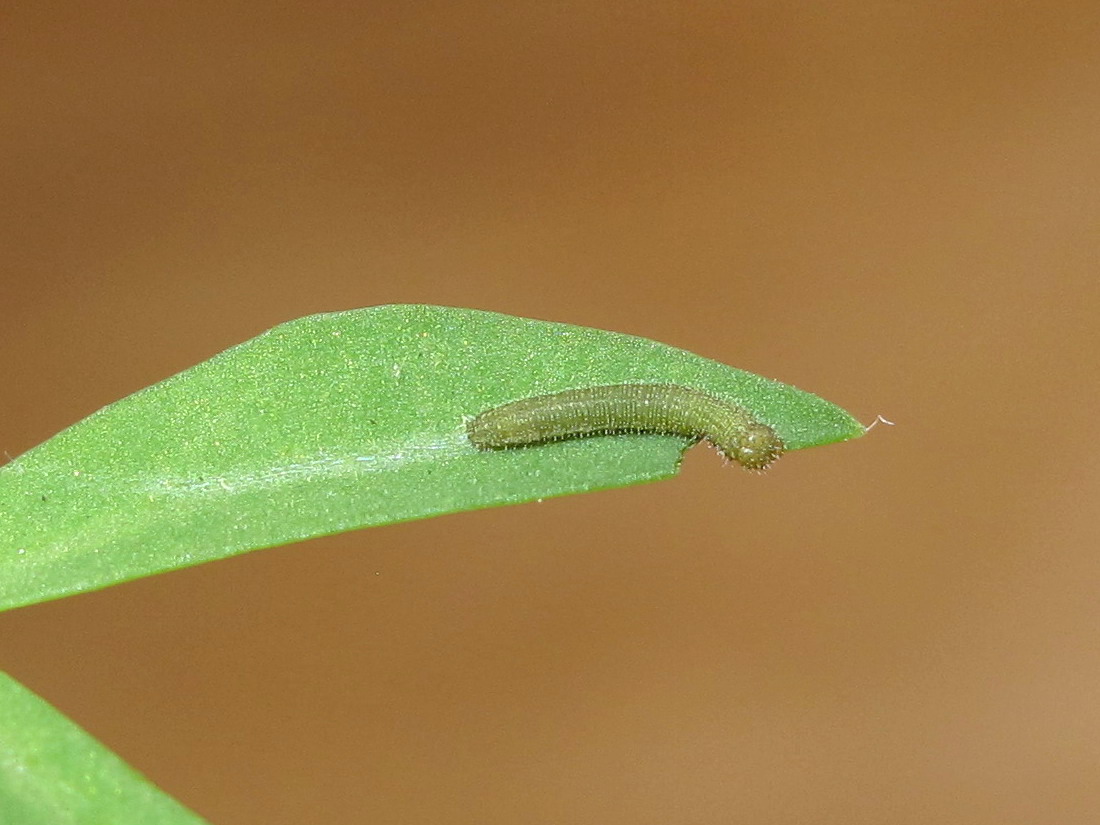
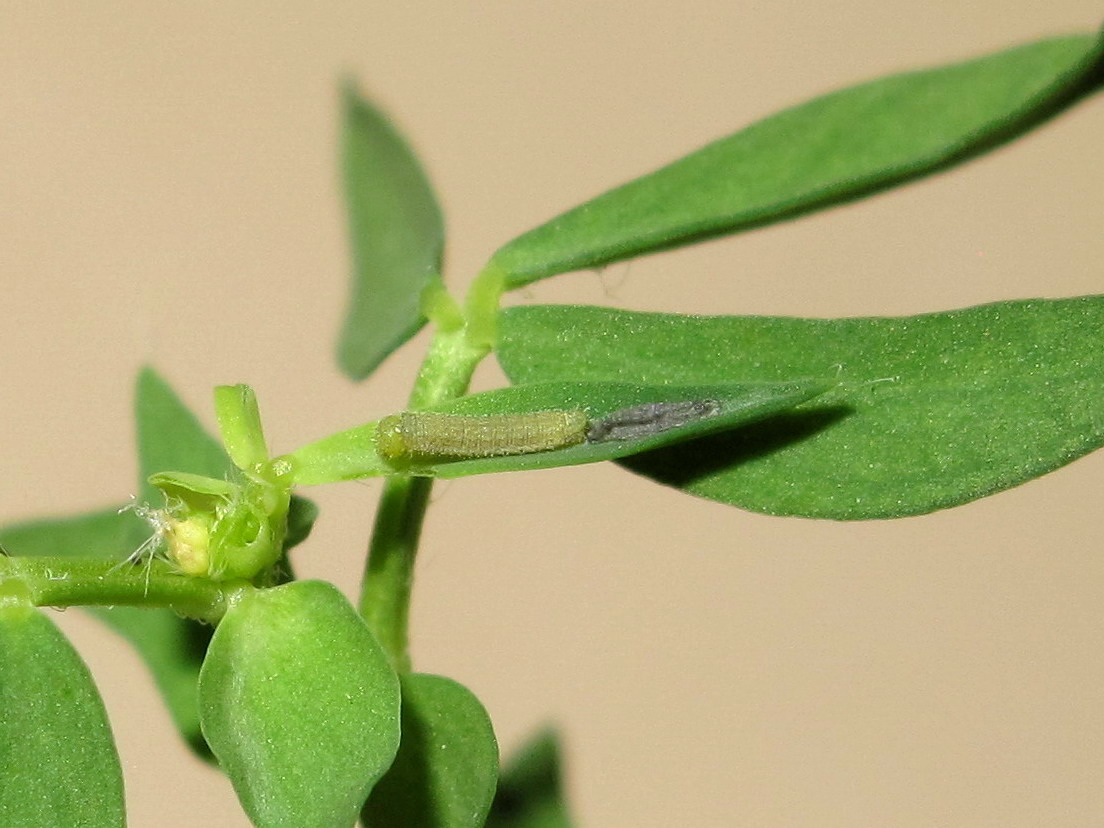
"After the second moult and shortly before the third it is 9.5 mm. long. The body is nearly cylindrical; the colour is a dull green, approaching a smoky or grey-green, produced by the numerous black warts and whitish hairs, which also give the surface a velvety texture, which is increased in roughness by the deep transverse wrinkles; a whitish lateral line runs the entire length of the body; the head is pale ochreous-green, sprinkled with black warts and white hairs similar to the body; the under surface is dull green. Just before moulting the colouring becomes paler and assumes a light bluish-green tint." - Frohawk (1924)
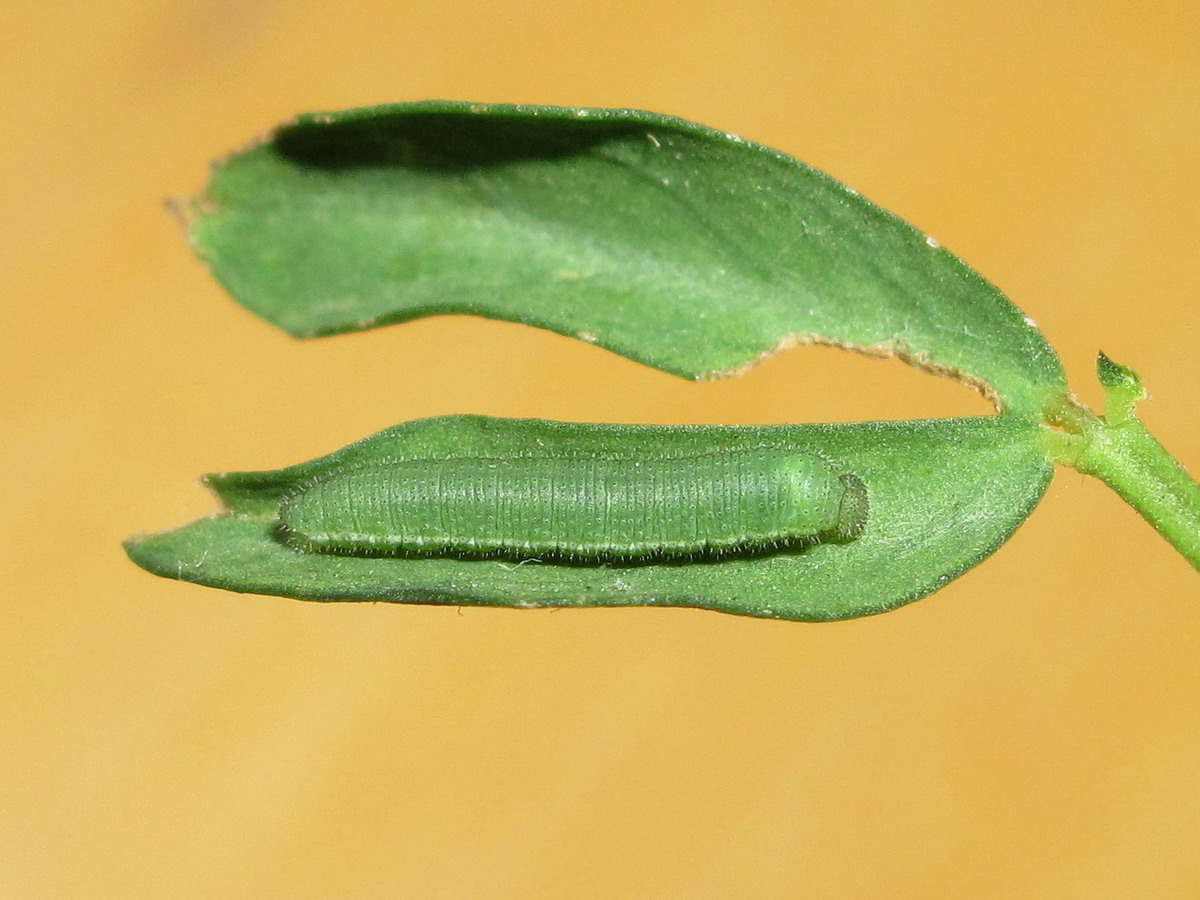

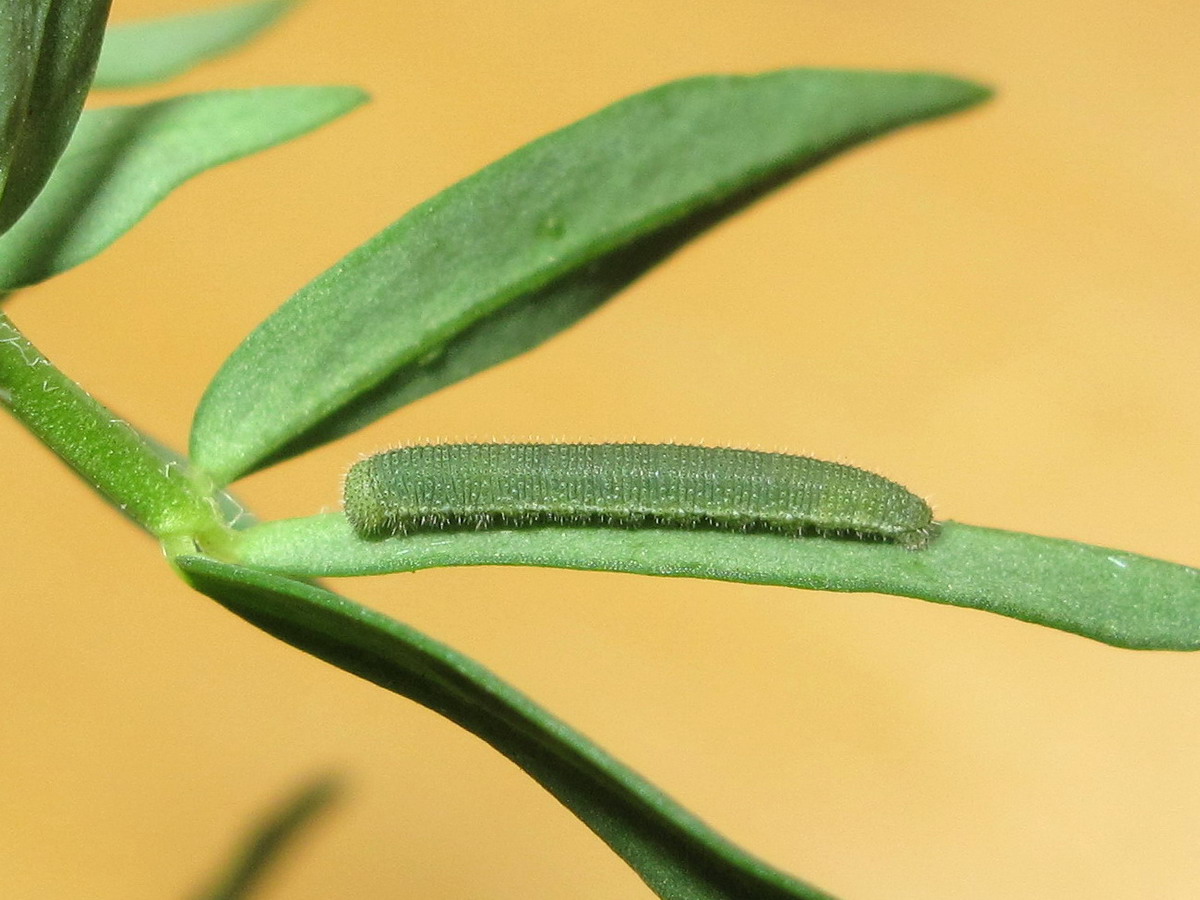
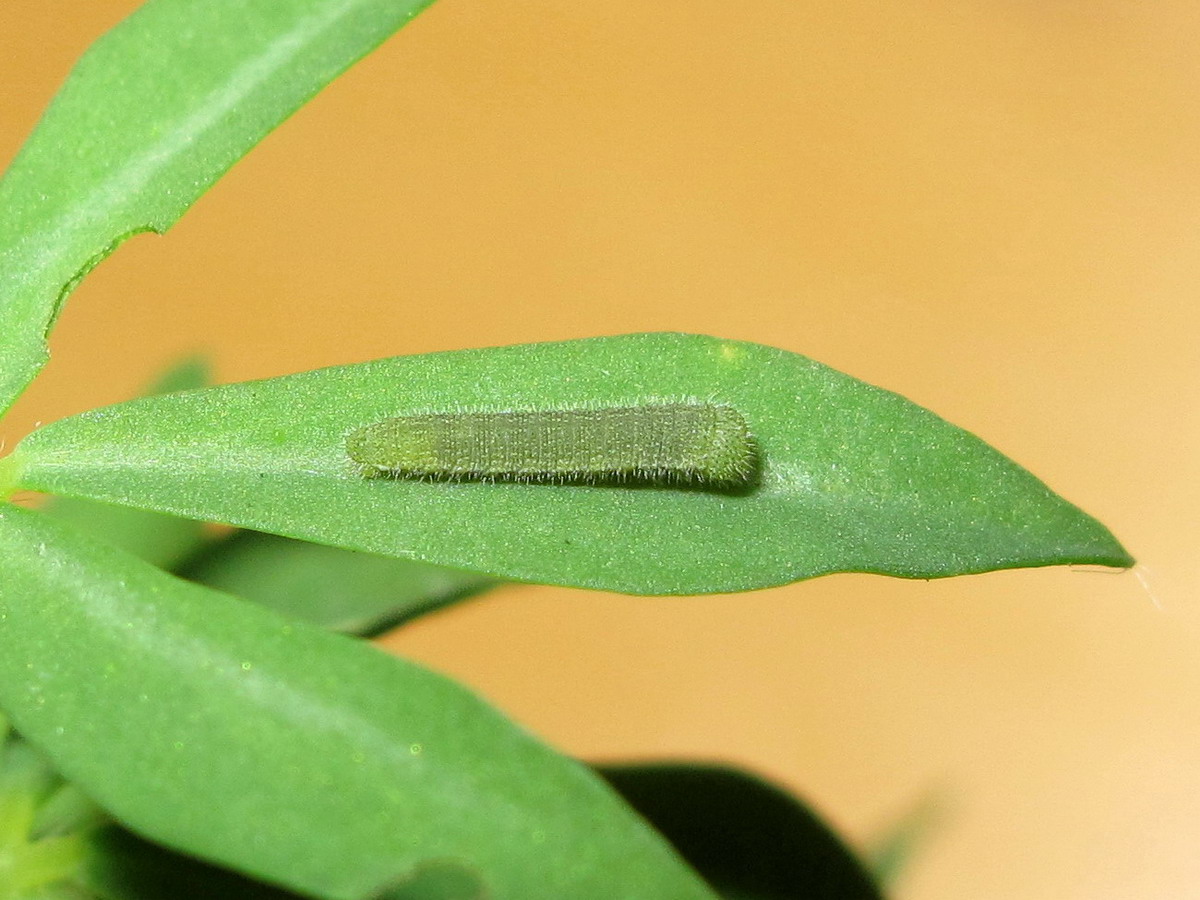

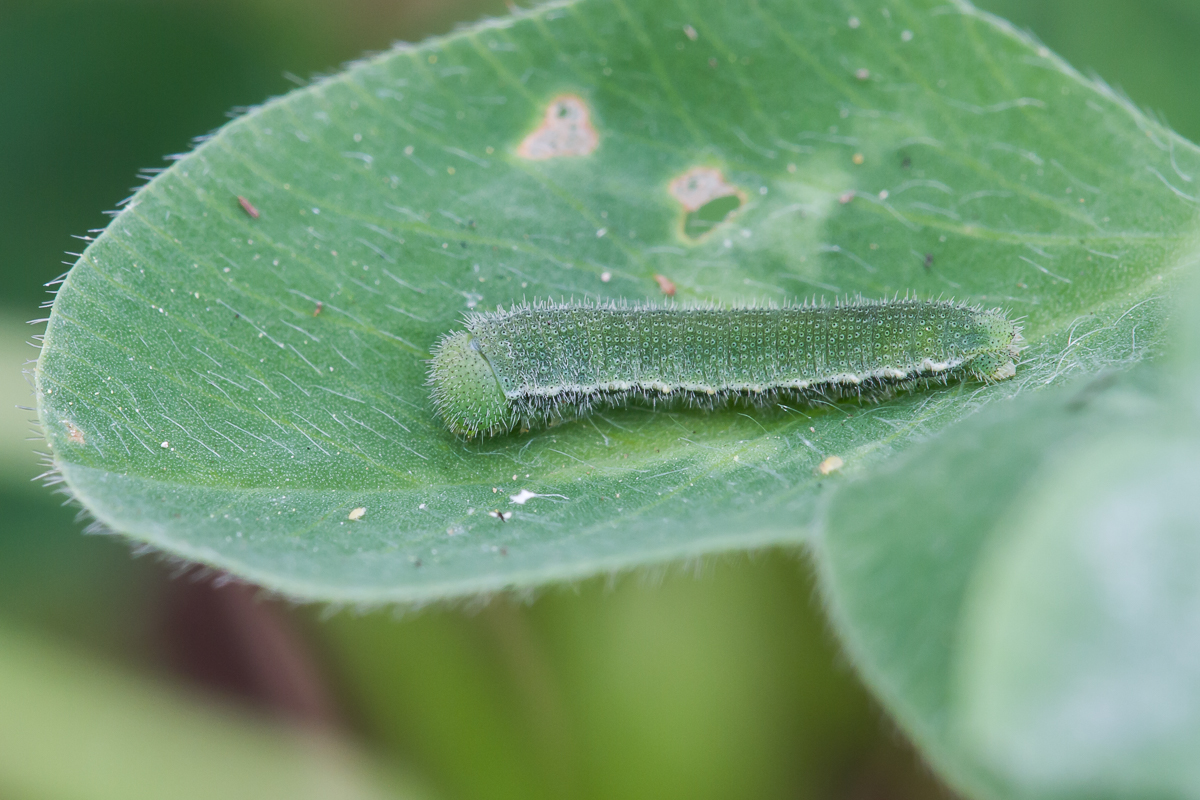
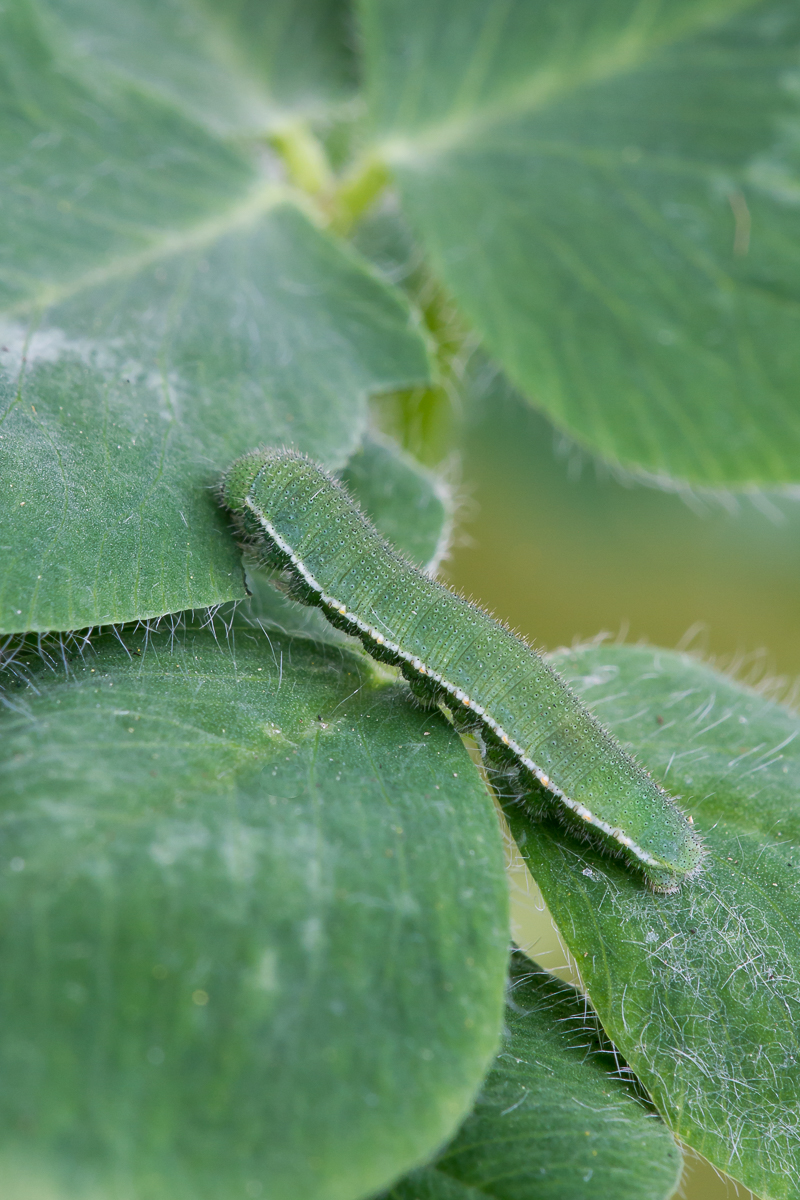
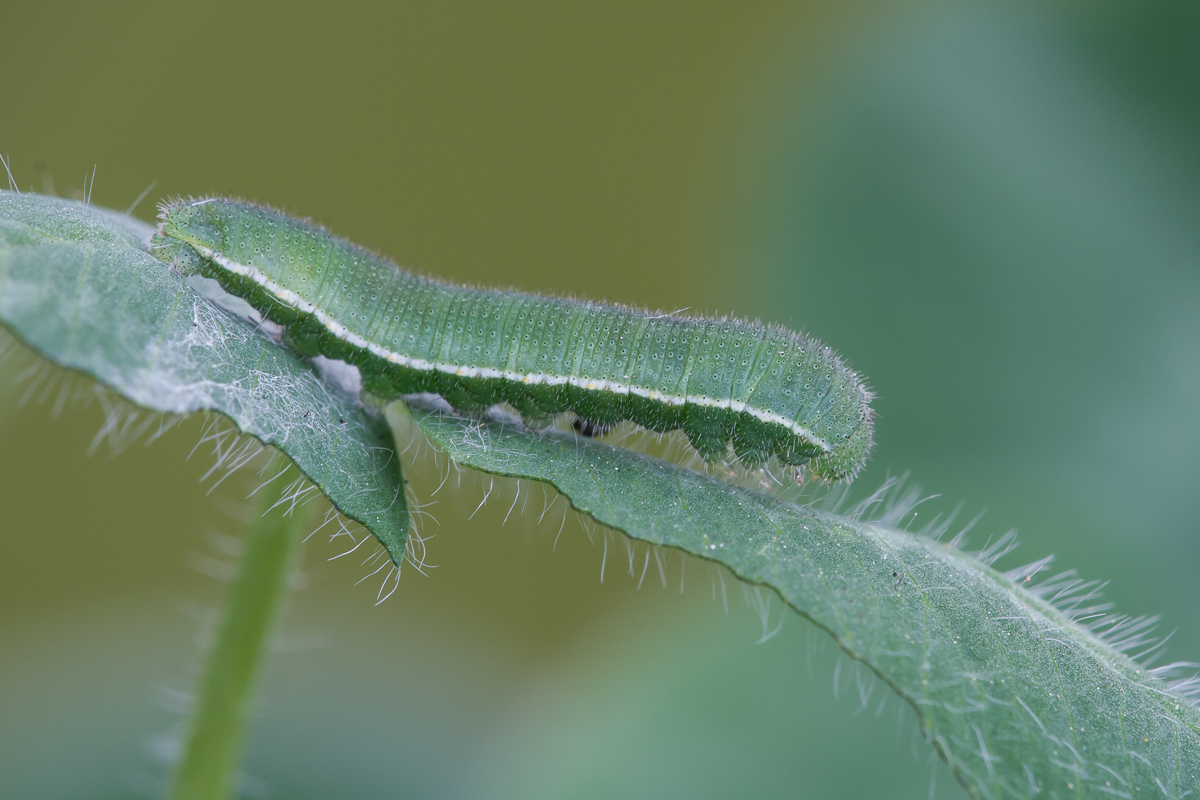
"One larva which hatched on June 11th moulted the third time on July 1st, and its fourth moult occurred on the 4th, having fed for only two days, as it fixed itself for the fourth moult on the 3rd and changed its skin the following day. After third moult, when twenty days old, it measures 15.9 mm. in length while resting; the colour is now light green, tinged with bluish, resembling very closely the colour of the upper surface of a clover leaf; the white spiracular line is very conspicuous and encloses the spiracles and a yellow spot on each segment. In other respects it is precisely similar to the previous stage. It rests with its anterior segments slightly raised in a gentle curve. It has the power of ejecting its excrement to some distance. It feeds during day in sunshine or shade, but prefers the former, and grows rapidly." - Frohawk (1924)
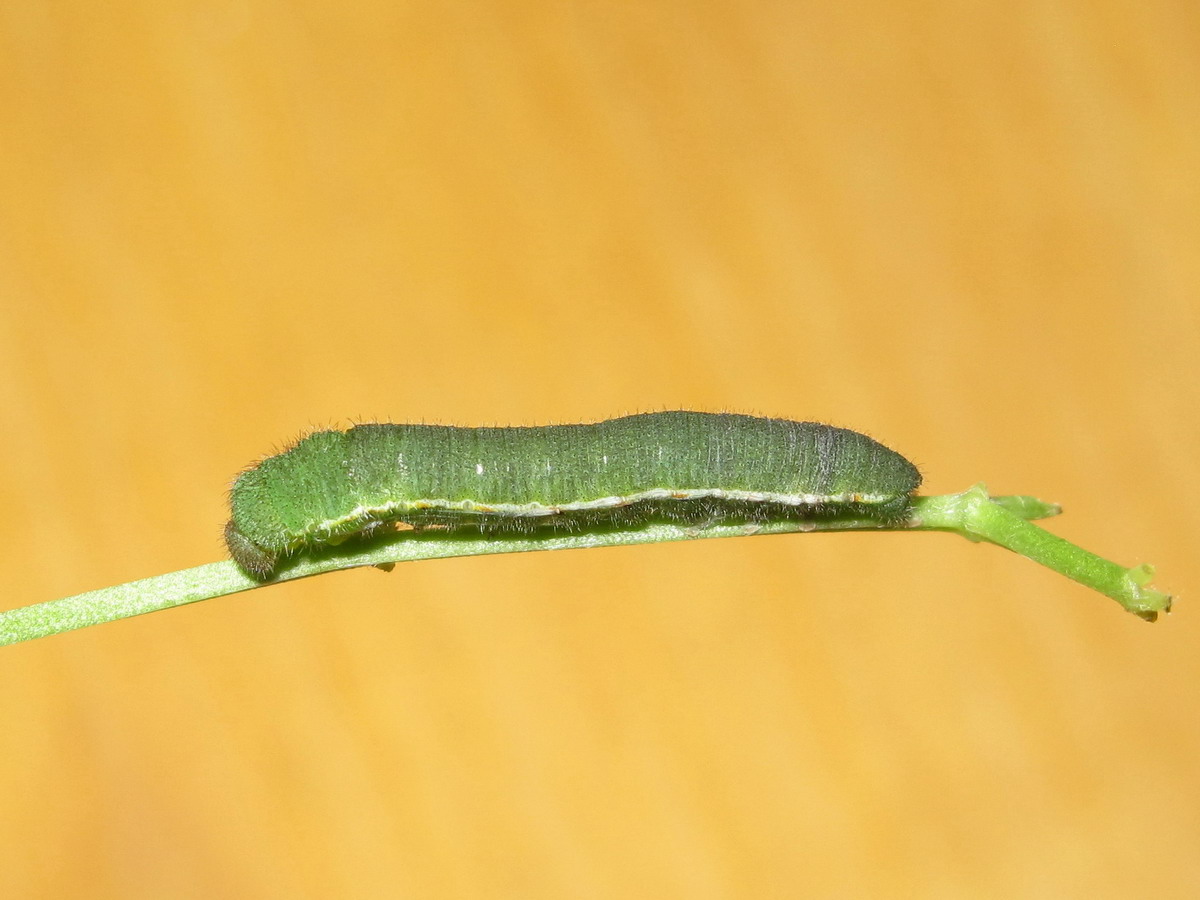
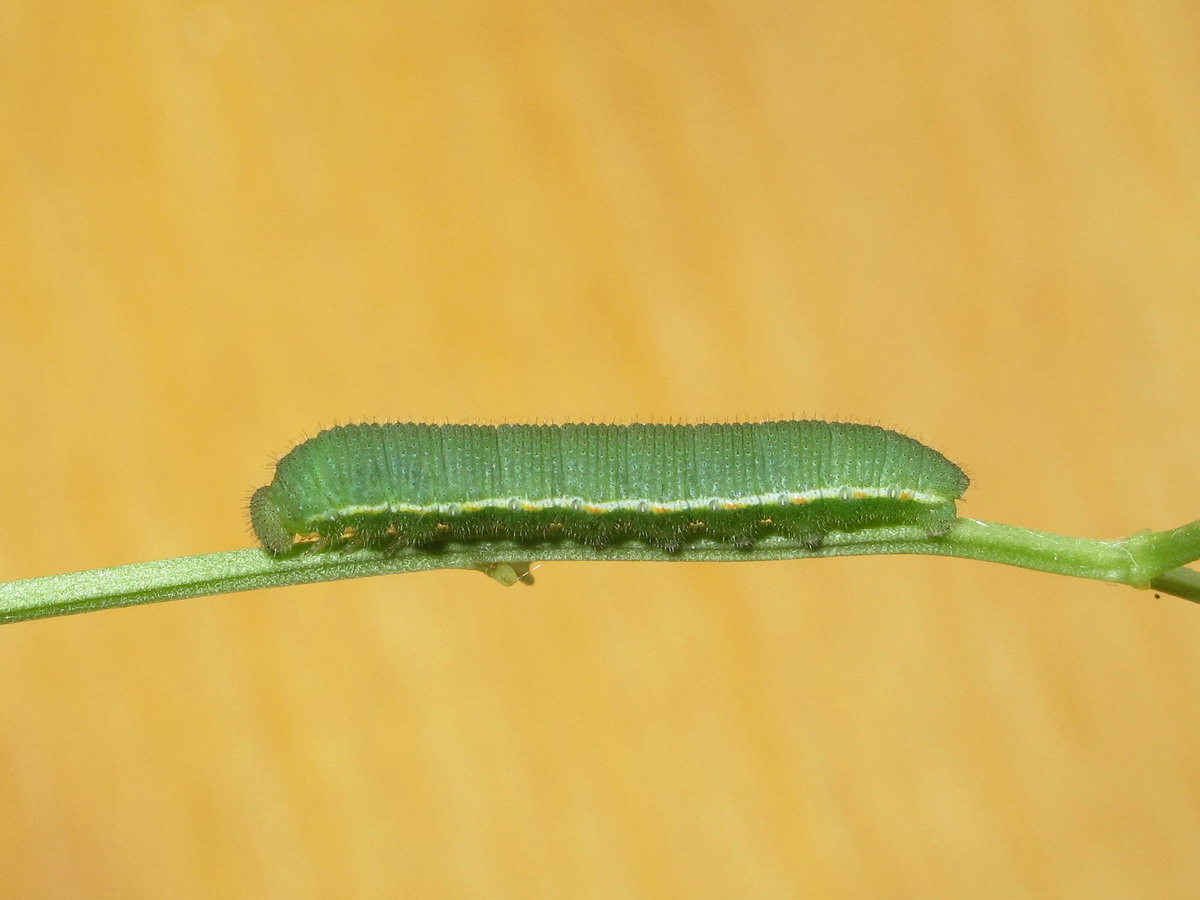
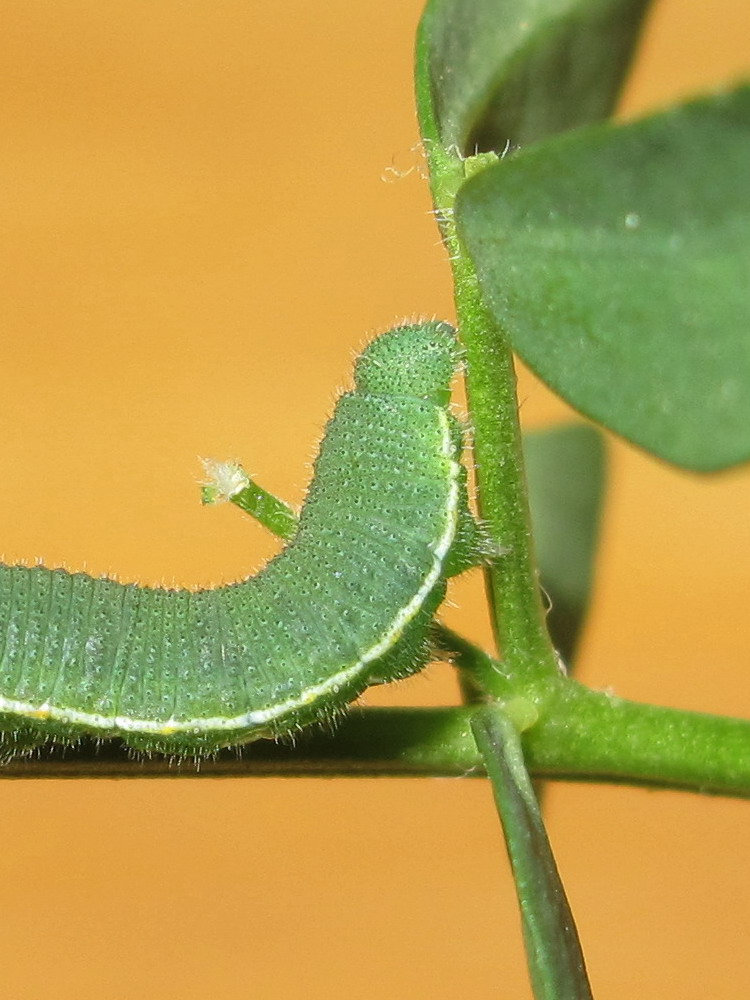
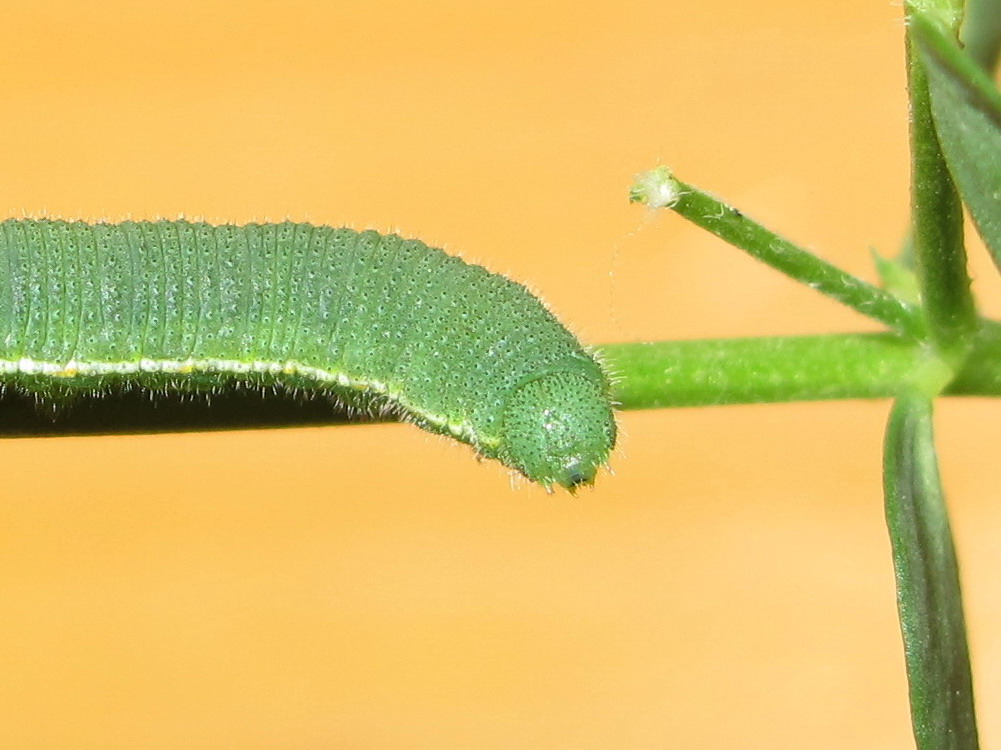

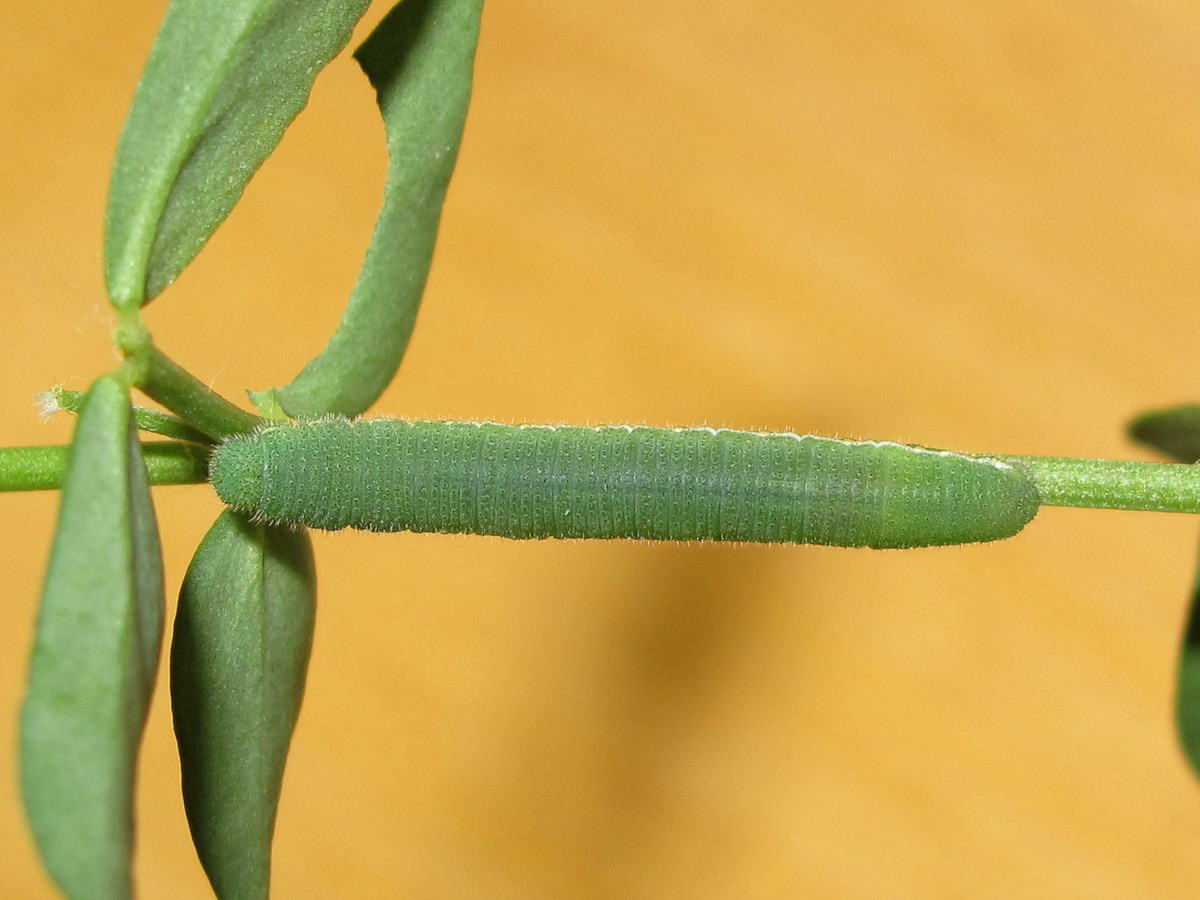
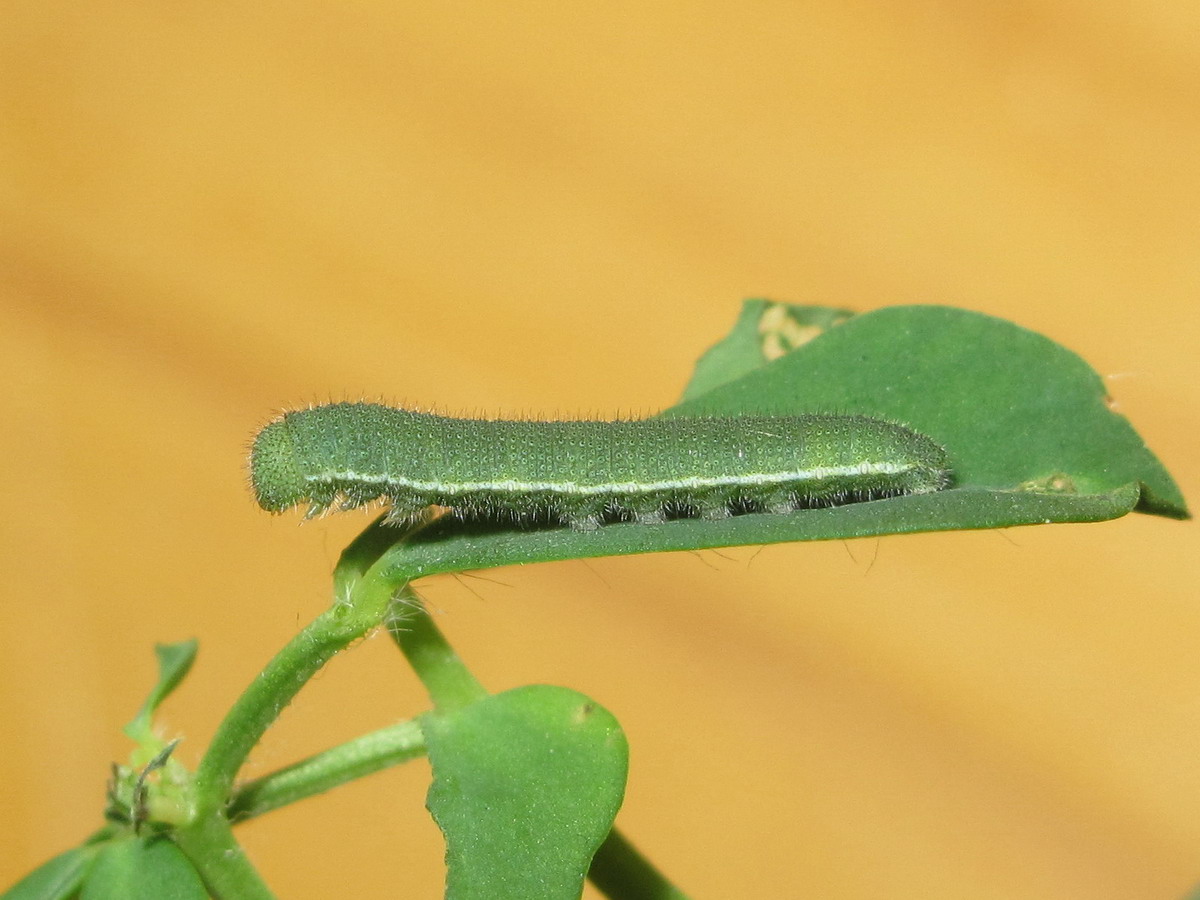
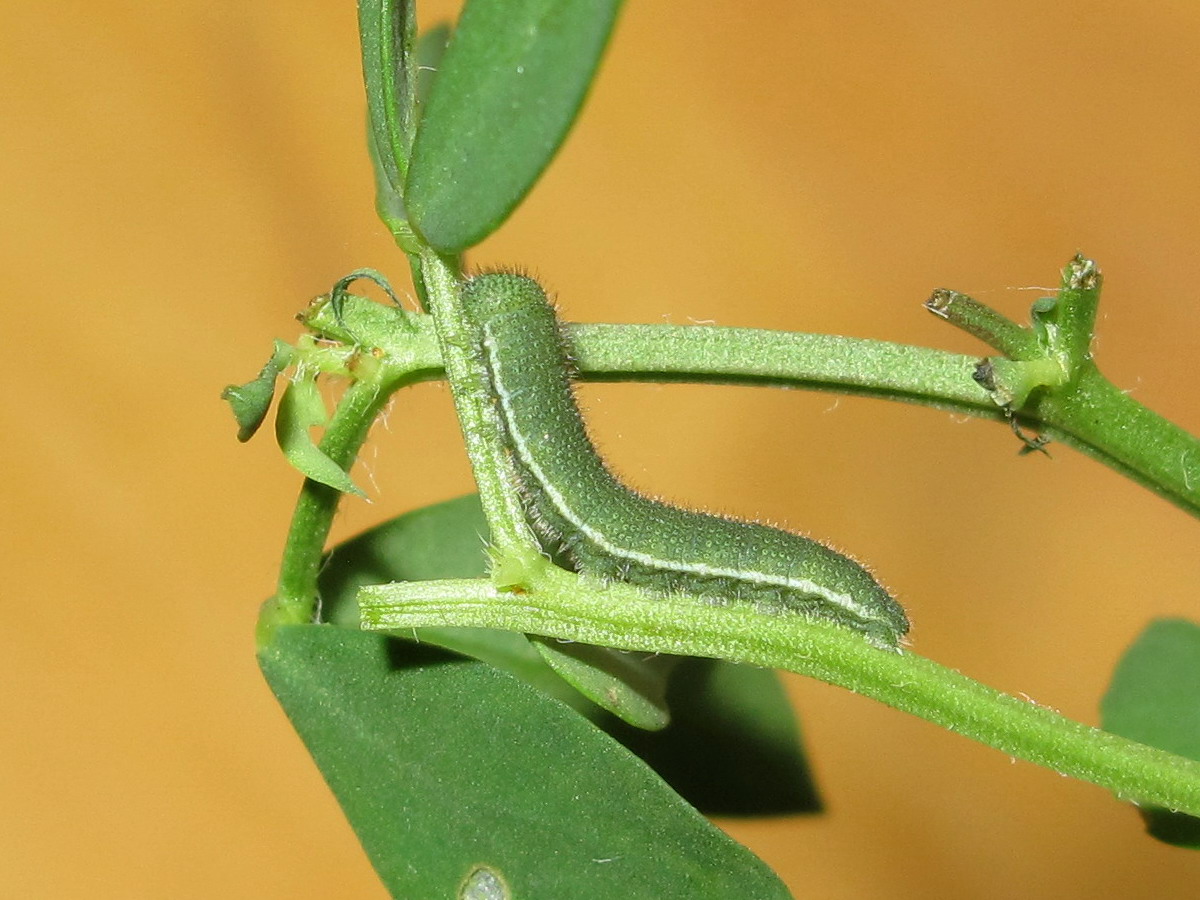
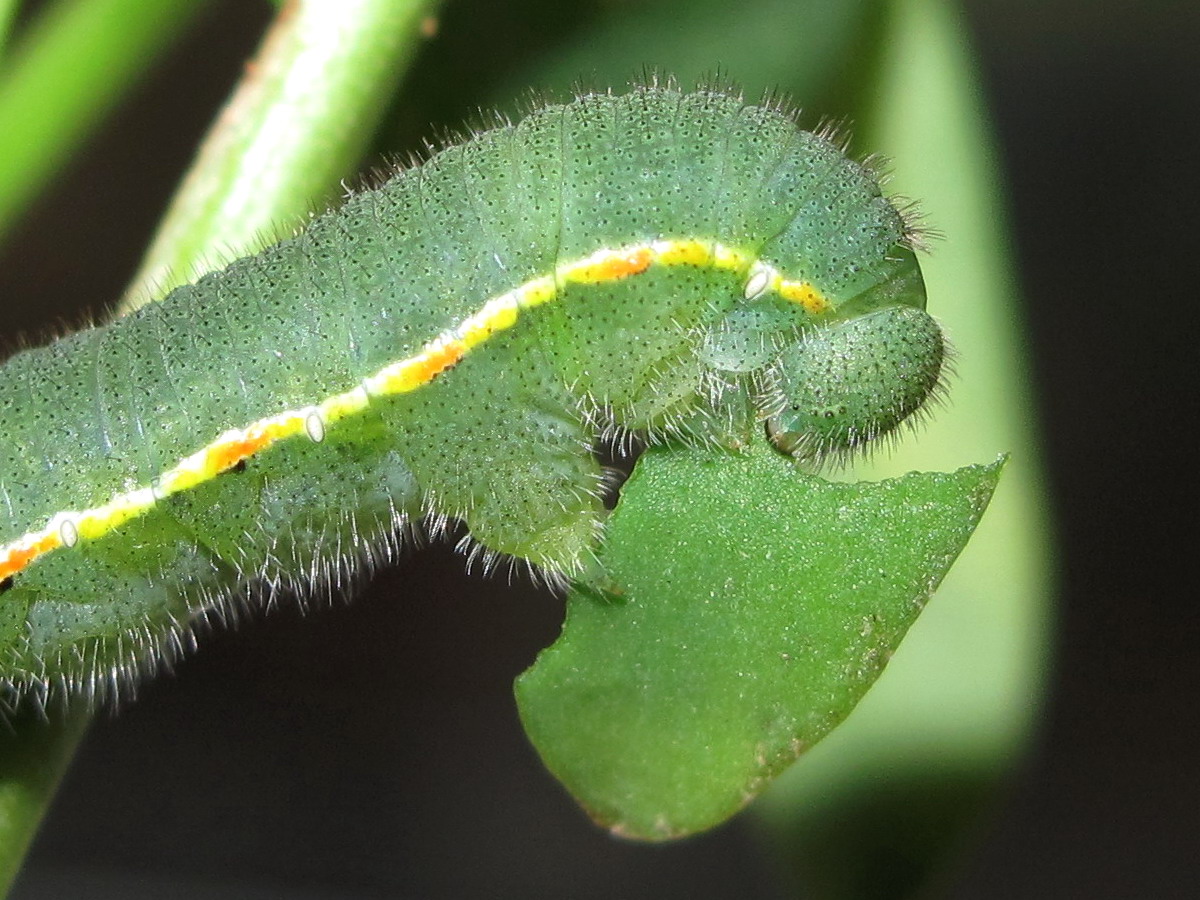
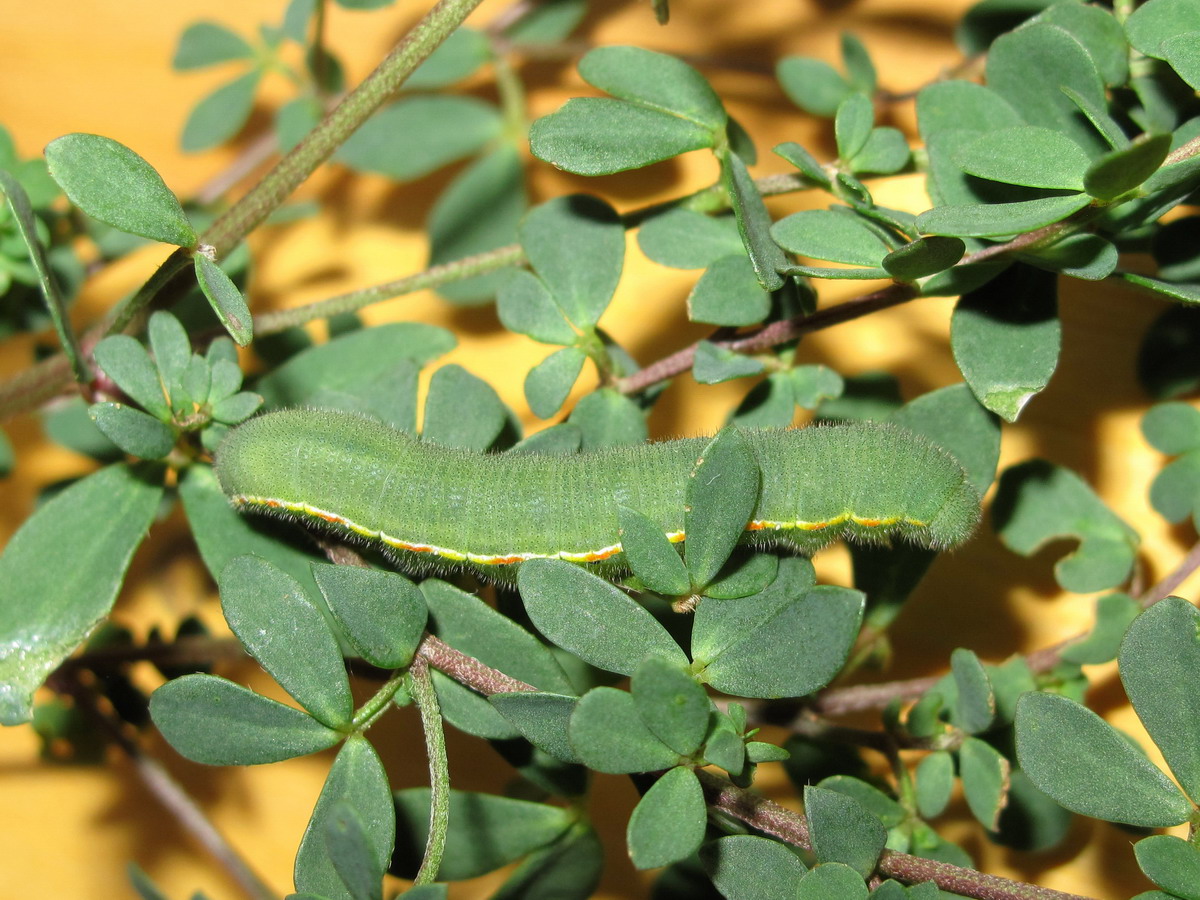
"After fourth and last moult, when fully grown, on July 10th, twenty-nine days old, it measures 33.4 mm. long, being almost cylindrical, but slightly attenuated at each end, and moderately stout but well proportioned. The segments are clearly defined and transversely wrinkled; the entire surface, including the head, legs and claspers, is profusely sprinkled with extremely minute black warts, each emitting a very fine short white hair, giving the whole surface a rough and somewhat velvety appearance; it is entirely of a green colour (exactly resembling the colour of the upper surface of a clover leaf), but varying in depth, being darkest on the dorsal surface and palest on the ventral area, where it approaches a bluish-whitish-green. A very beautiful and conspicuous spiracular stripe adorns the side, which is composed of yellow and bright orange-vermilion streaks alternating, the yellow occupying the anterior half and the red the posterior half of each segment; the spiracles are white and situated immediately in front of the red. The upper edge of the stripe is outlined with white, and directly below the red mark is an intensely rich black spot on each segment, from the third to the tenth inclusive; the first two and last two segments are without the black spot. This larva commenced crawling restlessly about on July 11th, and early on the morning of the 12th it fixed itself for pupation upon the gauze covering which had been previously placed over the plants to prevent the full-grown larva from escaping. By noon the following day it pupated, the larval period lasting thirty-one days." - Frohawk (1924)
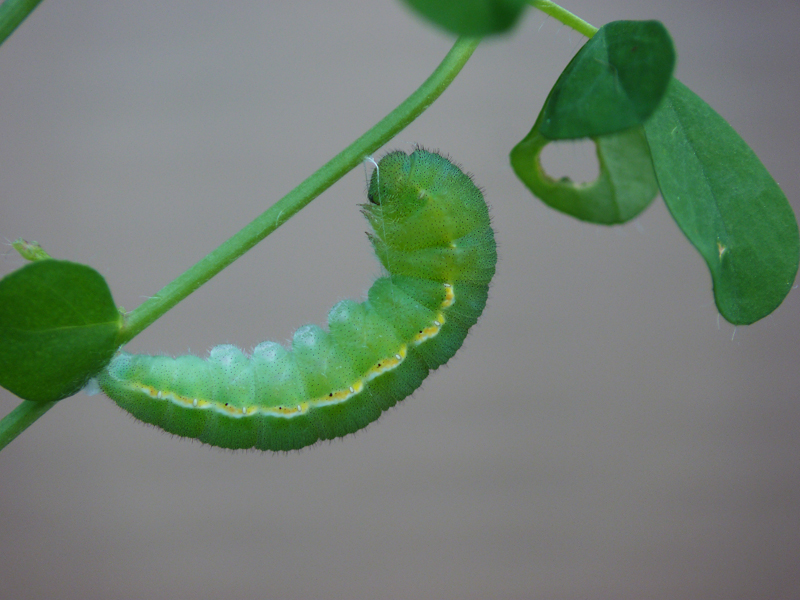
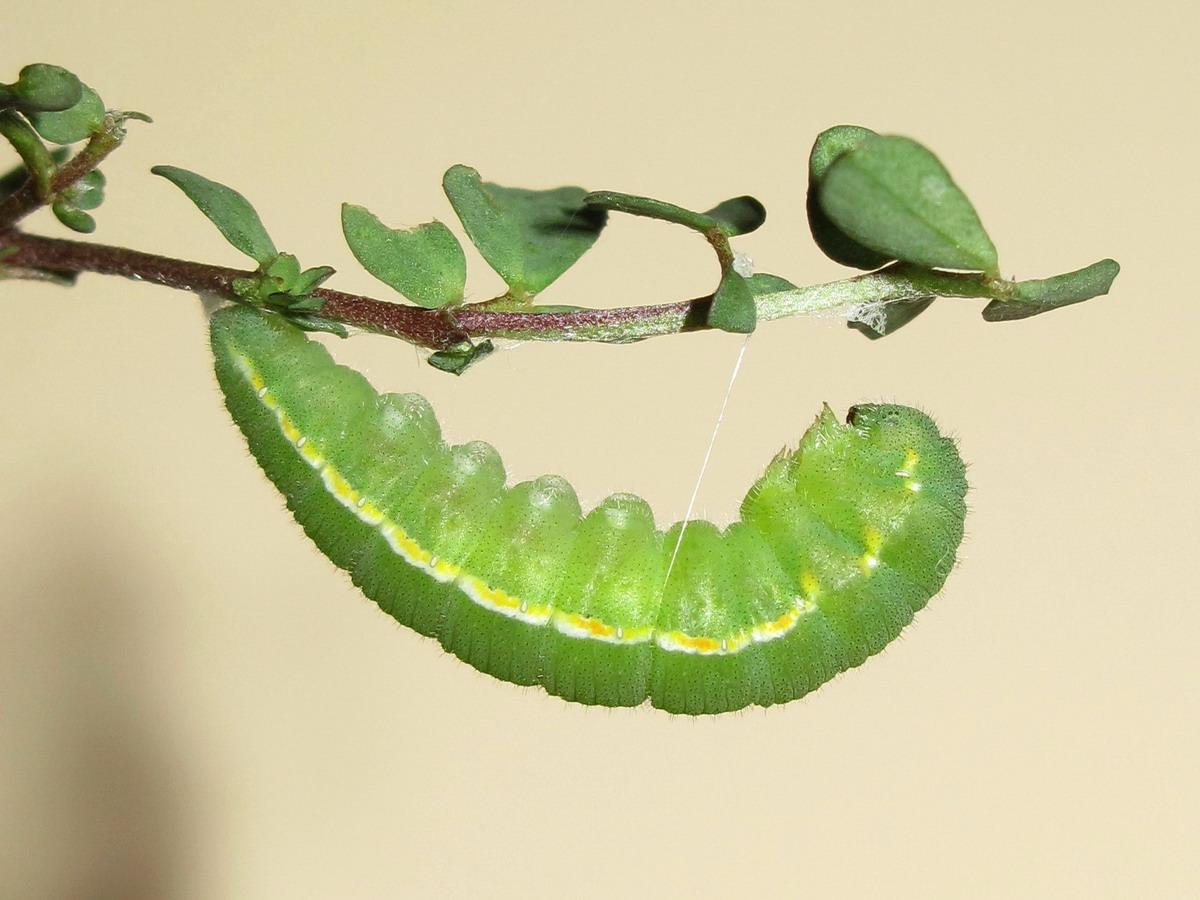
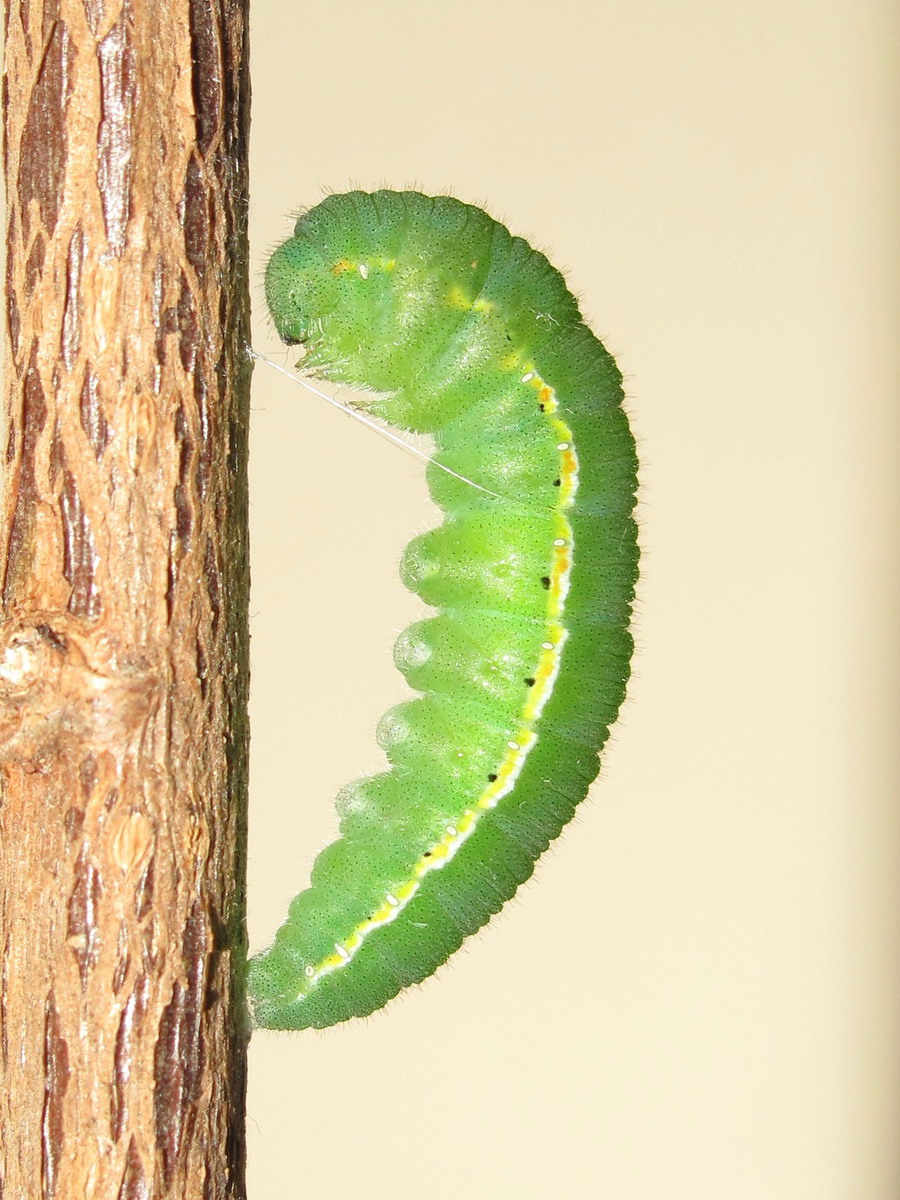
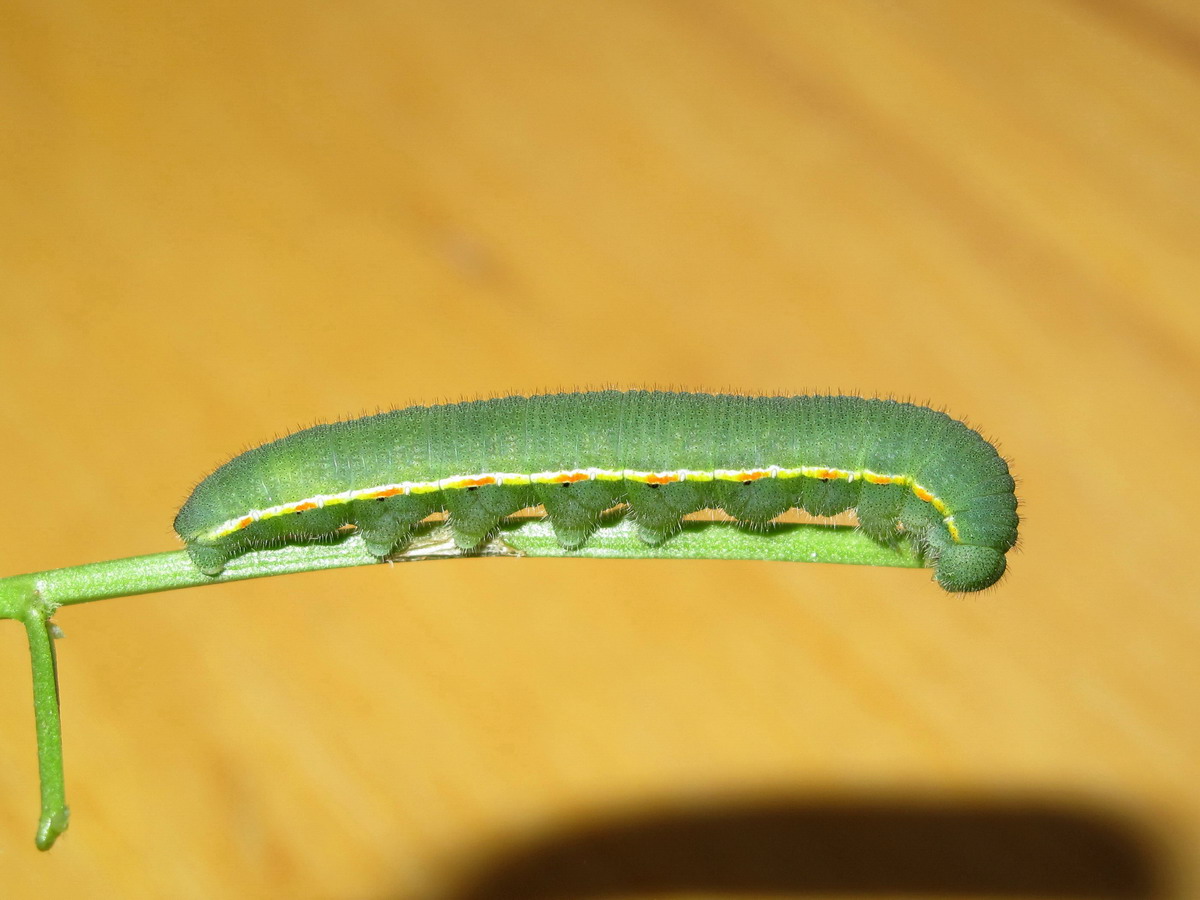
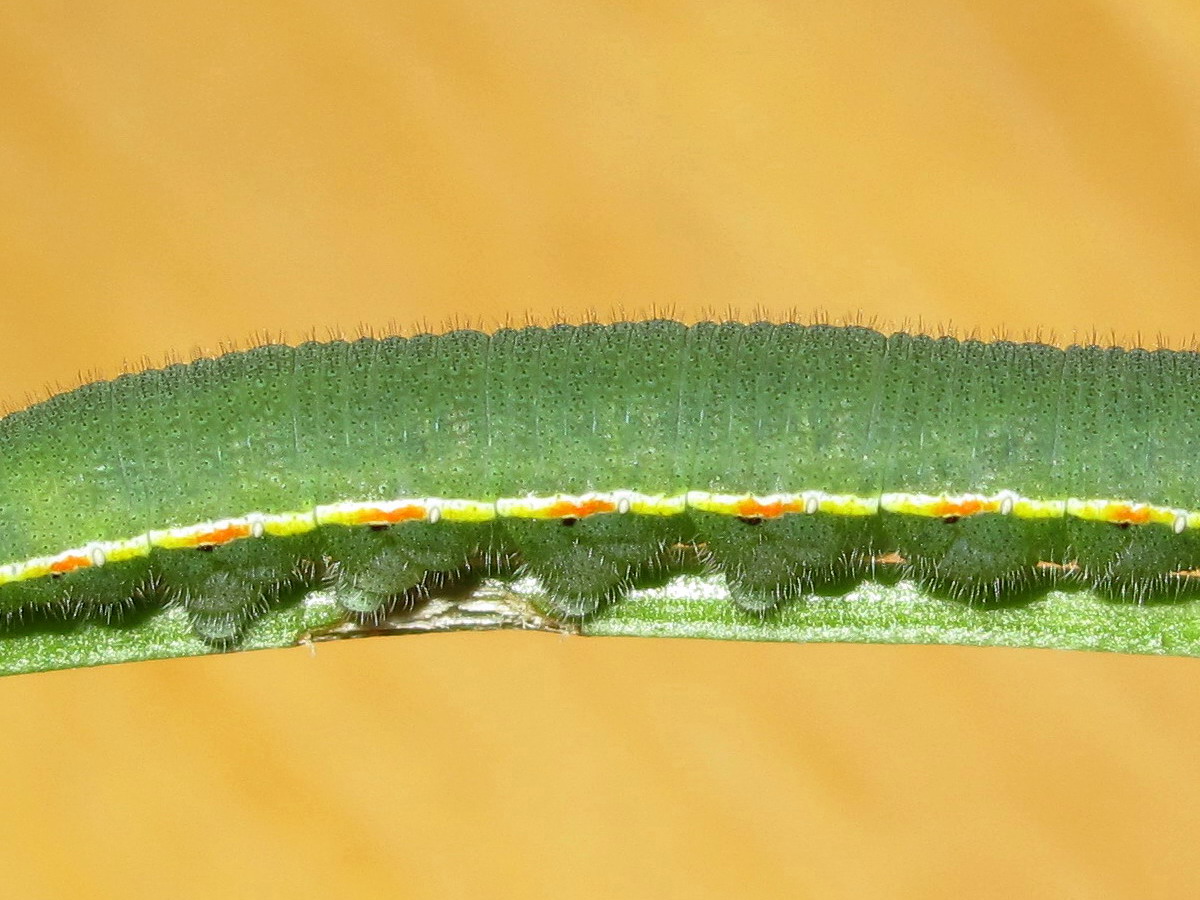

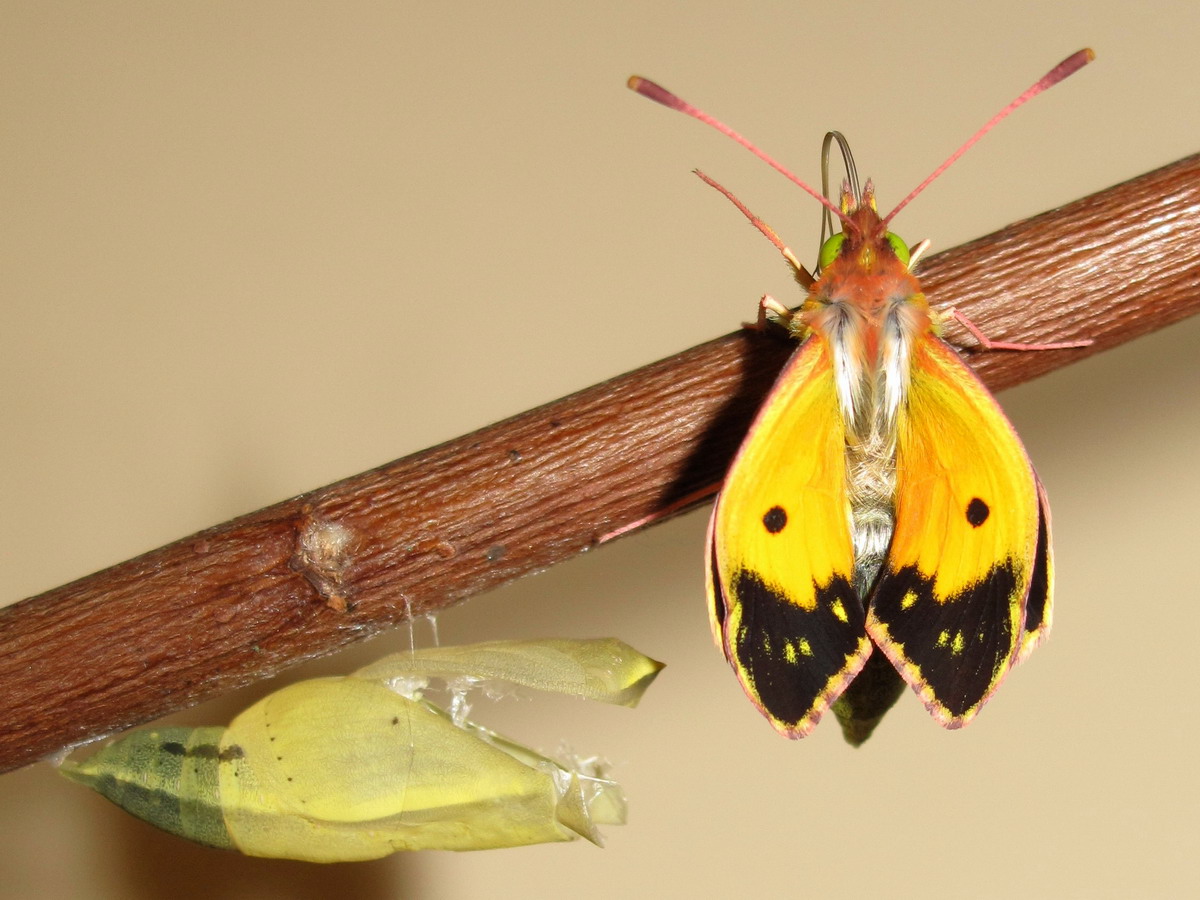
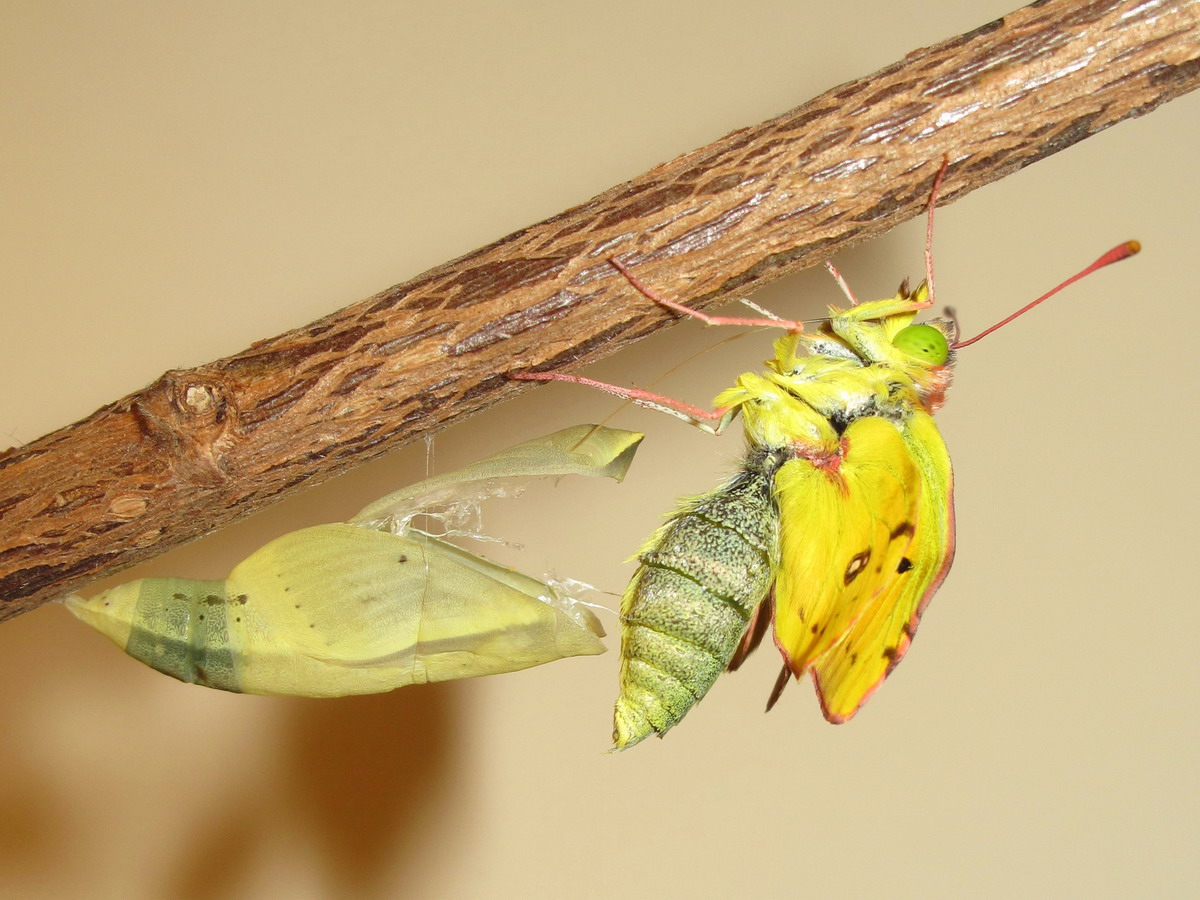
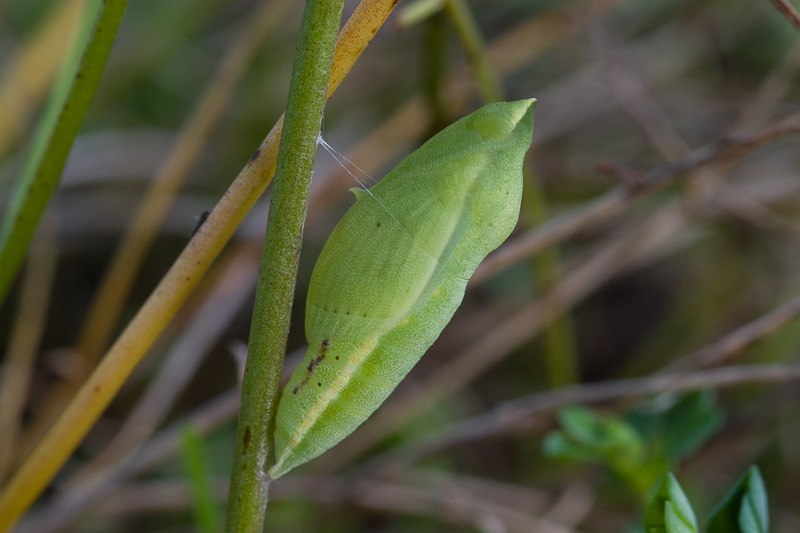
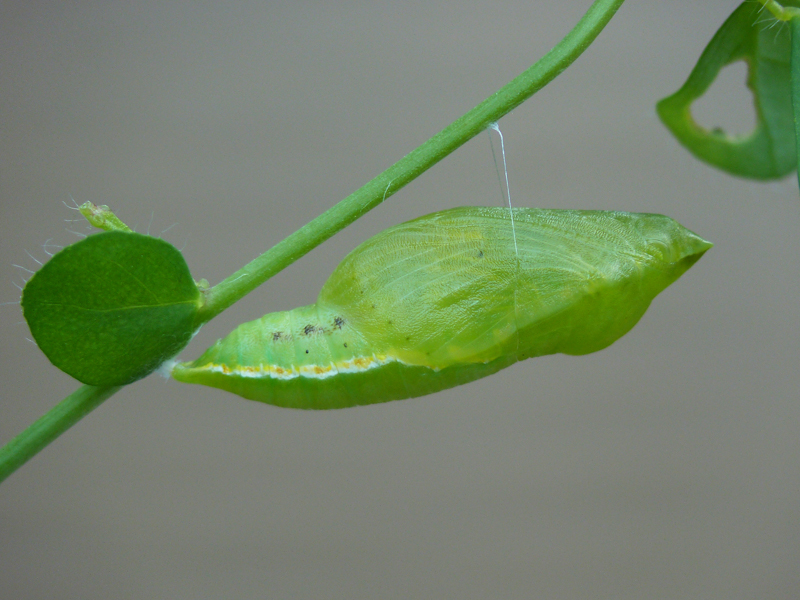
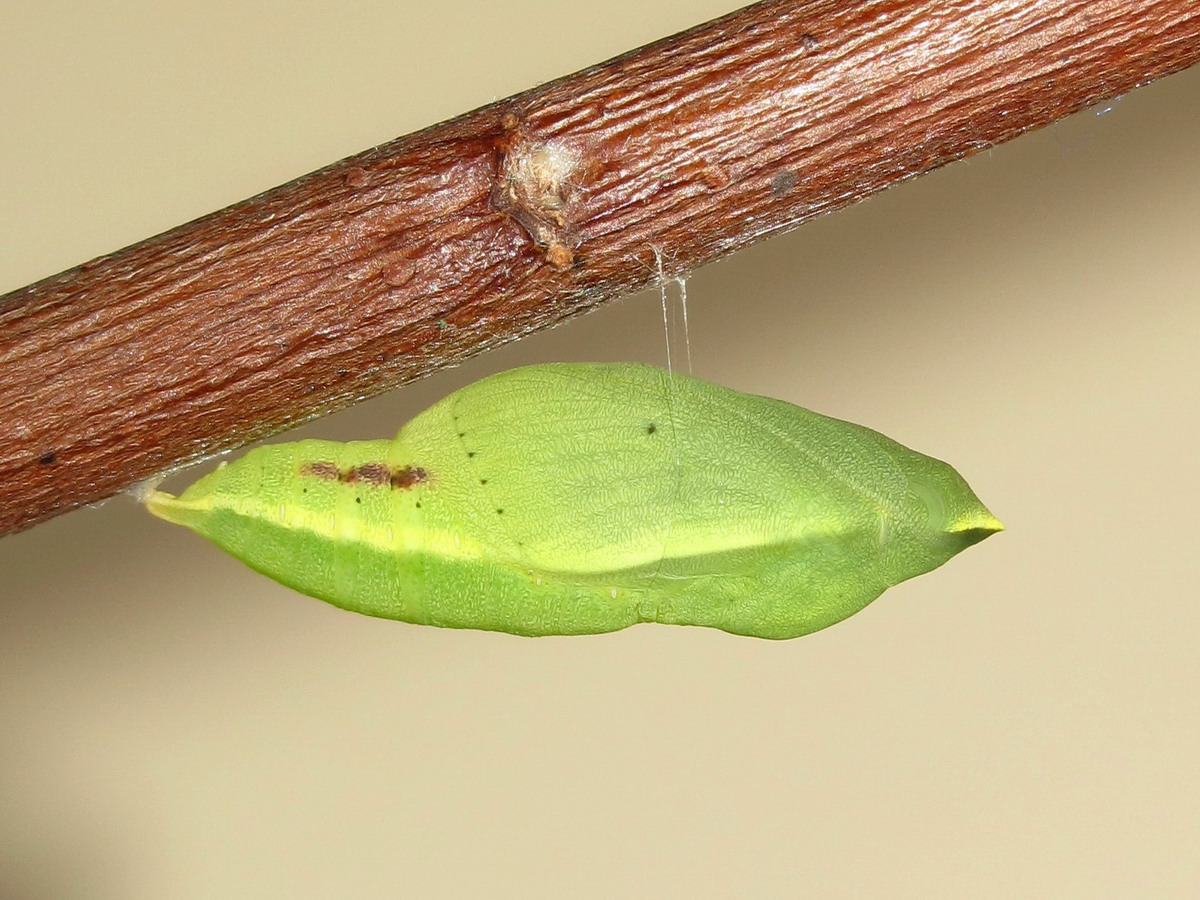
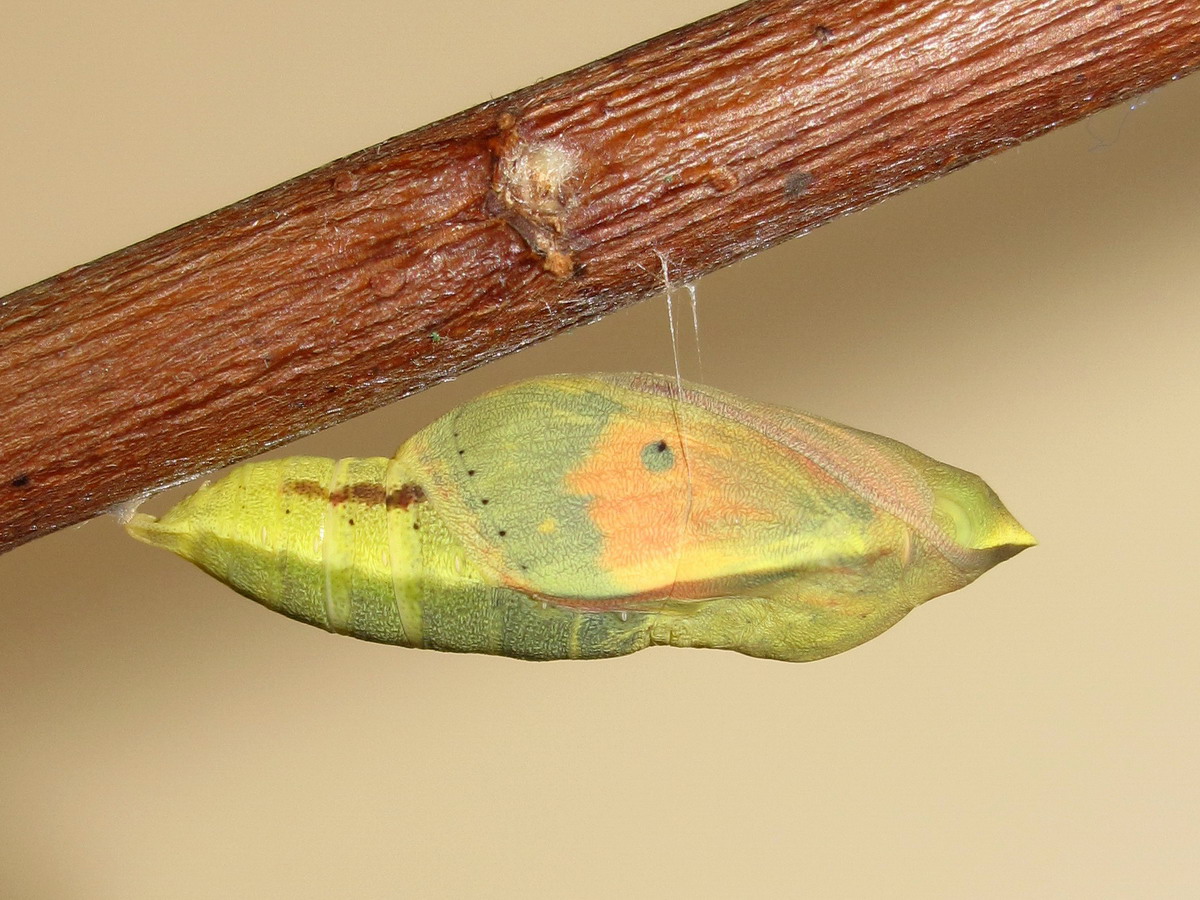
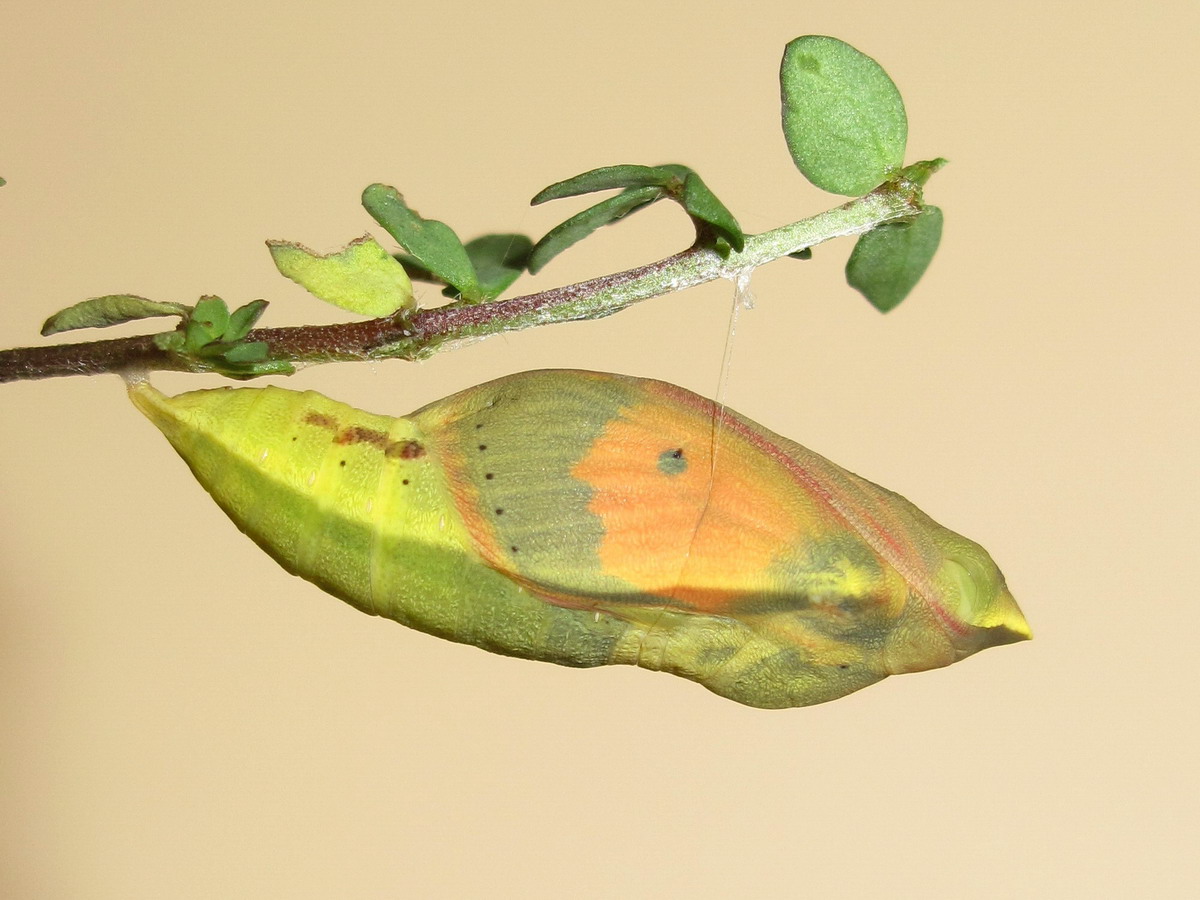
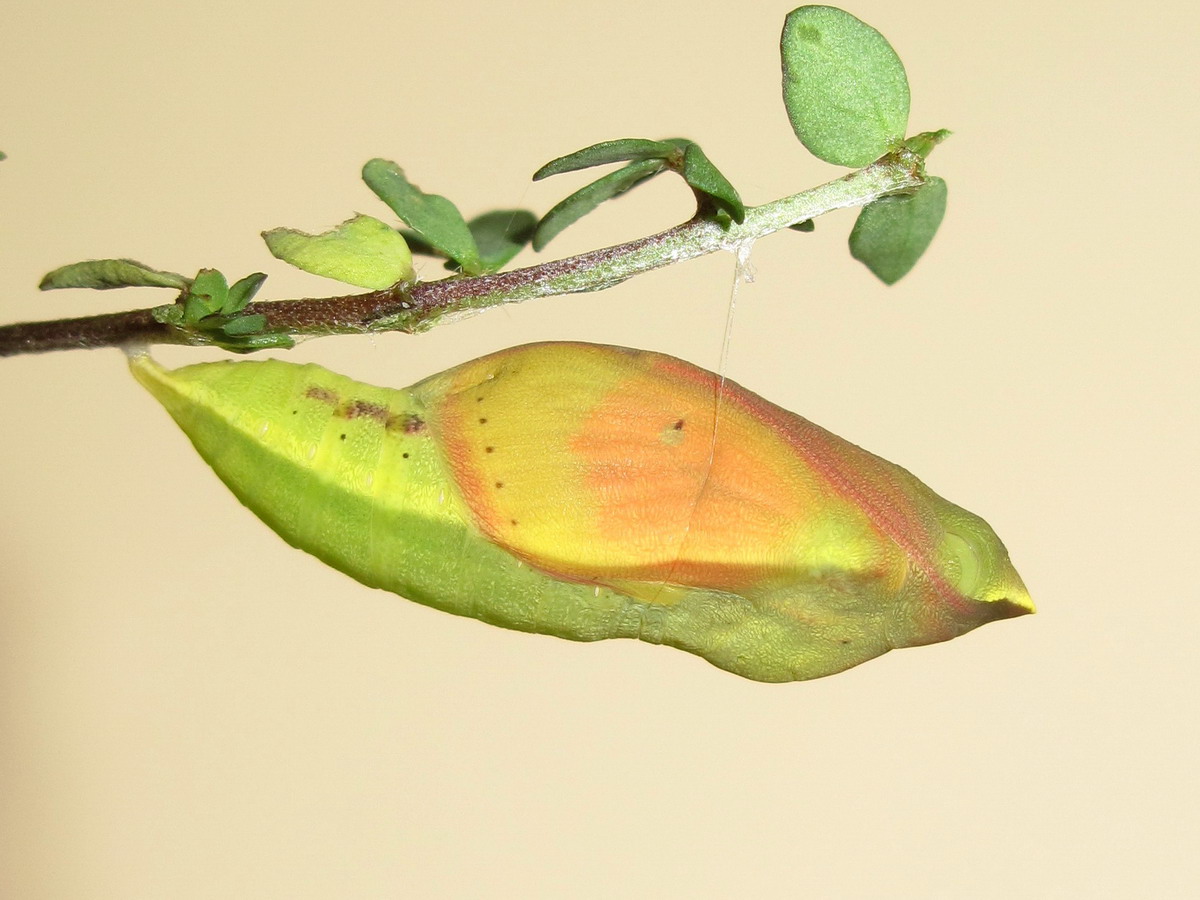
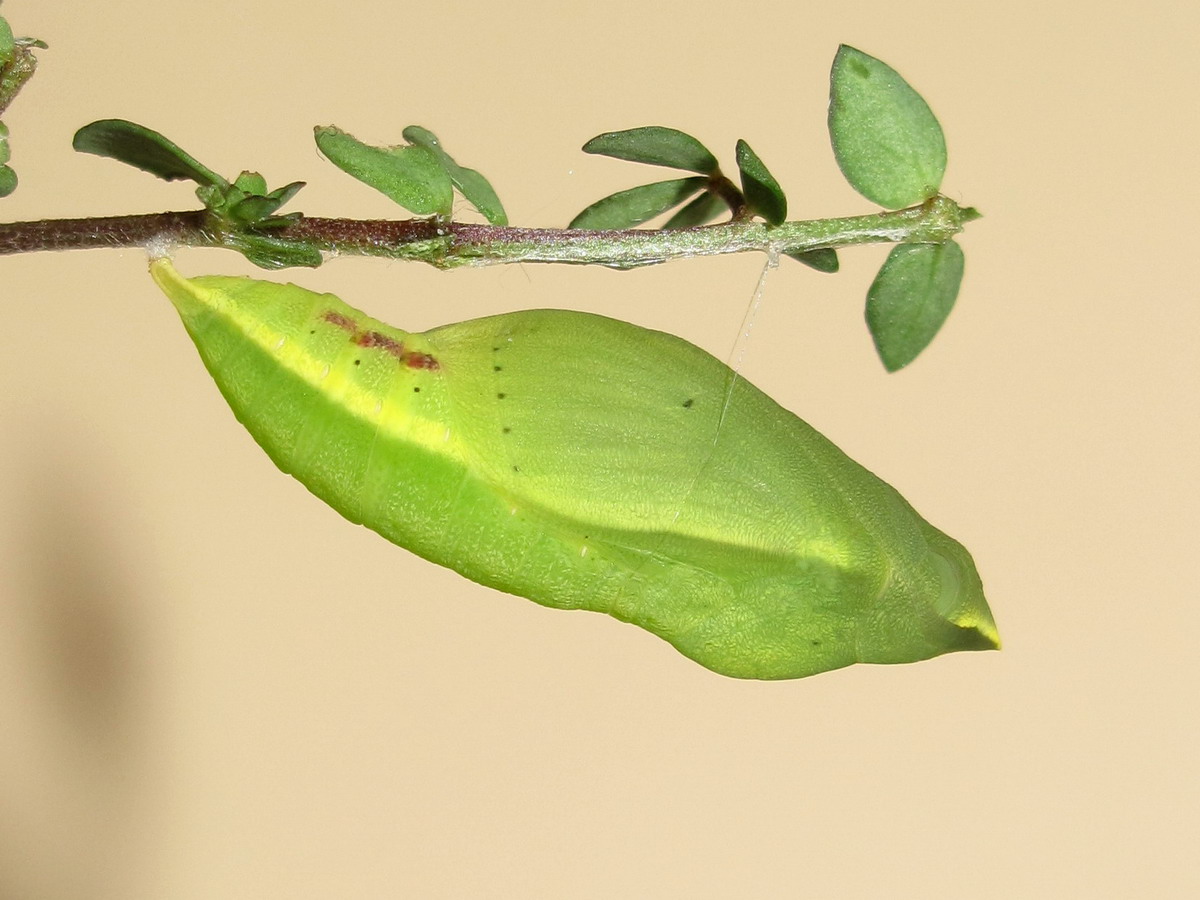
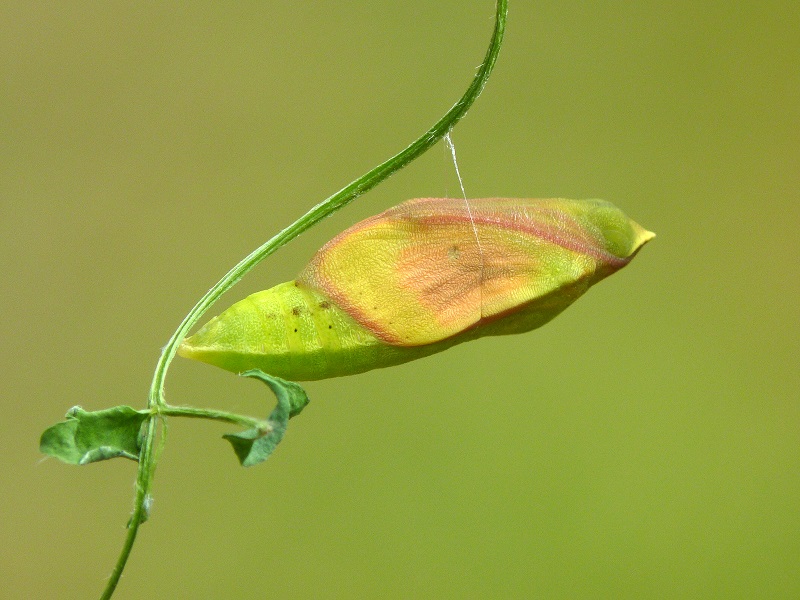
The pupa is attached to a foodplant stem by a silk girdle and the cremaster. This stage lasts 2 or 3 weeks.
"The pupa measures 22.2 mm. in length and 6.3 mm. across the greatest width. Lateral view: The head terminates in a point slightly upturned, with the dorsal surface compressed; the thorax is swollen and somewhat rounded and very slightly keeled; the body is nearly cylindrical and tapering to the anal segment. The cremaster is rather elongated and furnished with hooks; the wing is dilated along the inner margin and considerably swollen about the middle of the costal area. Dorsal view: It is broadest across the thorax at the base of the wings: the head is sharply angular and the body gradually attenuated. The colour of the head is dark olive-green above, sharply defined laterally by light greenish-yellow and clear green underneath; the whole of the dorsal surface is a clear light green, with a medio-dorsal darker green longitudinal line, and shading into darker green down the side of the inner margin of the wing; the wing is also a clear green, darkening at the base and of the same colour as the antennae and legs; the inner margin is dark green and sharply defined by an inner sub-marginal pale greenish-yellow stripe, which blends into the darker colouring of the wing; this light stripe extends down the side of the abdomen, in which are placed the whitish spiracles. There are from three to four small black dots, forming a sub-spiracular series, one on each segment, and below a dark purplish-brown band extending from the wing along the abdomen, which is broken up into four blotches by the segmental divisions; the last one is generally very pale and the smallest; at the end of the discoidal cell is a small black dot, a sub-marginal series of six smaller black dots situated between the nervures, and a few very minute black specks on the thorax. Such is the description when eleven days old. It is attached by the cremastral hooks to a pad of silk spun upon any suitable object the larva selects for the purpose, also by a cincture round the middle. The pupal state occupies about eighteen days. The author had the opportunity of observing a number in the act of pupating, the process usually occupying about twenty minutes, from the splitting of the larval skin down the thorax until the last writhings of the pupa to firmly anchor the hooks into the silk. The actual casting of the skin is accomplished in a few minutes. The same individual served throughout for the above history, which agreed exactly with the rest of the brood in all its stages, the duration of the metamorphoses being the average time of the summer emergence." - Frohawk (1924)

The following links provide additional information on this butterfly.