UK Butterflies
Building a Community of Responsible Butterfly Enthusiasts in Britain & Ireland
Building a Community of Responsible Butterfly Enthusiasts in Britain & Ireland
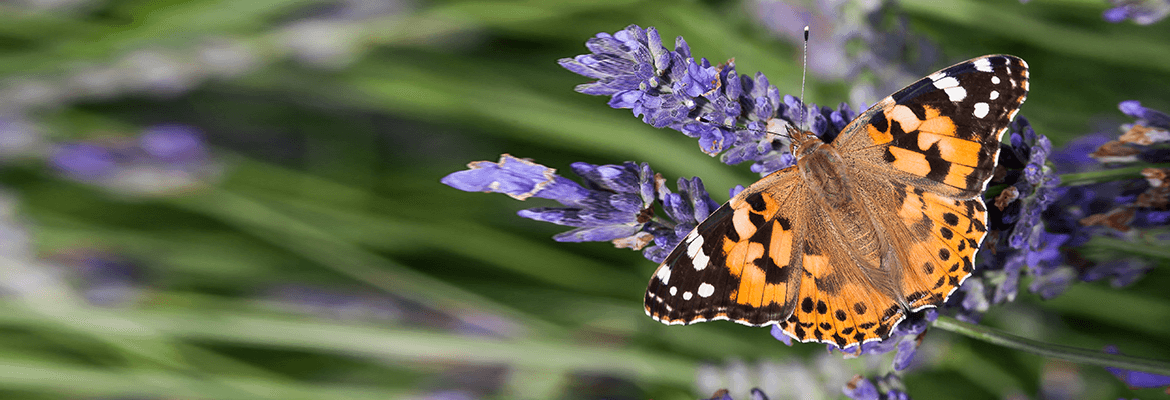
Wingspan
♂ 58 - 70 mm, ♀ 62 - 74 mm
Checklist Number
59.024
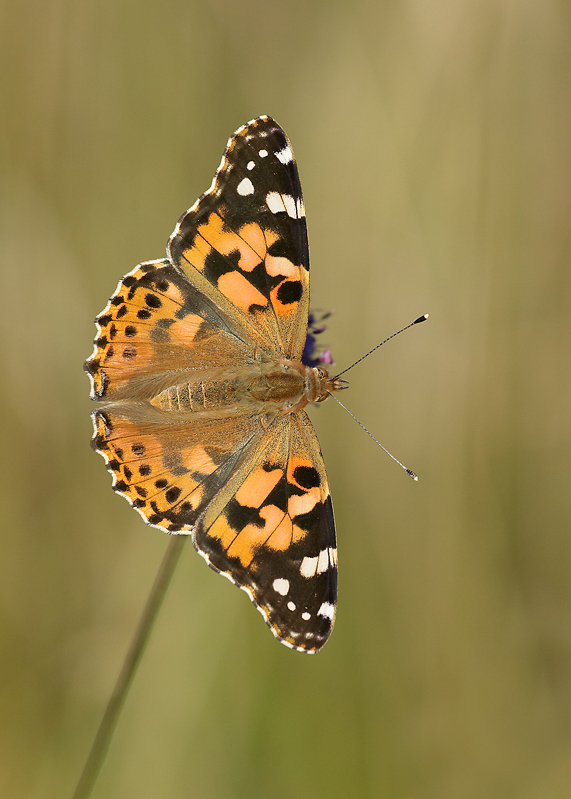
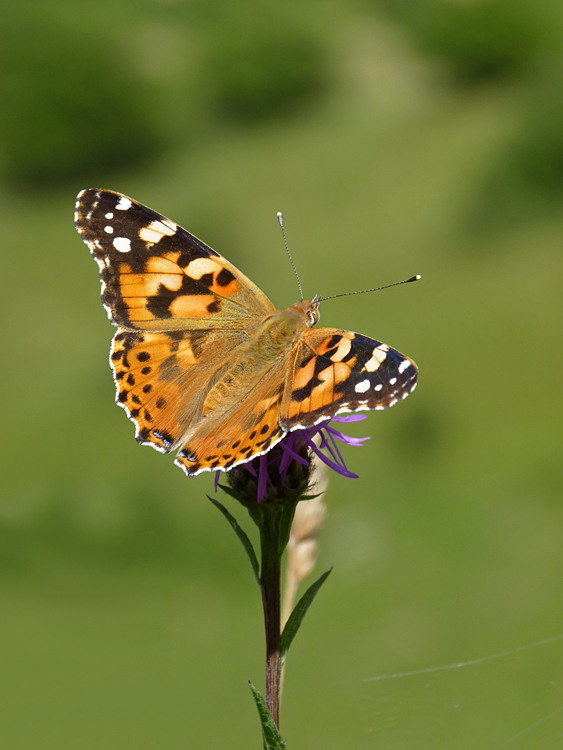
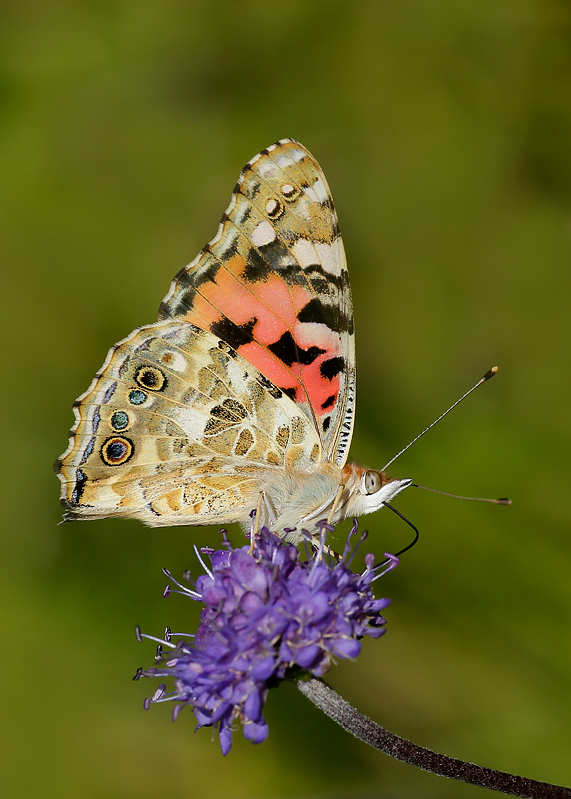
This species is a migrant to our shores and, in some years, the migration can be spectacular. The most-recent spectacle, in 2009, is considered to be one of the greatest migrations ever, with sightings from all over the British Isles that are definitely on a par with previous cardui years.
This species originates from north Africa, and it has been suggested that the urge to migrate is triggered when an individual encounters a certain density of its own kind within a given area. This theory makes perfect sense, since this species can occur in high densities that result in foodplants being stripped bare on occasion with many larvae perishing as a result.
Unfortunately, this species is unable to survive our winter in any stage. This is a real shame, for not only does this species often arrive in large numbers, but is a welcome sight as it nectars in gardens throughout the British Isles in late summer. This butterfly has a strong flight and can be found anywhere in the British Isles, including Orkney and Shetland. An interesting fact is that this butterfly is the only butterfly species ever to have been recorded from Iceland.
| Family: | Nymphalidae | Rafinesque, 1815 |
| Subfamily: | Nymphalinae | Rafinesque, 1815 |
| Tribe: | Nymphalini | Rafinesque, 1815 |
| Genus: | Vanessa | Fabricius, 1807 |
| Subgenus: | ||
| Species: | cardui | (Linnaeus, 1758) |
Description to be completed.
The distribution data (2000-2009) has been made available through the generosity of Butterfly Conservation and any subspecies distribution is taken from Riley (2007). Click here to see the distribution of this species together with site information overlaid.
This butterfly can be found almost anywhere, from the seashore and town gardens, to the tops of the highest mountains. This is one of the few species that can breed in intensive farmland since even these sites typically contain a patch of Thistles, the primary foodplant of this species.
Long term distribution and population trends both show an increase. Since the presence of this species in the British isles is wholly dependent on immigrants from the continent, this species is not a conservation concern.
The table below shows the occurrence (distribution) and abundance (population) trends, using information from The State of the UK's Butterflies 2015 (Fox, 2015). Any UK BAP status is taken from the UK Biodiversity Action Plan (UK BAP) (2007 review).
1976-2014 (%) | 1976-2014 (%) | 2005-2014 (%) | 2005-2014 (%) |  +14 +14 |  +133 +133 |  -16 -16 |  -84 -84 |
|---|
Adults are first seen in late March as they start to arrive on our shores and numbers build up in May and June as further migrants arrive from the continent. These breed and give rise to the next generation that peaks in early August. There may be more than one brood in the British Isles each year - depending largely on the weather.
This butterfly is continuously brooded on the continent, which may be the cause of its ultimate demise in the British Isles, since it seems unable to survive our winter in any stage. However, it is thought that some individuals may make an attempt at a return migration in autumn.

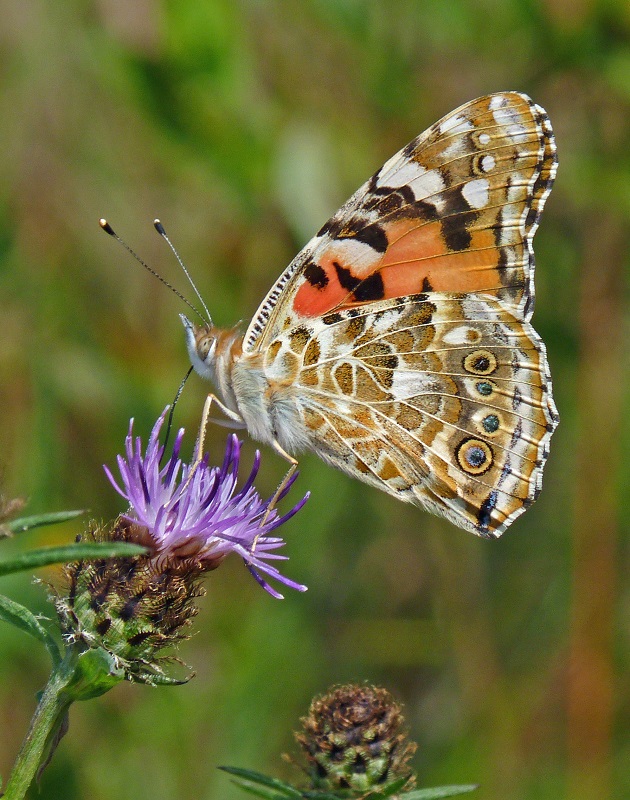
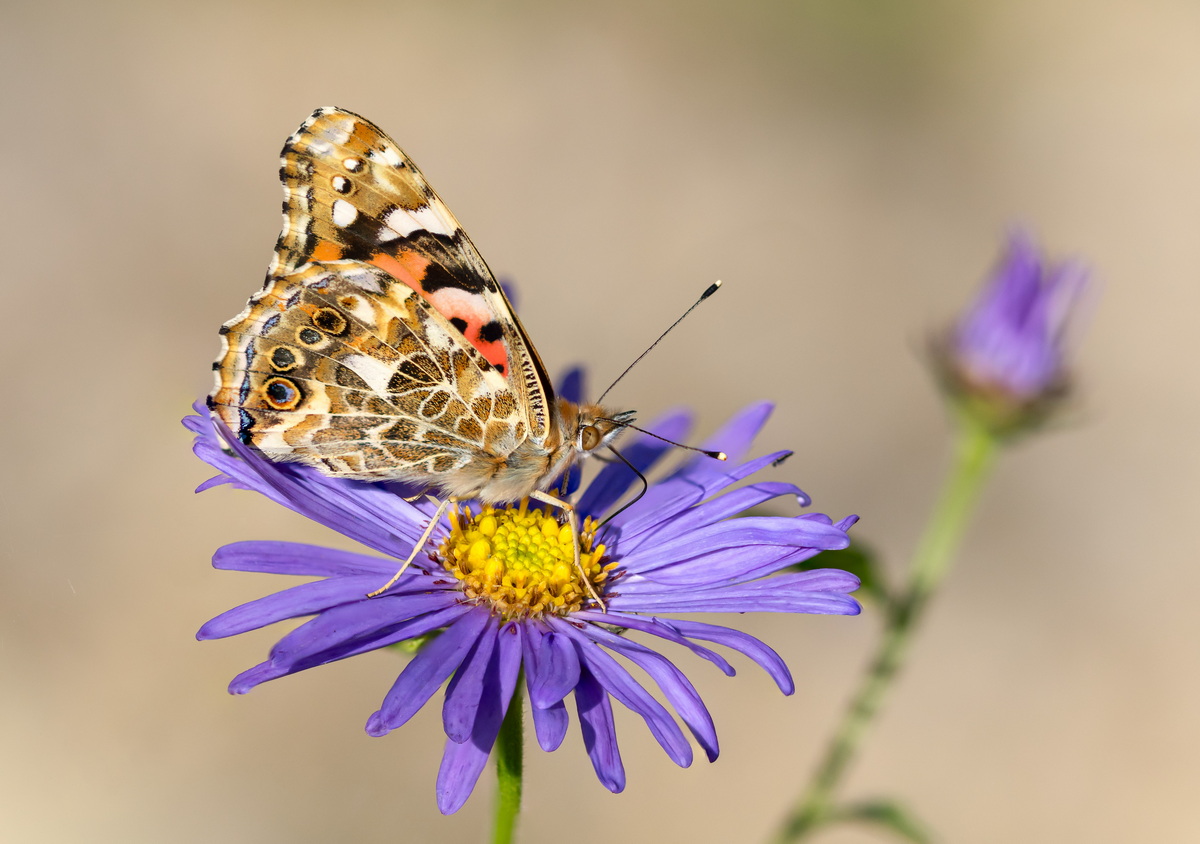
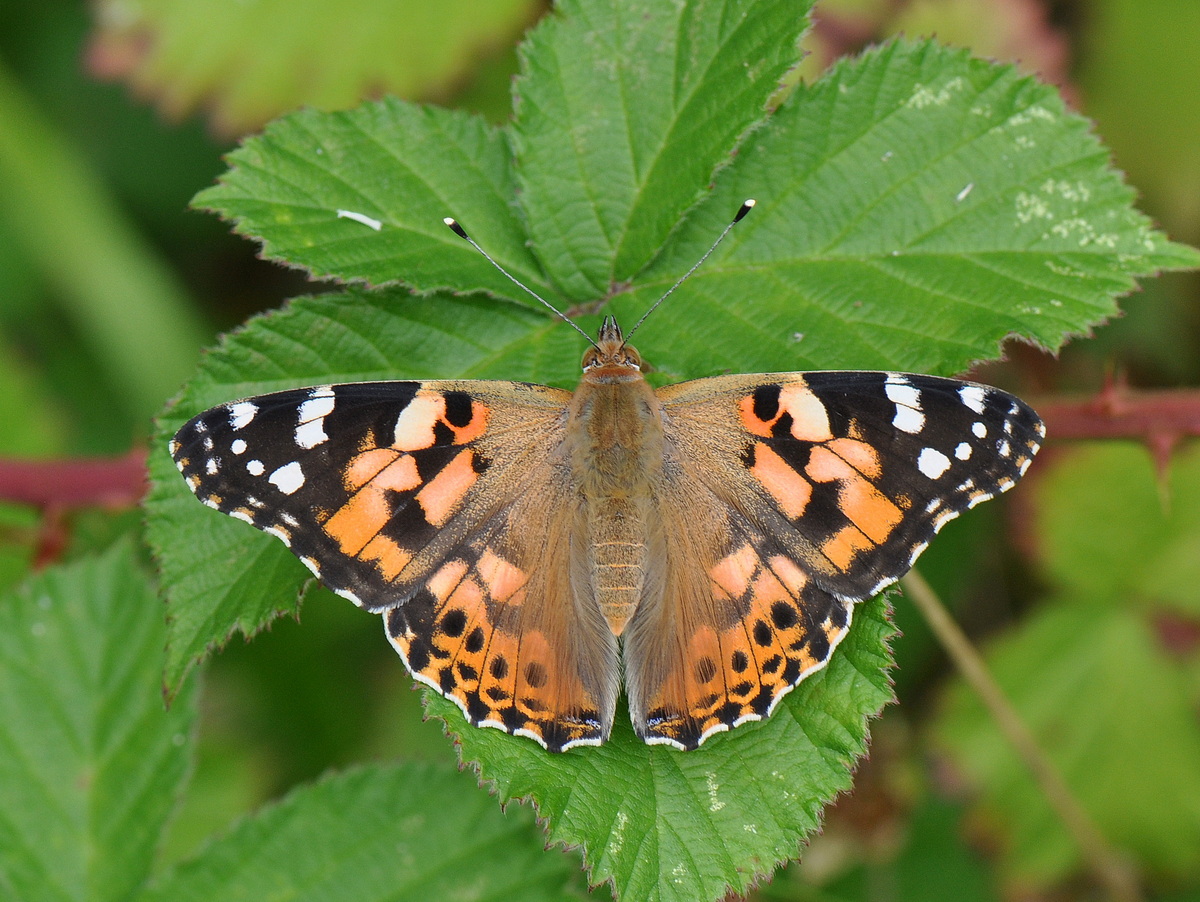
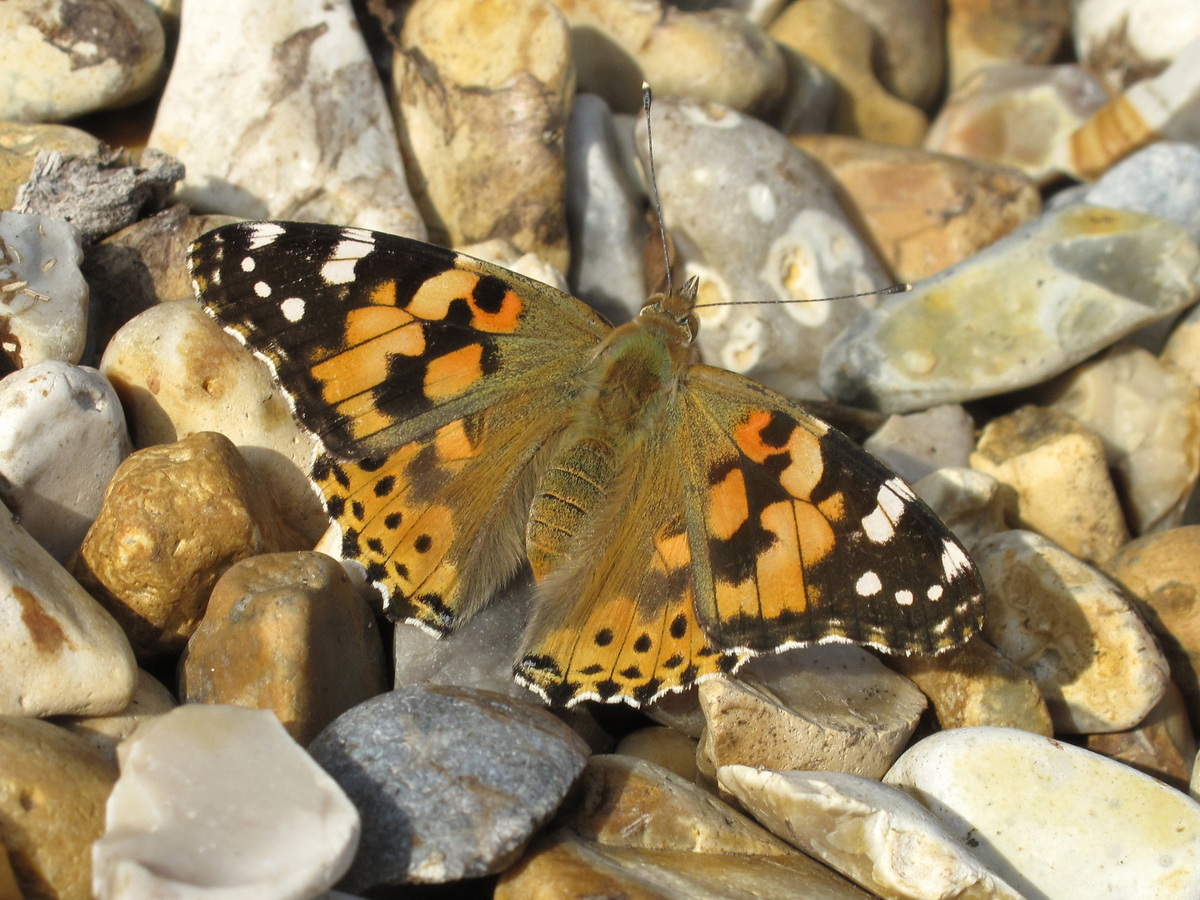
A newly-emerged adult is flushed with a beautiful salmon-pink and is a most-beautiful insect. This colouring, however, fades rapidly with the passage of time - adults not only appear drab, but are occasionally missing various pieces of their wings, especially the apex of their forewings, no doubt the result of nectaring on plants such as Thistles and Brambles.
Adults feed primarily on thistles (Carduus spp. and Cirsium spp.). brambles (Rubus spp.), Buddleja (Buddleja spp.), Bugle (Ajuga reptans), Common Bird's-foot-trefoil (Lotus corniculatus), Common Fleabane (Pulicaria dysenterica), Devil's-bit Scabious (Succisa pratensis), hawkweeds (Hieracium spp.), heathers (Calluna and Erica spp.), Hemp-agrimony (Eupatorium cannabinum), Ivy (Hedera spp.), knapweeds (Centaurea spp.), ragworts (Jacobaea spp.), Red Clover (Trifolium pratense), Wild Marjoram (Origanum vulgare) and Wild Privet (Ligustrum vulgare) are also used.
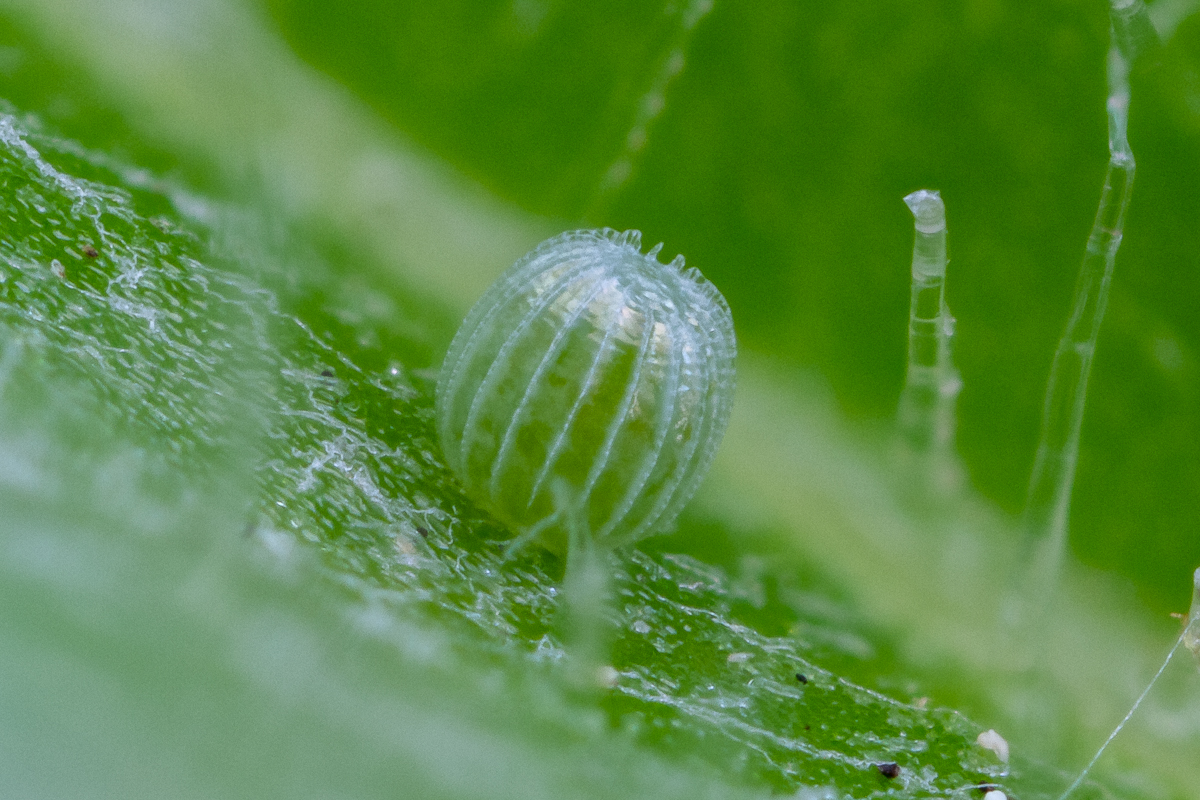
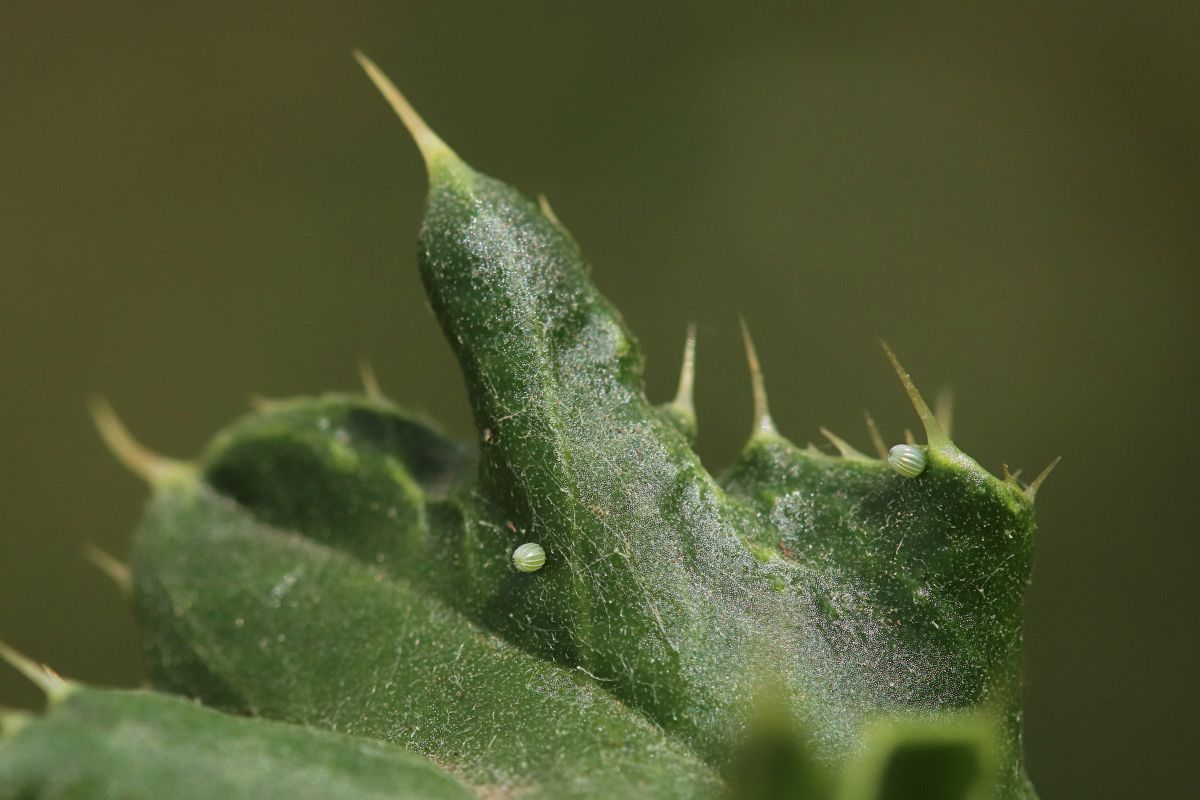
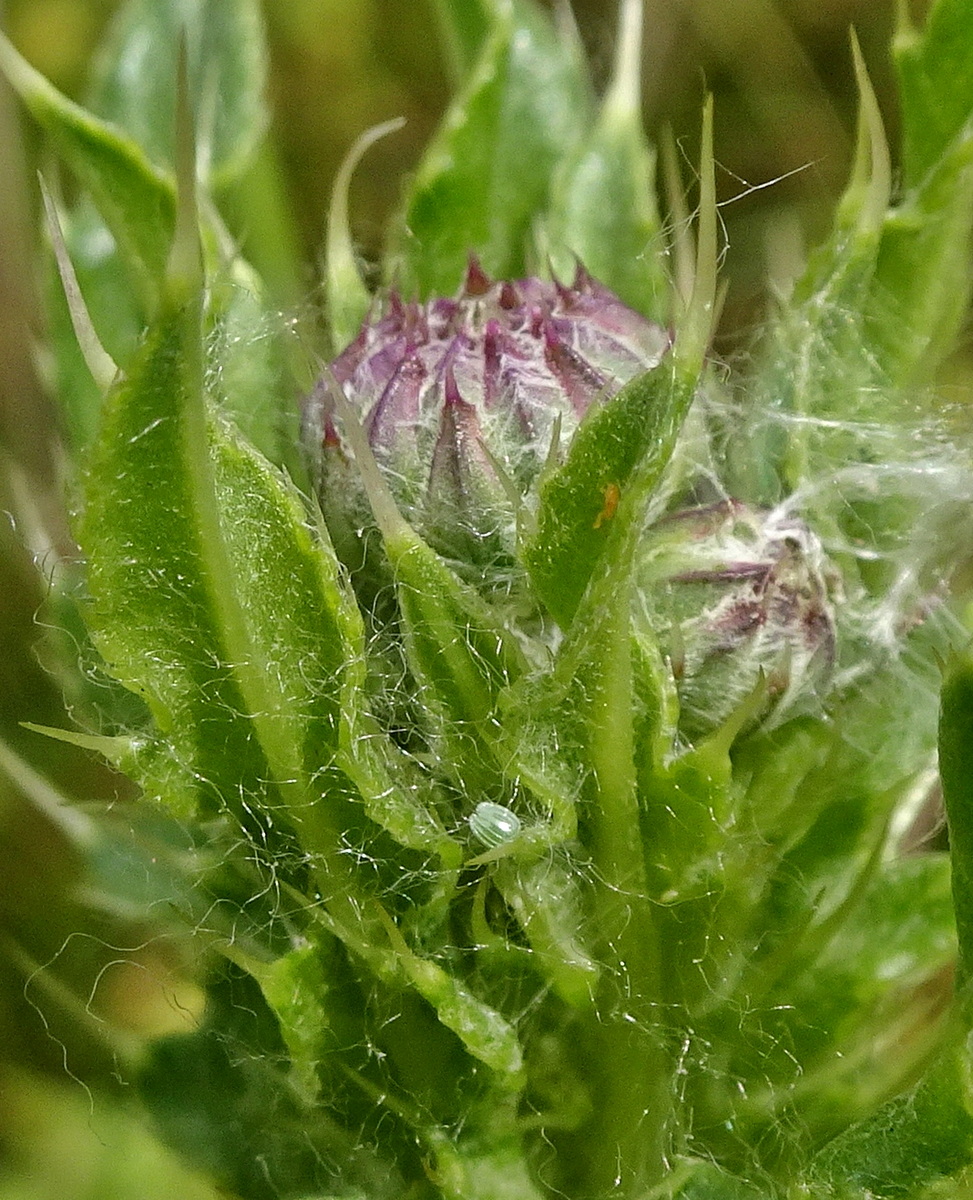
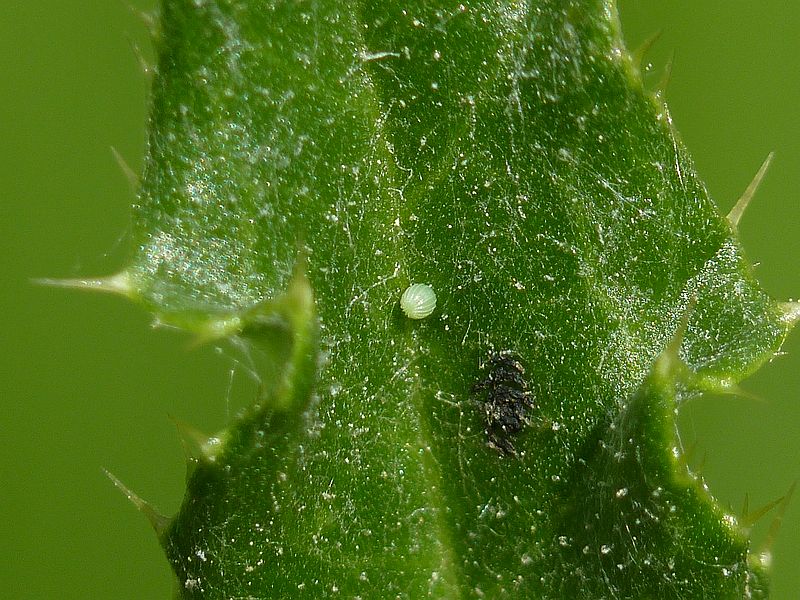
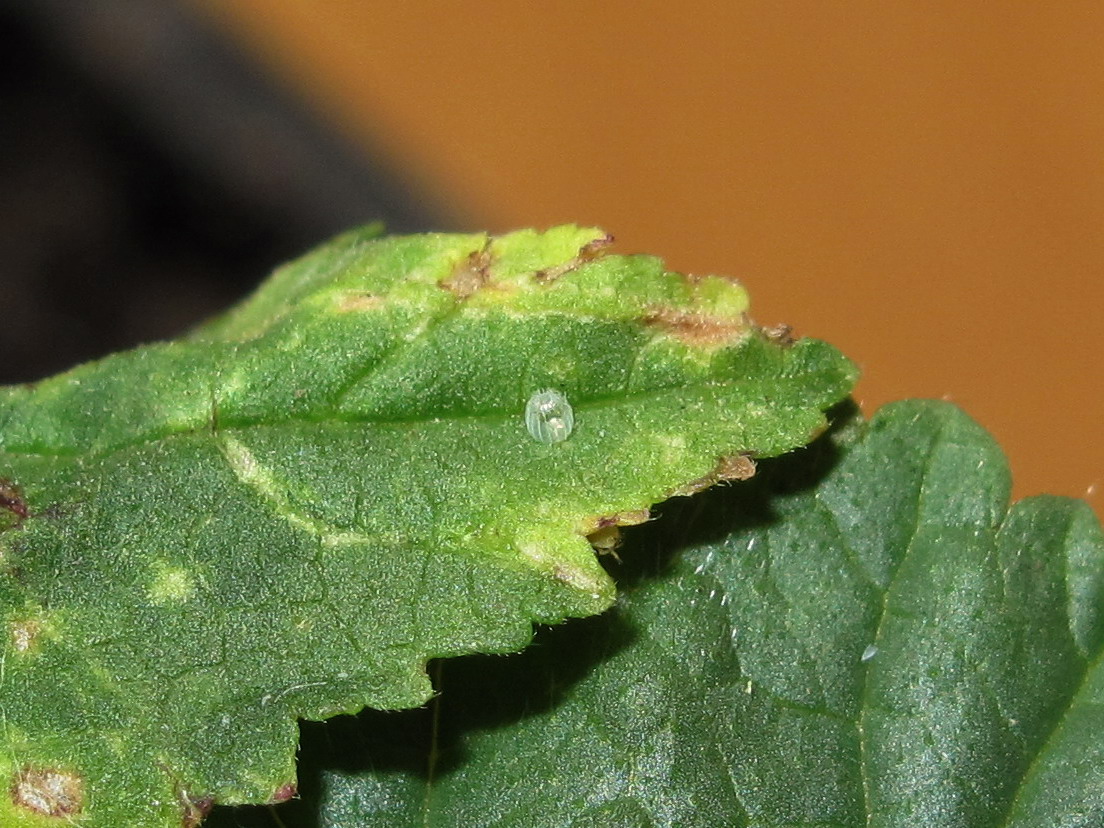
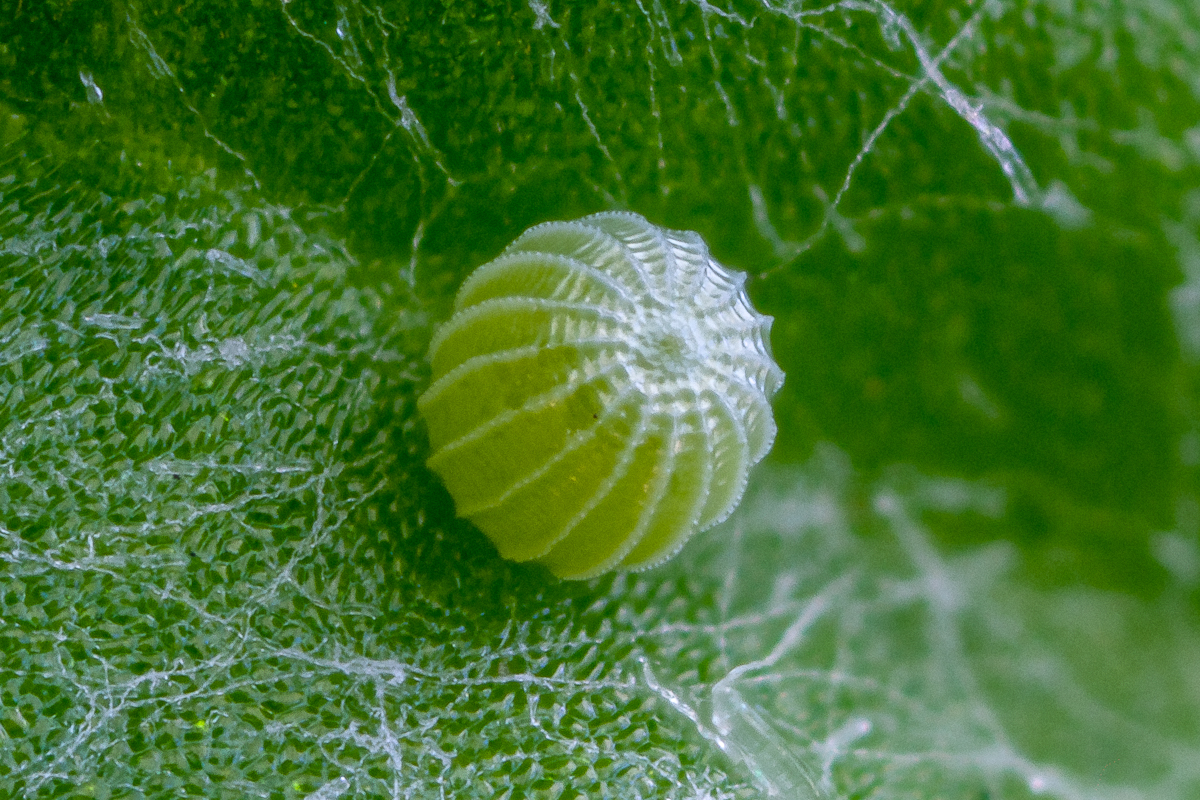
Eggs are laid singly on a leaf of the foodplant, usually on the leaf upperside. They are light green when first laid but turn grey before hatching. This stage lasts just over a week.
"Eggs laid on thistle, June 8th, 1892, hatched during the evening of June 15th, remaining seven days in the egg state. The egg is small in comparison to the size of the butterfly, measuring only 0.65 mm. It is oval in form, and rather widest just below the middle; the micropyle is granular and surrounded by the elevated apices of sixteen longitudinal, glassy-white, fluted keels which run to the base. They are uniform in structure, all rising regularly round the micropyle, where they are of greatest elevation, and gradually becoming less as they descend down the side, finally disappearing at the base; the spaces between the keels are slightly ribbed transversely. When first laid the colour is a light green, which deepens into a smoky-grey-green before emergence, and finally the crown becomes a deep leaden colour from the dark head of the larva showing through the shell." - Frohawk (1924)


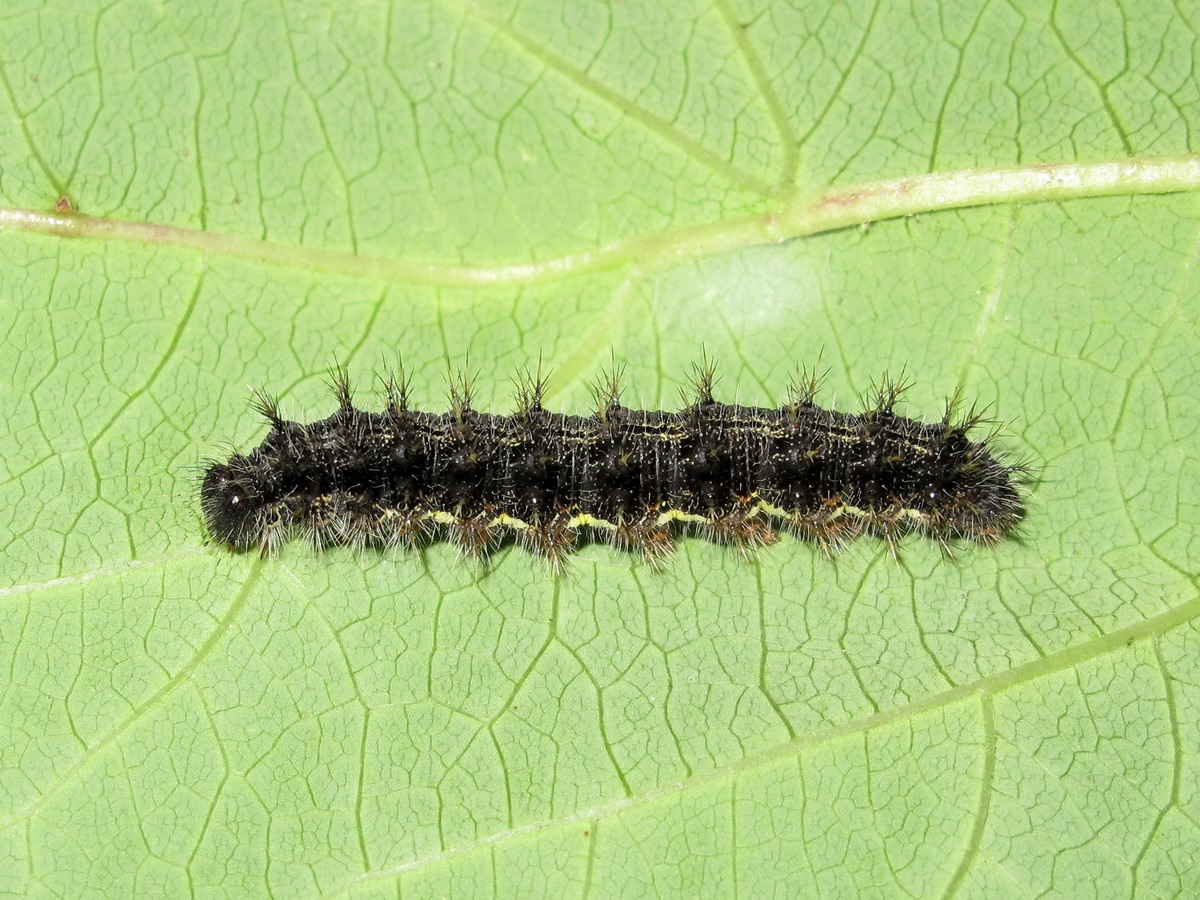
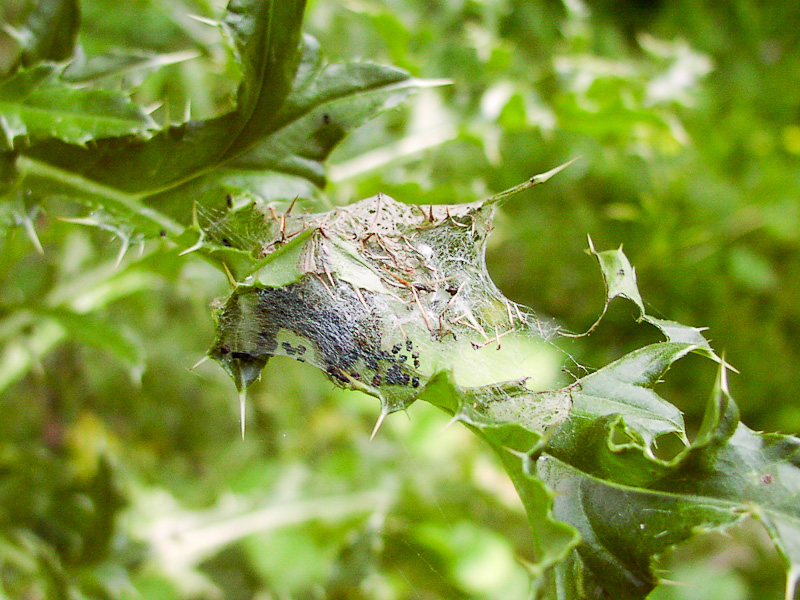
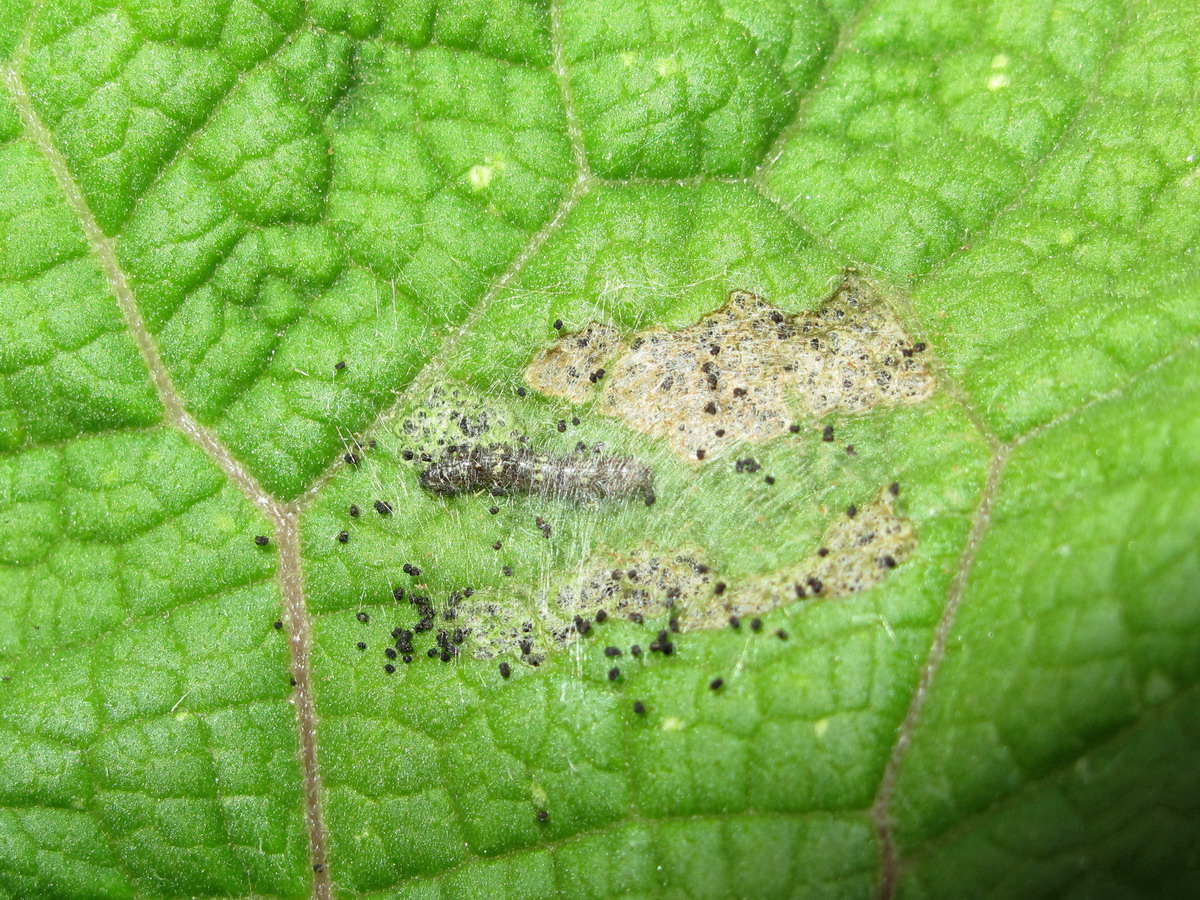
On emerging from the egg, the larva moves to the underside of the leaf to feed on the cuticle. This leaves a transparent patch when looked on from above, and the young larva can be quite easy to find as a result. As the larva grows, it builds a silk tent around one or more leaves from which it feeds. This makes them very easy to find in the wild but difficult, no doubt, for a predator to penetrate. As the larva continues to grow, it builds successively larger tents, providing tell-tale clues of its presence to the trained eye.
Larvae seldom leave their original plant and, if several eggs are laid on the same plant, this can lead to starvation as the number of larvae outstrips the available food source. Larvae need good periods of warmth to reach the pupal stage and perish in prolonged periods of cold and damp. There are 5 instars in total.
The primary larval foodplant is thistles (Carduus spp. and Cirsium spp.). burdocks (Arctium spp.), Common Nettle (Urtica dioica), mallows (Malva spp.) and Viper's-bugloss (Echium vulgare) are also used.
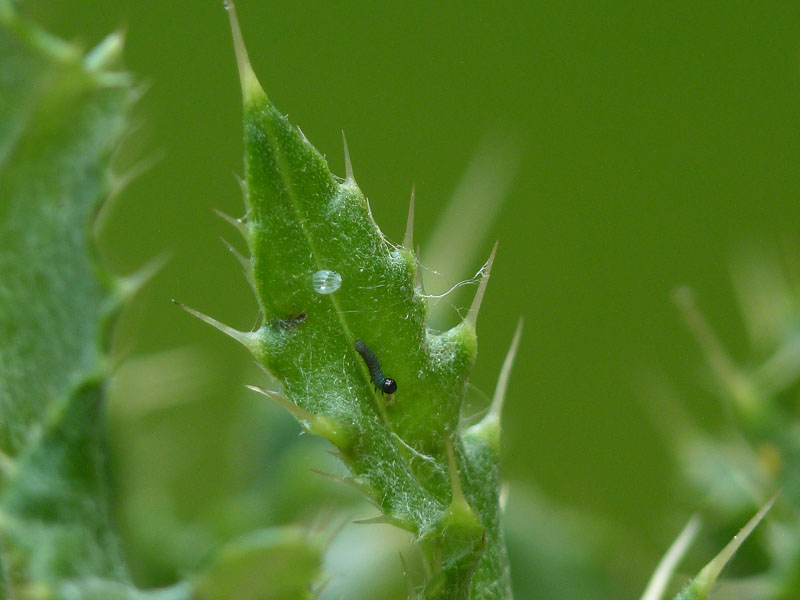
"Just previous to hatching the larva within the egg eats round the crown and pushes off the top like a lid, crawls out and wanders over the leaf to the under side, where it takes up its abode and soon spins a little web over itself as a covering, under which it lives and feeds on the cuticle of the leaf, leaving the upper cuticle, which forms a cover on the one side and the web on the other. Directly after emergence it measures 1.6 mm. long. The head is shining black, beset with fine black hairs; the body is slender and cylindrical. The segments have three sub-divisions, the anterior one occupying half of the segment. There are longitudinal rows of very long, simple, slender, black hairs with wart-like bases, five on each of the body segments, i.e., on each side, three above the spiracle and two below; the anterior dorsal hairs curve forwards and the posterior ones slightly backwards; the sub-spiracular ones project laterally; on the ventral surface and claspers are other simple hairs; the legs are likewise hairy. The first segment is encircled with a fringe of hairs curving gently forwards. The ground colour is pale olive-ochreous, and is thickly covered with black points, making the ground colour appear dark olive. Before the first moult, a week old, it measures 3.2 mm. long, of a dark olive-brown colour mottled with pale lemon-yellow, which is most conspicuous on the third, fifth, seventh, ninth and eleventh segments. The surface is glistening." - Frohawk (1924)
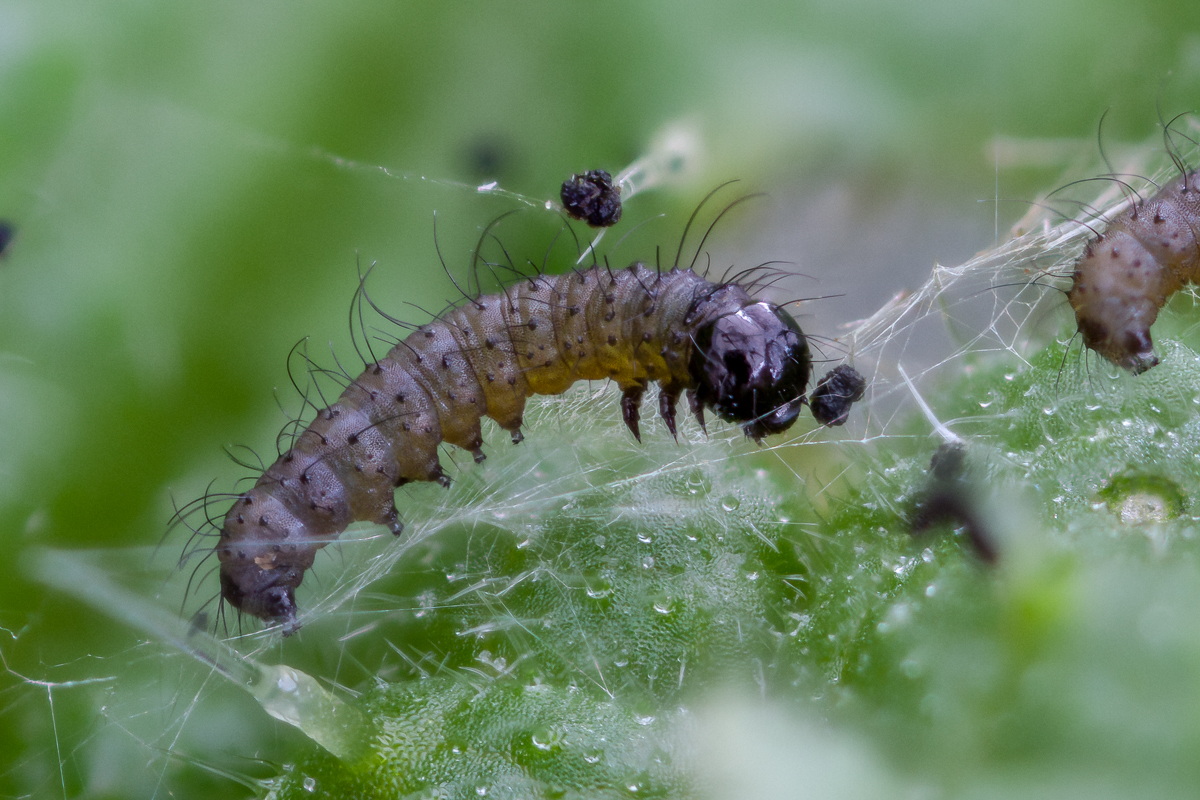
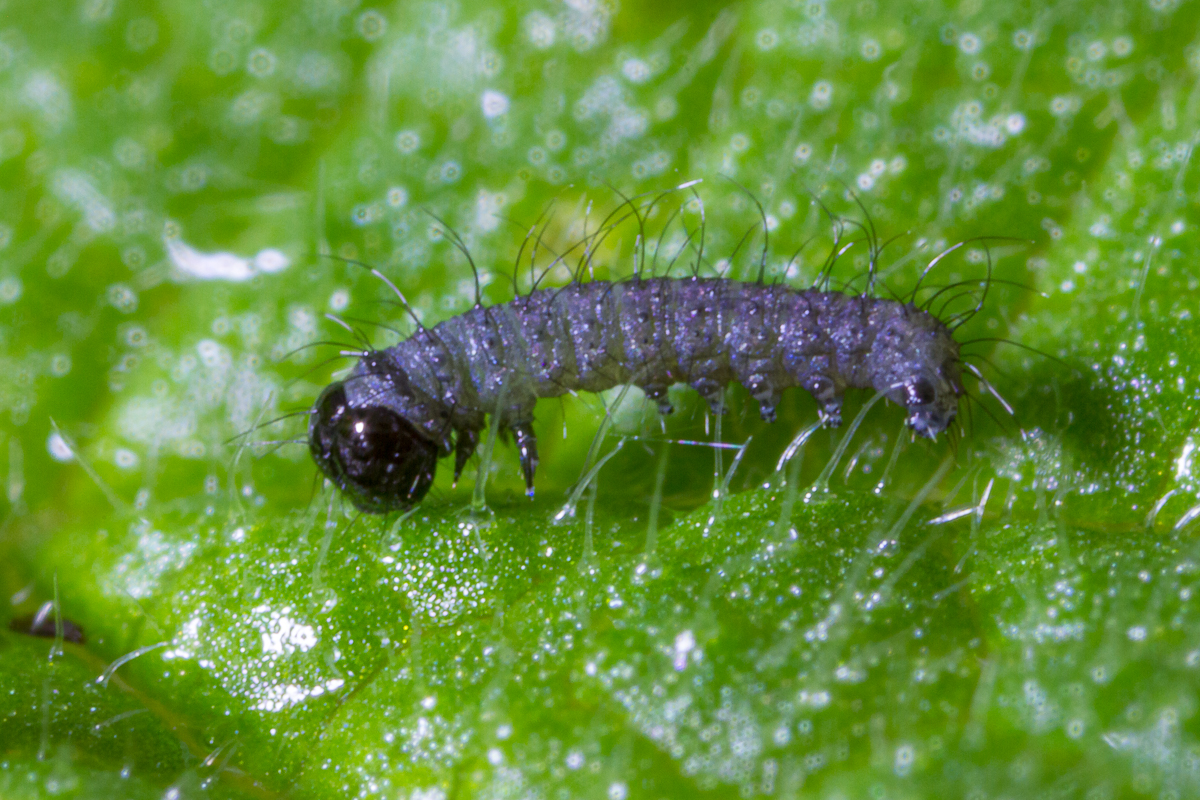
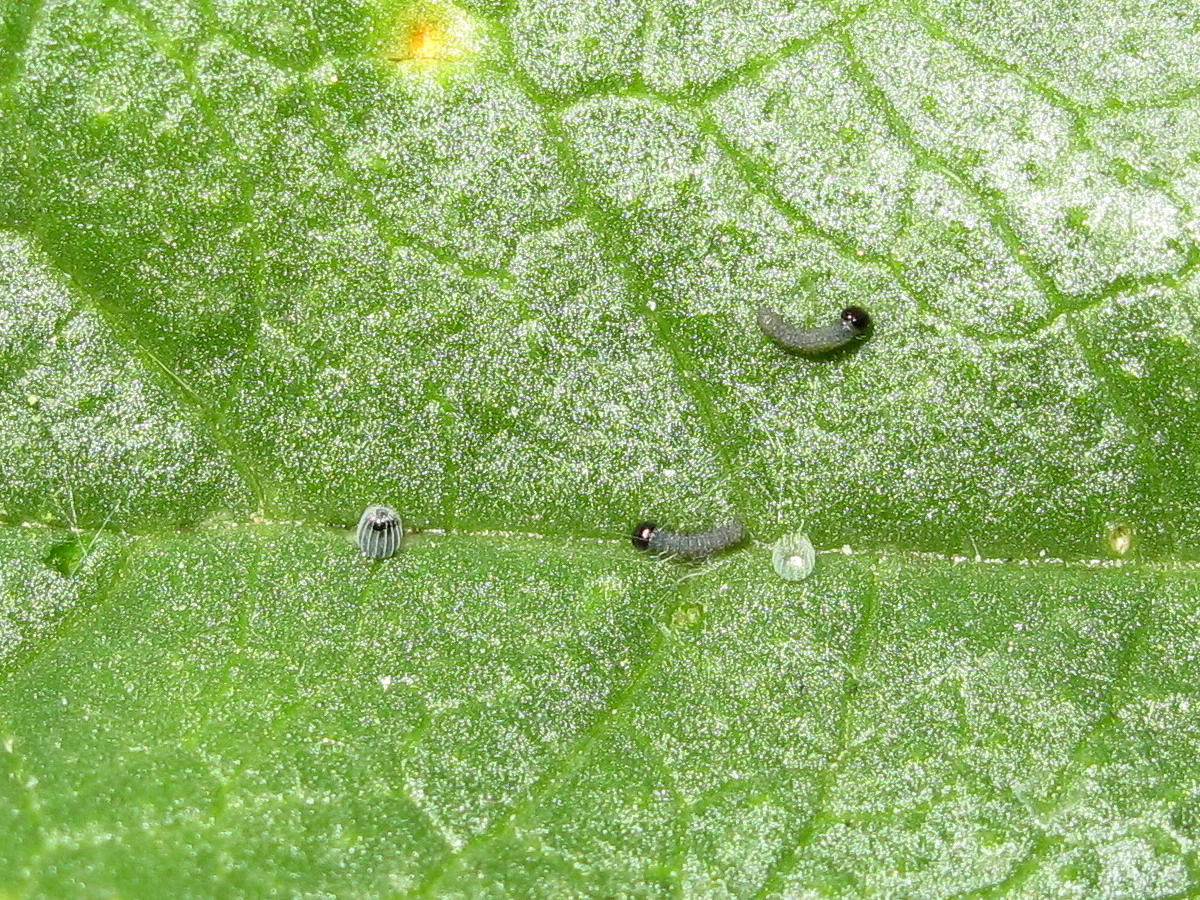
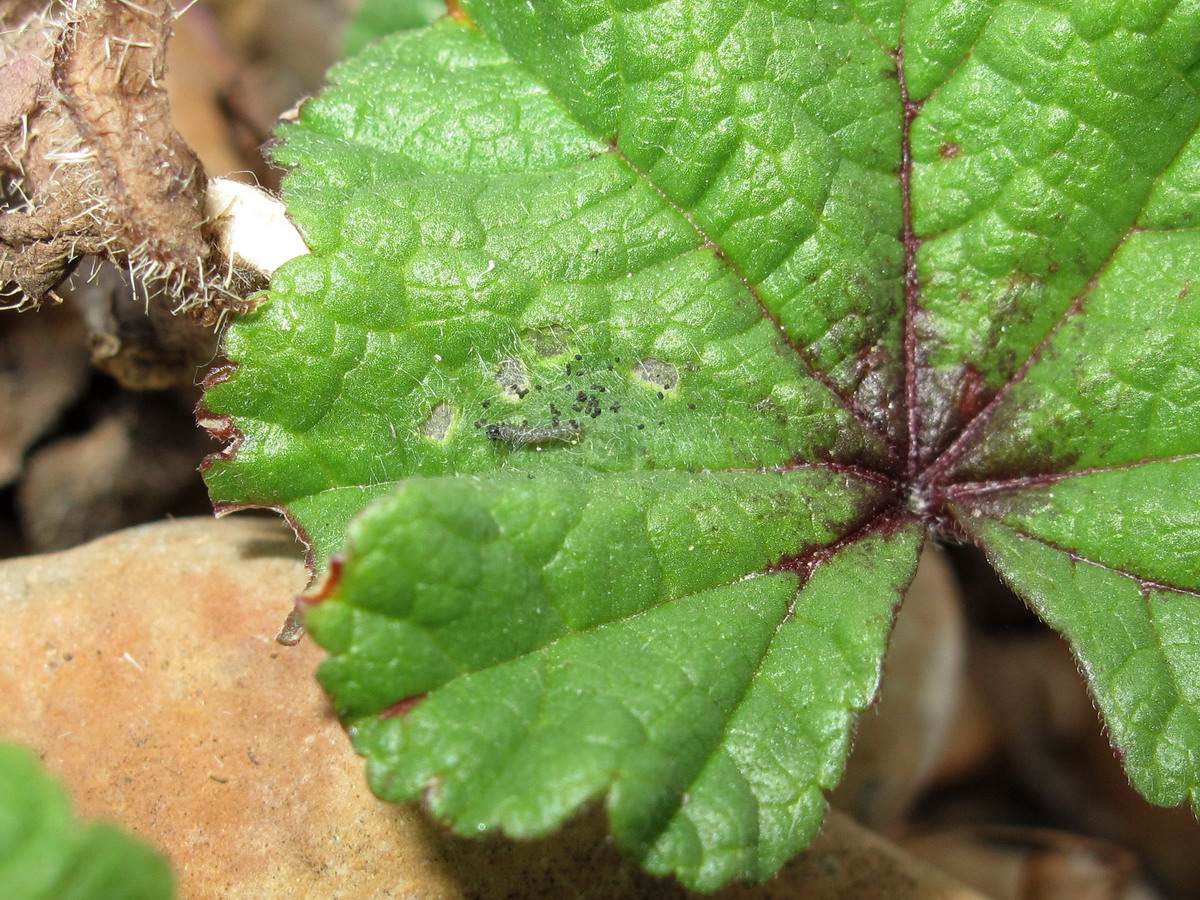
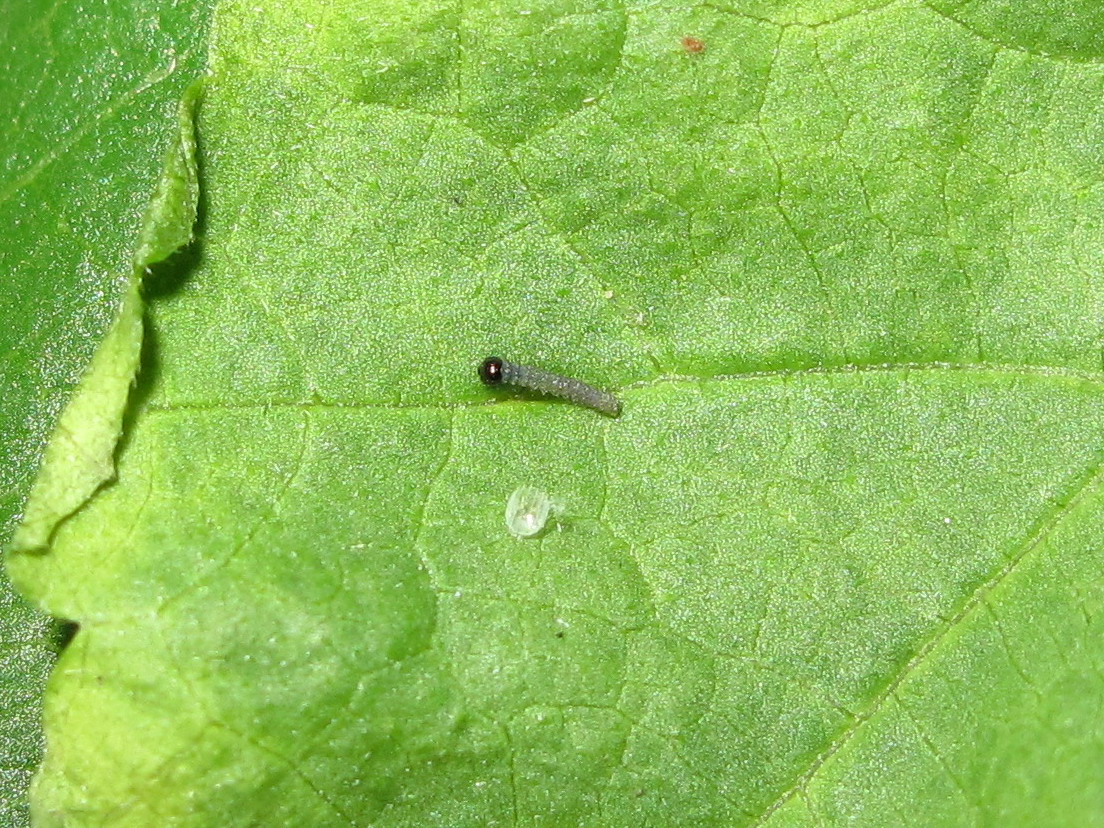
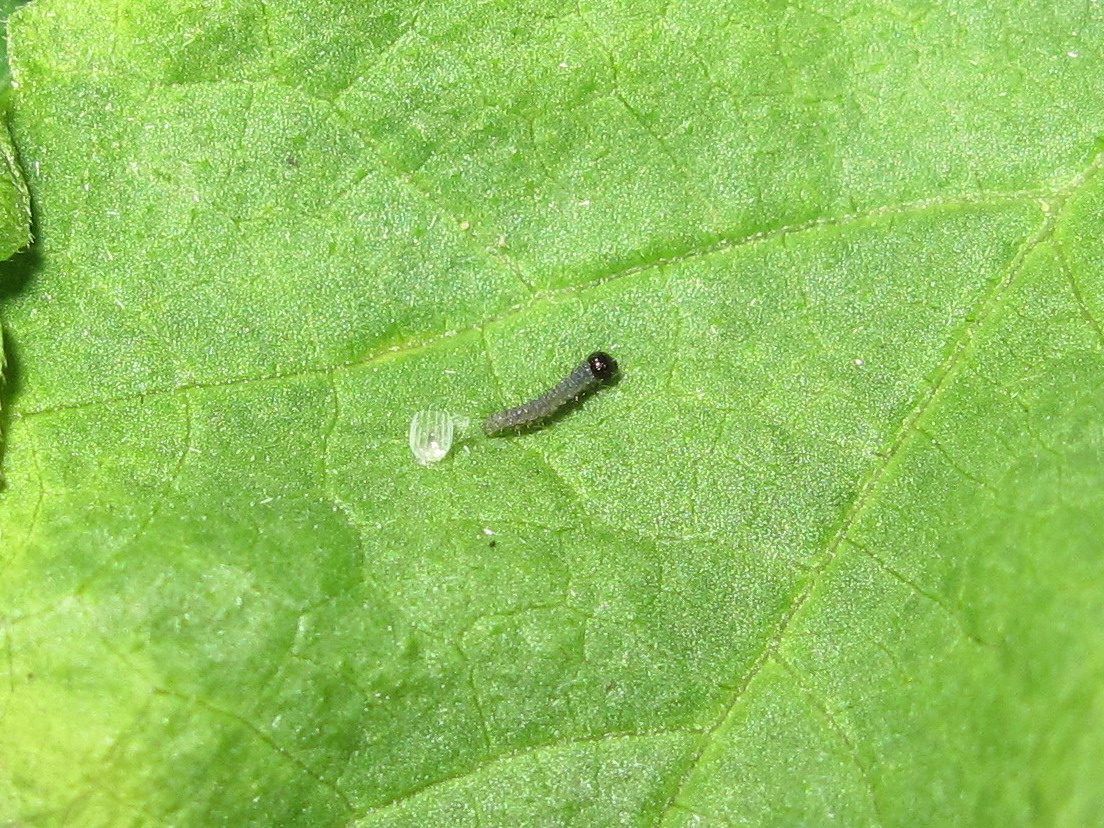
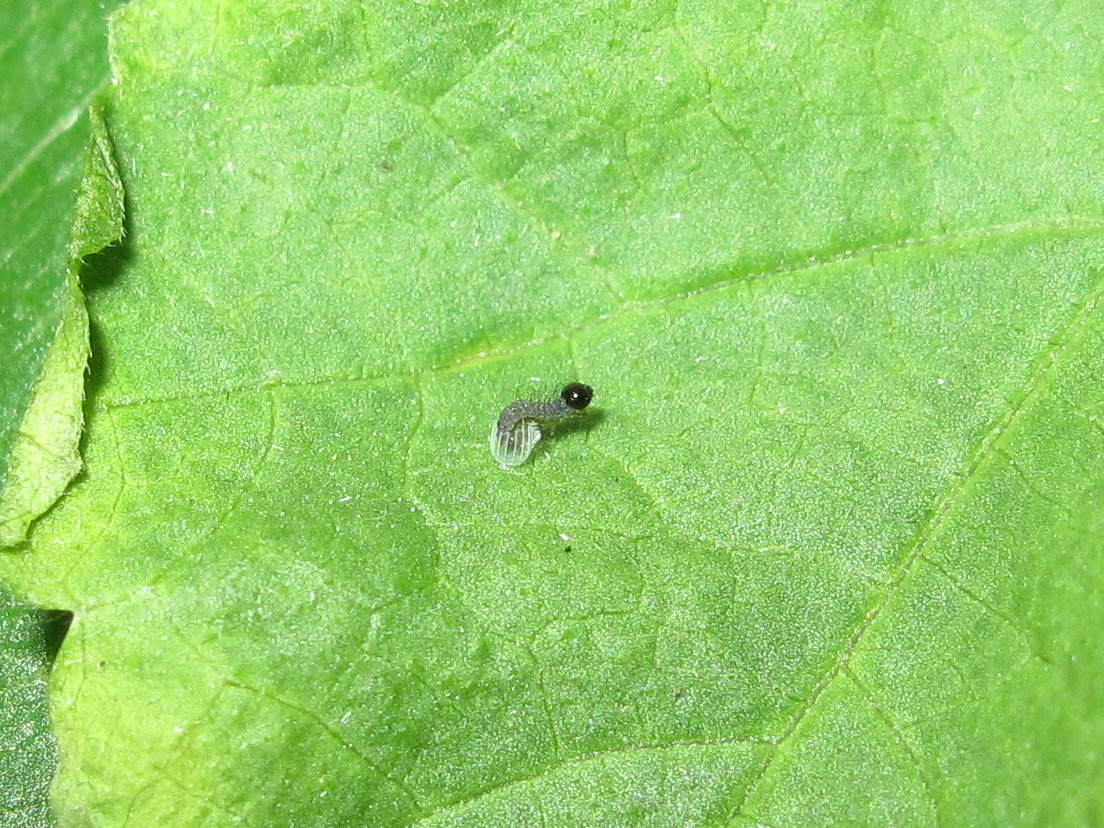
"The first one moulted June 23rd, 1892, being eight days in the first stage. After the first moult, seven days old, it measures 6.35 mm. in length. The ground colour is dark olive-brown, variegated with pale primrose-yellow, which colour forms conspicuous dorsal markings on the fifth, seventh and ninth segments by spreading over the dorsal tubercles; the remaining tubercles are chiefly dark olive; all terminate in a long, curved hair, and a few other hairs rise from the base of the tubercles; in other respects it is much the same as in the previous stage. The larva still lives and feeds under a layer of web, leaving a membrane of the leaf and not perforating it. The larva remains solitary throughout its existence." - Frohawk (1924)
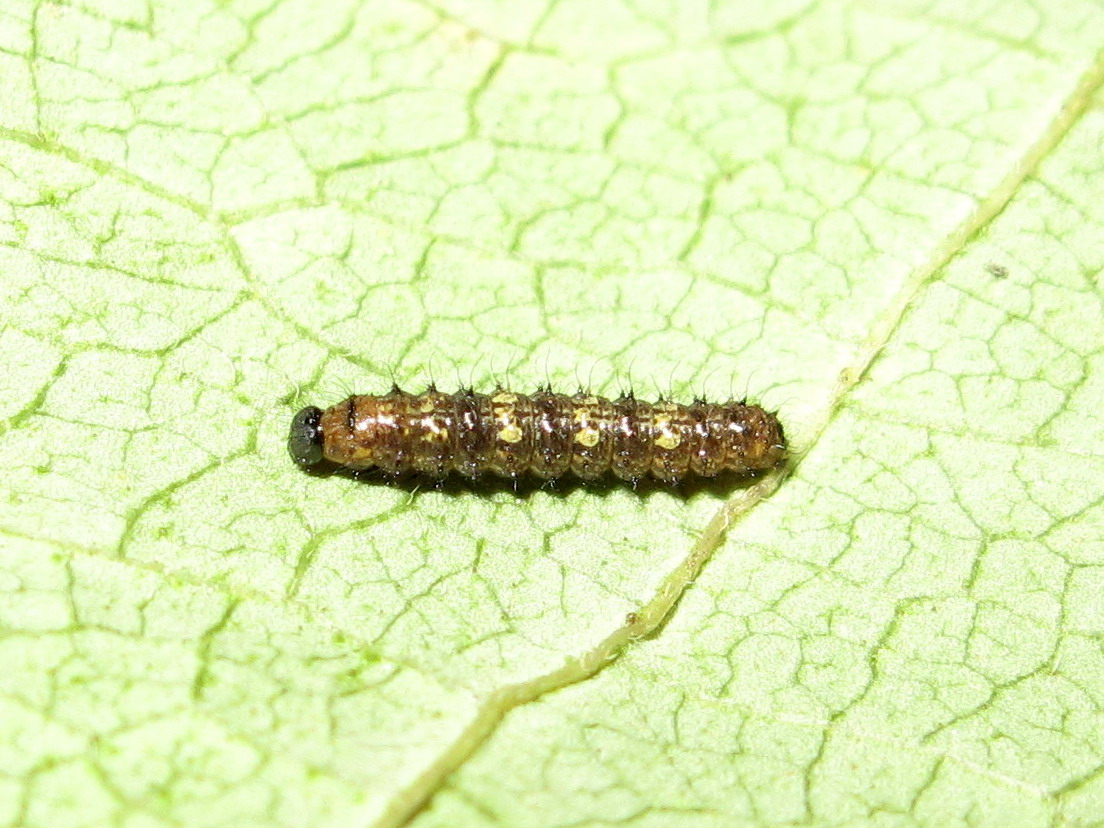
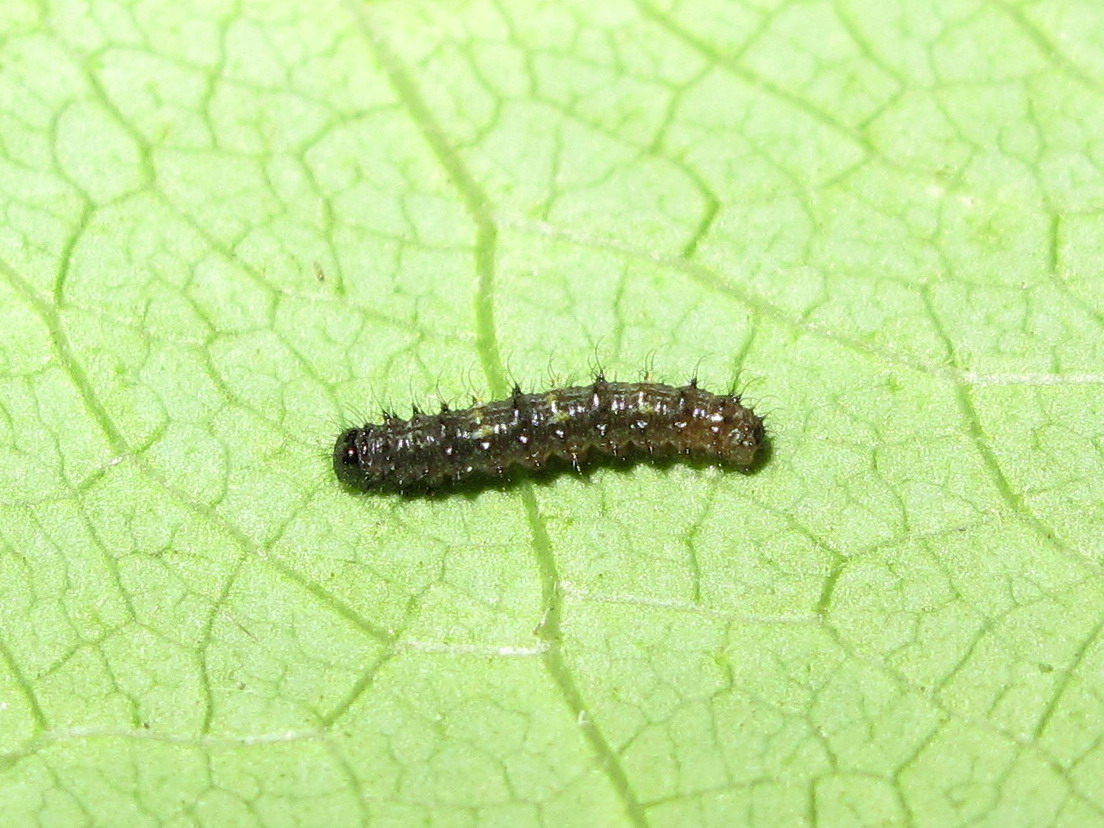
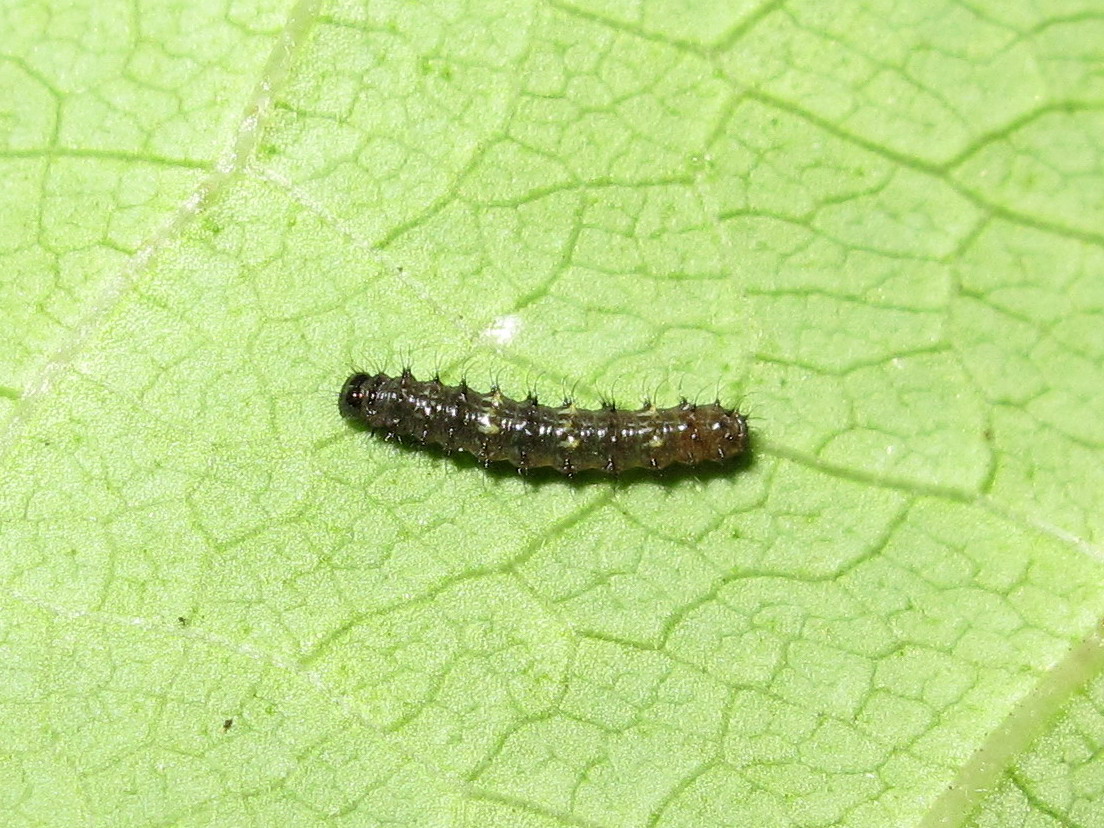
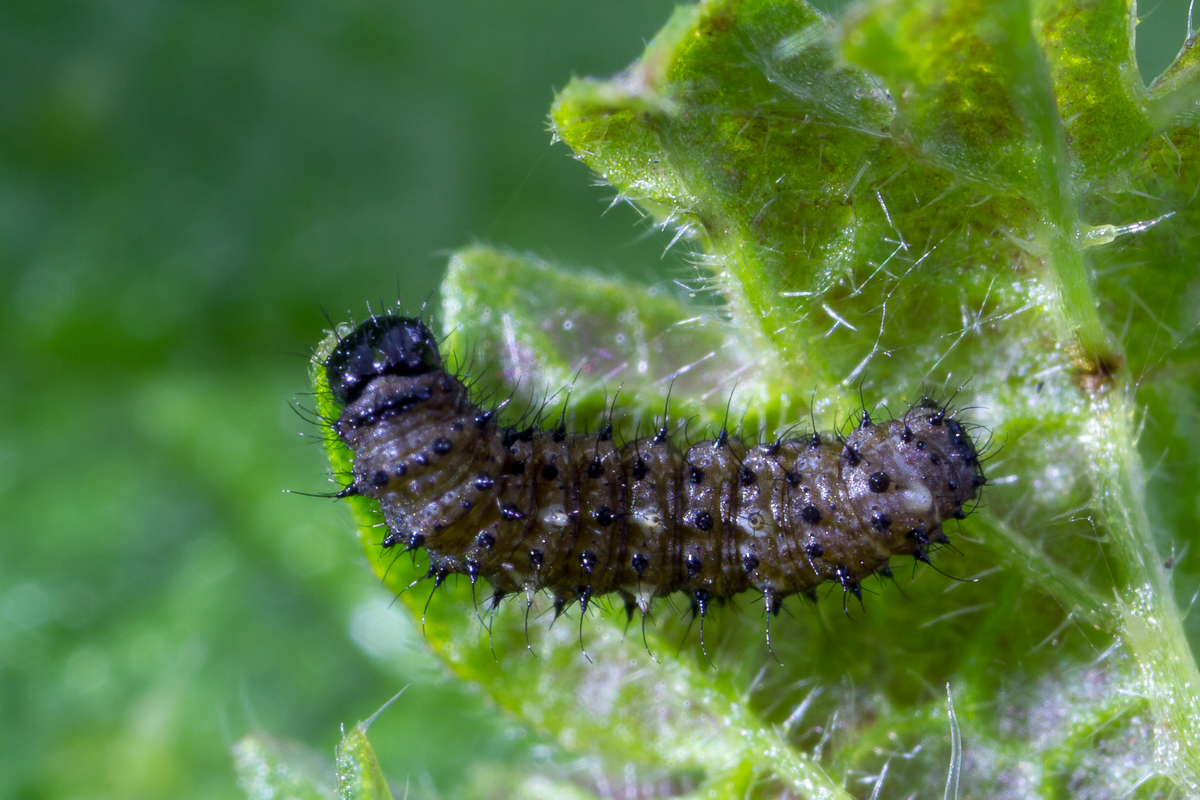
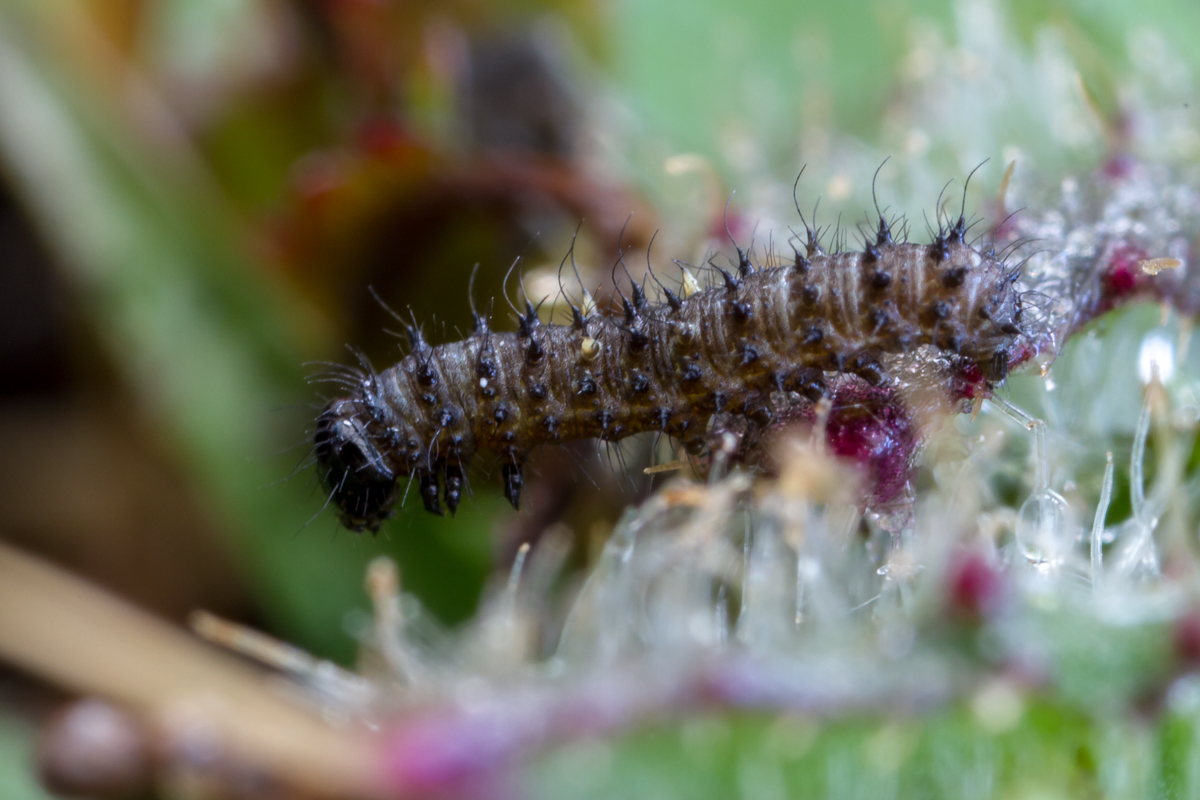
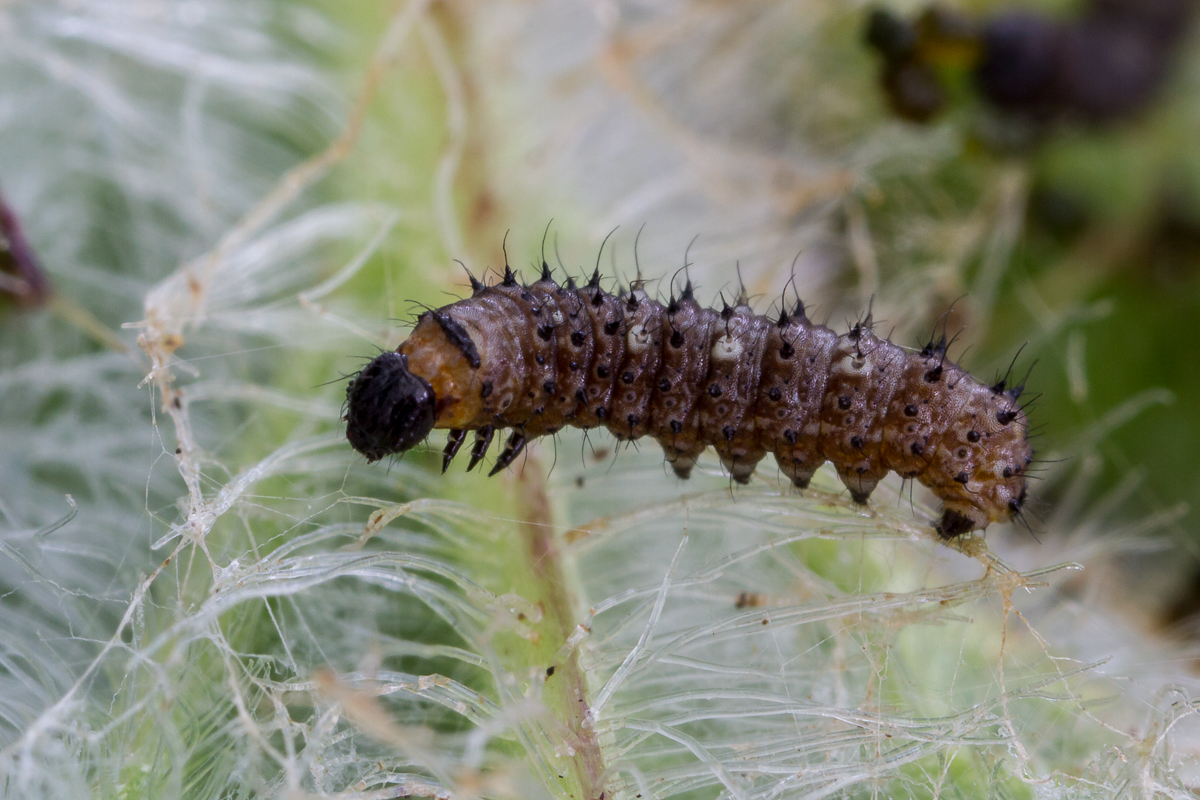
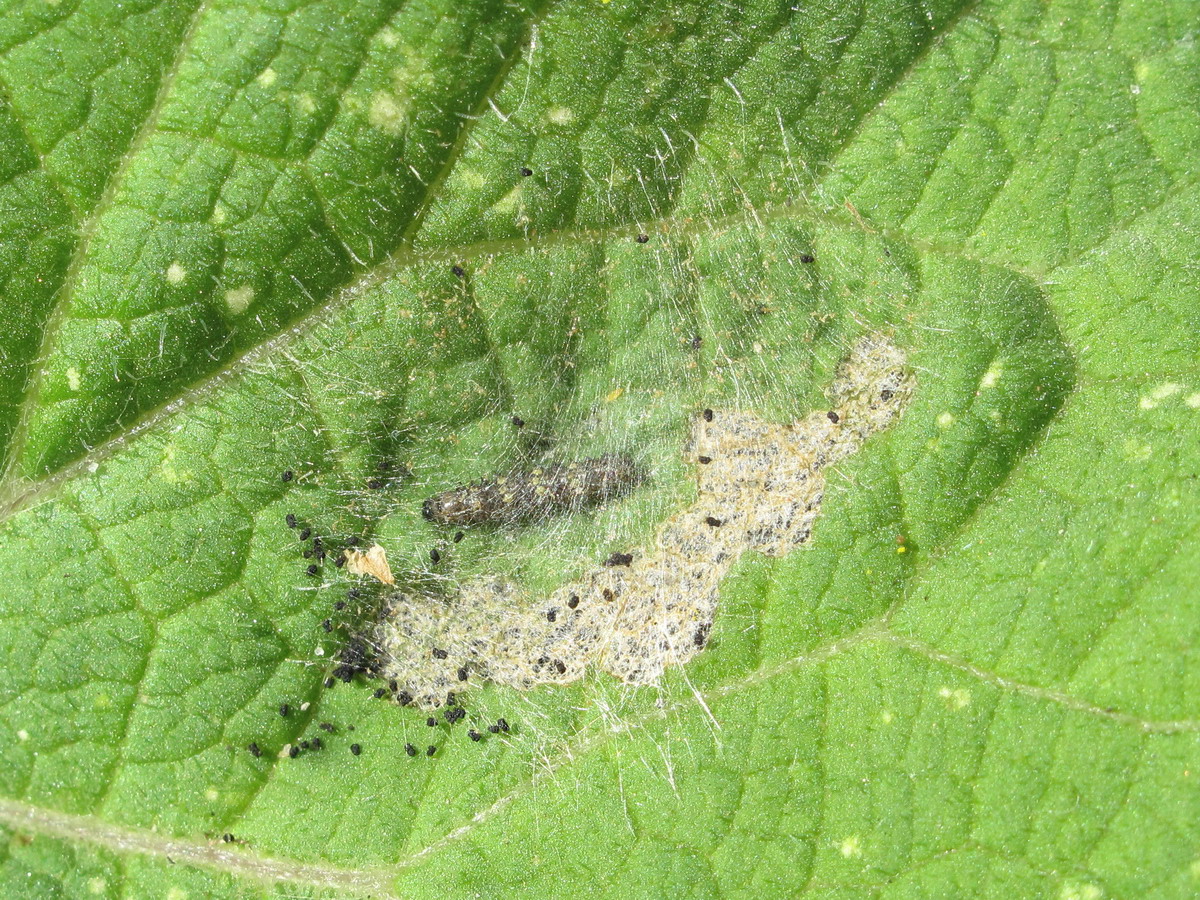
"After the second moult, fourteen days old, it measures 11 mm. long. The ground colour is smoky-black and shining. The transverse wrinkles of each segment have a series of minute warts, each emitting a tiny bristle. Excepting the three dorsal tubercles on the fifth, seventh and ninth segments, and the base of those on the second and third segments, all of which are lemon-yellow, the whole of the remaining tubercles are black, each terminating in a long bristle, and shorter ones on the shaft of the tubercles. A medio-dorsal, longitudinal, deep black line runs the entire length, only broken up on the fifth, seventh and ninth segments by the lemon-yellow of the medio-dorsal spines, and is bordered on either side by a fine lemon-yellow line, and a lateral line of the same colour broken up into a series of crescentic-shaped markings by the lateral row of black tubercles; there is also a much less distinct wavy line passing along just above the spiracles, and a series of pale streaks runs below the lateral line above the claspers; the head is black and beset with hairs. The legs and claspers are also black. The larva still lives under the protection of a web." - Frohawk (1924)
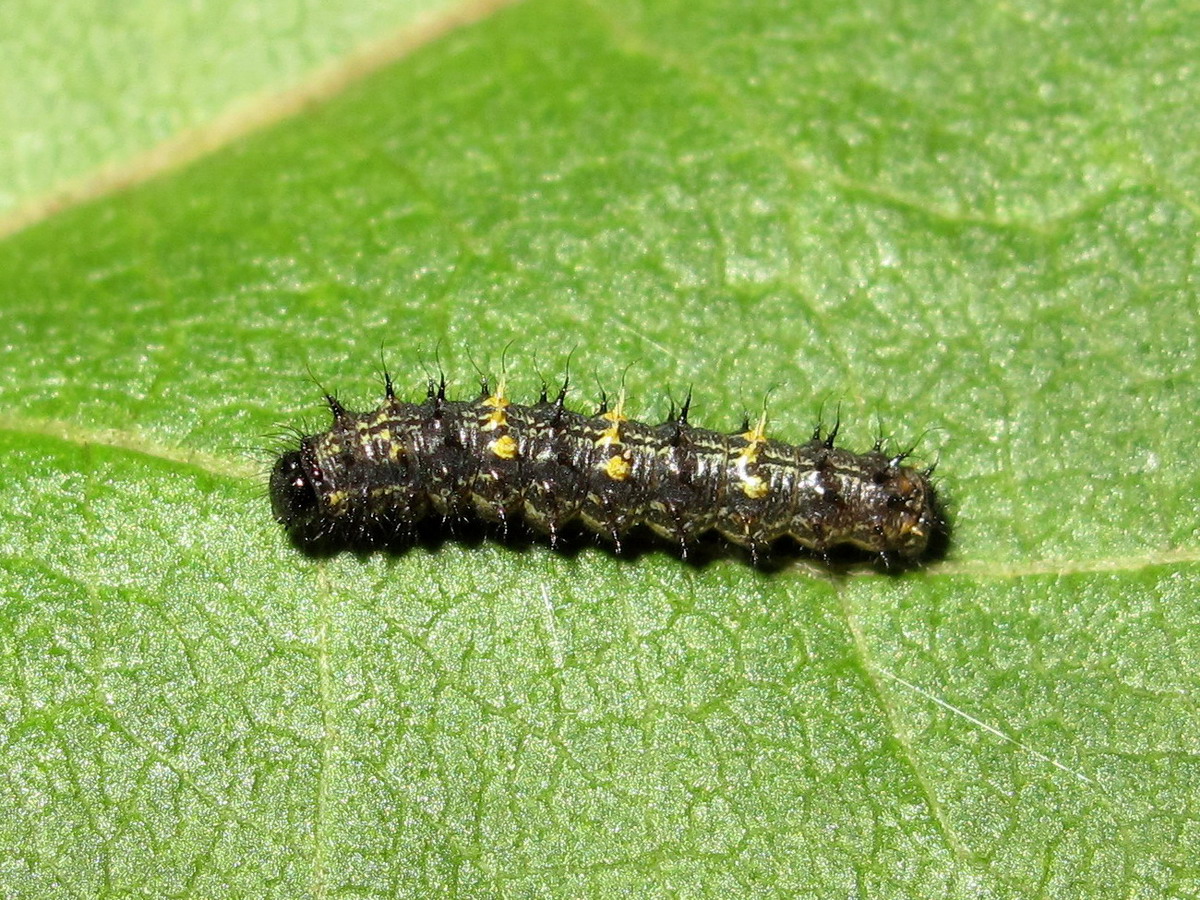
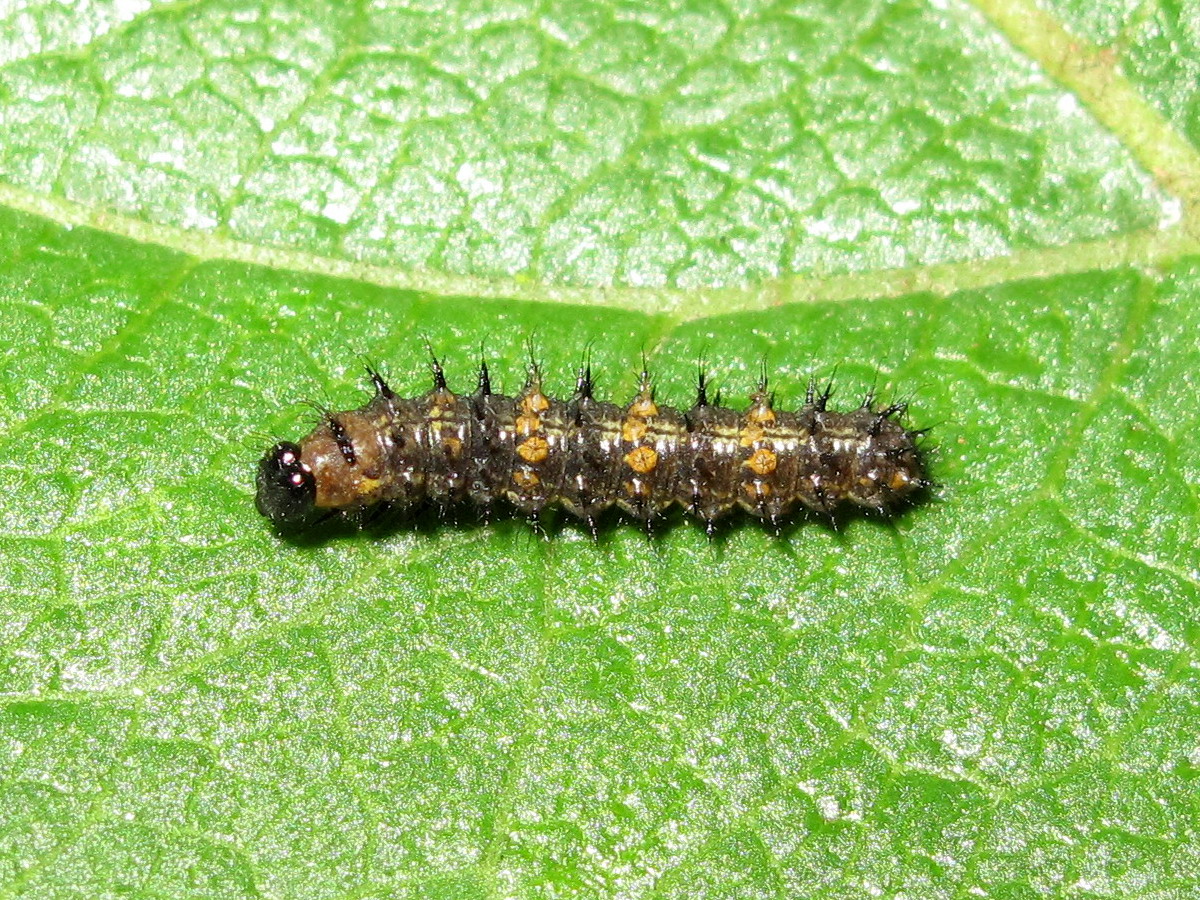
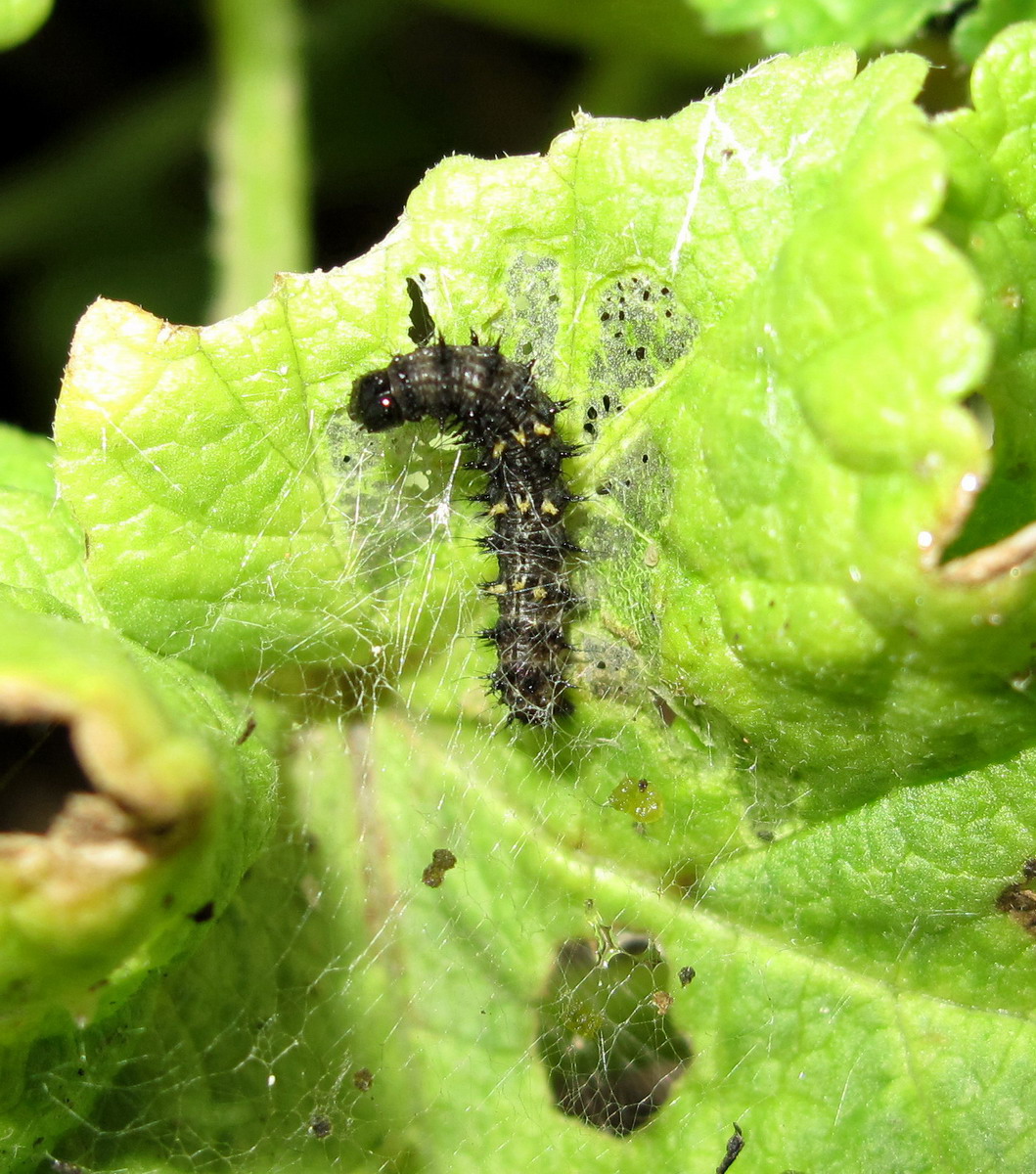
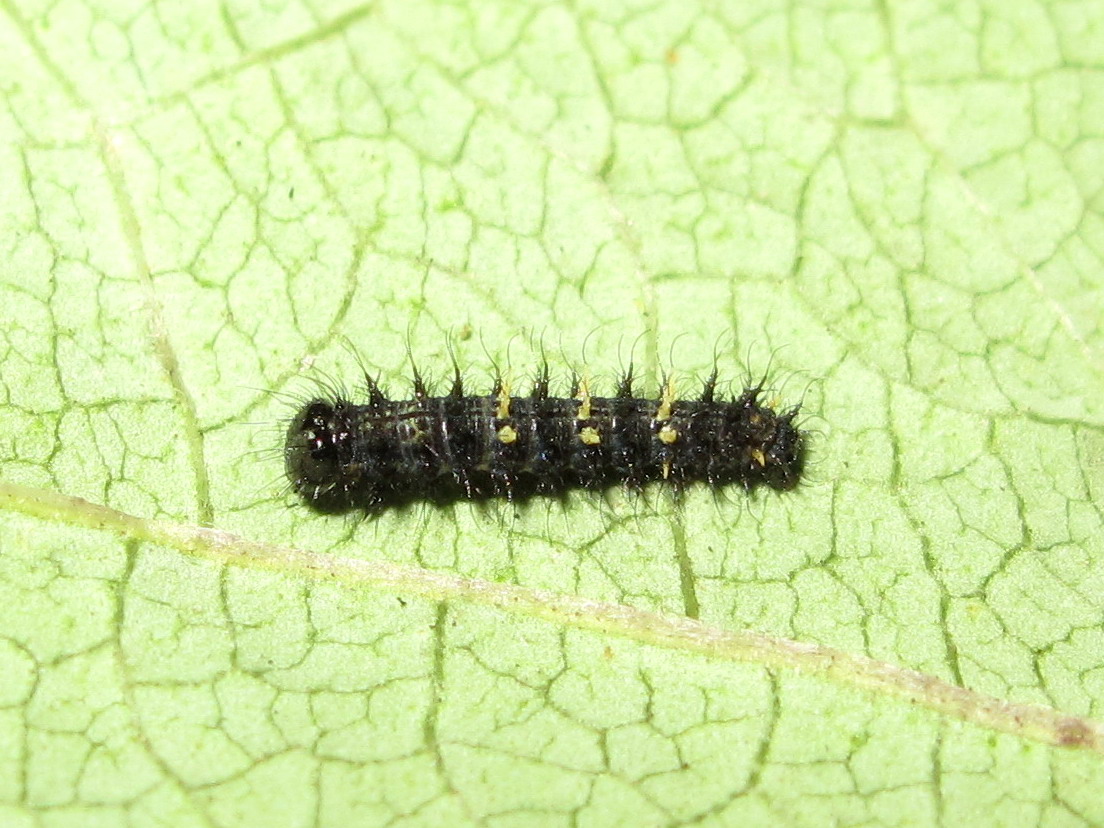
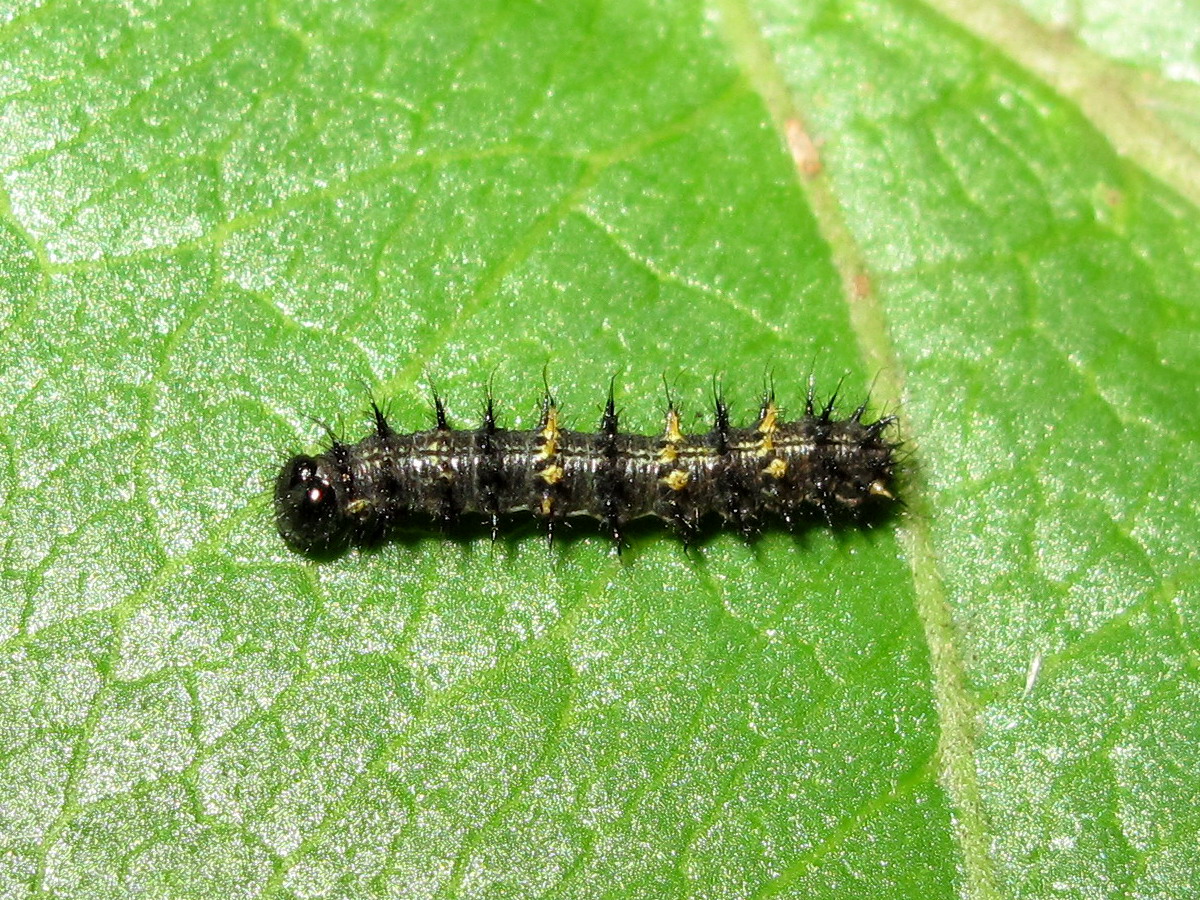
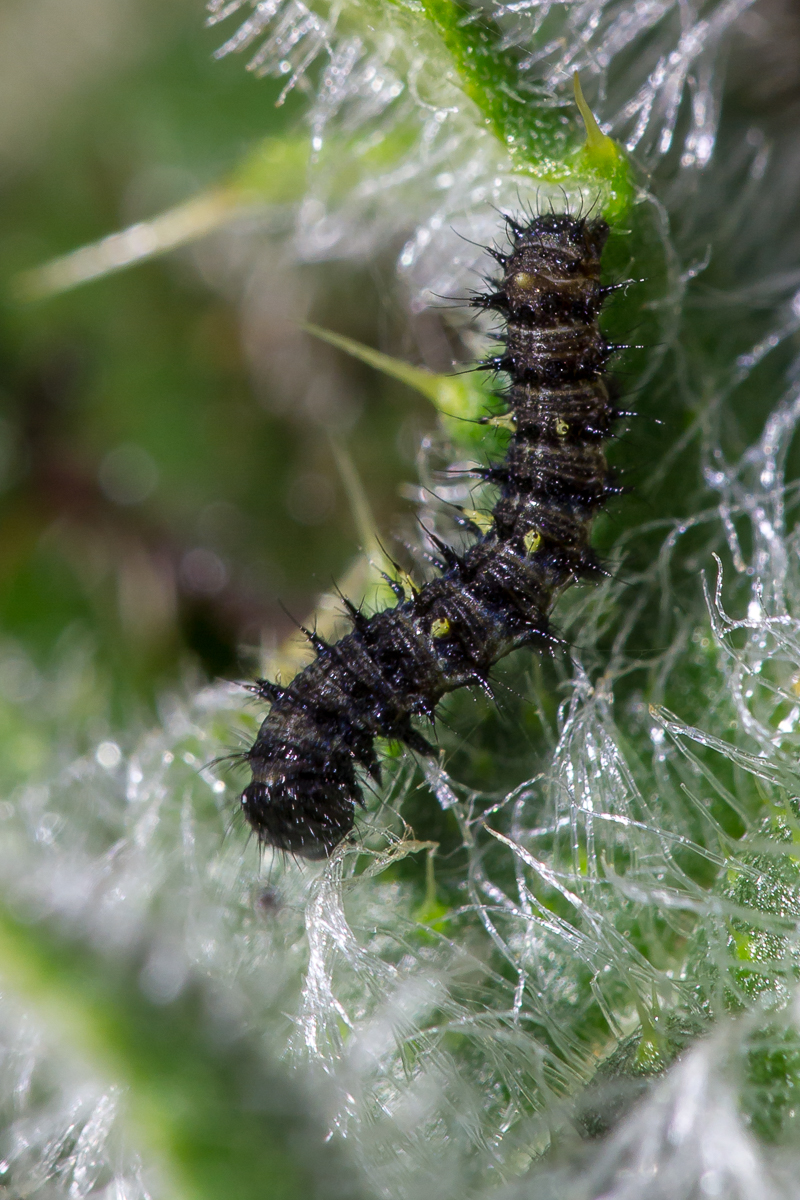
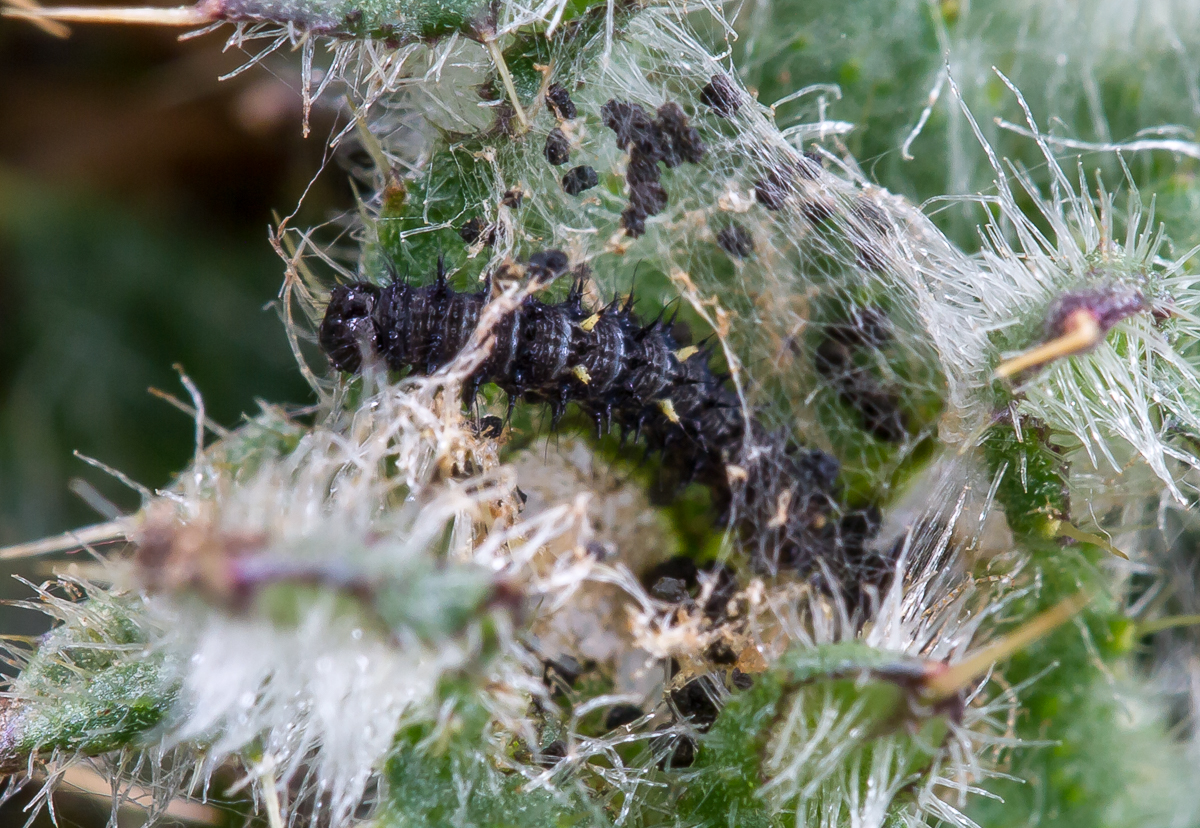
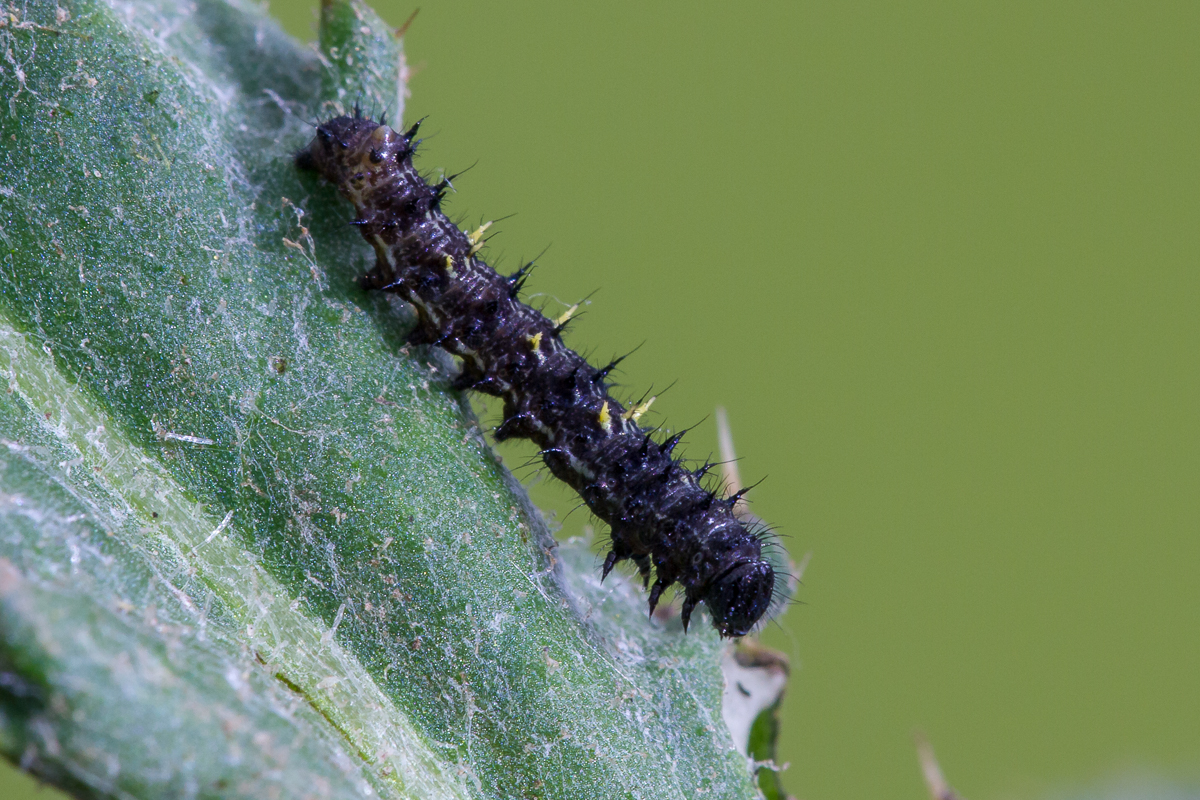
"After the third moult: Immediately after moulting the head, claspers and legs are ochreous, the spines pale yellow and the body black. When about eighteen days old it measures 19 mm. long. It is similar to the previous stage, excepting the whole of the markings are more clearly defined. The black is richer and the minute body warts encircling the segmental divisions are whitish and more distinct; the medio-dorsal line is velvety black. In some specimens all the spines (tubercles) are shining black, and the lateral line is composed of eight crescentic markings, commencing between the third and fourth segments and ending on the eleventh segment. The larva feeds with voracity, consuming the whole leaf, excepting the stronger spines and stems, and continues feeding for an hour or more at a time, and appears to take no notice of being touched, as it remains feeding while thus interfered with. Some of the larvae moulted the third time by July 1st, 1892, and some moulted fourth time July 5th, 1892." - Frohawk (1924)
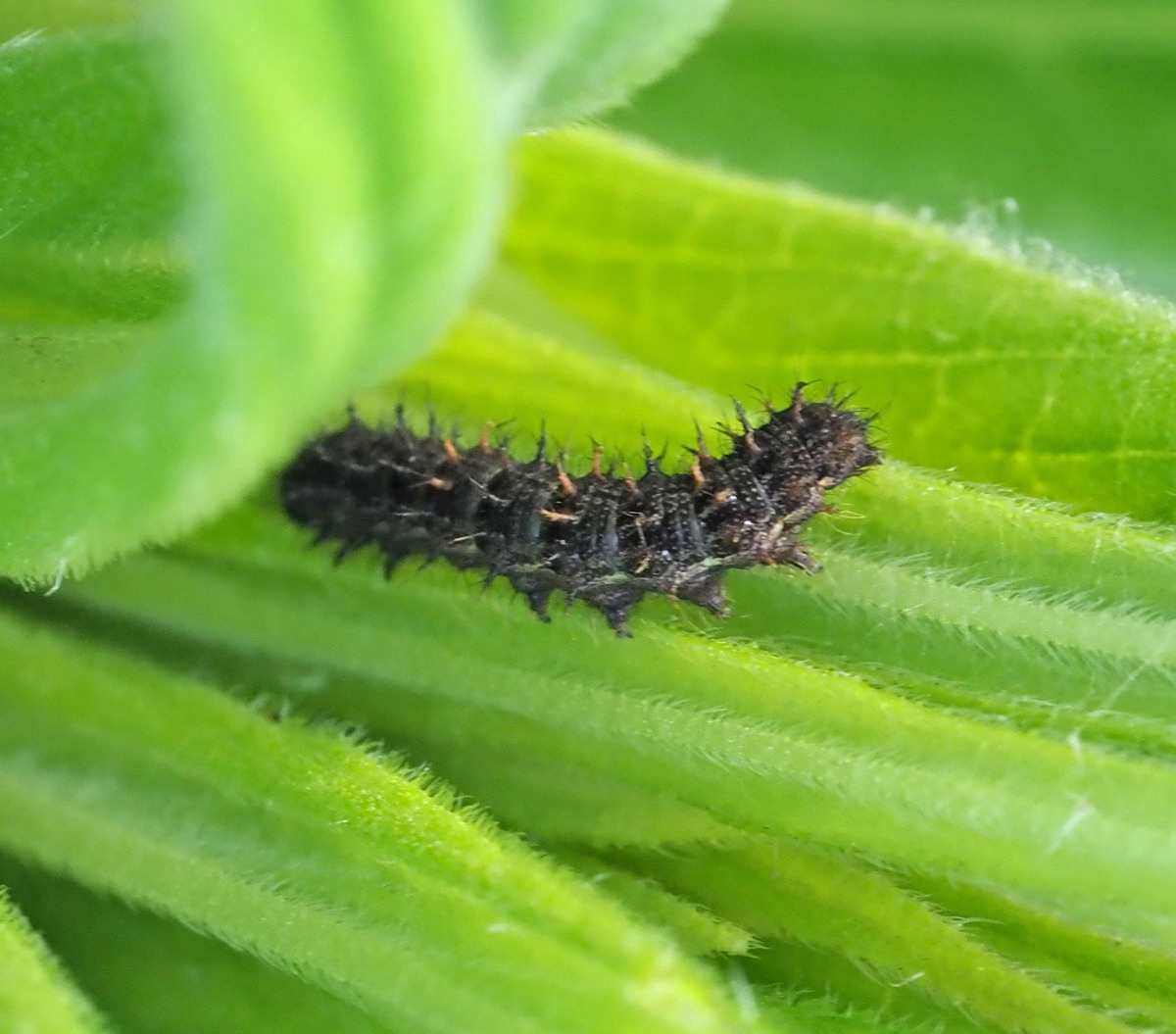
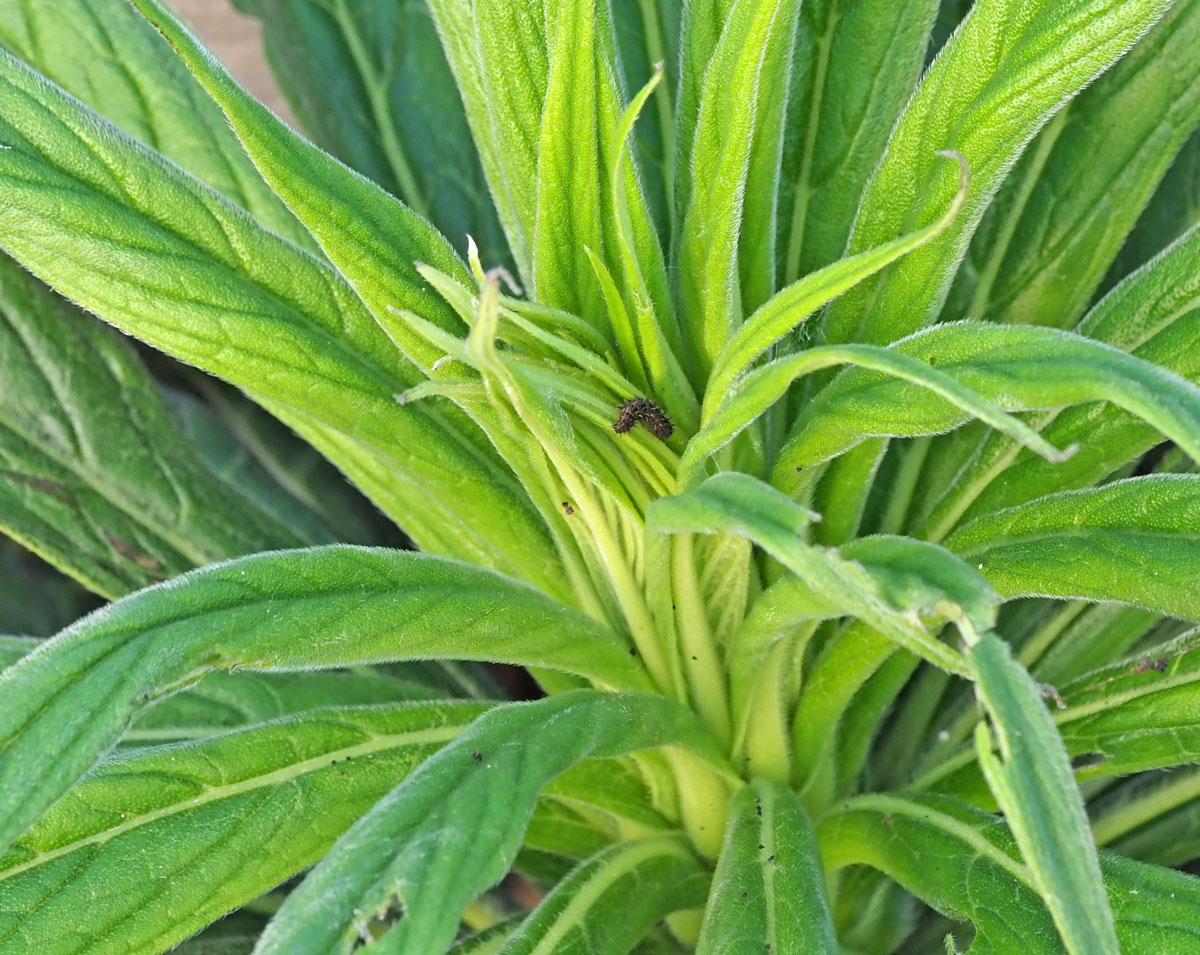
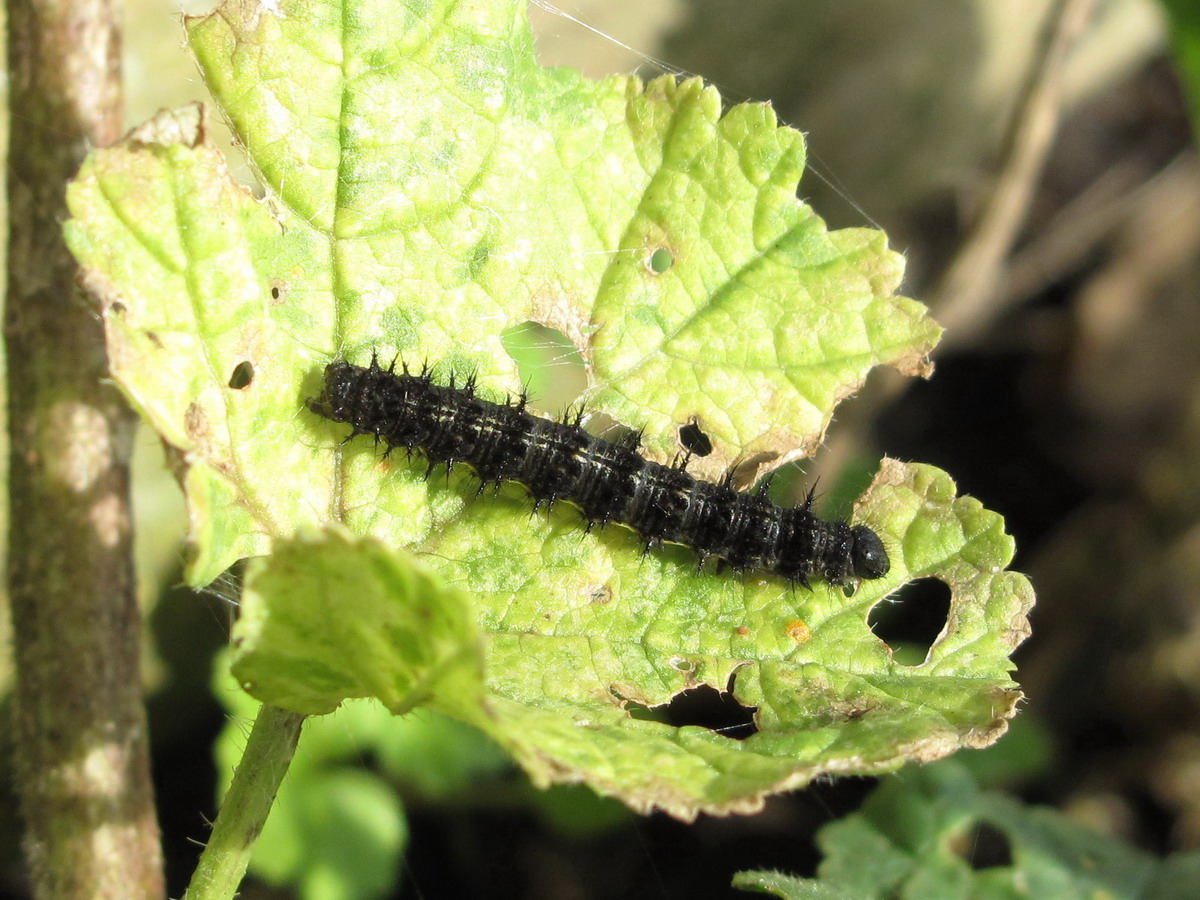
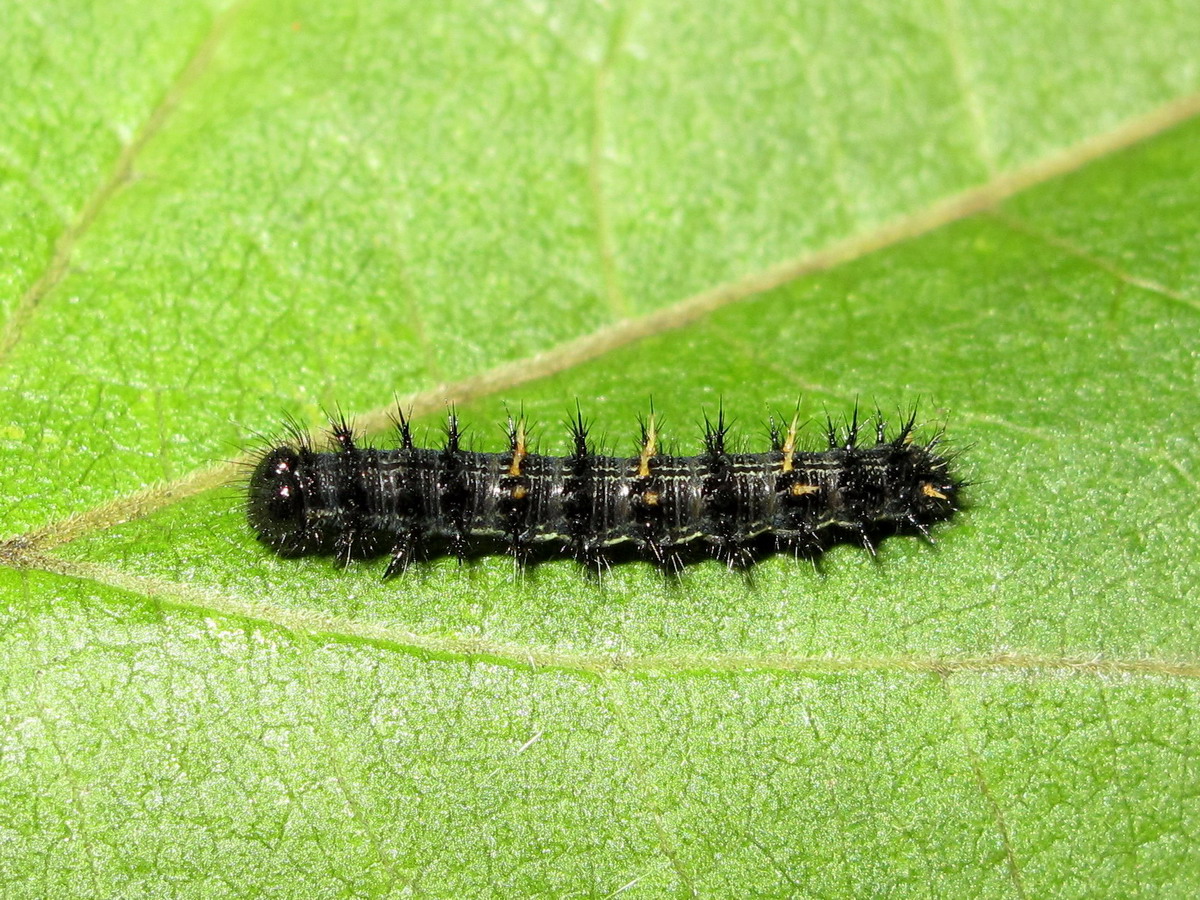
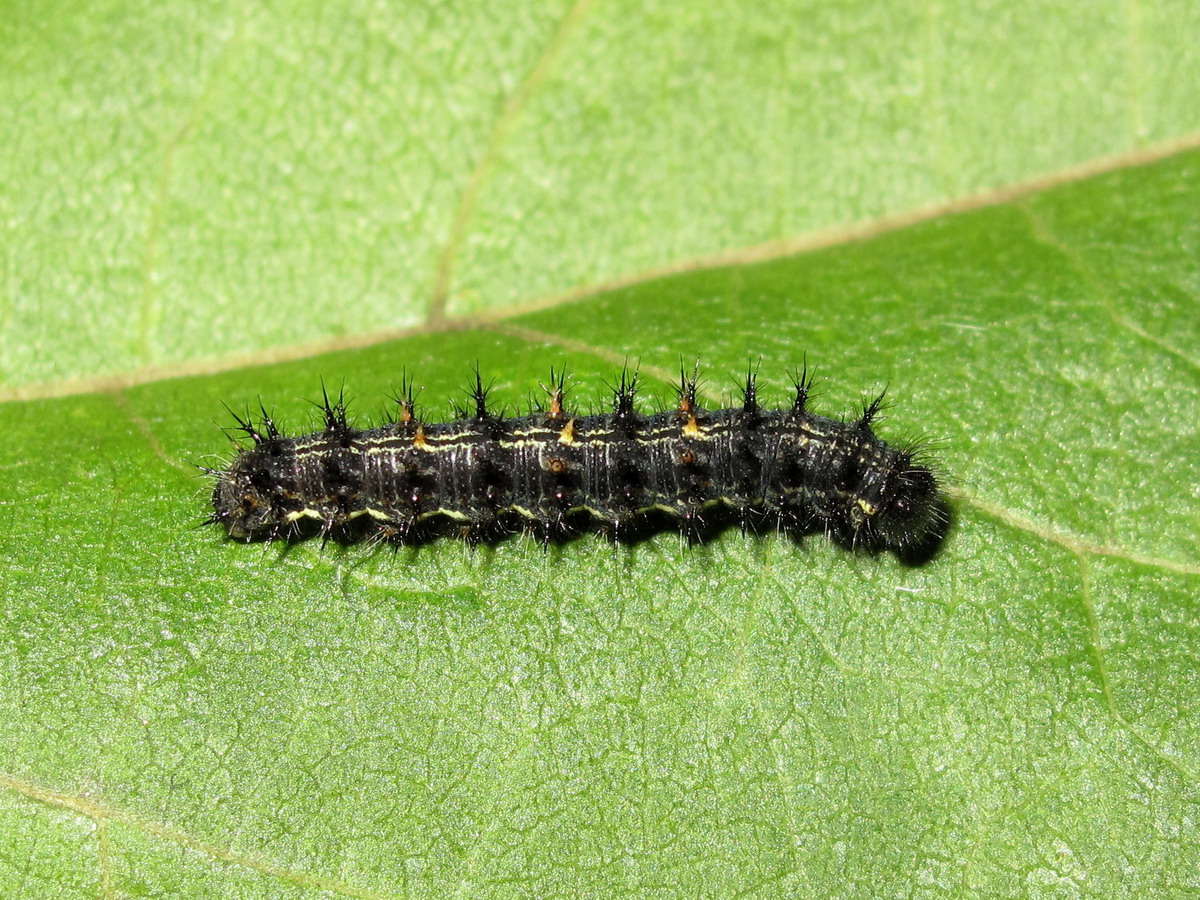
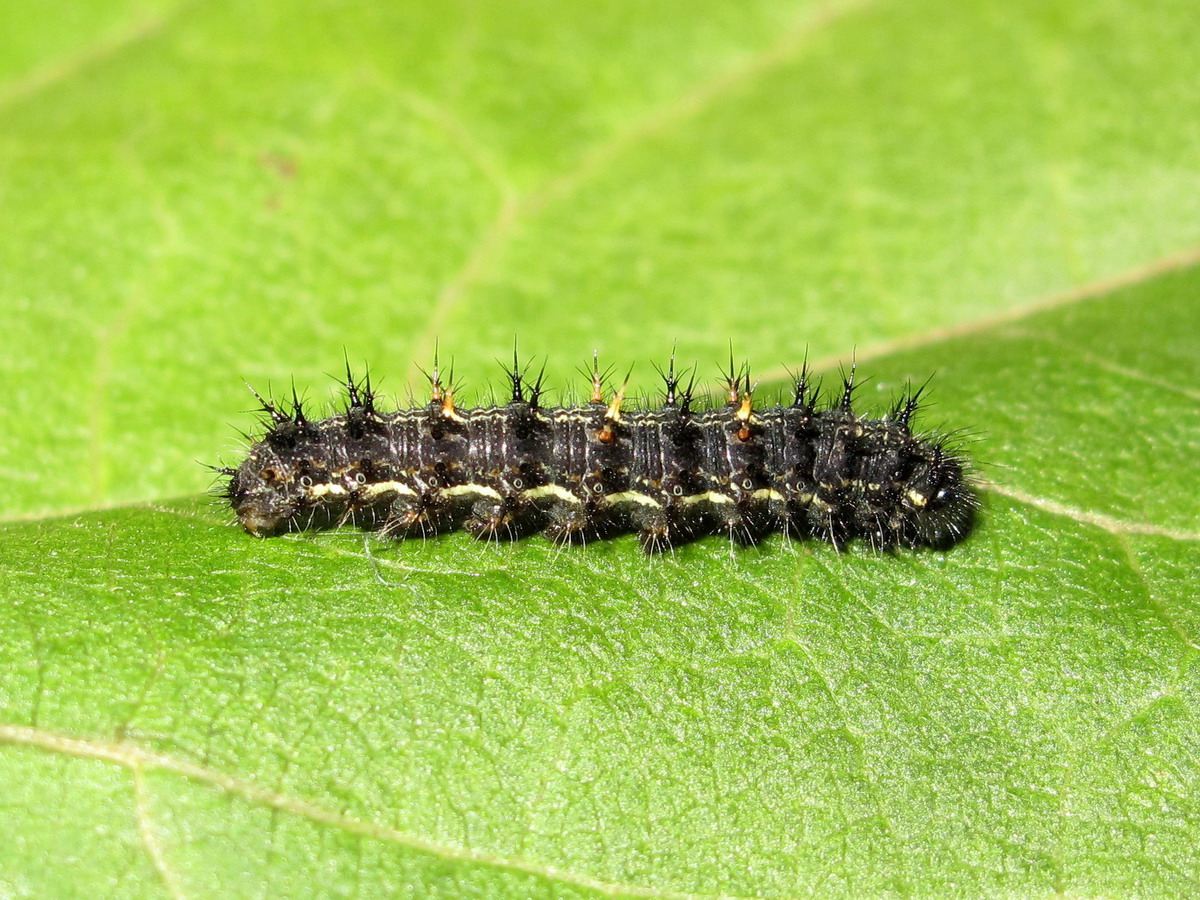
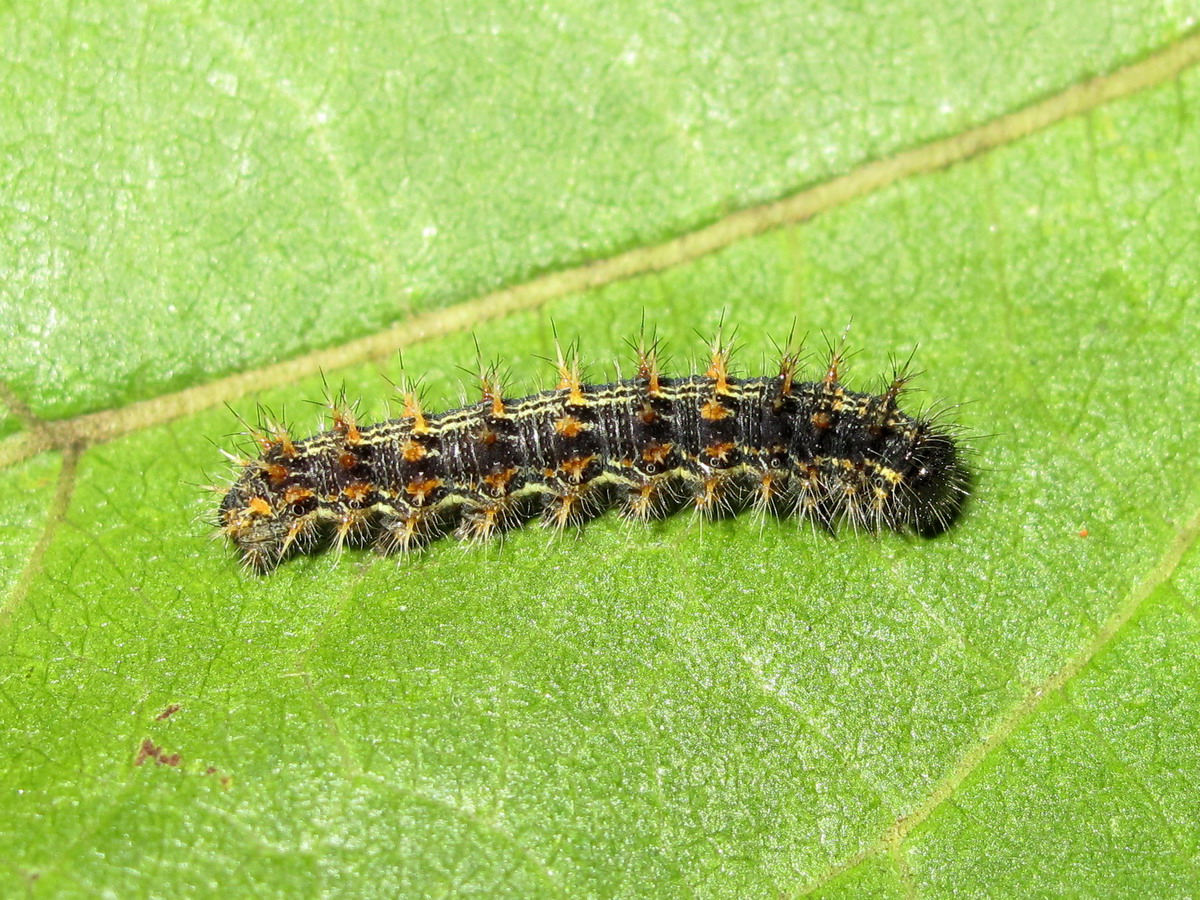
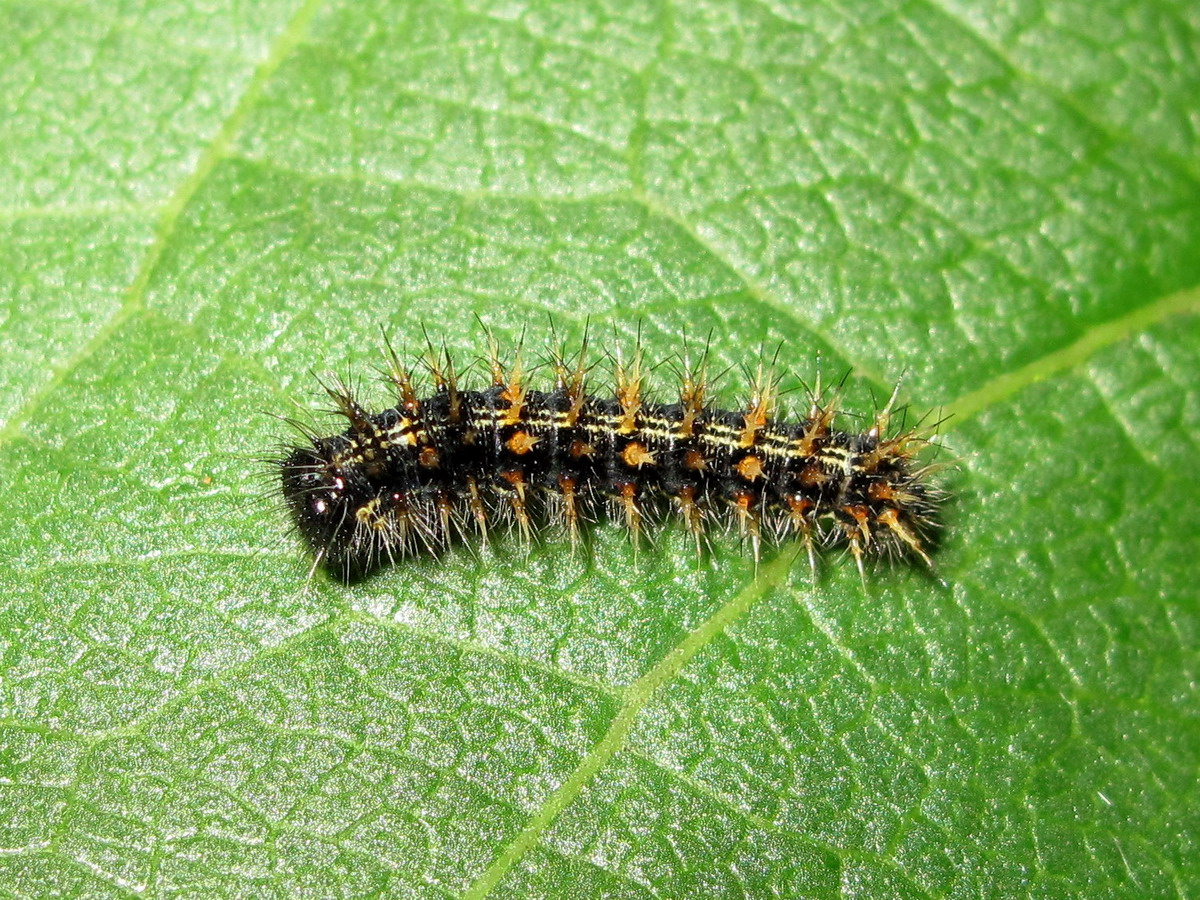
"After fourth and last moult, twenty-five days old, it measures 28.6 mm. in length. The body is of almost uniform thickness throughout, being only slightly thickest at the third and fourth segments. There are seven longitudinal rows of spines, placed medio-dorsal, sub-dorsal, super-spiracular and sub-spiracular. The first segment is spineless, being fringed with black bristles; the second and third segments have each four spines, which are sub-dorsal and lateral. The remaining segments have each seven spines, excepting the last, which has four; the colour of the spines varies in different individuals; in some they are wholly pale yellow, in others black with yellowish centres, but terminate in fine, sharply pointed spinelets. The body is velvety black, and leaden grey at the sub-divisions, and is densely sprinkled with minute white dots, each bearing a fine white hair, longest on the ventral and lateral surface, where they curve over the claspers. A longitudinal lateral stripe commences on the fourth segment, and ends on the eleventh segment, which is lemon-yellow and forms a series of crescents, being broken up by the sub-spiracular spines. There is also a short yellow streak behind each spiracle, and a more or less distinct series of yellow markings, forming a broken super-spiracular line; the spiracles are outlined with whitish. The ventral surface is coppery-brown, the claspers and legs are deep tawny. The head is black, deeply sunken between the lobes; it is studded with black warts, each emitting a hair; some are black and others whitish. There is a medio-dorsal, longitudinal black line, bordered on either side by cream-coloured freckles densely crowded together, forming a light line. The first larva pupated on July 11th, 1892; others pupated the following day." - Frohawk (1924)
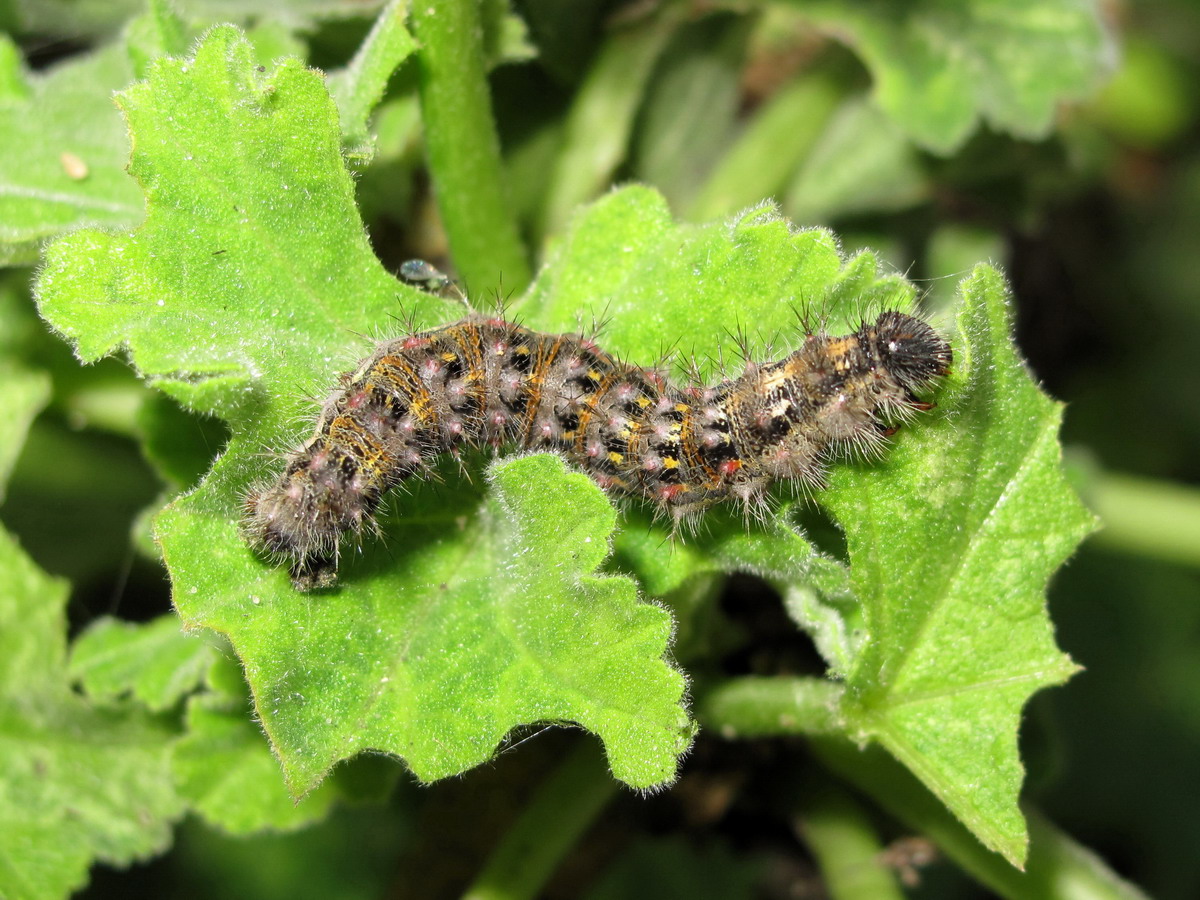
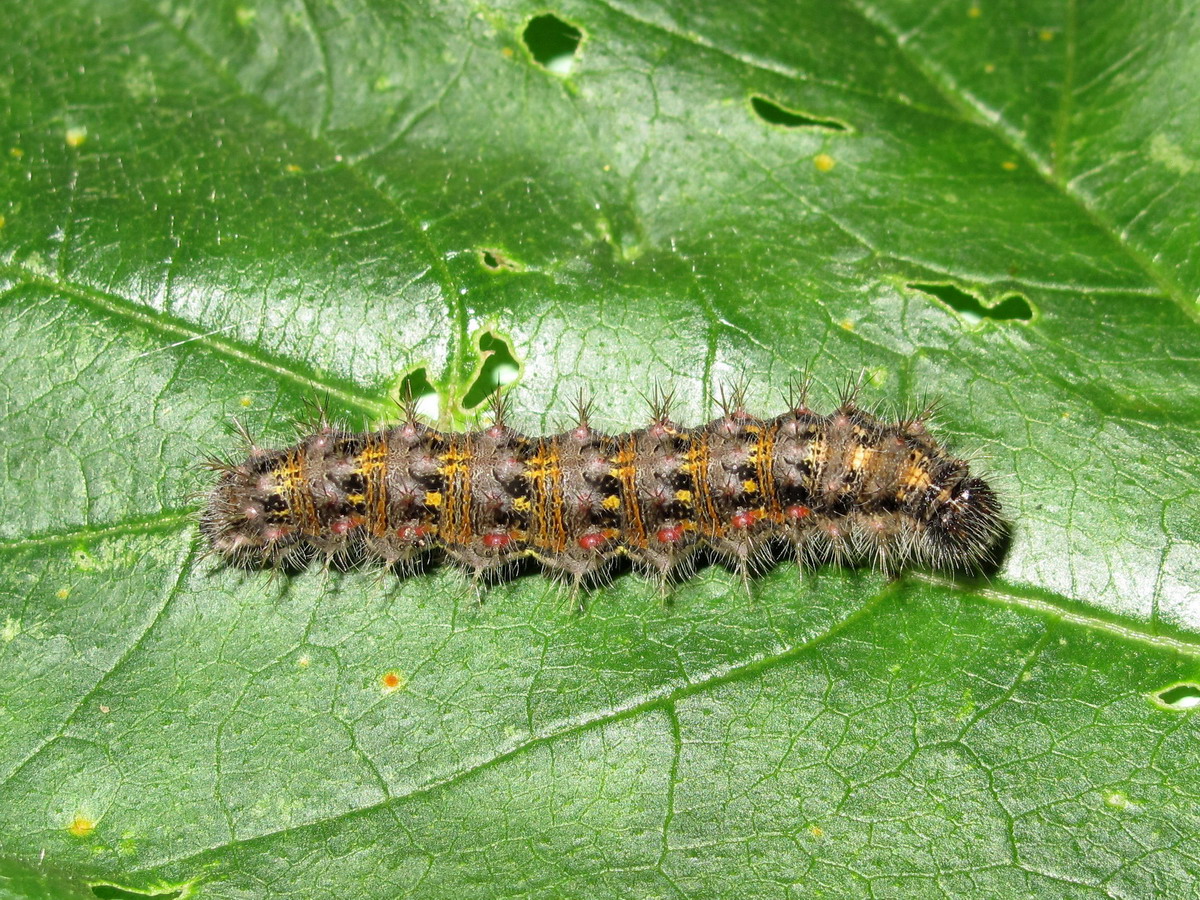
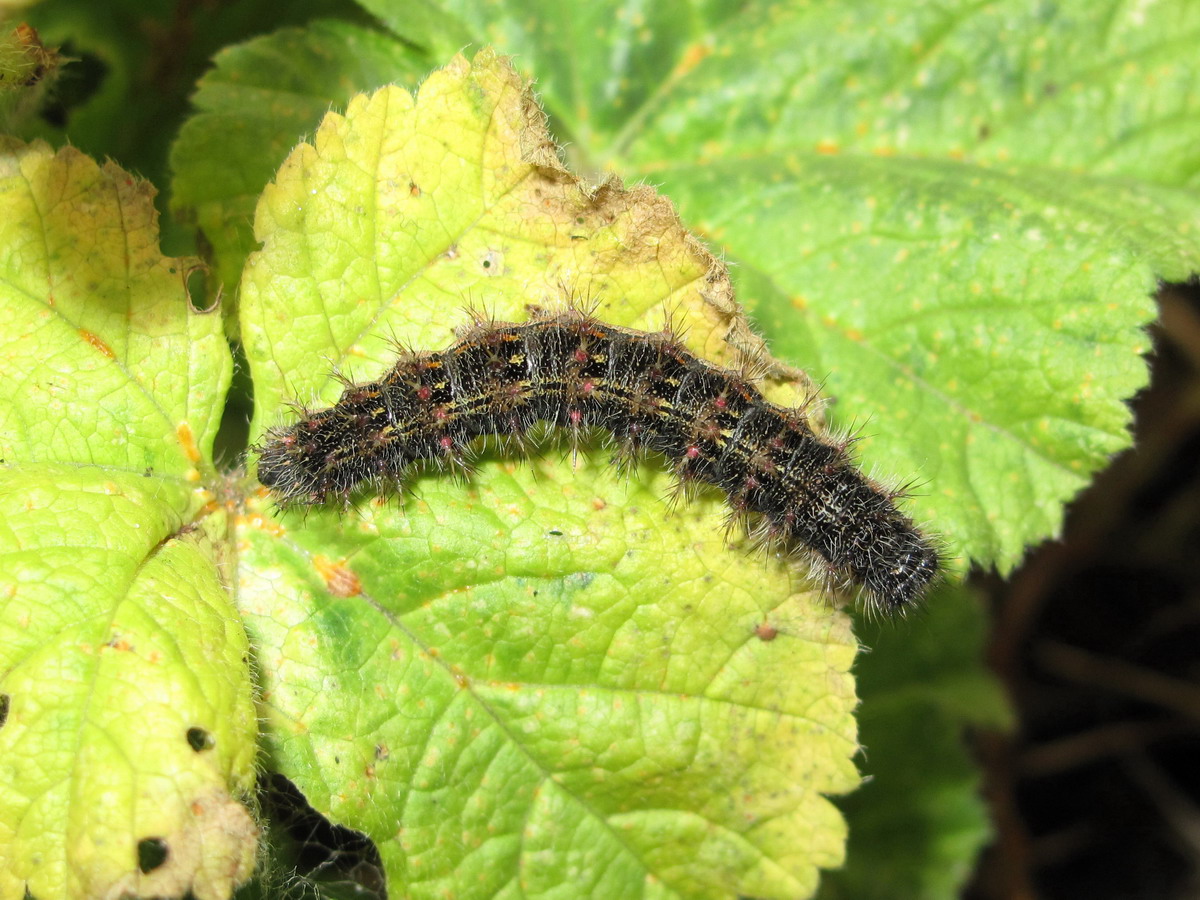
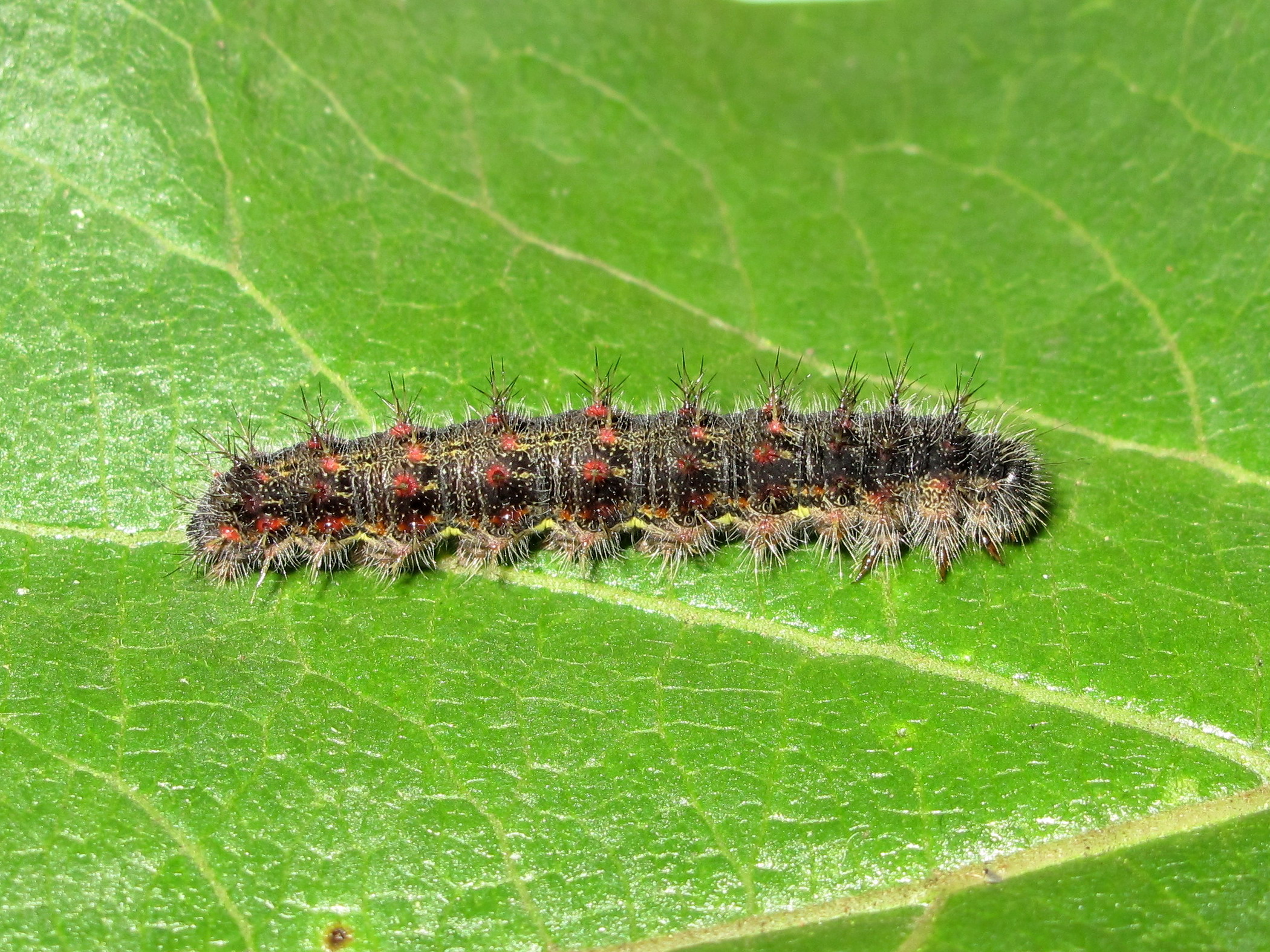
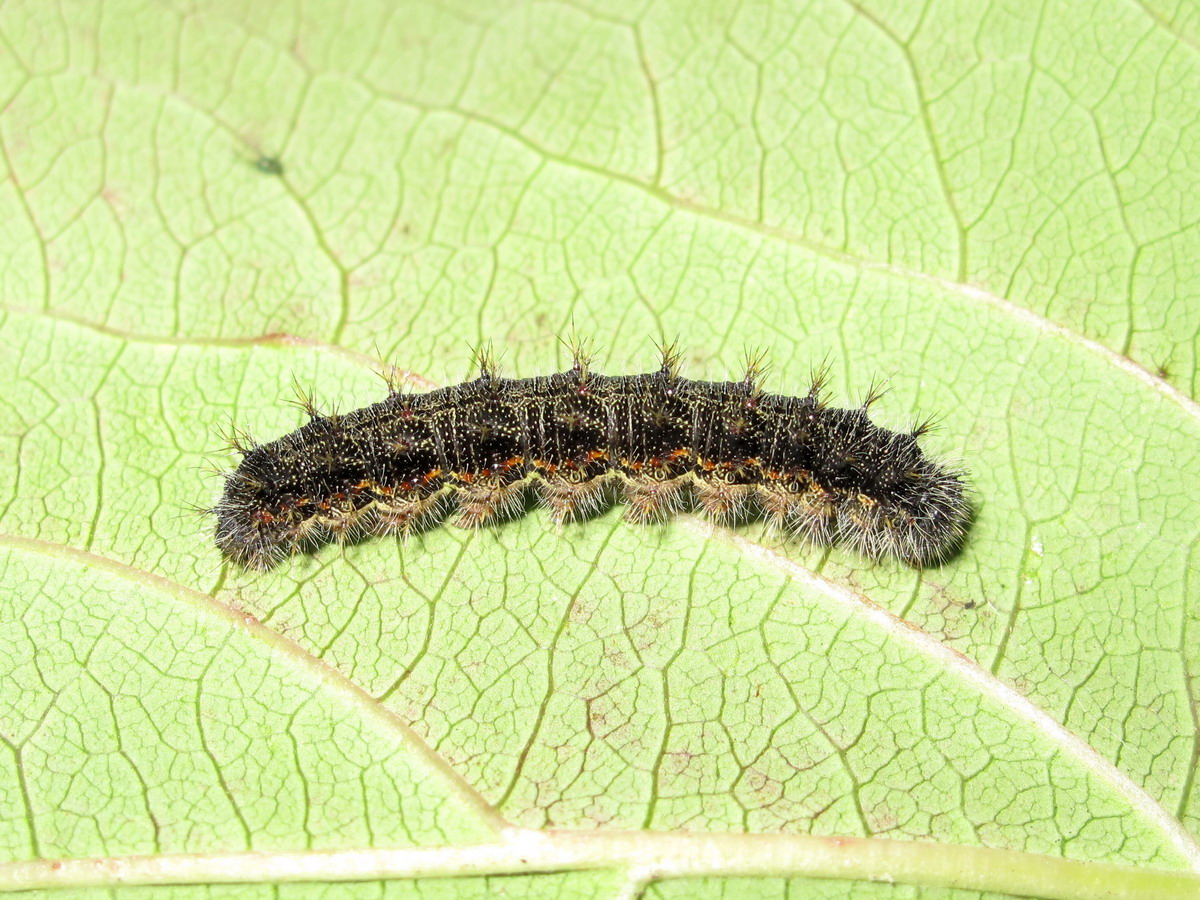
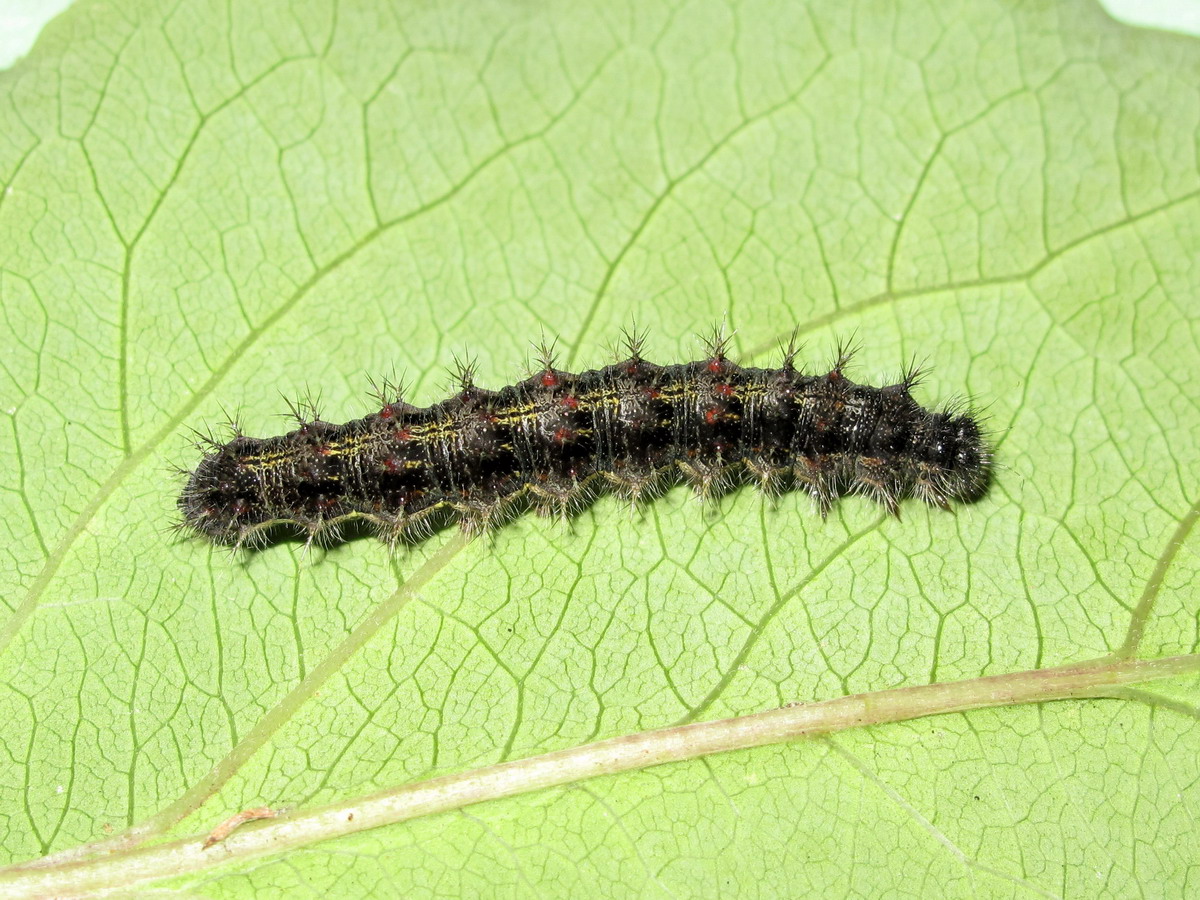
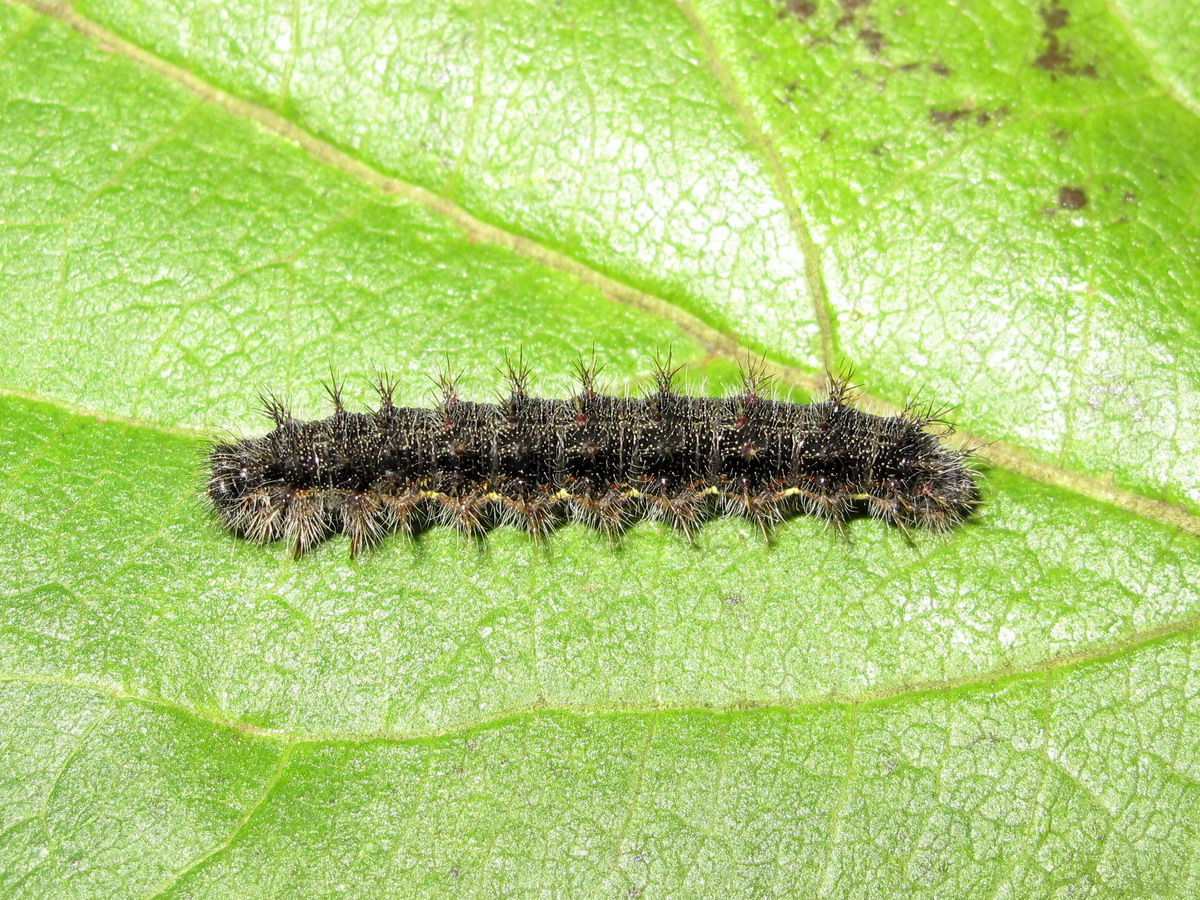
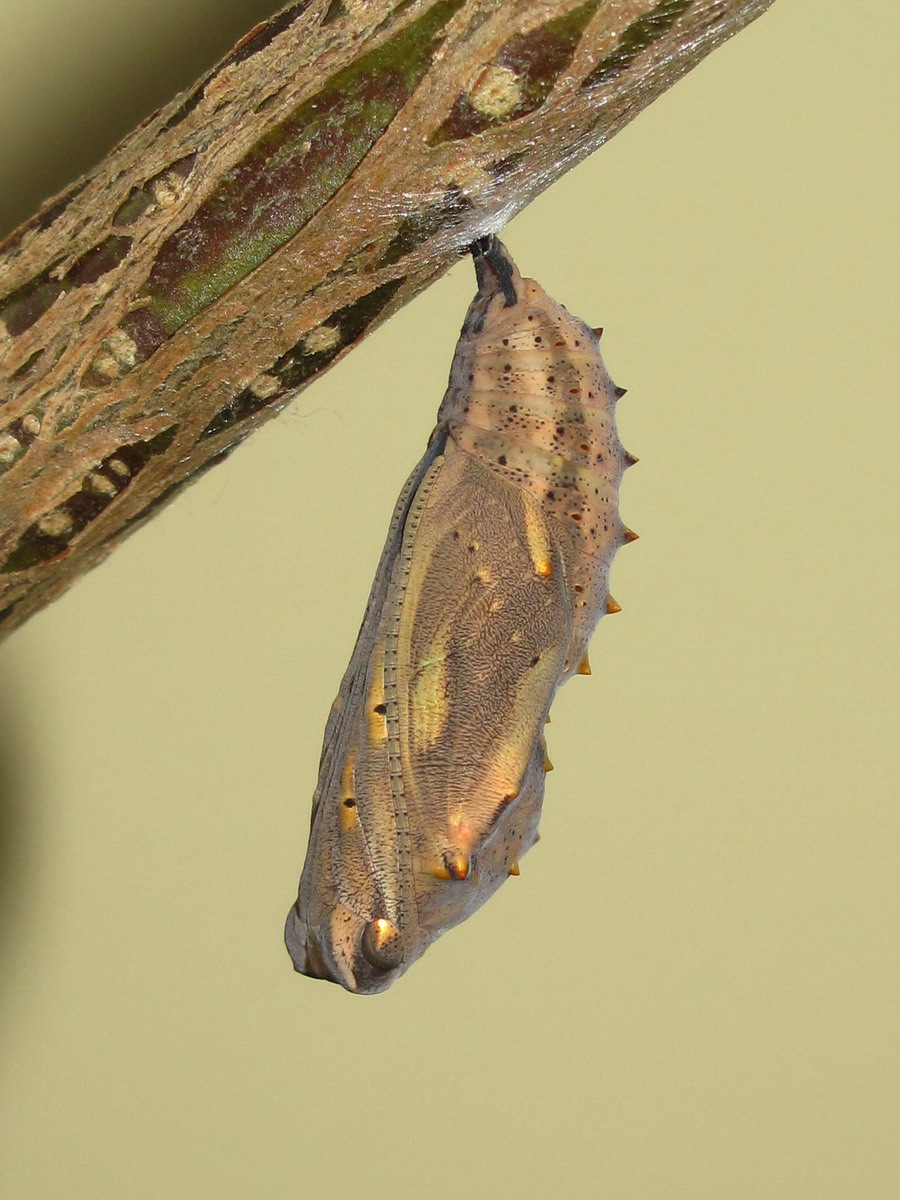
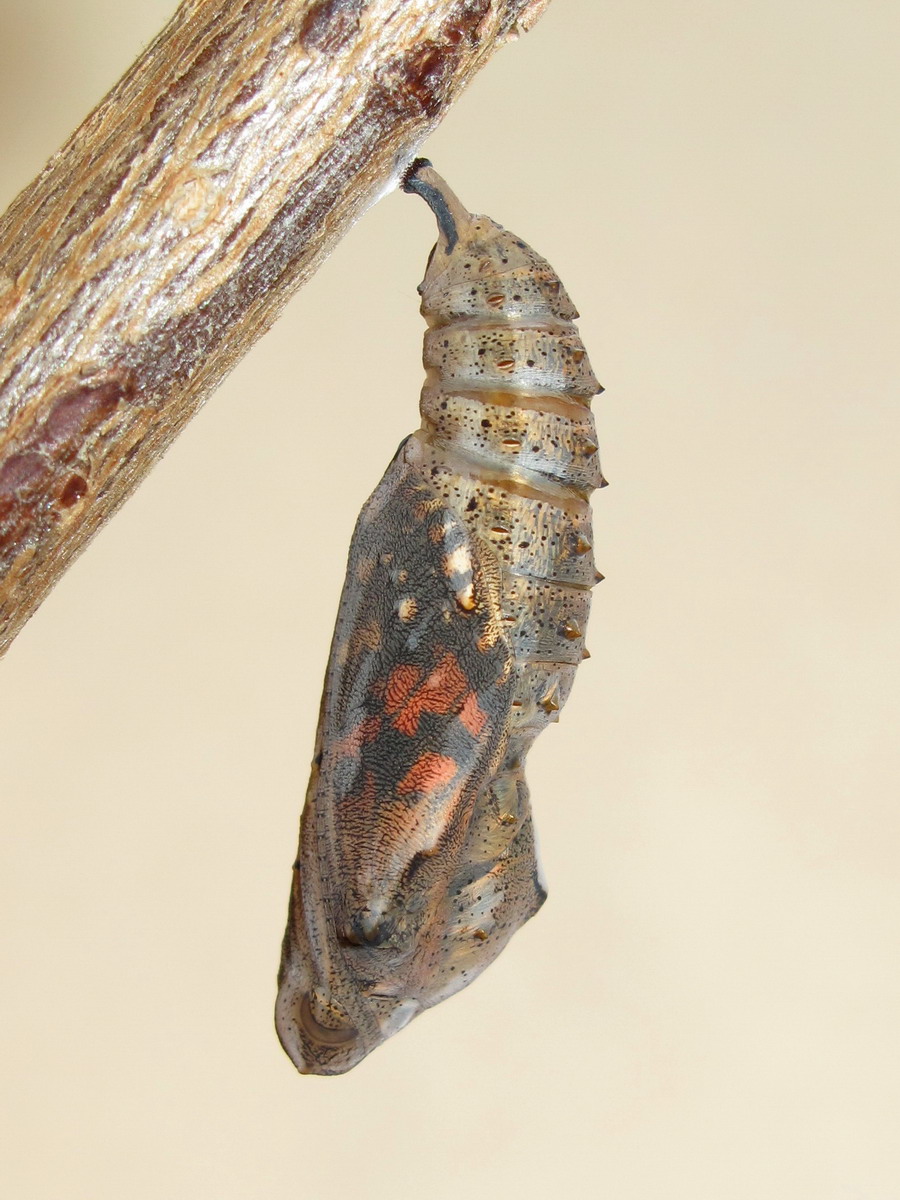
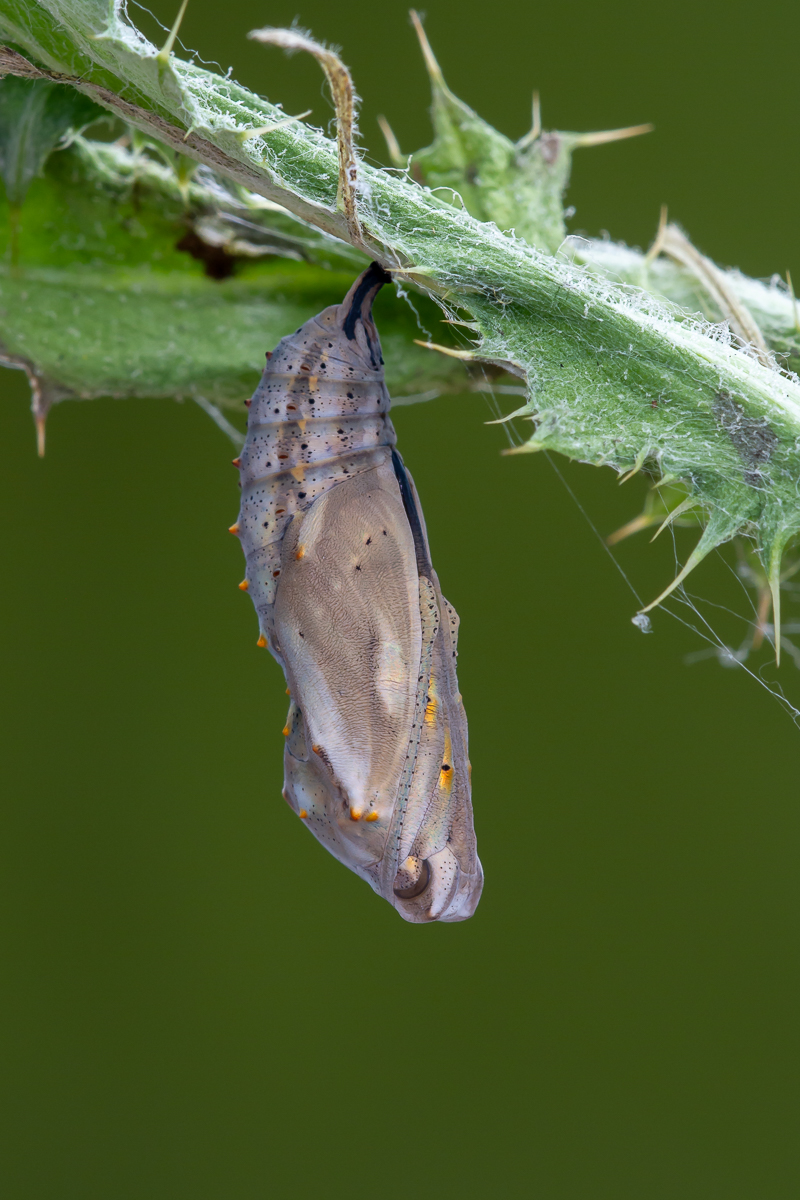
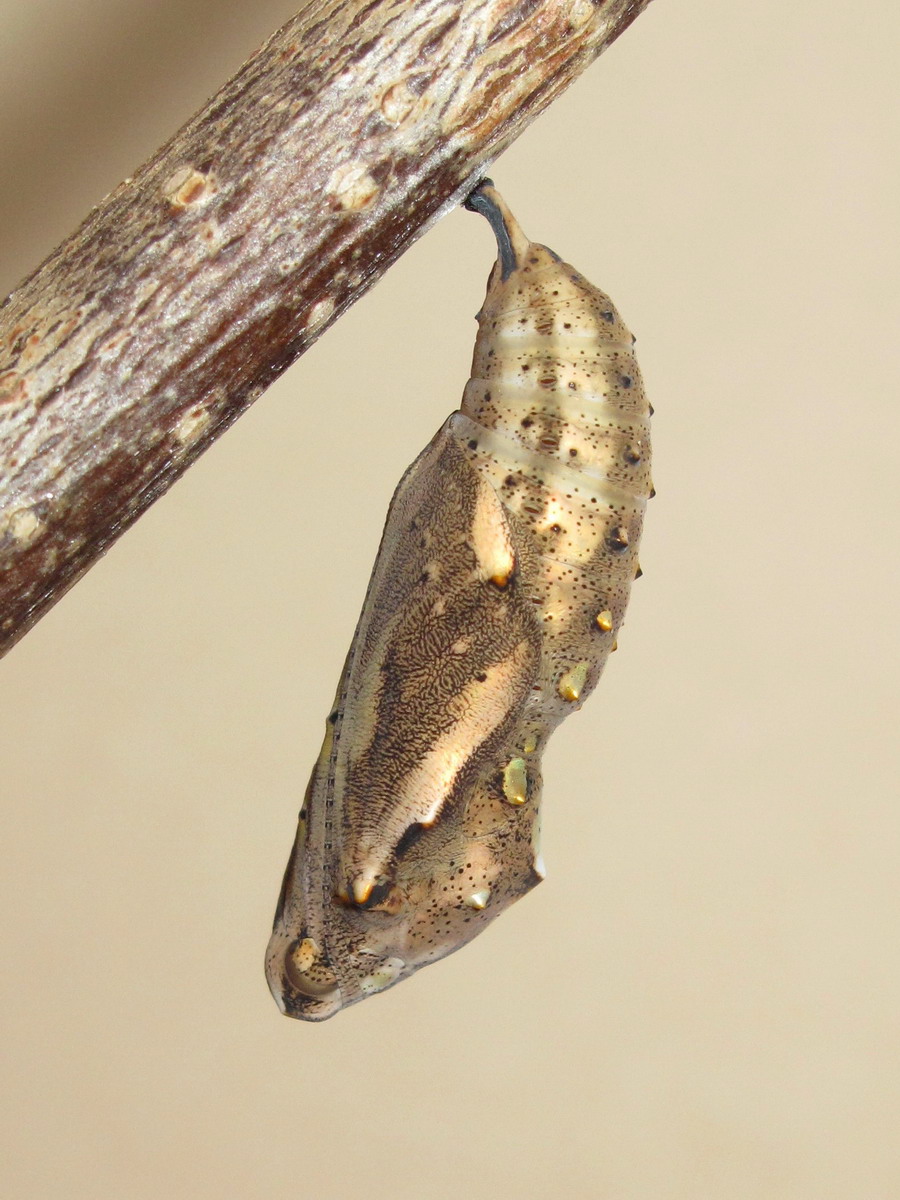
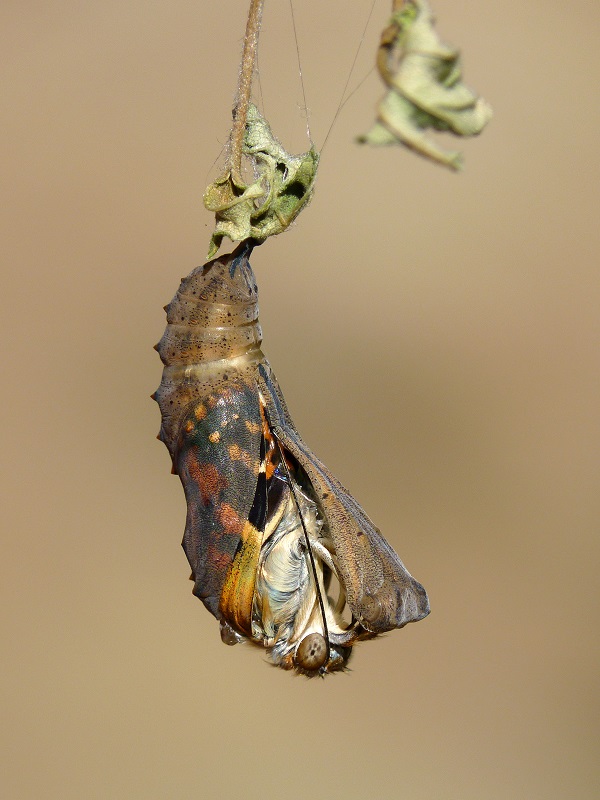
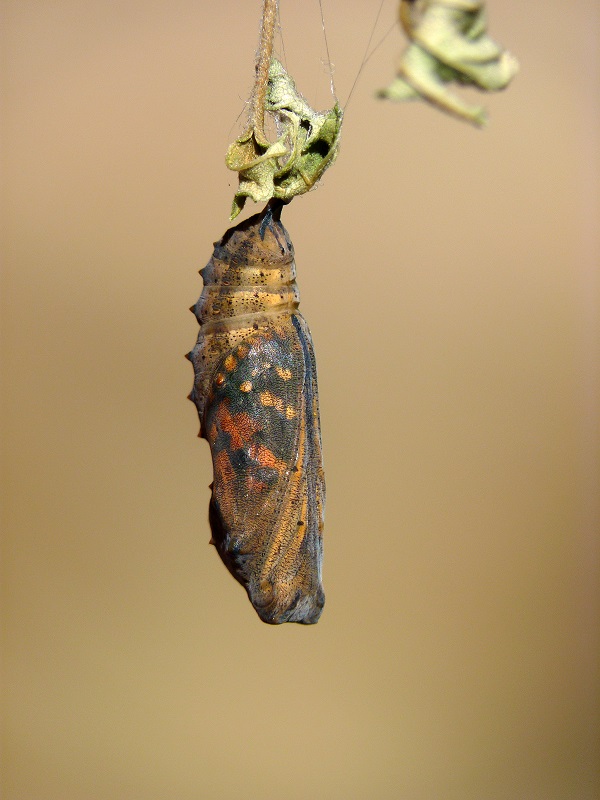
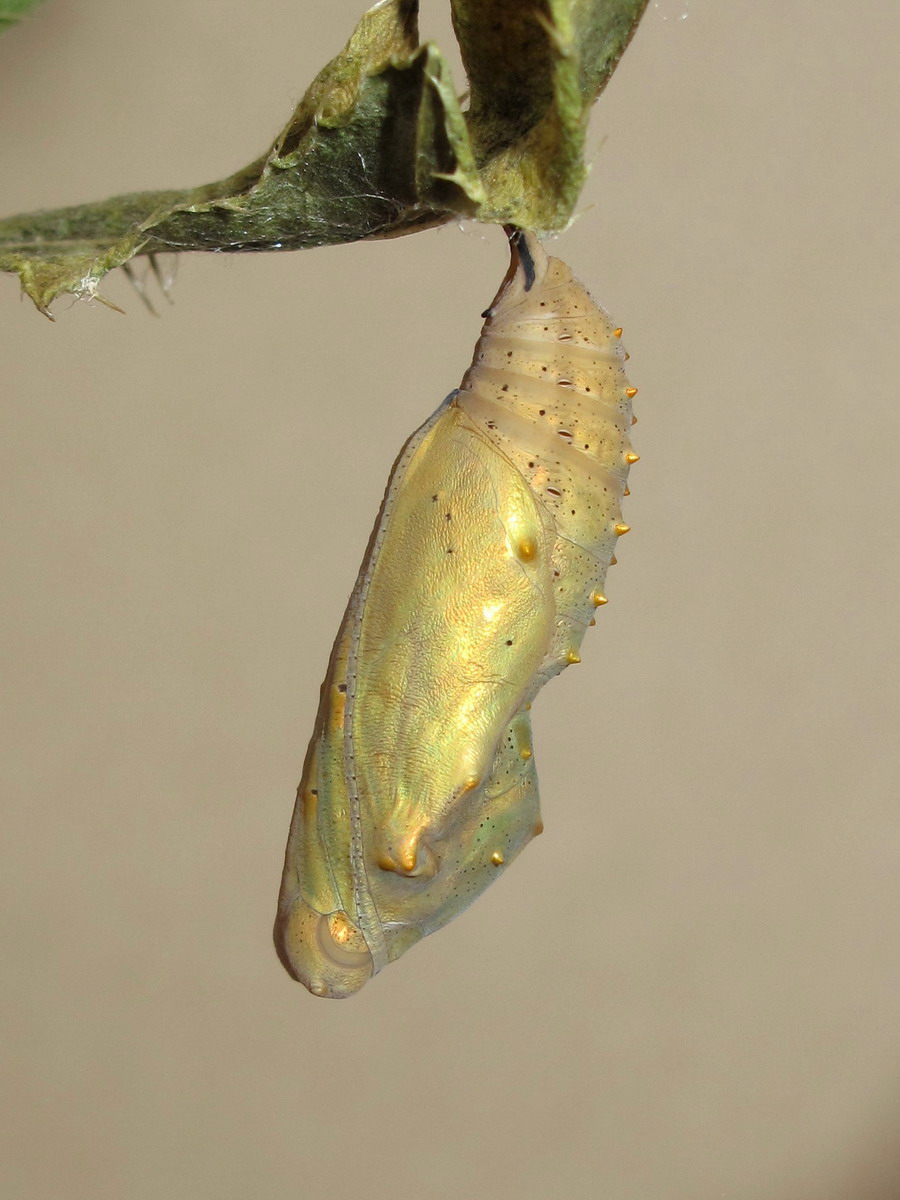
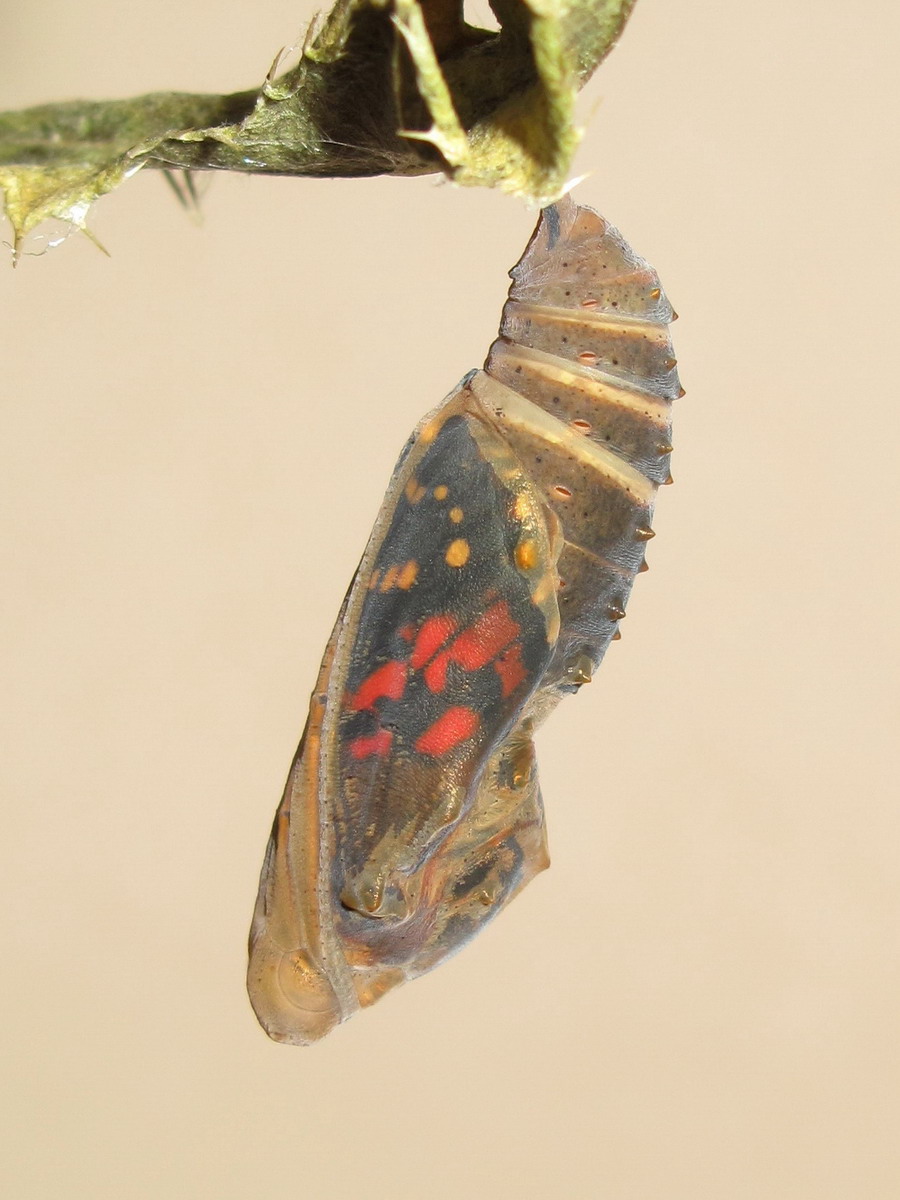
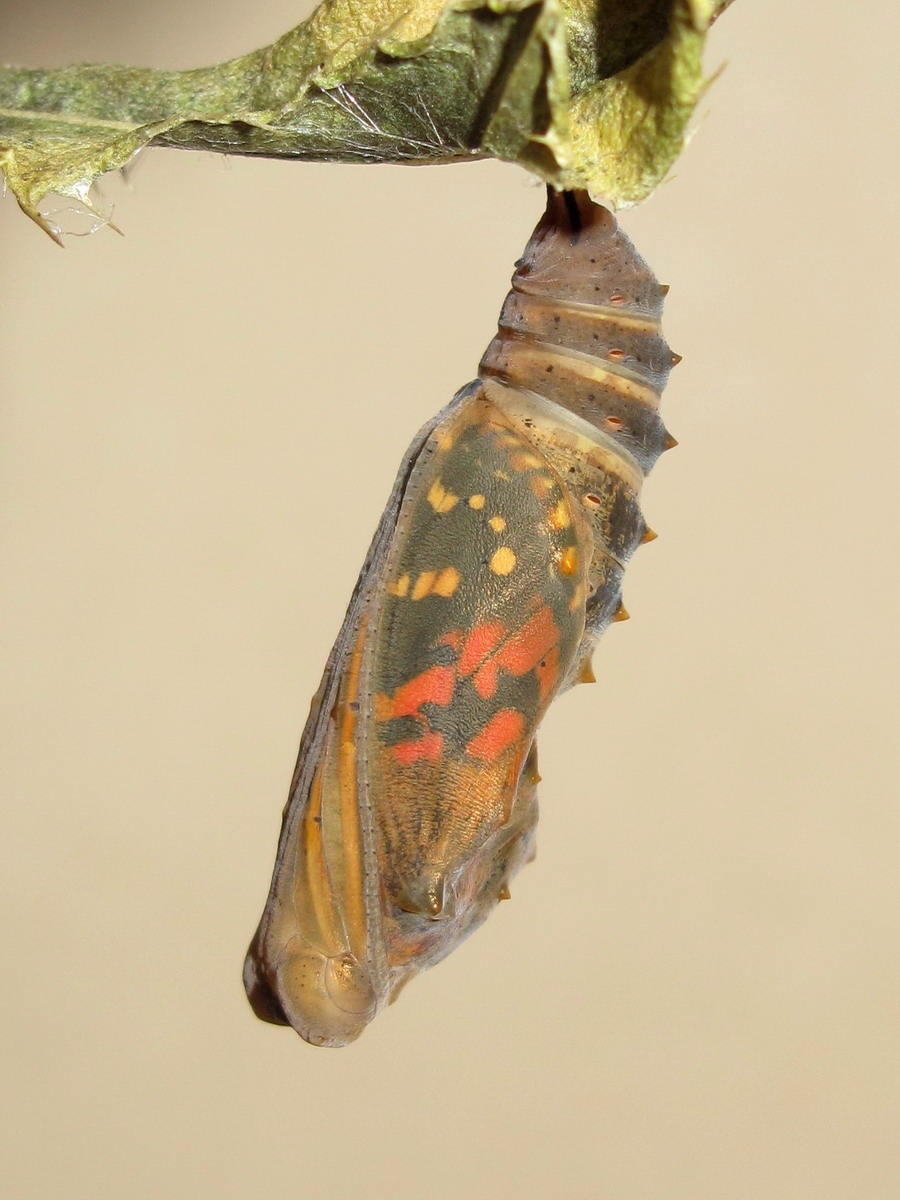
The pupa is formed in a tent of vegetation, using either the foodplant or some other convenient shrub, loosely spun together with silk. The pupa is hung upside down within the tent, attached by the cremaster. This stages lasts around a fortnight.
"The pupa measures 24 mm. long. It is of elegant proportions. Dorsal view: The head is almost square, with only very slight, blunt points; widest across the thorax, angulated at base of wings, and a smaller angle on inner margin of the wing; the body is swollen at the fifth and sixth segments, then tapers to the anal segment, which terminates in a rather long cremaster. Lateral view: Head conical; from the apex it rises in almost a straight line to the central angular meso-thoracic point; meta-thorax and first abdominal segment sunken; abdomen swollen at the middle and curving to the extremity of a rather long, stalk-like cremaster, which is furnished with hooks. On the dorsal surface the larval spines are represented by rows of sharp conical points; the medio-dorsal series are very small, except the meso-thoracic point, which is prominent. The colouring varies considerably. Some are beautifully washed with golden and coppery reflections over the entire surface, showing only the slightest trace of markings, the principal being a lateral streak along the abdomen and black streaks along the cremaster. The ground colour of normal specimens is pinkish-pearl-grey or dull nacreous, slightly washed with copper and gold, a pale longitudinal dorsal line runs the entire length and broadens out into a large pale patch on the thorax; along this line are placed the small medio-dorsal black points; the sub-dorsal points have black bases and pearl tips; these are developed into large discs of a beautiful nacreous lustre on the thorax and base of abdomen; a series of brown blotches borders the medio-dorsal band, and a blurred band of the same colour along the sub-dorsal points; then follows a pale lateral band, bordered below by a lateral stripe; the spiracles are outlined with black. The ventral surface is also faintly striped; the wings are dark purplish-brown (chiefly composed of extremely fine reticulations densely covering the surface), variegated with elongated nacreous markings, the largest running parallel to the inner margin, another along the costal margin, and a third on the hind margin, a double sub-marginal series of white spots between the nervures; the head is likewise variegated with black and pearl-white. There are four lateral rows of black spots along the abdomen, one row above the spiracles and three below; the antennae and legs are speckled with black, and two black marks on the ventral surface of the anal segment; the entire surface is sprinkled with very minute black specks. Between these two types of colouring various intermediate forms occur. The pupa is suspended by the cremastral hooks to a small but dense pad of silk spun on a stem or other support." - Frohawk (1924)
The following links provide additional information on this butterfly.