UK Butterflies
Building a Community of Responsible Butterfly Enthusiasts in Britain & Ireland
Building a Community of Responsible Butterfly Enthusiasts in Britain & Ireland
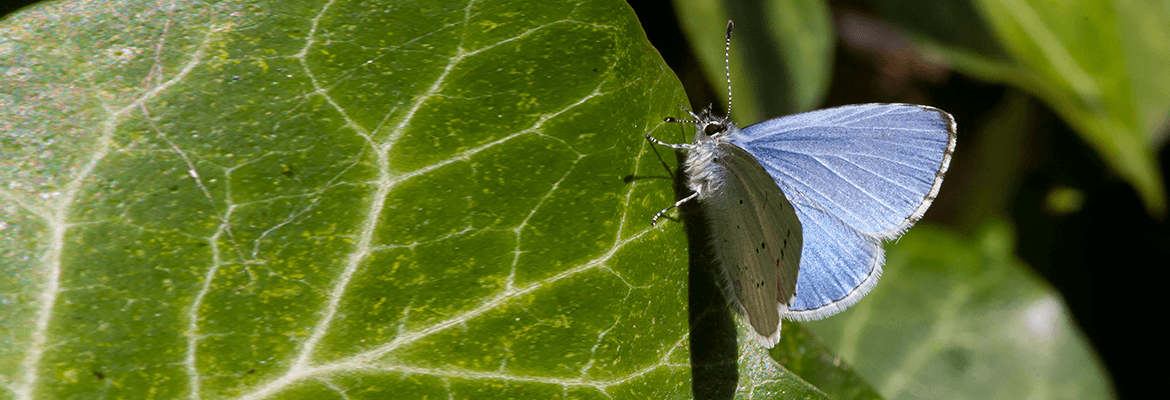
sell-us-TRY-nuh ar-jee-OH-luss
Wingspan
26 - 34 mm
Checklist Number
61.012
sell-us-TRY-nuh ar-jee-OH-luss
Wingspan
26 - 34 mm
Checklist Number
61.012
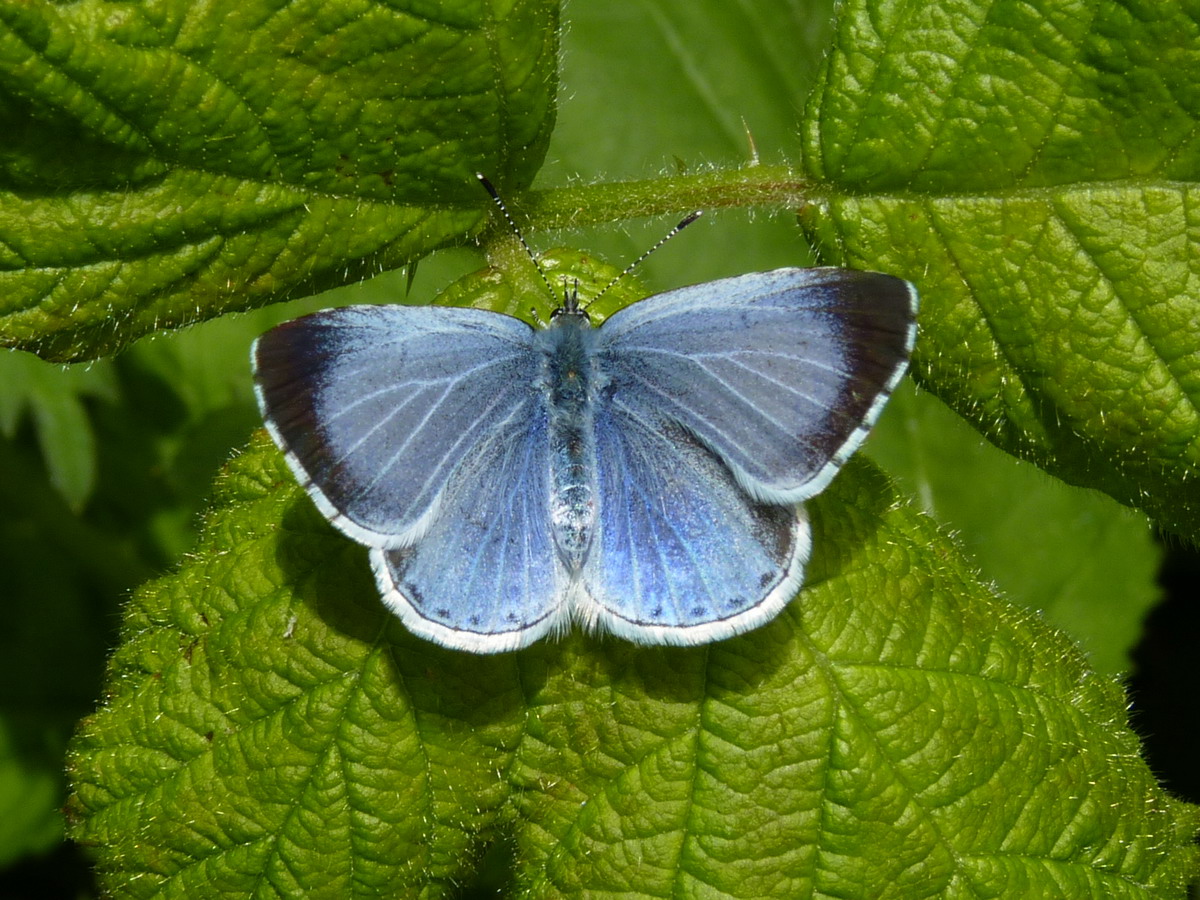
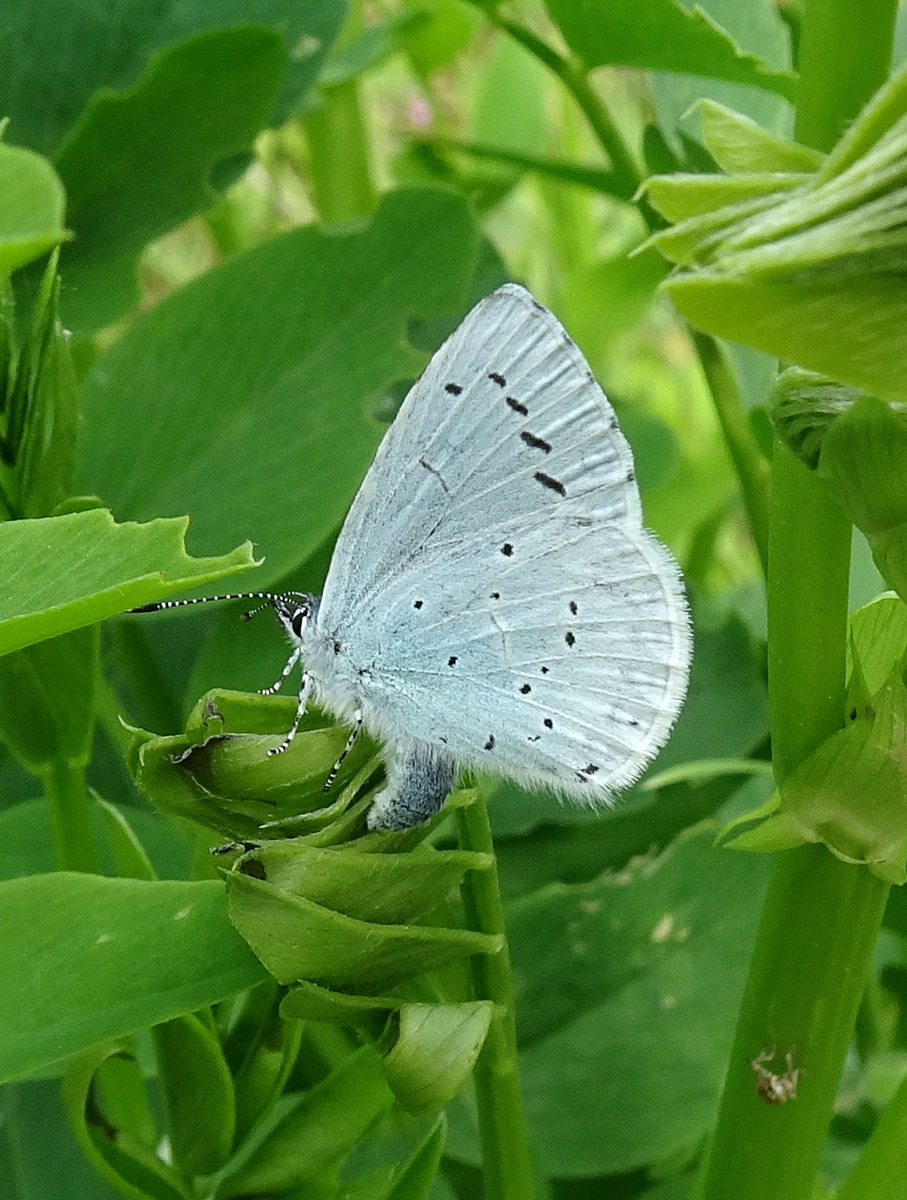
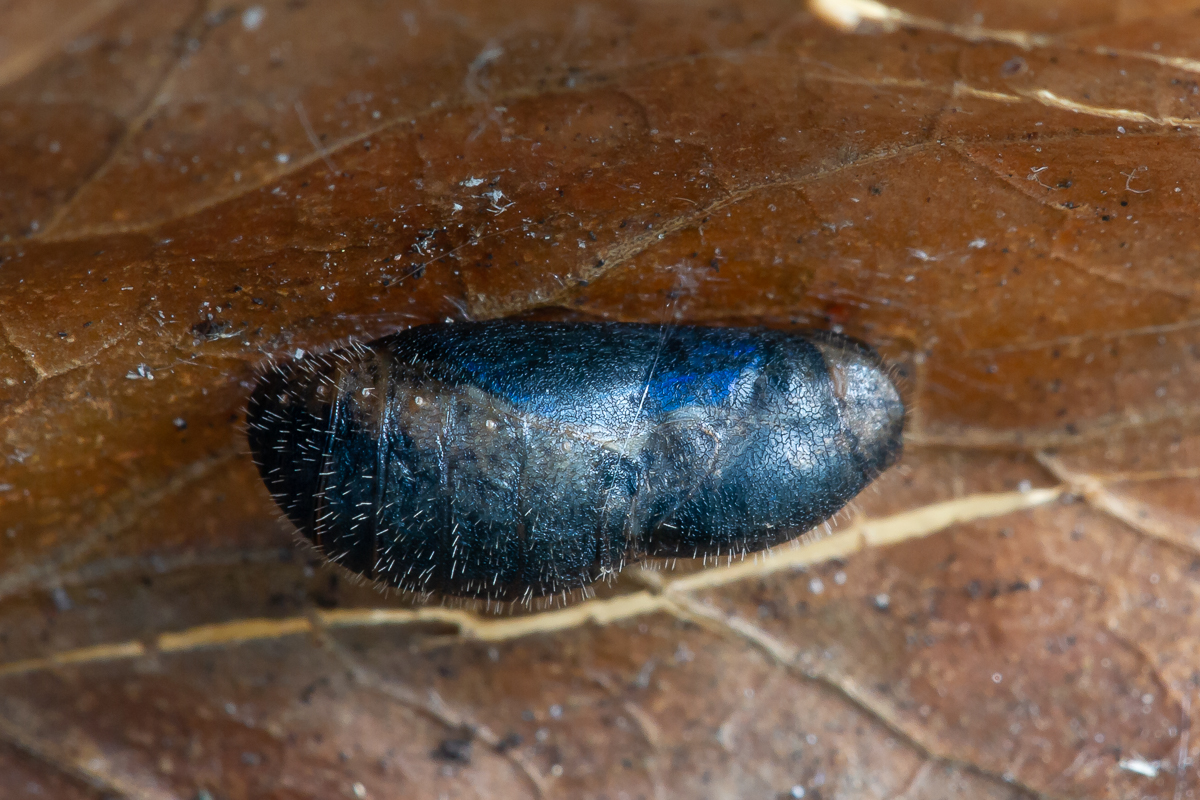
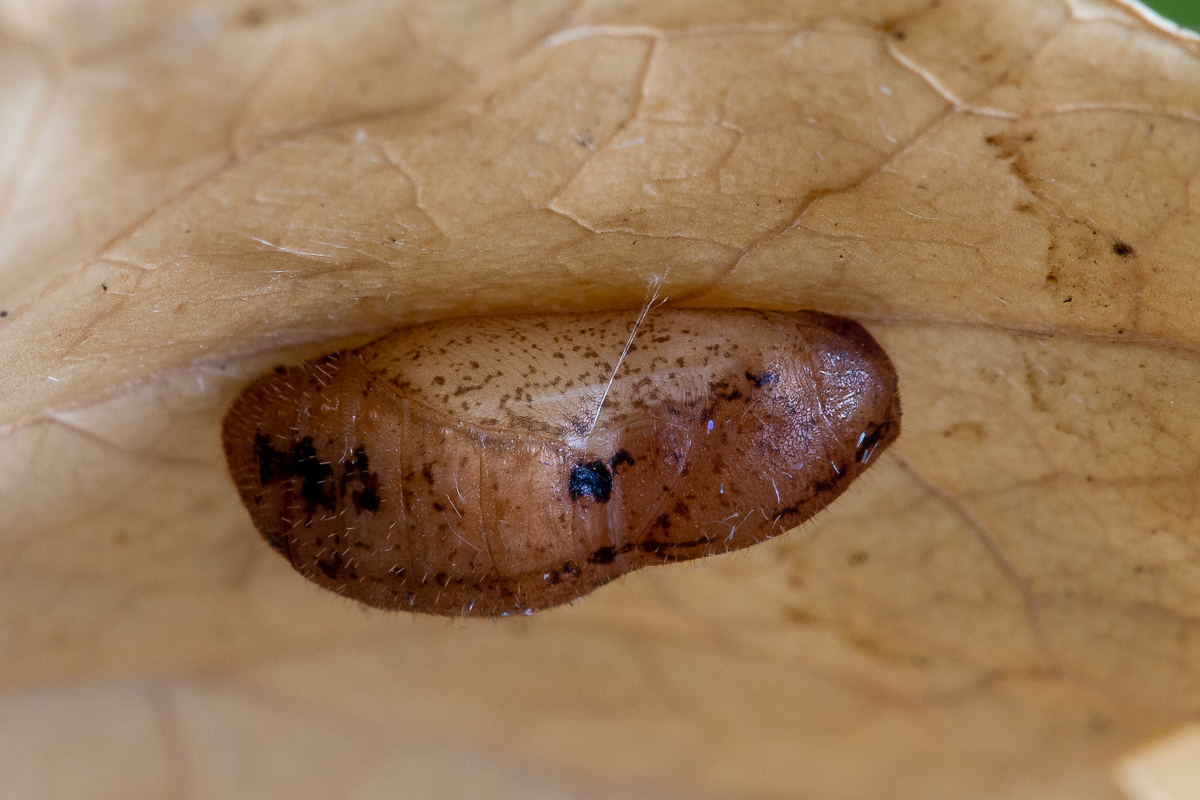
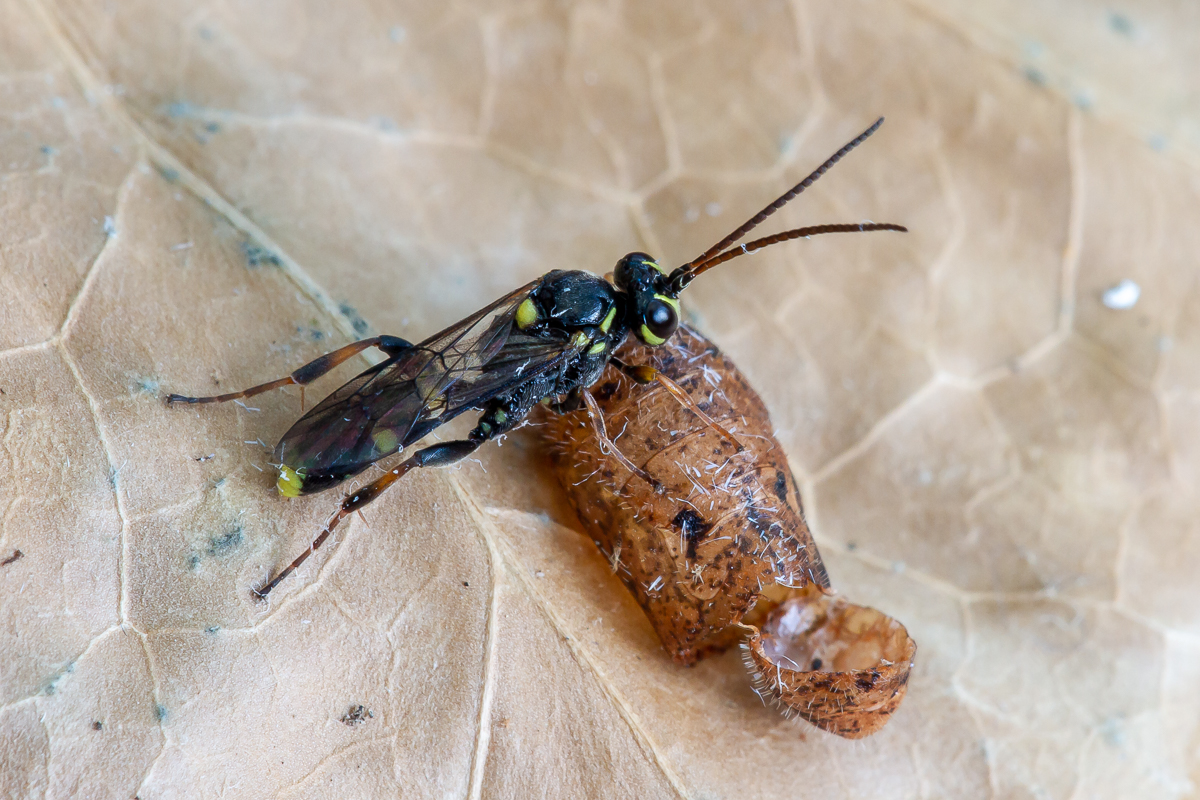
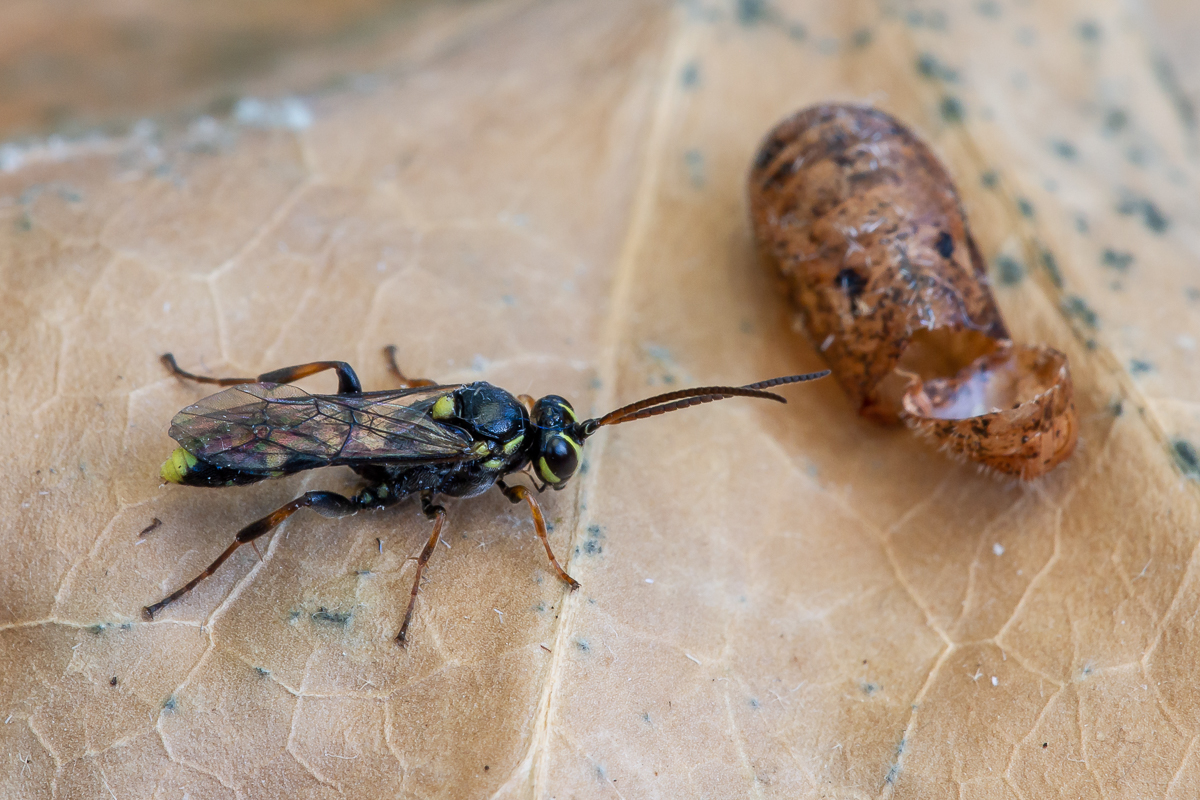
The Holly Blue is primarily found in the southern half of the British Isles, and is a frequent visitor to gardens. This species is renowned for fluctuating wildly in numbers, forming a predictable cycle over a few years, believed to be caused by parasitism from the wasp Listrodromus nycthemerus whose sole host is the Holly Blue. The wasp lays its eggs in Holly Blue larvae, with a single adult wasp eventually emerging from the Holly Blue pupa. In England and Wales this species is widespread and common, south of a line running from Cumberland in the west to County Durham in the east. This species is also found on the Isle of Man and throughout Ireland, but is absent from Scotland except as a scarce vagrant.
The species was first defined in Linnaeus (1758) as shown here (type locality: Europe). The nominate subspecies has not been recorded in Britain or Ireland.
This subspecies was first defined in Verity (1919) as shown here (type locality: Woodford, Epping Forest, Essex, England). Records from Britain and/or Ireland are of this subspecies.
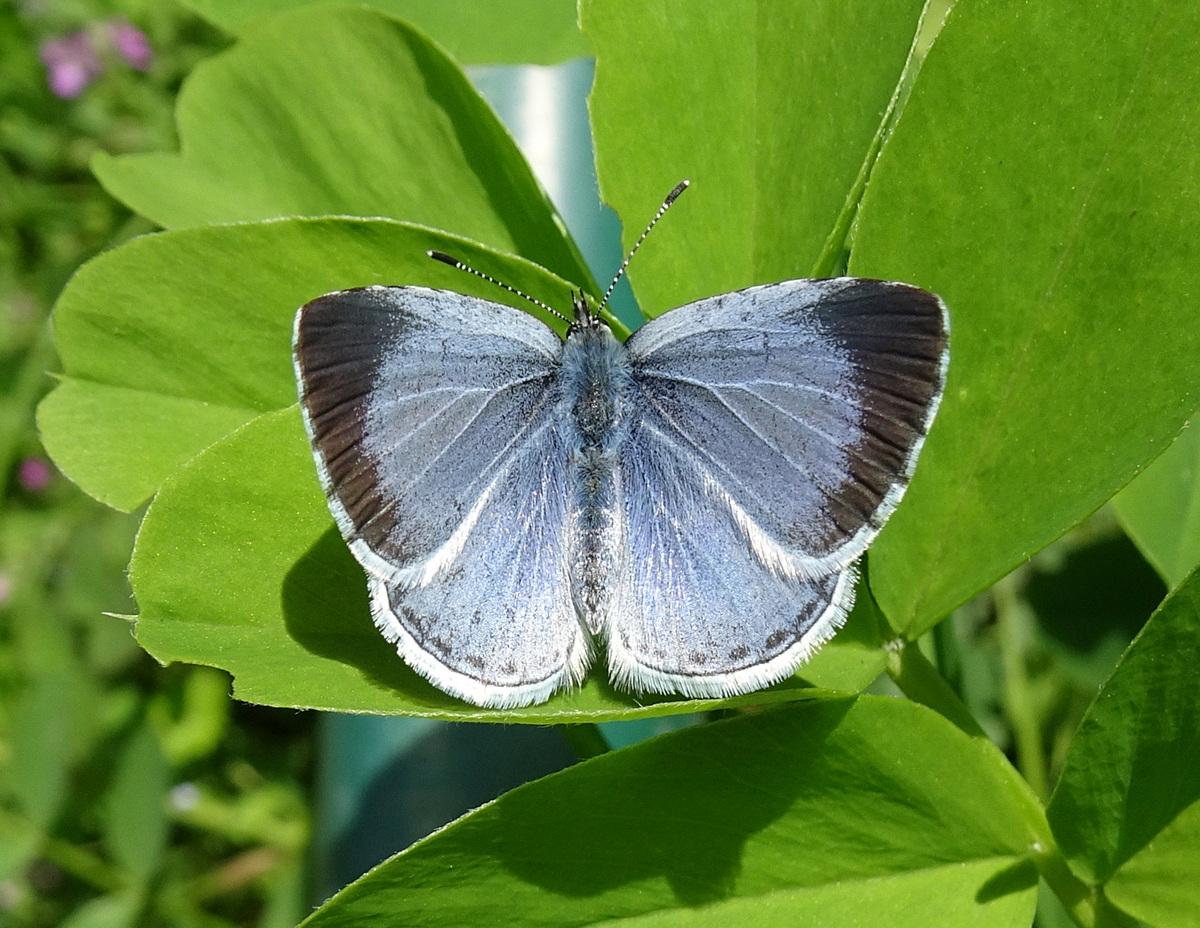
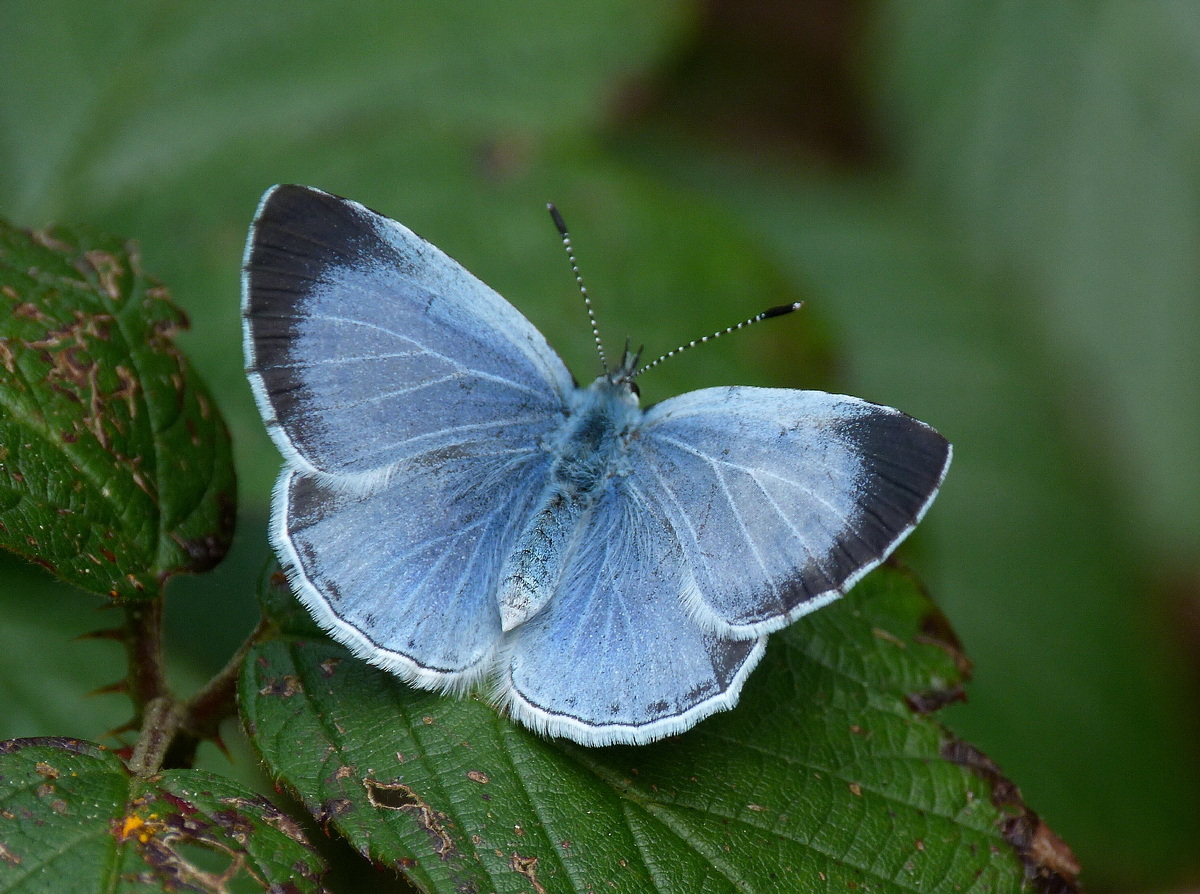
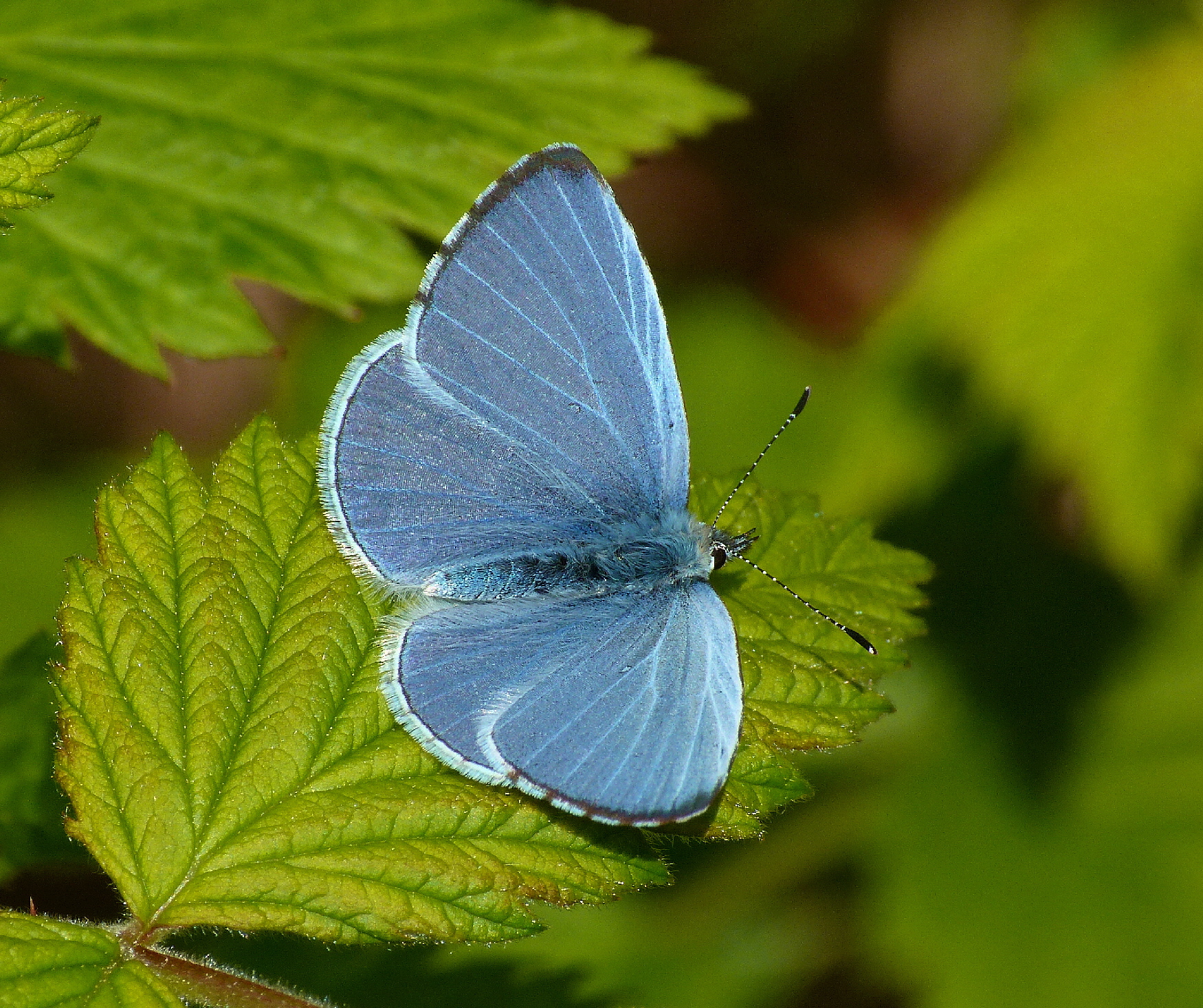
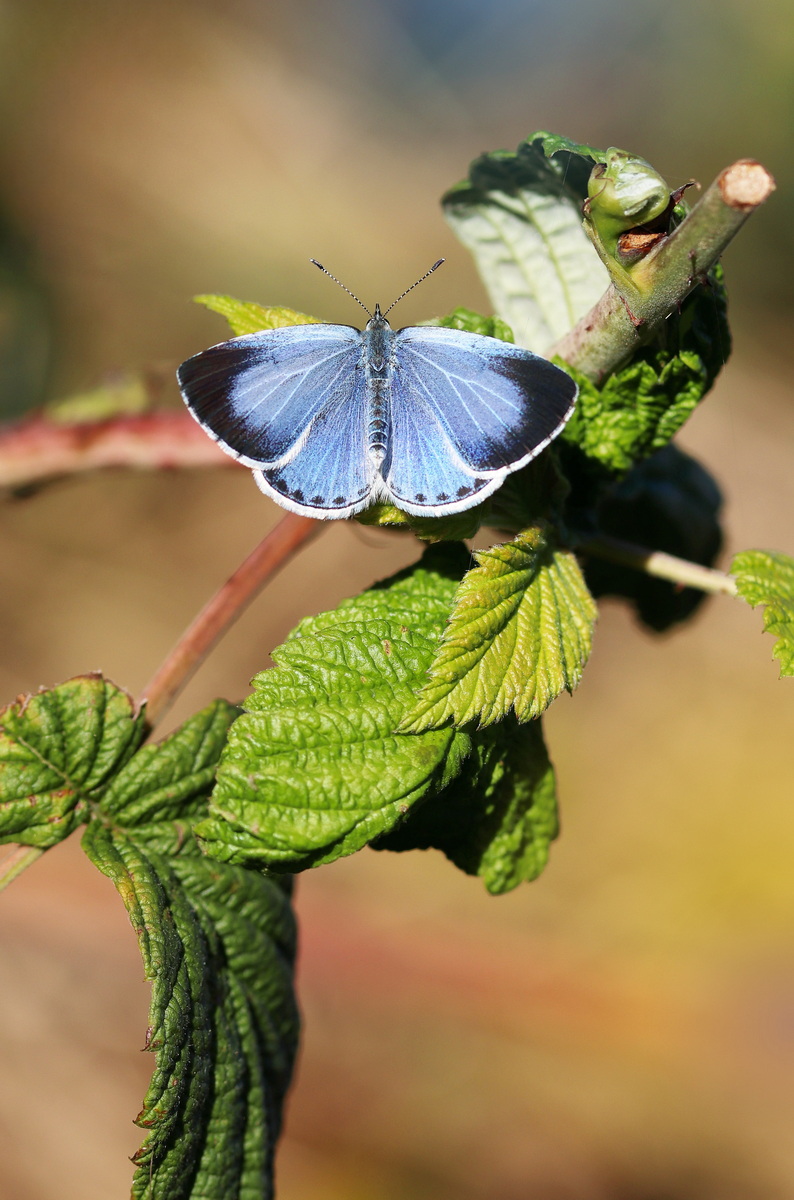
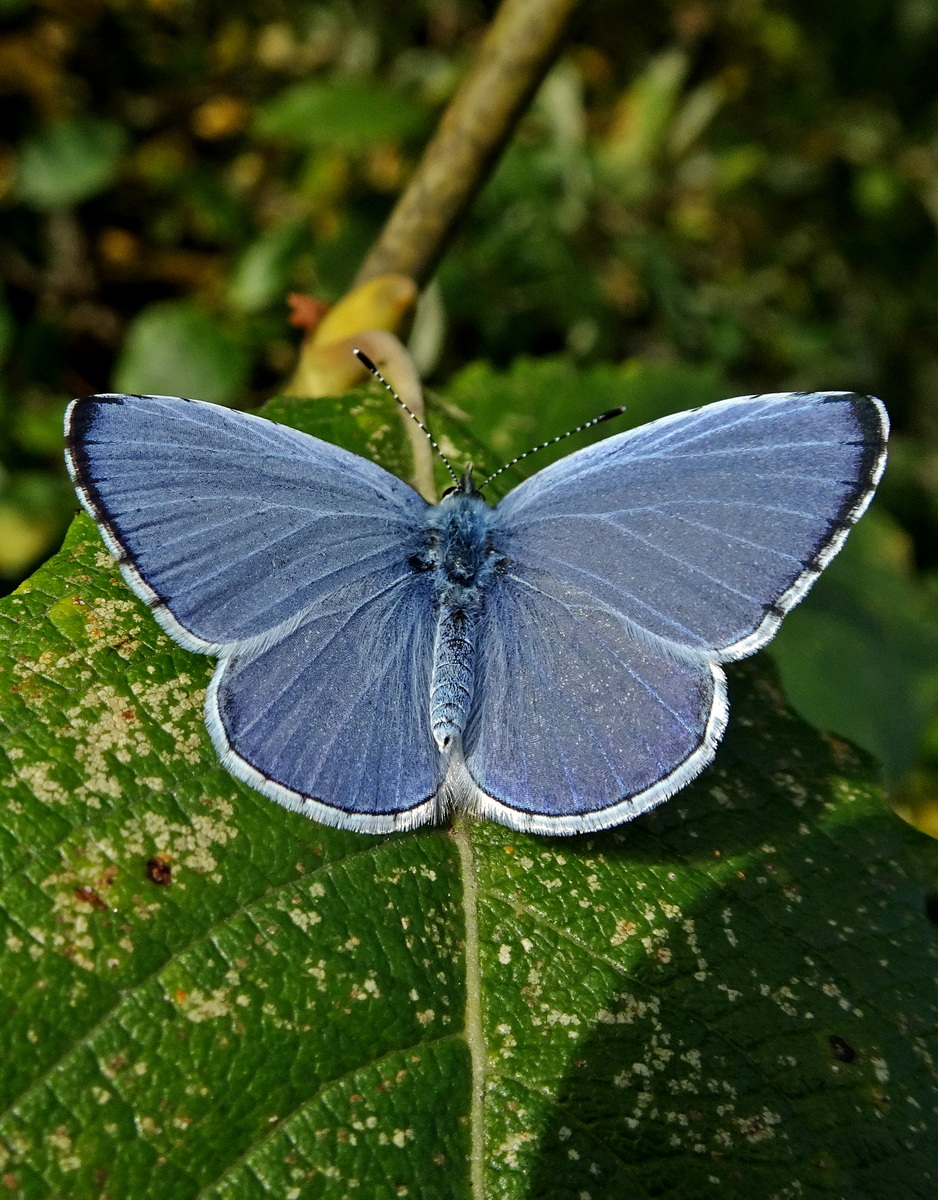
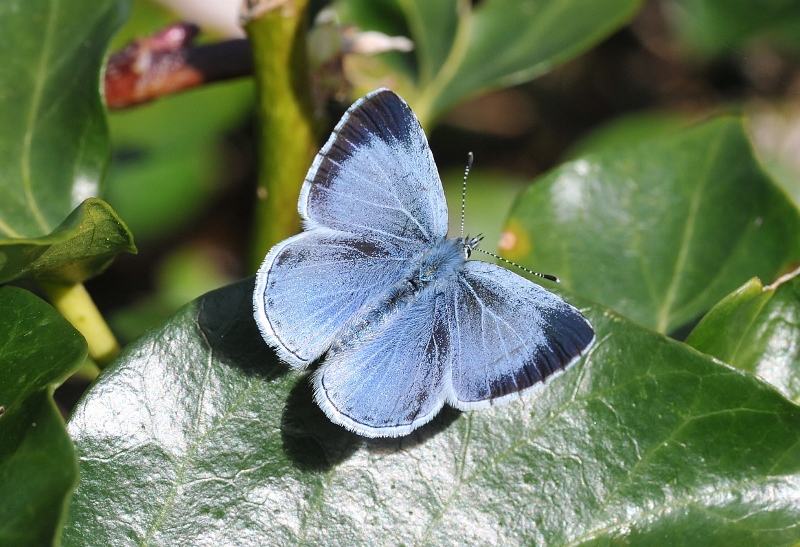
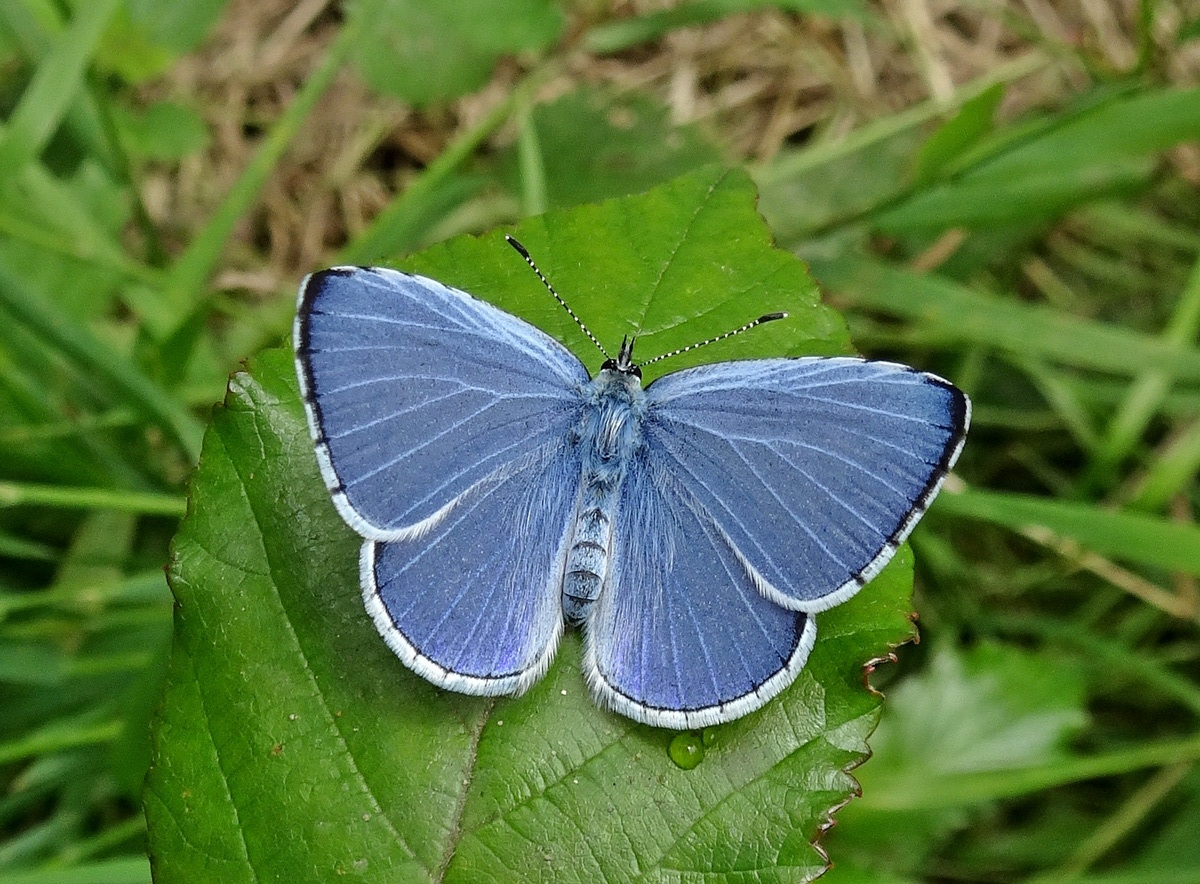
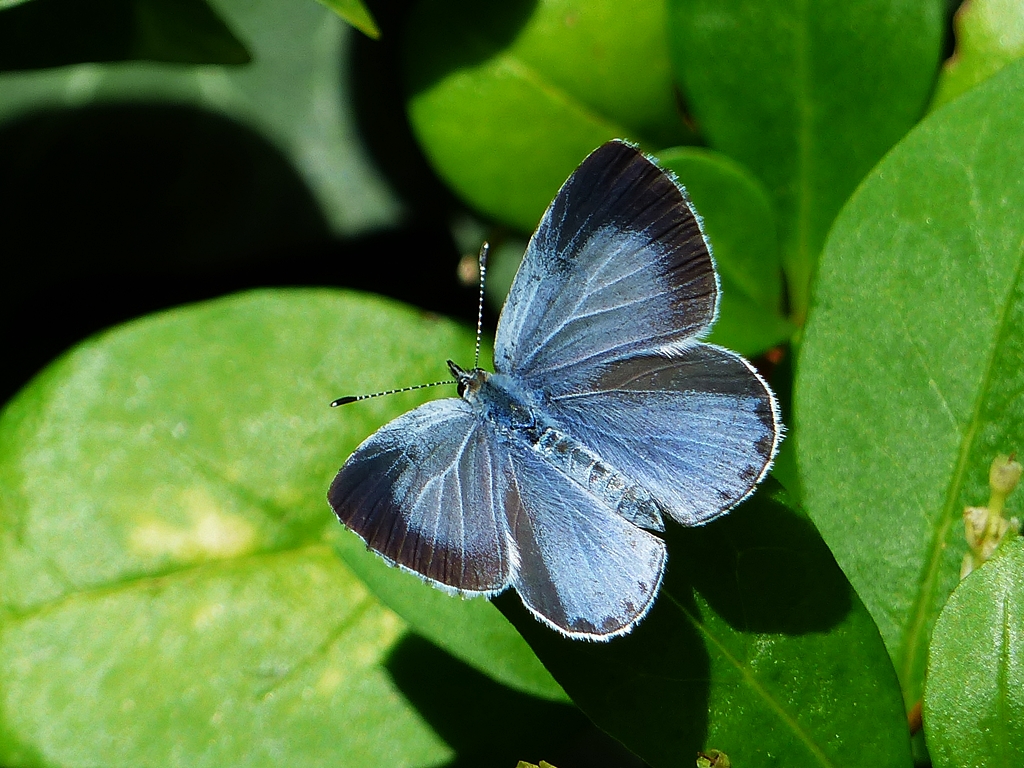
Males of the spring and summer brood are similar in appearance, but females of the summer brood have a much broader dark band on the upperside of the forewings than those of the spring brood.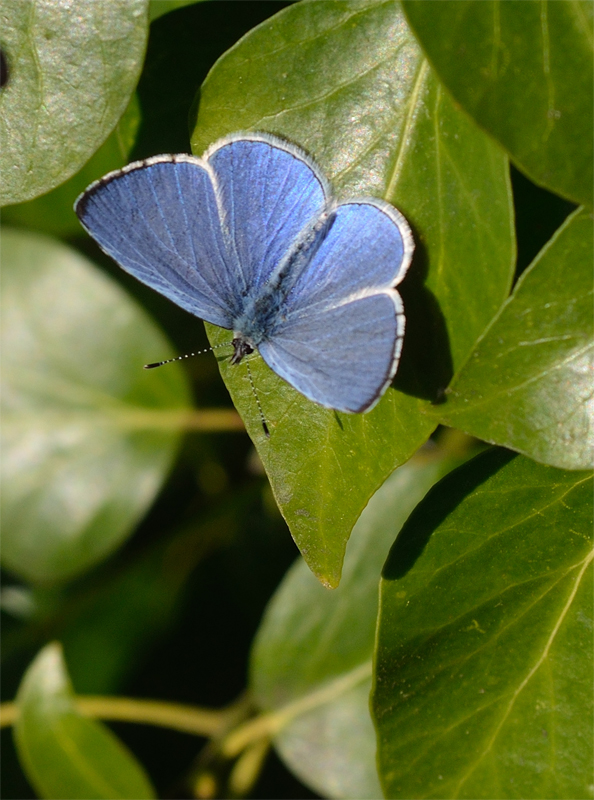
| Family: | Lycaenidae | Leach, 1815 |
| Subfamily: | Polyommatinae | Swainson, 1827 |
| Tribe: | Polyommatini | Swainson, 1827 |
| Genus: | Celastrina | Tutt, 1906 |
| Subgenus: | ||
| Species: | argiolus | (Linnaeus, 1758) |
| Subspecies: | britanna | (Verity, 1919) |
Description to be completed.
The distribution data (2000-2009) has been made available through the generosity of Butterfly Conservation and any subspecies distribution is taken from Riley (2007). Click here to see the distribution of this species together with site information overlaid.
This butterfly is found in many different types of habitat, including gardens, churchyards, woodland, parks, and anywhere its foodplants and nectar sources can be found.
The population trend of this delightful butterfly is one of a marked increase. It has also spread northward. It is not, therefore, considered a species of conservation concern.
The table below shows the occurrence (distribution) and abundance (population) trends, using information from The State of the UK's Butterflies 2015 (Fox, 2015). Any UK BAP status is taken from the UK Biodiversity Action Plan (UK BAP) (2007 review).
1976-2014 (%) | 1976-2014 (%) | 2005-2014 (%) | 2005-2014 (%) |  +39 +39 | +37 |  -12 -12 |  -61 -61 |
|---|
There are typically two broods each year, although this varies with some northern sites producing a single brood, and some southern sites managing to produce a third brood in favourable years. Adults from overwintering pupae emerge as early as the first week of April in a typical year, with the next generation emerging at the end of July and early August.

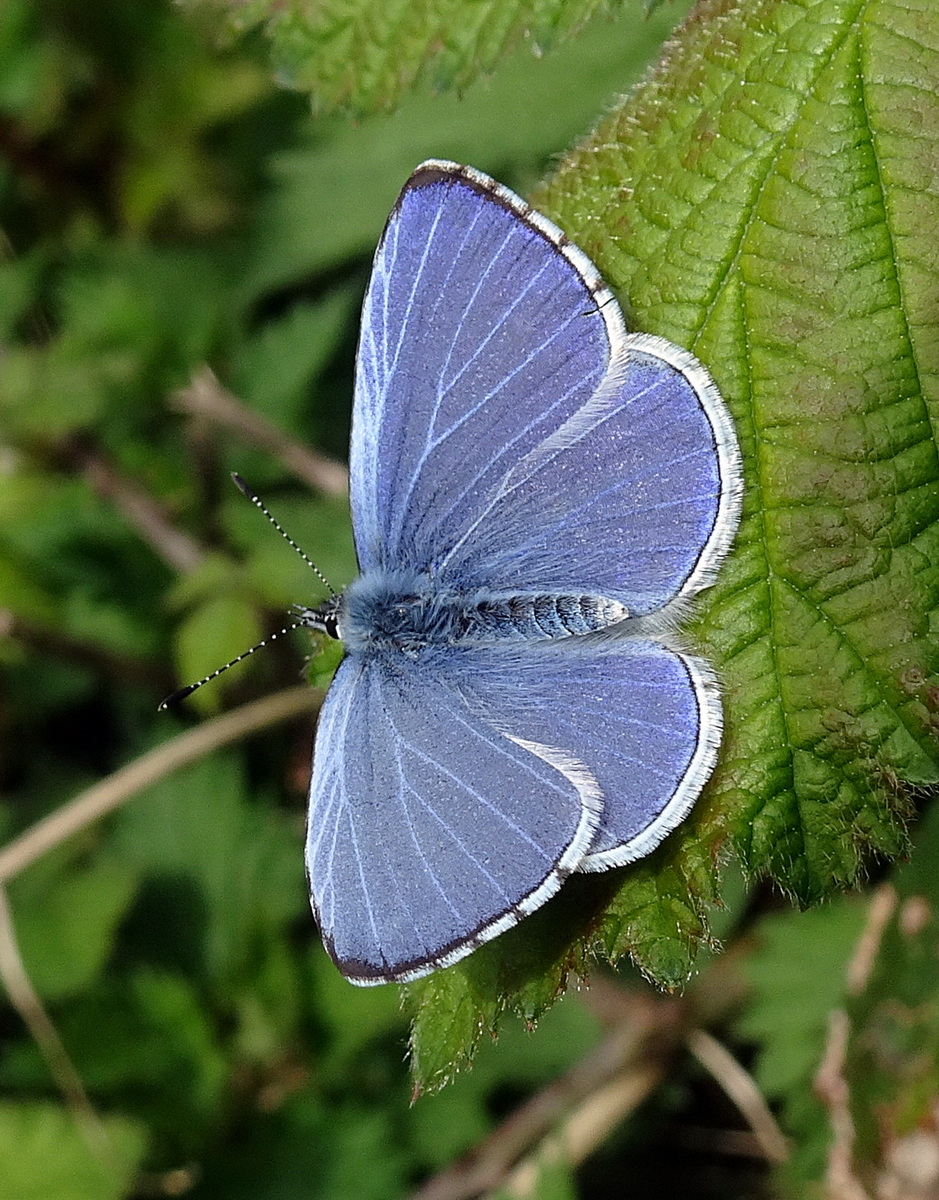
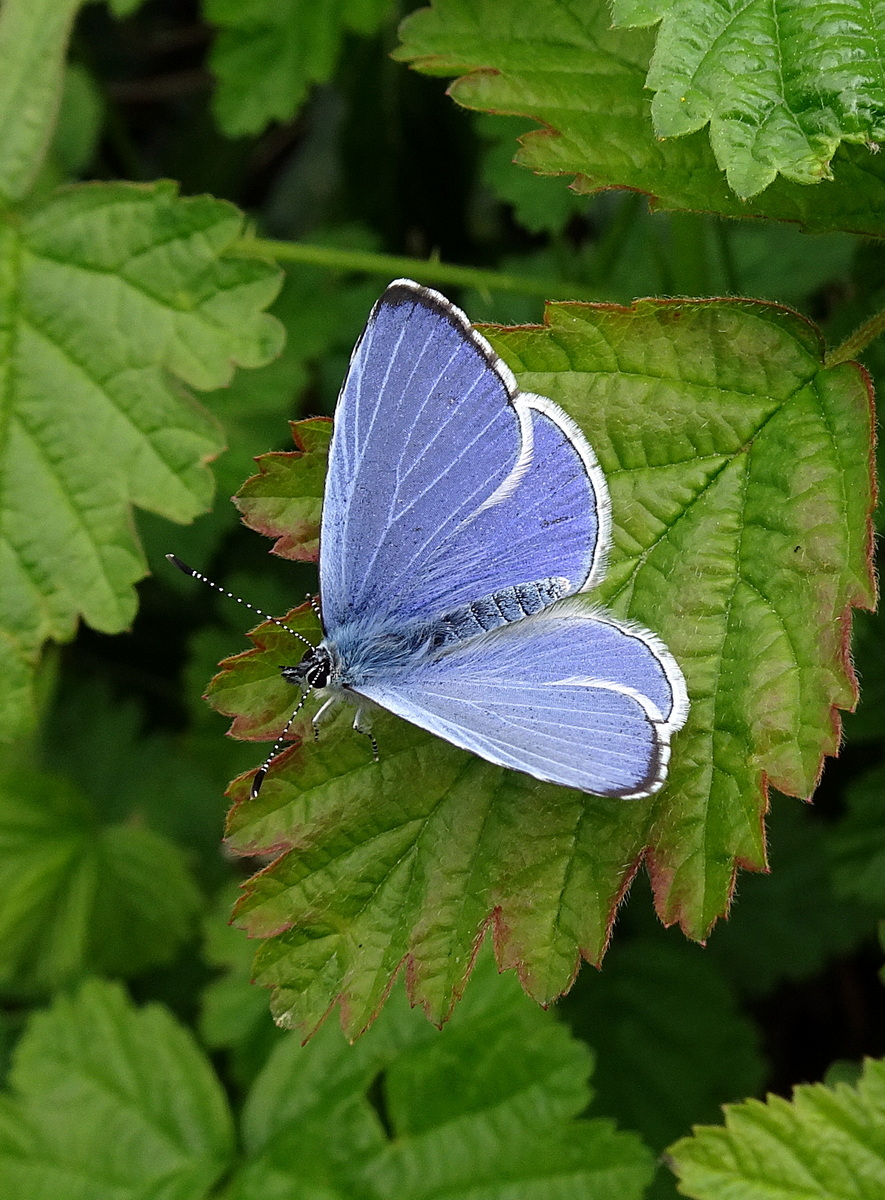
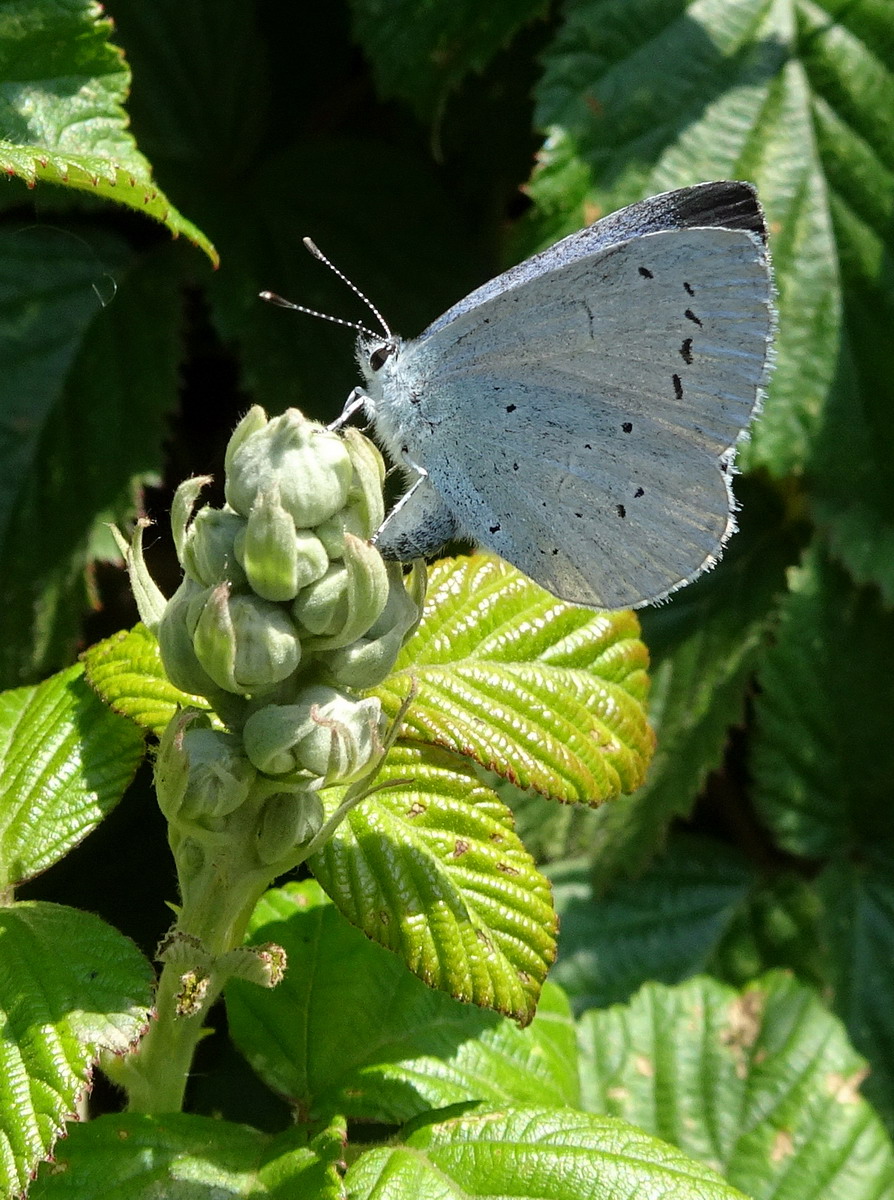
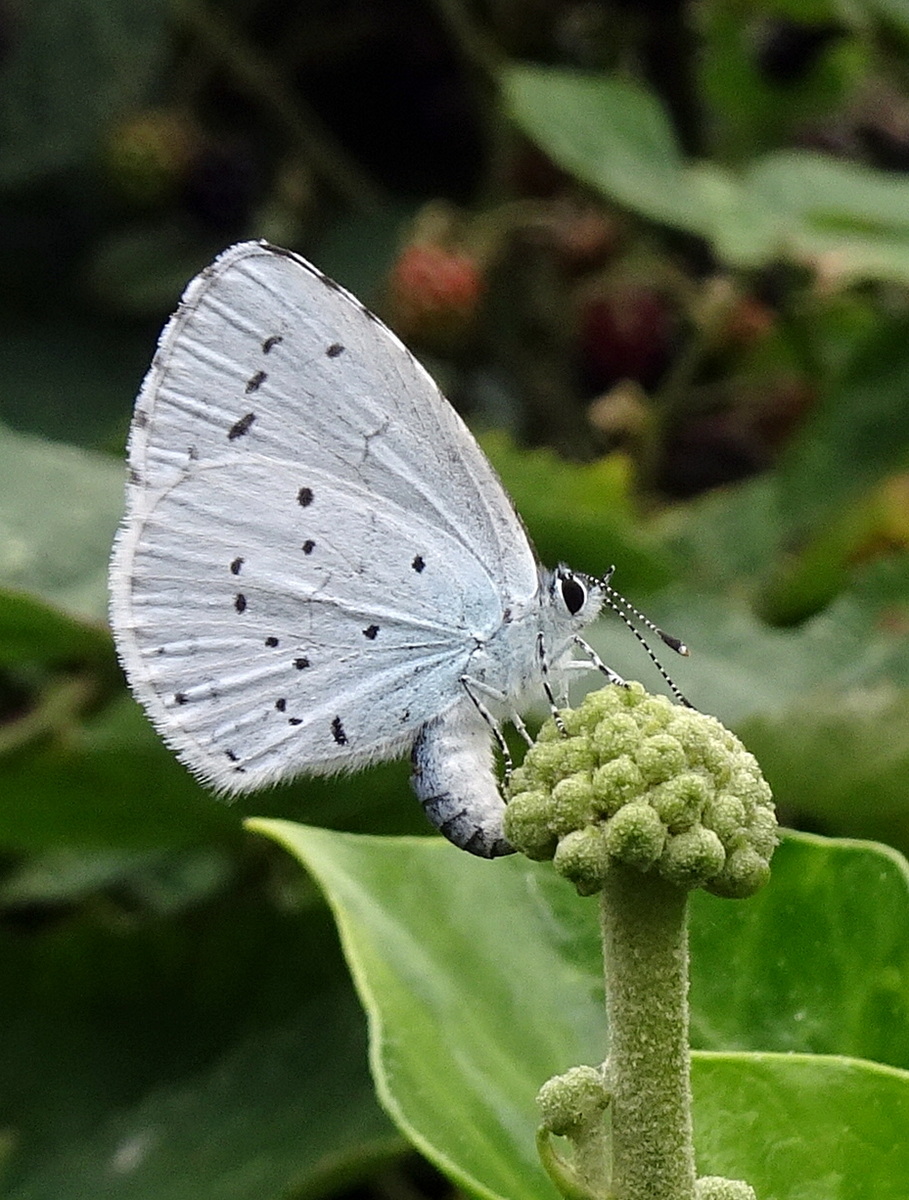
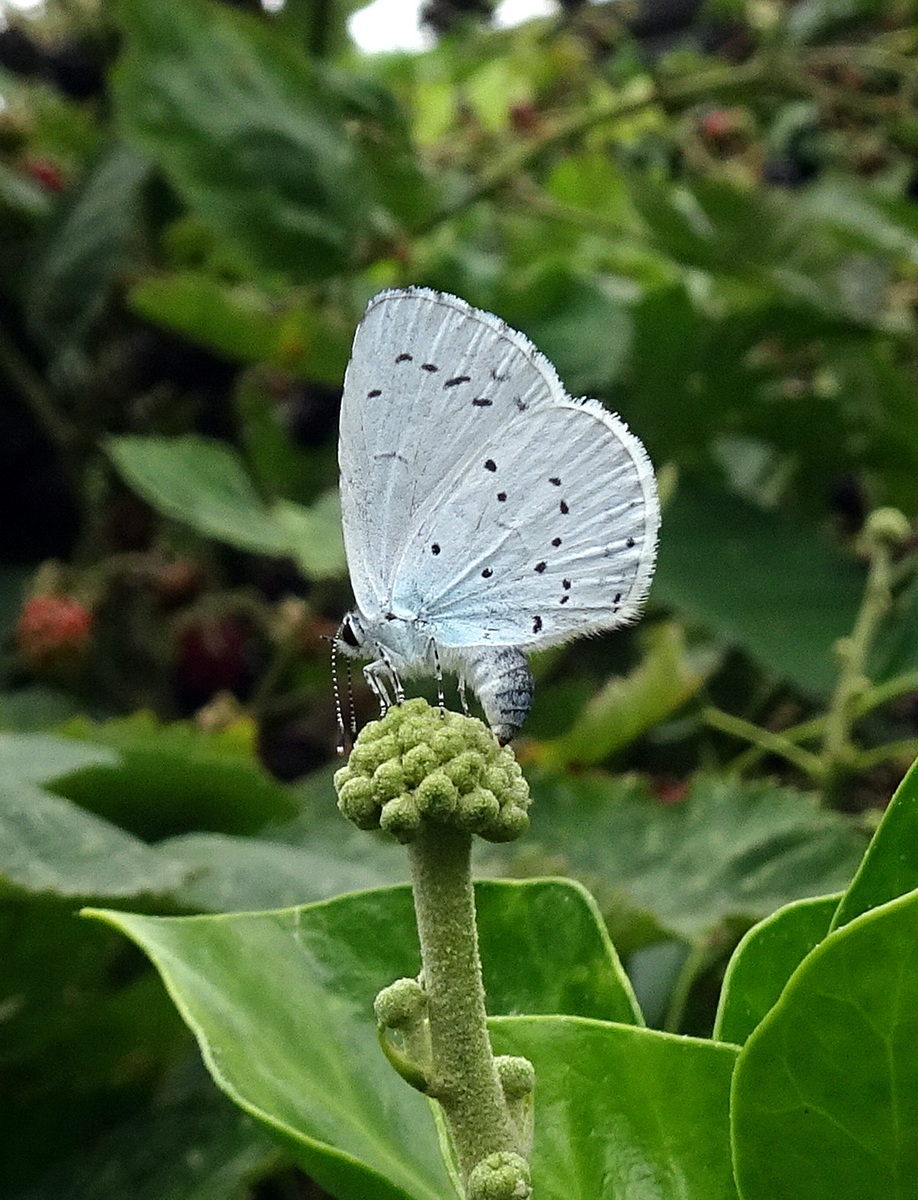
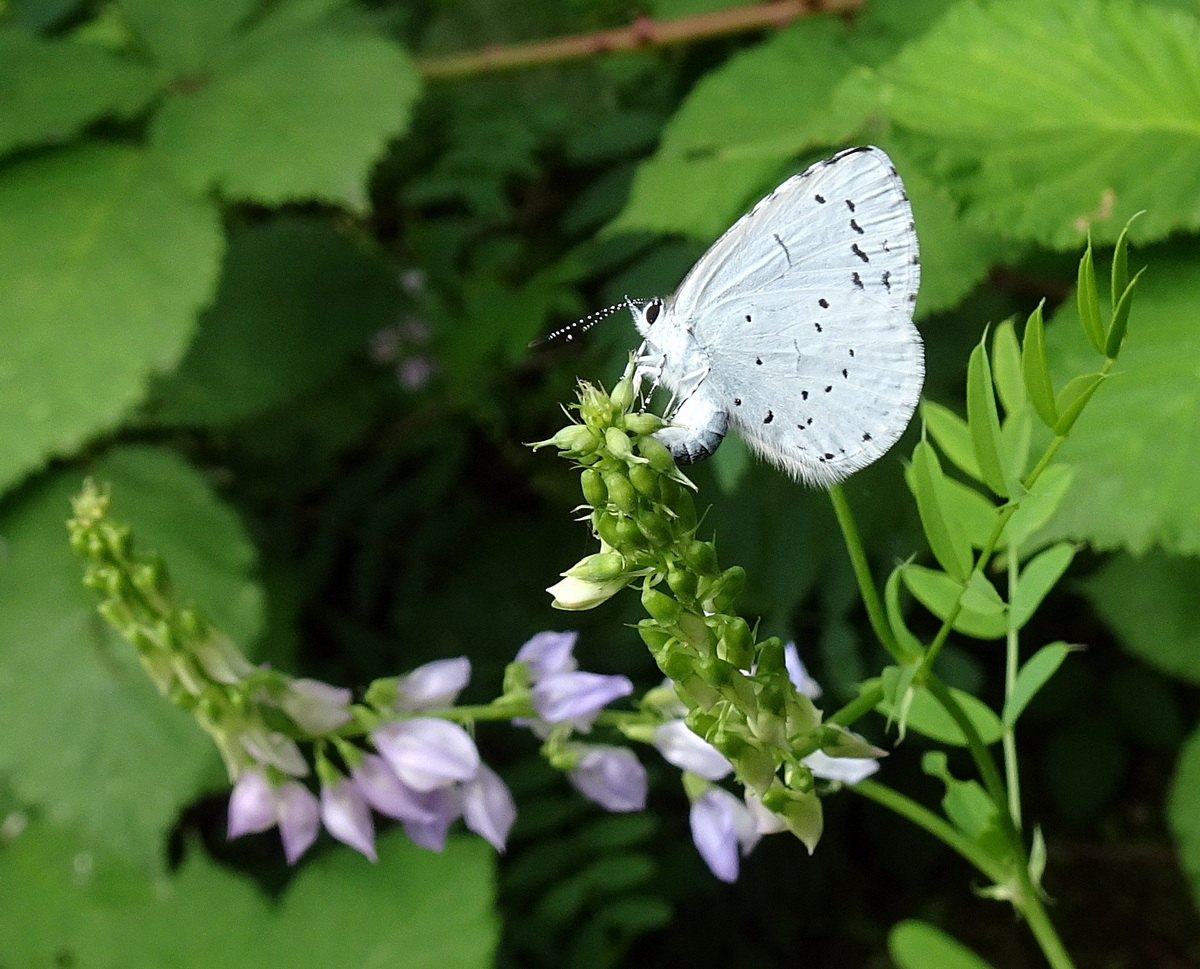
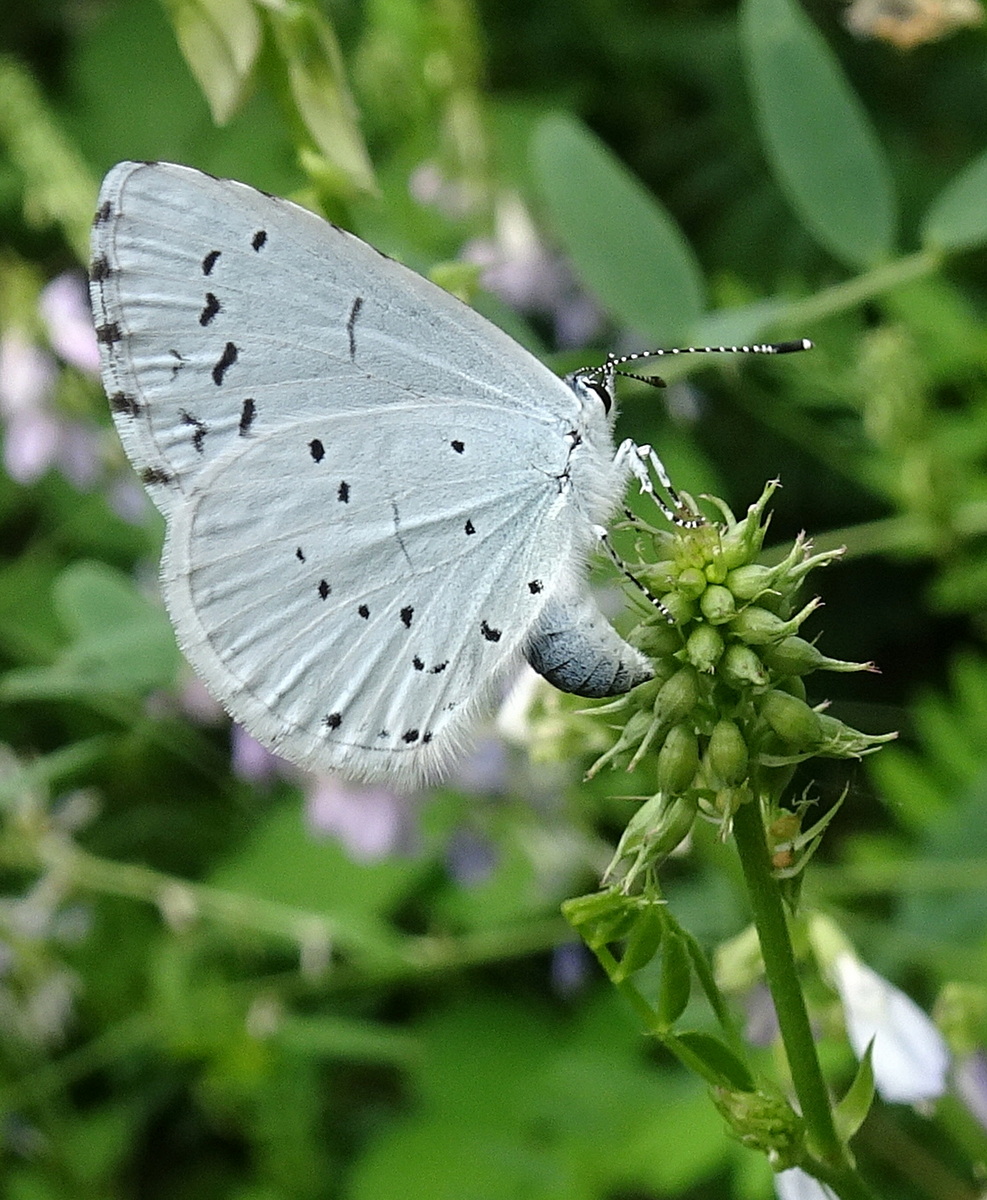
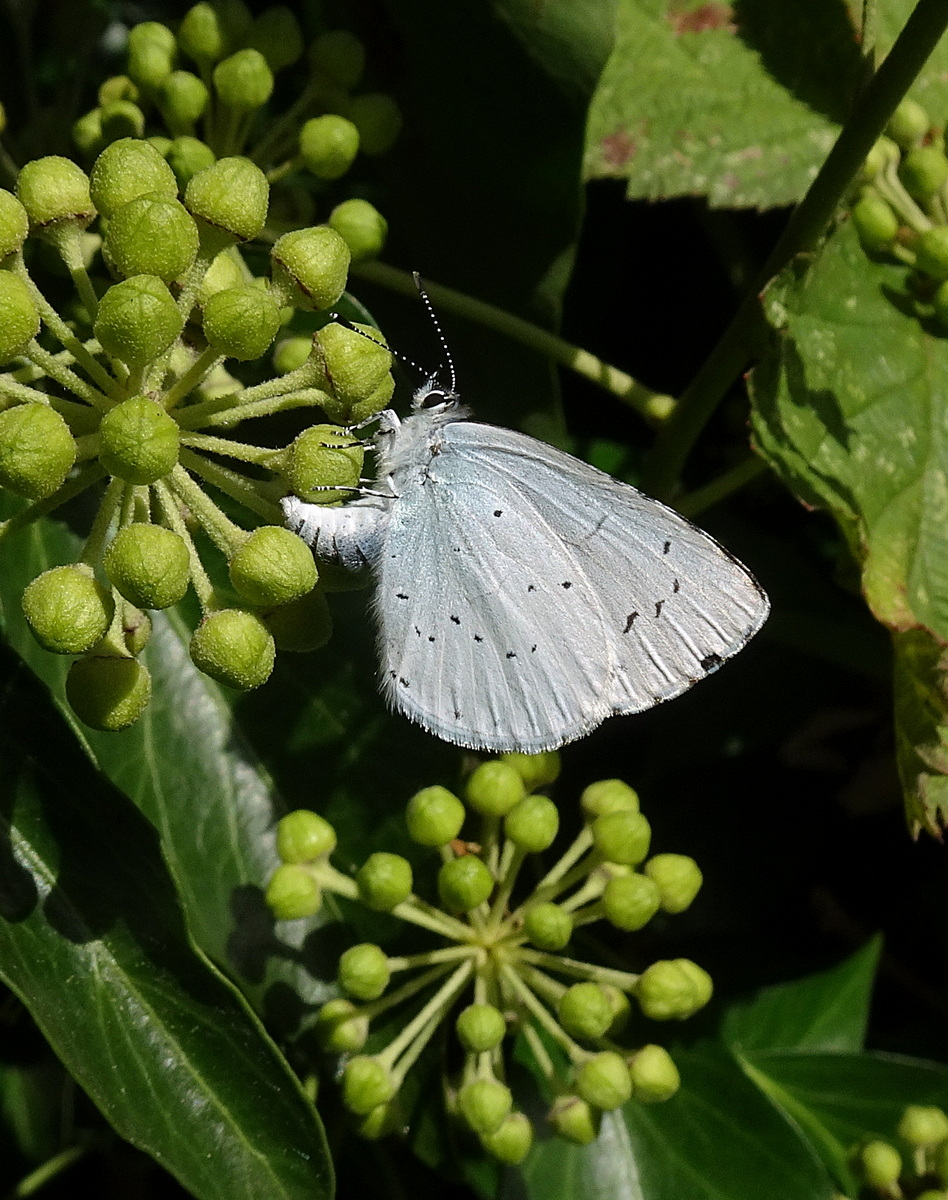
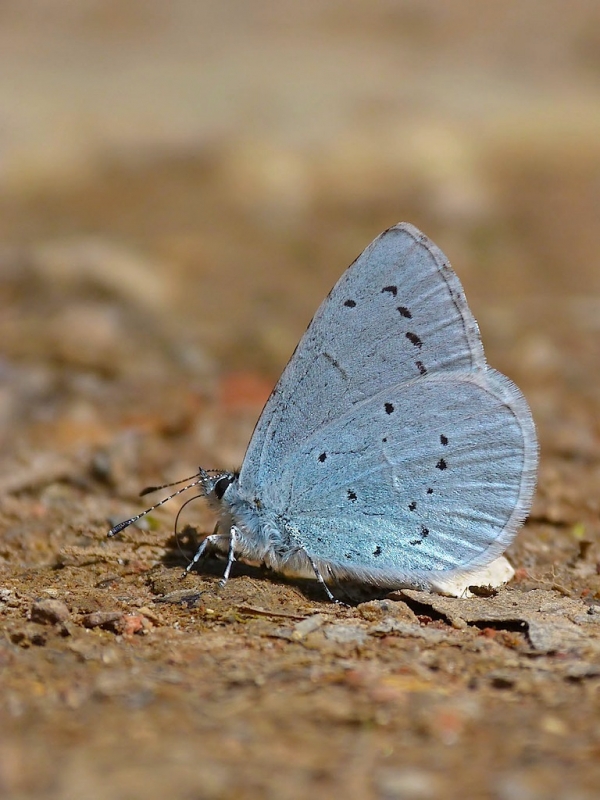
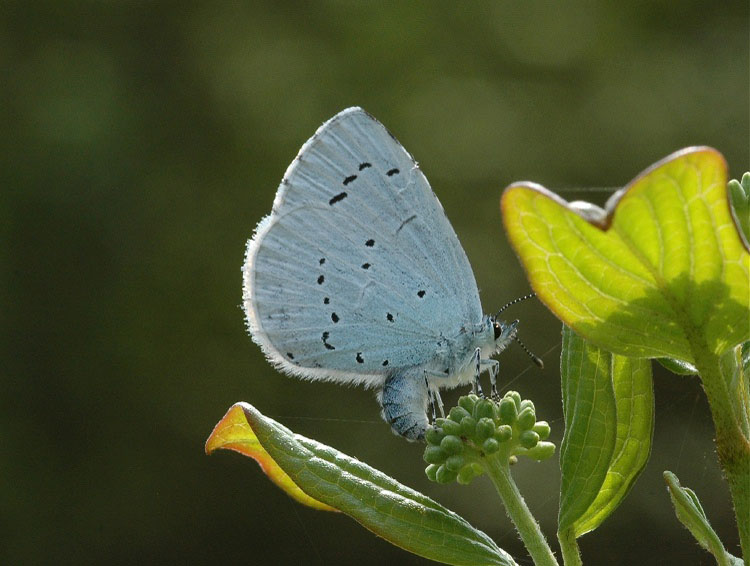
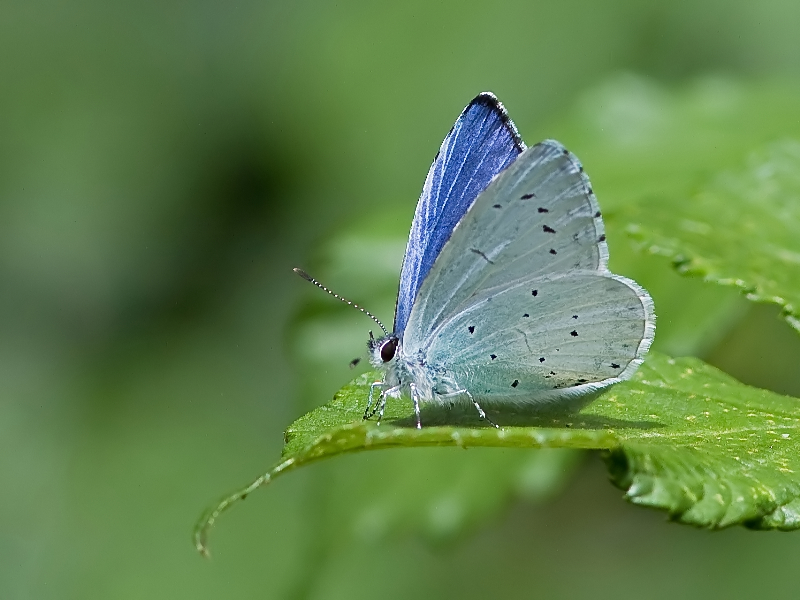
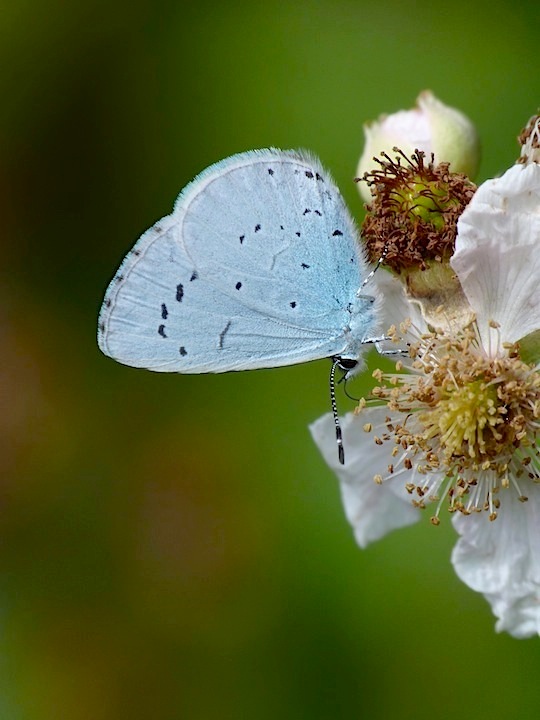
The adults are most easy to identify when at rest, since their undersides are distinctive among the blues found in the British Isles, with the possible exception of the Small Blue, which is much scarcer (and, as its name implies, much smaller). The male and female are distinguished by their uppersides, where the forewings of the female have broad black borders that are absent in the male. However, the adults only tend to open their wings in weak sunshine. Second brood females generally have broader black borders than first brood females.
A particular characteristic of this blue is that it will fly high off the ground, distinguishing it from other blues. In this respect, they are more similar in behaviour to a hairstreak.
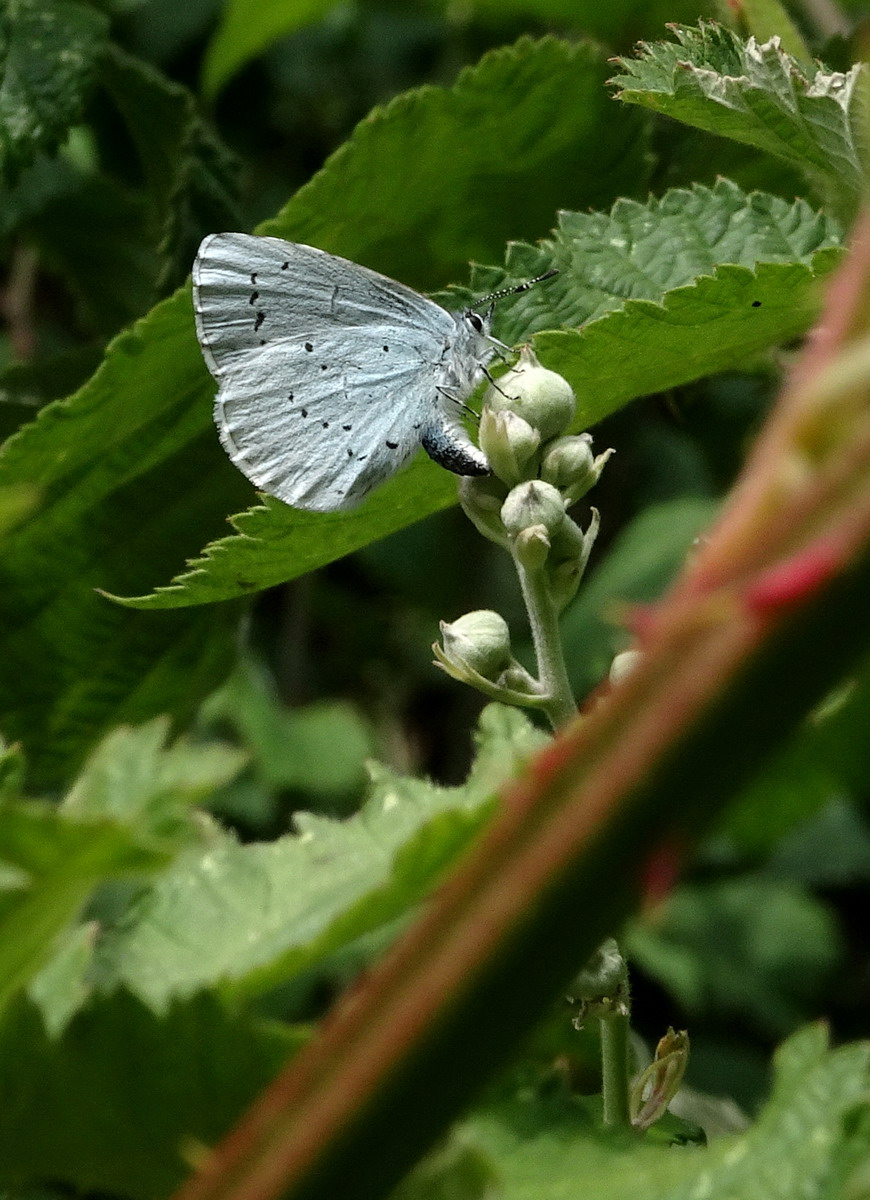
Both sexes visit a variety of nectar sources such as Bramble, Holly and Forget-me-not. However, they do seem to have a preference for honeydew rather than nectar. The males will also come down to the ground to take salts and minerals from damp mud and animal waste.
Adults feed primarily on Honeydew (N/A). brambles (Rubus spp.), Bugle (Ajuga reptans), buttercups (Ranunculus spp.), forget-me-nots (Myosotis spp.), Holly (Ilex spp.), Ivy (Hedera spp.), thistles (Carduus spp. and Cirsium spp.), Water Mint (Mentha aquatica) and Wild Privet (Ligustrum vulgare) are also used.
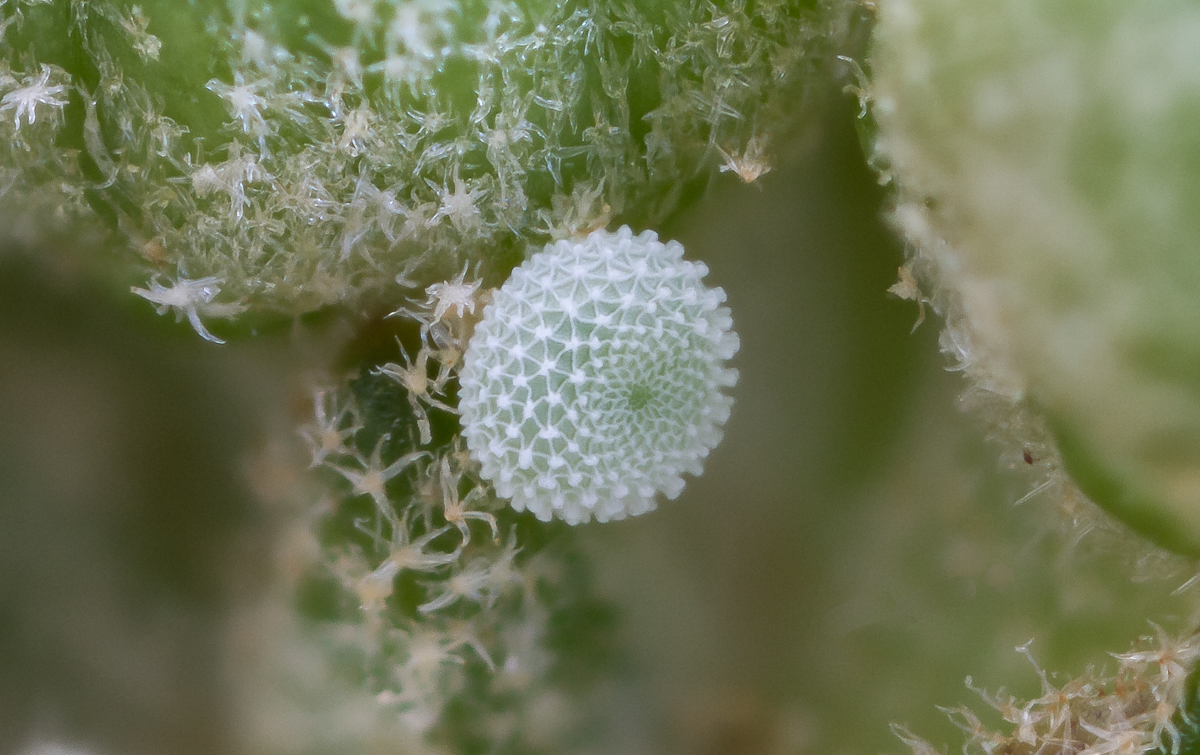
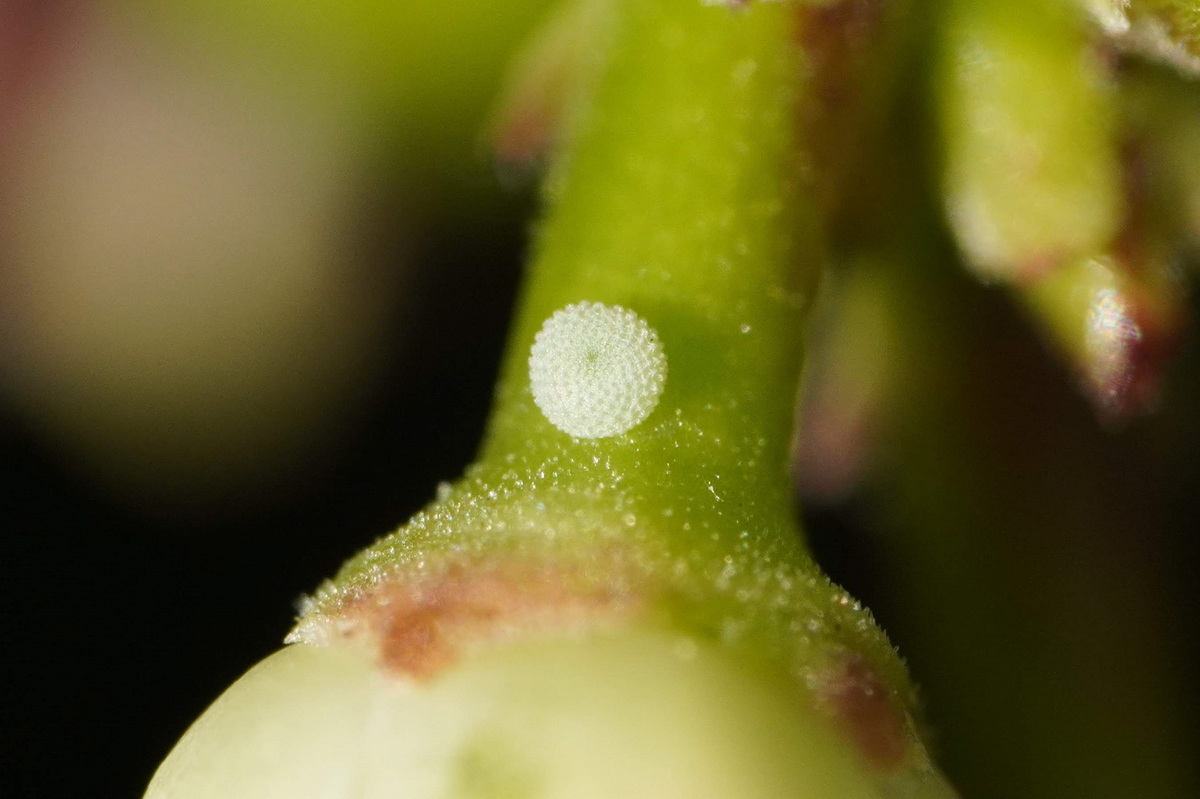
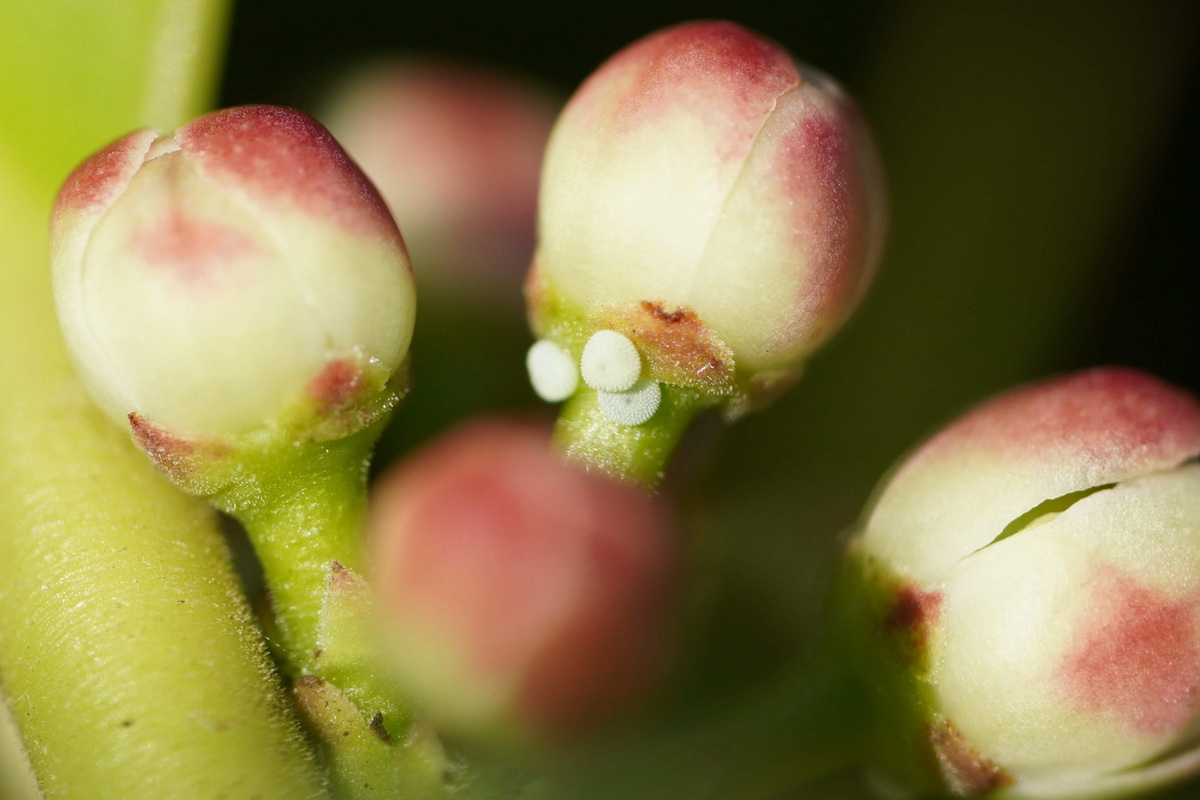
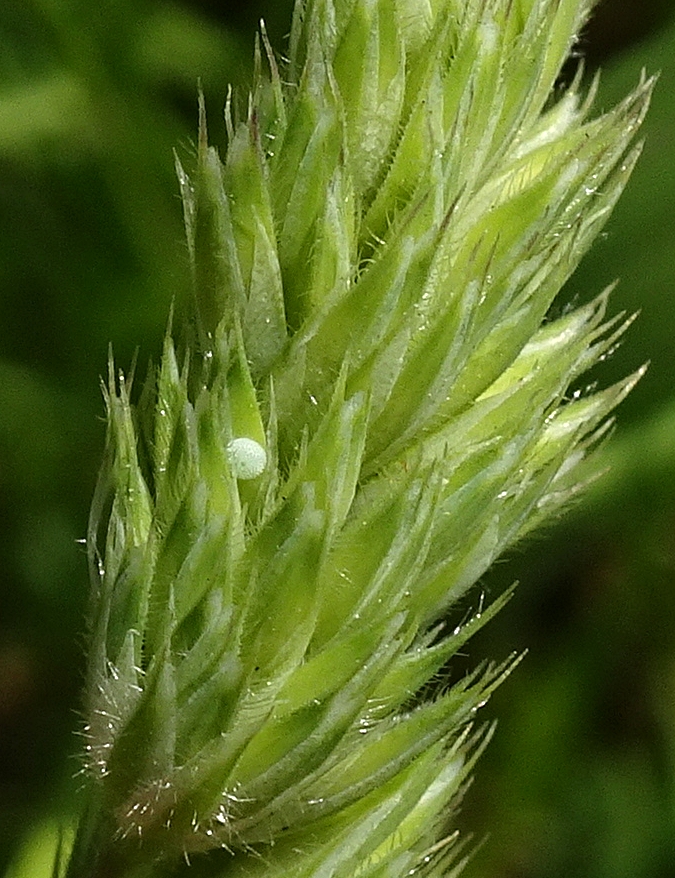
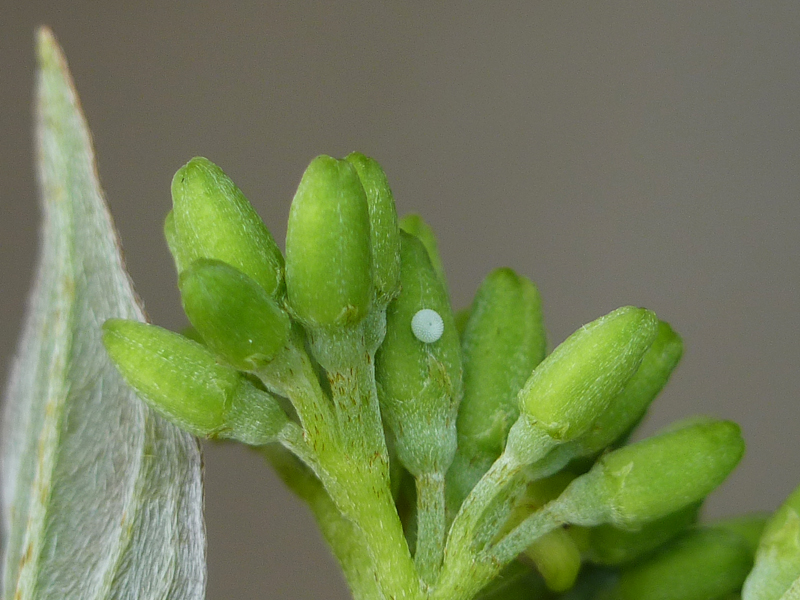
The white eggs are laid singly at the base of unopened flower buds of the foodplant. Eggs laid in spring are typically laid on Holly, whereas the summer eggs are typically laid on Ivy. And so the Ivy Blue would be an equally-appropriate name for this species! In this respect, the Holly Blue is unique in the British Isles, where the different broods use different foodplants. In good years, the eggs can be relatively easy to find on the foodplant and hatch in around 2 weeks.
"When the butterfly intends to deposit it flutters over and around the chosen bush, and generally selects the flower heads of the upper branches (if dogwood is selected, the most exposed and uppermost flowers are preferred). She then settles on the buds, and curves the abdomen down underneath the buds, and feels for either the flower stalk or base of a bud and deposits a single egg. She then flies off and repeats the process, sometimes laying several eggs on the same bush. The eggs are usually laid on the base of the calyx of a flower bud. On May 14th, 1900, a female was captured which deposited between fifty and sixty eggs during the next few days on the stalks and calyces of holly blooms; they began hatching on May 25th. Others laid June 13th, 1891, hatched on June 19th, remaining six days in the egg state ... The egg is 0.60 mm. wide and only half the width in height, i.e., 0.30 mm.; it is of a compressed circular form, the micropyle deeply sunken and finely punctured; the whole surface is beautifully sculptured with a delicate lacework-like pattern, composed of raised reticulations rising into prominent knobs, from which radiate about six fine ribs, each end uniting to a knob, thus forming a triangular cell; the pattern is largest round the side, diminishing on the crown and base. The ground colour is a delicate pale greenish-blue, and the reticulations are pure white and glassy, resembling the finest white porcelain." - Frohawk (1924)
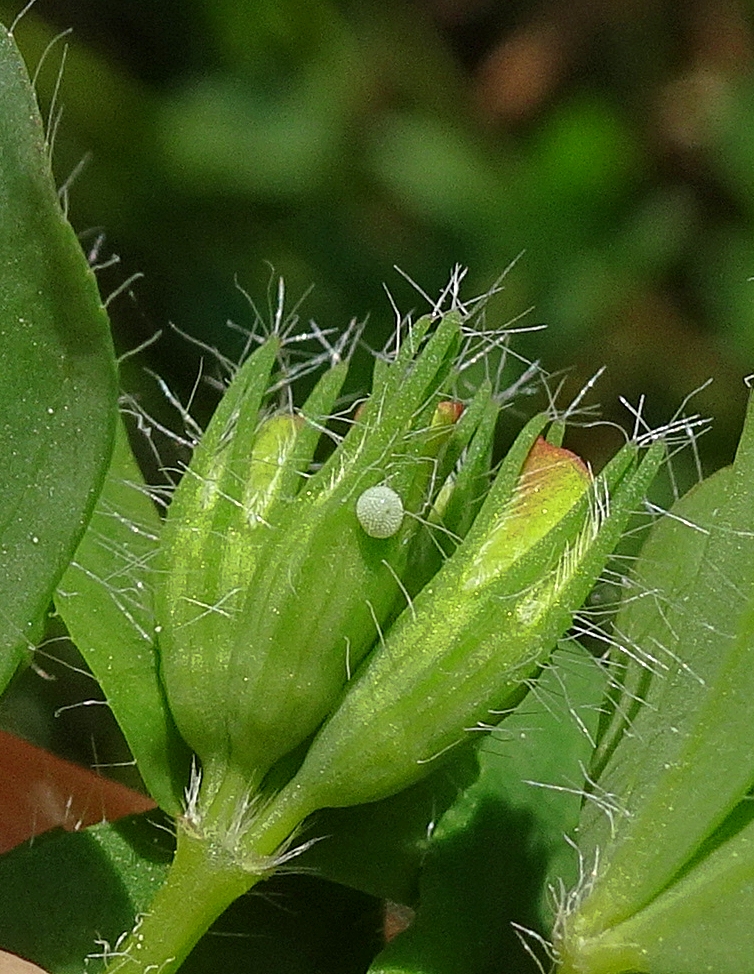
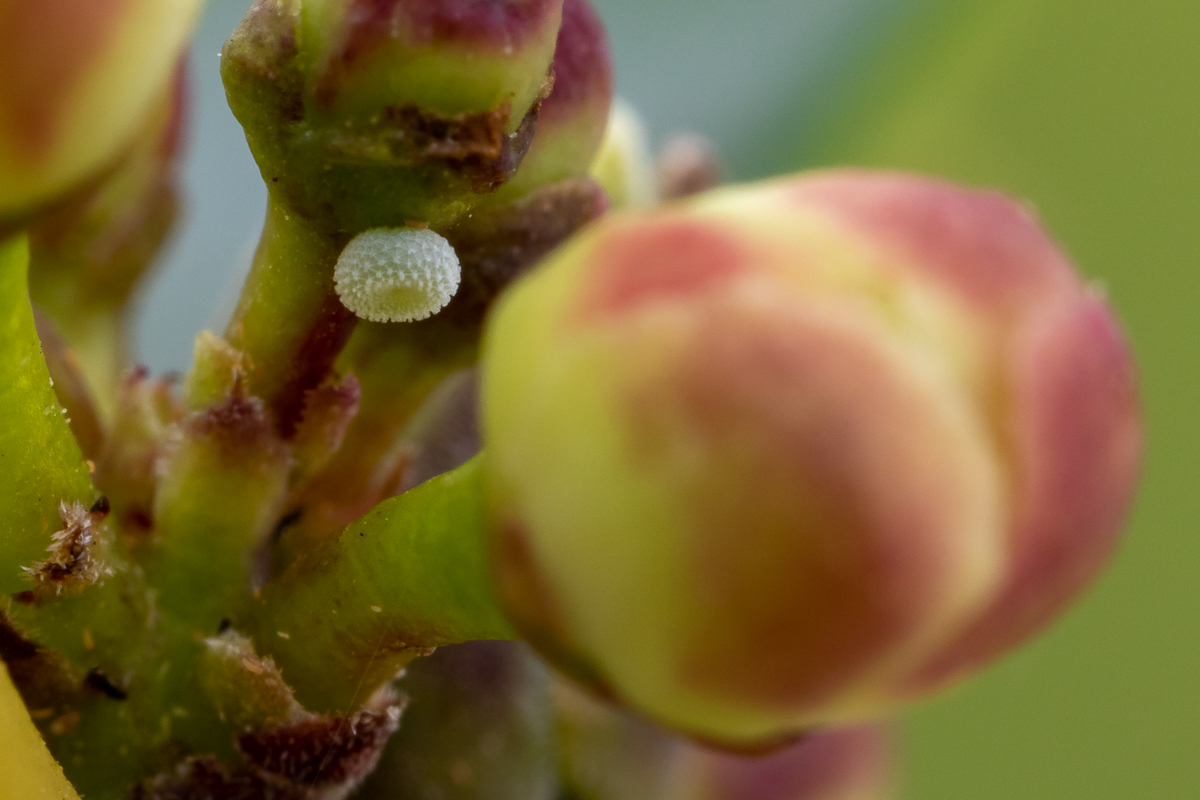
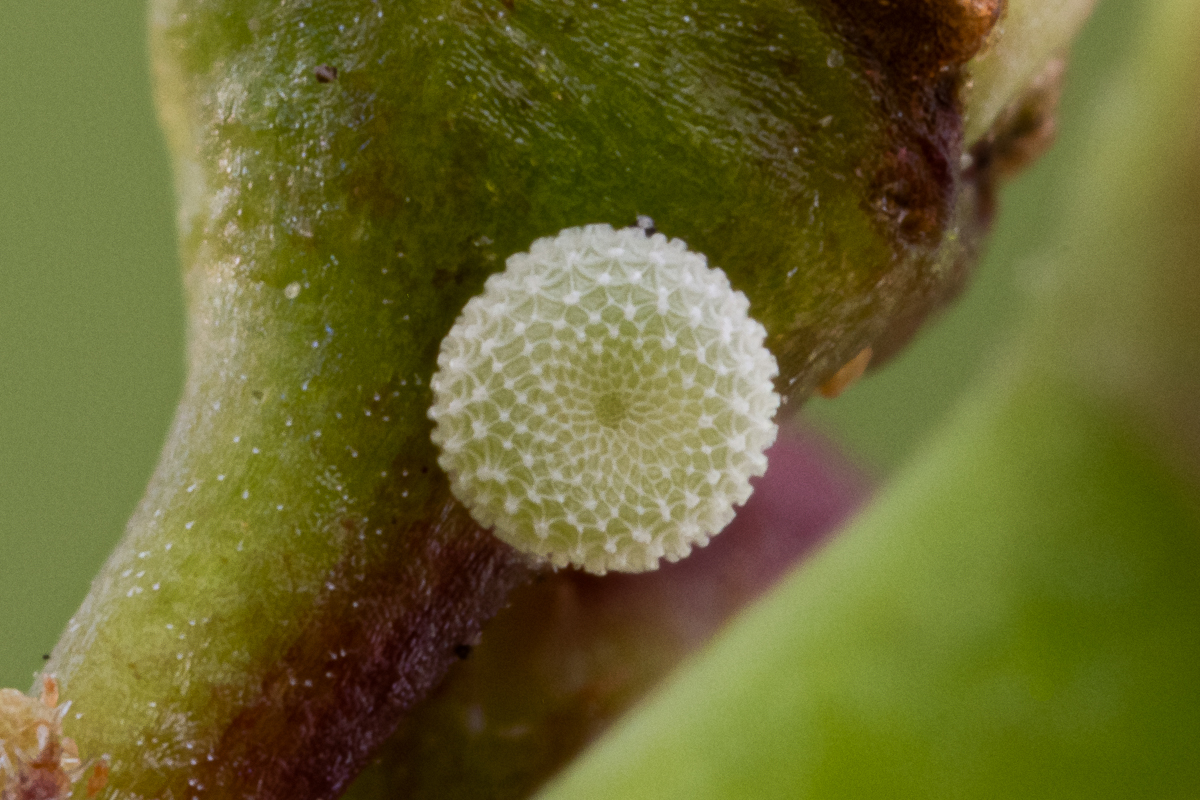
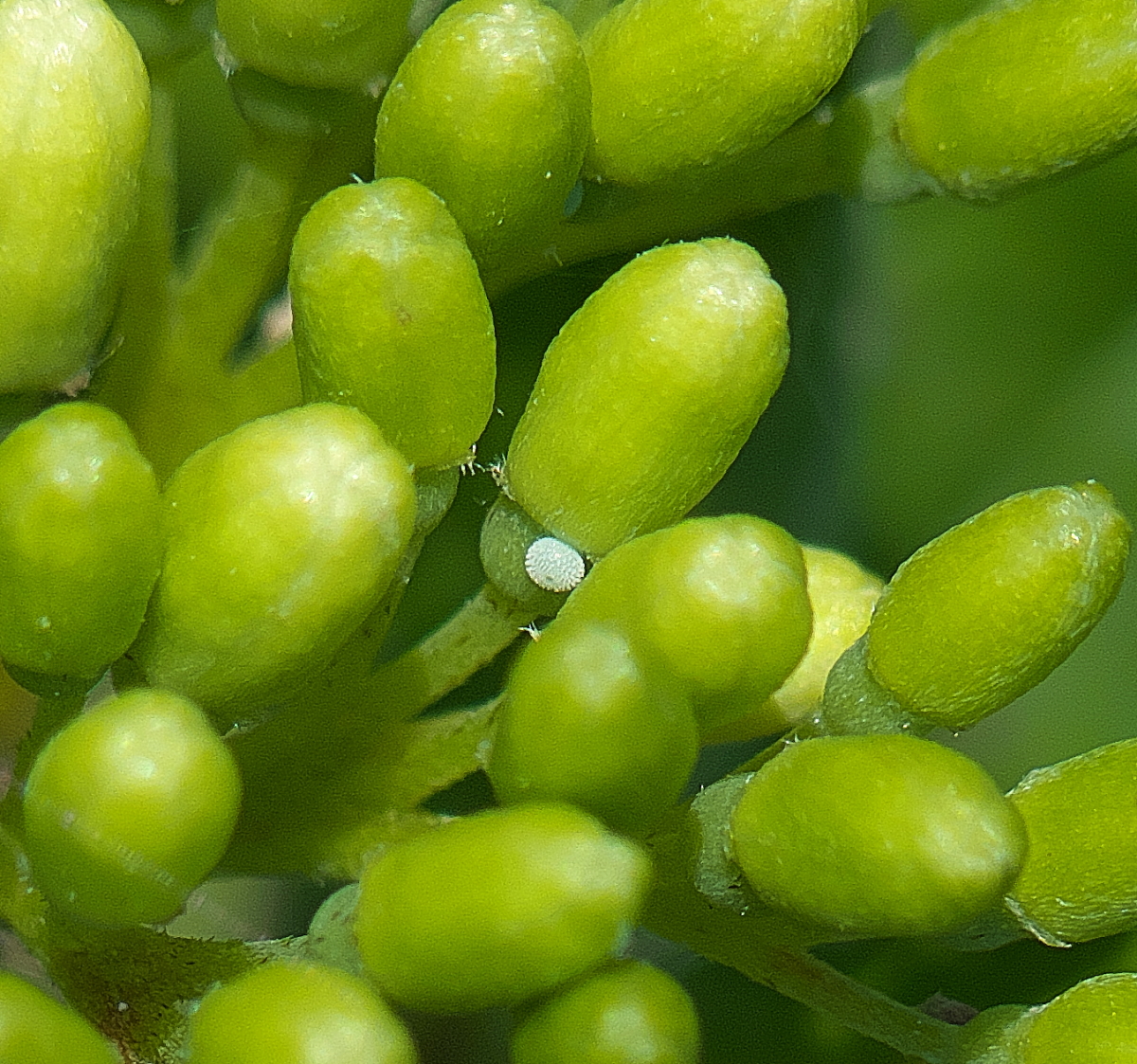
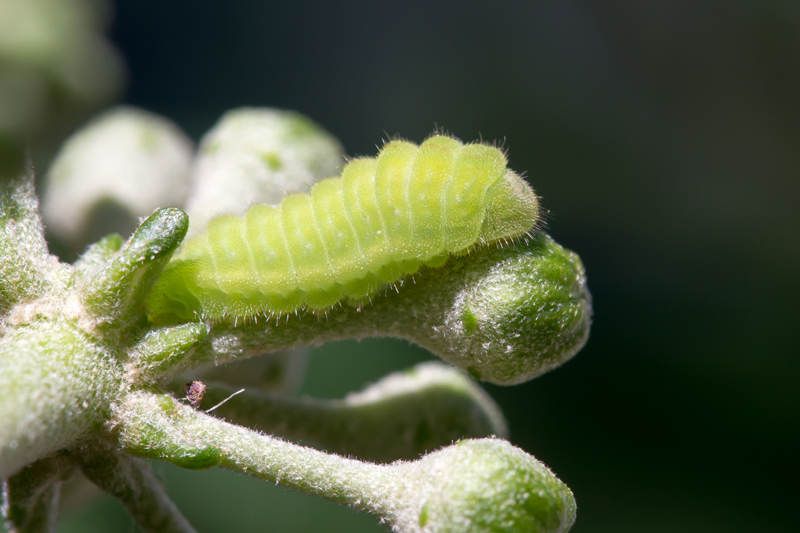
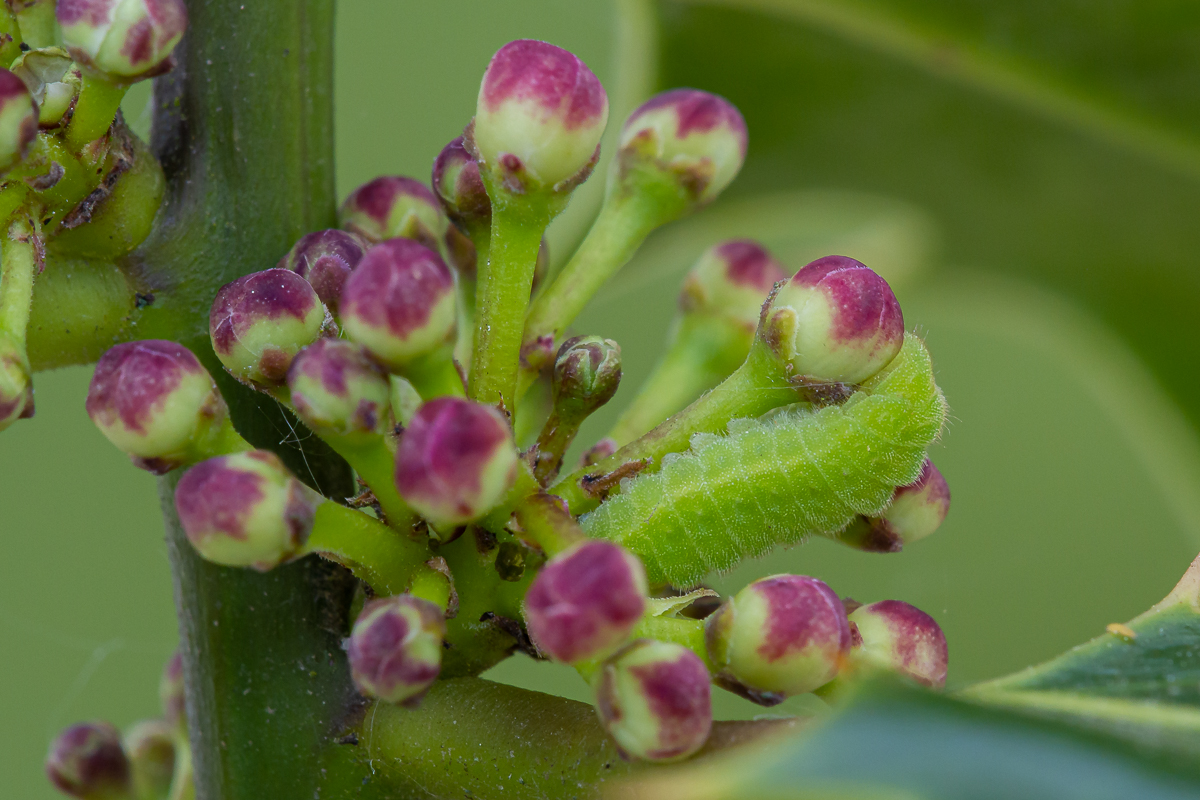
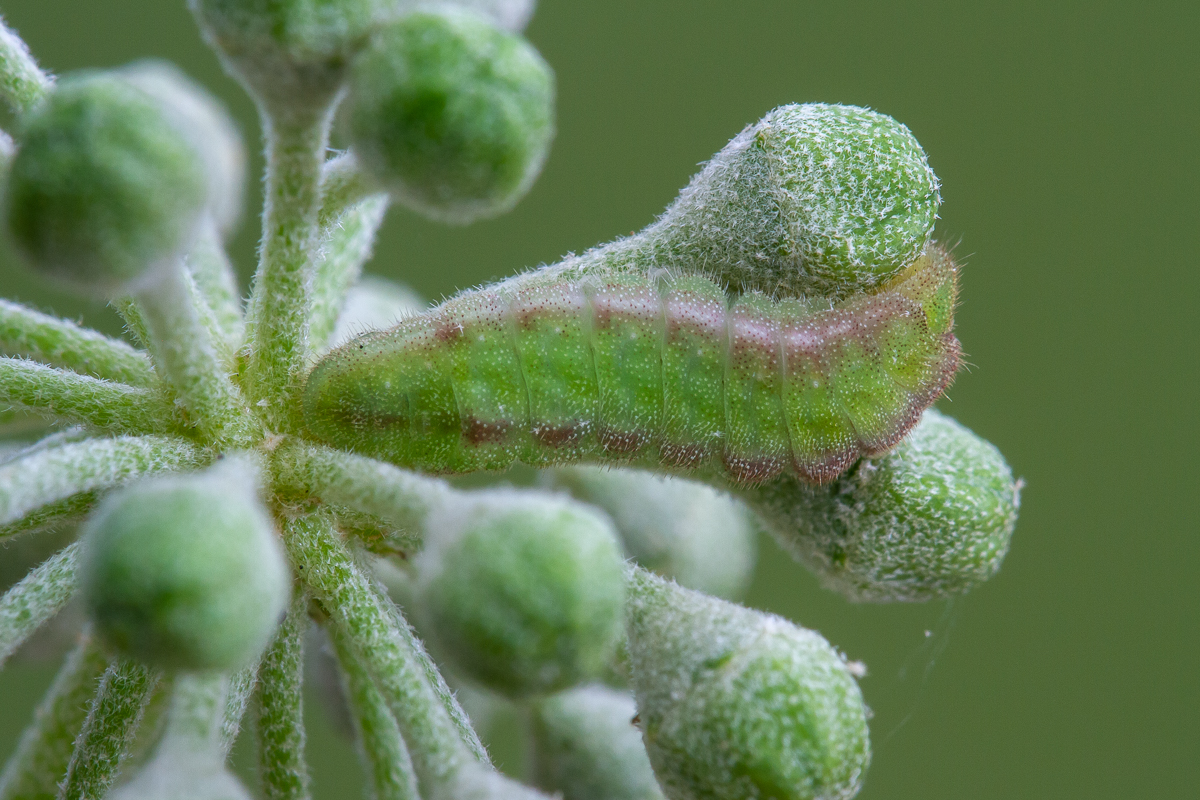
The larva is extremely well camouflaged, and is usually a plain green colour, although some larvae may also have areas that are light pink. The larva is most-easily found by looking for damage to the developing flower buds, where it may usually be found attached to a neighbouring bud. The larva bores a hole in the side of the flower bud and scoops out the content, leaving a succession of empty flower buds, each with an access hole, in its wake. The larva has 4 instars in total.
The primary larval foodplants are Holly (Ilex spp.) and Ivy (Hedera spp.). brambles (Rubus spp.), buckthorns (Frangula alnus and Rhamnus cathartica), Dogwood (Cornus sanguinea), Gorse (Ulex europeaus), snowberries (Symphoricarpos spp.) and Spindle (Euonymus europaeus) are also used.
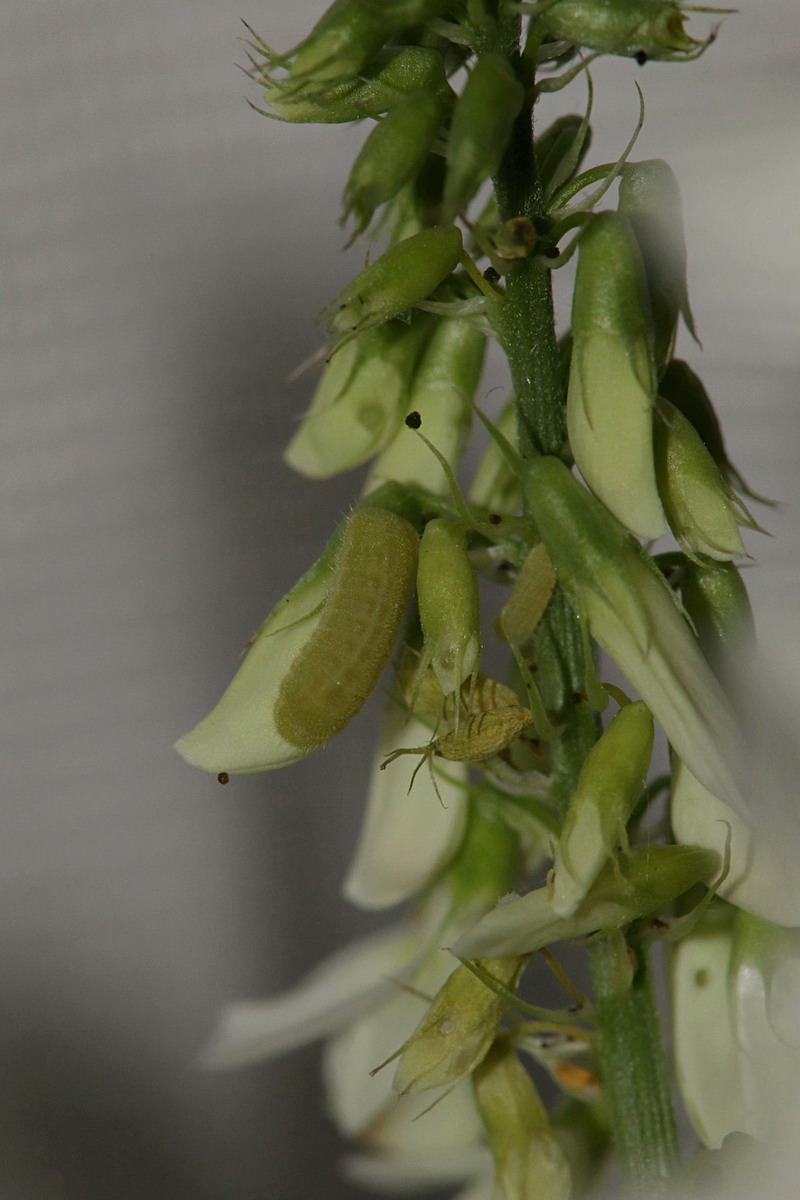
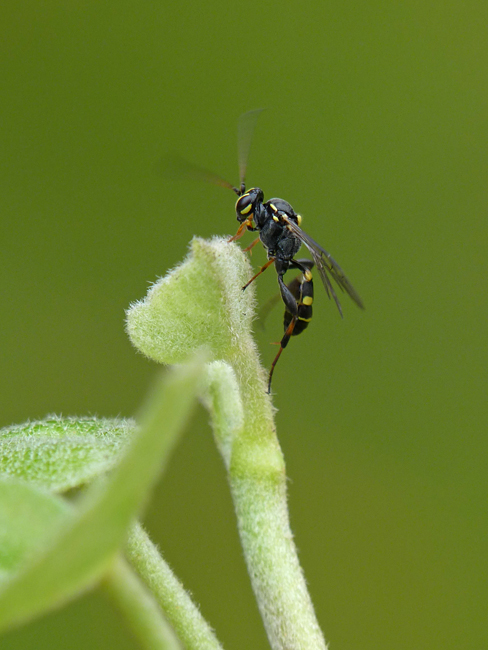
"The larva emerges by eating away the whole of the sunken portion of the crown of the egg. Directly after emerging, the larva is only 0.90 mm. long. The entire colour is very pale ochreous, with a greenish-grey tinge. The first segment is flattened and projects over the head. The posterior segments are rather compressed, all the others are humped dorsally with the segmental divisions deeply cut; along the dorsal surface is a series of long glassy white hairs, curving backwards, situated in pairs on each segment; the base of each forms a short tubercle; close below is a shorter hair directed backwards and laterally, forming a sub-dorsal series; and below this, in the centre of the segment, is a pale olive lenticle. Between this and the spiracle are two short hairs curving a little downwards. There are two rows of lateral hairs. The first sub-spiracular series is composed of three on each segment, the central one being much the longest. They form a projecting lateral fringe. The second series consists of shorter hairs situated lower down at the base of the claspers. The anterior segment bears a number of hairs, all curving forwards, and those on the anal segment curve backwards. All the hairs are finely serrated. The head is shining bronze-black; while crawling it is protruded, and partly withdrawn while resting. The legs and claspers are the same colour as the body. The young larva will readily feed on the very young leaves of holly, eating small holes in the upper cuticle." - Frohawk (1924)
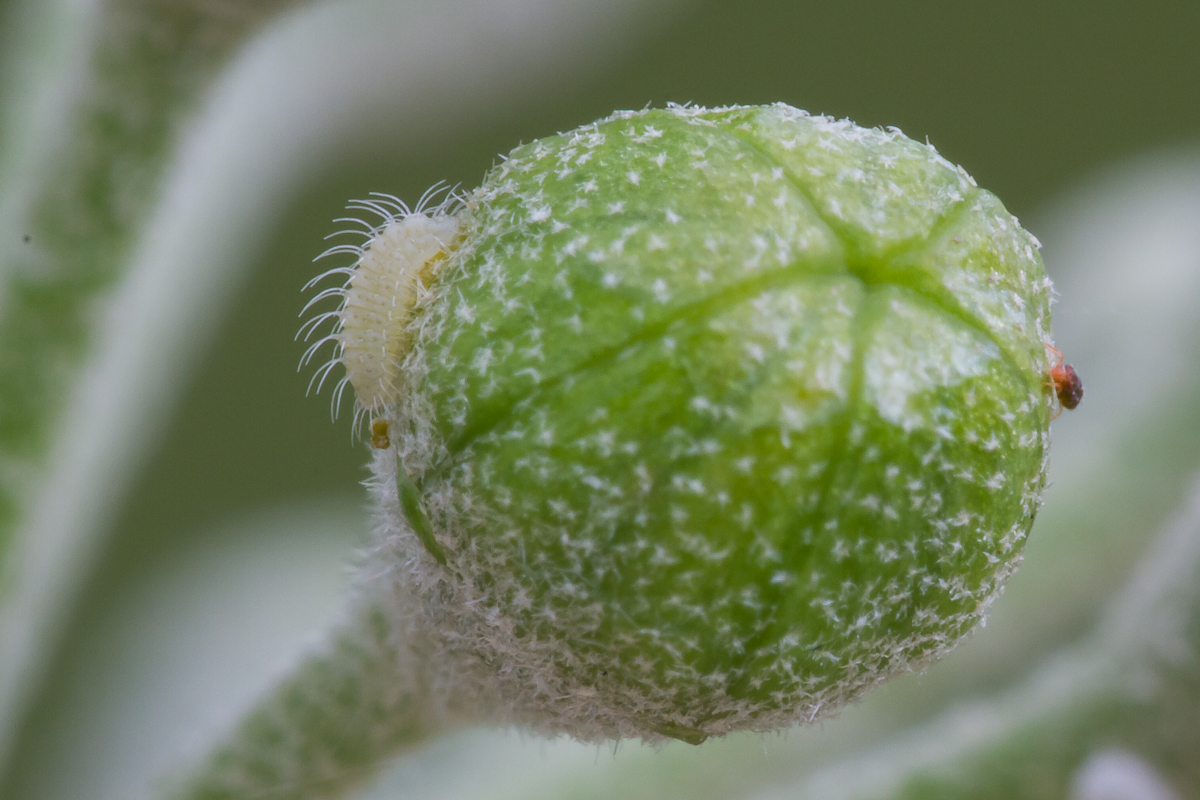
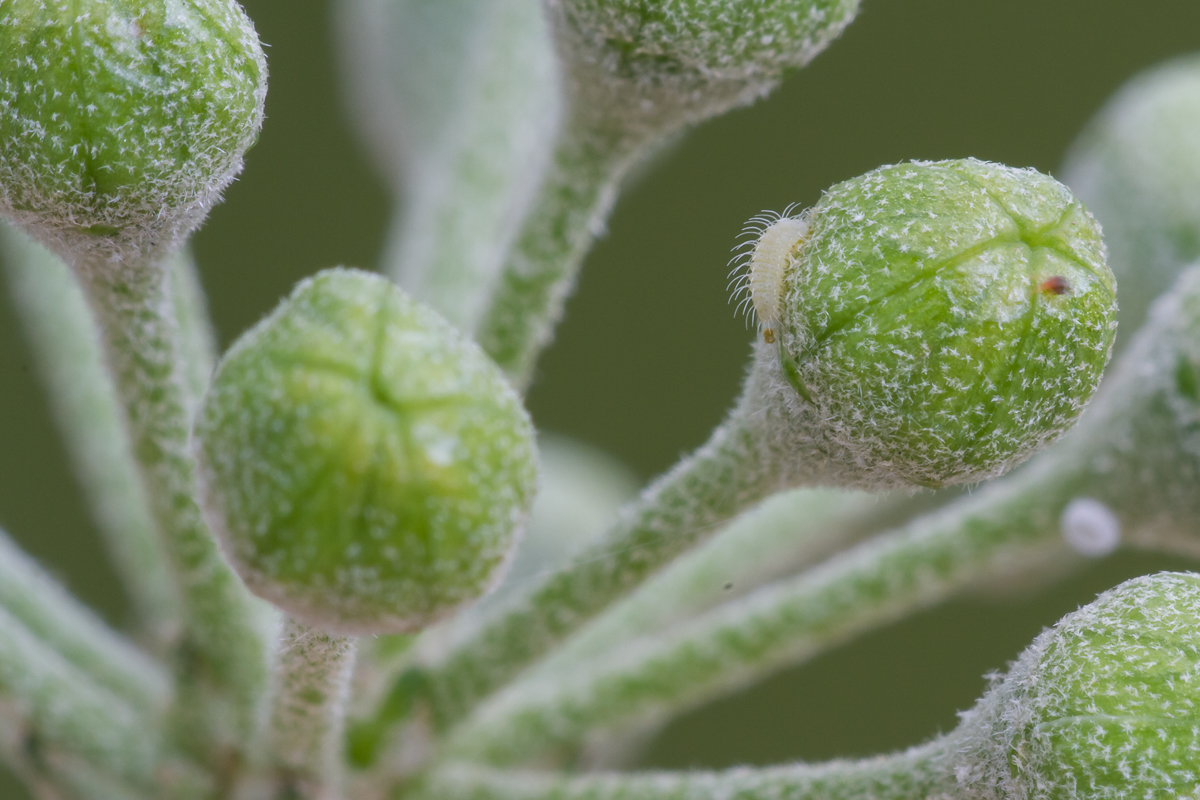
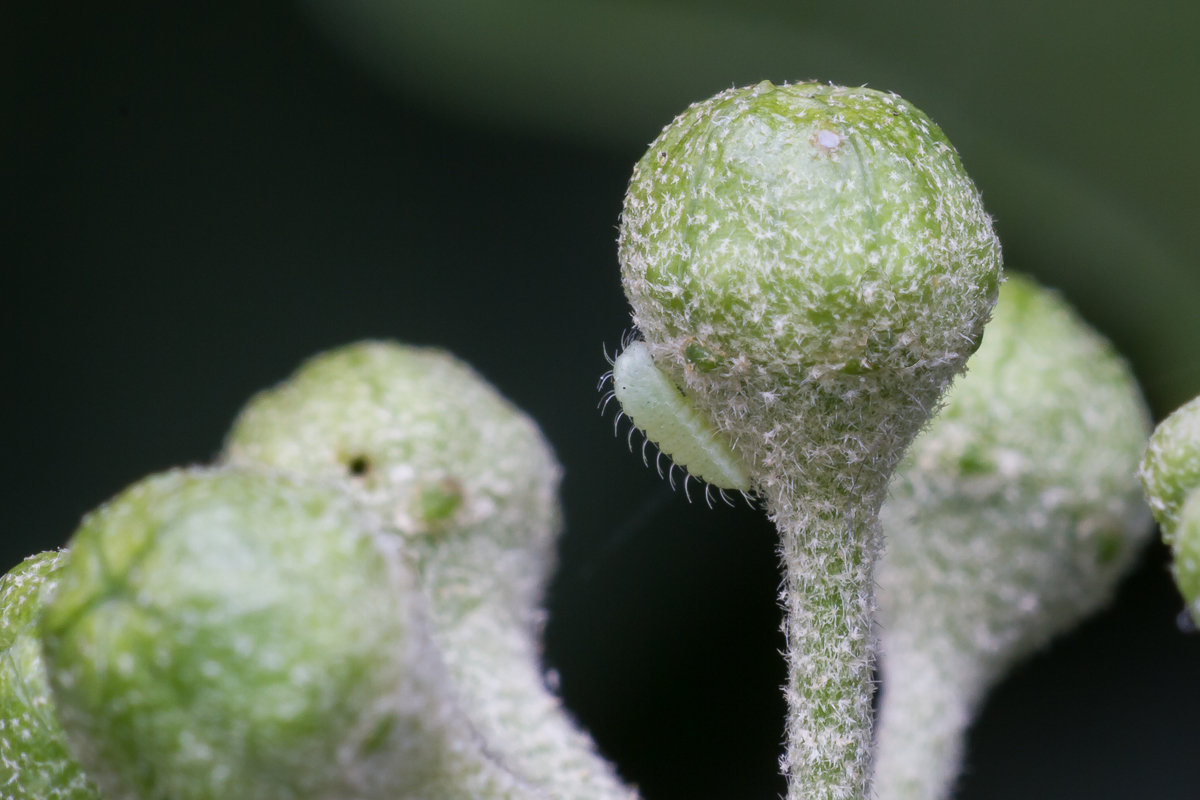
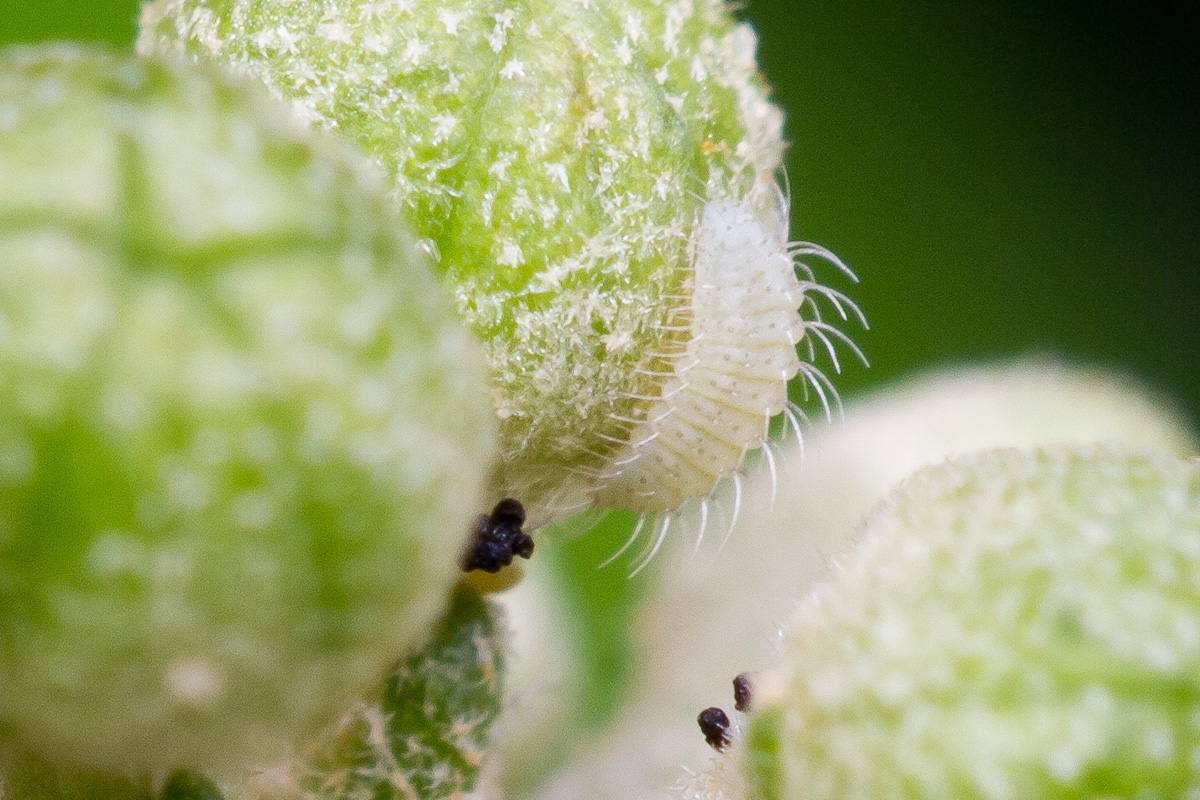
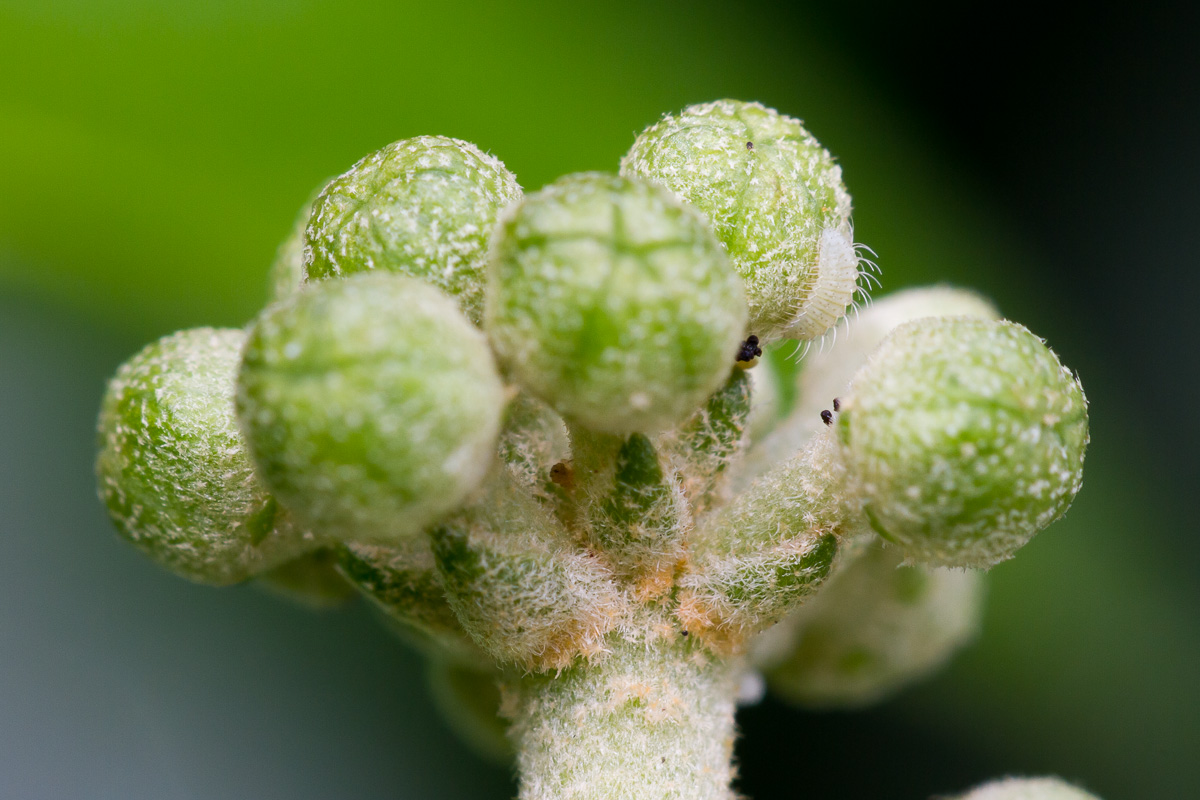
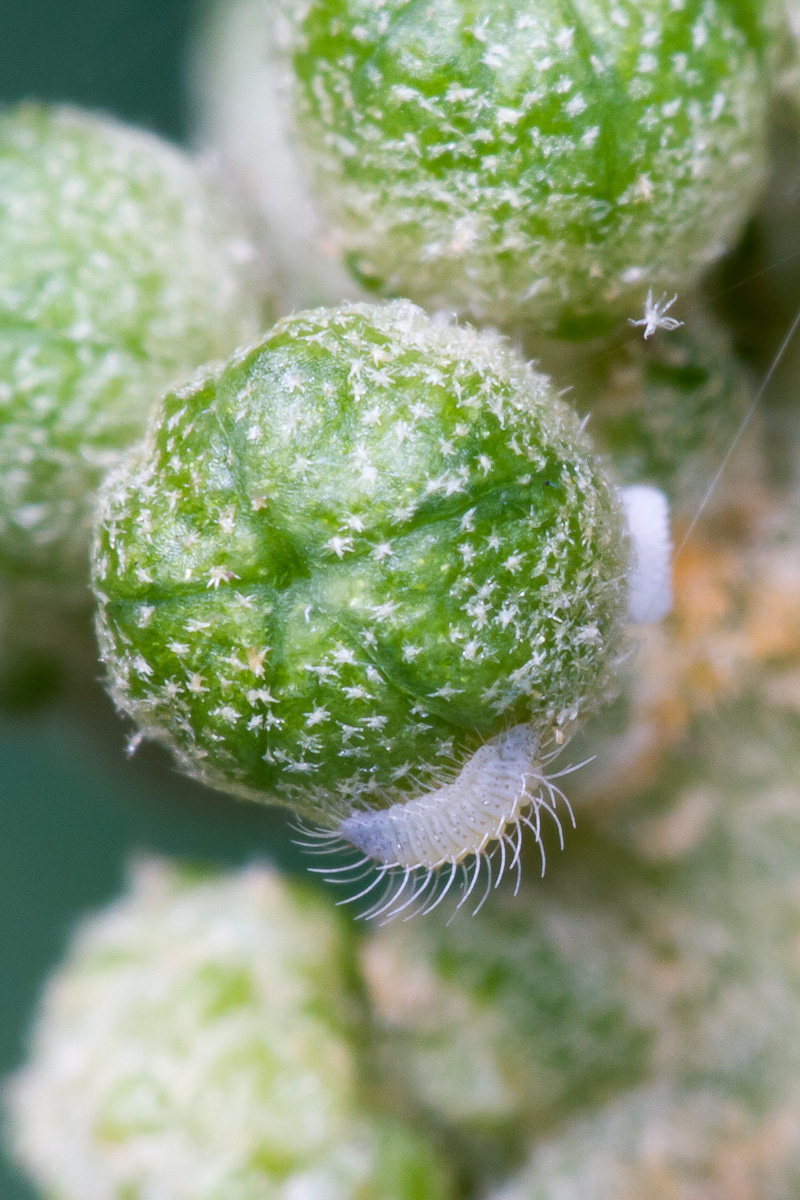
"The first moult on June 1st, 1900, remaining in the first stage seven days. It is then 2 mm. long while crawling. The anterior and posterior segments are flattened, rounded and projecting, covering the head while at rest, as well as the anal claspers. The dorsal surface is elevated; sides flattened and sloping to the lateral ridge; the under surface is also flat. The segmental divisions are deeply defined. The colour of the body is pale green and thickly covered with rather long white hairs, all curving backwards, excepting on the anterior segment, where they all project forwards; all the hairs have curiously formed bases, composed of a short tubercle, bearing a number of short, curved, black, claw-like spines, giving the body a longitudinally striped appearance. The head is shining black. The larva in the first stage feed on the buds and young tender leaves, perforating the latter with small holes. The cast skin is eaten after the first moult. Shortly before the second moult it measures 3 mm. long, of a uniformly bright light yellow-green with a paler lateral line. When at rest the head is quite hidden by the projecting overlapping anterior segment; the under surface is so much flattened that the legs and claspers are entirely hidden by the projecting lateral ridge. The sides and medio-dorsal surface are slightly concave." - Frohawk (1924)
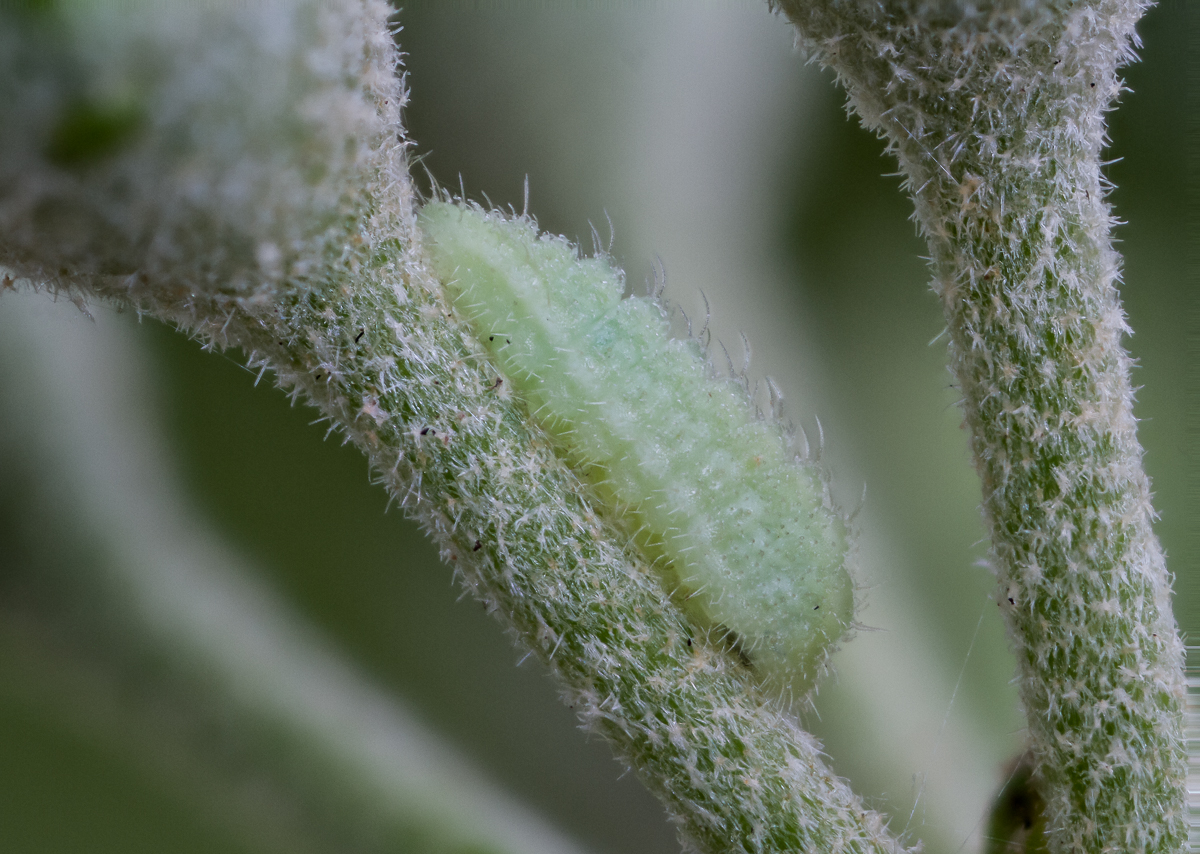
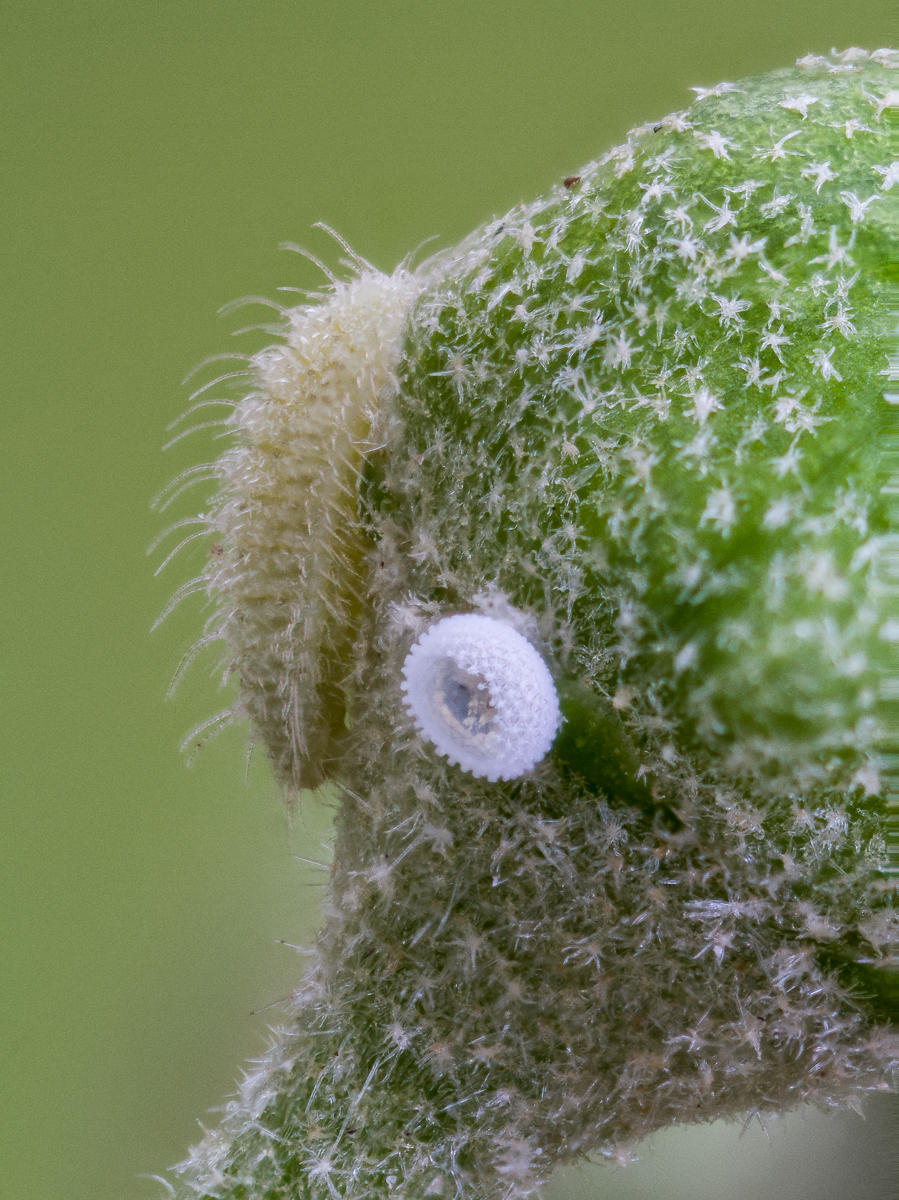
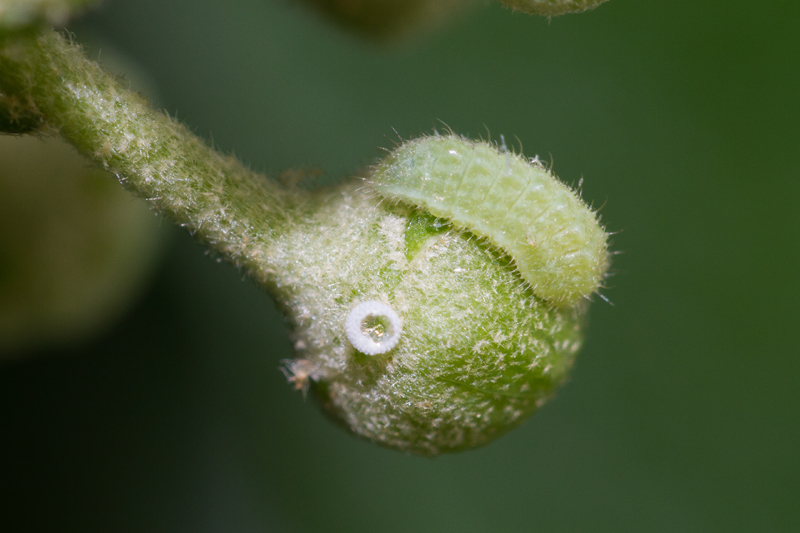
"After the second moult and one day before third moult, fourteen days old, it measures 5.4 mm. long. In form and structure it is much the same as the previous stage. There are three forms of colouring: Form 1: The ground colour is a clear green with dull pinkish-purple markings, the sub-dorsal and lateral lines whitish. Form 2: Ground colour pale greenish-buff with all the markings clearer, of a richer rose colour; the sub-dorsal and lateral lines cream-yellow. The first segment is rounded and sloping to the projecting edge. While at rest the larva lies flat upon the surface of the food plant. The segments are humped dorsally with a sunken medio-dorsal line of dull rose colour, edged on either side by a pale yellowish line, which is bordered below by a rose-coloured band, composed of a triangular mark on each segment; below and separated by the greenish-buff ground colour is a short oblique dull rose mark on each segment, forming a longitudinal band, and below this is a broader spiracular band of similar hue bordering on the lateral yellowish line; the ventral surface is dull pinkish. The whole of the body is clothed with fine hairs, varying in length. The segmental divisions are deeply incised above, giving additional height to the humps on the segments. On the tenth segment the honey-gland shows as a scar. It is not visible in the previous stage. Form 3: The whole colouring of a clear light green without any pink, but with a light yellow lateral line. They feed chiefly on the green, unripe holly berries, boring small round holes in them." - Frohawk (1924)
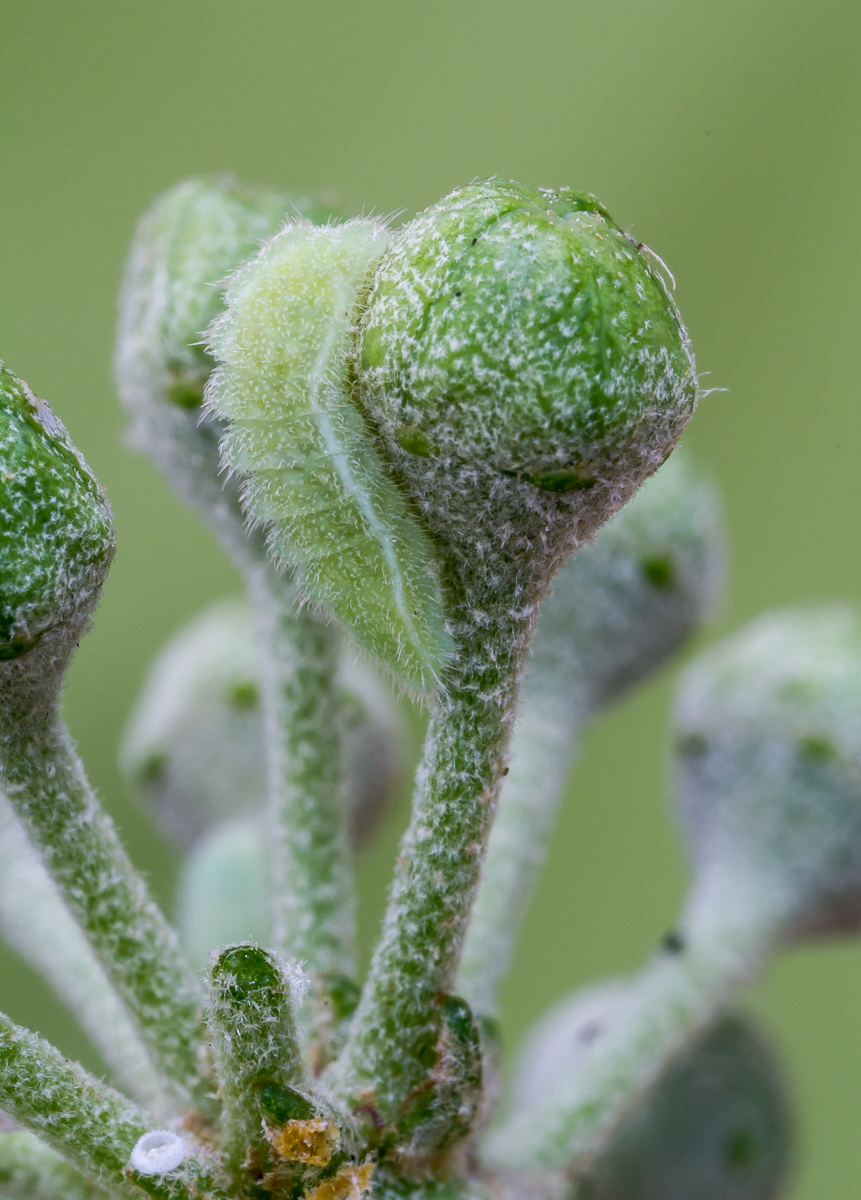
"The third and last moult June 13th, 1900. Three days after, and twenty days old, it measures 11 mm. long. Form 1: The colouring is now more brilliant; the dorsal and lateral bands of a deep pink strongly contrast with the light green sides; the ventral surface and claspers green. Form 2: After the third moult much of the pink colouring is lost; the sides now are green with rather darker oblique stripes, and the lateral yellow line of the previous stage is merely the faintest tinge of pink, and the dorsal stripe is brownish-pink. Form 3: Just before the third moult it measures 6.5 mm. long. One hour after moulting it eats its cast skin. It moulted the third time on June 17th, 1900. Form 2: Fully grown, after third moult, twenty-five days old, it measures 14.8 mm. in length. The whole colouring becomes a purplish-pink, with a paler pink lateral band, all the green having vanished. This larva became fully grown on June 19th, and pupated evening June 21st. Form 1: Also turned wholly pink when full grown, and spun up early morning June 21st on the under surface of a holly leaf, attaching itself by a silk cincture round the waist, and by the anal claspers to a loose pad of silk; it pupated on the evening of June 23rd, being twenty-six days in the larval state. Form 3: Likewise assumed a dull pinkish colour all over when it became fully grown on June 24th; it stopped feeding and roamed about for thirty-six hours, and finally spun up on the 26th and pupated June 28th, 1900, and emerged (a female) on July 16th, 1900, remaining eighteen days in the pupal state. The fully grown larva measures from 12.7 mm. to 14.8 mm. long. The very small shining bronze-black head is attached to a yellow retractile neck; it is protruded while feeding and crawling, otherwise it is hidden by being withdrawn into the projecting and somewhat compressed anterior segment. The segments are humped dorsally from the second to ninth inclusive; the remaining posterior three segments are somewhat flattened. There is a medio-dorsal furrow, and a dilated lateral ridge extends all round the larva, concealing the legs and claspers. The ventral surface is very flat. The honey-gland on the tenth segment is a transverse dorsal incision. The surface is very finely granulated and densely beset with minute star-like processes, each emitting a serrated spine, mostly tinged with rust colour at the tip. The star formations are white and glassy; they are largest on the dorsal surface and on the side, where they are thickly placed in two oblique patches on each segment; the spiracles are white, finely outlined with black, but inconspicuous, being deeply set in the central sub-divisional furrow of each segment. After feeding, when fully grown, the larvae become very restless, and wander about for one or two days before spinning up for pupation. When they feed on the bloom of ivy, they eat away the bud or young berry, leaving the stalk and cup of the bud." - Frohawk (1924)
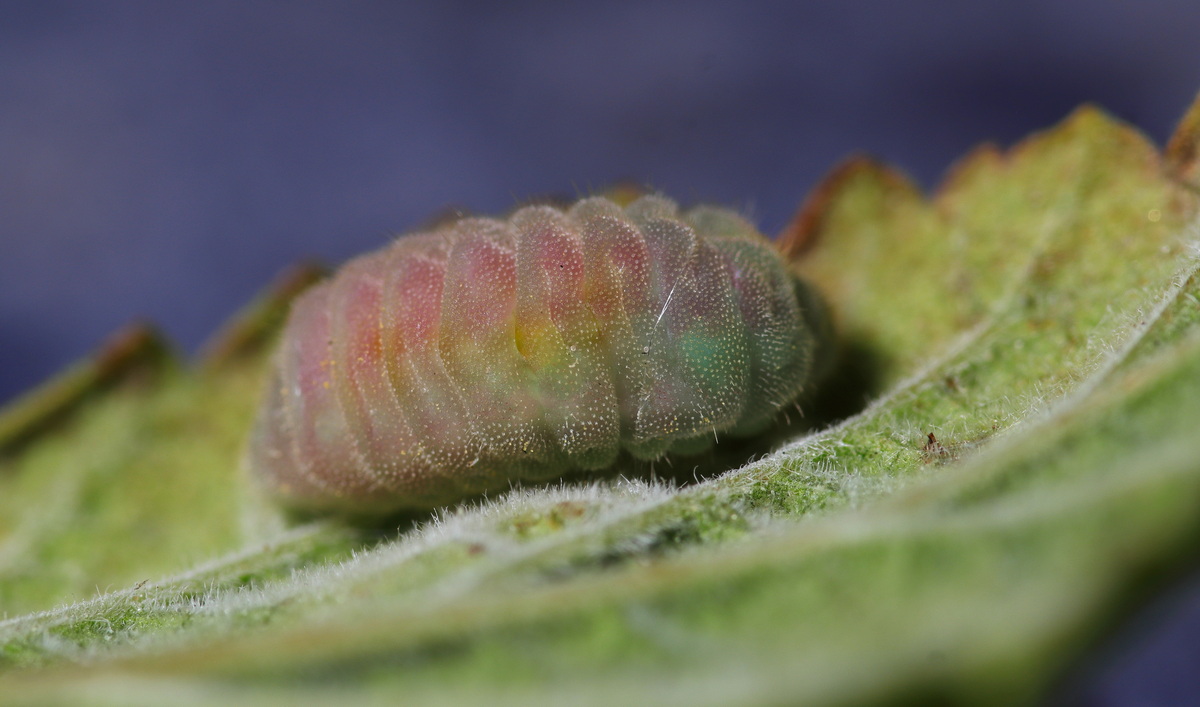
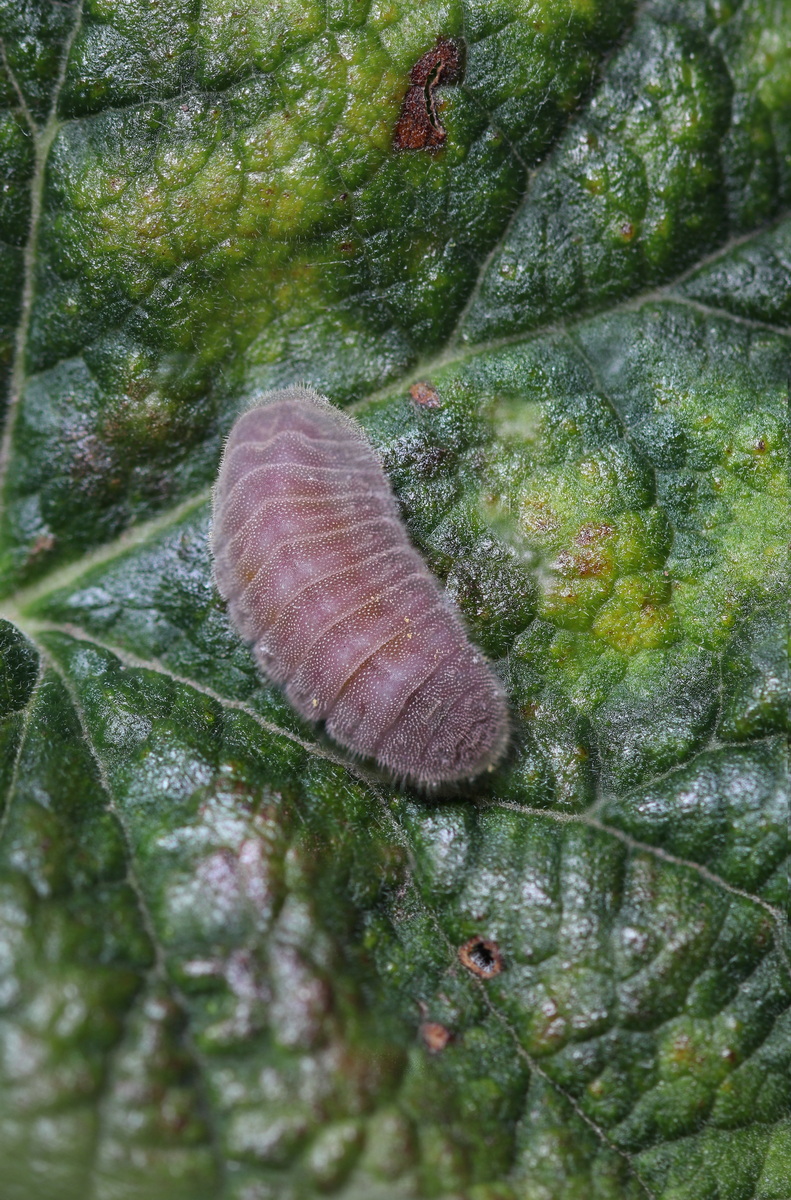
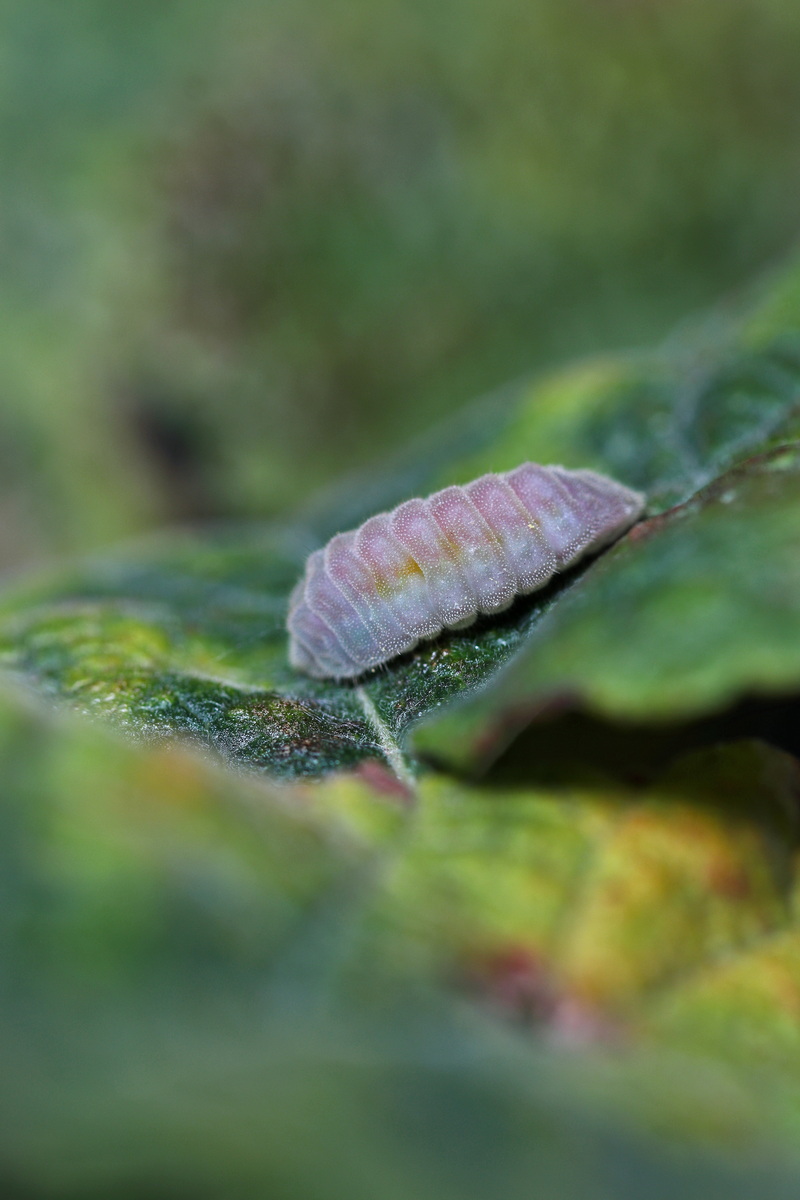
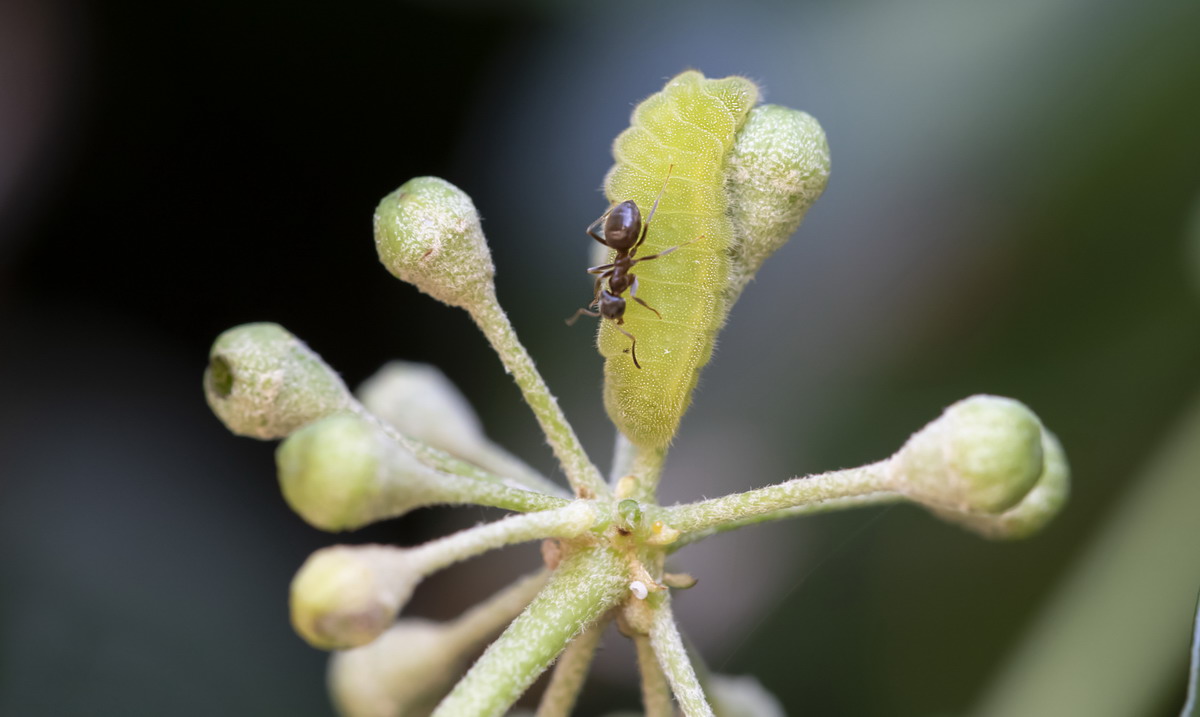
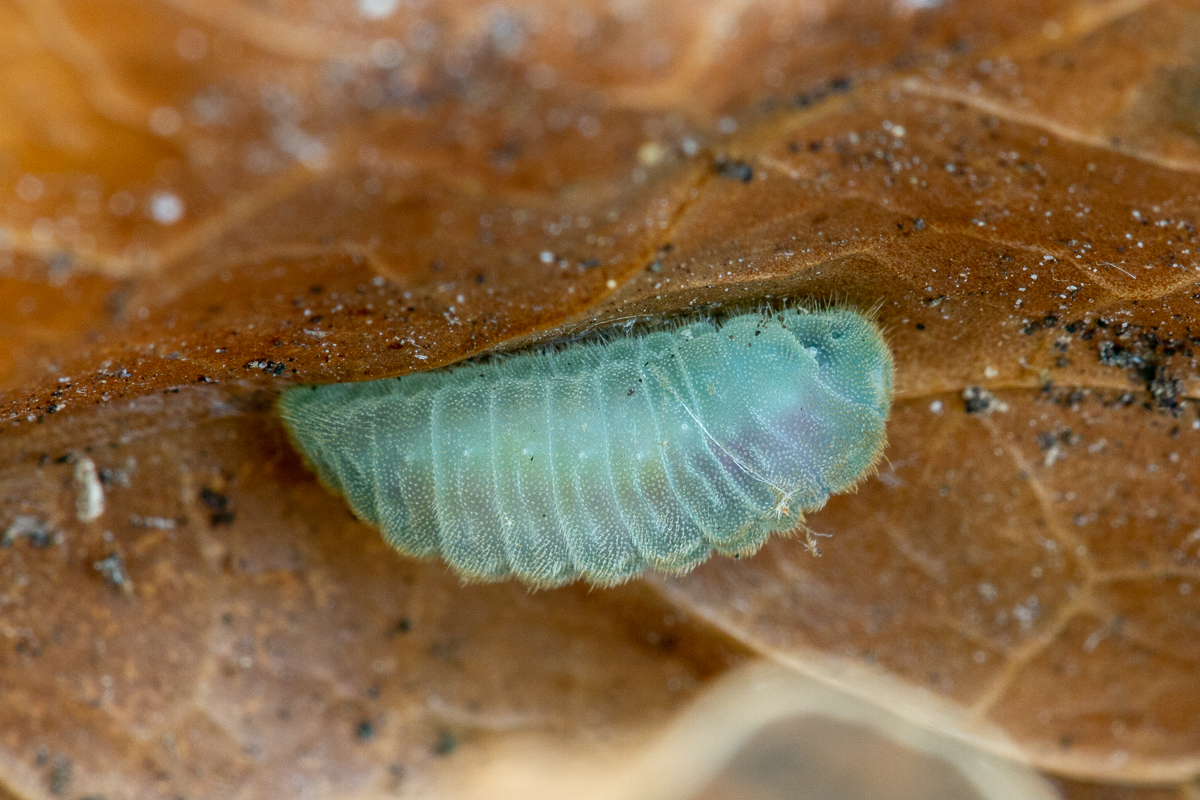
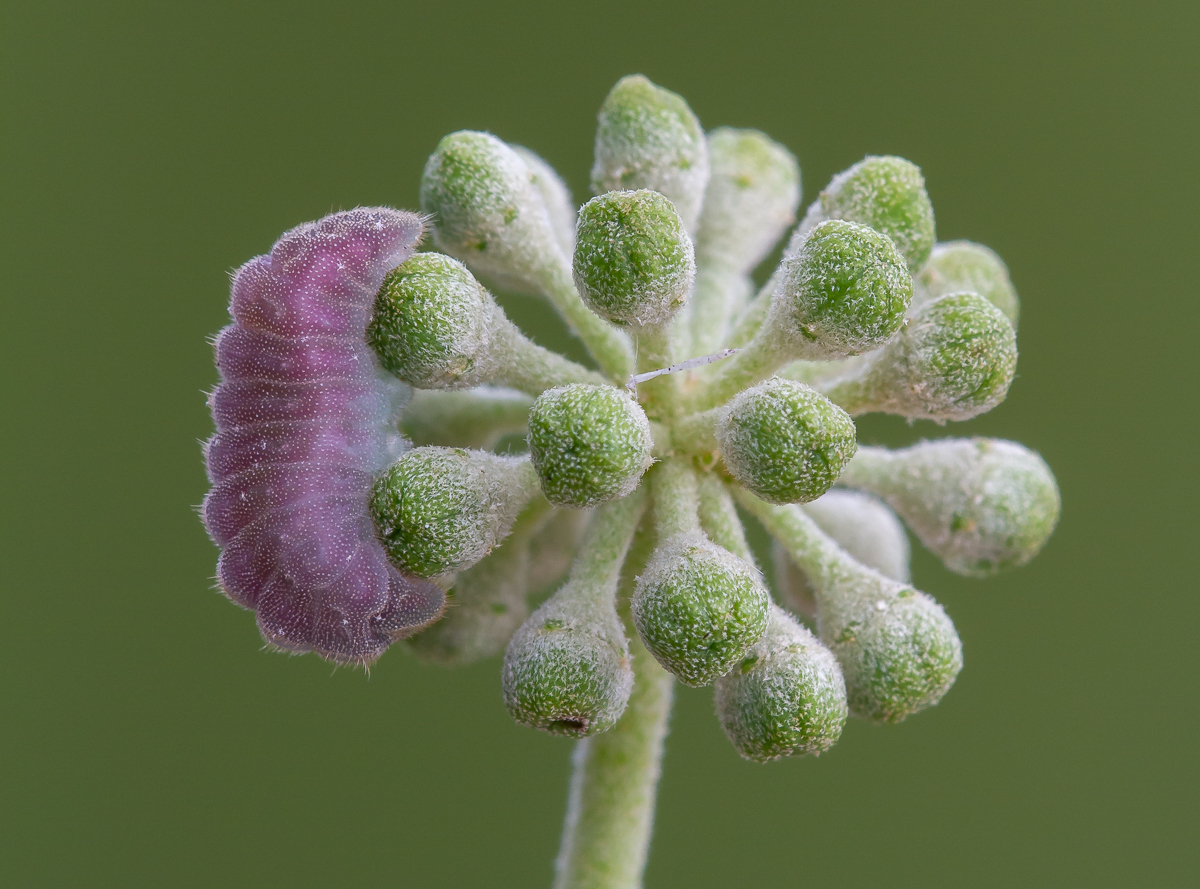
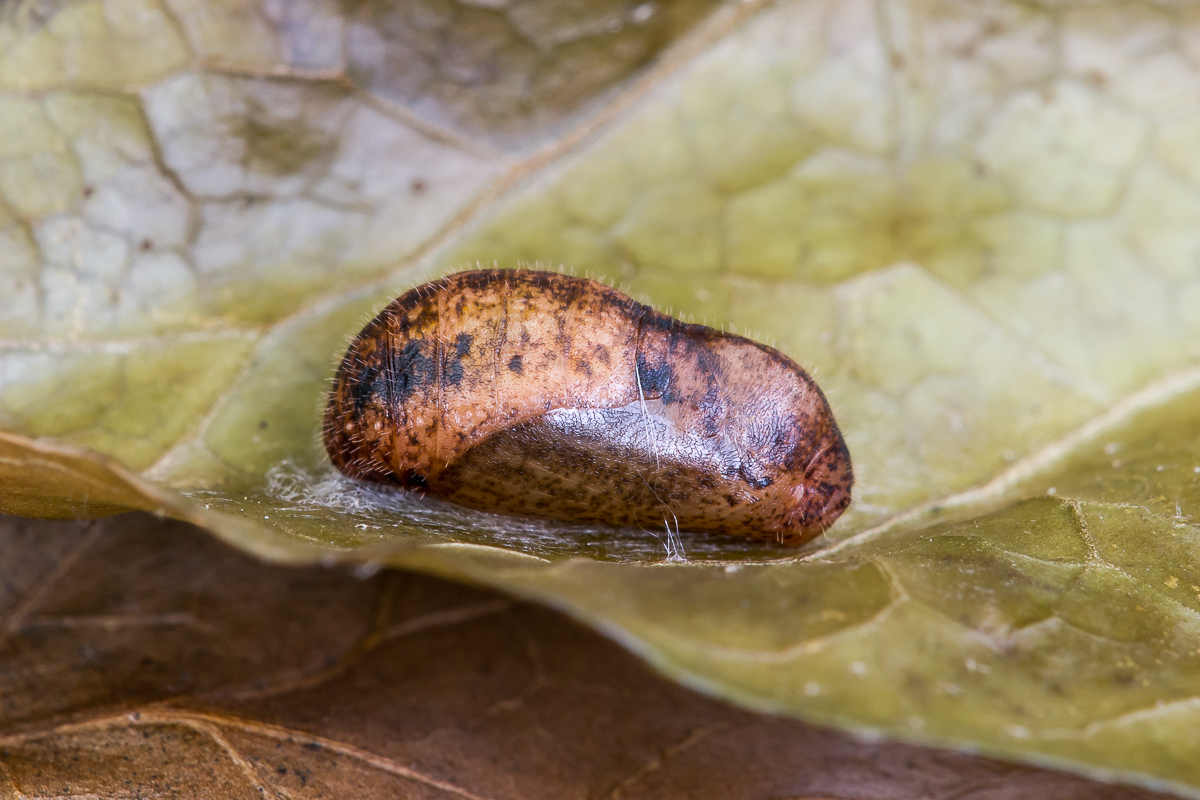
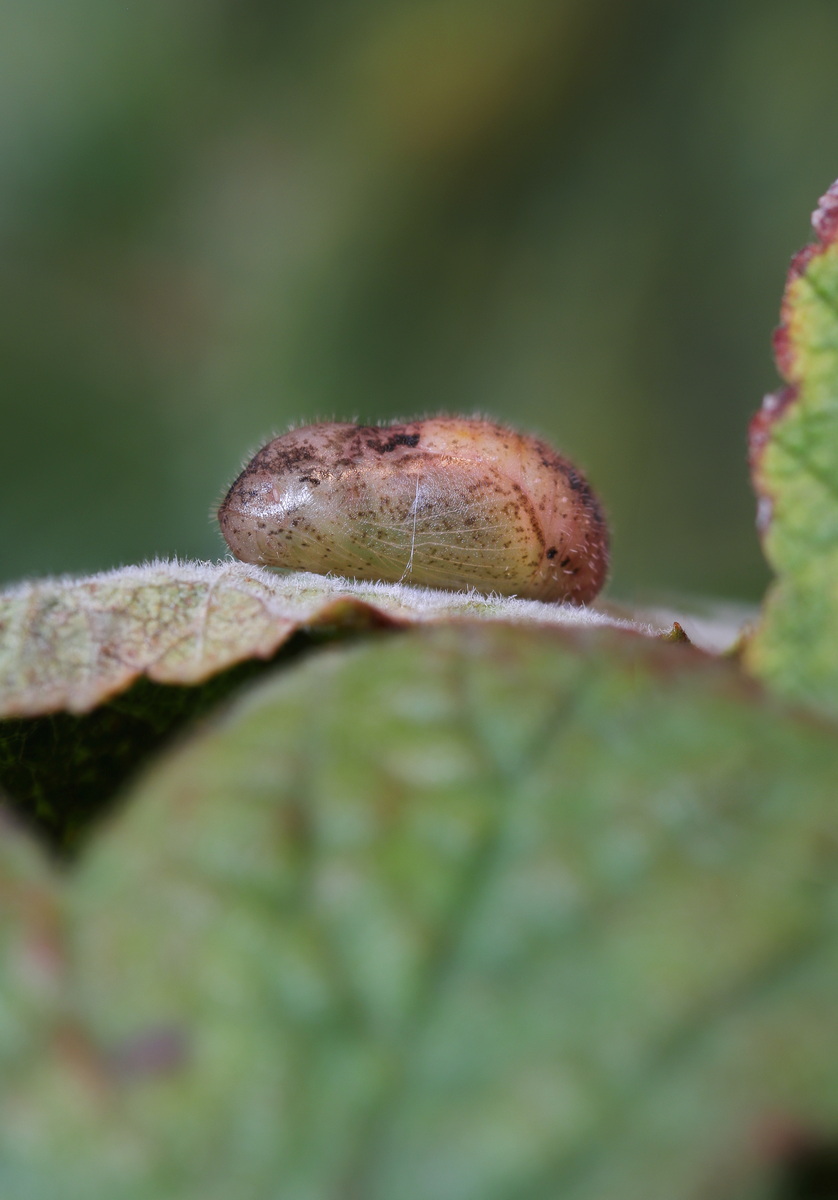
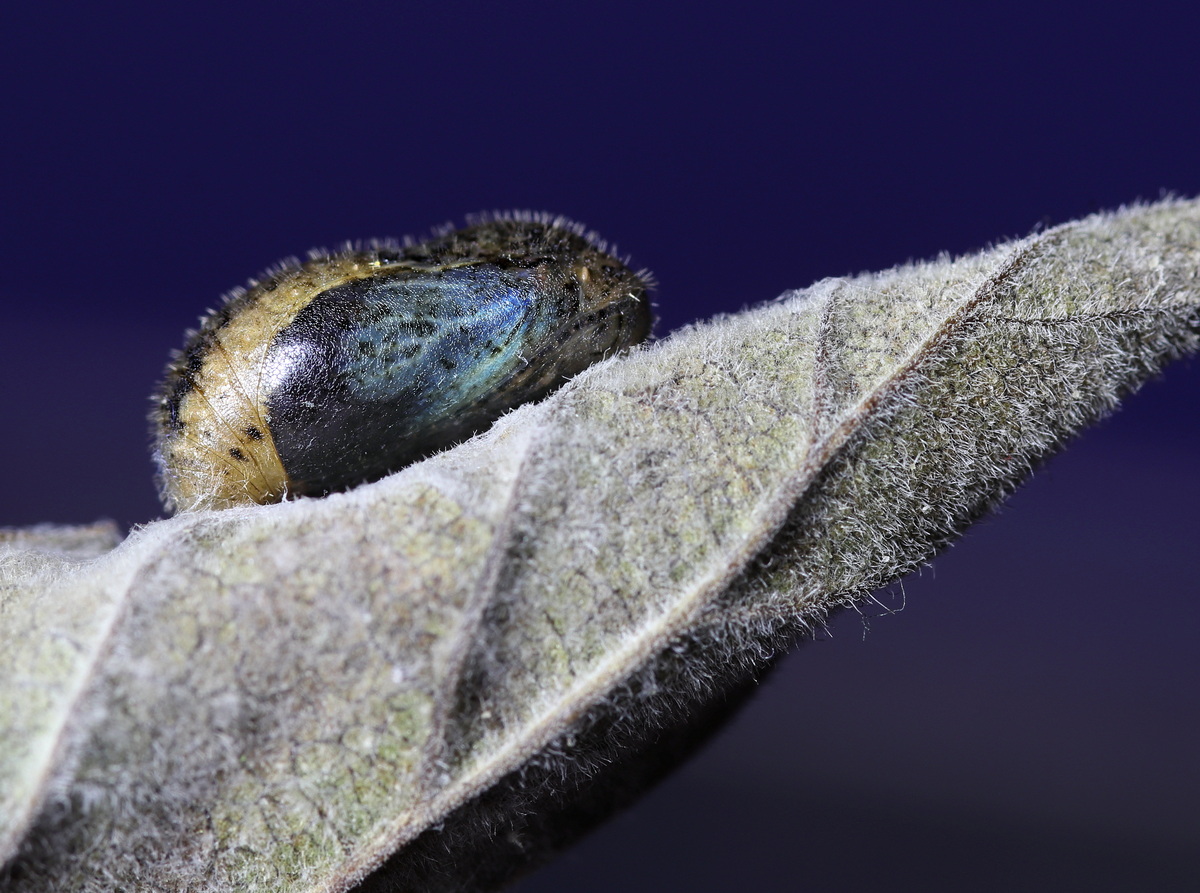
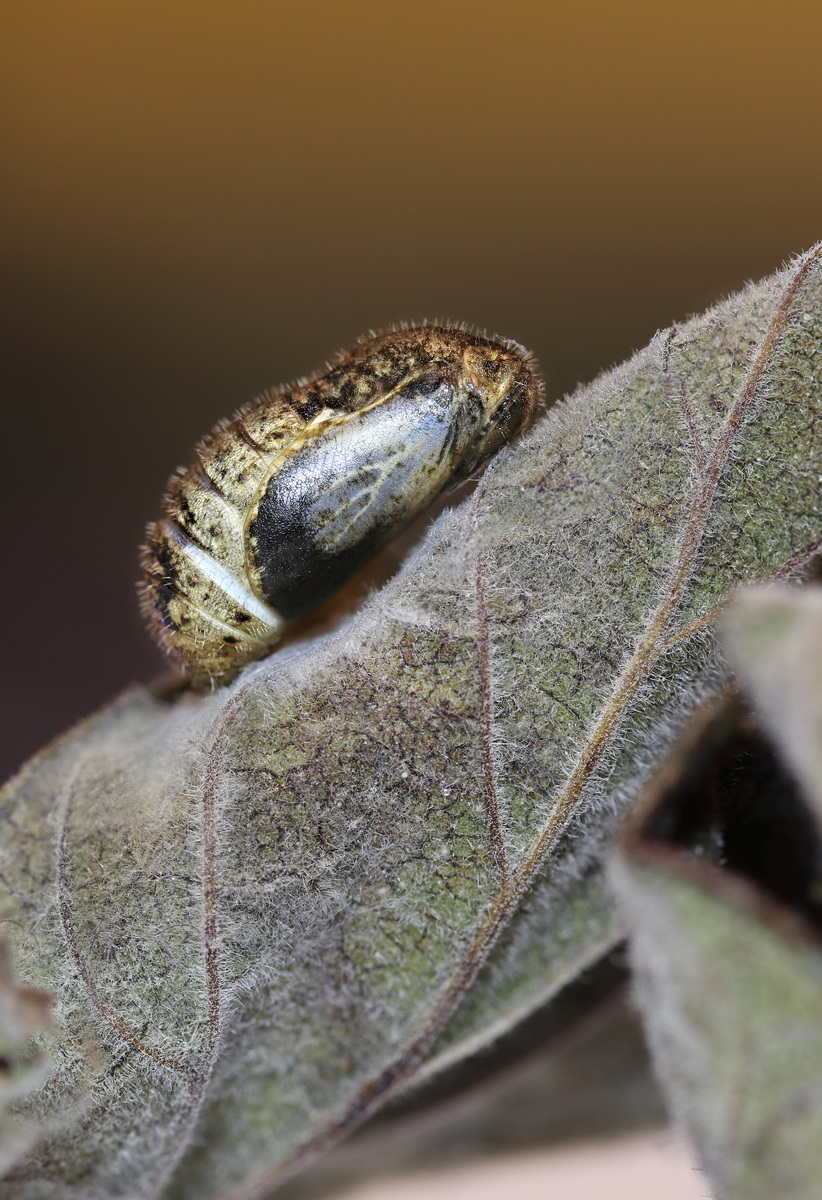
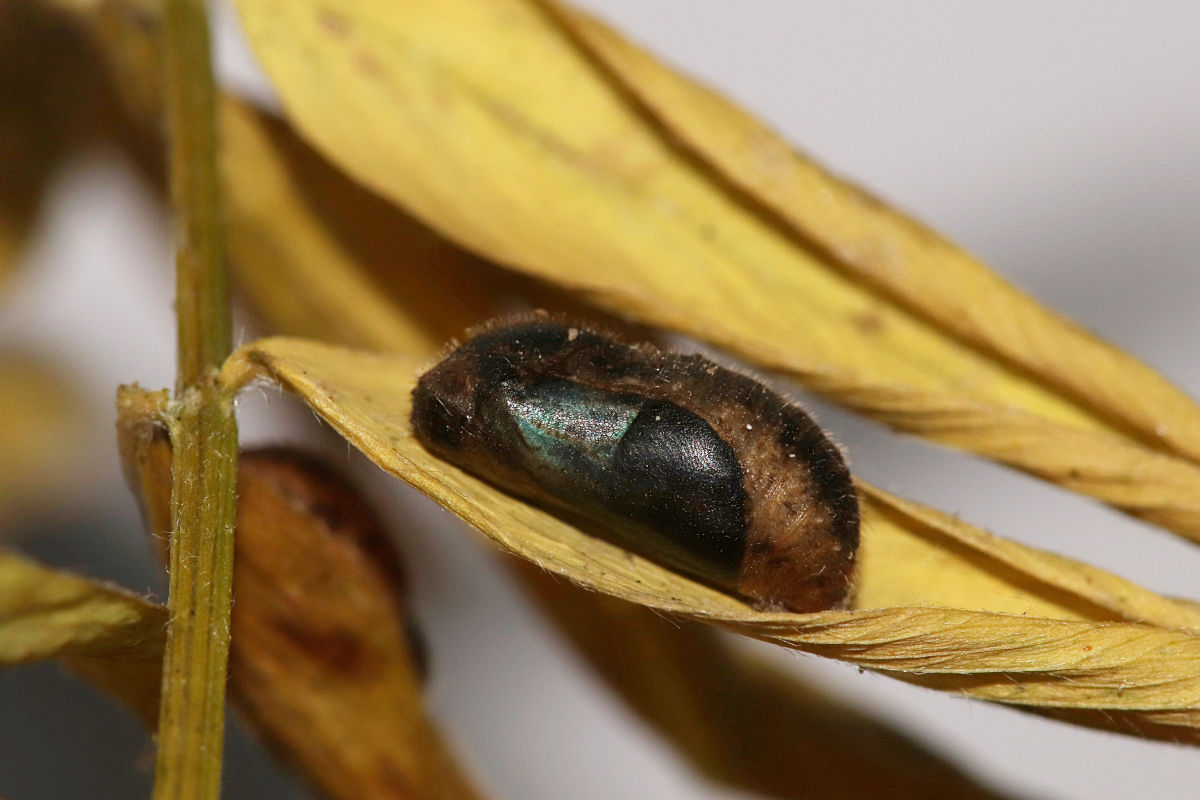
The larva leaves the foodplant to pupate on or near the ground, and turns mauve in colour prior to pupation. The larva spins a very fine silken girdle to attach itself to the chosen pupation site. Pupae from the spring generation emerge in 2 to 3 weeks, whereas those formed in late summer overwinter.
"The pupa measures 8.5 mm. long, of dumpy, stout proportions. The head is rounded and slightly concave in front; the thorax swollen, concave at the juncture with the abdomen; the abdomen is rounded and curved to the anal segment, which is blunt, round, and closely approximate to the wings; the latter are ample and bulging. To the naked eye it presents a smooth and tolerably shining surface, but when seen under a microscope the entire surface is covered with a finely reticulated branching pattern, and with the exception of the wings it is sprinkled all over with minute warts, each emitting a fine amber-brown bristle; the anal segment is encircled with club-like hooks. On the seventh abdominal segment the honey-gland of the larva shows as three incised scars in the pupa. The ground colour is tawny-buff inclining to pinkish, and the wings are slightly ochreous; the latter as well as the head, legs and antennae are checkered with olive-brown, the thorax with deeper brown; a medio-dorsal mottled brown and black streak runs the entire length, and blotches of the same colour form a sub-dorsal band on the middle of the abdomen, and similar blotches occur at the base and anal angle of the wing, also on the ventral surface of the abdomen, forming longitudinal bands. These dark markings have a burnt purplish-black appearance similar to the burnt colouring on Argynnis aglaia pupa. The pupa is attached by a fine silk girdle round the waist, and by the cremastral hooks to a rather loose silken pad. The larval skin is detached." - Frohawk (1924)
The following links provide additional information on this butterfly.